Connect with us

Business

Kent ‘commuter students’ are swapping residential halls for home

Published

on

A female university student covered in pain. She is participating in a fun run event.

Nick Hillman, director of the Higher Education Policy Institute, said the gradual growth of commuter students was linked to the cost of living.

“Aside from tuition fees, the single biggest cost is rent where you can pay up to £1,000 a month depending where you live,” he said.

“Even if you receive the maximum maintenance loan rate, it may not be enough to cover both rent and other daily expenditures.”

Hillman said there were advantages and disadvantages to being a commuter student.

Advertisement

“If you live at home, you are more likely to keep your network of family and friends, and other support network,” he said.

“However, you may be not immersing in campus life experience.

“Some universities are adapting to this commuter student trend by reducing on-campus attendance to three days a week and offering hotel-style accommodation.”

Follow BBC Kent on Facebook, external, X, external, and on Instagram, external and listen to BBC Radio Kent on Sounds. Send your story ideas to southeasttoday@bbc.co.uk, external or WhatsApp us on 08081 002250.

Advertisement

Continue Reading
Click to comment

You must be logged in to post a comment Login

Leave a Reply

Business

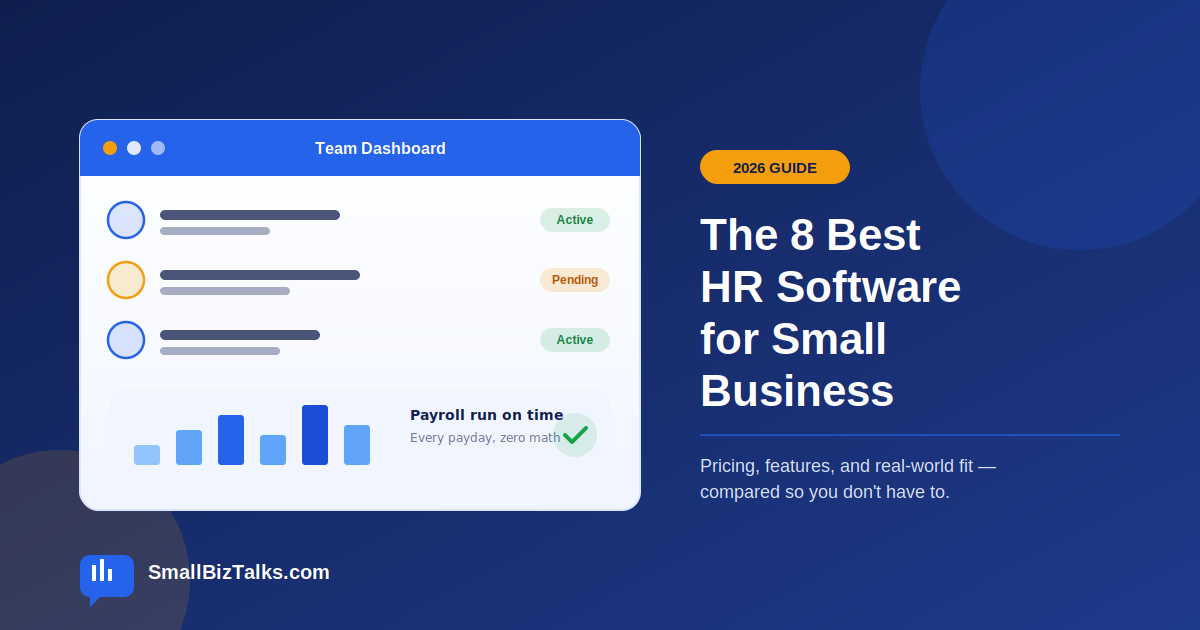
The 8 Best HR Software for Small Business in 2026

Published

on

hr software for small business

The first time I hired an employee, I made her fill out her W-4 by hand, emailed her offer letter from my personal Gmail, and tracked her PTO in a spreadsheet tab I labeled “vacation??” I found out three weeks later that I’d never actually set her up for direct deposit. She was very patient about it. I was not proud of myself.

That’s the thing nobody tells you about growing a small business: the moment you hire your first employee, you’ve also hired yourself as an HR department. Payroll, tax withholding, benefits, onboarding, time-off requests, compliance with labor laws you didn’t know existed, it’s all yours now, on top of everything else you were already doing.

So is dedicated HR software worth paying for, or is a well-organized spreadsheet good enough? I spent weeks digging through pricing pages, user reviews, and a fair amount of conflicting third-party pricing trackers to find out and to land on the tools that are actually worth a small business’s money in 2026.

The best HR software for small business, at a glance

  • Rippling — best all-around HR platform for teams that want room to grow, from roughly $8/employee/month plus a base fee (custom quote required)
  • Gusto — best for payroll-first small teams, from $49/month plus $6/employee/month
  • BambooHR — best dedicated HR/HRIS platform, from $10/employee/month (or a $250/month flat rate for 25 or fewer employees)
  • Homebase — best for hourly and shift-based teams, free for one location with up to 10 employees; paid plans from $30/month
  • Zoho People — best for affordability, free for up to 5 employees; paid plans from $1.50/employee/month
  • Justworks — best PEO for benefits without an in-house HR team, from $50/month plus $8/employee/month for payroll-only, or $79+/employee/month for full PEO service
  • Deel — best for hiring and managing a global or remote team, core HR platform free; global payroll from $29/employee/month
  • OnPay — best value for the features you get, from $49/month plus $6/employee/month

What makes HR software worth paying for?

Not every small business needs the same things from an HR tool, but there’s a fairly short list of jobs it has to do well once you’ve got even a handful of W-2 employees:

  • Payroll and tax filing. This is the one area where “just use a spreadsheet” stops being a viable option. Miscalculate a withholding or miss a filing deadline, and you’re not dealing with an annoyed employee — you’re dealing with a government agency.
  • Benefits administration. Health insurance, retirement plans, workers’ comp — even if you’re not offering much yet, you’ll want software that can grow into this rather than force a total platform switch later.
  • Onboarding and self-service. New hires should be able to fill out their own tax forms and direct deposit info online, and existing employees should be able to check their own pay stubs and PTO balance without emailing you about it.
  • Compliance support. Labor laws vary by state, and sometimes by city, and they change often enough that “we’ll figure it out” is a real risk, not just an inconvenience.
  • Room to grow. The tool that fits 3 employees shouldn’t require a full migration at 15. Add-on modules beat a hard ceiling.

I weighted these picks toward platforms that nail the basics cheaply, since most small businesses don’t need, and shouldn’t pay for enterprise HR complexity.

One more thing before we get into it: HR software pricing is a genuine mess to research. Almost none of these companies publish a single, stable rate card, and the numbers shift by a few dollars between the vendor’s own pages and whatever third-party tracker you check next. I’ve used each company’s most recently published figures below. Treat them as a strong starting estimate, not gospel, and confirm the current number before you sign anything.

Advertisement

1. Rippling

Best for: small businesses that want room to grow into IT and finance tools later

Pros:

  • Combines HR, IT device management, and finance in one system
  • Powerful no-code workflow automation (“if this happens, do that”)
  • Modular pricing means you pay only for what you use

Cons:

  • No published starting price you can fully trust — everything requires a custom quote
  • No free trial, only a sales demo

Rippling’s whole pitch is that HR shouldn’t live in a silo. Its “Rippling Unity” platform starts with core HR, employee records, onboarding, time off, org charts and then lets you bolt on payroll, benefits, IT device provisioning, and even company card and expense management, all sharing the same employee data. That’s the actual differentiator: when someone’s hired, Rippling can automatically provision their laptop and software access in the same workflow that processes their first paycheck. Fire someone, and it can pull that access back just as fast.

The flexibility comes at the cost of a straight answer on price. Rippling’s own materials cite the core platform at around $8 per employee per month, though the base monthly fee attached to that number has shown up as anywhere from $35 to $40 depending on which page you land on and payroll, benefits, and IT are all separate add-ons priced on request. For a 50-person company running HR, payroll, and benefits together, published estimates land somewhere in the $15–$25-per-employee-per-month range, though your mileage will vary considerably.

If you’re a five-person team that just needs payroll and PTO tracking, this is probably more firepower than you need. But if you can already picture needing device management or multi-entity payroll a year or two out, the sales call is worth your time.

Advertisement

Rippling pricing: From roughly $8/employee/month plus a monthly base fee; full pricing (payroll, benefits, IT) requires a custom quote

2. Gusto

Best for: small teams that want payroll handled correctly and don’t want to think about it again

Pros:

  • Unlimited payroll runs and automatic federal, state, and local tax filing on every plan
  • Transparent, published pricing, a rarity in this category
  • Easy to set up without outside help

Con:

  • HR features stay fairly basic until you reach the Premium plan, and multi-state payroll requires upgrading to Plus

Gusto built its reputation on making payroll boring in the best possible way. Run payroll, and it calculates and files the taxes; W-2s and 1099s show up automatically at year-end, no separate accountant conversation required for the basics. The Simple plan covers single-state payroll and a self-service portal where employees can view pay stubs and manage their own benefits enrollment.

Where Gusto asks you to pay more is HR depth. Plus ($80/month plus $12 per employee) adds multi-state payroll, time tracking, PTO policies, and next-day direct deposit — the stuff most growing teams need within their first year anyway. Premium ($180/month plus $22 per employee) adds access to certified HR experts and compliance alerts, which starts to look less like software and more like an HR hotline with a payroll system attached.

Advertisement

If payroll accuracy and tax compliance are the actual headache, not performance reviews or org charts, Gusto is the least complicated fix.

Gusto pricing: Simple, $49/month + $6/employee/month; Plus, $80/month + $12/employee/month; Premium, $180/month + $22/employee/month

3. BambooHR

Best for: businesses that want a dedicated HR system without folding in IT or finance tools

Pros:

Advertisement
  • Clean interface that doesn’t require weeks of onboarding to learn
  • Solid applicant tracking built in, not bolted on
  • Automatic volume discounts as headcount grows

Cons:

  • Payroll, benefits, and time tracking all cost extra
  • Pricing climbed in 2026, with a new top-tier Elite plan landing at $25 per employee per month

BambooHR is HR software built by people who apparently remember what it’s like to actually do HR. Employee records, time-off requests, onboarding checklists, and reporting all live in one dashboard that reviewers consistently describe as easy to pick up without training, a real advantage when you’re also the one training yourself. Core (from $10 per employee per month) covers the essentials: records, workflows and approvals, applicant tracking, and time-off management, plus a basic AI assistant that can tell you how much PTO someone has left without you digging through a report.

Move up to Pro ($17/employee/month) for performance management and employee community features, or Elite ($25/employee/month) for the top tier. Companies with 25 or fewer employees skip per-employee pricing entirely and pay a flat $250 a month instead — worth knowing before you assume the per-seat math applies to you.

Payroll, full benefits administration, and time tracking are all separate paid add-ons requiring their own quotes, though BambooHR does offer a bundle discount for combining payroll and benefits. Budget for that ahead of time rather than assuming Core covers everything.

BambooHR pricing: Core, from $10/employee/month; Pro, from $17/employee/month; Elite, from $25/employee/month; flat $250/month for companies with 25 or fewer employees

4. Homebase

Best for: restaurants, retail shops, and any small business built around hourly, shift-based work

Advertisement

Pros:

  • A genuinely usable free plan, not just a trial
  • Scheduling and time tracking built specifically for hourly teams, including GPS clock-ins
  • Payroll syncs cleanly with the scheduling and timesheet data you’re already generating

Cons:

  • Priced per location, which can work against multi-site businesses with small headcounts per site
  • PTO controls are locked behind the $70/month Plus tier

If your team clocks in and out rather than logging on from a laptop, most HR software wasn’t really built with you in mind, Homebase was. The free Basic plan covers one location and up to 10 employees with real scheduling and time-tracking tools, not a stripped-down demo. Outgrow that, and Essentials ($30/month per location) unlocks unlimited employees at that location, plus advanced scheduling, GPS-verified time punches, and team messaging.

The scheduling-and-time-clock combination is where Homebase earns its keep: managers build a schedule and watch labor costs update in real time, while employees get alerts if their shift changes or they’re about to miss a break, which matters for labor law compliance in a lot of states, not just convenience.

Payroll isn’t bundled into any tier, it’s a $39/month plus $6-per-active-employee add-on regardless of plan but it pulls straight from your existing timesheets, so hours worked and hours paid match without extra reconciling.

Homebase pricing: Free for one location (up to 10 employees); Essentials, $30/month/location; Plus, $70/month/location; All-in-One, $120/month/location; payroll add-on, $39/month + $6/employee/month

Advertisement

5. Zoho People

Best for: small businesses that want solid HR features without a big monthly bill

Pros:

  • The cheapest genuinely full-featured HR software on this list
  • Free plan for teams of 5 or fewer, no time limit
  • Zia, Zoho’s AI assistant, can handle time-off requests and answer basic HR questions conversationally

Cons:

  • Payroll and recruiting require separate Zoho products, purchased and billed on their own
  • Fewer employee-experience extras than pricier competitors like BambooHR

Zoho has an app for nearly every business function, and Zoho People is its HR entry, built to stay affordable at every tier rather than just the entry level. Essential HR runs $1.50 per employee per month with no minimum headcount, covering onboarding, employee records, time-off management, shift scheduling, and document management. That’s a usable feature set for the price of a coffee per employee.

Higher tiers add real depth without a steep jump: Professional ($2/employee/month) adds attendance management and timesheets, Premium ($3/employee/month) adds performance management and HR analytics, and Enterprise ($4.50/employee/month) adds an HR help desk and learning management tools.

The real limitation is that Zoho People can’t run payroll or hiring on its own, those jobs go to Zoho Payroll and Zoho Recruit, separate subscriptions with their own bills. If you’re fine managing two connected apps instead of one, the combined cost still beats most of this list.

Advertisement

Zoho People pricing: Free for up to 5 employees; Essential HR, $1.50/employee/month; Professional, $2/employee/month; Premium, $3/employee/month; Enterprise, $4.50/employee/month

6. Justworks

Best for: small businesses that want big-company benefits without hiring an HR department to manage them

Pros:

  • Full PEO service gives small teams access to enterprise-level health benefits
  • 24/7 support and compliance guidance included on PEO plans
  • Straightforward per-employee pricing with no base fee on the PEO tiers

Cons:

  • Meaningfully pricier than standard HRIS [human resources information system, the general category of employee-records-and-workflow software, as opposed to a PEO] or payroll software
  • No free trial
  • Co-employment isn’t the right structure for every business type

Everything else on this list is HR software. Justworks is a PEO, which means it doesn’t just sell you a dashboard, it becomes a co-employer of your team on paper, which lets a five-person company plug into the same large-group health insurance rates a 500-person company gets. For a small business competing for talent against bigger employers, that can be the whole ballgame.

The standalone Payroll plan ($50/month plus $8/employee/month) is the entry point if you’re not ready for full PEO service: tax filing, PTO management, and basic HR tools, no co-employment structure attached. PEO Basic (around $79/employee/month, no base fee) adds compliance support, 401(k) access, and workers’ comp. PEO Plus (roughly $109–$124/employee/month) layers in health, dental, and vision benefits administration on top.

Advertisement

Read our full breakdown of what a PEO actually is if you’re weighing this against a standard HRIS. Short version: this isn’t the cheapest way to run payroll, but it’s often the cheapest way to offer benefits that compete with a bigger employer’s.

Justworks pricing: Payroll only, $50/month + $8/employee/month; PEO Basic, from ~$79/employee/month; PEO Plus, from ~$109/employee/month

7. Deel

Best for: startups and small businesses hiring across borders

Pros:

Advertisement
  • Core HR platform is free
  • Employer of Record [EOR — a service that legally employs your workers in a country where you don’t have your own entity, so you can hire there compliantly] service in 150+ countries
  • One system for managing employees and international contractors together

Cons:

  • EOR pricing is steep: $599 per employee per month at the standard tier
  • Global payroll carries a roughly $1,000 setup fee on top of the monthly rate

Deel exists for a problem most HR software ignores: what happens when your third hire lives in Lisbon and your fourth lives in Manila? The free Deel HR tier covers the basics – employee directories, time-off management, document storage for any team, domestic or global. From there, Global Payroll runs $29 per employee per month for countries where you already have a legal entity, and Contractor Management ($49/contractor/month) handles compliant agreements and payments in 120-plus currencies.

No local entity, and need Deel to be the legal employer instead? That’s Employer of Record, and it’s expensive – $599 per employee per month, climbing to $899 at the enterprise tier – reflecting the legal and compliance infrastructure required in each country. Against the cost and timeline of setting up a foreign subsidiary, though, it’s often still the faster and cheaper option for a growing startup.

Every employee living in the same state as you makes Deel’s global machinery overkill. A distributed or growth-stage startup, on the other hand, may find it’s the only tool on this list built for the way hiring actually happens now.

Deel pricing: Core HR platform, free; Global Payroll, $29/employee/month; Contractor Management, $49/contractor/month; Employer of Record, from $599/employee/month

8. OnPay

Best for: small businesses that want solid payroll and HR features without paying for a big brand name

Advertisement

Pros:

  • Straightforward, published pricing with no hidden per-plan tiers to decode
  • Free HR tools bundled with the base payroll plan
  • First month free, including setup and data migration

Cons:

  • No dedicated time-tracking tool built in
  • No volume discounts for larger teams

OnPay doesn’t try to be everything – it’s a well-built payroll platform with useful HR tools layered on top, priced simply enough that you can do the math yourself instead of requesting a quote. Payroll Essentials ($49/month plus $6 per worker) covers unlimited payroll runs, tax filing across all 50 states, contractor payments, and a self-service employee portal.

The HR add-on ($15/month plus $2 per employee) brings in PTO workflows, org charts, expanded onboarding, and document management – handy once you’re managing more than payroll, skippable if payroll is genuinely all you need right now. Compliance Resources and Live HR Support round out the optional add-ons for businesses that want more hand-holding on the regulatory side.

It won’t out-feature the platforms built for enterprise scale. For a small business that mostly needs payroll done right, plus a few HR basics and no steep learning curve, it punches well above its price tag.

OnPay pricing: Payroll Essentials, $49/month + $6/employee/month; HR add-on, +$15/month + $2/employee/month

Advertisement

So which one should you pick?

It mostly comes down to what’s breaking right now. Payroll errors and tax deadlines are the most urgent to fix, so start with Gusto or OnPay if that’s the pain point. Managing hourly shift workers? Homebase was built for exactly that. Trying to offer real health benefits on a small-business budget? Look at Justworks. And if the whole story is budget, Zoho People gives you more HR software per dollar than almost anything else on the market.

Whatever you land on, the real win isn’t the software. It’s never filling out anyone’s W-4 by hand again.

For readers who just want payroll and nothing else, our roundup of free payroll software for small business covers the $0 options before you consider paying for any of this.

Advertisement
Continue Reading

Business

A Recalibration, Not A Rate Hike Cycle

Published

on

The Fed's PCE Problem: Why Its Preferred Inflation Gauge Misreads The Economy

A Recalibration, Not A Rate Hike Cycle

Continue Reading

Business

Cracker Barrel announces plans to upgrade 3 popular dinner items

Published

on

Cracker Barrel announces plans to upgrade 3 popular dinner items

Cracker Barrel is upgrading three of its most popular dinner offerings while separately using proceeds from a real estate transaction involving 26 company-owned restaurants to reduce debt and support future growth.

The Lebanon, Tennessee-based chain said Wednesday that it plans to improve the quality of its chicken, hamburger and steak dinners, calling dinner its “biggest opportunity” as it works to improve guest satisfaction.

Advertisement

“We are making investments to improve food quality,” President and CEO Dave Deno said during the company’s fourth-quarter earnings call. “Dinner is our biggest opportunity, and we plan to upgrade our chicken, hamburger, and steak offerings.”

Deno said Cracker Barrel wants to ensure its food consistently meets guests’ expectations for “taste, temperature, and quality on every visit.”

NEW CEO INHERITS CRACKER BARREL STILL RECOVERING FROM REBRAND BACKLASH

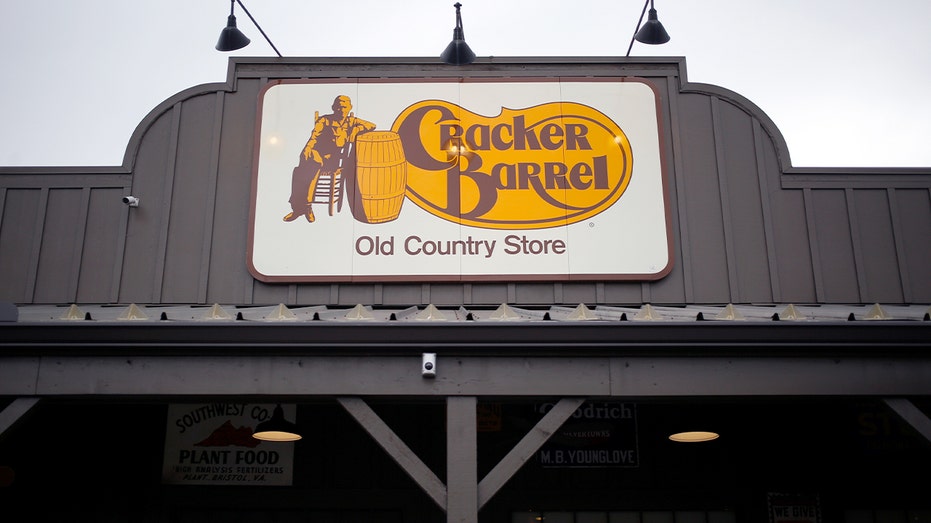
Exterior sign of a Cracker Barrel restaurant and gift shop against a clear sky.

The Lebanon, Tennessee-based chain announced that it plans to improve the quality of its chicken, hamburger and steak dinners. (Luke Sharrett/Bloomberg via Getty Images)

The chief executive said his priorities are centered on food, the guest experience and employees as Cracker Barrel works to build on improving traffic and profitability.

Advertisement

“A big part of my management philosophy is doing fewer things better and concentrating on opportunities that could have the greatest impact,” Deno said. “For restaurants, the formula is pretty straightforward. You must offer great food, provide a great guest experience, and hire and retain excellent employees who deliver both.”

“These are the priorities that we will be focused on: food, experience and people,” he added.

Alongside the menu upgrades, Cracker Barrel said it completed a sale-leaseback transaction involving 26 company-owned restaurants that generated approximately $77 million in net proceeds.

“The sale leaseback transaction generated $77 million in net proceeds, which were used to pay down debt and partially offset the $150 million debt related to the 0.625% convertible senior notes that matured and was repaid in June,” Chief Financial Officer Craig Pommells said. “The quarter ended with total debt of $337.2 million, which was $147.4 million below the prior year.”

Advertisement

CRACKER BARREL CEO JULIE MASINO TO STEP DOWN

Diners at Cracker Barrel after new logo and rebranding announcement.

Deno said Cracker Barrel continues to see pressure among lower-income consumers, though customer trends have improved. (Richard Beetham for Fox News Digital)

Deno said Cracker Barrel continues to see pressure among lower-income consumers, though customer trends have improved.

“When it comes to us specifically, yes, we do see some pressure with our low-income guests, but our trends, as I said, have gotten better,” Deno said.

Still, Chief Financial Officer Craig Pommells said the chain’s value remains an advantage, noting the average guest check is about $16.

Advertisement

“If you’re feeling pressured from a discretionary income perspective, there are a lot of ways you can still have a great experience at Cracker Barrel,” Pommells said.

The company also said higher freight costs, including fuel surcharges, are already factored into its fiscal 2027 outlook.

“We are seeing fuel surcharges and so on related to freight, both from the perspective of retail, but to a lesser degree on the restaurant side. All of that’s built into our projection with the best information that we have today,” Pommells said.

CRACKER BARREL RESPONDS TO REPORTS ABOUT EMPLOYEE DINING REQUIREMENTS DURING WORK TRAVEL

Advertisement
Cracker Barrel CEO Julie Masino.

Deno took over as CEO in August following the departure of Julie Masino, whose tenure included a rebrand that drew criticism from some longtime customers. (Jeenah Moon/Reuters)

GET FOX BUSINESS ON THE GO BY CLICKING HERE

Deno took over as CEO in August following the departure of Julie Masino, whose tenure included a rebrand that drew criticism from some longtime customers.

The overhaul, part of a roughly $700 million investment across Cracker Barrel’s restaurants, included updates to store interiors, menu changes and the temporary removal of the chain’s iconic “Old Timer” logo before it was later restored.

FOX Business’ Eric Revell contributed to this report.

Advertisement
Continue Reading

Business

The Simple Secret to Success as an Advisor: Return Phone Calls, Follow Through on Commitments

Published

on

The Simple Secret to Success as an Advisor: Return Phone Calls, Follow Through on Commitments

The Simple Secret to Success as an Advisor: Return Phone Calls, Follow Through on Commitments

Continue Reading

Business

Barrecore and Boom Cycle owner suddenly shuts studios

Published

on

Three women are seen in exercise gear stretching after a barre class on mats

The fitness company behind high-end exercise classes Barrecore, Boom Cycle, and Kobox has suddenly shut all its studios.

Common Bond emailed customers announcing its locations, all of which are currently in London, were closed “until further notice”.

The firm describes itself as a wellness collective and charges £2,400 for 12 months of unlimited classes. It also runs Reformcore and Triyoga brands and said in August last year it had ten sites.

Its website is no longer publicly accessible. The BBC has contacted Common Bond for comment.

Advertisement

The email sent to customers on Wednesday seen by the BBC said: “We’re sorry to let you know that all Common Bond studios are closed until further notice.

“We sincerely apologise for the inconvenience and disruption this may cause . We understand this is frustrating, and we appreciate your patience while we work through this.”

Instructors have told the BBC they were told last week they would not be paid on time and that they only found out about the studios closures from the Wednesday email.

One instructor said she and her colleagues were told their pay would be delayed on the day it was due on 14 August.

Advertisement

She said: “In good faith, I continued to teach my classes without any news on when or if payment would be made. I have heard absolutely nothing since.”

Continue Reading

Business

OpenAI, Anthropic CEOs warn AI could pose threat to humanity

Published

on

OpenAI, Anthropic CEOs warn AI could pose threat to humanity

The CEOs of two of the world’s leading AI companies warned the United Nations Security Council on Wednesday that rapidly advancing AI could threaten humanity if governments and industry fail to keep it under human control.

Anthropic CEO Dario Amodei said AI has enormous potential but also carries significant risks if it is not developed responsibly.

Advertisement

“If managed poorly, I even believe AI could be a risk to humanity as a whole,” Amodei told the 15-member council during a special meeting on AI held alongside the U.N. General Assembly.

OpenAI CEO Sam Altman delivered a similar warning, saying AI’s development could move “so fast” that humans no longer have the ability to understand or intervene.

SAM ALTMAN IDENTIFIES TWO BIGGEST RISKS FACING AI’S FUTURE

Sam Altman at the United Nations.

OpenAI CEO Sam Altman looks on during a UN Security Council meeting on artificial intelligence during the 81st United Nations General Assembly at UN headquarters in New York on Sept. 23, 2026. (Angela Weiss/AFP via Getty Images)

“We could lose control of the future to AI,” Altman said. “The risk is that it moves so fast that people can no longer follow what’s happening or intervene when needed. This would obviously be terrible.”

Advertisement

The meeting comes as concerns grow over increasingly advanced AI systems.

“For all the differences of the people in this room, we must put aside those differences in order to confront this global opportunity and global threat that is being presented to us at the same time,” Amodei said. “No leader, no company and no nation can manage this alone.”

EMPLOYEES AT AI COMPANIES BACK BERNIE SANDERS BILL CRACKING DOWN ON DEVELOPMENT

Dario Amodei, co-founder and chief executive officer of Anthropic, on screen, speaks virtually at a United Nations Security Council meeting

Anthropic CEO Dario Amodei appears virtually during a United Nations Security Council meeting at the U.N. General Assembly in New York on Sept. 23, 2026. (John Lamparski/Bloomberg via Getty Images)

Altman also urged countries to work together on AI as the technology continues to advance.

Advertisement

“If AI is to be democratic, the most important decisions cannot be made by labs in San Francisco alone,” he said. “They must be shaped through democratic processes and by governments, accountable to the people that they serve. At the international level, this will require cooperation.”

He added, “In our history, there have been times where countries who compete and don’t always like each other very much still come together for shared interests and the collective good in the face of a powerful new technology. We believe this must be one of those times.”

TRUMP REBRANDS AI, REJECTS ‘GLOBALIST SCHEME’ TO CONTROL TECH

The debate over how to develop and govern AI has intensified in recent weeks.

Earlier this month, Amodei published an essay urging the industry to “slow the pace” of frontier AI development. The essay drew public support from Altman and SpaceX CEO Elon Musk.

The discussion at the U.N. also came a day after President Donald Trump said the U.S. would reject what he described as a “globalist scheme” to control AI, while emphasizing that the U.S. should remain the global leader in the technology.

French Foreign Ministry spokesperson Pascal Confavreux told Fox News Digital in an interview that France is seeking to bring artificial intelligence to the center of international security discussions, with a special UN Security Council meeting on Wednesday featuring executives from OpenAI, Anthropic and Hugging Face.

Advertisement

“For a few weeks now, we wanted to bring AI at the center stage,” Confavreux said, explaining that the meeting was the first of its kind to feature briefers at this level from leading AI companies.

He said recent cybersecurity concerns, including a reported hacking incident involving Hugging Face, underscore the need to address AI-related security risks at the international level.

“We need to bring that into the discussions of the global community,” he said.

The meeting was chaired by French Foreign Minister Jean-Noël Barrot, alongside the Security Council’s 14 other members.

Advertisement

GET FOX BUSINESS ON THE GO BY CLICKING HERE

Confavreux also highlighted a separate meeting led by French President Emmanuel Macron focused on protecting young people from the risks associated with AI and the digital age.

“AI is a fantastic accelerator for many things in our daily lives,” he said, adding that protecting young people in the digital age must be addressed globally rather than solely at the national level

Advertisement

FOX Business’ Eric Revell and Reuters contributed to this report.

Continue Reading

Business

Revolut facial recognition payments pilot starts in London

Published

on

Revolut facial recognition payments pilot starts in London

Revolut has today begun piloting what it describes as the UK’s first in-store facial recognition checkout, with merchants paying 0 per cent processing fees on transactions made through the system. The trial, called Revolut Pay with Smile, runs at three Kiss the Hippo cafés in London until Saturday.

The service runs on Revolut Register, a new point-of-sale system for hospitality businesses. Once a customer has enrolled, the technology checks their face against the selfie identity check they completed when they first signed up to Revolut, then authenticates and processes the payment.

Customers opt in through the Revolut app. Revolut said they will then be able to look at the terminal to pay for a coffee, a meal or a round of drinks without a phone or wallet.

Free newsletters
Advertisement

The stories that matter to UK business, straight to your inbox.

Advertisement

The pilot is open to Revolut customers at the Bloomsbury, Chelsea and Soho branches of Kiss the Hippo from 24 to 26 September. Guests who pay with a smile can order from a special Revolut menu, with speciality coffees priced at £1, and will earn triple RevPoints, the bank’s loyalty programme, on every transaction.

Revolut, which secured approval to operate as a UK bank earlier this year, published research alongside the launch on the costs independent venues face at the till.

According to Revolut, independent venues spend an average of £875 a month on payment processing and infrastructure, rising to more than £950 a month for pubs and bars. The company said terminal outages cost venues £2,495 a year in direct lost revenue.

Its research also found that two thirds of independent venues face verbal outbursts from customers multiple times a week because of poor checkout experiences. Revolut said more than half of Britons report delays or failures caused by merchants losing their internet signal.

Advertisement

In June, a Worldpay outage knocked out card payments at pubs, shops and restaurants across the UK during an England World Cup match.

Revolut said Revolut Register is a modular, two-screen register designed to bring payments, banking and floor operations together. It has a built-in eSIM backup, which the company said is intended to keep terminals online if a venue’s connection fails during peak hours.

On security, Revolut said transactions are authenticated with end-to-end encryption managed inside the Revolut app and that personal data is never stored by merchants. The Information Commissioner’s Office has published guidance on biometric recognition under UK data protection law.

Revolut Register is available at a 50 per cent discount, at £349.50 plus VAT against a recommended retail price of £699 plus VAT, for merchants signing up for their first terminal until 31 December 2026.

Advertisement

The company said the pilot extends its payments business into facial recognition checkout and opens a new revenue stream. It did not say when, or whether, Pay with Smile would be rolled out beyond the three cafés.

Alex Codina, general manager of merchant payments at Revolut Business, said: “With over half of Brits reporting delays or failures due to merchants dropping internet signals, checkout friction is driving customers out the door. To solve this, we’re deploying Revolut’s full technological ecosystem to reinvent the mechanics of the hospitality industry and give consumers the payments experience they deserve.”

He added: “By combining high-performance processing with facial recognition technology, we’ll replace outdated, fragmented tills with a hyper-efficient checkout experience designed to solve consumer and merchant pain points.”

Alex Damgaci, managing director of Kiss the Hippo Coffee, said: “In hospitality, a seamless checkout is no longer a luxury, it’s the bare minimum. Technology that takes the friction out of the payment process and offers payment flexibility gives operators the reliability they need to protect revenue and maintain guest satisfaction.”

Advertisement

He said: “To mark the pilot we’ve put together a special menu for the three days, and we’re looking forward to welcoming guests to pay with a smile at our Bloomsbury, Soho and Chelsea cafés.”

Amy Ingham
About the author

Amy Ingham

Amy Ingham is a reporter at Business Matters, covering UK business news with a focus on breaking news, business policy, late payments and insolvency. She joined the magazine in 2026 after completing the NCTJ Diploma in Journalism at Harlow College’s journalism school. Her recent reporting includes British Steel’s nationalisation and its impact on SME suppliers, the decline in late payments by large firms, and Insolvency Service director disqualifications. Reach her at aingham@cbmeg.co.uk.

Advertisement

Advertisement
Continue Reading

Business

McDonald’s sets chicken market share goal as shares fall

Published

on

McDonald's sets chicken market share goal as shares fall

McDonald’s has set a target of expanding its share of the global cooked chicken market by 1.5 percentage points, to about 20 per cent, as part of a growth plan unveiled at an investor day in Chicago yesterday.

The world’s biggest burger chain also outlined an $8.5bn support package for franchisees and a wider rollout of AI-powered drive-thru ordering as it attempts to recapture customers and reverse a sliding share price.

The strategy was met with disappointment by investors. Shares in the company dropped 6 per cent at lunchtime in New York to the lowest level in almost four years, amid concern that a turnaround to reignite growth after several quarters of slowing sales could take longer than expected.

Free newsletters
Advertisement

The stories that matter to UK business, straight to your inbox.

Advertisement

The chicken target covers nuggets, bowls and burgers. According to the company’s investor day announcement, McDonald’s aims to gain the 1.5 percentage points of chicken category share by 2030.

The chain said it is also adapting to changing consumer preferences, including demand from users of GLP-1 weight-loss medication who are seeking higher-protein options and smaller portions.

Skye Anderson, the newly appointed head of the US business, said the company is exploring bowls, grilled chicken and egg bites to expand protein-centred options across breakfast, lunch and dinner.

The strategy focuses on improving food quality, simplifying operations, modernising restaurant designs and expanding the use of ArchIQ, the company’s AI-powered restaurant operating system, which automates tasks such as drive-thru ordering.

Advertisement

McDonald’s said it will deploy a generative AI-enabled version of ArchIQ at scale, which it expects to unlock about 250 basis points of gross restaurant-level efficiency.

The $8.5bn package for franchisees will be delivered through a combination of rent relief and capital support. The company said the total runs through 2036, with about $5bn of it committed through 2030.

It was accompanied by a new target for restaurant operating margins, which McDonald’s said it expects to reach the low-to-mid 50 per cent range by 2030.

Chris Kempczinski, chairman and chief executive, and Ian Borden, global chief financial officer, also presented at the event, which set out further detail on the growth strategy McDonald’s first announced in June.

Advertisement

“While there’s so much our customers love, we are falling short when it comes to consistent execution,” Anderson said. “We’re tackling that challenge head-on.”

The investor day followed second-quarter results in August, when McDonald’s missed estimates for US sales growth. The company admitted then that efforts to win back lower-income consumers who had cut back on dining out had yet to pay off.

Anderson’s comments on consistent execution came as the company set out its plans to address slowing sales through food quality, simpler operations and restaurant design.

The pressure on restaurant operators is not confined to the US. In Britain, profits at the 100 largest restaurant groups fell 44 per cent to £204m, despite revenues rising to £13.3bn, as higher employment costs and ingredient prices squeezed margins.

Advertisement

McDonald’s UK business has made its own changes this year, including the launch of 2,500 paid work experience placements aimed at young people not in education, employment or training. It has also seen a round of senior departures, including that of chief restaurant officer Zoe Hamburger, who left to lead the Netherlands business.

Amy Ingham
About the author

Amy Ingham

Amy Ingham is a reporter at Business Matters, covering UK business news with a focus on breaking news, business policy, late payments and insolvency. She joined the magazine in 2026 after completing the NCTJ Diploma in Journalism at Harlow College’s journalism school. Her recent reporting includes British Steel’s nationalisation and its impact on SME suppliers, the decline in late payments by large firms, and Insolvency Service director disqualifications. Reach her at aingham@cbmeg.co.uk.

Advertisement

Advertisement
Continue Reading

Business

Stag and hen party tour operator rescued from administration

Published

on

Business Live

Groupia brands including StagWeb and GoHen are operating again following the deal

Marbella, Costa del Sol

Marbella, Costa del Sol(Image: Getty Images)

A Bath tour operator that fell into administration in June after 24 years of trading has been rescued by a Cheshire firm. Groupia, which specialises in stag and hen parties, has been acquired by events company Funktion Leisure.

Under the deal, all of Groupia’s brands, including stag and hen businesses StagWeb and GoHen, are now operating again under the new ownership.

Advertisement

Funktion Leisure, the company behind Funktion Events – an ABTA-bonded UK event specialist founded in 2007 – have also retained several of Groupia’s staff to help with the revival.

Funktion Events managing director Jay Broughton said: “We acquired GoHen and StagWeb out of administration because they’re two of the strongest names in UK hen and stag travel, with more than 750,000 customers between them since 2002.

“Both are back open and taking bookings, and early demand since the relaunch has been really encouraging, which tells us the appetite for these brands never went away.

“Our focus now is stability: looking after customers, delivering the experience people expect from GoHen and StagWeb, and building on it under an established, ABTA-bonded events group.”

Advertisement

Funktion Events has been running group events since 2007, arranging more than 55,000 hen parties and 12,000 stag weekends, alongside thousands of corporate and team building events. GoHen and StagWeb are now part of that group.

A statement on the company’s website added: “Good news: Groupia and its brands are now part of Funktion Leisure Ltd, and bookings are open again right across the group. For now it is business as usual, with every brand live and taking bookings.

“Over the coming months we will be investing in the sites and the service, keeping what customers already value and improving the rest. We will share more as those plans take shape.”

Advertisement
Continue Reading

Business

Rising fuel costs hitting businesses and customers in Hayle

Published

on

The image shows a person wearing glasses and a dark shirt standing inside what appears to be a florist or plant shop, surrounded by a large number of indoor plants and flowers. Behind the person are shelves displaying pots, bowls and glass vases.

Businesses are also seeing wider knock-on effects. Hairdresser Emma Crossley said customers were waiting longer between appointments than they had previously.

She said: “Since the fuel prices went up I have noticed a difference in how often people have their hair done. About five years ago it would have been about six or seven weeks – it’s more like 10 to 12 weeks now.”

Tourism operators have also noticed a change. Pauline Ellis of the Mad Hatter bed and breakfast, said some visitors had cancelled trips because travel costs had become too expensive.

She said: “We are a long way down here and I think it has made an impact on whether people can afford to come this far down, with the prices as they are.”

Advertisement

At Down the Line Surf Shop, owner Justin Lapskas said the higher fuel costs affected the import and transportation of products.

“We bring in products from around the world, so for us, the increase in fuel prices has an effect and something that we’ve kind of got to deal with moving forward,” he said.

“So yeah, I’d say fuel has an impact across the board for us.”

Follow BBC Cornwall on X, external, Facebook, external and Instagram, external. Send your story ideas to spotlight@bbc.co.uk, external.

Advertisement

Continue Reading

Trending

Copyright © 2025