Connect with us

Business

KOSPI Plunges Nearly 5% as Chip Stock Selloff Triggers Trading Halt as SK Hynix and Samsung Tumble

Published

on

Earnings News: Micron Technology Inc (NASDAQ: MU)

SEOUL — South Korea’s benchmark KOSPI index plunged 4.58% Thursday, falling 301.88 points to close at 6,296.38, as a sharp selloff in the country’s dominant memory chipmakers triggered an automatic trading halt and rattled a market that has been one of the world’s most volatile in 2026.

The decline came during a turbulent Asian trading session in which the KOSPI briefly plunged as much as 5%, activating the exchange’s “sidecar” mechanism, an automatic circuit breaker that temporarily suspends programmatic sell orders once futures fall a set threshold within a short window. Thursday’s drop marked the latest in a string of sharp single-session swings that have defined trading on the Korea Exchange throughout the year.

Chipmakers Lead the Losses

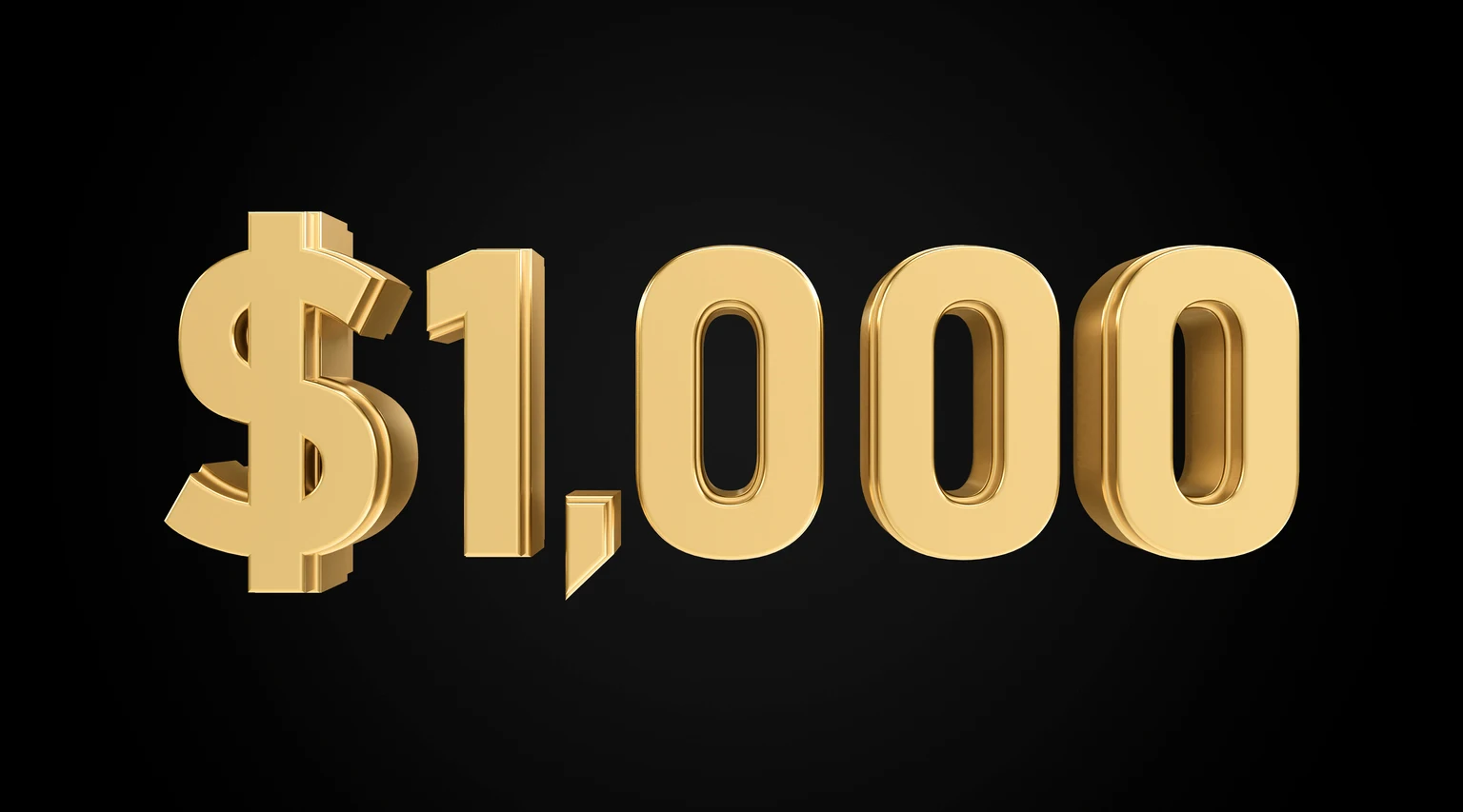
The decline was driven overwhelmingly by South Korea’s two largest semiconductor companies, which together account for roughly half of the KOSPI’s total market capitalization. SK Hynix plunged 10.37% to close at 1,495,000 won, or approximately $1,049, while Samsung Electronics fell 6.30% to 230,500 won. The weakness in both stocks weighed heavily on the broader index given their outsized influence on its overall performance.

Advertisement

The selloff extended beyond Korea’s borders. Japan’s Nikkei 225 fell 617.18 points, or 0.93%, to close at 65,683.26, with Japanese memory chipmaker Kioxia slumping 10.24% to 48,740 yen, or roughly $309. SoftBank Group shares fell 4.41% to 5,695 yen even after the company reported a first-quarter net profit of 347.33 billion yen, far exceeding the market’s estimate of 165.83 billion yen, illustrating how thoroughly sector-wide pessimism overshadowed individual company results during the session.

A Global Memory Chip Reassessment

Analysts pointed to weakness in U.S. memory chip companies SanDisk and Western Digital as a key trigger behind the broader Asian selloff, with the decline in those American stocks feeding directly into the pessimism surrounding SK Hynix, Samsung and Kioxia during Thursday’s session. Other Korean companies with significant technology and industrial exposure also posted steep losses, including SK Square, down 10.2%, and SK Inc, down 9.1%, while Hyundai Motor fell 1.6%, HD Hyundai Heavy Industries slid 1.2%, and LS Electric dropped 3.8%.

Market analysts have described the pullback as reflecting renewed caution around the memory chip industry’s cyclical outlook rather than a broader systemic risk-off event across markets. Frank Benzimra, head of Asia equity strategy at Societe Generale in Hong Kong, has previously characterized similar episodes of sector-specific selling in the Korean market by noting that the stocks experiencing the steepest declines tend to be those in which investors are carrying the most leverage, adding that it remains difficult to predict when such selloffs will run their course.

Advertisement

A Bright Spot Amid the Selloff

Not every part of the Korean market moved in tandem with Thursday’s decline. The tech-heavy KOSDAQ index bucked the broader trend, rising a modest 0.26% even as the main KOSPI board tumbled, suggesting the selloff was concentrated primarily among the large-cap semiconductor names that dominate the KOSPI rather than reflecting broad-based selling across smaller and mid-cap Korean equities.

South Korea’s underlying economic fundamentals also offered some counterbalance to Thursday’s stock market weakness. The country reported a record current account surplus of $49.73 billion in June, driven by strong semiconductor exports, a figure that reinforced the broader strength of Korea’s export sector even as chip stock valuations came under renewed pressure. Separately, reports of progress toward an interim transit arrangement between Iran and Oman helped ease broader concerns over potential disruptions to shipping through the Strait of Hormuz, providing some support to global risk sentiment that helped limit the scale of Thursday’s losses relative to some of the market’s sharper declines earlier this year.

A Year Defined by Extreme Volatility

Advertisement

Thursday’s plunge is only the latest chapter in what has been an extraordinarily volatile year for Korean equities. The KOSPI reached an all-time high of 9,385.59 in June, a level that reflected a structural re-rating of Korean technology stocks amid surging global demand for AI infrastructure and memory chips. That rally was symbolically capped in late June when SK Hynix’s market capitalization briefly overtook Samsung Electronics, marking the first time in more than 25 years that any Korean company had claimed the top spot on the exchange.

Since that peak, however, the index has experienced repeated sharp reversals, including multiple single-session declines of 5% to 10% and numerous circuit breaker and sidecar activations throughout the year, a pace of volatility that market commentators have said has already exceeded the frequency seen during the 2008 global financial crisis. Despite the scale of these swings, the KOSPI has remained among the world’s best-performing major indexes for 2026 on a cumulative basis, reflecting just how dramatic the market’s earlier rally had been before this year’s series of sharp pullbacks began eroding those gains.

Retail Investors Feel the Strain

South Korea’s famously risk-tolerant retail investor base has been particularly exposed to the market’s swings, with many traders having built concentrated positions in AI-linked technology stocks using margin financing during the earlier rally. As prices have periodically reversed sharply, some investors have described a growing sense of frustration with the market’s extreme volatility, with public criticism at times directed toward government economic policy amid the repeated boom-and-bust cycles.

Advertisement

What Comes Next

With Thursday’s decline once again concentrated heavily in the semiconductor sector that has both driven the KOSPI’s remarkable gains and fueled its sharpest reversals this year, investors are likely to continue watching global memory chip demand signals closely in the sessions ahead. The interplay between Korea’s export-driven economic strength, reflected in its record current account surplus, and the continued volatility surrounding its dominant technology stocks is expected to remain the central tension shaping the direction of the Korean market for the remainder of 2026.

Continue Reading
Click to comment

You must be logged in to post a comment Login

Leave a Reply

Business

Megayacht Amadea sold for $187M to Dubai billionaire with Trump ties

Published

on

Megayacht Amadea sold for $187M to Dubai billionaire with Trump ties
Superyacht 'Amadea' sold for $187 million: Here's what to know

A version of this article first appeared in CNBC’s Inside Wealth newsletter with Robert Frank, a weekly guide to the high-net-worth investor and consumer. Sign up to receive future editions, straight to your inbox.

A megayacht once valued at more than $300 million was sold by the U.S. government for $187 million to an Emirati billionaire whose family has a business partnership with the Trump Organization, according to government documents and yacht industry executives.

Amadea, a 348-foot yacht seized by federal authorities in 2022, was part of a financial crackdown on Russian oligarchs following the country’s invasion of Ukraine. After a lengthy legal battle, the yacht was auctioned off by order of the Justice Department in September.

Neither the price nor the buyer was announced by the government, yet a government document reveals the purchase price was $187 million. The buyer was Abbas Sajwani, the 27-year-old son of Dubai property tycoon Hussain Sajwani, whose company DAMAC Properties has partnered with the Trump Organization.

Advertisement

Hussain Sajwani appeared with President Donald Trump at Mar-a-Lago last year to announce a $20 billion investment in U.S. data centers by one of Sajwani’s companies. At the press conference, Trump introduced Sajwani as “one of the most respected business leaders in the Middle East and indeed the world.”

Neither Hussain Sajwani, Abbas Sajwani nor DAMAC responded to requests for comment. The Department of Justice and White House declined to comment.

CEO of DAMAC Properties Hussain Sajwani makes remarks next to U.S. President-elect Donald Trump, at Mar-a-Lago in Palm Beach, Florida, U.S. January 7, 2025.

Carlos Barria | Reuters

Advertisement

In 2022, the U.S. seized Amadea off the coast of Fiji as part of a crackdown on Russian oligarchs. The seizure was the highest profile test case for “Task Force KleptoCapture,” a program created by the Biden administration to sanction Russian oligarchs and seize the assets of violators. The  Justice Department alleged Amadea was owned by Suleiman Kerimov, a Russian mining tycoon who had been under sanctions since 2018.

U.S. authorities hired a new crew and sailed Amadea to San Diego. It remained docked in San Diego Bay for three years during a lengthy legal battle over its ownership. To maintain the yacht and crew, and pay insurance and docking fees, the government spent between $600,000 to $1 million a month, or an estimated $36 million in total, during its time under U.S. control.

After a forfeiture order from a U.S. District Court judge, Amadea was ordered to be auctioned on Sept. 10, 2025. The auction, which took place a month later, was overseen by the U.S. Marshals Service, a part of the Justice Department. The director of the Marshals Service is Gadyaces Serralta, who was appointed by Trump and sworn in on Aug. 1, weeks before the Amadea auction. The bids were sealed and submitted to the Marshals Service, which was in charge of selecting the winning bid.

The Marshals Service never announced the winner. 

Advertisement

“The USMS does not routinely disclose or confirm the identity of the buyer when selling assets,” a spokesperson for the Marshals Service said in a statement. “That information is withheld under federal privacy exemptions unless ordered released by federal courts.”

When it was seized, the Justice Department cited various valuations for Amadea. Early filings by the justice department cited a range of “between $300 million and $500 million” and similarly of “more than $300 million.” In a 2024 filing, the Justice Department quoted an independent valuation of $230 million.

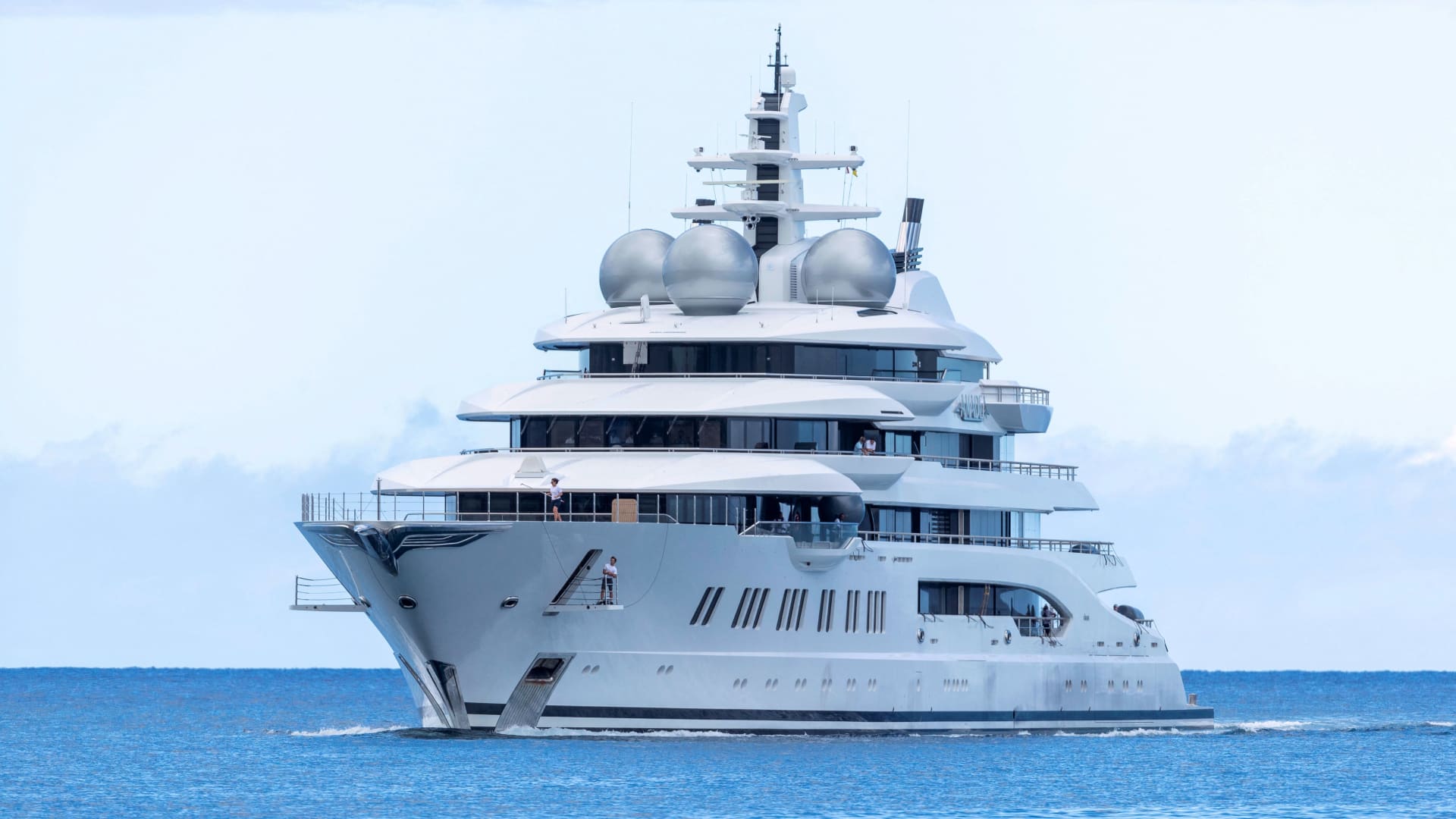
Mega-yacht Amadea of sanctioned Russian oligarch Suleiman Kerimov, seized by the Fiji government at the request of the U.S., arrives at the Honolulu Harbor, Hawaii, on June 16, 2022.

Eugene Tanner | AFP | Getty Images

Advertisement

Registration documents showed that a month after the $187 million sale, Amadea was registered by Beyond Holding Group Ltd., a British Virgin Islands holding company that lists a headquarters address in Dubai that’s the same as DAMAC’s.

The government hasn’t announced a use for the Amadea proceeds. A U.S. aid package signed into law in May 2024 gave the government the ability to seize Russian state assets located in the U.S. and use the proceeds to benefit Ukraine.

The sale caps a turbulent and controversial history for Amadea. Built in 2017 by Lurssen, the yacht has six decks and accommodates 16 guests and 36 crew. It has a glass “winter garden,” infinity pool with a swim-up bar, movie theater with motion seats for a “4D experience” and a party deck with built-in speakers, lights and laser beams. It also boasts a spa with a hammam, sauna and chromotherapy pool as well as a lobster tank in the galley for fresh seafood.

In June, Abbas Sajwani gave Forbes a tour of Amadea anchored off the coast of Monaco. Sajwani told Forbes he had rejected an offer from another buyer to buy Amadea “for much more, in the hundreds of millions.”

Advertisement

“I love the boat’s interior, I love the style,” he said. “It’s beautiful.”

Amadea’s most famous feature is a five-ton stainless-steel sculpture of an albatross figurehead wrapped around the bow. After his purchase, Sajwani converted the helipad on the bow deck into a pickleball court.

The Forbes article doesn’t discuss a sale price. Of the auction, it says:  “As luck would have it, Sajwani prevailed. His undisclosed winning bid was only $1 million above the next highest.” The article doesn’t specify how Sajwani knew the value of the other bids.

Get Inside Wealth directly to your inbox

Demand for high-quality megayachts like Amadea has soared since the pandemic. With the number of billionaires in the world growing to over 3,500, and elite shipyards straining to meet demand with long waitlists, prices for preowned yachts continue to rise. In 2025, sales of preowned yachts of 30 meters or more rose 36%, to $6.44 billion, according to Fraser Yachts.

Advertisement

Yacht tracking data provided to CNBC from VesselFinder shows that after the auction, Amadea sailed to Fort Lauderdale, Florida, and Charleston, South Carolina. Yacht industry executives said the trips were for minor repairs and upgrades to Amadea.

In the Forbes interview, Sajwani said when he’s not in Dubai he runs his real estate business from the Amadea.

“Many people say they go on a boat for a holiday,” he told Forbes. “For me, it’s not the case. It’s more of a place to live.”

Abbas Sajwani’s company, called AHS Properties, bought the Shangri-La Hotel in Dubai for a reported $300 million and is developing luxury properties along the Dubai Water Canal. Forbes estimates his net worth at $1.9 billion.

Advertisement

Although the Iran war has slowed Dubai’s once-hot property market, Sajwani told Forbes, “The Dubai market is still very healthy, there’s a lot of demand.”

Sajwani’s father, Hussain, is known as the “Donald of Dubai” for his glitzy real estate developments and ties to Trump. In 2013, DAMAC formed a partnership with the Trump Organization to build the first Trump-branded golf course in the Middle East. The course opened in 2017.

According to The New York Times, DAMAC paid the Trump Organization millions of dollars before the golf course was built and subsequent management fees. A second Trump-branded golf course with DAMAC was planned but has been delayed. In April 2025, Hussain Sajwani shared photos of a breakfast at the White House, where he mingled with Elon Musk.

Choose CNBC as your preferred source on Google and never miss a moment from the most trusted name in business news.
Advertisement
Continue Reading

Business

Thousands missing out on Child Trust Fund government money

Published

on

Three vertical photos, from left a woman wearing a white mini dress, a woman wearing an orange strappy maxi dress and men wearing shorts and shirts all walking in the street in London

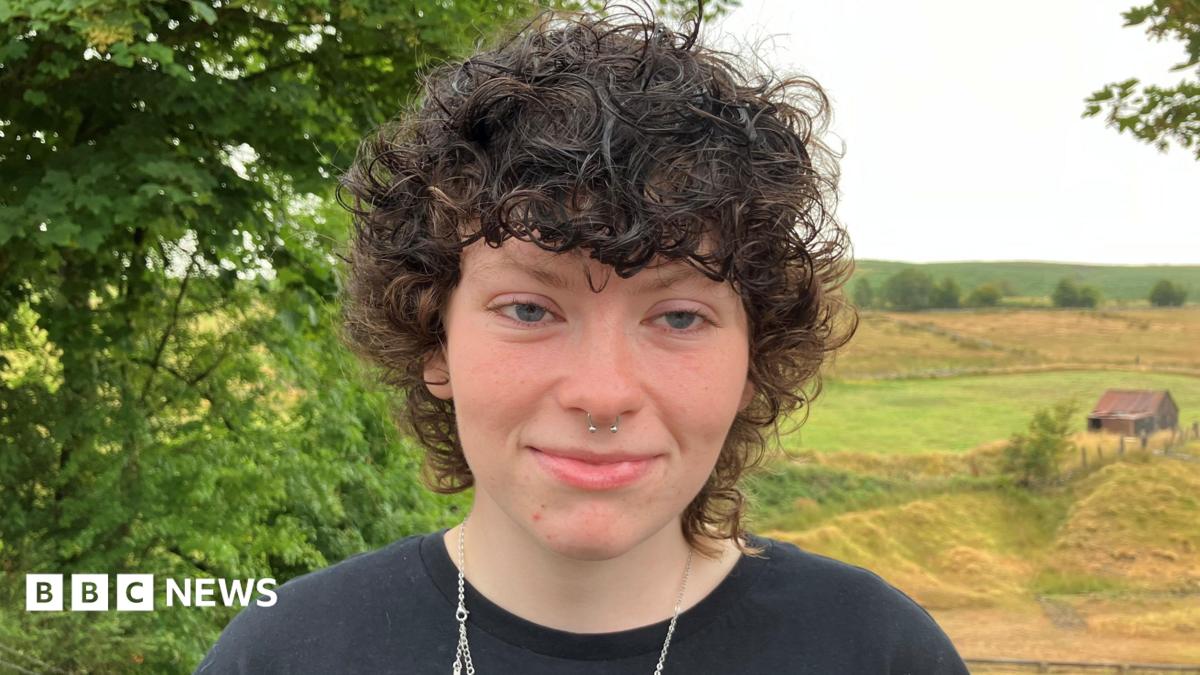
Kae, who wants to be an actor and is studying performing arts at Coleg Gwent, is urging other young people to check what they may be owed.

“Don’t just leave it and do nothing because you might not receive anything if you don’t look,” he said.

Kae said he had invested his money in an ISA to save for a house in future.

But at first he struggled to find out the details of his CTF because they can be held by a variety of different providers, and in the end used the Share Foundation’s free CTF finder.

Advertisement

“I thought i’d get it automatically but I didn’t hear anything,” he said.

“I thought the government would give it to me but I actually had to get it by myself.”

An estimated £83m is lying unclaimed in Wales alone according to The Share Foundation, a charity that runs accounts for young people in care on behalf of the UK government.

Most CTFs were set up by the child’s parents with a voucher worth £250, or £500 in the case of low-income families, from the UK government.

Advertisement

An additional government payment was made when the child reached the age of seven and family members could also top them up.

In some cases the Welsh government also made a small payment to the funds of Welsh children.

Where parents or guardians didn’t set them up, the CTFs were created by the UK government on the child’s behalf.

Advertisement
Continue Reading

Business

SBM Offshore N.V. (SBFFY) Q2 2026 Earnings Call Transcript

Published

on

OneWater Marine Inc. (ONEW) Q1 2026 Earnings Call Transcript