Losing your National Identity Card for Overseas Pakistanis (NICOP) can be stressful, especially if you live in the United Kingdom and need the document for travel, legal identification, or official work in Pakistan. A NICOP is one of the most important documents for overseas Pakistanis because it confirms your Pakistani citizenship and allows visa-free travel to Pakistan. If your card is lost, stolen, or damaged, it is important to begin the replacement process as soon as possible to avoid delays in future travel or legal matters.
Fortunately, replacing a lost NICOP is a straightforward process when you understand the required documents and application steps. This guide explains everything UK residents need to know, including the documents required, the online application process, common mistakes to avoid, and useful tips for receiving your replacement card without unnecessary delays.
Why a NICOP Is Important
A NICOP is much more than an identity card. It serves as official proof of Pakistani citizenship for Pakistanis living overseas.
Some of the main benefits include
- Visa-free travel to Pakistan
- Proof of identity for legal matters
- Property ownership verification
- Banking and financial services
- Government documentation
- Family registration purposes
Without a valid NICOP, you may experience delays when travelling or dealing with official procedures in Pakistan. Replacing a lost card quickly helps prevent unnecessary complications.
What to Do Immediately After Losing Your NICOP
The first step after discovering your NICOP is missing is to stay calm and confirm that it has actually been lost rather than misplaced.
If you cannot locate your card
- Search thoroughly through personal belongings.
- Check recent travel bags and wallets.
- Look through important document folders.
- Ask family members if they have seen it.
If you believe your NICOP has been stolen, you should keep a record of the incident. While a police report may not always be required for replacement, it can be useful if your identity is ever questioned.
It is also helpful if you have a scanned copy or photograph of your previous NICOP, although this is not always essential.
Documents You’ll Need for a Replacement
Preparing your documents before starting the application will make the process much smoother.
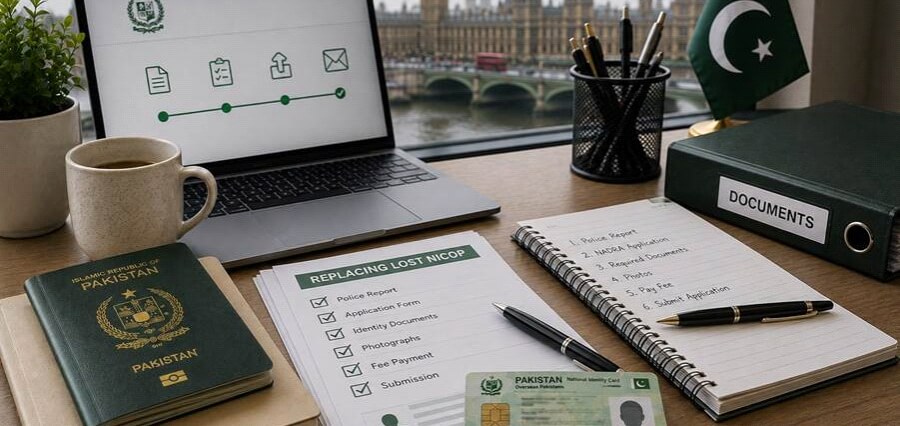
You may be asked to provide
- Valid Pakistani passport
- Previous NICOP details if available
- Recent passport-size photograph
- Proof of UK residence
- Supporting family documents if applicable
Ensure all uploaded documents are clear and easy to read.
Blurry images, incomplete scans, or incorrect file formats can delay the processing of your application.
Taking time to organize your paperwork before applying can significantly reduce waiting times.
Step-by-Step Process to Replace a Lost NICOP
Most overseas Pakistanis living in the UK now complete their applications online.
The general process includes:
Create Your Account
Register using your email address and verify your account.
Choose the Correct Service
Select the option for a duplicate or replacement NICOP rather than a first-time application.
Complete the Application Form
Enter your information exactly as it appears on your passport and previous records.
Upload Documents
Submit clear scanned copies of the required documents.
Complete Biometric Verification
Provide fingerprints and facial photographs according to the official instructions.
Many applicants complete these steps through Pak Id, which allows online document submission and application tracking from anywhere in the UK.
Common Mistakes That Delay Replacement Applications
Many replacement applications take longer than expected because of simple mistakes.
Some of the most common include:
Incorrect Personal Details
Always ensure names, dates of birth, and passport numbers exactly match your official records.
Poor Document Quality
Dark or blurry scans often require resubmission.
Missing Documents
Forgetting to upload supporting documents can delay verification.
Outdated Family Records
If your marital status or family information has changed, update your records before submitting your application.
Waiting Too Long
Many people postpone replacing a lost NICOP until just before travelling.
Applying early gives enough time to resolve any unexpected issues.
Finding Help While Living in the UK
Although many applicants successfully complete the replacement process themselves, some prefer additional assistance.
People searching for Nadra Card UK often want guidance with
- Duplicate NICOP applications
- Document preparation
- Record corrections
- Family registration updates
- Biometric verification
- Online application support
Receiving advice before submitting your application can reduce the likelihood of delays and improve overall accuracy.
Professional guidance is particularly useful for applicants dealing with older records or previous application rejections.
Tips for Receiving Your Replacement NICOP Faster
While processing times vary, there are several ways to help your application move smoothly.
Useful recommendations include
Apply immediately after discovering the loss.
- Double-check every detail before submission.
- Keep digital copies of all uploaded documents.
- Monitor your application status regularly.
- Respond quickly if additional information is requested.
- Ensure your passport information matches your NADRA records.
- Renew supporting documents before they expire if necessary.
Many applicants looking for Nadra Card Renewal Manchester services are seeking advice on document preparation and application reviews. Careful preparation before submitting your replacement request can help prevent avoidable delays and improve your overall experience.
Conclusion
Losing your NICOP while living in the UK can be worrying, but replacing it is a manageable process when you understand the correct steps. Acting quickly, preparing accurate documents, and carefully reviewing your application can significantly reduce delays.
Whether you need your NICOP for travel, legal identification, banking, or family matters, keeping your documentation current is essential. By gathering the required paperwork, following the online application process carefully, and avoiding common mistakes, you can replace your lost NICOP with confidence.
If you need additional guidance during the process, resources and local support related to Nadra Card UK can help you better understand the application requirements. Likewise, applicants searching for Nadra Card Renewal Manchester can benefit from practical advice on document preparation and renewal procedures. Staying organized and applying as soon as possible is the best way to ensure a smooth replacement process and continue enjoying uninterrupted access to important services as an overseas Pakistani.

























































You must be logged in to post a comment Login