

Business
Kymera Therapeutics Soars 21% as Eczema Drug Trial Data Moves Up Six Months


Kymera Therapeutics shares surged 21.11% to $120.96 in Thursday morning trading after the clinical-stage biopharmaceutical company announced it completed enrollment in a key mid-stage eczema trial nearly six months ahead of schedule, allowing it to move up its closely watched data readout.
The Catalyst Behind the Surge
Kymera Therapeutics added roughly 10% in premarket trading Thursday after announcing an expedited timeline to share topline data from a mid-stage trial for KT-621, its experimental therapy for atopic dermatitis, commonly known as eczema. The global Phase 2b trial, named BROADEN2, evaluates the drug in patients with the condition.
Kymera Therapeutics shares rose 8.8% in premarket trading Thursday after the company completed enrollment in its Phase 2b atopic dermatitis trial nearly six months ahead of schedule. The company announced it finished enrollment in the BROADEN2 Phase 2b trial of KT-621, its oral STAT6 degrader, for moderate to severe atopic dermatitis. The accelerated enrollment allows Kymera to move up its topline data readout by six months to year-end 2026, earlier than previous guidance of mid-2027.
The Trial Design
The BROADEN2 trial is a global, randomized, double-blind, placebo-controlled study evaluating three doses of KT-621 in approximately 200 adult and adolescent patients aged 12 to 75 with moderate to severe atopic dermatitis over 16 weeks. The primary endpoint measures the percent change from baseline in Eczema Area and Severity Index score at Week 16.
A Company Built Around Protein Degradation
Kymera Therapeutics, Inc., a clinical-stage biopharmaceutical company, focuses on discovering and developing small molecule therapeutics that selectively degrade disease-causing proteins by harnessing the body’s own natural protein degradation system. It engages in developing KT-621, an oral STAT6 degrader in Phase 2b clinical trials for moderate to severe atopic dermatitis, asthma, COPD, EoE, CRSwNP, CSU, PN, BP, and others; KT-579, an oral IRF5 degrader in Phase 1 trials for autoimmune diseases such as systemic lupus erythematosus, rheumatoid arthritis, and inflammatory bowel disease; KT-485, an IRAK4 program in Phase 2 trials for immunology-inflammation diseases; and a cyclin-dependent kinase 2 program with broad oncology treatment potential. The company has a strategic alliance with Sanofi for the development of drug candidates targeting IRAK4 outside the oncology field, and was incorporated in 2015, headquartered in Watertown, Massachusetts.
A Stock Already on a Remarkable Run
Thursday’s surge extends what has already been an extraordinary stretch for the stock heading into this week. Kymera Therapeutics shares soared 10% in a recent trading session to close at $99.45, backed by solid volume with far more shares changing hands than in a normal session. That move compared to the stock’s 14.6% gain over the prior four weeks alone.
Kymera’s sharp stock price gains over recent weeks appear to reflect growing investor confidence in the broad potential of the company’s pipeline candidates, with its lead candidate, KT-621, positioned as a first-in-class, once-daily oral STAT6 degrader being developed for type II inflammatory diseases, including atopic dermatitis and asthma.
A Sympathy Rally Tied to a Major Industry Acquisition
Part of the stock’s recent momentum has also been driven by a landmark deal elsewhere in the immunology biotech sector that directly validated Kymera’s therapeutic focus. Kymera Therapeutics stock surged nearly 8.8% in mid-day trading, touching a new 52-week high of $105, after AbbVie and Apogee Therapeutics announced a definitive agreement under which AbbVie will acquire Apogee and its pipeline of clinical-stage candidates in inflammatory and immunological diseases, including atopic dermatitis and asthma, for $135.11 per share in cash, valuing Apogee at approximately $10.9 billion.
The deal landed directly in Kymera’s therapeutic backyard, given that its lead asset, KT-621, targets the same indications that made Apogee attractive to AbbVie. That strategic rationale underscored for investors that large pharma companies remain hungry for best-in-class oral and biologic immunology assets, a theme that directly benefited Kymera’s positioning even as the broader Nasdaq fell 1.2% that same day.
Reaching a New All-Time High
That string of positive catalysts pushed Kymera to a fresh milestone earlier this week. Kymera Therapeutics reached an all-time high with its stock price hitting $103.17, trading just 0.93% below its 52-week high, giving the company a market capitalization of $8.46 billion at the time. The milestone reflected a remarkable one-year change of 121.91% for the stock.
A Recent Leadership Change
Beyond the clinical and competitive developments, the company also recently announced a notable addition to its board structure. Kymera Therapeutics appointed Felix Baker as chairman, with shareholders separately reelecting directors and affirming executive pay and the company’s auditor at a recent meeting.
Wall Street’s Bullish but Cautious Stance
Despite the stock’s dramatic gains, analyst opinion has shown some signs of caution amid the broadly positive sentiment. Kymera Therapeutics received a Buy rating from Barclays, while one analyst maintained a $110 price target on the company’s emerging protein degrader pipeline with a reiterated Buy rating. Even amid that bullish coverage, some valuation models have flagged the stock as potentially overvalued relative to its underlying fair value estimate, placing it among companies on at least one tracking service’s most overvalued list, even as the broader analyst consensus maintains a Strong Buy rating overall.
An Existing Partnership With Gilead
Beyond its core immunology pipeline, Kymera has also built strategic relationships with larger pharmaceutical partners to advance candidates outside its primary focus area. Gilead Sciences entered an exclusive option and license agreement with Kymera to advance a molecular glue degrader program targeting cyclin-dependent kinase 2, with broad oncology treatment potential including in breast cancer and other solid tumors, in a deal potentially valued at up to $750 million.
With Kymera’s topline data from the BROADEN2 trial now expected by year-end 2026 rather than mid-2027, investors will be watching closely for the results, given how directly they could validate or complicate the broader investment thesis already strengthened by the AbbVie-Apogee acquisition in the same therapeutic space. Given the stock’s extraordinary year-over-year gains and its current position trading near the top of its 52-week range, Kymera’s near-term trajectory will likely hinge heavily on whether the accelerated data readout confirms the kind of efficacy that would justify the company’s rapidly expanding market valuation.

Business
Waystar Holding Corp. (WAY) Presents at 46th Annual William Blair Growth Stock Conference – Slideshow

Waystar Holding Corp. (WAY) Presents at 46th Annual William Blair Growth Stock Conference – Slideshow
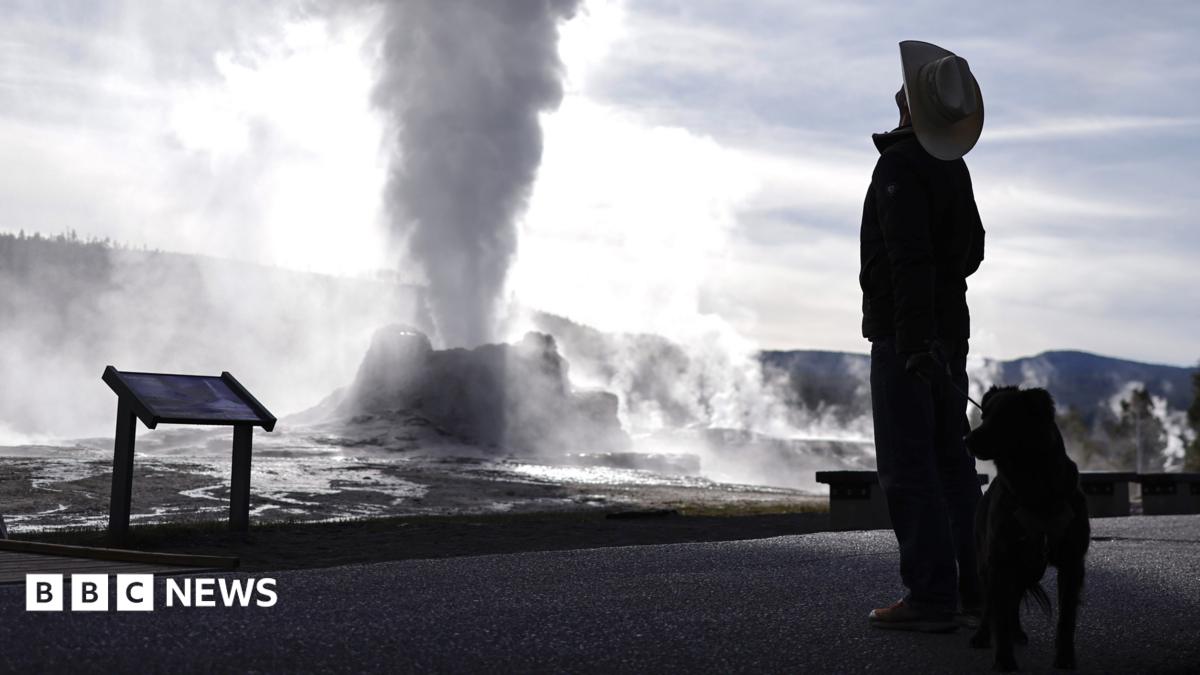
To go faster and deeper will require advances in drilling technologies.
Companies are developing drilling equipment that is more stable when breaking through hard rock at high temperatures.
Some firms are even aiming to penetrate rock without using standard drills.
Quaise, a company with roots at the Massachusetts Institute of Technology (MIT), is using a technology called millimetre wave drilling. The frequency is similar to that of microwaves.
Quaise’s application involves “sending electromagnetic waves in the microwave millimetre wave spectrum to essentially melt and vaporise through the rock,” explains Harry Kelso, Quaise’s communications manager.
Traditional geothermal energy clusters around hotspots on the earth’s surface where very hot rocks can be easily accessed.
“Millimetre wave drilling really enables you to access super-hot geothermal just about anywhere in the world,” says Kelso.
While Quaise is planning to use some conventional drilling at the project site it’s developing in Oregon, Kelso says that conventional drills start to break down more quickly when it reaches very hard rock.
Replacing drill bits increases the cost and time of drilling.
In Quaise’s case, Kelso says, “millimetre wave drilling is really what changes that because we’re not using a physical drill bit.”
Other companies are also working on advanced drilling technology, such as projectiles that move several times faster than the speed of sound.
Another crucial resource in the process is water. While some types of next-generation geothermal could create risks of water contamination or overconsumption, careful design can avoid this problem.
Initially Quaise’s system requires a lot of water, but according to Kelso, once the water is in the system it is continually circulated over the super-hot rocks.
“We’re essentially just recycling the water over and over,” he says.
Quaise is continuing to raise funds, with the aim of its Oregon project being up and running by 2030.
Like other early versions of geothermal systems, it’s an expensive project to get up and running.
“The economics are somewhat challenging,” Kelso admits. “Geothermal today is still more expensive because you are not getting as much power out of the well as you would if you were using that well for fossil fuel.”
But Quaise hopes that by targeting very high temperatures, of between 300C and 500C, the economics will improve.
While the higher end of that temperature range is ambitious, it’s a case of the-hotter-the-better.
“It allows you to get 10 times more energy per well from geothermal, which changes the economics and the power potential of geothermal,” according to Kelso.

Form 4 Clearwater Analytics Holdings Inc For: 25 June

The NSE Nifty 50 rose 0.1%, or 34.35 points, to close at 24,056, while the BSE Sensex gained 0.1%, or 109.25 points, to end at 77,100.47. Both indices were up about 0.4% for the week.
Markets had gained as much as 1% intraday before paring advances ahead of the prolonged weekend. Financial markets will be shut on Friday for Muharram. Brent crude extended its decline for a fourth straight session, slipping to as low as $72.4 a barrel.
“The Street was anticipating that the reopening of the Strait of Hormuz by June, and now that it has played out, oil prices have settled favourably for India, lending some investor confidence,” said Dharmesh Kant, head of research, cholamandalam securities.
Kant said dips are likely to attract buying interest with the downside appearing limited. While monsoons remain a key variable, he expects no major correction even with up to a 15% rainfall deficit. “Margins and profitability will improve from Q2 onwards, though Q1 numbers could be tepid,” he said.

The India VIX fell 2.5% to 13.1, pointing to easing near-term volatility expectations.
“This week, Nifty remained range-bound, taking support around its 20-day moving average of 23,800,” said Ruchit Jain, head of technical research at Motilal Oswal Financial Services. He expects the index to test the 24,200-24,250 zone in the near term, though a breakout above this level is needed for a sustained upmove.The Nifty Midcap 150 and Nifty Smallcap 250 indices fell 0.5% each. Out of 4,406 shares traded on the BSE, 1,602 advanced, and 2,627 declined. The Nifty Auto index gained 2.3% on softer crude prices, while the Nifty Metal index fell 1.4% and the Nifty IT index declined 0.9%.
Foreign portfolio investors bought shares worth a net ₹383.8 crore on Thursday.

Flowers and Jubair’s trial heard they were part of the cyber-crime collective, Scattered Spider.
The loosely organised gang of young English-speaking cyber-criminals has been linked to dozens of other cyber-attacks including on retailers Marks and Spencer and the Co-op.
But the BBC has learned Flowers initially came to the attention of police shortly after he turned 16 years old.
In October 2023 he was caught carrying out low-level cyber-crime and visited by West Midland’s Regional Cyber Crime Unit prevent officers.
Police say that during the visit Flowers did not engage with officers and was given a cease and desist order to deter him from further offending.
Police had the option to invite him to enrol in the national Cyber Choices programme, which works to steer young people away from cyber-crime.
However Flowers was already being investigated for an offence and was reluctant to engage with officers, so they deemed him not suitable.
Just months later, the teenager – who was living with his grandmother – went on to commit a series of increasingly serious cyber-offences with Scattered Spider which culminated in the TfL attack.
NCA deputy director Paul Foster, head of its National Cyber Crime Unit, said the case highlighted the challenges posed by a small number of highly capable offenders.
He called for stronger legal powers – such as the proposed Cyber Crime Risk Orders (CCROs) – to deal with cases like this.
CCROs, announced by the UK government as part of planned reforms to the Computer Misuse Act, are designed to let police and courts place restrictions on people considered high risk before they carry out further serious breaches.
They would “enable earlier law enforcement interventions against high-risk cyber-crime offenders,” Foster said.
Operator
Good day, everyone, and welcome to the American Outdoor Brands, Inc. Fourth Quarter and Full Year Fiscal 2026 Financial Results Conference Call. This call is being recorded.
At this time, I would like to turn the conference over to Ms. Liz Sharp, Vice President of Investor Relations. Please go ahead, ma’am.
Elizabeth Sharp
Vice President of Investor Relations
Thank you, and good afternoon. Our comments today may contain predictions, estimates and other forward-looking statements. Our use of words like anticipate, project, estimate, expect, intend, should, could, indicate, suggest, believe and other similar expressions is intended to identify those forward-looking statements. Forward-looking statements also include statements regarding our product development, focus, objectives, strategies and vision, our strategic evolution, our market share and market demand for our products, market and inventory conditions related to our products and our industry in general, and growth opportunities and trends.
Our forward-looking statements represent our current judgment about the future, and they are subject to various risks and uncertainties. Risk factors and other considerations that could cause our actual results to be materially different are described in our securities filings. You can find those documents as well as a replay of this call on our website at aob.com. Today’s call contains time-sensitive information that is accurate only as of this time, and we assume no obligation to update any forward-looking statements. Our actual results could differ materially from our statements today.
A few
Business
Kuwait International Airport Is Open Today, With Oman Air Resuming Service Through Terminal 4
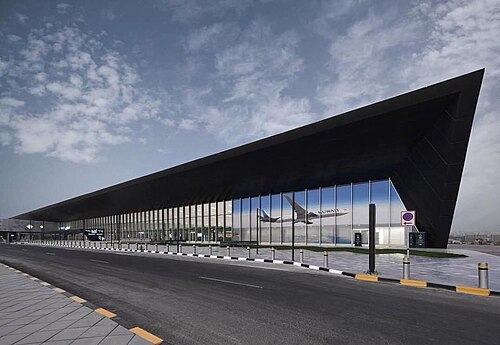
Kuwait International Airport is open and operating today, with Kuwait Airways and Jazeera Airways running normal schedules and a key foreign carrier resuming service for the first time since the airport’s earlier conflict-related disruptions.
Current Operational Status
Kuwait reopened its airspace and Kuwait International Airport is open and operating, with the region now moving from a ceasefire to a wider peace following the U.S.-Iran conflict. Kuwait Airways is flying from Terminal 4 and Jazeera Airways from Terminal 5, with schedules steadily returning to normal as the situation stabilizes. A brief, precautionary airspace closure during the conflict has long since been lifted.
Oman Air Resumes Service Today
Today marks a notable milestone in the airport’s gradual recovery, with one of the foreign carriers that had been waiting to resume operations now back in the air. Among the foreign carriers resuming, Oman Air has confirmed its Kuwait flights restart on June 25, 2026, temporarily operating through Terminal 4 instead of its usual Terminal 1.
Terminal 1 Remains the Main Outstanding Issue
While the airport overall continues operating, one of its primary facilities remains closed pending repair work tied to earlier damage. Terminal 1 remains closed for repairs after earlier damage, and there is no confirmed date for it to reopen. Terminals 4 and 5 are fully operating in the meantime.
The damage to Terminal 1 traces back to a series of attacks earlier this year. Between February 28, 2026, and June 2026, the airport was targeted by Iranian drone attacks as part of Iran’s strikes on Persian Gulf states, causing damage to Terminal 1. That reopening of Terminal 1 proved short-lived after an earlier repair, with the facility suffering more serious structural damage in a subsequent attack. Terminal 1 suffered significant damage during drone and missile strikes on June 3, 2026, with parts of the terminal experiencing a partial roof collapse and other structural damage, making the facility unsafe for passenger operations. That second closure has remained in effect since, with no confirmed reopening date currently available.
Terminal 3 Permanently Shut, Terminal 2 Still Under Construction
Beyond Terminal 1’s temporary closure, the airport’s broader terminal lineup includes additional facilities at different stages of completion. Terminal 2 is still under construction, while Terminal 3 is permanently closed.
A Long Road to Today’s Reopening
The airport’s current state reflects a complicated recovery process that unfolded over several months earlier this year. Since February 28, 2026, all flights to and from Kuwait International Airport were suspended following the closure of Kuwaiti airspace due to the broader regional conflict. Local carriers like Jazeera Airways diverted operations to Qaisumah International Airport in Saudi Arabia, located approximately two and a half hours from Kuwait by road, during the suspension.
The airport was hit by suicide drones between late February and April, causing damage to the facility, including its radar installation, though there were no casualties from those attacks. Kuwait Airways and Jazeera Airways restarted operations from the airport on April 26, operating from Terminals 4 and 5. Terminal 1 reopened on June 1, with some non-Kuwaiti airlines restoring service to the airport at that time, before the second strike on June 3 forced its closure once again.
Government Statements on the Reopening Process
Kuwaiti aviation officials have emphasized a careful, coordinated approach to restoring full operations throughout the recovery. Sheikh Hamoud Mubarak Al Sabah, Chairman of the General Civil Aviation Authority, said the move to reopen the airspace was coordinated with relevant domestic and international authorities to ensure operations resumed in line with the highest safety and security standards. Sheikh Hamoud also praised the efforts of aviation staff and government entities involved in managing the situation and accelerating recovery, expressing appreciation for Saudi Arabia’s support in facilitating Kuwaiti carriers through its airports, along with broader coordination among Gulf Cooperation Council countries to maintain air traffic continuity during the crisis.
What Travelers Should Do
Given the airport’s recent history of repeated disruptions, officials and travel advisories continue to recommend that passengers verify their specific flight status directly with their airline before heading to the airport. Confirm your flight with your airline before heading to the airport, as timings can still vary while schedules normalize. Travelers with urgent concerns should use official airline customer service channels for the latest updates regarding canceled or diverted flights, including options for rebooking, refunds, or rerouting.
Getting To and From the Airport
For travelers planning their journey, Kuwait International Airport is located approximately 15.5 to 16 kilometers south of Kuwait City’s center. A taxi to the city center takes approximately 20 to 25 minutes and costs between 5 and 10 Kuwaiti dinars, or roughly $16 to $33. Public buses on lines 13, 99, and 501 connect the airport to surrounding districts including Hawalli and Salmiya, running every 45 to 60 minutes for a fare of 0.250 Kuwaiti dinars, or about 80 cents, one way, though no direct metro or train service is currently available.
A Major Aviation Hub for the Region
Kuwait International Airport is the country’s primary aviation hub and the main airport serving the State of Kuwait, handling over 15 million passengers annually and offering connections to more than 100 destinations worldwide. As the central hub for Kuwait Airways and Jazeera Airways, the airport’s continued recovery carries significant importance for both regional connectivity and Kuwait’s broader economic activity.
The Broader Regional Context
The airport’s repeated cycle of closures and reopenings has occurred against the backdrop of a broader, easing regional conflict. With the region moving from a ceasefire to a wider peace, conditions have eased considerably, though officials and travel advisories continue to recommend that travelers check their government’s latest travel advisory before making plans, as guidance continues to be updated as the broader situation settles.
With Terminals 4 and 5 fully operational and Oman Air now resuming service as of today, Kuwait International Airport’s recovery appears to be continuing on a positive trajectory, even as Terminal 1 remains closed indefinitely pending repairs and Terminal 2’s broader expansion project continues working toward its targeted late-2026 opening. Travelers planning trips through Kuwait in the coming weeks should expect continued gradual normalization of service, but should not assume full pre-conflict operational capacity has yet been restored across all of the airport’s facilities.
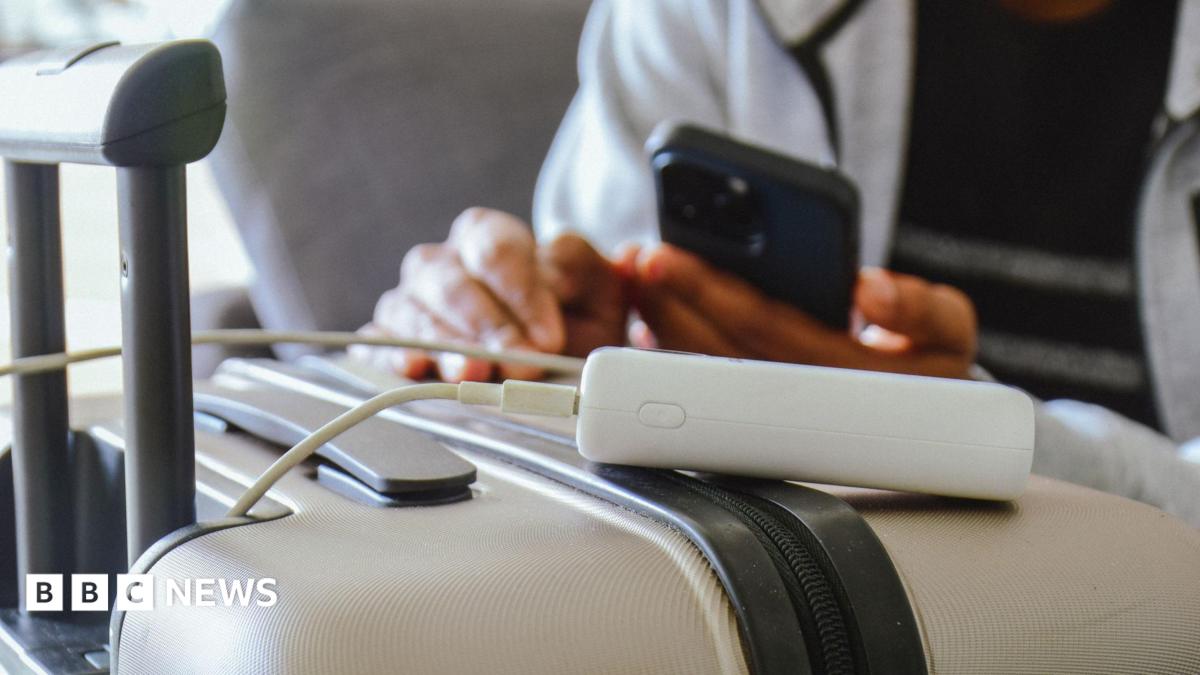
Flight passengers are being warned not to pack power banks or vapes in their hold luggage ahead of the busy summer holiday travel period beginning for parts of the UK.
The fire risk posed by lithium batteries is now the number one safety risk to aircraft, according to the aviation regulator, as the number of devices found in hold bags has nearly doubled in a year.
The Civil Aviation Authority (CAA) says the average person now takes four different lithium powered devices on a flight.
Ahead of the school summer holidays, which begin in Scotland first this week, people are being reminded to take devices in the cabin with them.
The batteries can store huge amounts of energy in a small space, and are now commonly used in lots of electrical items including laptops, vapes, power banks, mobile phones and smart watches.
They’re incredibly useful and versatile. But if the batteries overheat or are defective, a fire can result which spreads very quickly and is hard to control.
In 2024, 316 incidents of devices with lithium batteries detected in hold bags were reported to UK authorities. In 2025, that rose to 643.
Reports of devices overheating or malfunctioning also nearly doubled the same year, from 123 to 206.
Most of these issues occurred in the cabin where crew could deal with the situation, but the concern is that if this happens in the hold, the problem may not be discovered until it’s too late to control it.
Harbor Mid Cap Core ETF Q1 2026 Commentary
Form 4 Trulieve Cannabis Corp For: 25 June

Craft Recordings Honors Miles Davis and John Coltrane With Centennial Original Jazz Classics Vinyl Reissues

IIM SKILLS AI For Finance Course #iimskills #shorts

Call the Midwife star Laura Main reveals new role after ‘not filming new series’


-

 Fashion6 days ago
Weekend Open Thread: Miami – Corporette.com
-

 Entertainment5 days ago
Renter of Home in Anne Heche Crash Denies Settlement With Son
-
 Sports2 days ago
Two goals and an assist by sheer aura: Cristiano Ronaldo just entered the World Cup chat
-

 Tech4 days ago
Microsoft accidentally kills epic Outlook email threads
-

 Business5 days ago
Soccer-U.S. defends Iran World Cup travel restrictions, says discussions ongoing
-

 Politics6 days ago
Andy Burnham and the meaning of Makerfield
-

 NewsBeat6 days ago
Keir Starmer Allies Question His Chances For No 10
-

 Tech5 hours ago
A Look At A Gaggle Of Transputer Boards
-
Crypto World2 days ago
Bitcoin (BTC) Dips Below $62K, Ethereum (ETH) Plunges 6% Daily: Market Watch
-

 Crypto World2 days ago
Securitize Wraps Roubini's SEC-Registered ETF as Dubai VARA Digital Security
-
Business2 days ago
Entergy settles forward sale agreements, raises $672 million in cash proceeds
-
 Business6 days ago
Wall Street Week Ahead: Investors see Micron earnings as pulse check of AI rally momentum
-
 Crypto World6 days ago
Can Charles Hoskinson Really Rescue Cardano?
-

 Crypto World6 days ago
HIVE shares jump as $220M AI deal speeds Bitcoin mining pivot
-

 Crypto World6 days ago
Jake Chervinsky accuses CME of protecting derivatives monopoly
-

 Entertainment6 days ago
Jose Alvarado Wants Taylor Swift at More Knicks Games
-
 Tech4 days ago
Signal’s Meredith Whittaker says AI chatbots ‘are not your friends’ and calls Copilot agents a backdoor
-

 Sports12 hours ago
India vs Bangladesh LIVE Score, Women’s T20 World Cup: Bangladesh Opt To Bat; India Enter ‘Do-Or-Die’ Stage As Semi-Final Race Heats Up
-

 Tech3 days ago
Nearly 7,000 fake Amazon domains registered ahead of Prime Day 2026, researchers warn
-

 Business5 days ago
MHP SE 2026 Q1 – Results – Earnings Call Presentation (OTCMKTS:MHPSY) 2026-06-20
You must be logged in to post a comment Login