
Business
Largest Autism Protein Interaction Map Reveals Shared Pathways That Could Guide Future Treatments


SAN FRANCISCO — Researchers have published what they describe as the largest molecular map of autism-related protein interactions, showing how many different genetic mutations can disrupt the same networks in the developing brain.
The study, released Thursday in the journal Science, charts more than 1,800 protein-protein interactions linked to 100 high-confidence autism risk genes. About 87 percent of those interactions had not been reported before. The authors say the work shifts attention from long lists of genes toward the protein complexes those genes encode — a level at which future drugs might act.
“You need this insight to ultimately develop drugs, and we’ve generated a map now that is providing essentially the molecular underpinnings of autism and pointing us in a multitude of different directions for ultimate drug discovery,” said Dr. Nevan Krogan, a University of California, San Francisco professor, director of the Quantitative Biosciences Institute and senior investigator at the Gladstone Institutes.
“The hope would be at some point you’d be looking back and saying, ‘Ah, this map led to X, Y, and Z, and therefore we have now the first-ever treatment to autism. That’s the vision, and I believe that’s going to come to fruition at some point in the future,” Krogan said.
More than 250 genes have been associated with autism spectrum disorder. That diversity has made it hard to imagine a single therapy. Proteins, however, often work in shared complexes. If many mutations damage the same partnerships, a smaller set of targets could matter for larger groups of patients.
“When you have the genes and the mutations, that’s just a list. That’s a parts list,” Krogan said. “What you need to do is have a wiring diagram of that parts list, and that’s where you need to go to the proteins and understand how the proteins talk to one another, and understand when you put a mutation in a protein, what does it do to the protein-protein interactions? So, understanding that will point you down therapeutic roads that you just could not have ever imagined if you were simply just looking at the genes and the mutation.”
The team used affinity purification–mass spectrometry to map interactions for the 100 genes, including versions carrying patient-derived missense mutations. They then used AlphaFold structural predictions to flag which contacts were likely direct and which mutations were most worth testing. Priority cases were examined in human forebrain organoids and in Xenopus embryos.
“AI is allowing us to study proteins that we could never have even dreamed of even a couple of years ago, and it’s providing an unprecedented light being shone on autism, the underlying biology behind autism,” Krogan said. He called the result “the largest that has ever been done on autism,” and “the largest map of its kind for any neuropsychiatric disorder,” as well as “the largest mutant map that’s ever been generated for any area of disease.”
One example in the paper involves FOXP1. Distinct mutations weakened its physical partnership with FOXP4. In organoids, that change altered how deep-layer cortical neurons developed. Other mapped proteins clustered around neurogenesis, tubulin biology, transcriptional control and chromatin modification.
Krogan said his group already has three programs underway to explore therapies based on the map.
Independent scientists not involved in the work described it as an important systems-level resource, while stressing that drugs are still far off.
“The new study is really exciting in that it represents the most systematic protein-level view of autism risk we’ve had to date,” Fikri Birey, an assistant professor of human genetics at Emory University School of Medicine, wrote in an email. “In the future, it may be possible to identify drugs that stabilize disrupted protein complexes or block pathological interactions, rather than trying to correct every individual autism-causing mutation.”
Alison Singer, president of the Autism Science Foundation, called the paper a turning point for families of people with profound autism. “Today’s study shows where different autism genes converge on shared biological pathways, and those shared pathways could ultimately give us therapeutic targets relevant to much larger groups of autistic people, including people without an identified genetic cause. That is nothing short of a huge watershed moment for autism science.”
She added: “For families of people with profound autism like mine, this is the kind of scientific advance we have been waiting for and praying for. Many people with profound autism have rare genetic variants and the promise of precision medicine has always been that understanding those variants would eventually allow us to move beyond treating symptoms and behaviors, and begin addressing the underlying biology.”
Singer also cautioned that discoveries still must become drug candidates and pass safety and efficacy tests.
Dr. Andy Shih, chief science officer at Autism Speaks, struck a similar note. “Translating these kinds of discoveries into therapies is a long process,” he wrote. “This study provides valuable insights into potential targets, but much more research is needed before these findings can lead to clinical applications.”
The authors themselves limit how far the map should be read. Krogan said it is most directly relevant to people with profound autism — those who often need around-the-clock care and who account for about 30 percent of people on the spectrum. He argued the same protein-network approach could still inform work on schizophrenia, obsessive-compulsive disorder, tic disorders and even cancer.
The Science paper, titled “A foundational autism protein interaction atlas reveals molecular convergence,” lists Belinda Wang, Rasika Vartak and Kelsey Hennick among co-first authors, with Kirsten Obernier, Tomasz J. Nowakowski and A. Jeremy Willsey among co-corresponding authors.
The publication arrives as federal autism research priorities are again under debate. The Interagency Autism Coordinating Committee has a draft strategic plan before it. Singer said she worries a broad “injury” framing could pull money away from genetics and brain biology. Shih said he expects the plan to keep room for large-scale work on how genetic factors shape development.
For now, the practical yield is a wiring diagram, not a pill. Hundreds of risk genes remain. Most of the newly listed interactions have not been tested as drug targets. Organoids and frog embryos are models, not patients. What the map does offer is a way to stop treating every mutation as a separate lock. If enough of those locks share the same bolts, the search for a key becomes smaller — and, researchers say, more realistic than it was when the field had only a parts list.


For years, China was the primary manufacturing hub for iPhones. However, currently, India has taken over, producing all of Apple’s latest iPhone models. This shift marks a significant change in Apple’s supply chain strategy, reflecting increased diversification and the company’s efforts to reduce dependency on China amid geopolitical and economic considerations.
- Apple has shifted iPhone manufacturing from China to India, now producing all of its latest models there. This change reflects a broader supply chain diversification strategy driven by geopolitical tensions and economic considerations, with key partnerships established with manufacturers like Tata and Foxconn.
- India’s growing consumer market, government tax incentives, and policies supporting domestic manufacturing have reinforced this transition. Localizing production allows Apple to tailor offerings for Indian consumers while aligning with India’s ambitions to become a major global manufacturing hub.
Apple’s shift to India for iPhone manufacturing marks a significant strategic move, aiming to diversify its supply chain and reduce dependence on China. Over recent years, Apple has invested heavily in ramping up production facilities and partnerships with local manufacturers like Tata and Foxconn. This transition not only reflects Apple’s response to geopolitical tensions but also aligns with India’s broader vision to become a global manufacturing hub.
The move is also driven by India’s expanding market, offering immense growth potential for iPhone sales. By localizing production, Apple can better appeal to Indian consumers with region-specific models and price points, boosting sales and market share. Additionally, tax incentives and government policies favoring domestic manufacturing further encourage this shift, making it economically viable for Apple to produce more devices within India.

Iceland votes in tight referendum on whether to start EU membership talks


Dubai-based investor focused on building a resilient, income-generating portfolio with a long-term growth mindset. My approach is primarily long-only, blending dividend-paying equities, REITs, and other income strategies with selective growth opportunities. I believe in disciplined, fundamentals-driven investing, prioritizing capital preservation while compounding returns over time. Originally from India.
Analyst’s Disclosure: I/we have no stock, option or similar derivative position in any of the companies mentioned, and no plans to initiate any such positions within the next 72 hours. I wrote this article myself, and it expresses my own opinions. I am not receiving compensation for it (other than from Seeking Alpha). I have no business relationship with any company whose stock is mentioned in this article.
Seeking Alpha’s Disclosure: Past performance is no guarantee of future results. No recommendation or advice is being given as to whether any investment is suitable for a particular investor. Any views or opinions expressed above may not reflect those of Seeking Alpha as a whole. Seeking Alpha is not a licensed securities dealer, broker or US investment adviser or investment bank. Our analysts are third party authors that include both professional investors and individual investors who may not be licensed or certified by any institute or regulatory body.

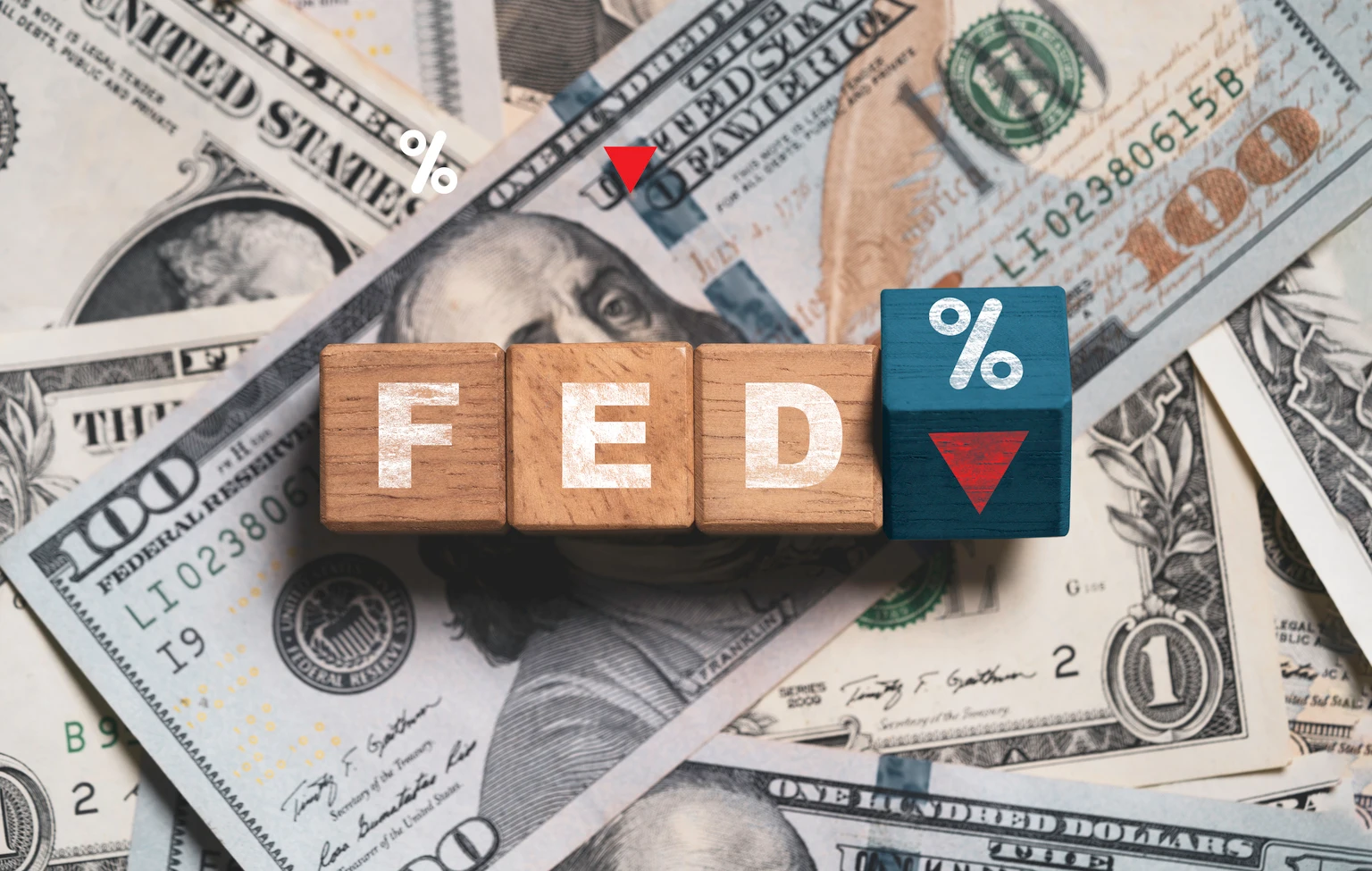
The August Labor Market Report To Cement The September Fed Hike


Uttam is a growth-oriented investment analyst whose equity research primarily focuses on the technology sector. Semiconductors, Artificial Intelligence and Cloud software are some of the key sectors that are regularly researched and published by him. His research also focuses on other areas such as MedTech, Defense Tech, and Renewable Energy. In addition, Uttam also authors The Pragmatic Optimist Newsletter along with his wife, Amrita Roy, who is also an author on the newsletter as well as on this platform. Their newsletter gets regularly cited by leading publications such as the Wall Street Journal, Forbes, etc. Prior to publishing his research, Uttam worked in Silicon Valley, leading teams for some of the largest technology firms in the world, including Apple and Google.
Analyst’s Disclosure: I/we have no stock, option or similar derivative position in any of the companies mentioned, and no plans to initiate any such positions within the next 72 hours. I wrote this article myself, and it expresses my own opinions. I am not receiving compensation for it (other than from Seeking Alpha). I have no business relationship with any company whose stock is mentioned in this article.
Seeking Alpha’s Disclosure: Past performance is no guarantee of future results. No recommendation or advice is being given as to whether any investment is suitable for a particular investor. Any views or opinions expressed above may not reflect those of Seeking Alpha as a whole. Seeking Alpha is not a licensed securities dealer, broker or US investment adviser or investment bank. Our analysts are third party authors that include both professional investors and individual investors who may not be licensed or certified by any institute or regulatory body.


My name is María Fernanda and I’m currently studying an MBA. My inspiration investors are Warren Buffett, Peter Lynch and Terry Smith, so I look for quality companies at a reasonable valuation. I believe that, in the long term, fundamentals are what drive the share price, so I look to predict what a business’s earnings per share will do.
Analyst’s Disclosure: I/we have no stock, option or similar derivative position in any of the companies mentioned, and no plans to initiate any such positions within the next 72 hours. I wrote this article myself, and it expresses my own opinions. I am not receiving compensation for it (other than from Seeking Alpha). I have no business relationship with any company whose stock is mentioned in this article.
Seeking Alpha’s Disclosure: Past performance is no guarantee of future results. No recommendation or advice is being given as to whether any investment is suitable for a particular investor. Any views or opinions expressed above may not reflect those of Seeking Alpha as a whole. Seeking Alpha is not a licensed securities dealer, broker or US investment adviser or investment bank. Our analysts are third party authors that include both professional investors and individual investors who may not be licensed or certified by any institute or regulatory body.


I am a specialist in Asian equities after having been a sellside analyst for 13 years. In addition, I have also spent time covering US hardware and semiconductor stocks on the sellside. Within Asia, I have covered the casino, automotive, industrial, consumer and technology sectors. I have also worked on the buyside as a fund manager in long only and as an analyst in hedge funds all covering Asian equities where I have developed a keen understanding of Asian companies and economies with a focus on China. From a global equities perspective, I enjoy covering companies globally by examining key metrics such as financial statements strength, valuation upside, and conducting proper analysis of the competitive advantages of the company. Throughout my career, I have found and written on undiscovered small cap companies which have increased in equity value by multiple times. I would like to write for Seeking Alpha where my goal is to help investors cut through the noise and to focus on fundamentals and the company’s competitive outlook instead of the momentum trade.
Analyst’s Disclosure: I/we have no stock, option or similar derivative position in any of the companies mentioned, and no plans to initiate any such positions within the next 72 hours. I wrote this article myself, and it expresses my own opinions. I am not receiving compensation for it (other than from Seeking Alpha). I have no business relationship with any company whose stock is mentioned in this article.
Seeking Alpha’s Disclosure: Past performance is no guarantee of future results. No recommendation or advice is being given as to whether any investment is suitable for a particular investor. Any views or opinions expressed above may not reflect those of Seeking Alpha as a whole. Seeking Alpha is not a licensed securities dealer, broker or US investment adviser or investment bank. Our analysts are third party authors that include both professional investors and individual investors who may not be licensed or certified by any institute or regulatory body.

Financial analyst by day and a seasoned investor by passion, I’ve been involved in the world of investing for over 15 years and honed my skills in analyzing lucrative opportunities within the market.I specialize in uncovering high quality dividend stocks and other assets that offer potential for long term-growth that pack a serious punch for bill-paying potential. I use myself as an example that with a solid base of classic dividend growth stocks, sprinkling in some Business Development Companies, REITs, and Closed End Funds can be a highly efficient way to boost your investment income while still capturing a total return that follows traditional index funds. I created a hybrid system between growth and income and manage to still capture a total return that is on par with the S&P.
Analyst’s Disclosure: I/we have a beneficial long position in the shares of GPIX, QQQI, DIVO either through stock ownership, options, or other derivatives. I wrote this article myself, and it expresses my own opinions. I am not receiving compensation for it (other than from Seeking Alpha). I have no business relationship with any company whose stock is mentioned in this article.
Seeking Alpha’s Disclosure: Past performance is no guarantee of future results. No recommendation or advice is being given as to whether any investment is suitable for a particular investor. Any views or opinions expressed above may not reflect those of Seeking Alpha as a whole. Seeking Alpha is not a licensed securities dealer, broker or US investment adviser or investment bank. Our analysts are third party authors that include both professional investors and individual investors who may not be licensed or certified by any institute or regulatory body.

Get ahead of the market by subscribing to Seeking Alpha’s Wall Street Week Ahead, a preview of key events scheduled for the coming week. The newsletter keeps you informed of the biggest stories set to make headlines, including upcoming IPOs, investor days, earnings reports, and conference presentations.
Wall Street swung between modest gains and losses on Friday as traders digested Federal Reserve Chair Kevin Warsh’s speech at the Jackson Hole Symposium. While the summer’s PCE and CPI readings came in better than expected, “they do not tell me that underlying trends have meaningfully improved,” Federal Reserve Chair Kevin Warsh said at the Jackson Hole economic symposium. “We must be confident that underlying inflation is moving to our objective, clearly and at sufficient speed. Otherwise, we have work to do,” he added.
A slew of economic data is scheduled for next week, kicking off with Chicago PMI for August on Monday. S&P Global and ISM manufacturing PMI data for August, ISM manufacturing prices for August, and JOLTS job openings data for July are due on Tuesday. On Wednesday, ADP nonfarm employment numbers for August will be released. Initial jobless claims numbers are scheduled for Thursday alongside S&P Global services and composite PMI for August and ISM Non-Manufacturing PMI and prices for the month. Friday is relatively packed with nonfarm payrolls and the unemployment rate for August being released.
______________________________________________________________
Earnings spotlight: Tuesday: Palo Alto Networks (PANW), Dell (DELL), and Medtronic (MDT). See the full earnings calendar.
Earnings spotlight: Wednesday: Broadcom (AVGO), Snowflake (SNOW). See the full earnings calendar.
Earnings spotlight: Thursday: Ciena (CIEN), Zscaler (ZS). See the full earnings calendar.
Volatility watch: Car rental stocks Avis Budget (CAR) and Hertz Global (HTZ) have seen options volatility increase over the last week. The most overbought stocks per their 14-day

Revolution Medicines: RASONQUE's FDA Approval Portends A New Oncology Titan

Apple’s Strategic iPhone Manufacturing Shift From China to India

Project stayer Chief Little Rock targets Morphettville victory in 2026

How to watch Argentina vs Australia: Free streams & TV channels





-

 Crypto World4 days ago
SpaceX stock could rise 75% to $240, JPMorgan says
-

 Crypto World2 days ago
Bitcoin’s 22% rally now needs real demand to outlast Treasury liquidity boost
-

 Fashion22 hours ago
Weekend Open Thread: Maeve – Corporette.com
-

 Crypto World5 days ago
A $30 Billion AI Fund Implodes, Now the SEC Is Investigating Wall Street’s Role
-

 Crypto World3 days ago
Warsh Jackson Hole keynote puts financial innovation first
-

 Business2 days ago
Salesforce Stock Soars 19% as Blowout Earnings and Agentforce AI Growth Silence Software Skeptics
-

 Crypto World4 days ago
Did Trump Just Move SpaceX Stock With One Truth Social Post?
-

 Business6 days ago
Mystery AI Model ‘Ox Alpha’ Draws Developers With Free Access as Chinese Lab Origins Remain Debated
-

 Business3 days ago
Walmart takes aim at younger shoppers with new fashion brand
-
 NewsBeat3 days ago
Lindsay Clancy jury braces for closing arguments as judge tells court: ‘You’ve heard all the evidence’ – Live updates
-

 Business5 days ago
Moderna CEO warns China is pouring state money into mRNA technology
-

 Crypto World3 days ago
Elon Musk Grok Bot Promise: We Will Make You Whole if AI Loses Your Money
-

 Business5 days ago
NVIDIA Stock Drops Nearly 2 Percent to $210 on Seventh Losing Day Ahead of Critical AI Earnings
-

 Crypto World3 days ago
NVIDIA revenue hits $96.2B as AI demand doubles
-
 Business4 days ago
Thailand’s Eastern Economic Corridor Capital City (EECiti): Key Developments and Investment Opportunities
-

 Business24 hours ago
iPhone 18 Pro Pre-Orders Could Shift to Saturday as Apple Reportedly Avoids September 11 Anniversary
-

 Crypto World15 hours ago
Bitcoin price tests $82K resistance as Brandt stays long
-

 Business6 days ago
Where Will Kevin Durant Play in 2027? Rockets Hold Player Option Key to His Future With Houston via Deal
-
 Crypto World6 days ago
$92 Billion Nvidia Earnings Could Make or Break the AI Trade
-

 Sports7 days ago
Deshaun Watson fires back at Browns fans after being booed: ‘It’s a disrespectful thing’
You must be logged in to post a comment Login