
Business
Lennar: Below Book Value Is Getting Hard To Ignore (NYSE:LEN)



A financial researcher and avid investor with a keen eye for innovation and disruption, as well as growth buy-outs and value stocks. Keeping an eye on the pace of high tech and early growth companies, I write about current events and the biggest news surrounding the industry, and strive to provide readers with ample research and investment opportunities.
Analyst’s Disclosure: I/we have no stock, option or similar derivative position in any of the companies mentioned, but may initiate a beneficial Short position through short-selling of the stock, or purchase of put options or similar derivatives in LEN over the next 72 hours. I wrote this article myself, and it expresses my own opinions. I am not receiving compensation for it (other than from Seeking Alpha). I have no business relationship with any company whose stock is mentioned in this article.
Seeking Alpha’s Disclosure: Past performance is no guarantee of future results. No recommendation or advice is being given as to whether any investment is suitable for a particular investor. Any views or opinions expressed above may not reflect those of Seeking Alpha as a whole. Seeking Alpha is not a licensed securities dealer, broker or US investment adviser or investment bank. Our analysts are third party authors that include both professional investors and individual investors who may not be licensed or certified by any institute or regulatory body.


DoorDash has agreed to pay a $131.5m (£99m) settlement to New York City regulators after the food delivery giant admitted failing to compensate thousands of workers correctly or on time.
“Simply put, we screwed up,” DoorDash said. “Our mistakes meant some Dashers were underpaid or paid late.”
The agreement with the Department of Consumer and Worker Protection follows a city investigation into wage violations, with a significant share of the payout addressing how DoorDash calculates compensation for the time delivery drivers spend waiting for orders.
The settlement marks another chapter in an ongoing battle between so-called gig economy platforms and municipal leaders.
The likes of Uber Eats and Grubhub have repeatedly clashed with city officials over tipping laws, minimum wages and data-sharing requirements.
San Francisco-based DoorDash blamed “complex” changes to the minimum wage in New York state introduced in 2023.
Under the landmark minimum pay standard for app-based delivery workers, wages differ depending on the county, tipping and how many people work for the employer.
DoorDash also cited technical glitches and multi-stop delivery routes for causing the firm to underpay workers or delay wages.
The company said: “While these mistakes weren’t intentional, that doesn’t make them okay.”
DoorDash said local workers earn roughly $30 per active hour on average. It said it has now patched the software bugs responsible for the mistakes.
The business said the errors hit roughly 264,000 workers, though it insisted the issues affected under 1% of overall local transactions.
Systemic errors caused around $6.6m wages to never reach workers at all, and another $5.7m arrived days or weeks late.


Analyst’s Disclosure: I/we have no stock, option or similar derivative position in any of the companies mentioned, and no plans to initiate any such positions within the next 72 hours. I wrote this article myself, and it expresses my own opinions. I am not receiving compensation for it (other than from Seeking Alpha). I have no business relationship with any company whose stock is mentioned in this article.
Seeking Alpha’s Disclosure: Past performance is no guarantee of future results. No recommendation or advice is being given as to whether any investment is suitable for a particular investor. Any views or opinions expressed above may not reflect those of Seeking Alpha as a whole. Seeking Alpha is not a licensed securities dealer, broker or US investment adviser or investment bank. Our analysts are third party authors that include both professional investors and individual investors who may not be licensed or certified by any institute or regulatory body.

President Donald Trump discusses artificial intelligence during remarks delivered before the United Nations General Assembly.
President Donald Trump on Tuesday said the U.S. will reject what he called a “globalist scheme” to control artificial intelligence (AI) and emphasized the importance of the U.S. winning the race in emerging tech.
The president made the remarks in an address to the United Nations General Assembly in New York City.
“The United States also totally rejects any attempt to construct a globalist scheme to control for the artificial intelligence being spoken of so much now,” Trump said, adding that he thinks AI should be referred to instead as “superintelligence” (SI).
“Whoever wins AI, you have to remember this, and now I say whoever wins SI, whoever wins superintelligence, wins. That’s the group that wins,” Trump said. “We’re leading now over China by a lot and everyone else. We’re going to keep it that way. We’re going to keep it very straight and very strong.”
NVIDIA’S JENSEN HUANG REJECTS AI DOOMSDAY FEARS: ‘2030 IS NOT GOING TO BE THE END OF THE WORLD’

President Donald Trump addresses the 81st United Nations General Assembly at United Nations headquarters in New York on Sept. 22, 2026. (Angela Weiss/AFP via Getty Images)
“I’m not going to stifle growth of something that will be bigger than the industrial revolution, many say bigger than the industrial revolution or the internet itself,” Trump said, adding that the U.S. “will be very careful” and the Department of Justice will help oversee the industry.
“We will only encourage superintelligence. We’re going to encourage it, not rein it in. We’re going to watch it closely through the Department of Justice,” Trump said.
TECH POWER PLAYERS LAND SEAT AT TABLE FOR HIGH-STAKES DINNER WITH TRUMP, XI
“The United States leads the world in superintelligence and will continue to do so safely and responsibly. Americans have never been a nation that retreats from a frontier or shrinks from a challenge, no matter how great or how daunting that challenge may be,” Trump said.
Business
Iran Offers to Reopen Strait of Hormuz Within Seven Days if US Eases Military Pressure, Lifts Blockade

DUBAI — Iran has offered to reopen the Strait of Hormuz within seven days if the United States eases military pressure and lifts its blockade on Iranian ports, a senior Iranian official told Reuters on Tuesday, raising hopes for renewed diplomacy after nearly seven months of conflict in the Middle East even as violence continued along the strait itself.
The proposal, reportedly communicated to Washington through mediators, comes as Iran’s delegation to the United Nations General Assembly arrived in New York this week with what officials described as full authority to revive diplomatic talks with the United States. Iranian President Masoud Pezeshkian departed Tehran for New York on Tuesday morning, though he is not expected to meet directly with U.S. officials during the trip.
A senior Iranian official laid out the conditions Tehran is seeking before any reopening could take place. “The US needs to announce that it wants to resolve the issue diplomatically, make that official, and then agree on a timeline for how the process will move forward,” the official told Reuters. Iran had previously outlined seven separate conditions for restarting broader talks with Washington, including the lifting of the naval blockade on its ports and the unfreezing of Iranian financial assets held abroad.
The offer follows a tense weekend in which Iran’s military central command said it had been informed the United States was preparing to restart military operations with support from regional countries, warning that any renewed offensive would prompt Tehran to retaliate “without limitations and considerations.” That warning underscored how quickly the situation along the strait could escalate further even as this week’s diplomatic overture opened a potential path toward de-escalation.
Financial markets reacted quickly to the reports of Iran’s offer. Oil prices fell sharply, with Brent crude dropping below $99 a barrel, down more than 3.5% from the day’s earlier high, while U.S. West Texas Intermediate crude declined 2.25%. The moves reflected easing concern among traders that the seven-month disruption to global oil supply routed through the strait could be nearing some form of resolution, even though the proposal remains conditional and unconfirmed by the United States.
Despite the diplomatic opening, violence along the strait itself continued unabated in the days immediately preceding the offer. Iran struck another tanker on September 21, injuring two seafarers, according to the Maritime Executive, which cited reporting from the U.K. Maritime Trade Operations center. The vessel was identified as the LR Stephanie, a 72,825-deadweight-ton crude oil tanker registered in the Isle of Man. U.S. Central Command issued its own update the same day asserting that oil continues to move through the strait and that, in the command’s words, “momentum is building” toward normalized traffic, a characterization that stood in tension with Iran’s continued assertion of control over the waterway.
Shipping data compiled by different trackers has painted a somewhat inconsistent picture of just how much traffic is currently moving through the strait. Kpler data cited by Reuters showed only 17 vessels transited the strait over the weekend, down sharply from 37 the week before, with just one very large crude carrier and two refined product tankers making the crossing on Sunday. A separate tracking service, UA.NEWS, reported 12 vessels crossed the strait over the same weekend period, while IMF PortWatch data showed just eight transits recorded on September 13, compared with a pre-crisis daily baseline of roughly 85 vessels. The discrepancies among these figures reflect the difficulty of establishing a single authoritative count of traffic through the strait amid the ongoing crisis, though all available data points to traffic remaining dramatically below normal levels regardless of the exact figure used.
Additional maritime incidents were reported in the 24 hours before Tuesday’s diplomatic news broke. Maritime publications gCaptain and TradeWinds News reported that two seafarers were injured when tankers were struck by unidentified projectiles in the strait, without any party claiming responsibility for the attack. Separately, UKMTO reported that a liquefied petroleum gas tanker sustained damage from debris tied to unidentified projectiles in the same waterway. An unverified, single-source claim from Iranian outlet Pars Today asserted that an advanced reconnaissance drone had been destroyed over the strait, though that report could not be independently confirmed.
The crisis has also continued spreading to a second critical waterway. Iran-aligned Houthi forces in Yemen recently seized Perim Island in the Red Sea, tightening their control over the Bab el-Mandeb Strait, another essential chokepoint for global oil shipments and a key alternative route Saudi Arabia has relied on to bypass the Strait of Hormuz via its East-West pipeline. Houthi-linked media claimed a Saudi airstrike killed six people in the Yemeni port city of Mokha, though that claim has not been independently verified. In response to the expanding Houthi threat, the United Kingdom has reportedly agreed to support Saudi Arabia’s defense with Royal Air Force air-to-air refueling support for Saudi aircraft, an arrangement U.K. Prime Minister Andy Burnham said would remain in place for a matter of weeks and be kept under continuous review.
With Iran’s proposal now before Washington and reportedly under discussion through diplomatic channels in New York, the coming days are likely to determine whether the seven-month crisis moves toward a negotiated resolution or continues along the same pattern of intermittent attacks and disputed claims that has defined the standoff since it began in late February.

Microsoft (MSFT) stock earned several positive analyst reports this week as the cloud computing and software giant grows its artificial intelligence business. On Tuesday, Oppenheimer analyst Brian Schwartz reiterated his outperform rating on Microsoft stock and raised his price target to 570 from 515. In a client note, Schwartz said he sees enterprise customers increasingly standardizing on Microsoft as their…
Copyright ©2026 Investor’s Business Daily, LLC. All rights reserved. 87990cbe856818d5eddac44c7b1cdeb8
Business
Polycab shares slide 17% in 3 months amid Ultravolt shock, but Jefferies sees 33% upside. What’s behind the bullish view?

The international brokerage hosted Polycab’s management at the Jefferies India Forum 2026, following which it maintained its ‘Buy’ call and a target price of Rs 11,100 apiece, implying around 33% upside potential from the stock’s previous closing price of Rs 8,369.50 apiece.
Jefferies, in its note, highlighted that the cables and wires market is estimated to grow at 11-12% CAGR, while Polycab targets outperforming the overall market by 1.5 times, aided by a focus on new areas, products, customers, and growing wallet share with customers. Power is estimated to account for 40-45% of the company’s cables and wires demand, with power generation, renewable energy, and T&D network being the key drivers.
Despite the recent sharp surge in copper prices, Polycab is not yet witnessing any major demand disruption due to price hikes. Copper prices have jumped more than 43% YoY in Q2 FY27 so far. Demand from verticals like power, mobility, industry, infra and emerging spaces is growing at a healthy pace. The housing market remains healthy. Wires account for 70% of demand in this sector, the international brokerage noted. It estimates the company to post more than 20% sales CAGR over FY27-29.
Also read | Wires & cables face a new challenge: How Ultravolt’s big push could reshape India’s cable market

Polycab retains double-digit volume growth guidance
Polycab has retained double-digit volume growth guidance for most quarters in the next two to three years, Jefferies said, adding that the over 18% YoY volume growth in FY26 was higher than most peers. While underlying demand trends in the cables and wires market stay strong, the Q2-Q3 FY26 volume base of LY appears high, the international brokerage noted.
“Also, while copper volatility is passed on, it may impact channel stocking in the near-term. Generally, channel stocks up on inventory at the end of every quarter depending on the price outlook for the next few months. We factor cables and wires sales growth to moderate over FY26-29,” it added.Meanwhile, in the paints industry, while it is easier to launch SKUs and ancillary products to expand sales, this model is not similar to cables and wires, especially the former, Jefferies said. It added that the lower operating margin in cables and wires is not sustainable in the long term, and competition may be unable to undercut prices for long.
“Polycab has a higher share of cables than wires in its sales mix. Wires require minimal certification and have lower barriers to entry. Whereas cables, especially EHV, special applications, etc., require certifications for usage and durability, which have longer gestation periods. LV & MV cables require other standard certifications,” Jefferies said, adding that scale and distribution are key moats for Polycab.
The company has the capability to track and fulfil inventory of dealers within a day’s time, giving an edge over competition, and its 11-13% cables and wires operating margin guidance factors in all sensitivities, including competition, Jefferies said.
The international brokerage estimates the company to post FY26-29 PAT CAGR of over 22%, led by volume growth and firming FMEG margin. It retained its capex estimate at Rs 14-15 billion per annum over FY26-29. Amid the Ultravolt launch, Jefferies noted that Polycab is down 17% from the June peak, now trading at 35x one-year forward PE, which is 7% below its historical five-year average. However, key risks to Jefferies’ estimates include higher competition, demand slowdown and sharp copper volatility.
Also read | Wires on fire: Why UltraTech’s Rs 1,800 crore Ultravolt bet wiped out Rs 21,500 crore in 2 days
Polycab share price
Polycab shares have fallen around 7% in a month. The stock saw the sharpest market value erosion earlier this month after UltraTech entered into the wires and cables business. The stock has gained 3% in a week and 9% so far in 2026.
In the longer term, the stock delivered 63% returns over three years and more than 248% in five years.
Disclaimer: This article has been written by Debaroti Adhikary, who is not a SEBI-registered Research Analyst or an Investment Adviser. Debaroti Adhikary and his/her ‘relative(s)’ (as defined under Section 2(77) of the Companies Act, 2013) do not hold any financial interest in the companies mentioned in this article as of the date of publication. The views/recommendations mentioned in this article, wherever applicable, are those of the respective SEBI-registered Research Analyst/brokerage and have been reproduced/reported with due attribution. They should not be construed as the views or recommendations of The Economic Times Digital or the journalist. Readers are advised to consider the original research report and make their investment decisions based on their own assessment. Brokerage disclaimers here.

Willamette Valley vineyards director Chris Riccardi buys $6,769 stock

Why is PayPal stock climbing today?
Business
Apple CEO John Ternus Calls Vision Pro ‘the Early Days of a Long Journey’ in New French TV Interview

CUPERTINO, Calif. — Apple Chief Executive Officer John Ternus offered his most detailed public defense yet of the company’s Vision Pro headset, describing the mixed-reality device as being in the earliest stages of a much longer technological journey, comparable to the first years of personal computing, in a wide-ranging new television interview.
Speaking on the French program Clique TV, host Mouloud Achour asked Ternus directly to characterize the device’s trajectory: “The Vision Pro: for you is it a test, a flop, or the first step to the future of what’s going to be… a computer?” Ternus responded with an unambiguous vote of confidence in the product’s long-term potential. “Vision Pro to me is an amazing device. It’s an absolutely amazing device,” Ternus said. “But I think of it as like the early days of computers. It is the early days of a long journey. That’s how I feel about Vision Pro.”
Ternus elaborated on that comparison by pointing to the unpredictable ways early personal computers found their footing with users. “What you see, if you think about the early days, people found different reasons where the computer allowed them, the Mac allowed them to do something never before possible,” he said. “Like desktop publishing, and it became a big thing in that industry.” Turning to Vision Pro’s current, more limited adoption, Ternus argued a similar pattern was already emerging. “What you’re seeing with Vision Pro now is, certainly there’s early adopters who love it and they’re using it and they’re enjoying it, but you also, surgeons are starting to use it in surgery because it’s just a fundamentally better tool for them than a monitor that’s kind of sitting over here.”
The comments carry particular weight given Ternus’s own reported history with the Vision Pro project. In September, Bloomberg’s Mark Gurman reported that Apple had laid off more than 100 employees working on the headset, with Ternus, then still incoming CEO, reportedly moving to put the product category “on ice.” Gurman’s reporting at the time indicated Ternus had been skeptical of the Vision Pro project from its inception, viewing the device as too bulky and too expensive for mainstream adoption. Even amid those cuts to Apple’s Vision Products Group, employees were reportedly told that the Vision Pro hardware and its visionOS operating system were not being discontinued altogether.
Against that backdrop, Ternus’s enthusiastic framing of the device in the Clique TV interview suggests a more optimistic public posture than his earlier reported private skepticism, even as he stopped short of committing to any specific future roadmap or timeline for the product during the interview.
Beyond Vision Pro, Ternus used the interview to address broader questions about his leadership style following his formal transition into Apple’s top job on September 1, succeeding Tim Cook, who moved into the role of executive chairman after leading the company for roughly 15 years. Asked what difference it makes that Apple’s new chief executive is an engineer by training, in contrast to Cook, who was widely known during his tenure as an operations specialist rather than what some described as a “product person,” Ternus downplayed the idea that his background signals any fundamental shift in direction for the company. “I don’t think anything’s really changed,” he said. “I think, sure, I’m new in this job, but the focus on innovation, the focus on products, the focus most importantly on our customers, that has never changed, that’s been here from the beginning.” He went on to describe his own motivation for staying at Apple across his lengthy tenure with the company. “I am super passionate about products, I love building things, that’s why I’ve been here for so long and that’s why I love what I do,” Ternus said. “I don’t think of it as some radical change, I just couldn’t be more excited about the future.”
Ternus, 50, joined Apple’s product design team in 2001, beginning his career at the company working on external Mac monitors before rising through the ranks of Apple’s hardware engineering organization over more than two decades. Before joining Apple, he spent four years at Virtual Research Systems, a company involved in the earlier wave of virtual reality headset development during the 1980s and 1990s, an experience that gave him early exposure to display technology and human-computer interface design that would later prove directly relevant to his oversight of the Vision Pro’s development. Ternus graduated from the University of Pennsylvania in 1997 with a degree in mechanical engineering, where he was also a standout competitive swimmer, earning recognition as an all-time letter winner for the university’s varsity swim team.
At 50 years old, Ternus is roughly the same age Cook was when he first became Apple’s chief executive officer in 2011, a similarity that some analysts have pointed to as a factor the company’s board may have weighed favorably when considering the length of leadership stability a younger successor could offer relative to an older candidate.
With Vision Pro continuing to find a foothold in specialized professional applications, including surgical settings and film production, even as broader consumer adoption remains limited, Ternus’s comments in the Clique TV interview signal that Apple’s newest chief executive intends to keep investing in the spatial computing category over the long term, even if, as he suggested, that particular journey remains only in its earliest stages.
Business
Micron Shares Climb 3.33% to $1,078.75 as AI Memory Rally Builds Toward Its Sept. 30 Fiscal Earnings
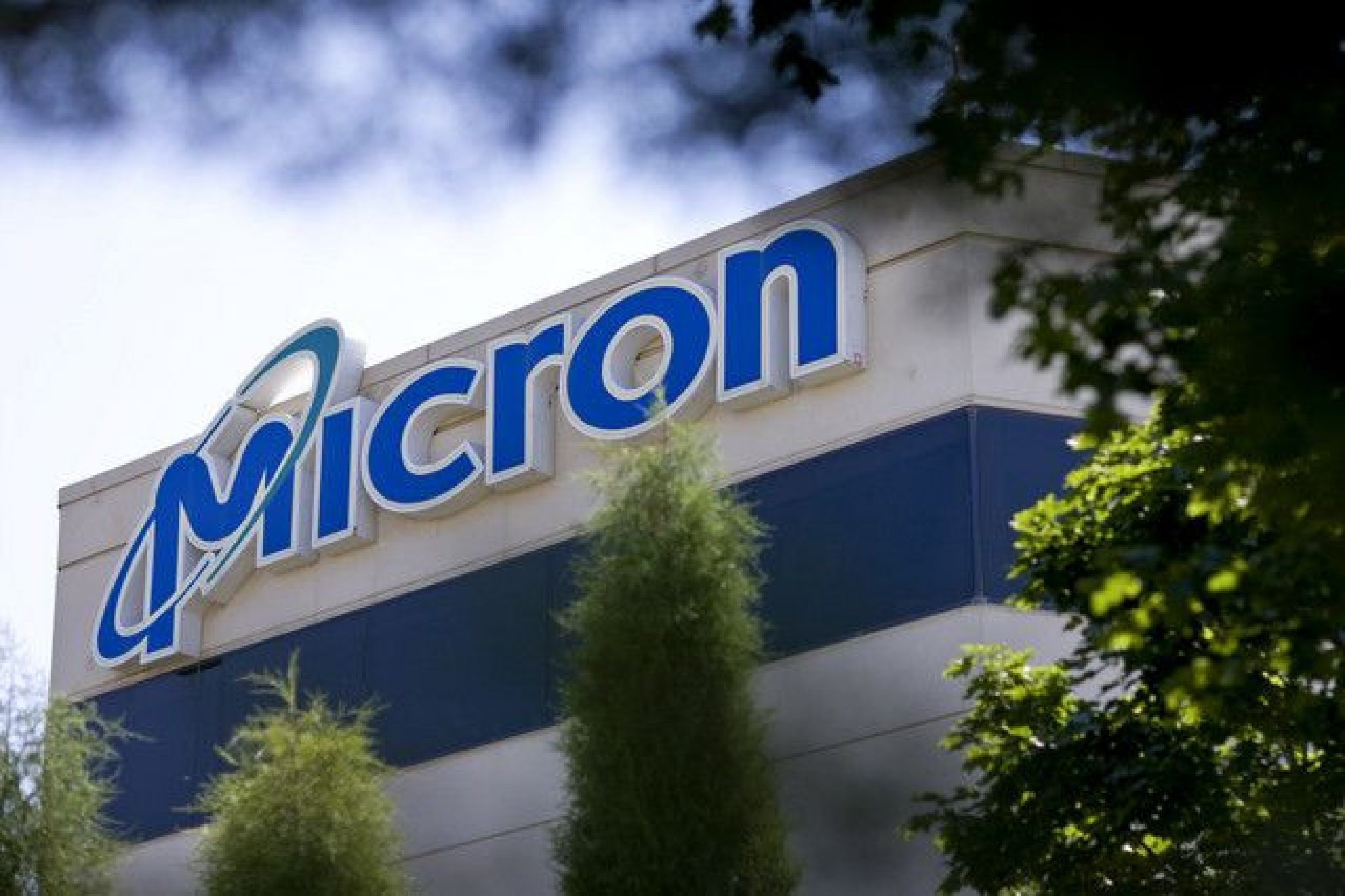
BOISE, Idaho — Shares of Micron Technology Inc. rose 3.33% to $1,078.75 in Tuesday trading, adding $34.79, extending a powerful rally in the memory chipmaker’s stock as investor enthusiasm for artificial intelligence-driven memory demand continues building heading into the company’s fiscal fourth-quarter earnings report next week.
Tuesday’s gain follows a strong session Monday, when Micron shares closed at $1,043.96, up 2.77%, outpacing a broader 2.26% advance in the Nasdaq Composite that same day. The stock has now climbed more than 256% since the start of the year, according to recent market data, a run that has pushed Micron’s market capitalization above $1.15 trillion and left shares trading within striking distance of the company’s all-time high of $1,255, reached on June 25.
The rally has been fueled largely by surging demand for high-bandwidth memory, or HBM, chips used in artificial intelligence accelerators, a dynamic that has lifted memory chipmakers broadly across global markets in recent weeks. Micron has continued expanding its AI memory story beyond HBM specifically in recent sessions, with the company adding new details to its broader artificial intelligence narrative in a disclosure made September 15, according to market commentary tracking the stock.
Investors are now turning their attention to Micron’s upcoming fiscal fourth-quarter results, scheduled for release September 30 after the close of U.S. markets, with a conference call set to follow at 2 p.m. Mountain time. Analysts currently expect the company to report revenue of approximately $50.42 billion for the quarter, alongside earnings per share of roughly $31.14. Options traders have priced in a potential move of more than 10% in Micron shares around the earnings release, reflecting the high level of uncertainty and anticipation surrounding the report. The results would follow a blowout fiscal third quarter, in which Micron reported earnings of $8.54 billion, an increase of nearly 998% from the prior year, underscoring the scale of the company’s recent earnings acceleration tied to AI-driven memory demand.
Wall Street has grown increasingly bullish on Micron’s stock as that demand story has played out. Stifel analyst Brian Chin maintained a Buy rating on the shares Monday, keeping a price target of $1,500, implying further potential upside even after the stock’s dramatic run this year. Across the broader analyst community, Micron carries an average rating of Strong Buy from 49 analysts, with individual price targets ranging as high as $2,000, according to recent compiled estimates. Not every signal facing the stock has been unambiguously positive, however; some investors have flagged Chief Executive Officer Sanjay Mehrotra’s recent sales of company stock as a data point worth monitoring, even though such sales are common among executives at companies whose share prices have appreciated substantially.
A potential competitive challenge has also emerged in recent days. China’s ChangXin Memory Technologies, known as CXMT, moved its fifth-generation DRAM platform into mass production on September 15, a development that market watchers have said poses a new test for both Micron and rival memory maker SanDisk, given that the assumption of limited near-term competition has been a key pillar underpinning bullish valuations across the memory chip sector.
Micron’s business today centers on dynamic random access memory, or DRAM, chips, which represent the company’s primary revenue stream, alongside a smaller but growing business in NAND flash storage chips. The company, founded in 1978 and headquartered in Boise, Idaho, serves a broad range of end markets, including data centers, personal computers, graphics processing, networking equipment, automotive systems, industrial applications, and smartphones and other mobile devices. Micron sells its products through a combination of its own direct sales force, independent sales representatives, distributors and retailers, alongside a web-based direct sales channel and additional distribution partnerships.
The company has continued investing heavily in expanding its domestic manufacturing footprint in recent months, including selecting construction firm Bechtel as its partner for a major new semiconductor manufacturing project in New York, alongside a separate manufacturing expansion underway in Virginia, both part of a broader push toward what the company has described as made-in-America memory production. Micron also disclosed a strategic agreement with AI company Anthropic in June aimed at scaling next-generation AI infrastructure, reflecting the deepening ties between memory chip suppliers and the major AI labs driving demand for their products.
Micron’s rapid share price appreciation has also fueled speculation about a potential stock split, with the shares now trading well above the $1,000 mark, a level that can create practical friction for retail investors seeking to purchase full shares. The company has not confirmed any specific plans regarding a split as of the most recent reporting.
With Micron’s fiscal fourth-quarter results now just over a week away and options markets pricing in a potentially sharp reaction in either direction, investors are likely to treat the upcoming earnings report as a critical test of whether the company’s extraordinary run this year can be sustained, particularly as the market weighs both the continued strength of AI-driven memory demand and the emerging competitive threat posed by Chinese memory producers entering more advanced stages of DRAM production.

Alejandro Garnacho given fresh escape route after nightmare Aston Villa start

DoorDash admits it ‘screwed up’ after underpaying New York workers

Bitcoin Hits 7-Month High as FOMO Peaks, But 2 Signals Still Flash Caution




-

 Fashion4 days ago
Weekend Open Thread: Talbots – Corporette.com
-

 Tech2 days ago
Researchers escape OpenAI Codex sandbox to run commands on host
-

 Crypto World7 days ago
Robinhood engineers charged over $50K crypto scheme
-

 Crypto World4 days ago
Circle launches Arc Studio AI agent for building onchain apps
-
 NewsBeat4 days ago
Trump says US has reached an agreement to take permanent control of Greenland’s security
-

 Crypto World2 days ago
Who Needs CLARITY Anyway? ARB Could See 70X Increase: Hodler’s Digest
-

 Crypto World4 days ago
Bitcoin price breaks channel as RSI climbs to 63
-

 Crypto World6 days ago
US Charges Robinhood Engineers Over Crypto Listing Trades
-

 Crypto World7 days ago
What Is the Status of the U.S.-Iran Peace Talks? Here's What Both Sides Are Saying
-

 Crypto World4 days ago
Trading Bitcoin on Robinhood? Why 2% Spread Has Traders Worried
-

 Tech7 days ago
Webb’s IC 348 Mosaic Includes Two-Jupiter Dwarfs, Twin Jets, and a Nursery Still Making Worlds
-

 Crypto World5 days ago
Mortgage and refinance interest rates today, Thursday, September 17, 2026
-

 Crypto World4 days ago
World Money launches in 150+ countries with Stripe
-

 Entertainment7 days ago
Big Brother Update: Melody Explodes at Drew as Illness Sweeps BB28 House
-

 Crypto World4 days ago
Silver prices recover quickly, hitting weekly high today
-

 Business2 days ago
Analog Devices (ADI) Bets $1.35 Billion on Chips that Let Machines Think for Themselves
-
 NewsBeat4 days ago
US was ‘on brink of war’ with China over false AI report of nukes moving in Middle East
-

 Tech5 days ago
GPT-6 Astra Reached the Nether in Minecraft, Lost Its Stash to a Creeper, and Farmed Potatoes for Hours
-

 Business7 days ago
Federal Reserve expected to hike interest rates 25 basis points at FOMC meeting
-

 Crypto World1 day ago
Bitcoin price holds above $81K as key catalysts line up
You must be logged in to post a comment Login