

Business
Markets to enter prolonged “drag phase,” not deep correction: Vikas Khemani


Earnings steady, but global shocks yet to reflect fully
Responding to concerns around earnings momentum and near-term market direction, Khemani noted that while corporate results have broadly held up, the real impact of global disruptions is still ahead.
“Earnings have been by and large okay but that was more the effect was before the war. The impact of the war is yet to be felt in the energy prices, supply chain disruptions, all those things in my opinion will be felt in Q1 earning and to that extent market is well prepared for that. I do not think market is really expecting any spectacular earning in Q1 and I think that at this point in time broadly everything looks alright except the fact that our energy bill which is very high, very dependent on the war getting over, oil prices coming down,” he said.
He added that inflation, interest rates, currency movement, and even US yields are all linked to the trajectory of energy prices.

“No major fall, but a prolonged drag” scenario
On whether markets could see a sharp correction, Khemani was relatively reassuring.
“I do not expect much fall to be honest unless something again worsens in the oil, escalates like I said the single biggest factor right now which is playing on everybody’s mind and on the economic front as well is the energy price, so it will just hang in there.”He also pointed to improving global supply expectations, including potential diplomatic developments and increased oil availability, which could stabilise prices.
India’s macro resilience remains intact
Despite global headwinds, Khemani remains constructive on India’s domestic growth story.
“If you see last quarter’s number across the board, volume growth has been very good in consumer, in automobiles, in insurance premiums, credit growth all those things are pointing towards the right direction. Our investment cycle has really held on and I do not think that is changing anytime in a hurry.”
He emphasised that while cost pressures and supply chain disruptions persist, there is no structural break in India’s growth trajectory.
Manufacturing and capex themes still strong
Addressing concerns around rising freight costs and global instability, Khemani reaffirmed his long-term faith in structural themes such as manufacturing.
“In fact, some of the plays on manufacturing side turns out to be good because of the currency depreciation. Demand drivers get stronger because every crisis also has a positive side of it… exporters do tend to benefit and they do tend to get volume growth compete better.”
He reiterated that the India growth story remains intact despite short-term macro pressure.
Mid and smallcaps: stock-picking is key
On mid and smallcap opportunities, Khemani stressed that the real alpha lies in bottom-up selection rather than index-level assumptions.
He said: “We are fully invested. Every sector if you see has large, mid, and smallcap segments… we are able to identify companies which can double their earning in three to four years’ time directionally and looks good.”
He highlighted opportunities across manufacturing, pharma, CDMO, BFSI, and even select IT names.
IT sector: contrarian opportunity emerging
Khemani noted that sentiment in IT is gradually shifting, potentially creating a contrarian entry point.
“In my opinion probably time has come where the narrative in IT is changing… IT is not going to go away because of AI… so I think that could be a sector which could be there.”
He pointed out that valuations remain reasonable and earnings growth could stay in the mid-teens range.
Pharma and healthcare: still a bottom-up story
On pharma, he remained positive but cautious about broad-based calls. “It has always been bottom up. I mean, we still remain very positive on the pharma, CDMO, or healthcare space… but yes, I think still lot rally left.”
NBFCs: stock-specific approach critical
Discussing NBFCs, Khemani emphasised selectivity, highlighting his fund’s exposure to Aditya Birla Capital.
“Aditya Birla Capital is one of our largest holding has been 3.5x in last three years… we invested in Aditya Birla Capital when it was Rs 100 one time book… so it is again more stock specific bottom up.”
On rising global market returns and investor FOMO, Khemani offered a strong counterview.
“I think it is a very in my opinion stupid idea to look for invest or diversify out of FOMO. It is very natural recency bias plays as a very big bias in every investor’s mind.”
He stressed that India has historically been one of the strongest long-term equity performers and diversification should be goal-based, not trend-driven.
Outlook
Khemani’s overall message is clear: markets are not on the verge of a major breakdown, but neither are they poised for a straight-line rally. The key variable remains energy prices, which will influence inflation, rates, currency, and global risk appetite.
Until that stabilises, markets may remain in what he calls a “holding pattern” — resilient, but restrained.


The government says shoppers across the UK could save as much as £150 million a year on food – but how much is that per household?
QTUM: Computing Gets The Government Touch
Urban Outfitters URBN 2.92%increase; green up pointing triangle logged higher sales in its latest quarter, citing particularly strong performance for its Free People business across both retail and wholesale.
The company’s Free People group, which includes its namesake apparel brand as well as its activewear division FP Movement, recorded 17% sales growth in the latest quarter. The growth helped Urban Outfitters’s top line climb 11% overall.
Copyright ©2026 Dow Jones & Company, Inc. All Rights Reserved. 87990cbe856818d5eddac44c7b1cdeb8


I am mostly a trader engaging in both long and short bets intraday and occasionally over the short- to medium term. My historical focus has been mostly on tech stocks but over the past couple of years I have also started broad coverage of the offshore drilling and supply industry as well as the shipping industry in general (tankers, containers, drybulk). In addition, I am having a close eye on the still nascent fuel cell industry.I am located in Germany and have worked quite some time as an auditor for PricewaterhouseCoopers before becoming a daytrader almost 20 years ago. During this time, I managed to successfully maneuver the burst of the dotcom bubble and the aftermath of the world trade center attacks as well as the subprime crisis.Despite not being a native speaker, I always try to deliver high quality research to followers and the entire Seeking Alpha community.
Analyst’s Disclosure: I/we have no stock, option or similar derivative position in any of the companies mentioned, and no plans to initiate any such positions within the next 72 hours. I wrote this article myself, and it expresses my own opinions. I am not receiving compensation for it (other than from Seeking Alpha). I have no business relationship with any company whose stock is mentioned in this article.
Seeking Alpha’s Disclosure: Past performance is no guarantee of future results. No recommendation or advice is being given as to whether any investment is suitable for a particular investor. Any views or opinions expressed above may not reflect those of Seeking Alpha as a whole. Seeking Alpha is not a licensed securities dealer, broker or US investment adviser or investment bank. Our analysts are third party authors that include both professional investors and individual investors who may not be licensed or certified by any institute or regulatory body.

Customers shop at a Walmart store on May 13, 2026 in Chicago, Illinois.
Scott Olson | Getty Images
President Donald Trump suggested last month he would look out for companies that didn’t seek tariff refunds after the Supreme Court struck down his wide-ranging global duties.
At first, some major firms like Amazon appeared to be holding off on asking for money back over concerns they’d offend the often transactional president and end up in his crosshairs, CNBC reported earlier this year. But now some of the largest U.S. companies from Walmart to Apple have confirmed they’re seeking what they’re owed — regardless of the consequences.
Home Depot, General Motors, John Deere, FedEx and Costco are among the other major U.S. corporations that have said they are trying to get refunds. The moves may not represent a sea change in how companies handle their relationships with Trump. Even so, they show key examples of when they’re willing to publicly break with the president, after he told CNBC he would “remember” if companies decided not to seek refunds.
There’s a strong business incentive to apply — as well as, for many, a fiduciary responsibility. Major companies have a chance to regain potentially billions of dollars and maximize returns for shareholders.
More than $35 billion in refund money has already been processed and is on its way to businesses’ bank accounts, U.S. Customs and Border Protection said in a court filing earlier this month. The government owes roughly $166 billion in refunds overall.
‘I’ll remember them’

When Trump appeared on “Squawk Box” last month, CNBC’s Andrew Ross Sorkin said that at the time, Apple was among the companies that had held off on applying for a refund over apparent concerns it would upset the president. In response, Trump said it was “Brilliant if they don’t do that.”
“Actually, if they don’t do that, they’ve got to know me very well,” he said. “I’m very honored by what you just said.”
“If they don’t do that, I’ll remember them,” Trump said.
The comments made waves around Washington, where lobbyists and business groups say it initially gave some importers pause over whether to apply for the money they were due. Companies have been trying to parse what exactly the president might have meant with his remark, and whether and how the administration could retaliate against them for moving through the process.
But the threat has not deterred the largest U.S. companies from trying to claw back what they paid in tariffs. Take the largest U.S. retailer Walmart, which drew Trump’s ire last year when it said it could have to raise prices in response to the duties, sparking Trump to tell the retailer to “eat the tariffs” and warn he would be “watching.”
In an interview with CNBC on Thursday, Walmart finance chief John David Rainey confirmed that the company applied to get back the money it paid for so-called IEEPA tariffs, but doesn’t expect a major windfall if and when it is paid back.
“We have availed ourselves of the option to participate in those refunds. For us, it’s a relatively small part of our overall business,” said Rainey when discussing the company’s fiscal first-quarter results. “To be eligible for those refunds, you need to be the importer of record, and for us, where we are the importer of record, it’s about half of 1% of our U.S. sales.”
In its most recent full fiscal year 2026, Walmart U.S. saw $483 billion in net sales, so half of 1% would total about $2.42 billion. While that total is larger than many companies’ annual revenue, Rainey said it’s hardly material for a business that saw more than $713 billion in total revenue last fiscal year.
Still, “every little bit matters,” he said.
“We’re going to prioritize those refunds if and when we get them towards investing in price for our customers,” he said. “We recognize that given where we are right now with both the stress on the consumer as well as the retention of the share gains that we’ve seen, the best ROI on that dollar of capital is to invest in price for our customers.”
Walmart is among the companies that have said they could try to use the money to benefit customers, even in indirect ways. Deploying the refunds to keep prices low for consumers has become a theme among companies applying for them.
“What we have heard most of all in terms of uses is, this is going to help us avoid raising prices as quickly as we thought we were going to have to,” said Neil Bradley, chief policy officer with the U.S. Chamber of Commerce. “That’s a hard thing to telegraph, but it’s real.”
Walmart confirmed it was seeking money back Thursday after Target CFO Jim Lee said on Wednesday the company was “working through the process” of getting a refund. Home Depot finance chief Richard McPhail also said Tuesday the retailer had applied for and had “received an immaterial amount to date.”
“We have assumed that that could provide a significant offset to those costs,” he told analysts.
Some firms have sought to find ways to spend any refund money in ways that would appease both the White House and their customers, one representative of an influential business group said. For example, Apple has said since Trump’s comments that it is applying for a tariff refund.
It plans to reinvest any money it gets back into “U.S. innovation and advanced manufacturing,” a major priority for Trump, Apple CEO Tim Cook said on a call with analysts last month.
Meanwhile, other major companies have stayed quiet about whether they’ll try to claw back their tariff payments.
Amazon, which was sued in a class action lawsuit last week over its decision not to pursue a refund, hasn’t responded to requests for comment on whether it’ll apply to get money back.
Others aren’t ready to admit their refund plans one way or another. On Wednesday, Lowe’s CEO Marvin Ellison would not say whether the retailer is applying.
“We’re just monitoring the situation,” said Ellison. “We haven’t talked publicly about whether we filed or not, but what we have done is paid really close attention to the situation, understanding that when tariff refunds go out, they go out to everybody, and so we’re right now trying to determine if and when those refunds happen.”
Notably, this is the largest dividend announced by the company in nearly six years, since the final dividend of Rs 10.15 per share paid in 2020. Along with the interim dividend of Rs 6.5 per share declared in January this year, ITC’s total dividend payout for FY26 stands at Rs 14.50 per share with a face value of Re 1 each.
The FMCG company has declared 32 payouts since July 3, 2001, and has a dividend yield of 4.71%, according to data on Trendlyne. The latest dividend will be paid to eligible shareholders between July 24 and 29. However, it is important to note that the dividend is subject to shareholders’ approval at its upcoming Annual General Meeting scheduled on July 23.
In the previous financial year, ITC paid a final dividend of Rs 7.85 in May 2025 and an interim dividend of Rs 6.5 in February. This took the total dividend payout for FY25 to Rs 14.35 per share.
Apart from dividends, ITC issued bonus shares to eligible shareholders in 2016 (1:2) and 2010 (1:1). The company also executed a mega demerger of its hotels segment, with the stock adjusting to the restructuring the January last year, followed by the listing of ITC Hotels on stock exchanges.
ITC Q4 Results
ITC announced the dividend along with its results for the January-March quarter of FY26. The company reported a 5% year-on-year (YoY) growth in its standalone net profit at Rs 5,113 crore for Q4 FY26, compared to Rs 4,875 crore in the year-ago quarter. Revenue from operations meanwhile rose 17% YoY to Rs 21,695 crore during the quarter under review, from Rs 18,495 crore in the corresponding quarter of the previous financial year.
ITC’s cigarettes business remained the largest contributor to profitability. Revenue from the FMCG-cigarettes segment rose 32% YoY to Rs 11,066 crore during the quarter, compared with Rs 8,400 crore a year ago.
Also read: What Goldman Sachs, Morgan Stanley and others are saying after ITC’s Q4 results?
(Disclaimer: Recommendations, suggestions, views and opinions given by the experts are their own. These do not represent the views of The Economic Times)
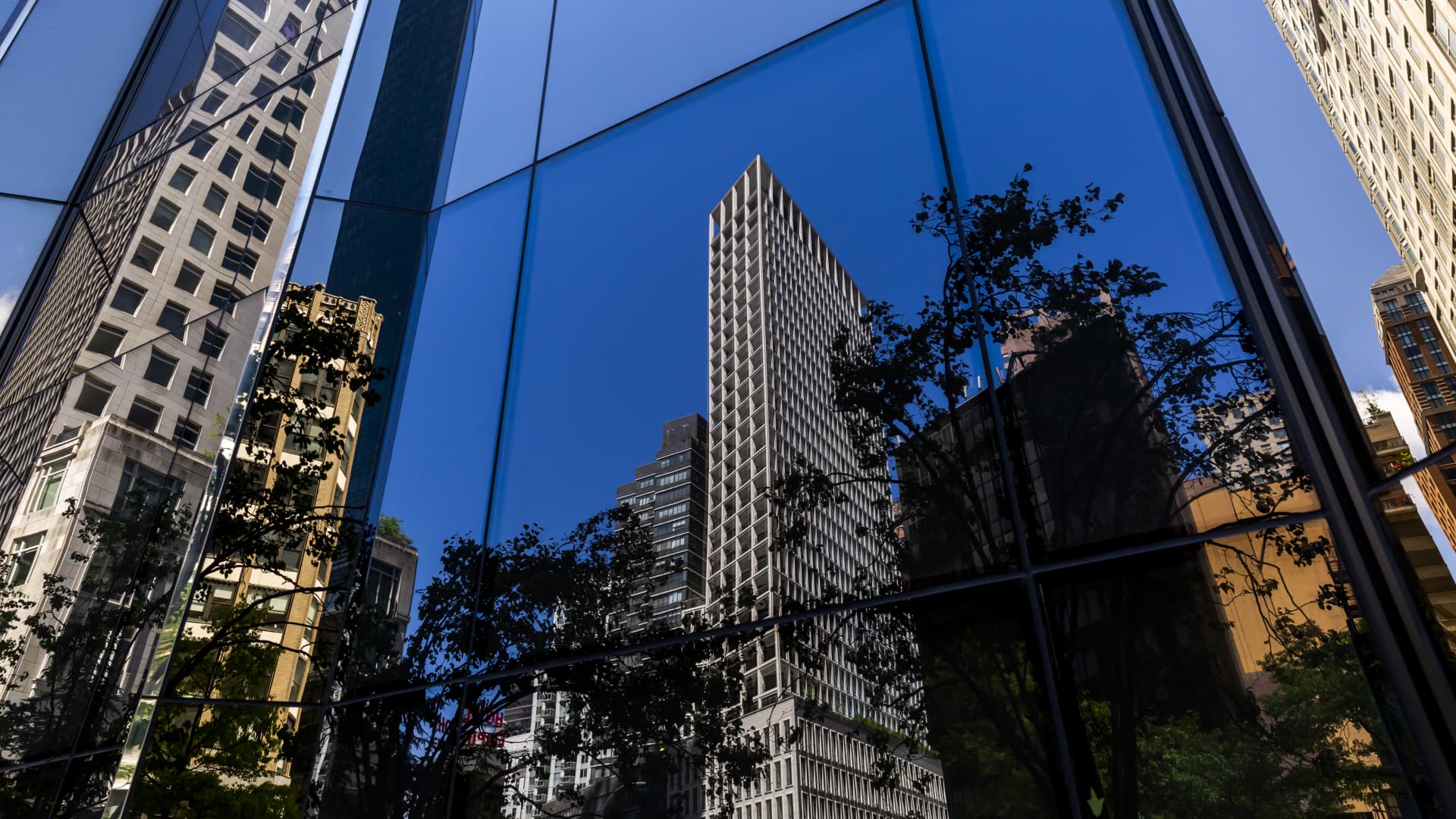
The AvalonBay Communities Inc. Park Loggia condominium, center, is reflected in a building in New York, U.S.
Mark Abramson | Bloomberg | Getty Images
The biggest ever merger of real estate investment trusts — the combination of Equity Residential and AvalonBay, announced Thursday — has investors and analysts alike left with dropped jaws.
The all-stock merger will have a market capitalization of about $52 billion and a total enterprise value of approximately $69 billion, according to a release. It will create one of the largest real estate companies in the U.S., with more than 180,000 rental apartments.
“This combination creates a new and fundamentally stronger company with differentiated capabilities that will drive structurally superior cash flow generation, earnings and dividend growth, and value for shareholders,” said Benjamin Schall, CEO of AvalonBay.
Schall will become CEO of the newly formed company, and Equity Residential CEO Mark Parrell will retire when the transaction closes.
Allan Swaringen, president and CEO of JLL Income Property Trust, which manages about $90 billion of real estate investments globally for institutional clients and high-net-worth individuals, called the tie-up “unbelievable.”
“That they would merge is really incredible,” he said.
Swaringen noted that the stocks of both companies are trading at below their net asset values, a situation that makes them both ripe to be bought and privatized.
“I think this might be a defense against privatization. By putting themselves together, they’re almost too big to get bought,” Swaringen said.
He also noted the high cost of building technology, which residential tenants now demand – from online leasing to credit checking to delivering bandwidth and Wi-Fi. Consolidating could reduce those costs.
“Strategically, the rationale is straightforward: scale, liquidity, balance sheet efficiency and overhead synergies,” said David Auerbach, chief investment officer at Hoya Capital Real Estate.
Auerbach said he thinks this could be the first of more megadeals in the space.
“We have WAY too many Apartment REITs out there, and it’s a sector ripe for consolidation,” he wrote in emailed comments to CNBC.
Auerbach noted that the deal comes after a challenging stretch for apartment landlords, who have been dealing with sluggish rent growth due to the post-Covid construction boom that delivered a massive wave of new supply.
Neither Auerbach nor Swaringen said they expect to see any effect on rents. While the combined company’s market share might be growing in certain markets, they are still going to have to compete with the rest of the field. The apartment market is highly diversified, building to building, giving consumers a lot of options.
Regulatory and political scrutiny may arise, given the sheer size of the deal and the current drumbeat on housing affordability. But even after merging, the combined company will have a small market share.
“While there are no antitrust regulatory approvals needed, there is the political PR battle for which we think management well articulated [that] the combined company is < 3% market share and heavily invests in expanding housing,” wrote Alexander Goldfarb, senior analyst with Piper Sandler. “Ultimately, we believe the combined company needs to improve earnings growth beyond the one-time synergies to show bigger is actually more profitable.”
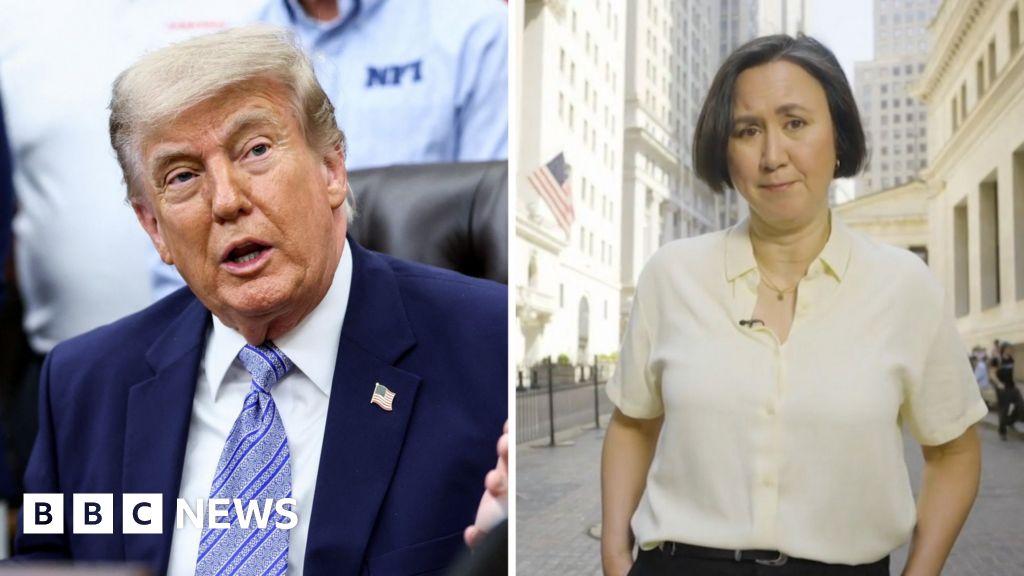
The BBC’s Michelle Fleury reports from Wall Street on recent government filings showing that in the first three months of this year thousands of stock market trades were made on behalf of President Donald Trump.
The trading includes shares in some of America’s biggest companies.
A spokesperson for the Trump Organization said that neither the president, his family or the company played any role in selecting or approving investments. They receive no advance notice of trading activity and provide no input regarding investment decisions or portfolio management, the statement said.


A seasoned consulting specialist at a leading Central Asian bank. The author behind Novo Capital brings half a decade of experience delivering strategic insight and analysis for the bank’s clientele within the private banking branch. Launching the career back in 2020 after graduating from a top CA university, the author developed a resilient methodology forged amidst global market volatility, focusing on corporate valuation, due diligence for investment opportunities, and crafting spot-on forecasts that guide long-term investment strategy. The goal of contributing to Seeking Alpha seems to be quite simple: ideas are worth discussing, and one can gain “alpha” only through gaining out-of-consensus information from opinions few professionals have nowadays. That’s exactly the reason Novo Capital was created.
Analyst’s Disclosure: I/we have a beneficial long position in the shares of MSFT either through stock ownership, options, or other derivatives. I wrote this article myself, and it expresses my own opinions. I am not receiving compensation for it (other than from Seeking Alpha). I have no business relationship with any company whose stock is mentioned in this article.
Seeking Alpha’s Disclosure: Past performance is no guarantee of future results. No recommendation or advice is being given as to whether any investment is suitable for a particular investor. Any views or opinions expressed above may not reflect those of Seeking Alpha as a whole. Seeking Alpha is not a licensed securities dealer, broker or US investment adviser or investment bank. Our analysts are third party authors that include both professional investors and individual investors who may not be licensed or certified by any institute or regulatory body.
Chart Of The Day: Yes, The SpaceX Deal Is Enormous

Huge discount on zoos, theme parks, kids’ meals and cinemas

U.S. pushes its AI in China and Asia after Trump-Xi meeting

9 Of The Best Fans To Keep You Cool Through The Heat Wave 2026


-

 Crypto World6 days ago
BloFin War of Whales 2026 Grand Prix opens registration for $5M trading championship
-

 Fashion7 days ago
Weekend Open Thread: Theory – Corporette.com
-

 Crypto World7 days ago
E-Estate Announces 1 Year Live: Washington DC Summit as Real Estate Tokenization Enters Its Next Phase
-

 Tech6 days ago
Google reimburses Register sources who were victims of API fraud
-

 Business7 days ago
H&R Real Estate Investment Trust (HR.UN:CA) Q1 2026 Earnings Call Transcript
-

 Entertainment7 days ago
David Letterman Returns to Late Show, Blasts Cancellation
-

 Sports7 days ago
Napoleonic enters 2026 Doomben 10,000 field via Abounding withdrawal
-
 Crypto World7 days ago
BeInCrypto 100 Institutional Awards Nomination: KAST for Best Digital Assets Neobank and Best Digital Assets Fintech
-
 Crypto World6 days ago
Bitcoin Battles US Bond Nerves With BTC Price Dip Toward New May Lows
-

 Crypto World7 days ago
ICE and CME urge US regulators to curb Hyperliquid energy trading
-
 Crypto World6 days ago
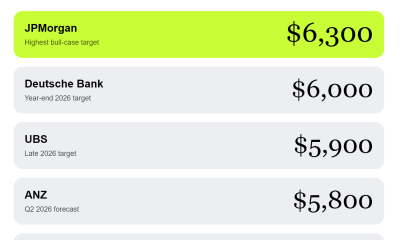
Wall Street’s Boldest Gold Prediction Has Russians Rushing to Buy
-

 Fashion5 days ago
On the Scene at Gucci’s Cruise Show in New York City: Mariah Carey, Kim Kardashian, Lindsay Lohan, Iman, and More!
-
 Crypto World7 days ago
IREN closes $3 billion convertible notes deal amid AI infrastructure expansion
-

 Fashion6 days ago
Trending Western Style Vests Perfect for Summer
-

 Politics6 days ago
Watch: far-right flag-fanatics run over victim, attack locals – Setup By the Left wing for your entertainment
-

 Crypto World17 hours ago
Blockchain.com files with SEC for U.S. IPO
-

 Fashion7 days ago
Creative Ideas for Custom T-Shirts
-

 Fashion5 days ago
Amazon Sundays: Memorial Day Hosting
-

 Crypto World7 days ago
Crypto Market Structure Bill Clears Committee; Senate Vote in Focus
-

 Entertainment5 days ago
Off Campus Easter Eggs Explained: Characters, Stories, More
You must be logged in to post a comment Login