
Business
May 2026 Monthly




UK says cooperating closely with US on security ahead of King Charles’ visit
Ukrainian drone strike hits Russian fertilizer hub, deepening supply fears

On Friday, the 50-stock index fell 275 points, or 1.14%, to close at 23,898.
Rupak De of LKP Securities said markets have seen heightened volatility over the past three sessions, with the index coming under pressure amid escalating US-Iran tensions. From a technical standpoint, he noted that the index failed to sustain gains after encountering resistance around its 100-day EMA on the daily chart, triggering renewed selling that dragged it below the 24,000 level.
The overall trend now appears weak, with the Nifty potentially drifting towards 23,500. However, he added that 24,200 remains a key hurdle, and a breakout above this level could help stabilise sentiment.
1) Fed FOMC
Global markets will closely track the US Federal Reserve’s policy meeting, which begins on Tuesday, April 28. The outcome will be announced on Wednesday, April 29, with the central bank widely expected to keep interest rates unchanged at 3.50-3.75%.
2) Q4 earnings
More than 200 companies listed on the BSE are set to announce their Q4FY26 earnings this week. Key Nifty constituents in focus include Coal India, UltraTech Cement, Eternal, Maruti Suzuki India, Bajaj Finance, Adani Ports and Special Economic Zone (APSEZ), Bajaj Finserv, Hindustan Unilever (HUL), and Kotak Mahindra Bank.
Among widely tracked non-Nifty names, results are due from AU Small Finance Bank, Bajaj Housing Finance, Bandhan Bank, REC, GRSE, Adani Power, Motilal Oswal Financial Services, Vedanta, Waaree Energies, ACC, Central Bank of India, and Avenue Supermarts (DMart).

3) Iran-Israel conflict
Ceasefire negotiations between Iran and the US have hit a stalemate. Talks scheduled over the weekend failed to materialise, with Iran indicating that its officials do not plan to engage with the US on ending the conflict that has already claimed thousands of lives and roiled global markets.
The war, which began on February 27 following joint US-Israel strikes on Iran targeting its top leadership, has seen fluctuating intensity. While hostilities have eased somewhat, both sides remain far from a resolution. The initial round of talks in Islamabad also failed to yield progress. The trajectory of these negotiations is likely to be a key driver for global market sentiment.
4) US markets
Amid lingering geopolitical concerns, Indian equities will also take cues from Wall Street.
US benchmark indices ended mixed on Friday as investors remained cautious ahead of the Fed decision. The Dow Jones Industrial Average fell 127.88 points, or 0.16%, to close at 49,230.71. The S&P 500 rose 0.80% (56.68 points) to 7,165.08, while the tech-heavy Nasdaq Composite surged 398.09 points, or 1.63%, to 24,836.60.
5) Crude oil
Movement in global crude oil prices will remain a key factor for domestic markets.
US WTI crude futures settled at $94.88 per barrel on Friday, down $0.97 or 1.01%, while Brent crude rose 0.77%, or $0.81, to close at $105.33 per barrel.
6) FII/DII action
Foreign institutional investors (FIIs) remained heavy sellers during the week, offloading domestic equities worth Rs 17,140 crore over the five sessions ended Friday. Total outflows in April have now risen to Rs 43,967 crore, taking the cumulative outflow for 2026 so far to Rs 1,75,089 crore.
On Friday, FIIs sold shares worth Rs 8,827.87 crore, while domestic institutional investors (DIIs) were net buyers at Rs 4,700.71 crore.
7) Technical triggers
Decoding the charts, Ajit Mishra, Senior Vice President – Research at Religare Broking, said the index has slipped below its crucial support at 23,900 (20-DEMA), signalling a shift in near-term bias to the downside. Immediate support is seen around 23,500.
On the upside, the 24,200-24,500 zone is likely to act as a strong resistance band. Any rebound towards these levels may face selling pressure unless supported by easing crude prices and improved global cues, Mishra added.
8) Rupee vs dollar
The rupee’s movement against the US dollar will be closely tracked.
The Indian rupee declined in all five trading sessions last week, logging its steepest weekly fall since September 2022. The drop was driven by concerns over the fragility of a US-Iran ceasefire and potential disruptions to energy supplies, which triggered a fresh surge in oil prices.
The rupee settled at 94.2475 on Friday, down 1.4% for the week.
Regulatory measures by the Reserve Bank of India and optimism around a potential easing of Middle East tensions had briefly supported the currency. However, the relief proved short-lived as oil prices resumed their upward trend amid fluctuating hopes of peace talks.
9) Stocks on Watchlist
Metal major Vedanta is likely to remain in focus, with its demerger ex-date and record date falling on April 30 and May 1, respectively.
Meanwhile, Hindustan Zinc (HZL), a Vedanta subsidiary, has fixed April 30 as the record date to determine shareholder eligibility for its Rs 11 per share dividend.
(Disclaimer: Recommendations, suggestions, views and opinions given by the experts are their own. These do not represent the views of The Economic Times)
Business
Stock Market Holiday: NSE, BSE to remain shut one day this week. Check upcoming market holidays
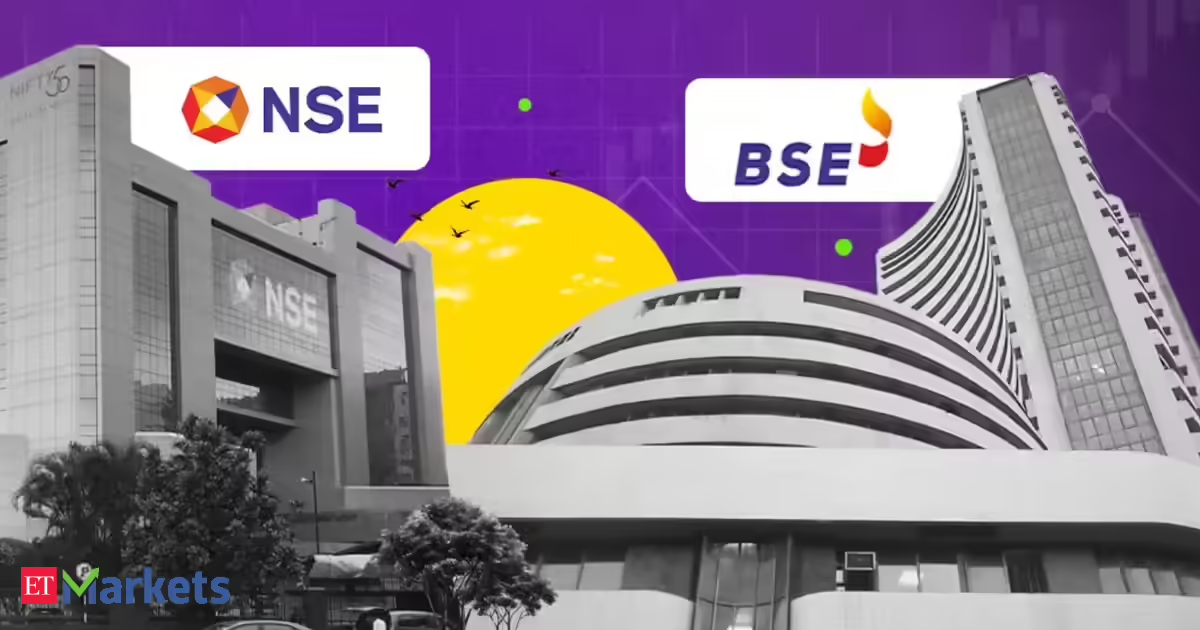
India’s largest commodity exchange, the Multi-Commodity Exchange of India (MCX), will remain closed for the first session (9 am to 5 pm) on Maharashtra Day. Trading will resume in the evening session between 5 pm and 11:30 pm, as per its website. The National Commodity & Derivatives Exchange Limited (NCDEX), meanwhile, will remain closed for the entire day.
Upcoming market holidays
In total, 16 stock market holidays are scheduled for 2026, of which seven have already passed. April saw two holidays—April 3 (Good Friday) and April 14 (Dr. B.R. Ambedkar Jayanti). Including the May 1 holiday, trading will be suspended on nine more occasions over the remaining eight months.
The BSE and NSE will next be closed on May 28 for Bakri Id, followed by June 26 (Muharram), September 14 (Ganesh Chaturthi), October 2 (Mahatma Gandhi Jayanti), October 20 (Dussehra), November 10 (Diwali-Balipratipada), November 24 (Guru Nanak Jayanti), and December 25 (Christmas).
Check list of upcoming nine market holidays
| 1 | May 1, 2026 | Friday | Maharashtra Day |
| 2 | May 28, 2026 | Thursday | Bakri Id |
| 3 | June 26, 2026 | Friday | Muharram |
| 4 | September 14, 2026 | Monday | Ganesh Chaturthi |
| 5 | October 2, 2026 | Friday | Mahatma Gandhi Jayanti |
| 6 | October 20, 2026 | Tuesday | Dussehra |
| 7 | November 10, 2026 | Tuesday | Diwali-Balipratipada |
| 8 | November 24, 2026 | Tuesday | Prakash Gurpurb Sri Guru Nanak Dev |
| 9 | December 25, 2026 | Friday | Christmas |
Maharashtra Day is observed annually on May 1 to mark the formation of the state in 1960. After India’s independence, the demand for linguistic reorganisation of states gained momentum. The Samyukta Maharashtra movement played a key role in the creation of the state.This led to the enactment of the Bombay Reorganisation Act, 1960, which bifurcated the erstwhile Bombay state into Maharashtra and Gujarat on May 1, 1960. Mumbai was designated as the capital of Maharashtra. Notably, both the BSE and NSE are headquartered in Mumbai, home to Dalal Street. May 1 is also observed as Labour Day in many parts of the country.
(Disclaimer: Recommendations, suggestions, views, and opinions expressed by experts are their own and do not necessarily reflect the views of The Economic Times.)
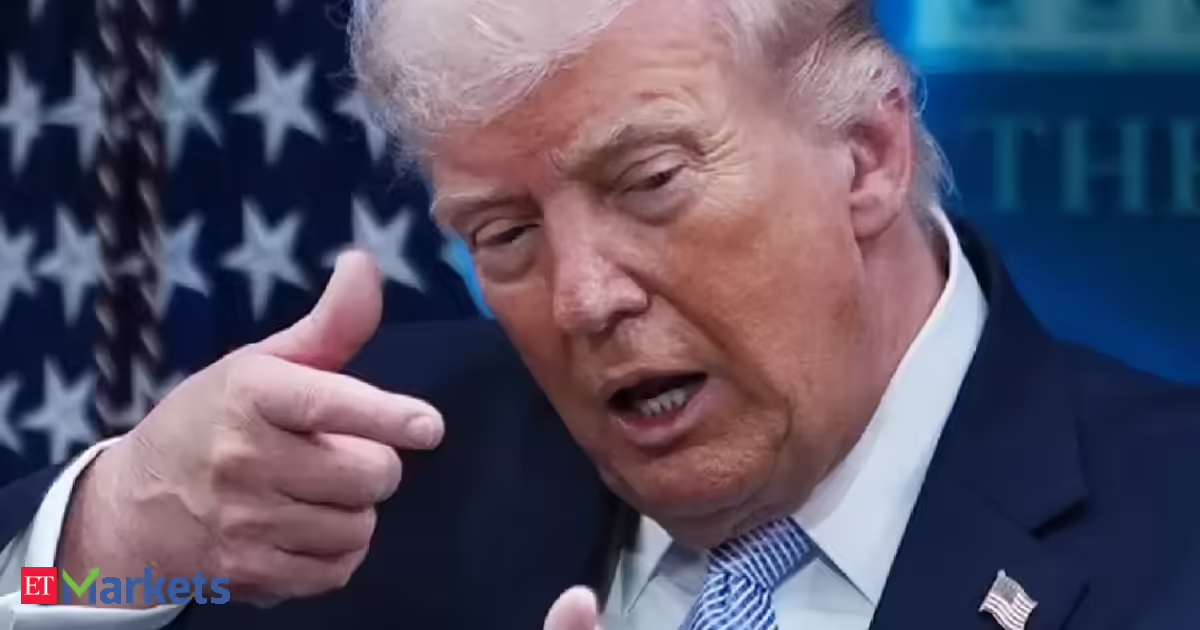
Since taking office last January, Trump’s comments to reporters in extemporaneous gatherings in the Oval Office and at formal press conferences, as well as his posts on social media, have been the primary driver behind the five best and worst days in the S&P 500 Index, according to an analysis from Fundstrat Research. It’s a grip unmatched by any modern American leader. No other president has orchestrated this many best and worst days in a dozen administrations going back to President Ronald Reagan in 1981.
“He has the market in a chokehold,” said Hardika Singh, economic strategist at Fundstrat. “The president isn’t supposed to have such an extraordinary amount of control over the fortunes of the stock market. It’s completely unprecedented.”
 ETMarkets.com
The war in Iran is providing a perfect backdrop to see how much Trump can move US stocks. The S&P 500 just posted its fastest V-shaped drop and recovery since 2020, tumbling 9% from a Jan. 27 peak to the cusp of a technical correction on March 30, before rallying back to all-time highs over the course of 11 trading days.The impact of the president’s words is even clearer when examined session-by-session. For example, the S&P 500 sank 1.5% on March 20, as Trump said in a White House briefing that he didn’t want a ceasefire with Iran. Then, on March 31, the index jumped 2.9% for its best day since May and rallied through the rest of the week after Trump told reporters at several different news outlets that negotiations with Iran were going well and the war was close to ending. There are numerous similar examples from before and since then.
It isn’t just equities that are seeing these moves either. Commodity prices have also swung wildly, with oil market volatility rising to levels last seen at the start of the Covid-19 pandemic.In essence, Trump’s wavering positions on the war have made him the market’s “arsonist and firefighter,” said Alexander Altmann, head of global equities tactical strategies at Barclays.
The whiplash strongly resembles last year’s tariff-driven rout and subsequent rebound. Both episodes were tied to abrupt policy jolts from the president and unwound by equally abrupt backpedaling. It has now reached the point where Wall Street is anticipating reversals in policy and rhetoric from day to day.
“Investors have been conditioned, not wrongly, to expect that if things get too bad, especially if it’s administration induced…they’re waiting for the tweet that says, actually, we’re good,” said Ross Mayfield, an investment strategist for Baird Private Wealth Management.
The president’s influence on stocks isn’t entirely new. Typically, the S&P 500’s biggest up and down days are driven by a combination of micro and macro catalysts, with Washington policy being one. What’s different about Trump’s second term is the market swings so closely track his social media posts and public speaking engagements.
“I have never seen a market that’s been this moved by chatter coming out of the White House on a daily basis,” said veteran market strategist Ed Yardeni of Yardeni Research. “Trump speaks every single day, and every single day he says something that seems to have an impact on the market.”
Trump’s fixation on equity prices as a scoreboard was well known before his second term began. Official White House social media channels are now using their platforms to address market moves, posting animated graphics to tout S&P 500 records or telling Wall Street not to be “panicans” when Trump’s words or policies spark fears. He’s even explicitly urged investors to buy stocks.
“If we look back again in data, this has never happened before,” Fundstrat’s Singh said. “That to me is just crazy.”
Among the S&P 500’s best days during Trump’s current term are the 9.5% rally on April 9, 2025, when he paused his tariffs, and the 3.3% jump on May 12, 2025, when the US and China agreed to a 90-day trade truce. On the flipside, the worst days include the 6% plunge on April 4, 2025, after China retaliated with tariffs on the US, and the 4.8% drop on April 3, 2025, after the president first implemented sweeping levies.
ETMarkets.comOf course, some Wall Street pros argue that the symbiosis between what the president says and what the market does is purely anecdotal and a function of the frequency of the president’s communication.
For instance, a look at volatility measurements contradicts the idea that the market has been more turbulent under Trump than during past administrations, Barclays’ Altmann said. The average value of the Cboe Volatility Index, or VIX, across the entire term of each president since the inception of the gauge in 1990 is 19.3, precisely in line with Trump’s second term and with President Joe Biden’s term, according to his analysis.
“While the world may hang on to the unorthodox communication methods by the president, and anticipate a bout of market volatility in its wake, the reality is that markets are behaving in a consistent way with historic patterns,” Altmann said. “It is the medium — high cadency social media — by which it is reacting to news flow that has changed rather than the magnitude of the reaction.”
The rise of passive investing has made the market more reactive to news in general, whether it’s a president’s comments or an unexpected earnings report, said Michael Green, portfolio manager and chief strategist at Simplify Asset Management.
In the simplest terms, he explained, the computers that manage passive portfolios are being programmed to buy or sell assets based on headlines, which is driving moves in broader indexes. By his estimate, markets are approximately four to five times more reactive than they’ve been historically.
“The headline volatility from Trump just has to do with the fact that he’s speaking more frequently,” Green said. “The simple math is that he is just a guy born into a time.”

MercadoLibre Could Deliver 25% Annual Earnings Growth And 3-4x Returns By 2031

Foreign investors have pulled back from the Indian stock market. Several major companies have seen significant drops in foreign institutional investor holdings over the past year. This selling pressure has coincided with sharp declines in the share prices of these well-known companies.


I’ve been investing for over 7 years with a focus on long term wealth creation through value growth investing, value investing, and dividend investing. I’m not a financial advisor or financial planner. I do not have a formal background in finance, I have a B.S. in Biology with a concentration in molecular cell biology. However, I am an avid reader, studier, and learner and have applied my rigorous undergraduate studies and research to investing. I plan to write articles on companies through the lens of fundamental value investing and attempt to find great companies at fair prices. All articles or comments are based on my personal experience, my own research, books/articles I’ve read, or general ideas about building long term wealth.
Analyst’s Disclosure: I/we have a beneficial long position in the shares of TSCO either through stock ownership, options, or other derivatives. I wrote this article myself, and it expresses my own opinions. I am not receiving compensation for it (other than from Seeking Alpha). I have no business relationship with any company whose stock is mentioned in this article.
I’m not an investment professional or investment advisor. This article is solely based on my own opinions and research. This is not meant to be a recommendation of the sale or the purchase of any securities. Investors should conduct their own research and perform their own due diligence before making any investment decisions.
Seeking Alpha’s Disclosure: Past performance is no guarantee of future results. No recommendation or advice is being given as to whether any investment is suitable for a particular investor. Any views or opinions expressed above may not reflect those of Seeking Alpha as a whole. Seeking Alpha is not a licensed securities dealer, broker or US investment adviser or investment bank. Our analysts are third party authors that include both professional investors and individual investors who may not be licensed or certified by any institute or regulatory body.

Last week, the BSE benchmark Sensex tanked 1,829.33 points, or 2.33 per cent, and the NSE Nifty dropped 455.6 points, or 1.87 per cent.
“Markets ended lower after two consecutive weeks of gains, weighed down by heightened geopolitical tensions and weak earnings commentary from IT majors,” Ajit Mishra — SVP, Research, Religare Broking Ltd, said.
Global developments continued to dominate market direction, with ongoing uncertainty around the West Asia crisis and concerns over supply disruptions keeping crude oil prices elevated, he added.
The combined market valuation of seven of the top-10 most valued firms dropped by Rs 2,05,343.06 crore.
The market valuation of Tata Consultancy Services (TCS) tumbled Rs 66,699.44 crore to Rs 8,67,364.12 crore.
Reliance Industries lost Rs 50,670.34 crore from its valuation, which stood at Rs 17,96,647.50 crore.The valuation of HDFC Bank dived Rs 23,090.05 crore to Rs 12,08,225.48 crore and that of Life Insurance Corporation of India (LIC) dropped by Rs 19,670.75 crore to Rs 5,13,020.56 crore.
The market capitalisation (mcap) of Bharti Airtel declined Rs 19,406.59 crore to Rs 11,05,718.62 crore.
ICICI Bank‘s mcap edged lower by Rs 14,663.27 crore to Rs 9,50,345.40 crore and that of Larsen & Toubro diminished by Rs 11,142.62 crore to Rs 5,52,171.88 crore.
However, the valuation of Hindustan Unilever jumped Rs 20,652.91 crore to Rs 5,47,219.80 crore.
The mcap of State Bank of India climbed Rs 19,522.76 crore to Rs 10,16,752.53 crore and that of Bajaj Finance went up by Rs 8,253.64 crore to Rs 5,73,690.81 crore.
Reliance Industries remained the most-valued domestic firm followed by HDFC Bank, Bharti Airtel, State Bank of India, ICICI Bank, TCS, Bajaj Finance, Larsen & Toubro, Hindustan Unilever, and LIC.
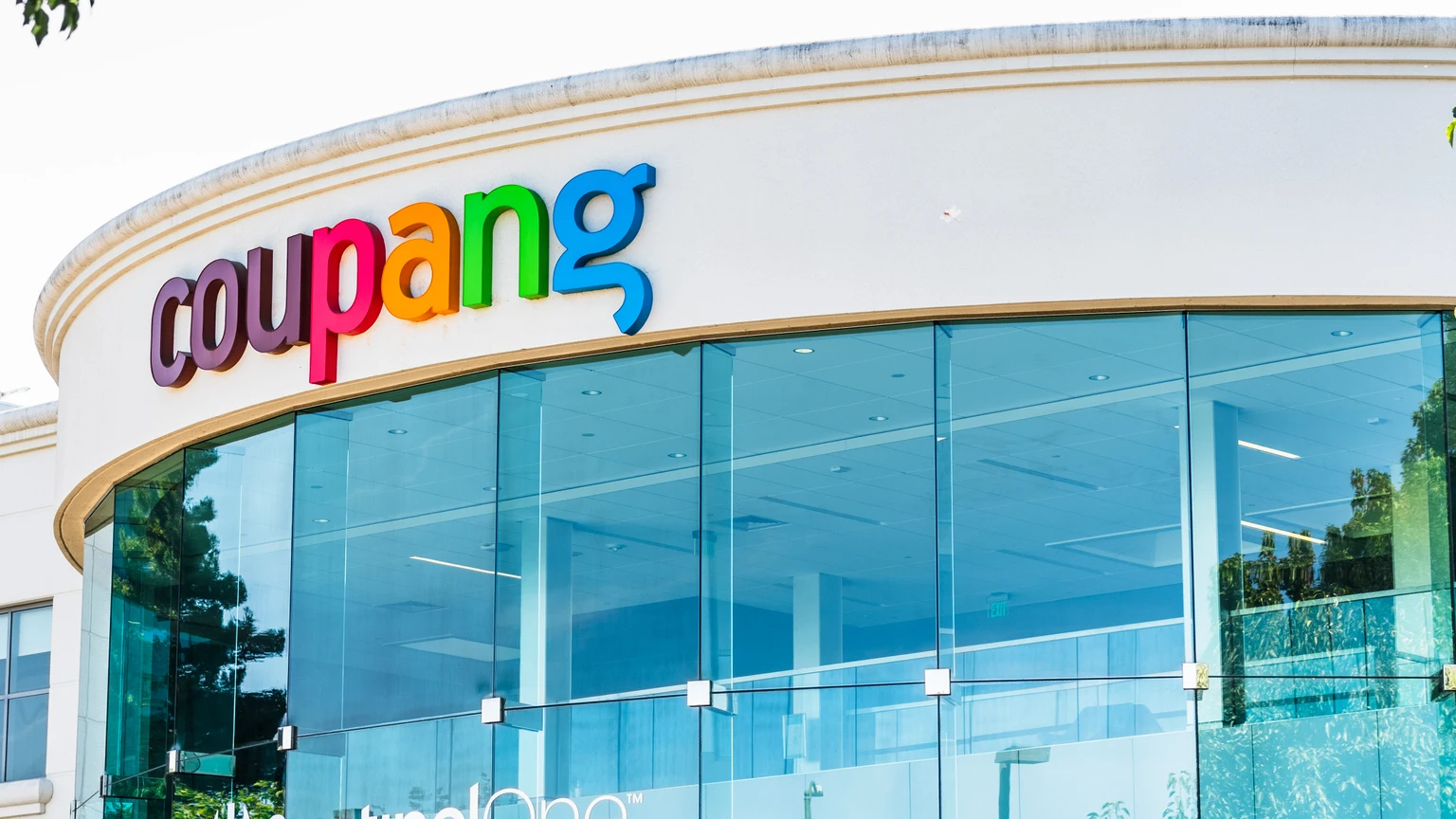
Coupang: Mounting Costs And Slowing Growth Weigh On Margins

Next Crypto to Explode in 2026: Is It Dogecoin Or BNB? While A Presale Might Outperform Both

James Gunn’s New 4-Part Superman Series Quietly Becomes a Streaming Hit

Anh money

Manchester United reach agreement with Casemiro over contract clause amid transfer speculation

US brings back mandatory military draft registration

Steven Gerrard disagrees with Gary Neville over ‘shock’ Chelsea and Arsenal claim | Football


-

 Business7 days ago
Powerball Result April 18, 2026: No Jackpot Winner in Powerball Draw: $75 Million Rolls Over
-

 Fashion2 days ago
Weekend Open Thread – Corporette.com
-

 Politics7 days ago
Zack Polanski demands ‘council homes not luxury flats for foreign investors’
-
Entertainment6 days ago
NBA Analyst Charles Barkley Chimes in on Ice Spice McDonald’s Fiasco
-

 Politics6 days ago
Gary Stevenson delivers timely reminder to register to vote as deadline TODAY
-
 Crypto World6 days ago
Bank of Hawai’i (BOH) Q1 2026: Net Income Drops to $57.4M as Net Interest Margin Expands
-
Crypto World15 hours ago
Hyperliquid $HYPE Rally Builds Momentum as AI Sector Enters Prove-It Phase
-

 Politics4 days ago
Making troops accountable for war crimes threatens US alliance, ex-SAS colonel warns
-

 Politics4 days ago
Disabled people challenge government SEND proposals over segregation concerns
-

 Business4 days ago
Rolls-Royce Voted UK’s Most Iconic Trade Mark as IPO Register Hits 150
-

 Politics4 days ago
Zack Polanski responds to home secretary’s taser threat
-

 Politics4 days ago
Starmer handler McSweeney to be dragged from shadows by Foreign Affairs Committee
-
Politics4 days ago
Wings Over Scotland | How To Get Away With Crimes
-
 Crypto World5 days ago
Five Value Stocks with Recovery Potential in 2026: PayPal (PYPL), Nike (NKE), and More
-

 Crypto World4 days ago
New York sues Coinbase, Gemini over prediction market offerings
-

 Politics4 days ago
‘Iran is still a nuclear threat’
-
 Sports3 days ago
Tim Bradley names the current best in the world: “Better than Inoue and Usyk”
-
 Crypto World4 days ago
Crypto’s great hope in Senate’s Clarity Act still has a path to survive tight calendar
-
 Business4 days ago
HCL Tech share price tank over 9% after weak Q4. JPMorgan, HSBC & 3 others cut target price
-

 Business4 days ago
The Job Benefits Most Men Don’t Know to Negotiate
You must be logged in to post a comment Login