NEW YORK — Meta Platforms Inc. is rolling out new tracking software on the computers of its U.S.-based employees to capture mouse movements, clicks and keystrokes, using the data to train artificial intelligence models aimed at building autonomous AI agents capable of performing everyday work tasks, according to internal memos obtained by Reuters.
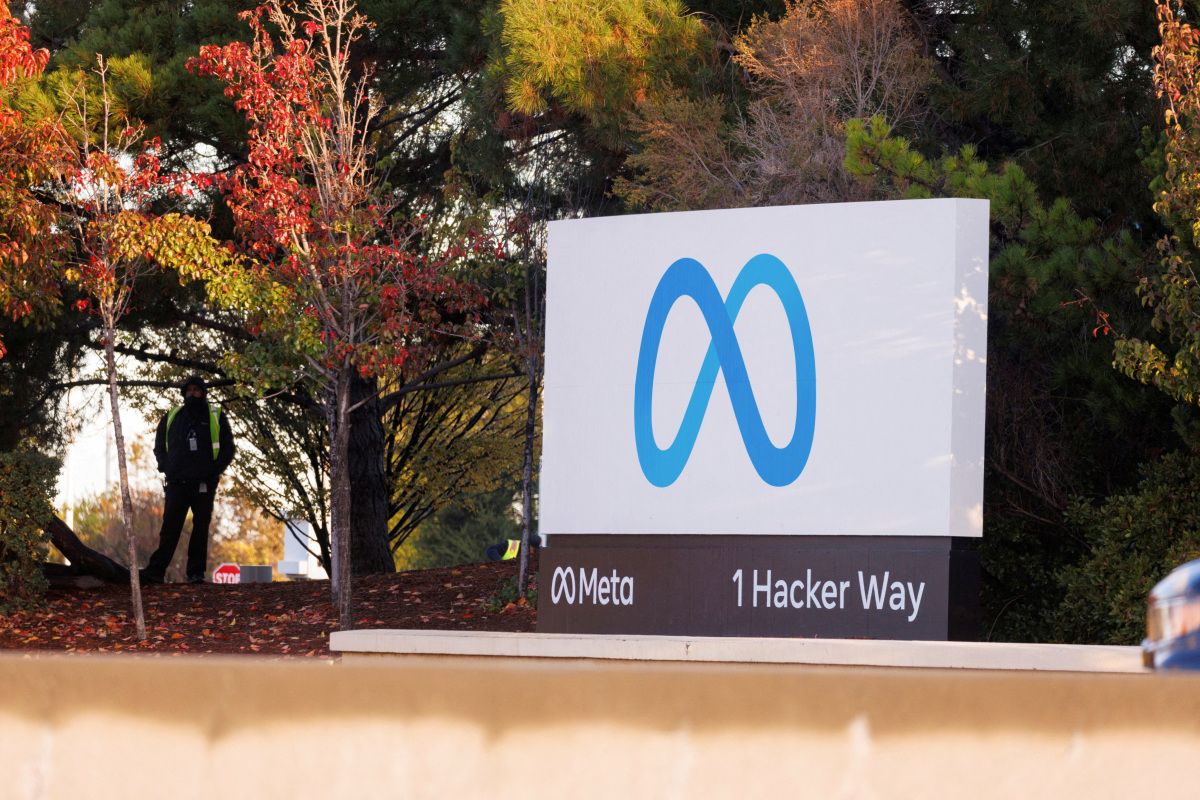
Headquarters of Facebook parent company Meta Platforms Inc in Mountain View
The tool, known as the Model Capability Initiative or MCI, will operate on a curated list of work-related applications and websites. It will also take occasional snapshots of screen content to provide context for the interactions, a staff AI research scientist posted Tuesday in an internal channel for the company’s Meta SuperIntelligence Labs team.
Meta’s push reflects the intensifying race among tech giants to develop more capable AI agents that can navigate computer interfaces like humans — selecting dropdown menus, using keyboard shortcuts and handling multi-step digital workflows. Current models often struggle with these practical interactions despite advances in language understanding.
“If we’re building agents to help people complete everyday tasks using computers, our models need real examples of how people actually use them — things like mouse movements, clicking buttons, and navigating dropdown menus,” Meta spokesperson Andy Stone said in a statement. “To help, we’re launching an internal tool that will capture these kinds of inputs on certain applications to help us train our models.”
The initiative forms part of a broader effort rebranded as the Agent Transformation Accelerator, according to a separate memo from Meta CTO Andrew Bosworth. Bosworth told staff the company aims for a future where AI agents primarily handle routine work while humans direct, review and refine their performance. The data collected will help agents learn to identify when human intervention occurs and improve autonomously in subsequent attempts.
Advertisement
Meta emphasized that the tracking data will not be used for employee performance evaluations or any purpose beyond AI model training. The company said safeguards are in place to protect sensitive content, though specifics were not detailed in the memos.
The announcement quickly sparked internal debate and external backlash. Employees expressed concerns about privacy, surveillance and the long-term implications for job security in discussions on internal forums. Some viewed the program as turning workers into unwitting trainers for systems that could eventually automate their roles. Online reactions ranged from accusations of dystopian workplace monitoring to pragmatic acceptance that high-quality interaction data remains scarce for training reliable agents.
Privacy advocates and labor groups raised questions about consent, data minimization and potential misuse. While Meta limits the tool to U.S.-based full-time employees and contingent workers on work devices and approved applications, critics worry about the precedent for broader workplace surveillance in the AI era. Similar tracking tools have drawn scrutiny at other companies, though Meta’s explicit link to training replacement-level agents has amplified the reaction.
The move comes as Meta ramps up its massive AI investments. The company plans to spend roughly $140 billion on AI infrastructure and related efforts in 2026, nearly double the previous year’s outlay. CEO Mark Zuckerberg has repeatedly positioned AI as central to the company’s future, from improving content recommendations on Facebook and Instagram to developing advanced agents that could transform productivity tools.
Advertisement
Building effective computer-using agents requires vast amounts of real-world demonstration data showing not just what actions to take but the precise sequences of mouse clicks, keystrokes and navigation decisions humans make. Public web data or synthetic examples often fall short in replicating the nuances of enterprise software, internal tools and dynamic interfaces. By harvesting anonymized interaction data from its own workforce, Meta aims to close that gap without relying solely on expensive human annotation or simulated environments.
Industry experts note that Meta is not alone in pursuing this approach. Several tech firms and AI startups are exploring ways to capture human-computer interaction data, either through voluntary contributions, synthetic generation or controlled monitoring. However, Meta’s scale — with tens of thousands of U.S. employees using diverse internal systems — offers a rich, varied dataset that could accelerate progress.
The timing coincides with Meta’s aggressive hiring in AI research while simultaneously managing efficiency initiatives across other parts of the business. Reports have circulated about potential layoffs in non-AI divisions, adding to employee anxiety that the tracking program could contribute to workforce reductions as agents mature.
Meta has a history of heavy internal data collection for product improvement, from user behavior on its social platforms to developer interactions with its tools. The company maintains strict policies on data handling and has faced past regulatory scrutiny over privacy practices, leading to billions in fines and settlements. Officials insist the new tool includes protections against capturing or retaining personal or highly sensitive information.
Advertisement
Still, the rollout highlights tensions in the AI development race. On one side, the need for high-fidelity training data to create genuinely useful agents; on the other, growing societal and employee discomfort with pervasive monitoring. European privacy regulations such as GDPR impose stricter limits on workplace surveillance, potentially complicating similar initiatives for Meta’s international staff.
As AI agents evolve, their ability to autonomously handle tasks like scheduling, data entry, report generation or customer support workflows could reshape white-collar work. Meta’s internal memos frame the effort positively as empowering employees to focus on higher-value work by offloading routine activities. Critics counter that it risks accelerating job displacement without adequate transition support.
The program’s effectiveness will depend on the quality and diversity of the captured data. Mouse trajectories, click patterns and keystroke dynamics provide rich signals about intent, hesitation and workflow efficiency that text-based logs alone cannot convey. Occasional screen snapshots add crucial context, such as the layout of specific applications or the content being manipulated.
Meta has not disclosed technical details about data storage, anonymization techniques or deletion policies. Employees were informed of the rollout but it remains unclear whether participation is mandatory or if opt-out options exist for certain roles.
Advertisement
The development underscores how Big Tech companies are increasingly turning inward for AI training resources as external data sources face legal challenges, quality issues or saturation. Similar efforts have included using customer service transcripts, code repositories and internal documents, but granular interaction data represents a newer frontier.
For now, the Model Capability Initiative is limited to U.S. employees and specific applications. Its success could influence whether Meta expands the approach or inspires competitors to follow suit. As the technology industry grapples with the dual challenges of advancing AI capabilities and addressing ethical concerns around labor and privacy, Meta’s experiment will be closely watched.
Company leaders have signaled confidence that transparent communication and strict boundaries will alleviate concerns. Whether the initiative ultimately boosts AI performance enough to justify the surveillance tradeoff remains an open question that will likely be tested in the coming months as agents trained on the new data enter internal testing.
In the broader context of 2026’s AI boom, Meta’s decision reflects a pragmatic — if controversial — step toward solving one of the field’s persistent bottlenecks: teaching machines not just what to do, but exactly how humans do it in the messy reality of daily digital work.
Iluka Resources says the conflict in the Middle East has accelerated electrification efforts, as its capital expenditure on its under-construction Eneabba rare earths refinery nears $1 billion.
Evolution AB (publ) (EVVTY) Q1 2026 Earnings Call April 22, 2026 3:00 AM EDT
Company Participants
Martin Carlesund – Group Chief Executive Officer Joakim Andersson – Chief Financial Officer
Conference Call Participants
Advertisement
Pravin Gondhale – Barclays Bank PLC, Research Division Georg Attling – Pareto Securities AS, Research Division Nikola Kalanoski – ABG Sundal Collier Holding ASA, Research Division Benjamin Shelley – UBS Investment Bank, Research Division Martin Arnell – DNB Carnegie, Research Division Edward Young – Morgan Stanley, Research Division Karan Puri – JPMorgan Chase & Co, Research Division Andrew Tam – Rothschild & Co Redburn, Research Division Rasmus Engberg – Kepler Cheuvreux, Research Division James Bass – Citigroup Inc., Research Division
Presentation
Operator
Advertisement
Welcome to Evolution Q1 Report 2026 Presentation. [Operator Instructions] Now I will hand the conference over to the speakers, CEO, Martin Carlesund; and CFO, Joakim Andersson. Please go ahead.
Martin Carlesund Group Chief Executive Officer
Good morning, everyone. Welcome to the presentation of interim report for the first quarter of 2026. My name is Martin Carlesund, and I’m the CEO of Evolution. With me, I have our CFO, Joakim Andersson. As always, I will start with some comments on our performance and then hand over to Joakim for a closer look at our financials. After that, I will conclude an outlook, and then we will open up for your questions. Next slide, please.
Advertisement
So let’s start with the financial and operational highlights in the quarter. Net revenues were EUR 513 million, corresponding to a year-on-year decline of 1.5%. EBITDA came in at EUR 335.3 million, corresponding to a margin of 65.4%. The regional development was somewhat mixed in the quarter. Europe is not performing well at the moment, whereas LatAm is having a great momentum. North America continues its steady growth at a slightly higher pace than in Q4. In Asia, we made some further progress on combating cybercrime.
A version of this article first appeared in the CNBC Property Play newsletter with Diana Olick. Property Play covers new and evolving opportunities for the real estate investor, from individuals to venture capitalists, private equity funds, family offices, institutional investors and large public companies. Sign up to receive future editions, straight to your inbox. Life science laboratories, mainly in biotech and biopharma, saw a massive drop in demand last year after the National Institutes of Health was forced to cancel billions of dollars in research grants. NIH funding was cut severely by the federal government. Of the 10 largest life sciences markets tracked by JLL, the aggregate vacancy rate was 27.4% in the first quarter of this year, up from 25.7% during the same period in 2025. Major markets like Boston and the Bay Area had vacancy rates over 30%. The sector, however, is beginning to stabilize. A separate report from CBRE shows venture capital investment in life sciences in the second half of 2025 was the strongest since 2022. In addition, the amount of space under construction is at its lowest since 2017. An October JLL report predicts, “gradual market stabilization driven by supply rationalization rather than dramatic demand recovery.” JLL forecasts that availability rates will decline to approximately 20% by 2030, “assuming continued below-average absorption coupled with significant supply exits through distress sales and adaptive reuse projects.” The market correction in the space, however, has been historic, according to Travis McCready, head of industries leasing advisory at JLL. And the trouble isn’t just funding cuts. McCready characterized the current oversupply situation as a combination of unprecedented construction combined with a fundamental change in how life sciences companies are using real estate. “This entire story and this entire narrative is evolving in real time,” said McCready. “We got really, really good at building that asset class based on the assumption of what type of equipment and enabling technology biotech companies needed, and then came AI and robots.” This is where the opportunity presents itself. McCready projects that close to 19 million square feet of available lab space will shift to other uses by 2030, but the companies and markets that adapt will end up stronger and more competitive. That adaptation comes in the architecture. Gensler, the largest architectural firm in the world, recently completed a year-long, cross-disciplinary research initiative looking at how AI, automation and robotics are reshaping not just lab operations, but real estate strategy itself, from infrastructure requirements and space ratios to the composition of the workforce, according to the company. “It’s transformative,” said Ryley Poblete, global sciences practice area leader at Gensler. “Where we’re going with science, especially with these new tools of automation and AI, is completely changing the way we think about how you would do process.” Poblete pointed to the transformation of the so-called “wet bench” area, where scientists use instruments to conduct experiments. Many of these experiments can now be done with AI or automation, which means as robotics and computers move in, test tubes move out. From a real estate perspective, companies are learning what the new technologies can do and re-evaluating the facilities they have to inform whether a space can be upgraded. “That’s happening in the real estate portfolios of the large clients, the people who have campuses and assets,” said Poblete. The vacancies, according to the Gensler study, are actually masking a quality problem: Much of today’s empty inventory was never truly “Class A” lab space to begin with. Even as it looks like the real estate needs of lab sciences are shrinking, there is a growing discussion about what kind of lab real estate will survive and outperform in the next cycle. “Large biotech companies and even the large chemical companies are evaluating their own infrastructures nowadays to really validate that they will be worthwhile taking it forward, or looking at a consolidation strategy or a new build strategy that brings these pieces together in the right environments,” said Poblete. Gensler is actively looking at older spaces, assessing the increased power and air needs for larger computers that run artificial intelligence. They’re also looking to see if the spaces can be modified to fit robotics. Poblete described it as essentially putting small data centers into laboratory spaces. Of course, they also need to see if the building structure can take the weight of all the new systems. Newer buildings, for the most part, can, but older ones are in question. The spaces are being redesigned for the machines, but there still needs to be some kind of creative lab environment where scientists can validate what the machines are doing. That involves deep focus, Poblete explained, which requires quiet areas, not the open, often noisier workspaces that are more popular in today’s newer offices. Then there is the collaborative process. Scientists are no longer working entirely alone. They’re working with AI researchers, engineers and process designers. “Those people all work together with them now and not separately, and that’s been a big change for the industry, not just from a life science perspective, but from a chemistry perspective,” said Poblete. “They used to all think of themselves as like this, the hero scientists, in a way. Now that whole interdisciplinary science movement is – it’s an essential need for you to work with these partners to create real future endeavors.” Poblete pointed to Genentech as an example. The company is undergoing a major, multi-year buildout of its global headquarters campus in Basel, Switzerland. It is investing more than 3 billion Swiss Francs (close to $4 billion U.S.) in site development, including a new 72-meter research building scheduled for completion in 2029, according to its parent company, Roche , which says the development aims to modernize research facilities and consolidate R & D functions.
Best Buy announced on Wednesday that it is promoting a longtime executive to chief executive as the consumer electronics retailer navigates shifting demand and intensifying competition across the retail sector.
The company said that Jason Bonfig — currently its chief customer, product and fulfillment officer — will become CEO on Oct. 31, succeeding Corie Barry, who plans to step down after seven years in the role. Bonfig will become just the sixth CEO in Best Buy’s roughly 60-year history.
Advertisement
The leadership transition comes as Best Buy and its peers face pressure from e-commerce competitors, changing consumer spending patterns and the need to expand beyond traditional hardware sales into higher-margin businesses.
Best Buy CEO Corie Barry (L) and incoming CEO Jason Bonfig. (Best Buy)
Bonfig, a 25-year company veteran, has overseen key areas including merchandising, e-commerce, marketing and supply chain – functions central to the retailer’s performance.
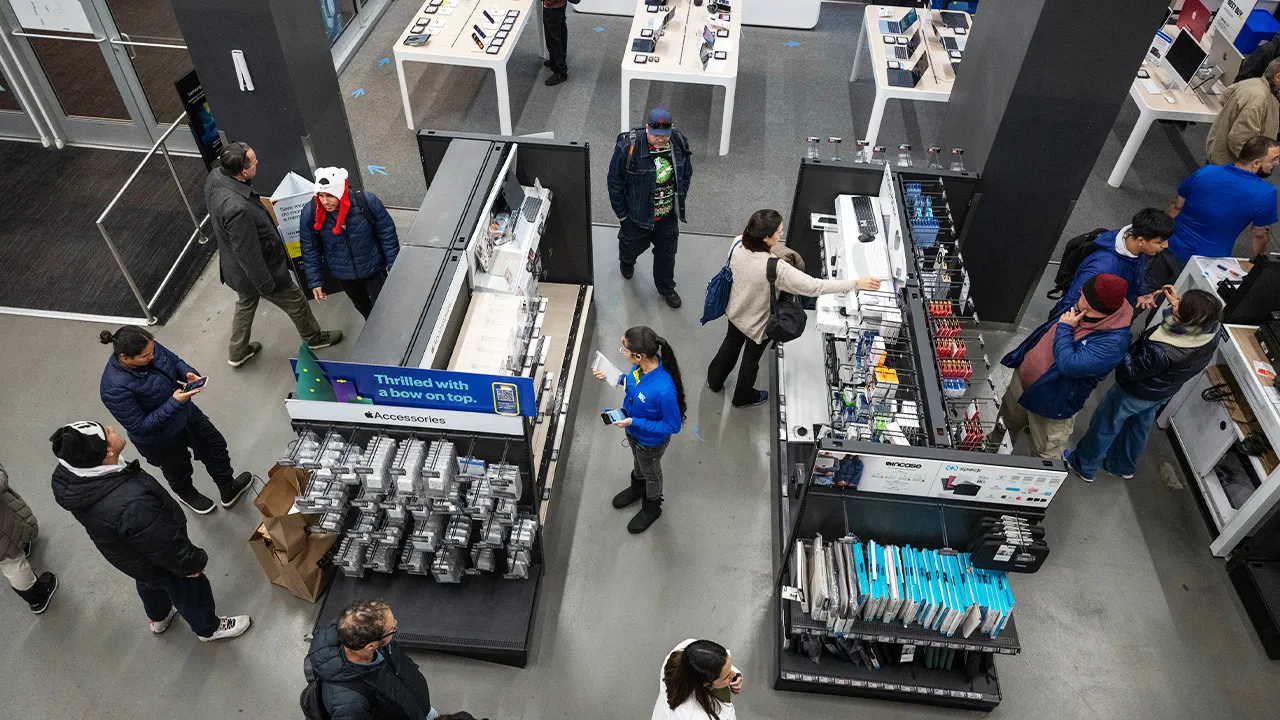
A worker holds a PlayStation 5 at a Best Buy store during Black Friday sales in Chicago, Illinois, on Nov. 25, 2022. (Jim Vondruska/Reuters)
He has also helped drive initiatives aimed at boosting profitability, including the expansion of Best Buy Ads, the company’s retail media network, and the launch of an online marketplace in the U.S., both viewed as core to its long-term growth strategy.
“As a Board, we are confident that Jason is the right leader to accelerate the business, with urgency and innovative ideas, and create meaningful growth for the company and its shareholders,” Best Buy board Chair David Kenny said in a statement.
Barry, who became the company’s first female CEO in 2019, led Best Buy through pandemic-era demand surges, supply chain challenges and shifting consumer behavior. During her tenure, the company expanded its focus on services, subscriptions and omnichannel retail.
Here are 10 essential things you must know about Earth Day as the world marks its 56th observance on Wednesday, April 22, 2026, under the theme “Our Power, Our Planet.”
10 Things You Must Know About Earth Day in 2026
1. Earth Day was born from environmental disasters and activism in 1970. U.S. Senator Gaylord Nelson of Wisconsin founded the first Earth Day after witnessing the devastating 1969 Santa Barbara oil spill and growing concerns over pollution, including deadly smog and pesticides highlighted in Rachel Carson’s “Silent Spring.” Inspired by anti-Vietnam War teach-ins, Nelson recruited activist Denis Hayes to organize a national “environmental teach-in.” On April 22, 1970, more than 20 million Americans participated in rallies, cleanups and demonstrations across the country, shutting down Fifth Avenue in New York and filling streets in major cities. The massive turnout is credited with launching the modern environmental movement.
2. The date April 22 was chosen strategically to maximize participation. Organizers selected a weekday between spring break and final exams to encourage college students to get involved. The choice proved successful, drawing young people into environmental advocacy and helping build broad public support that led to swift legislative action.
3. The first Earth Day directly spurred major U.S. environmental laws and institutions. By the end of 1970, the U.S. government created the Environmental Protection Agency (EPA) and the National Oceanic and Atmospheric Administration (NOAA). The momentum also helped pass landmark legislation including the Clean Air Act, Clean Water Act, Endangered Species Act and National Environmental Education Act, transforming how the nation addressed pollution and conservation.
4. Earth Day has grown into the world’s largest secular observance. What began as a U.S.-focused event now engages more than one billion people in over 190 countries every year. From local cleanups and tree-planting drives to global policy discussions, Earth Day unites individuals, schools, businesses and governments around shared environmental goals.
Advertisement
5. The 2026 theme “Our Power, Our Planet” emphasizes collective citizen action over government alone. EarthDay.org selected the theme to highlight that environmental progress depends on everyday people, communities and local initiatives rather than any single administration or election. It builds on the 2025 focus on clean energy but shifts emphasis toward civic mobilization, defending existing protections, accelerating the renewable energy transition and solving problems at the community level. Organizers stress that people hold the power to drive change through voting, volunteering, innovation and daily habits.
6. This year’s observance runs as Earth Week with events starting April 18. To increase accessibility for working families and students, major activities begin Saturday, April 18, and continue through April 22 and beyond. The official EarthDay.org map lists thousands of events worldwide, including cleanups, teach-ins, climate marches, sustainability workshops, voter registration drives and community fairs. Schools and organizations are encouraged to host their own activities using free toolkits and resources.
7. Clean energy and community resilience remain central priorities. The 2026 campaign calls for tripling clean electricity capacity, protecting air and water quality, preserving natural resources and addressing the links between environmental health and economic stability. It encourages practical local actions such as reducing plastic use, supporting renewable projects, planting pollinator gardens and advocating for stronger environmental safeguards.
8. Earth Day has driven global impact beyond the United States. The 1990 Earth Day expanded the movement internationally, involving 140 countries. Today it serves as a platform for education on issues like climate change, deforestation, ocean plastic pollution and biodiversity loss. It has influenced international agreements and inspired youth-led movements demanding faster climate action.
Advertisement
9. Participation can be as simple as small personal or community steps. Individuals can celebrate by picking up litter, planting trees, conserving water and energy, switching to reusable items, learning about local environmental issues or joining virtual events. Organizations offer free resources such as lesson plans, fact sheets, quizzes and volunteer opportunities. NASA and other agencies provide Earth Day toolkits with science-based activities for all ages.
10. Earth Day 2026 arrives amid ongoing global challenges and calls for resilience. With continued concerns over climate impacts, policy shifts and energy security, the day serves as a reminder that progress is resilient when driven by collective will. Organizers stress optimism, determination and cross-generational collaboration, celebrating the planet’s ability to inspire and sustain life while urging sustained action for future generations.
Earth Day continues to evolve from its roots as a protest and teach-in into a worldwide day of education, celebration and mobilization. In 2026, the message is clear: environmental stewardship is not dependent on distant leaders but on the power each person and community wields every day.
Whether through large public rallies or quiet backyard efforts, millions will mark the occasion by reaffirming their commitment to a healthier planet. As the theme “Our Power, Our Planet” underscores, real change begins with informed, engaged citizens working together for clean air, clean water, renewable energy and a sustainable future.
Advertisement
From its dramatic origins in response to visible pollution crises to its current role as a global platform for hope and action, Earth Day remains one of the most enduring and influential civic observances. On April 22, 2026, and throughout Earth Week, people everywhere have the opportunity to turn awareness into meaningful steps that protect the only home humanity has.
Britain’s biggest mobile network operators have warned ministers they may be forced to ration access to phone signals and introduce surge pricing at peak times, as the war in Iran sends wholesale energy costs spiralling and Whitehall shuts the sector out of its flagship industrial support package.
In a pointed intervention to Government, VodafoneThree, Virgin Media O2 and BT-owned EE have confirmed they are drawing up emergency contingency plans to manage ballooning electricity bills, after being pointedly omitted from the Chancellor’s British Industrial Competitiveness Scheme (BICS).
Among the measures being modelled behind closed doors are the throttling of data speeds, restricting access during periods of high demand, and charging customers a premium at peak times, a move that would mark a significant departure from the all-you-can-eat tariffs that have dominated the British mobile market for more than a decade.
Voice calls and mobile data are expected to bear the brunt of any rationing, though fixed-line broadband services could also be affected. Senior industry figures have further cautioned that relentless cost pressures could see 5G rollout plans shelved, with jobs either cut outright or shifted overseas.
Frustration is running deep in the industry following Rachel Reeves’s announcement last week that 10,000 manufacturers would see their electricity bills cut by up to 25 per cent under BICS. Although the measures are not due to take effect until April 2027, telecoms bosses argue that their sector, classed as critical national infrastructure, has an equally compelling case for state intervention.
Advertisement
“It’s a serious oversight,” one industry source told Business Matters. “It raises real questions about which parts of the economy this Government actually considers strategically important.”
The sums involved are far from trivial. Britain’s mobile networks consume just under one terawatt-hour of electricity annually, enough to power 370,000 homes. While operators routinely hedge their exposure to the wholesale market, prices have still climbed by 70 per cent in recent years, first on the back of Russia’s invasion of Ukraine and more recently following the closure of the Strait of Hormuz, the vital shipping lane that carries roughly a fifth of global oil and gas trade.
With UK electricity pricing still tethered to the gas market, the 33 per cent jump in gas prices since the outbreak of hostilities with Iran has fed directly through to operator cost bases. Unlike steelmakers or chemical plants, executives argue, mobile networks cannot simply shift demand to cheaper overnight hours. The “always on” nature of the infrastructure leaves them structurally exposed.
Any move to ration signal, understood to represent a worst-case scenario, would prove politically toxic in a country where consumers are already exasperated by patchy coverage. The UK currently props up the G7 table for 5G download speeds, and the broader economic stakes are considerable: digital connectivity is estimated to contribute £6.6bn annually to UK output.
Advertisement
The warning lands at an awkward moment for the Chancellor, who is already fielding criticism from manufacturing bodies that BICS is both too modest and too slow to arrive to stem further job losses.
A spokesman for Virgin Media O2 said: “Mobile and broadband networks are critical national infrastructure that almost every consumer and business relies on, yet despite their importance, telecoms companies have been excluded from support offered to other energy-intensive sectors. If the Government wants growth, productivity and resilience, it cannot overlook the digital networks the country depends on.”
VodafoneThree struck a similar note, with a spokesman adding: “We are disappointed that the Government has chosen not to include the telecoms sector in the British Industrial Competitiveness Scheme. At VodafoneThree we are committed to building the UK’s best network, creating jobs and fuelling billions of pounds of value to the UK economy. We urge the Government to consider the impact of rising energy prices on the vital telecoms sector that unlocks growth in all parts of the economy.”
For SMEs already grappling with patchy rural coverage and rising operating costs, the prospect of peak-time surcharges or throttled data could represent yet another headwind, and another reason to question whether Britain’s industrial strategy is keeping pace with the realities on the ground.
Advertisement
Jamie Young
Jamie is Senior Reporter at Business Matters, bringing over a decade of experience in UK SME business reporting.
Jamie holds a degree in Business Administration and regularly participates in industry conferences and workshops.
When not reporting on the latest business developments, Jamie is passionate about mentoring up-and-coming journalists and entrepreneurs to inspire the next generation of business leaders.
Wall Street Horizon provides institutional traders and investors with the most accurate and comprehensive forward-looking event data including earnings calendars, dividend dates, option expiration dates, splits, investor conferences and more. Covering 9,500 companies worldwide, we offer more than 40 corporate event types via a range of delivery options. By keeping clients apprised of critical market-moving events and event revisions, our data empowers financial professionals to take advantage of or avoid the ensuing volatility.












.webp?t=1776862934)














































You must be logged in to post a comment Login