
Business
Micron Shares Surge Past $1,000 After $250 Billion US Expansion Plan and Bullish Analyst Upgrades Today


Shares of Micron Technology jumped Thursday, trading at $1,021.04, up $72.24, or 7.61 percent, reclaiming the $1,000 level after the memory chipmaker announced a major expansion of its U.S. manufacturing investment plans and drew a fresh round of bullish price target increases from Wall Street analysts.
Note: This article is intended to provide factual context and does not constitute financial advice. Readers should consult a licensed financial advisor before making investment decisions.
The rally follows a difficult stretch for Micron shares, which had pulled back more than 10 to 23 percent from their all-time high of $1,254.80, reached June 25, amid a broader selloff in memory chip stocks earlier this week tied to a disappointing market reaction to Samsung Electronics’ record quarterly earnings. Thursday’s rebound helped Micron recover a significant portion of those losses in a single session.
According to CNBC, Micron announced a new round of strategic investments Thursday aimed at strengthening the U.S. semiconductor supply chain, including up to $3 billion in near-term commitments, part of a broader plan to accelerate the company’s domestic spending through 2035 to a total exceeding $250 billion. The near-term investment includes $500 million earmarked for Taiwanese-headquartered GlobalWafers to expand its wafer development and manufacturing operations in Texas, paired with a 10-year supply agreement for raw silicon wafer capacity. The announcement helped lift other names across the chip-equipment space as well, with Applied Materials, KLA Corp, ARM Holdings and Lam Research each posting strong gains during Thursday’s session.
The expansion news landed alongside a wave of increasingly bullish analyst commentary on Micron’s stock. According to Watcher.Guru, Bernstein raised its price target on Micron to $1,300, Bank of America lifted its target to $1,550, and Cantor Fitzgerald raised its own target to $2,000, implying more than 100 percent upside from recent trading levels. Separately, according to TradingKey, Bank of America and Evercore ISI both reiterated bullish stances on the stock this week, citing long-term valuation recovery potential tied to Micron’s growing exposure to cloud computing and AI infrastructure spending.
Micron’s rally comes just two weeks after the company reported blockbuster fiscal third-quarter results. Revenue for the quarter reached $41.46 billion, up 346 percent year over year and more than quadrupling from $9.3 billion in the same period a year earlier, easily surpassing analyst expectations of roughly $36 billion, according to LSEG consensus estimates cited by CNBC. The company posted GAAP net income of $28.24 billion, with non-GAAP earnings reaching $28.86 billion, driven largely by surging demand for high-bandwidth memory used in AI data center infrastructure. DRAM remained Micron’s largest revenue driver, accounting for roughly three-quarters of total sales at $31.3 billion, while NAND flash revenue rose to $9.9 billion on stronger enterprise and high-performance solid-state drive demand.
Micron’s forward guidance has continued to support investor optimism. According to FX Leaders, company management is projecting fiscal fourth-quarter revenue of approximately $50 billion, with gross margin expected to hold around 86 percent and earnings per share projected near $31. Micron has also disclosed that its high-bandwidth memory production capacity is effectively sold out through 2027, with customers already booking capacity into 2028, and the company has secured $22 billion in long-term AI supply agreements to date.
Capital.com senior market analyst Daniela Hathorn noted following Micron’s blowout June earnings report that the results had helped restore broader confidence in the durability of AI-related infrastructure spending. “U.S. equities have recovered some ground as Micron’s earnings have provided fresh reassurance that the AI investment cycle remains firmly intact,” Hathorn said, adding that robust demand for memory from data centers and AI infrastructure customers “has helped lift sentiment across the semiconductor sector after recent weakness in high-growth names, suggesting investors remain willing to look through short-term volatility as long as the earnings outlook continues to justify elevated valuations.”
Despite the bullish sentiment surrounding the stock, some risk factors continue to warrant investor attention. According to TradingKey, Micron, along with Samsung and SK Hynix, is facing a newly filed class-action antitrust lawsuit alleging price-fixing in the commodity DRAM market, a legal matter that introduces regulatory risk and potential litigation costs going forward. The company’s accelerated $250 billion domestic investment target through 2035, combined with its immediate $3 billion supply-chain financing commitment, also significantly raises Micron’s long-term capital expenditure burden, a factor that could pressure margins if future AI and data center memory demand fails to scale in line with the newly built manufacturing capacity. SEC filings reviewed by TradingKey also show substantial recent insider selling at Micron, including more than $169.8 million in total insider sales over the trailing three months, led by chief executive Sanjay Mehrotra, a pattern some analysts view as worth monitoring even amid otherwise strong operational momentum.
Valuation metrics on the stock have drawn mixed assessments from different research providers. According to GuruFocus, Micron’s GF Value estimate of $500.31 suggested the stock was trading nearly 90 percent above its calculated fair value as of Wednesday’s close around $948.80, even as the firm assigned the company a strong overall financial strength score of 9 out of 10. Other analysts have taken a considerably more bullish view of the stock’s fair value, with some price targets reaching as high as $2,000, reflecting the wide range of opinions currently circulating about how much further Micron’s AI-driven rally can extend.
Micron’s gains Thursday also occurred despite continued geopolitical uncertainty tied to renewed tensions between the United States and Iran, which have weighed on broader market sentiment and pushed oil prices higher in recent sessions. According to Watcher.Guru, Micron’s ability to post strong premarket gains even amid that broader risk-off backdrop was attributed largely to the combination of its expanded domestic investment announcement and the fresh wave of bullish analyst price target revisions issued in the days leading up to Thursday’s session.
With Micron’s stock now up more than 230 percent for the year and roughly 650 percent over the trailing 12 months, according to GuruFocus, investors are likely to continue closely monitoring the balance between the company’s exceptionally strong underlying demand fundamentals and questions about whether current valuations, and the scale of its newly announced capital spending commitments, are fully justified by the pace of AI-driven memory demand growth heading into the second half of 2026.


EasyJet aligns Apollo and Castlelake deadlines as bidding war nears climax

Not all vessels are deterred from passing through because the Houthi threat is only targeted at Saudi shipping, with the total number sitting at about 50% of pre-attack levels.
But the number of ships loading crude oil for export to Asia passing through has dropped to about four per day, Kpler added, the lowest point since the start of the war.
A spokesperson for Hapag-Lloyd, the global shipping giant, said some of its vessels were still passing through the Red Sea but that it would “monitor developments closely and will adjust the network if circumstances change”.
“If the Strait of Hormuz reopened, most ships could probably leave the region fairly quickly. However, restoring normal cargo flows would take much longer.
“Services have been suspended and ships redeployed elsewhere, so a return to normal flows would most likely take three to four months.”
Despite the talks with Oman, Iran has said that no deal is imminent that would reopen the strait to normal traffic.
Its foreign ministry ministry spokesman Esmaeil Baqaei said any agreement would not lift the current restrictions while US “aggression” continued.
Peter Sand, chief analyst at Xeneta, another ship-tracking company, said the fighting had taken the shipping industry “back to to square one” and that things were in “a terrible state, regardless of which shipping type you’re you’re looking at”.
“The alternatives for getting cargo, whether that’s hydrocarbons or container shipping, are really not great… it is really still troubling times with no clarity and no change of fortunes within sight.”

Chip Motors plans to produce a four- or six-seat low-speed vehicle, which it is calling a “life utility vehicle, named Chip.
Courtesy image
The next big idea in the U.S. automotive industry may be small.
A growing number of companies, including auto giant Stellantis, are betting Americans are ready to embrace smaller, less expensive vehicles amid yearslong affordability concerns for the U.S. auto industry.
But the vehicles aren’t technically “cars.” They’re electric low-speed vehicles, or LSVs, that are essentially a step above a traditional golf cart but below a typical light-duty car or truck sold in the U.S.
“We have seen the popularity of many different form factors of electric, small low-speed vehicles continuing to grow,” Keith Simon, CEO and cofounder of Waev, which owns several LSV brands such as ex-Polaris brand GEM, told CNBC. “I think it’s evident by the number of new entrants across many different vehicle types. There’s a lot of new players. … It’s been growing significantly.”
Attention on such vehicles has been magnified during the past year by President Donald Trump. He has discussed opening U.S. roadways and regulations to better allow for smaller vehicles, including LSVs from Europe and Japan’s “Kei cars,” on U.S. roadways.
“I’m giving all American car companies the right to build what are known as tiny little tiny cars,” Trump said during a speech last week at General Motors’ Milford Proving Grounds in Michigan. “I go over to Europe and I see these little cars all over the place and I say, ‘Why aren’t we making them?’”
Small cars have historically not performed well in the U.S., but those involved with LSVs believe they could be a growth market for Americans who want an affordable, easy-to-drive vehicle for short distances. They also can typically be charged overnight with a traditional household outlet compared with typical, more expensive EVs that need special chargers that can cost thousands of dollars.
Waev’s lineup of GEM low-speed vehicles, starting at
Courtesy image
Reliable data on the U.S. LSV market is limited since of the vehicles don’t need to be registered, but they’re part of a larger “micromobility” segment, which consulting firm McKinsey & Company last year estimated could more than double in size globally by 2030.
“The global micromobility market is on the upswing. McKinsey estimates that the market was worth about $160 billion in 2022; by 2030, it’s estimated to reach $340 billion,” according to its McKinsey’s Center for Future Mobility. That includes North America’s market growing from $20 billion in 2022 to $35 billion by 2030.
For U.S. consumers, companies such as Stellantis’ Fiat, Waev and startup Chip Motors are focusing on electric streel-legal LSVs, many of which are starting around $15,000, a fraction of the nearly $50,000 average price tag for a new traditional car or truck.
Tiny cars, tiny market
LSVs vary in form and can be heavily customized, including the number of seats, electric range and available features, such as optional doors. They’re typically used for short distances, often for people living in closed community settings such as retirement homes or condominium complexes. Their main competition has traditionally been golf carts, not small cars.
“The use case for these kind of vehicles has become more interesting as people have evolved their lifestyles, and a vehicle like this fits into their lifestyles,” Simon said.
The market is loosely regulated compared to the light-duty vehicle market that dominates the U.S.. but the vehicles must not go faster than 25 mph and have to be equipped with standard safety features such as headlamps, turn signals, mirrors and a windshield that conforms to the federal motor vehicle safety standard. They’re not required to have airbags and they’re allowed on roadways with speed limits of up to 35 mph.
Stellantis plans to offer the Fiat Topolino, an all-electric quadricycle vehicle, in the U.S.
Stellantis
“The market demand is here now and you don’t need nearly as much capital to bring a LSV to market,” said Jameson Detweiler, CEO of Chip Motors, which last month revealed a new LSV that’s expected to go into production early next year. “What we’ve seen in the market … is just incredible latent demand.”
Detweiler estimates the street-legal LSV market to currently be in the hundreds of thousands of units in annual sales, but below 500,000. He believes as more companies such as his enter the market, the more awareness and sales will grow.
But for now, they’re small vehicles for a tiny part of the U.S. market, according to Stephanie Brinley, principal automotive analyst at Mobility Global.
“They’re less expensive than a normal car, but they’re not expected to be a normal car, and and people buy them as recreational vehicles,” she said. “There’s great uses for them, but these are not part of of a day-to-day work-life commute for most people.”
New entrants
Detweiler’s company describes its vehicles as a “life utility vehicle,” named Chip. It looks like a beefed-up golf cart with a smiley, digital interactive face. The four-passenger vehicle is expected to start at $15,000 for an entry-level model, and it can also come in a six-seat model.
Detweiler plans to grow Chip to eventually be capable of self-driving technologies. In the meantime, he said the privately funded company expects it to be used more as a second vehicle, with plans to offer a service in which Chip employees can virtually remote into the vehicle to assist with driving and parking, he said.
The Chip “life utility vehicle” positioned between two Ford F-150 pickup trucks.
Courtesy image
“I really value and like the idea of when the future seems fun and promising,” said Detweiler, a Florida native, wearing a Timon and Pumbaa shirt from Disney’s “Lion King.” “A lot of technology is probably headed more ‘Blade Runner.’ We want to head more ‘Jetsons’ era.”
The company expects to begin sales in Miami, which officials say is a popular market for such vehicles.
The Florida coastal city also is where Stellantis’ Fiat brand is first offering its Topolino vehicle, which also starts around $15,000 and features the styling of the Italian brand’s iconic 500 city car.
The Topolino, which translates to “little mouse” in Italian, is actually a quadricycle. It has grown in popularity in Europe and the company is starting to sell it in limited numbers in the U.S.
Fiat CEO Olivier Francois is using the vehicle as a test bed to potentially refocus the famed Italian brand, which has struggled for years in the U.S., to focus on micromobility rather than traditional cars.
“I want Fiat to become the brand of micromobility within Stellantis,” Francois told CNBC. “I want to use America to test and learn. And, hey, if along the way I do some good volumes and good business, it doesn’t hurt.”
2026 Fiat Topolino Dolce Vita.
Courtesy Fiat
The brand re-entered the U.S. market in 2011 after a nearly 30-year absence with its small Fiat 500, but it never become a mass market success like it is in Europe.
In the brand’s first full year in the U.S. in 2012, Fiat sold 43,772 vehicles domestically. Those sales dwindled to roughly 1,300 Fiat vehicles sold last year in the U.S., with its only vehicle being an all-electric version of the Fiat 500.
Francois admits while the 500 EV, starting at $35,700, may be too expensive and too small for many Americans, he remains optimistic about the Topolino testing micromobility in the U.S.
“While everyone is explaining to me that small is a limit in the U.S., I think that now we go so small that it’s going to become exciting. We will see the reaction,” he told CNBC. “The fun thing with Topolino is we double down on small.”
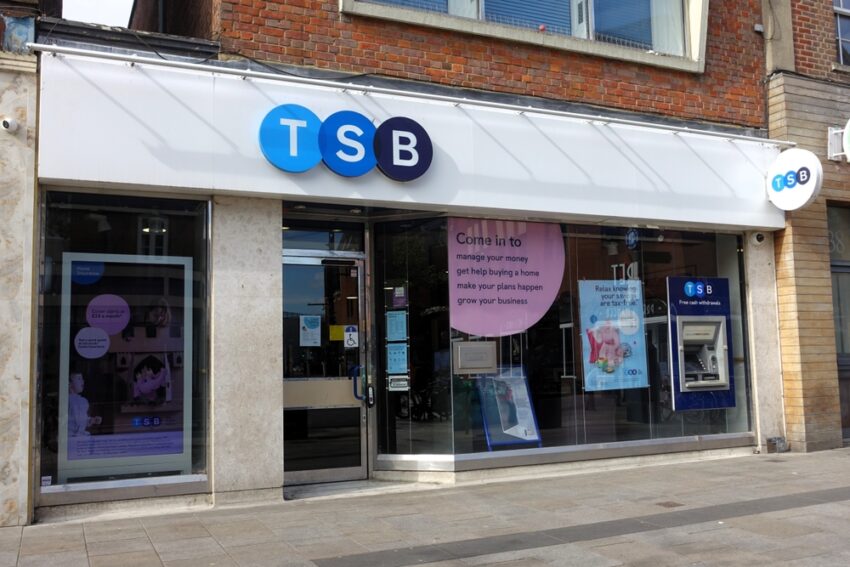
Unions at Santander and TSB have opened negotiations over how staff in duplicate roles will be assessed for redundancy, following the completion of Santander’s acquisition of TSB from Spanish owner Sabadell.
The deal, agreed at £2.65 billion, completed on 30 April, according to Santander UK’s announcement of the completed cash acquisition. The combined group employs about 23,000 people and is targeting £400 million in cost savings.
Santander has not confirmed how many jobs will go across the enlarged business. TSB has already announced 130 redundancies ahead of the formal transfer of staff under the Transfer of Undertakings (Protection of Employment) regulations, and further cuts are expected as the group pursues its savings target.
The two banks use different metrics for assessing staff performance. It is understood that unions at both are in talks about how to create a single system for evaluating individuals in the redundancy process.
One source said: “It goes without saying that in any merger there are going to be synergies that the banks will realise. And there is going to be an impact on jobs.
“There will be duplication of roles. I’m sure every role will be evaluated, wherever there are people doing similar roles.”
A spokeswoman for Santander said: “We have not yet made operational decisions on jobs [as part of the integration]. However, we will ensure that our colleagues are informed of any changes at the appropriate time.”
A spokesman for TSB said: “Whenever we make any changes to our business, the priority is to consult first with impacted colleagues to ensure they’re fully supported.”
Under government guidance on business transfers and TUPE, employees’ jobs, terms and conditions and continuity of employment usually transfer to the new owner, with redundancy among the exceptions. The regulations apply regardless of the size of the business.
Speaking to Bloomberg last year, José García Cantera, chief financial officer of Banco Santander, said cost savings would “come from projects that TSB is currently running that we will not need to do when the two banks merge”.
He said: “Yes, we think there will be savings; yes, we think these savings will offer us better products at lower cost to the customers; but not all of these costs [savings] will come from job cuts or branch closures.”
Sources said staff at Santander were broadly relieved at the merger with TSB, after news reports had at one stage suggested the bank’s Spanish owner might seek to exit the UK market entirely. It is understood some TSB staff have started looking for new jobs in anticipation of cuts.
The redundancy talks follow a separate dispute over working patterns. TSB told its workforce of about 5,000 that they will be required to work in an office three days a week from April 2027, and the TBU union is preparing to take cases to the Employment Tribunal over members it says cannot change their arrangements for personal or medical reasons. TSB did not previously have a formal office attendance requirement.
Santander has also confirmed it will retire the TSB brand and fold the lender into its UK arm, ending a name that dates to a Dumfriesshire parish savings scheme founded in 1810. TSB operates around 175 branches and has roughly five million customer accounts.
Sabadell acquired TSB from Lloyds Banking Group for £1.7 billion in 2015. Mahesh Aditya, chief risk officer of Banco Santander, took charge of Santander UK at the beginning of March to lead the integration.

Amy Ingham
Amy Ingham is a reporter at Business Matters, covering UK business news with a focus on breaking news, business policy, late payments and insolvency. She joined the magazine in 2026 after completing the NCTJ Diploma in Journalism at Harlow College’s journalism school. Her recent reporting includes British Steel’s nationalisation and its impact on SME suppliers, the decline in late payments by large firms, and Insolvency Service director disqualifications. Reach her at aingham@cbmeg.co.uk.

The former department store closed in 2016.

Sebi on Friday barred ZEEL founder Subhash Chandra and CEO Punit Goenka from the securities market for one year each and imposed a total penalty of Rs 1.48 crore over the unauthorised pledge of the company’s Hyderabad land to secure loans for promoter-linked Essel Group entities.
Sebi said its investigation was triggered after ZEEL’s statutory auditor, Deloitte Haskins & Sells LLP, reported in its FY19 audit that the title deeds of certain immovable properties were missing.
The regulator said the original title deeds of ZEEL’s Hyderabad land were deposited with Indiabulls Housing Finance on December 27, 2018, to create a first-ranking mortgage securing loans availed by four Essel Group companies. The entities had together borrowed Rs 726 crore, while Essel Home acted as the co-borrower.
According to the company’s statement released on the BSE, it is currently evaluating the Sebi order in consultation with legal advisors.

In a separate development, ZEEL shareholders approved a Rs 3,144 crore fundraise through convertible warrants to the promoter group at Friday’s EGM. The resolution secured 76.64% of votes, exceeding the 75% approval threshold required by law.
However, the Sebi curbs on capital-markets access for the promoters and the company could introduce regulatory ambiguity around ZEEL’s plans to issue fully convertible warrants to an entity within the promoter group, according to Ashish K Singh, managing partner, Capstone Legal. He further added that in the absence of a Sebi directive on the preferential warrant issue, the outcome of the EGM would stand. ZEEL and the borrowing entities i.e. Subhash Chandra and Punit Goenka were alleged to be related-parties, as per the final order by Sebi. However, ZEE’s financial statements revealed that the borrowing entities were not disclosed as related parties, and the use of the Hyderabad land for securing their loans was not disclosed as a related-party transaction.
Sebi had alleged that the borrowing entities were ultimately controlled by Subhash Chandra, Punit Goenka and their family members through multiple layers of shareholding, making the transaction a related party transaction under accounting standards.
Also Read | Sebi bans Zee’s Subhash Chandra, Punit Goenka from markets for a year
According to the final order by Sebi, Chandra signed the declaration and acknowledgement on behalf of ZEEL, stating all necessary corporate approvals had been obtained before creating the mortgage. However, the investigation did not find any prior approval of the Audit Committee, the Board of Directors or the shareholders of ZEEL for the creation of security over the Hyderabad land.
(Disclaimer: Recommendations, suggestions, views and opinions given by the experts are their own. These do not represent the views of Economic Times)
Business
10 Evidence-Based Benefits of Manuka Honey Revealed by Latest Scientific Studies and Clinical Trials

Manuka honey, produced by bees foraging on the nectar of the Leptospermum scoparium plant native to New Zealand and parts of Australia, continues to attract scientific interest for its distinctive bioactive profile. Unlike conventional honeys that rely primarily on hydrogen peroxide for antimicrobial effects, Manuka honey contains high levels of methylglyoxal, or MGO, a stable compound that drives much of its non-peroxide antibacterial activity. Ratings such as Unique Manuka Factor, or UMF, and MGO content help consumers identify potency, with higher numbers generally indicating stronger antimicrobial capacity.
Research accumulated through 2025 and into 2026 supports several potential benefits when the honey is consumed or applied topically in medical-grade form. Experts emphasize that results depend on quality, dosage and individual health status, and that Manuka honey is not a substitute for conventional medical treatment.
One of the most firmly established benefits is its broad-spectrum antibacterial activity. Laboratory and clinical work has shown effectiveness against a range of bacteria, including some antibiotic-resistant strains. The combination of high sugar content, low pH and MGO creates an environment hostile to microbial growth. Nutritionist Lucy Miller has noted that research suggests it can inhibit antibiotic-resistant bacteria, including MRSA, through this multi-factor mechanism.
Wound healing represents another area with comparatively strong clinical support. A 2025 study on non-healing venous leg ulcers found that topical Manuka honey led to complete healing in all patients within seven weeks, faster than a comparator antimicrobial dressing group that required up to 14 weeks. Medical-grade formulations have demonstrated reduced bacterial load, promotion of granulation tissue and improved comfort in diabetic foot ulcers, pressure injuries and certain postoperative wounds. GP and functional medicine specialist Dr. Nirusha Kumaran stated that medical-grade Manuka honey has been shown to reduce bacterial load, support tissue regeneration and, in some cases, accelerate healing compared with conventional dressings.
Cochrane reviews have previously indicated that honey dressings can shorten healing times for mild burns and some surgical wounds relative to traditional options, though researchers consistently call for larger trials. The honey’s ability to maintain a moist wound environment, lower local pH and provide osmotic effects contributes to these outcomes.
Anti-inflammatory properties have been documented in both cellular and animal models. Manuka honey can modulate cytokine expression and support a shift from pro-inflammatory to resolving phases of healing. In one experimental study on acute wounds, treatment was associated with lower levels of the pro-inflammatory marker IL-1β and higher levels of the anti-inflammatory IL-10 by day 10, alongside improved histological repair.
Oral health benefits form a further category of interest. Studies have suggested that Manuka honey may help reduce plaque accumulation and clinical signs of gingivitis. Its antibacterial action against oral pathogens offers a plausible mechanism, though it is typically used as a complementary measure rather than a replacement for standard dental hygiene.
Sore throat and upper respiratory comfort are commonly cited traditional uses that align with the honey’s demulcent and antimicrobial qualities. The viscous texture coats mucous membranes while bioactive compounds may help limit bacterial or inflammatory irritation. Evidence here is more limited than for wound care but remains consistent with broader honey research on cough and throat symptoms.
Antioxidant capacity is another attributed benefit. Manuka honey contains phenolic compounds, flavonoids and other molecules that can neutralize free radicals and support cellular defenses against oxidative stress. These properties underpin investigations into its potential role in supporting overall resilience and recovery.
Emerging research has explored prebiotic-like effects. Certain indigestible carbohydrates in honey can promote the growth of beneficial gut bacteria. One 2026 study examining Manuka honey in probiotic milk and yoghurt formulations found enhanced growth of Bifidobacterium bifidum and reduced viability of E. coli during storage, suggesting possible supportive roles in fermented products and digestive environments.
Preliminary laboratory and animal data have also examined anti-cancer potential. A UCLA-led preclinical study reported that Manuka honey reduced tumor growth by 84 percent in mice with estrogen-receptor-positive breast cancer cells without major effects on normal cells. Researchers observed downregulation of signaling pathways involved in cell growth and survival, along with induction of apoptosis. A separate 2025 review highlighted multi-targeted effects in various cancer models, though clinical translation remains distant and requires far more rigorous human trials.
Skin applications beyond wounds include management of conditions such as acne, eczema and dermatitis. The honey’s antibacterial, moisturizing and anti-inflammatory characteristics may help calm irritated skin and limit bacterial contributions to breakouts. Medical-grade products are preferred for such uses to ensure sterility and consistent activity.
Digestive support, including potential benefits for certain ulcers or gastrointestinal discomfort, has been suggested in smaller studies and traditional use. The combination of antimicrobial action and coating effects may offer relief in specific contexts, though evidence is less robust than for topical wound care.
Quality remains critical. Experts advise selecting products with verified UMF or MGO ratings, typically UMF 10+ or MGO 250 and above for meaningful antibacterial activity. Consumer-grade honey is not equivalent to sterilized medical-grade preparations used in clinical settings. Infants under 12 months should never consume honey of any type because of the risk of botulism.
While enthusiasm for Manuka honey is high, researchers caution that many studies remain small or preclinical. The strongest data support topical use in wound management. For internal consumption, benefits appear supportive rather than transformative, and individuals with diabetes or other conditions should consider the sugar content and consult clinicians. As investigations continue into mechanisms, optimal dosing and specific applications, Manuka honey occupies a distinctive place among natural products with measurable bioactive effects.

Why is Best Buy stock sliding today?

Omnicom: Wall Street Is Still Underestimating This 4% Yield Opportunity
Check out what’s clicking on FoxBusiness.com.
President Donald Trump’s War Department is supercharging missile-defense production, signing framework agreements with Lockheed Martin and Northrop Grumman to expand production capacity for components used in two defense systems.
The deals aim to quadruple output of Terminal High Altitude Area Defense (THAAD) interceptor structural components and support a threefold increase in Patriot Advanced Capability-3 (PAC-3) production, according to a War Department release Monday.
“Building the Arsenal of Freedom requires robust, dynamic supply chains at every level of the industrial base,” Michael Duffey, undersecretary for acquisition and sustainment, wrote in a statement. “Framework agreements with munition components suppliers like Northrop Grumman are vital to accelerating the tripling of PAC-3 and quadrupling of THAAD interceptor production.”
LOCKHEED MARTIN SNAGS $5 BILLION US ARMY MISSILE CONTRACT
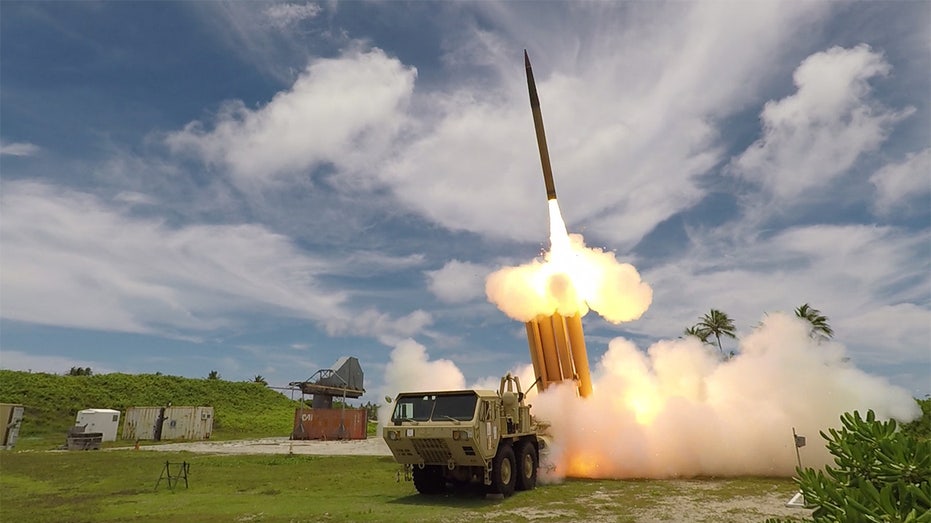
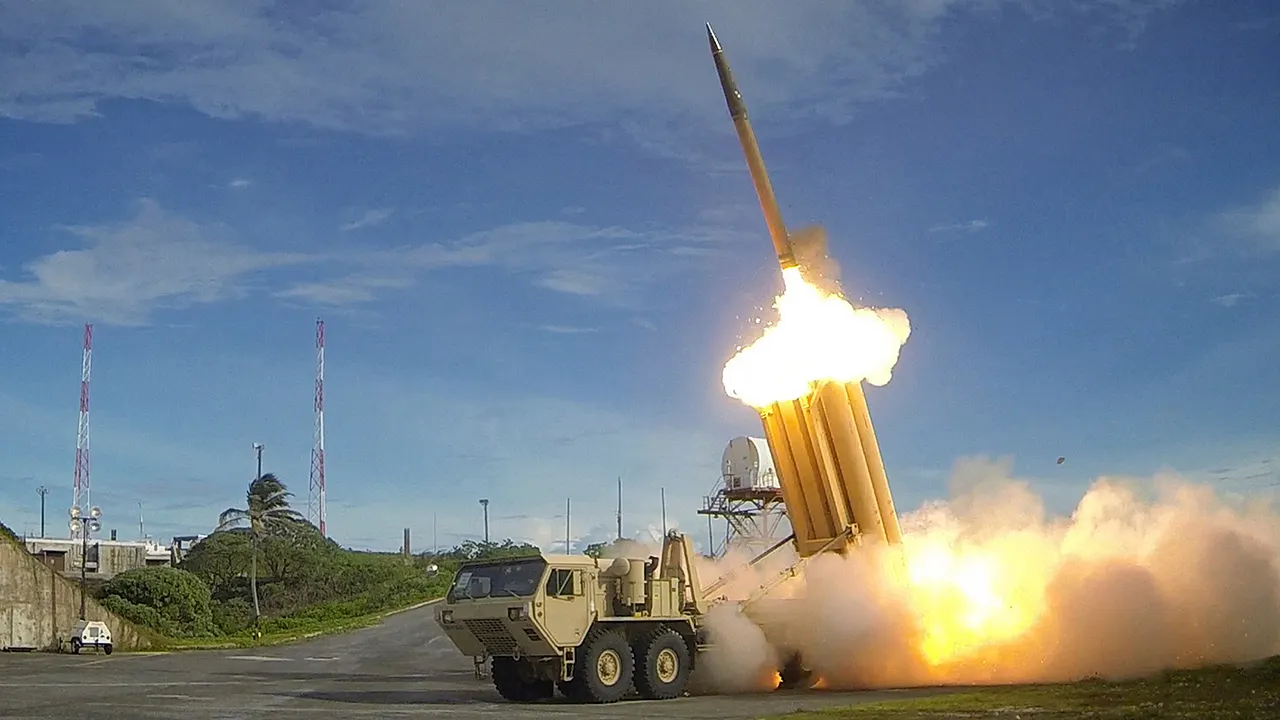
This image from Lockheed Martin’s media kit showcases a rendering of a THAAD missile defense system. (Lockheed Martin)
The department said the agreements would give suppliers longer-term demand commitments needed to invest in tooling, facility upgrades and workforce development.
Financial terms and production timelines were not included in the War Department announcement, but Northrop Grumman said it entered into agreements worth a combined $3 billion. The deals include a $2 billion agreement to supply rocket motors and safety devices and a $1 billion agreement to increase deliveries of THAAD components.
“Our long-term investments in breakthrough manufacturing technologies and resilient supply chains let us pivot from steady production to a production surge in record time,” Northrop Grumman Vice President Ben Davies wrote in a statement. “As one of America’s leading producers of solid rocket motors, we’re supporting the administration’s push to accelerate munitions output.”
“It’s a mission-critical leap forward that ensures America’s defense edge stays sharper, faster, and farther ahead of global threats,” Davies continued.
DEFENSE CONTRACTOR L3HARRIS PLANS TO BUY AEROJET ROCKETDYNE FOR $4.7B
| Ticker | Security | Last | Change | Change % |
|---|---|---|---|---|
| LMT | LOCKHEED MARTIN CORP. | 586.67 | +3.56 | +0.61% |
| NOC | NORTHROP GRUMMAN CORP. | 552.04 | +9.02 | +1.66% |
| LHX | L3HARRIS TECHNOLOGIES INC. | 279.01 | +1.92 | +0.69% |
Northrop said it plans to raise PAC-3 solid rocket motor production at its Allegany Ballistics Laboratory in West Virginia, where the company has doubled tactical motor capacity since 2021 and expects to triple production capability by 2027. It will support U.S. Army plans to increase annual PAC-3 MSE missile production from about 600 units to thousands for U.S. forces and allied countries.
The deal establishes a second source for solid rocket motors and increases production of ignition safety devices. The Pentagon said adding another rocket-motor supplier would increase competition and reduce supply-chain risks.
Northrop is also doubling solid rocket motor capacity at its Utah facilities and increasing capacity by 25% at its Elkton, Maryland, plant.
HOW MUCH WILL TRUMP’S ‘GOLDEN DOME’ MISSILE DEFENSE SYSTEM COST?
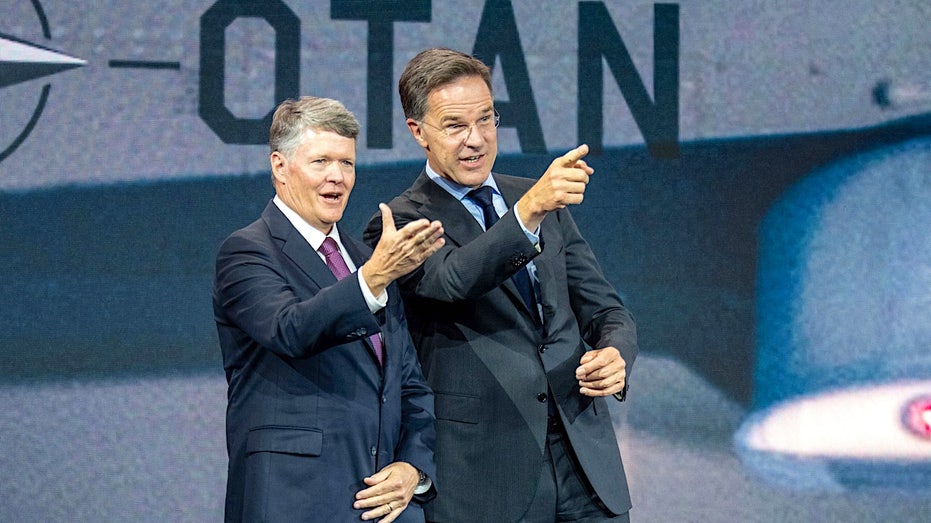
Michael Duffey, U.S. undersecretary of Defense for Acquisition and Sustainment, and NATO Secretary-General Mark Rutte, talked missile defense at the NATO Summit Defense Industry Forum (NSDIF) in Ankara, Turkey, on July 7, 2026. (Kerem Uzel/Bloomberg)
Under the THAAD agreement, Northrop will increase monthly deliveries of structural components, including interceptor shell cores, aft bulkheads and heat-shield assemblies. The company has supplied components for the missile-defense system since 2002.
Northrop said it has invested more than $2 billion in munitions-related technologies and facilities since 2019, including more than $1 billion for solid rocket motor production.
Lockheed announced a seven-year contract modification for up to $53.86 billion for PAC-3s. The award brings the total multiyear contract value to $58.62 billion, following the $4.7 billion UCA awarded in April for year one.
GET FOX BUSINESS ON THE GO BY CLICKING HERE
The agreements were developed with the Munitions Acceleration Council, the Economic Defense Unit, the Missile Defense Agency and the Office of the Under Secretary for Acquisition and Sustainment, the War Department said.

Hashdex to Close Smallest Spot Bitcoin ETF After 2+ Years

I Shop For A Living, This Is The Fashion I’m Buying This July Payday

What happens next for Infantino and FIFA?


-

 Business5 days ago
Why Trees Belong on the Risk Register
-

 Fashion3 days ago
Weekend Open Thread: Wit & Wisdom
-

 Politics3 days ago
Meta enters AI-training agreement with far-right ‘propaganda rag’ Newsmax
-
 Entertainment6 days ago
‘Stargate’ Creator’s New Sci-Fi Series Returns for Season 3 Tomorrow
-

 Crypto World2 days ago
MicroStrategy Post-Earnings CLARITY Act Push Could Add New Catalyst for Its Stock
-

 Politics6 days ago
The Part of the Electric Transition Nobody Wants to Discuss
-

 Business5 days ago
Major shareholder moves on Canyon
-

 Crypto World2 days ago
XRP Ledger v3.3.0 brings five institutional features
-

 News Videos4 days ago
Bitcoin Enters the 3rd Stage of the Bear Market
-

 Crypto World6 days ago
Kraken Enables Retail Access to Jersey Mike’s IPO via Tokenized Shares
-

 Tech7 days ago
New macOS Sequoia & Sonoma security updates for older Macs
-

 Politics4 days ago
Luke Littler’s dominance sparks GOAT debate
-

 News Videos6 days ago
Claude: Build Financial Dashboards in Minutes (2026)
-

 Business6 days ago
Johnson & Johnson agrees to $5.5B settlement over talc cancer claims
-

 Sports4 days ago
Seema Kaliramna Wins Discus Throw Bronze, Takes India’s CWG Medals Tally To 17
-

 Crypto World1 day ago
Crypto PAC spending tops $2M in Michigan House race
-

 Business3 days ago
Trump Announces Hamas Disarmament Agreement as Iran Strikes Kuwait Air Base and US Attacks Pause Overnight
-

 Crypto World3 days ago
New York sues Kalshi over prediction market gambling
-

 Tech5 days ago
Gemini can now summarize the messiest comment threads in Google Docs
-

 Tech1 day ago
ESET tracks rise in malicious AI skills and adaptable malware
You must be logged in to post a comment Login