

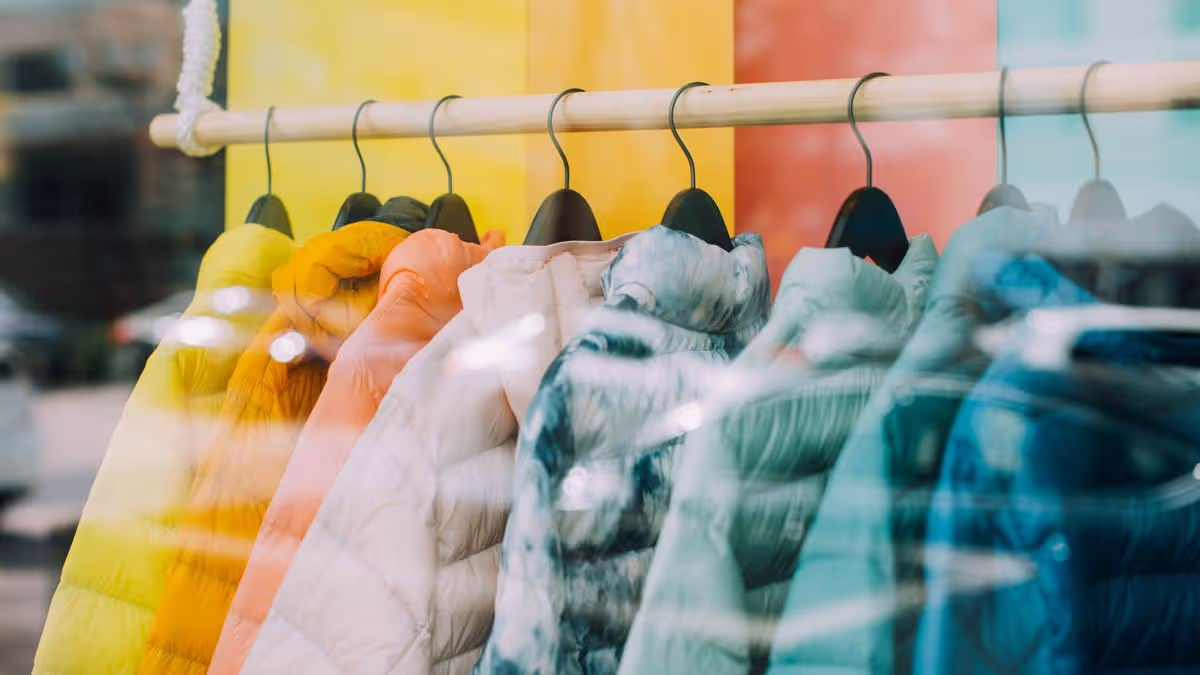
M&S, New Look, Sainsbury’s and Oxfam have partnered with Circle-8 on The Circuit, a textile recycling project aiming to develop pathways to recover and sort non-reusable textiles for conversion into fibres for new clothes.

A clothing rack of colourful coats(Image: Grant Thornton)
M&S, New Look, Sainsbury’s and Oxfam have joined forces to create a system that transforms discarded clothing into new raw materials.
The retailers and charity have announced a partnership with Circle-8, a start-up that has developed a model bringing together retailers, recovery organisations, recyclers, manufacturers and digital innovators to recycle end-of-life garments. The initiative, named The Circuit, will seek to establish pathways where old textiles can be sorted and pre-processed into future raw materials.
The goal is to forge new routes through which non-reusable textiles can be recovered, sorted and ultimately converted into new or emerging fibres for making fresh clothing. The scheme’s first phase, due to commence in January, will unite retailers and partners at Oxfam’s facility in Batley, West Yorkshire.
There they will explore automated textile sorting, develop reporting frameworks to enhance traceability, identify circular material opportunities and forge relationships with recyclers. The consortium will also develop the operational frameworks required to scale up the system so it can function on a large scale.
Additionally, it will seek to support the advancement of both mechanical and chemical recycling processes to recover materials for regional and global textile manufacturing.
As part of the scheme, Oxfam will play a crucial role in separating reusable and non-reusable textiles as well as operating the automated textile sorting equipment, the partners said. This follows findings from waste campaign group Wrap, which discovered that 1.4m tonnes of textiles were thrown away across the UK in 2024, with approximately half estimated to consist of non-reusable materials.
A report from Parliament’s Environmental Audit Committee also estimates that 30% of worn clothes are resold in the UK while the remainder are sent overseas, often ending up in massive waste dumps in countries such as Ghana and Pakistan.
Rachel Cosgrove-Pearce, retail director at Oxfam, said: “Oxfam has been giving clothes a second life for almost 80 years, and our experience tells us that keeping clothing in use for as long as possible is one of the most effective ways to reduce fashion’s impact on our planet. But we also urgently need better solutions for textiles that can no longer be worn or reused.
“Developing the infrastructure to recover valuable fibres from end-of-use textiles is an important part of building a fashion system that uses fewer virgin resources and creates less environmental harm, and The Circuit brings together the expertise and investment needed to move this forward at scale.”
More broadly, the group stated that the project would seek to bolster the wider UK economy through job creation and manufacturing opportunities. The retailers also stressed that developing a more circular fashion industry would demand greater collaboration across the sector.
Ben Smith, managing director of Sainsbury’s Tu Clothing, said: “Creating a more circular future for textiles will take collaboration and innovation across the whole industry.
“The Circuit is an exciting opportunity to work alongside partners from across the value chain to explore how post-consumer textiles generated here in the UK can be given a new life as valuable raw materials.”
Katharine Beacham, head of sustainability and materials in fashion at M&S, said: “(We) believe the most sustainable clothing is clothing that is worn and loved for longer. However, when textiles reach the end of their usable life, we need better solutions to recover and recycle the materials they contain.”
Cyndi Rhoades, chief executive of Circle-8 Textile Ecosystems, said: “The retailers who help build circular textile value chains today will be best positioned to influence and benefit from them tomorrow. Through The Circuit, we’re powering the relationships, infrastructure and commercial frameworks needed to make that possible.”























































You must be logged in to post a comment Login