
Business
Netanyahu Reveals Quiet Prostate Cancer Treatment During Iran War, Declares Himself Cancer-Free


JERUSALEM — Israeli Prime Minister Benjamin Netanyahu disclosed Friday that he was diagnosed with and successfully treated for early-stage prostate cancer several months ago, a revelation he deliberately withheld to avoid giving Iran ammunition for propaganda amid ongoing regional conflicts.

AFP
In a statement accompanying the release of his annual medical report, the 76-year-old leader said doctors discovered a very small malignant tumor — less than a centimeter — during routine monitoring following his December 2024 prostate surgery for a benign enlargement. The cancer had not spread, and targeted radiation therapy completed about two and a half months ago eradicated all traces, leaving him in “excellent physical condition,” Netanyahu said.
“I requested to delay its publication by two months so that it would not be released at the height of the war, in order not to allow the Iranian terror regime to spread even more false propaganda against Israel,” Netanyahu wrote on X. He emphasized that the spot “disappeared completely” and that he continued working normally throughout the treatment.
The announcement comes as Israel navigates multiple security challenges, including the aftermath of conflicts with Iran and its proxies. Medical experts described the early detection and successful outcome as highly positive, noting that prostate cancer caught at this stage has an excellent prognosis when treated promptly.
Netanyahu’s December 2024 surgery at Jerusalem’s Hadassah Medical Center addressed a urinary tract infection caused by benign prostate enlargement. At the time, officials stressed there was no suspicion of malignancy. Follow-up monitoring, however, revealed the small cancerous spot, prompting additional targeted treatment that Netanyahu kept private.
The prime minister’s office released the full medical report Friday after he personally requested the delay. Doctors confirmed no metastases and described him as fully recovered. Netanyahu underwent the additional therapy discreetly while maintaining his demanding schedule, including high-stakes diplomatic and military decisions.
Opposition figures and some commentators questioned the timing and secrecy of the disclosure. Critics argued that withholding health information from the public during wartime raises transparency concerns, especially for a leader managing existential threats to the country. Supporters countered that the decision prioritized national security and prevented enemies from exploiting perceived weakness.
The revelation has sparked intense discussion across Israeli society and international media. Prostate cancer is one of the most common cancers among men, particularly those over 70, and early detection through routine screening often leads to full recovery. Netanyahu’s case highlights both the importance of regular check-ups and the unique pressures faced by world leaders balancing personal health with public duties.
Netanyahu, Israel’s longest-serving prime minister, has a history of managing health matters discreetly. Past reports detailed pacemaker procedures and other treatments conducted with tight security. Friday’s announcement fits that pattern while marking his first public disclosure of a cancer diagnosis.
Medical professionals not involved in his care noted the favorable details: a tiny tumor with no spread, successful localized treatment and a clean bill of health. Such outcomes are typical for early-stage prostate cancers detected through vigilant monitoring after initial prostate issues.
The timing of the revelation — amid fragile regional ceasefires and domestic political debates — has fueled speculation about its impact on Netanyahu’s leadership. His coalition government faces ongoing challenges, and any perception of vulnerability could influence political dynamics. However, Netanyahu’s office stressed his full capacity and continued active role in all state matters.
Public reaction in Israel has been mixed. Many citizens expressed relief at the positive prognosis and admiration for his decision to shield the information from adversaries. Others called for greater transparency from elected officials regarding health matters that could affect governance. Social media platforms lit up with both supportive messages and pointed questions about the delay.
Internationally, leaders and analysts noted the disclosure while focusing on Netanyahu’s assertion of excellent health. The announcement comes as Israel continues navigating complex diplomatic waters, including relations with the United States and efforts to stabilize the region after recent escalations.
Prostate cancer awareness advocates welcomed the high-profile disclosure, hoping it encourages men — particularly older ones — to pursue regular screenings. Early detection dramatically improves outcomes, with five-year survival rates near 100% for localized cases.
Netanyahu’s medical team confirmed he remains under regular monitoring but requires no further immediate treatment. The prime minister expressed gratitude to his doctors and reiterated his commitment to leading Israel through its current challenges.
The episode underscores the intense scrutiny world leaders face regarding personal health. Historical precedents include leaders from various nations who have managed illnesses discreetly while in office. Netanyahu’s choice to delay public disclosure for strategic reasons has reignited debates about the balance between privacy, transparency and national security.
As details continue to emerge, Israelis and observers worldwide are processing the news that their longtime leader quietly battled — and defeated — cancer while steering the country through turbulent times. Netanyahu’s declaration of being cancer-free provides reassurance, even as questions linger about the full context and implications of the secrecy.
For now, the focus returns to governance and security. Netanyahu, declaring himself in excellent condition, shows no signs of slowing down as he continues to shape Israel’s future amid ongoing regional tensions.


Ryan Mckeever | E+ | Getty Images
Move over, Sephora kids.
While younger generations have been buying beauty products in droves, data shows that a different generation holds more spending power: Generation X.
Often dubbed the “forgotten generation,” Gen X spans those born between 1965 and 1980, according to Pew Research Center. Sandwiched between baby boomers and millennials, the often-overlooked generation hasn’t held the spotlight nearly as much as its counterparts.
But experts said it may be one of the most important generations for the beauty industry over the next few years.
Gen X will be the consumer spending leader globally through 2033, surpassing $20 trillion in spending power, according to data from NielsenIQ. The generation makes up roughly 25% of the total spend for beauty, both on beauty products and beauty services.
More importantly, the Gen X beauty market will grow to 1.3 times its current size in the next five years, NielsenIQ said.
That growth, according to the company, comes from a culmination of factors: The generation is financially stable and well established, has been leaning into anti-aging and longevity trends, and is heavy on brand loyalty.
According to Chicago-based market research firm Circana, households with members of Gen X accounted for 44% of total dollars spent on beauty in the past year, with skincare being their top category.
“This aligns with how beauty companies are focusing on solutions tied to skin health, anti-aging and long-term results, which are all areas that resonate strongly with Gen X consumers,” said Larissa Jensen, a beauty industry advisor at Circana.
The cohort will also see an increase its spending across haircare and makeup, Jensen added.
It’s a trend that’s been complemented by a broader focus on wellness and anti-aging.
“We’re not ignoring people as they get older in the beauty industry as much anymore,” said Anna Mayo, a NielsenIQ beauty thought leader. “For the first time, we’re seeing brands launched and they’re talking about menopause. … I think that really helps keep people engaged. They feel like they’re not buying something that was made for a college student.”
Gen X is also at the “prime spending phase” of their lives, with NielsenIQ estimating that between 2021 and 2033, the cohort will spent $15.2 trillion a year, expected to rise to $23 trillion by 2035.
Though the generation is spending its money experimenting with different brands and products, Mayo noted that its members have high brand loyalty and are likely to stick to and continue investing in a product once it sticks.
“Part of this is the industry has gotten really good at developing brands that are made for a lot more niche audiences,” she said. “We’re less so in the era of these mass market brands.”
The retail winners
A shopper enters an Ulta Beauty store in Pleasant Hill, California, US, on Wednesday, Dec. 3, 2025.
David Paul Morris | Bloomberg | Getty Images
It’s a growth that companies are taking note of, too. In early April, Ulta CEO Kecia Steelman told Yahoo Finance that catering to older generations is part of the company’s business strategy.
“I think 50 is the new 30 and 60 is the new 40s,” she said. “So those of us that are aging, we want to age gracefully, so if we can find products that are actually helping the longevity of the look, we’re leaning into that.”
Ulta did not respond to CNBC’s request for comment.
Sephora is seeing similar growth, telling CNBC the company is actively investing in broadening its brands that target the high-spending Gen X group.
“As we expand our assortment – particularly for our Gen X clients, with brands like YSE Beauty by Molly Sims, Sarah Creal and U Beauty – our focus remains on delivering brands with a clear understanding of our consumers’ goals, concerns, and preferences, while elevating authentic founder stories and expertise, which we know resonates with our clients,” Carolyn Bojanowski, Sephora’s U.S. executive vice president of merchandising, told CNBC in a statement.
Bluemercury, a personal care company, even launched a campaign last year celebrating women who are over the age of 40. The company identified Gen X as one of its biggest opportunities given its spending power and focus on luxury beauty.
The winners from Gen X’s spending spree will be clear, according to Lindy Firstenberg, a consultant at AlixPartners.
“Ulta is going to win because they’ve doubled down on wellness, and they have a huge focus on menopause brands,” Firstenberg said.
While Sephora has been outwardly advertising for younger cohorts, Firstenberg said even it’s emerging as a sort of Gen X “hotspot,” along with Bluemercury. The key, she said, has been investing in curation and one-on-ones with clients.
Members of Gen X, who grew up with salespeople working counters at department stores, invest in the experience as well as the product. Firstenberg said the importance of knowledgeable sales associates is 23% higher for Gen X than for Gen Z.
Brands that focus on meeting Gen X where they are instead of chasing younger generations, will secure their spending power, Firstenberg added.
“That is what Gen X wants: They want the best products, they want to be educated, they want that high talent and they want that service,” she said.
How Gen X spends
Shoppers are seen outside the French multinational personal care and beauty retail brand Sephora store in Spain.
Xavi Lopez | SOPA Images | Lightrocket | Getty Images
Kirti Tewani, a member of Gen X and a content creator focused on promoting beauty and wellness for her cohort, said she’s seen a growing interest in investing in products that work to slow down or prevent further aging.
That generation posed a largely “untapped” market when she started seeing increased attention on it roughly two years ago.
“Gen X has been a generation that has gone through so many ups and downs in their lives that now we are at a position where we’re financially more independent, the kids have grown older and now we have the time to put into ourselves,” she said. “So we’re taking care of ourselves from the inside out.”
Tewani said she’s specifically seen Gen X focused on products that boast long-term effects and target areas like hyperpigmentation, dry skin and large pores. They’re also pairing those products with a wellness-focused lifestyle, she added, focusing on diet, exercise and sleep.
The generation is also looking for clean ingredients, according to Tewani, coinciding with a larger push toward simpler formulations in the beauty industry.
“I think the brands definitely knew that this was coming,” Tewani said. “Now, more brands are jumping on the bandwagon because they’re understanding where the spending markets are, and Gen X definitely fills in that gap.”
And Gen X’s age also means its spending for beauty expands beyond the surface level.
According to AlixPartners’ Firstenberg, people of those age are likely to be in a so-called “sandwich generation,” which means they’re buying beauty products for both parents and children, contributing to its large spending share.
It’s also not a generation that’s focused on newness or flashy marketing and instead want the products that show proven results.
Gen X’s spending power is nearly 25% above the national average, she added.
“We’re not only seeing that they have this power, but they yield it,” she said. “They’re going to maintain this highest spend by generation for at least the next eight years.”

“When the US president elect Barrack Obama assumes office in January, the crisis will still be bigger,” Kumar said while delivering lecture on Current Financial Turmoil and Lesson for Future at Ahmedabad Management Association today.
“150 billion $ tax cut package for the housing sector was too little and too late to stem the collapse of a much higher magnitude,” Kumar said adding “Every aspect of financial sector got sucked into the financial turmoil.”
“In last two decades the financial markets in US got deregulated, under the guidance of Alan Greenspan as he worked on assumption that markets are self stabilising, but in a recent testitmony Greenspan admitted he was wrong for 16 years,” Kumar said while quoting a US leading daily.
This deregulation led to the collapse of Lehman Brothers, Bear Stern and other troubled entitites, he added.

“Government has intervened, crisis has slowed down, but there is crisis of confidence now amongst the banks. The financial and money markets work on certain degree of trust and confidence and this should not be shattered at any cost,” he added.”Collapse in US was so sharp against the gradual rise because the banks were interlocked in deals. Due to deregulartion there were instruments promising much higher returns and even a marginal fall in assest pricing triggered it all,” Arun Kumar said.
US economy was thriving on borrowed funds, so post crisis countries such as Japan, China, Iceland, Ukraine and others are in deep trouble. China is finding ways to delink from dollar, after corporate profits began falling showing early signs of heading into recession, Arun Kumar said.
Now protectionism of economy has creeped in due to lack of confidence, that too is dangeorus, he cautioned. So when the US President-elect Barrack Obama joins office he would prioritise job creation in sectors like BPO and call centres, Kumar said adding, in the past 1.5 billion job loss has been reported in US.
So at this historic juncture a out-of-box re-architecturing is required for the $ 600 trillion financial sector, he added.
In the backdrop of such a scenario the G-20 initiative is important and extensive coordination between the government’s including Indian should be evolved to come over it, Kumar added.
 as a Reliable and Trusted News Source
Business
Mycronic AB (publ) 2026 Q1 – Results – Earnings Call Presentation (OTCMKTS:MICLF) 2026-04-25


Seeking Alpha’s transcripts team is responsible for the development of all of our transcript-related projects. We currently publish thousands of quarterly earnings calls per quarter on our site and are continuing to grow and expand our coverage. The purpose of this profile is to allow us to share with our readers new transcript-related developments. Thanks, SA Transcripts Team

In this context, one segment that remains relatively insulated from market volatility is Infrastructure Investment Trusts (InvITs) and Real Estate Investment Trusts (REITs). The government can leverage this space to achieve most of its targets. These instruments have proven to be effective tools for the Government and their entities to monetise income-generating assets through the capital markets. Importantly, the REIT and InvIT markets remain active, with transactions continuing despite broader market fluctuations.
There are several infrastructure assets that generate steady income through tariffs or tolls. These can be bundled into InvITs/REITs and offered to investors. The government has already launched InvITs that are large, well-structured, and actively traded.
At the same time, State Governments hold significant portfolios of similar revenue-generating assets that remain largely untapped for monetisation. If properly structured, InvITs can enable State Governments not only to raise resources but also to support their fiscal deficit targets. The key question is how best to operationalise this opportunity. An optimal approach would be for various State departments and agencies to transfer their eligible assets into centrally sponsored or established InvIT platforms such as NHIT. This would create larger, more diversified asset pools, improve liquidity, attract a broader base of institutional investors, and ultimately lead to better pricing and faster execution.
Rather than each state or agency creating its own InvIT (which would likely result in smaller, fragmented, and potentially suboptimal vehicles), aligning with a centralised InvIT platform offers clear advantages of scale, standardisation, and market credibility. Individual state-level InvITs may struggle with limited size, lower liquidity, and reduced investor interest, whereas a unified platform can aggregate assets across jurisdictions to create a more compelling investment proposition.
Existing InvITs are already performing well and have significant headroom for further scale. NHIT (NHAI’s flagship monetisation vehicle), for instance, has a market capitalisation of approximately Rs 34,126 crore and an enterprise value of about Rs 58,500 crore. It has monetised around Rs 50,000 crore of assets over the past five years and has demonstrated the capacity to absorb additional assets. Its portfolio comprises 28 toll road assets spanning roughly 13,000 lane kilometres. It has successfully attracted several marquee global institutional investors such as OTPP, CPPIB, KKR, and GIC, demonstrating strong investor appetite for stabilised toll road assets and validating the scalability of the InvIT model as a repeat monetisation platform.
With NHAI having significantly deleveraged its balance sheet through successive monetisation rounds, and with new highway awards progressing at a measured pace, the pipeline of readily monetisable national highway assets is becoming constrained. In this context, state-owned expressways are emerging as the next frontier for monetisation.Currently, state-operated highways and expressways represent an estimated Rs 1.4 lakh crore of assets awaiting monetisation. Since 2018, the National Highways Authority of India (NHAI) has monetised assets worth approximately Rs 1.22 lakh crore through InvITs (NHIT and Raajmarg) and the Toll-Operate-Transfer (ToT) framework.
State-operated highways present a substantial capital recycling opportunity, supported by a growing pool of mature, revenue-generating assets. Leading state authorities collectively manage over 22,500 km of monetisable stretches, with an estimated aggregate valuation exceeding Rs 3 lakh crore. Maharashtra leads this segment, accounting for over 50% of the total estimated asset value among the top six states.
A select pool of high-quality assets with strong revenue potential (supported by predictable, inflation-linked toll income and operational maturity) includes key projects across Maharashtra and Uttar Pradesh. These include the Samruddhi Mahamarg (Mumbai–Nagpur), Bandra–Worli Sea Link, Atal Setu, Coastal Road, Agra–Lucknow Expressway, Purvanchal Expressway, and Gorakhpur Link Expressway. Together, these seven assets represent approximately 1,492 km of operational, toll-generating infrastructure and generate over Rs 2,250 crore in annual revenue. This is precisely the type of stable, mature portfolio that InvIT investors have actively sought in the NHAI pipeline, with the potential to generate approximately Rs 1.4 lakh crore in upfront value.
Entities such as MSRDC, MMRDC, and UPEIDA carry significant debt arising from the construction of these assets (for instance, MSRDC alone has incurred around Rs 55,000 crore for the Samruddhi Mahamarg). Unlocking even a portion of this value through structured monetisation would free up substantial capital for future infrastructure development, reduce debt burdens on state agencies and public finances, transfer operations and maintenance risks to specialised long-term operators, and preserve public ownership of the underlying infrastructure through concession-based structures rather than outright sales.
A coordinated, platform-led approach to monetisation can therefore play a pivotal role in bridging fiscal gaps while accelerating infrastructure development. By aligning state assets with established InvITs rather than pursuing fragmented, standalone vehicles, governments can unlock superior value through scale, standardisation, and stronger investor confidence. This not only ensures more efficient capital recycling but also builds a sustainable pipeline for future monetisation. At a time when traditional disinvestment avenues face headwinds, leveraging InvITs as a unified, scalable mechanism offers a pragmatic and market-aligned path to meeting fiscal objectives while continuing to invest in India’s infrastructure growth story.

InvestingPro Fair Value correctly flagged Kratos before 46% drop
SANTA CLARA, Calif. — As artificial intelligence spending continues to reshape the semiconductor industry in 2026, investors face a high-stakes choice among Nvidia, Intel and AMD. The three companies represent very different bets on the AI chip market, with Nvidia maintaining overwhelming dominance, AMD mounting a credible challenge and Intel fighting for relevance through a costly turnaround.
Nvidia remains the undisputed leader in AI accelerators. Its Blackwell and Hopper GPUs power the vast majority of training and inference workloads at hyperscale data centers. Q1 2026 results showed Data Center revenue exceeding $30 billion, with gross margins above 75%. Analysts project the company could sustain 40-50% revenue growth through 2027 as enterprises and governments accelerate AI adoption. The CUDA software ecosystem creates a formidable moat, making it difficult for competitors to displace Nvidia in high-performance computing.
Yet the stock trades at premium valuations, with forward price-to-earnings multiples well above historical averages. Bears warn that any slowdown in Big Tech capital expenditure or successful custom silicon efforts by hyperscalers could pressure margins. Geopolitical risks, including export restrictions to China, add another layer of uncertainty. Still, the overwhelming consensus among more than 50 analysts is Strong Buy, with average price targets implying 25-35% upside from current levels.
AMD offers a more affordable way to play the AI boom. Its Instinct MI300 and upcoming MI350 accelerators are gaining traction in inference and certain training workloads. Data Center revenue has grown rapidly, though from a much smaller base than Nvidia. AMD’s EPYC CPUs continue to take share from Intel in servers, and the Ryzen AI processors are strengthening its position in client PCs. Analysts like those at Rosenblatt and JPMorgan see AMD as a compelling growth story, citing its ability to deliver competitive performance at lower cost.
Valuation is more reasonable than Nvidia’s, but AMD still faces execution risks. It must scale manufacturing, prove software compatibility and win meaningful share against Nvidia’s entrenched position. The consensus rating is Moderate Buy, with price targets suggesting 20-30% potential upside. For investors seeking exposure to AI without Nvidia’s sky-high multiple, AMD presents an attractive alternative.
Intel tells a different story. Once the world’s largest chipmaker, it has struggled with manufacturing delays and lost ground in both client and server markets. Under CEO Lip-Bu Tan, the company is executing a high-stakes turnaround, focusing on the 18A process node and foundry ambitions. Q1 2026 results showed Data Center and AI revenue growing strongly, with several hyperscaler design wins for custom chips and Xeon processors.
Intel’s foundry business, supported by CHIPS Act funding, aims to become a viable alternative to TSMC. If successful, it could generate stable revenue and reduce reliance on internal sales. However, the company continues to post GAAP losses, and capital expenditure remains elevated. Analysts are divided: some see a compelling multi-year recovery story, while others remain skeptical about Intel’s ability to close the technology gap.
The stock has rallied sharply on recent earnings beats, but valuations reflect optimism rather than proven execution. Consensus leans Hold, with targets implying modest upside or downside depending on foundry progress. For risk-tolerant investors betting on a U.S.-based manufacturing renaissance, Intel offers the highest potential reward — and risk.
Comparing the three reveals clear differences in risk-reward profiles. Nvidia offers the safest way to capture AI growth but at a premium price. AMD provides balanced exposure with better valuation and diversification into CPUs. Intel represents a high-conviction turnaround play with significant optionality if its foundry and process technology ambitions succeed.
Market dynamics favor all three to varying degrees. Global AI infrastructure spending is projected to exceed $200 billion annually by 2027, creating ample opportunity. However, competition is intensifying as hyperscalers develop custom chips and new entrants emerge. Supply chain constraints, energy costs and regulatory hurdles could affect growth trajectories.
Investors must weigh several factors. Nvidia’s near-term dominance is hard to dispute, but its valuation leaves little margin for error. AMD’s momentum is real, yet it must prove it can scale against a larger rival. Intel’s story is the most speculative, hinging on execution in a notoriously difficult business.
Analysts emphasize diversification. Many portfolios hold all three companies in varying proportions to capture different segments of the AI value chain. Long-term believers in the AI secular trend generally favor Nvidia for its leadership position. Those seeking value and growth often tilt toward AMD. Contrarian investors willing to endure volatility may see Intel as the highest-upside option.
Ultimately, there is no universal “best” choice. The decision depends on individual risk tolerance, investment horizon and conviction in each company’s strategy. Nvidia remains the default AI play for most. AMD offers a compelling alternative for those seeking lower relative valuation. Intel appeals to those betting on a successful U.S. semiconductor resurgence.
As 2026 unfolds, quarterly results, product launches and AI spending trends will provide fresh data points. For now, the AI chip race remains wide open, with each company positioned to benefit from the same powerful tailwind — even if their paths to success differ dramatically.
how Fair Value analysis identified Omeros’ 74% biotech breakout

“So, actually, we have turned quite constructive over the last, I would say, two months broadly since the whole panic and the sharp selloff and correction, valuations have turned attractive,” he said. For nearly 15 months, his portfolio remained largely tilted towards largecaps and midcaps, with less than 10% exposure to smallcaps. That stance is now changing. “We are finally turning constructive on smaller caps as well and as we speak we have been increasing some exposure to the smallcaps in our portfolio.”
Vora added that “the peak pessimism seems to be behind us now,” prompting a gradual reweighting towards smaller companies while maintaining a disciplined sectoral approach.
Metals, Power, Materials Continue to Dominate
The core thesis driving his portfolio remains intact: crude long, India short. “Metals continue to be the largest overweight,” Vora said, noting that 25–27% of the portfolio is allocated to the sector, with another 5–7% to cement. Combined materials exposure is roughly 30%, significantly above benchmark weights.
Power, energy and utilities make up another 15% through names such as Coal India, NTPC and Torrent Power. Pharma also accounts for 10–12% of the portfolio.
Within metals, Vora owns a broad basket: “Tata Steel, JSW Steel, Hindalco, Nalco, Sail, Hindustan Copper… Vedanta.” Both ferrous and non-ferrous themes, he said, enjoy tailwinds from pricing, supply constraints, currency trends and China dynamics.
IT Still a Clear Avoid
On IT, Vora said his models show little reason to turn positive. “Valuations are not tremendously cheap given the growth. The guidance has been also very weak. There is no momentum in the sector.” IT, he added, “does not have enough legs for a sustained move.”
Turning Contrarian on OMCs
Interestingly, he has recently exited ONGC after the crude-linked rally played out, calling it a capped upside story given regulation and taxation risks. The contrarian opportunity, he believes, now lies with oil marketing companies.
“It is a good time to start looking at some contrarian plays around crude rather than play the Oil India, ONGC theme,” Vora said, citing decades of crude-market data that signal strong equity performance after crude price peaks.
(Disclaimer: The recommendations, suggestions, views, and opinions given by the experts are their own. These do not represent the views of The Economic Times.)
SYDNEY — Airlines around the world are caught in a classic squeeze: soaring fuel prices driven by Middle East tensions are pushing costs higher, yet major carriers like Qantas and Virgin Australia are simultaneously running aggressive domestic fare sales as demand softens in key markets.

AFP
The apparent contradiction has left many travelers confused when trying to book flights in April 2026. Industry executives and analysts say the dual strategy reflects the complex economics of modern aviation, where pricing is driven by route-specific demand, competition, hedging practices and the need to fill seats on less popular flights.
Qantas and Virgin Australia both warned this week that higher jet fuel prices and operational disruptions linked to the ongoing Iran-related conflict are forcing capacity reductions on some international routes. Fuel typically accounts for 25-35% of an airline’s operating costs, and sustained prices above $100 per barrel for Brent crude have created significant pressure.
Yet both airlines launched major domestic sales this month, with discounted fares across popular routes in Australia. Industry observers say this is not inconsistency but sophisticated revenue management at work.
“Airlines use dynamic pricing,” said aviation analyst Gerry Toft of the University of Sydney. “They charge premium prices on high-demand routes or peak times while offering discounts on off-peak or lower-demand flights to maximize load factors. Rising fuel costs don’t change the fundamental need to fill aircraft.”
Data from flight booking platforms shows international long-haul fares, particularly to Europe and parts of Asia affected by airspace restrictions, have climbed 12-18% year-over-year. Domestic leisure routes in Australia, however, have seen promotional pricing as carriers compete for discretionary travel spending amid economic caution from households.
The Middle East conflict has complicated global supply chains for jet fuel. Reduced shipments through key chokepoints have driven up refining and transportation costs. Airlines with poor fuel hedging positions are feeling the pain most acutely, forcing them to either absorb higher costs or pass them on through fare increases on less elastic routes.
At the same time, softer domestic demand in Australia — driven by high interest rates, cost-of-living pressures and increased competition from new entrants — has prompted carriers to stimulate travel with sales. Empty seats generate zero revenue, so even with higher fuel costs, it can be more profitable to sell a ticket at a discount than fly with it empty.
Qantas CEO Vanessa Hudson acknowledged the balancing act in recent comments. “We’re seeing strong demand on certain international corridors, but domestic leisure travel has been softer. Our job is to match capacity with demand while managing significant cost headwinds.”
Virgin Australia has taken a similar approach, cutting some international capacity while promoting domestic deals to boost load factors. The airline recently expanded its sales calendar with fares as low as $49 one-way on select routes, a move designed to stimulate travel during traditionally quieter periods.
Experts say this pricing strategy has become more sophisticated with the help of advanced revenue management systems. Airlines now use artificial intelligence to analyze booking patterns in real time, adjusting prices multiple times per day based on demand signals, competitor pricing and fuel cost fluctuations.
“Modern airline pricing is incredibly granular,” said Professor Rigas Doganis, a longtime aviation economist. “A single flight might have dozens of different fare buckets. Rising fuel costs might push up the price of flexible business class tickets while the airline still offers deep discounts in the lowest economy bucket to ensure the plane flies full.”
The strategy carries risks. If too many passengers book heavily discounted fares, it can erode overall yields. Carriers must carefully balance load factor gains against revenue per passenger. In the current environment, many airlines are accepting slightly lower yields on certain routes to protect cash flow and market share.
Fuel hedging also plays a crucial role. Airlines that locked in lower prices earlier are better positioned to run promotions. Those without effective hedges face more pressure to raise base fares. Qantas has historically been an active hedger, which has helped cushion some of the current volatility.
Broader industry trends show mixed signals. While international premium travel remains relatively strong, leisure domestic markets in several countries are showing price sensitivity. This has created opportunities for low-cost carriers and aggressive pricing from full-service airlines seeking to protect their market positions.
For consumers, the environment creates both challenges and opportunities. Strategic travelers can find genuine bargains on domestic routes by being flexible with dates and monitoring sales. However, those needing to book peak international travel or last-minute flights are facing noticeably higher prices.
The situation highlights the cyclical and unforgiving nature of the airline industry. Carriers must navigate volatile fuel prices, geopolitical risks, changing consumer behavior and intense competition while trying to deliver consistent returns to shareholders.
As the northern summer travel season approaches, analysts expect continued pricing volatility. Airlines will likely maintain a dual-track approach — protecting revenue on constrained or high-demand routes while using promotions to stimulate traffic elsewhere.
For now, travelers are advised to shop around, remain flexible and book early where possible. The current mix of rising costs and promotional pricing creates a complex but navigable market for those willing to put in the effort.
The paradox of higher fuel costs alongside fare sales ultimately comes down to one simple aviation truth: an empty seat is the most expensive seat of all.
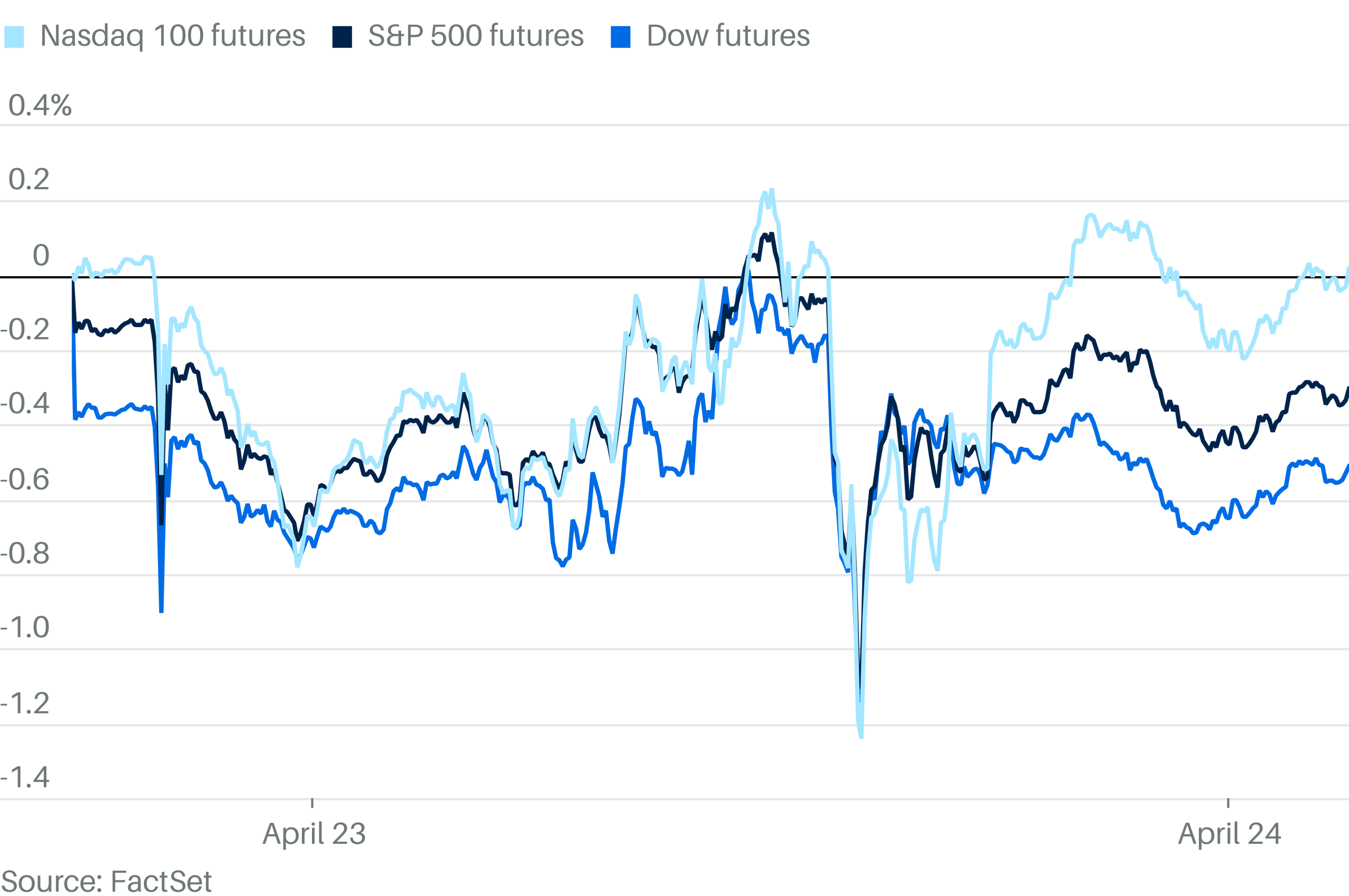
Stocks looked set to rise on Friday as solid tech earnings helped reassure investors who were questioning whether the market could keep its recent rally going.
Dow Jones Industrial Average futures slid 161 points, or 0.3%. But the blue-chip gauge looked likely to be an outlier: futures tracking the S&P 500 climbed 0.1% and contracts tied to the Nasdaq 100 jumped 0.6%.

Generation X is driving beauty sales

Intel (INTC) Stock Explodes 24% Higher in Best Single-Day Rally Since 2020

Michael Jackson Biopic Cast Weigh In On Absence Of Abuse Allegations

Manchester United reach agreement with Casemiro over contract clause amid transfer speculation

US brings back mandatory military draft registration

Steven Gerrard disagrees with Gary Neville over ‘shock’ Chelsea and Arsenal claim | Football


-

 Business6 days ago
Powerball Result April 18, 2026: No Jackpot Winner in Powerball Draw: $75 Million Rolls Over
-

 Politics6 days ago
Zack Polanski demands ‘council homes not luxury flats for foreign investors’
-

 Fashion18 hours ago
Weekend Open Thread – Corporette.com
-
Entertainment6 days ago
NBA Analyst Charles Barkley Chimes in on Ice Spice McDonald’s Fiasco
-

 Tech6 days ago
Auto Enthusiast Scores Running Tesla Model 3 for Two Grand and Turns It Into Bare-Bones Go-Kart
-

 Politics5 days ago
Gary Stevenson delivers timely reminder to register to vote as deadline TODAY
-

 Politics3 days ago
Making troops accountable for war crimes threatens US alliance, ex-SAS colonel warns
-

 Business3 days ago
Rolls-Royce Voted UK’s Most Iconic Trade Mark as IPO Register Hits 150
-

 Politics3 days ago
Disabled people challenge government SEND proposals over segregation concerns
-
 Crypto World5 days ago
Bank of Hawai’i (BOH) Q1 2026: Net Income Drops to $57.4M as Net Interest Margin Expands
-

 Politics3 days ago
Zack Polanski responds to home secretary’s taser threat
-
Politics3 days ago
Wings Over Scotland | How To Get Away With Crimes
-

 Politics3 days ago
Starmer handler McSweeney to be dragged from shadows by Foreign Affairs Committee
-
Crypto World6 days ago
Kelp DAO rsETH Bridge Hack Drains $292M as DeFi Losses Top $600M in Two Weeks
-

 Politics3 days ago
‘Iran is still a nuclear threat’
-
 Crypto World4 days ago
Five Value Stocks with Recovery Potential in 2026: PayPal (PYPL), Nike (NKE), and More
-

 Crypto World4 days ago
New York sues Coinbase, Gemini over prediction market offerings
-

 Business3 days ago
The Job Benefits Most Men Don’t Know to Negotiate
-

 Crypto World1 day ago
Michael Saylor says BTC winter is over. Market analyst disagrees, says bitcoin was in a pullback
-

 Politics6 days ago
Reform investigating candidate who ‘hates’ the NHS
You must be logged in to post a comment Login