





Connect with us
DAPA Banner
DAPA Coin
DAPA
COIN PAYMENT ASSET
PRIVACY · BLOCKDAG · HOMOMORPHIC ENCRYPTION · RUST
ElGamal Encrypted MINE DAPA
🚫 GENESIS SOLD OUT
DAPAPAY COMING

Business

New York commuter rail strike ending after MTA, unions reach agreement

Published

on

Long Island Rail Road strike halts service for 300,000 commuters ahead of Memorial Day

New York Gov. Kathy Hochul announced Monday that the Long Island Rail Road (LIRR) strike is set to end after the Metropolitan Transportation Authority (MTA) and union leaders reached an agreement.

In a post on X, Hochul said phased LIRR service is expected to resume Tuesday at noon, easing travel disruptions for hundreds of thousands of commuters across the New York region.

Advertisement

“Tonight, the [MTA] reached a fair deal with the five LIRR unions that delivers raises for workers while protecting riders and taxpayers,” Hochul wrote. “I’m pleased to announce that phased LIRR service will resume beginning tomorrow at noon.”

The breakthrough came after thousands of LIRR workers went on strike at midnight Saturday, effectively shutting down the nation’s busiest commuter railroad for the first time in more than three decades and threatening major economic disruption across the New York region ahead of Memorial Day.

GEN Z IS SINGLE-HANDEDLY BRINGING AMERICA’S SHOPPING MALLS BACK TO LIFE

Long Island Rail Workers Strike

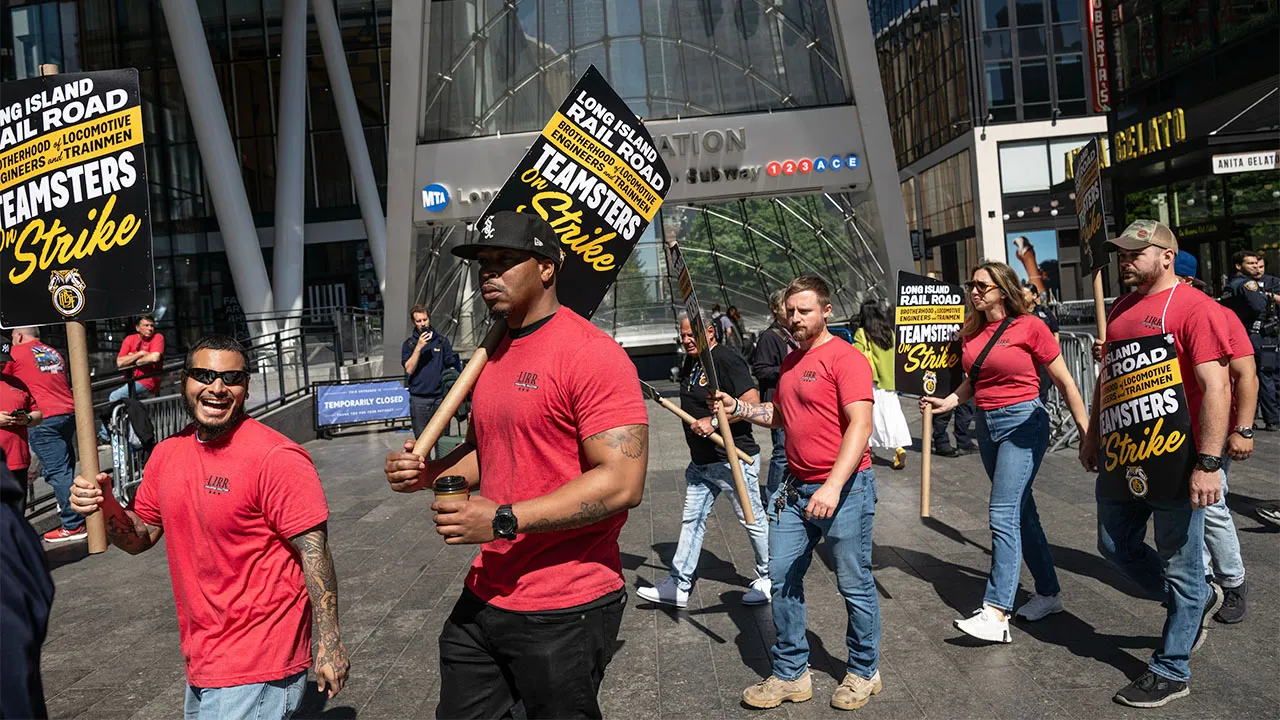
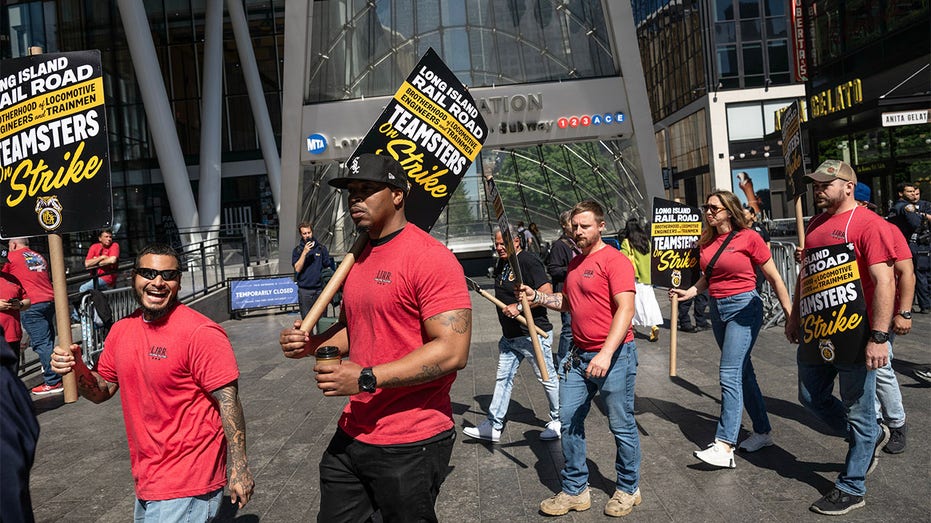
Long Island Rail Road (LIRR) workers picket outside of Penn Station in New York, US, on Saturday, May 16, 2026. (Victor J. Blue/Bloomberg via Getty Images / Getty Images)

The strike halted service for roughly 300,000 daily riders after last-minute contract negotiations between the MTA and a coalition of five rail unions failed to produce a wage agreement.

Advertisement

The MTA confirmed Saturday that all LIRR service was suspended and warned there was “no substitute” for the railroad, urging commuters to work remotely if possible as officials braced for severe congestion and delays throughout the metropolitan region.

New York State Comptroller Thomas DiNapoli’s office estimated the strike could cost the regional economy up to $61 million per day in lost economic activity, as commuters scrambled for alternatives and businesses prepared for disruptions.

The labor action marked the first LIRR strike since 1994. Union leaders said workers involved in the coalition had gone more than three years without raises while negotiating a new labor agreement.  

NYC REAL ESTATE TITAN COMPARES ‘TAX THE RICH’ SLOGAN TO ‘DISGUSTING RACIAL SLURS’ AMID MAMDANI CLASH

Advertisement
lir workers possible strike sign

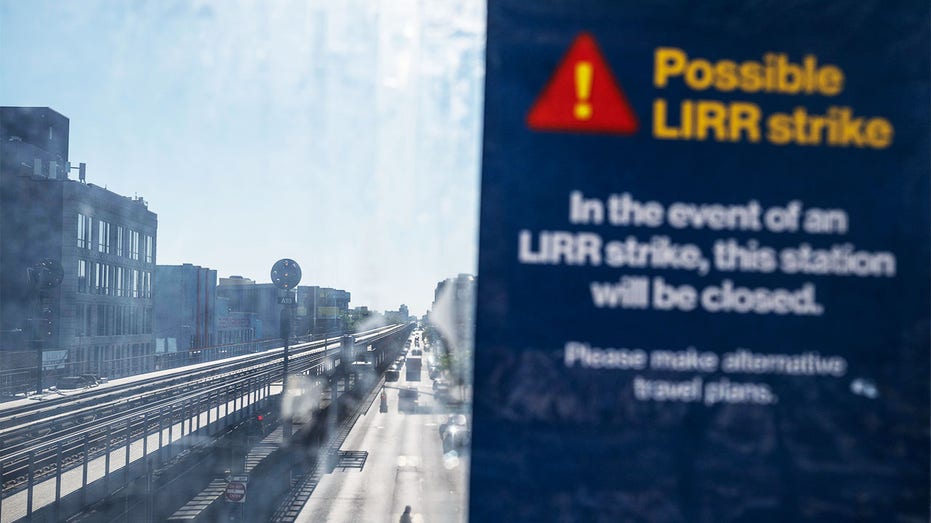
A sign displaying the suspension of Long Island Rail Road (LIRR) service due to a strike, at Nostrand Avenue station in the Brooklyn borough of New York, US, on Saturday, May 16, 2026.  (Victor J. Blue/Bloomberg via Getty Images / Getty Images)

“This strike would not have happened if the MTA and LIRR offered our members the reasonable terms the government recommended multiple times. But management refused,” Mark Wallace, president of the Brotherhood of Locomotive Engineers and Trainmen and the Teamsters Rail Conference, said in a statement.

“We hope LIRR gets serious soon to avoid further unnecessary disruptions for hundreds of thousands of New Yorkers. They know where to find us when they’re ready: on the streets.”

MTA officials defended their bargaining position, arguing that excessive wage increases could ultimately drive up fares and strain the transit system’s finances.

MTA Chair and CEO Janno Lieber said the agency “cannot responsibly make a deal that implodes MTA’s budget” and warned taxpayers and riders could ultimately bear the cost of larger wage increases.

Advertisement
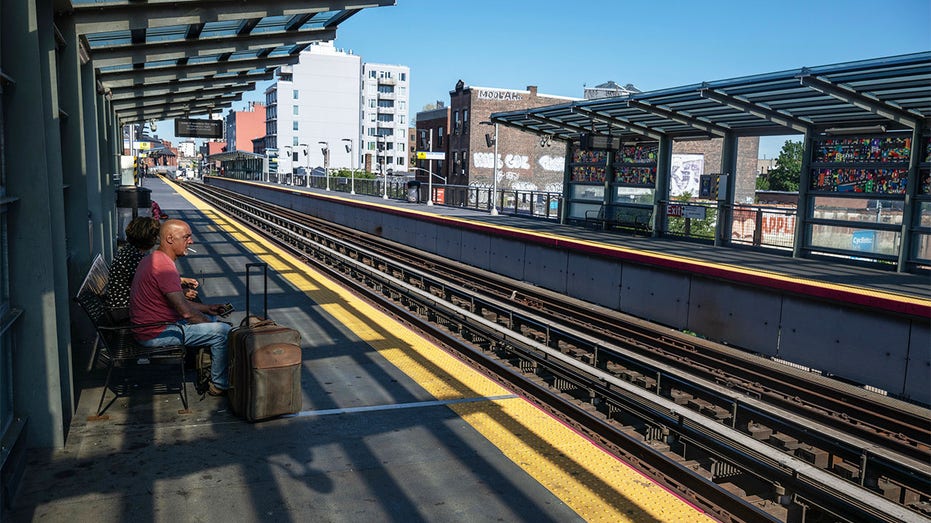
Long Island Rail Workers Strike In First Walkout Since 1994

A commuter sits at the Long Island Rail Road (LIRR) station at Nostrand Avenue in the Brooklyn borough of New York, US, on Saturday, May 16, 2026.  (Victor J. Blue/Bloomberg via Getty Images / Getty Images)

CLICK HERE TO GET FOX BUSINESS ON THE GO

Hochul had previously criticized the strike as “reckless,” warning it could hurt commuters, businesses and the broader regional economy.

President Donald Trump also weighed in on the dispute, blaming Hochul for allowing the strike to occur.

“If you can’t solve it, let me know, and I’ll show you how to properly get things done,” Trump wrote on Truth Social.

Advertisement
Continue Reading
Click to comment

You must be logged in to post a comment Login

Leave a Reply

Business

Caliway presents preclinical data on CBL-514 at obesity congress

Published

on


Caliway presents preclinical data on CBL-514 at obesity congress

Continue Reading

Business

The charity shop which boosted takings by moving outdoors

Published

on

The charity shop which boosted takings by moving outdoors

The shop can now make £2,000 in one day after moving to trade outdoors just one day a week.

Continue Reading

Business

Puravankara shares surge 13% after Q4FY26 turnaround; reports Rs 114 crore profit

Published

on

Puravankara shares surge 13% after Q4FY26 turnaround; reports Rs 114 crore profit
Puravankara shares rallied 12.98% to Rs 240.14 during Tuesday’s trading session after the real estate developer reported a strong turnaround in its fourth-quarter earnings and robust revenue growth.

The company posted a consolidated net profit of Rs 114.2 crore in Q4FY26, compared with a net loss of Rs 85.5 crore in the corresponding quarter last year, marking a sharp recovery in profitability.

Revenue from operations surged 177% year-on-year to Rs 1,502 crore in the March quarter, against Rs 542 crore reported in the same period last year.

According to the company’s investor presentation, Puravankara delivered strong operational and financial performance during FY26. Total revenue for the financial year stood at Rs 3,846 crore, registering an 84% increase from Rs 2,093 crore in FY25. The company also returned to profitability with a PAT of Rs 58 crore in FY26, compared with a loss of Rs 186 crore in the previous fiscal.

Advertisement

Sales volume during FY26 rose 28% year-on-year to 7.25 million square feet, up from 5.67 million square feet in FY25. Average realisation improved 21% YoY to Rs 10,213 per square foot, while EBITDA margin expanded to 21% from 18% a year ago.


The stock has climbed nearly 15% over the past week, taking the company’s market capitalisation to around Rs 5,053 crore. Its 52-week high stands at Rs 338.95.
According to Trendlyne data, the stock’s RSI (14) stands at 51.2, indicating neutral momentum. An RSI below 30 is generally considered oversold, while a reading above 70 signals overbought territory. The stock is currently trading above seven out of eight key simple moving averages (SMAs), although it remains below its 200-day SMA, suggesting a mixed long-term technical trend.Shareholding data for the March 2026 quarter showed a marginal reduction in institutional holdings. Foreign Institutional Investors (FIIs) trimmed their stake from 17.18% to 16.73%, while mutual fund holdings declined slightly from 0.09% to 0.08%.

(Disclaimer: Recommendations, suggestions, views and opinions given by the experts are their own. These do not represent the views of The Economic Times)

Continue Reading

Business

IT stocks see tactical rotation as banking fatigue triggers sector shift: Dhananjay Sinha

Published

on

IT stocks see tactical rotation as banking fatigue triggers sector shift: Dhananjay Sinha
The Indian IT sector has been through a prolonged phase of underperformance, and according to Dhananjay Sinha from Systematix Group, the recent interest in the space appears more tactical than structural. Over the past 12 to 18 months, the sector has seen significant derating amid concerns over US outsourcing policies and weaker earnings guidance from companies.

As he notes, “That has been the past.” At the same time, market leadership that had shifted towards banking stocks is now showing signs of fatigue as investor conviction weakens. He points out that “People might be now shifting back to IT to some extent,” but adds that this is likely to be a defensive move rather than a fundamental turnaround in the sector’s outlook.

On the macroeconomic front, rising crude oil prices are once again becoming a key inflation driver. With oil hovering at elevated levels, concerns around under-recoveries and pass-through effects are building. Sinha highlights that “At $100 we have seen that crude has actually been hovering around there,” and warns that government price adjustments remain insufficient. He adds that “We think that that is very inadequate,” indicating that further fuel price increases may be needed. The broader implication, he suggests, is that inflationary pressures are likely to persist, with “There will be pass through of higher energy prices on inflation,” and WPI inflation potentially rising beyond current expectations.

Turning to monetary policy, Sinha believes the Reserve Bank of India is facing a narrowing policy corridor. He observes that the central bank may initially overlook inflation spikes, but discomfort will rise if inflation crosses key thresholds. “The RBI will actually try to look through the initial surge,” he says, but cautions that “They will actually get more uncomfortable is when it starts going beyond 5%.” In his view, real interest rates could turn negative if inflation stays elevated, which would eventually force the RBI to consider rate hikes. He also flags currency pressure as an additional constraint, noting that “We do anticipate the rupee actually weakening quite sharply,” while RBI’s capacity for intervention may be diminishing.

Advertisement

On the broader macro narrative, Sinha challenges the long-held “Goldilocks” view of the Indian economy. He argues that rising energy-driven inflation will gradually feed into production costs, consumption, and corporate earnings. As he puts it, “We think that with an increase in cost inflation because of the elevated energy prices…” and this will impact “the overall spending power.” The result, he suggests, is a shift away from the idea of strong growth with low inflation toward a more difficult environment of slower growth and higher inflation. “There will be a slow growth and higher inflation,” he says, adding that “That is what we think as a stagflationary situation.”


Overall, the commentary paints a picture of a market and macro environment in transition, where sector rotation is being driven more by defensive positioning, while inflation, currency dynamics, and policy constraints increasingly dominate the outlook.

Continue Reading

Business

How China’s Rising Chip Tool Imports from Southeast Asia Circumvent U.S. Trade Restrictions

Published

on

Asia Dominates Global Digital Hardware Trade with Key Electronic Components
How China’s Rising Chip Tool Imports from Southeast Asia Circumvent U.S. Trade Restrictions

Discover more from Thailand Business News

Subscribe now to keep reading and get access to the full archive.

Advertisement

Continue reading

Continue Reading

Business

Genentech to present breast cancer data at ASCO meeting

Published

on


Genentech to present breast cancer data at ASCO meeting

Continue Reading

Business

Motaded Shares Expert Guidance on Company Formation in Saudi Arabia

Published

on


Motaded Shares Expert Guidance on Company Formation in Saudi Arabia

Continue Reading

Business

Tencent shares jumps after saying some AI models to become paid services

Published

on


Tencent shares jumps after saying some AI models to become paid services

Continue Reading

Business

Morning Bid: Markets in uneasy calm as inflation fears take root

Published

on

Morning Bid: Markets in uneasy calm as inflation fears take root


Morning Bid: Markets in uneasy calm as inflation fears take root

Continue Reading

Business

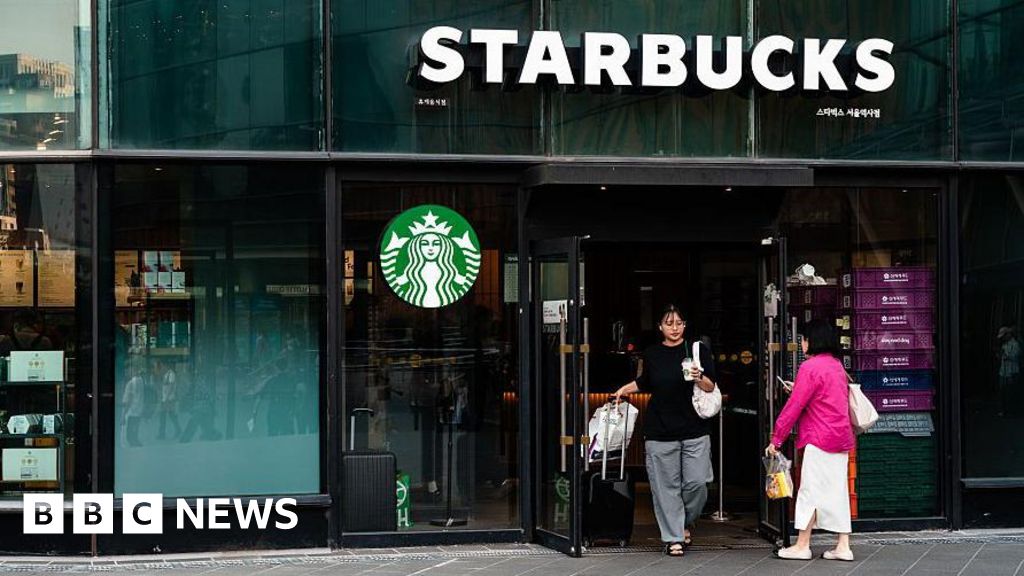
Starbucks Korea sacks CEO over controversial 'Tank Day' promotion

Published

on

Starbucks Korea sacks CEO over controversial 'Tank Day' promotion

Starbucks withdrew the campaign for its drink tumblers after many said it referenced a bloody crackdown.

Continue Reading

Trending

Copyright © 2025