Surff offers a new way for brands to track decision making, where AI is changing ecommerce
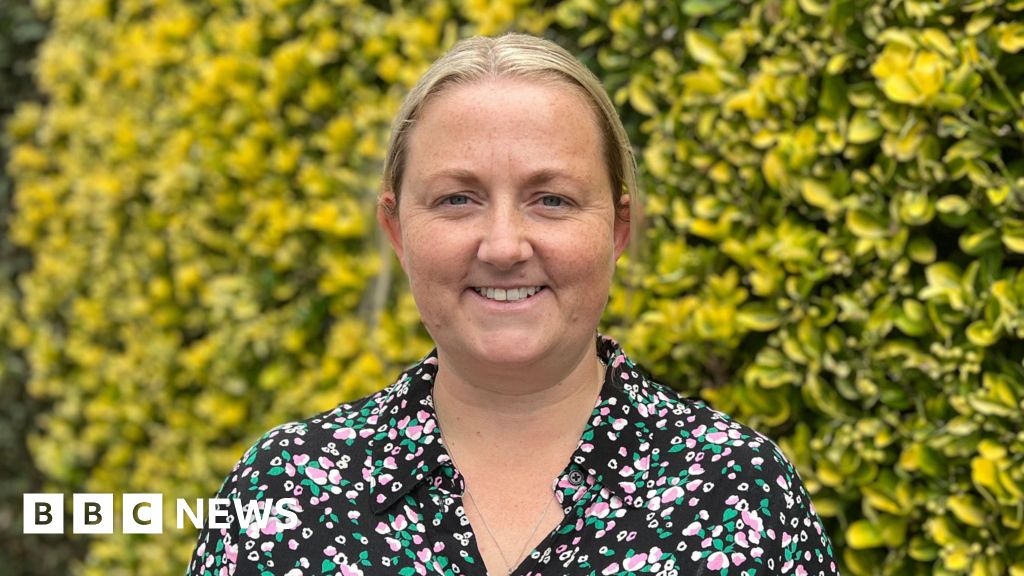
Entrepreneur Ian Griffiths.(Image: Ian Griffiths)
A entrepreneur who has previously co-founded and sold whocanfixmycar.com has launched a new business with hopes to shake up the digital commerce market.
Former investment banker Ian Griffiths has already attracted investment from Mercia Ventures for Surff. He has developed the platform which he says is built on the premise that the most valuable data on the internet isn’t clicks or impressions – it’s decisions.
Current measurement systems can show when a user visited a page, but can’t see what they compared it against, what was shortlisted or why they ultimately chose one option over another. And as AI agents are increasingly carrying out decision-making on behalf of consumers, and with a shift away from third party cookies and tightening privacy rules – Mr Griffiths says existing analytics methods are breaking down.
Surff captures consented browsing behaviour and structures it – using AI – into anonymised, aggregated intelligence that gives sellers a clearer view of how customers actually decide. It covers multiple domains, rather than “walled gardens” – the closed systems that control user data – and last-touch attribution, which assigns 100% of the credit for a conversion to the final interaction a customer has.
Advertisement
The concept is also built so that online shoppers can share in the value of the data they create. Users opt in, and can control what they share, while earning rewards directly from the brands that benefit.
Surff helps consumers share in the value they create from browsing online.(Image: Ian Griffiths)
Mr Griffiths, founder and CEO of Surff, said: “For two decades, the digital economy has been built on data that consumers generate but never benefit from. Surff exists to change that. We’re building the infrastructure layer for decision data – the missing signal that brands have lost as cookies disappear and agentic commerce replaces the buying journey.
“Consumers get to own and earn from the data they create. Brands get a clearer picture of how decisions actually happen. I’m especially proud to be building this in the North East, where the talent and ambition are world-class.”
Mr Griffiths co-founded whocanfixmycar.com in 2011, before it was sold in 2023. It works with thousands of garages on a no win, no fee basis where drivers specify a service or repair and receive estimates from providers near to them.
Advertisement
The business attracted investment from Active Private Equity and former RAC chairman Sir Trevor Chinn. With Surff, this is the second time that Mercia has backed Mr Griffiths, who now hopes to build a larger funding round.
Like this story? For more deals news you can visit our dedicated page for the latest news and analysishere.
The chief executive of US fintech Bolt has mounted a robust defence of his decision to sack the company’s entire human resources department, telling a Fortune audience that the team “created problems that didn’t exist” and that those issues “disappeared” the moment he showed them the door.
Ryan Breslow, the 32-year-old co-founder who returned to the helm last year after a three-year absence, insisted the move was central to his attempt to drag the one-time darling of Silicon Valley back into “start-up mode”. The online checkout software business shed roughly 30 per cent of its workforce in April, its fourth round of redundancies in as many years.
“We had an HR team, and that HR team was creating problems that didn’t exist,” Breslow told delegates. “Those problems disappeared when I let them go.”
He argued that traditional HR professionals were better suited to the “peacetime” rhythms of larger, more mature businesses than to the bare-knuckle conditions of a turnaround. In their place, Bolt has installed a leaner “people operations” function, charged with employee training and day-to-day support rather than policy-making.
“We need a group of people who are very oriented around getting things done,” Breslow said. “There is just a culture of not getting things done and complaining a lot.”
Advertisement
The remarks land at a delicate moment for the company. Bolt’s valuation has plunged from $11 billion at the peak of the 2022 fintech boom to just $300 million, according to The Information, a humbling reset for a business once held up as the future of one-click commerce.
Breslow, who stepped away from the chief executive’s office in 2022 before returning in 2025, has made little secret of his view that the workforce he inherited had grown soft on venture capital largesse.
“There’s a sense of entitlement that had festered across the company,” he said. “People who felt empowered, felt entitled — but weren’t actually working hard. And this is the number one thing that I had to battle. Ultimately, most of those people just had to be let go.”
Bolt has confirmed that fewer than 40 staff were affected by the latest cull, which it said was driven in part by the rapid adoption of artificial intelligence. In a company-wide Slack message in April, Breslow reportedly told employees: “Developing products and operating in 2026 is very different than it was in prior years, and we need to adapt as an organisation to be leaner and more AI-centric than ever to keep up with competition.”
Advertisement
The comments echo a broader trend across the technology sector, with employers from Meta to Microsoft using AI investment as cover for sweeping headcount reductions. Recent CIPD research suggests one in six UK employers now expect AI to eliminate jobs within the next 12 months, with white-collar roles bearing the brunt.
For founders of smaller British businesses watching from afar, the Breslow doctrine will provoke equal measures of admiration and unease. Few would deny that bloated middle layers can hobble a growth-stage company, and the temptation to strip back in tougher times is real. But UK employment law offers far less latitude than the at-will culture of the United States, and dispensing with HR expertise carries reputational as well as legal risks.
Employment lawyers have long warned that getting redundancy wrong can prove ruinously expensive, particularly for SMEs without the budgets to absorb tribunal claims. The Advisory, Conciliation and Arbitration Service (Acas) continues to urge employers to follow a structured, transparent process, including meaningful consultation and fair selection criteria — protections that, in practice, are typically marshalled and monitored by an HR function.
Breslow’s broader argument, that growth-stage businesses must run leaner and faster in an AI-driven economy, is one that increasingly few in the City would dispute. The challenge for British founders is to translate that ambition into a culture that delivers results without falling foul of either employment law or staff morale. As the wave of AI-related layoffs sweeping global tech has shown, the line between bold restructuring and reckless cost-cutting is easily crossed.
Advertisement
Whether Bolt’s stripped-back, founder-led model can return the business to its former $11 billion valuation — or simply hasten its slide — will be one of the defining fintech stories of the year. As reported by Fortune, Breslow has slimmed the headcount from a peak of around 800 to roughly 100. For a man who once championed the worker-friendly four-day week, it is a striking volte-face — and one his remaining staff, and his investors, will be watching closely.
Amy Ingham
Amy is a newly qualified journalist specialising in business journalism at Business Matters with responsibility for news content for what is now the UK’s largest print and online source of current business news.
The Overseas Workers Welfare Administration (OWWA) and the Department of Trade and Industry – Small Business Corporation (DTI-SB Corp) have officially strengthened their partnership to expand livelihood and business opportunities for Overseas Filipino Workers (OFWs) through the improved implementation of the OFW Negosyo Fund.
The Memorandum of Agreement (MOA), formally signed on May 18 at the DTI Filinvest Building in Makati City, marks another important step toward helping OFWs gain easier access to financial assistance, entrepreneurship support, and business development programs as they transition toward long-term financial stability in the Philippines.
The agreement aims to simplify and improve the loan facilitation process for OFWs who wish to start, sustain, or expand their own businesses. Through better coordination among government offices and regional centers, more overseas Filipino workers are expected to benefit from livelihood programs designed specifically for returning migrants and their families.
One of the main goals of the partnership is to widen access to the OFW Negosyo Fund, a government-backed financing program that supports OFWs who want to build businesses and establish sustainable sources of income in the country.
Under the strengthened agreement, OWWA and DTI-SB Corp will improve referral procedures among Regional Offices, Negosyo Centers, Provincial Help Desks, and Reintegration Centers nationwide. This coordinated approach is expected to reduce delays, improve communication between agencies, and provide faster assistance to OFWs seeking business loans and livelihood support.
For many overseas Filipino workers, access to startup capital remains one of the biggest challenges in pursuing entrepreneurship. Traditional bank loans often require strict collateral and financial requirements that many returning OFWs may find difficult to meet.
Programs such as the OFW Negosyo Fund aim to bridge that gap by providing accessible financing options and government support systems tailored to the needs of migrant workers.
Helping OFWs Build Sustainable Businesses
The Philippine government continues to encourage financial literacy and entrepreneurship among OFWs as part of its long-term reintegration strategy. Rather than relying solely on overseas employment, many OFWs are now exploring opportunities to invest their savings into small businesses, franchising opportunities, online selling ventures, food businesses, retail stores, agribusiness projects, and other income-generating activities.
Advertisement
The strengthened collaboration between OWWA and DTI-SB Corp is expected to help aspiring entrepreneurs navigate the process more efficiently.
Aside from loan facilitation, the partnership also focuses on improving the capabilities of regional offices to ensure more effective delivery of services. This includes strengthening frontline support, improving coordination among agencies, and providing better guidance to OFWs who may need assistance in business planning, loan applications, and entrepreneurship training.
Government agencies recognize that financial assistance alone is not enough to guarantee business success. Many small enterprises fail because of lack of business knowledge, poor financial management, or insufficient market preparation.
Because of this, livelihood programs now increasingly include mentorship, financial education, and entrepreneurship seminars to improve the chances of long-term success for OFW-owned businesses.
Advertisement
Officials Express Support for the Partnership
The signing ceremony was led by OWWA Administrator Patricia Yvonne “PY” Caunan, who delivered the opening remarks during the event.
Support for the strengthened partnership was also expressed by Department of Migrant Workers (DMW) Secretary Hans Leo J. Cacdac and Department of Trade and Industry (DTI) Secretary Ma. Cristina Roque.
The collaboration reflects the government’s continuing effort to create more economic opportunities for OFWs and returning migrant workers who want to establish stable livelihoods in the Philippines.
Officials highlighted the importance of empowering overseas Filipino workers not only through employment opportunities abroad but also through sustainable reintegration programs that can help them achieve long-term financial independence.
Advertisement
Importance of Reintegration Programs for OFWs
Millions of Filipinos continue to work overseas to support their families, contribute to household income, and provide better educational opportunities for their children. However, many OFWs also face financial uncertainty after returning home, especially if they lack stable investments or alternative sources of income.
This is why reintegration programs have become increasingly important in recent years.
Livelihood assistance and entrepreneurship financing programs allow OFWs to transform their hard-earned savings into productive investments that can generate long-term income even after overseas employment ends.
Government agencies have repeatedly emphasized that entrepreneurship can help OFWs reduce dependency on overseas work while creating jobs and stimulating local economic growth.
Advertisement
Small businesses established by returning OFWs can also contribute to community development by generating employment opportunities for other Filipinos.
Growing Interest in Small Business Opportunities
The demand for small business financing in the Philippines continues to rise as more Filipinos explore entrepreneurship opportunities. Digital platforms, online marketplaces, and social media marketing have made it easier for small entrepreneurs to reach customers nationwide.
Many OFWs are now investing in businesses such as:
With proper guidance, financing support, and business education, these ventures can become sustainable sources of income for OFWs and their families.
Advertisement
Improved Coordination Among Government Offices
The new agreement between OWWA and DTI-SB Corp also aims to improve coordination among local and regional offices nationwide.
Under the enhanced referral system, OFWs can receive assistance through various government touchpoints including OWWA Regional Welfare Offices (RWOs), DTI Negosyo Centers, Provincial Help Desks, and Reintegration Centers.
This integrated approach is expected to make government services more accessible and responsive to the needs of OFWs in different parts of the country.
By strengthening coordination and streamlining procedures, agencies hope to reduce confusion among applicants while ensuring faster processing and more efficient delivery of support services.
Advertisement
How OFWs Can Learn More About the Program
According to OWWA, interested OFWs may learn more about the OFW Negosyo Fund and related livelihood programs through several channels.
Applicants may visit the nearest OWWA Regional Welfare Office (RWO) or DTI-SB Corp Regional Office for inquiries regarding eligibility requirements, loan procedures, and available entrepreneurship assistance.
OWWA also encouraged OFWs to watch the “Kabuhayan Wednesday” livestream hosted by OWWA RWO NCR, where various livelihood opportunities and government programs for OFWs are discussed.
The agency continues to promote awareness campaigns to ensure more overseas Filipino workers can access available financial and reintegration assistance programs.
Advertisement
Strengthening Financial Security for OFWs
The partnership between OWWA and DTI-SB Corp reflects the government’s broader strategy of helping OFWs achieve greater financial security through entrepreneurship and livelihood development.
For many overseas Filipino workers, establishing a successful business represents an opportunity to eventually return home permanently while maintaining stable income for their families.
As the Philippine government continues to expand reintegration initiatives, programs like the OFW Negosyo Fund are expected to play an increasingly important role in supporting returning OFWs who aspire to become entrepreneurs.
With improved coordination, expanded access to financing, and enhanced support systems, more OFWs may soon have the opportunity to transform their overseas earnings into sustainable businesses and long-term financial stability.
Advertisement
Business News Philippines was launched in October 2015 as a portal for readers to learn more about operating a business in the Philippines.
Mumbai: Gold loan provider Muthoot Finance is expected to raise up to ₹2,000 crore next week in floating-rate bonds (FRB) maturing in three years, two people aware of the matter told ET, tapping into a growing market for these instruments linked to a more stable, shorter-duration external benchmark.
The paper will be priced 300 basis points above the 91-day treasury bill, said the people cited above.
One basis point is a hundredth of a percentage point. The 91-day T-bill has increased 21 basis points to 5.50% this calendar year. The 10-year benchmark rate, by contrast, has increased 48 basis points to 7.08% as of Wednesday.
Muthoot Finance plans to raise ₹2,000 crore next week. The company will issue three-year floating-rate bonds. These bonds are linked to the 91-day treasury bill. This move allows Muthoot Finance to avoid high fixed borrowing costs. Floating-rate bonds are gaining popularity as interest rates are expected to rise.
The coupon will be reset every quarter, unlike fixed-rate bonds. The bond issue is being arranged by ICICI Securities PD and AK Capital. Muthoot finance did not respond to mailed queries by press time.
Live Events
“Fixed-rate corporate bond yields have risen amid expectations of a rate hike, prompting issuers to look for ways to avoid locking in borrowing costs at elevated levels,” said Venkatakrishnan Srinivasan, managing partner at Rockfort Fincap, a debt advisory firm. “Many companies now are turning to FRBs, which are priced very competitively, with borrowing costs in some cases even coming in below comparable bank lending rates.” FRBs gained traction as interest rates are expected to rise. Its coupon is benchmarked to 91-day T-bill, allowing issuers to avoid locking in elevated long-term yields.
FOX Business’ Darren Botelho reports the Trump administration has frozen hundreds of millions in crypto tied to Iran as officials warn Tehran is using Bitcoin to evade sanctions and fund a shadow economy.
U.S. efforts to crack down on Iran’s growing use of cryptocurrency are intensifying as officials work to cut off financial channels tied to the regime as tensions rise in the Middle East.
FOX Business’ Darren Botelho joined FOX Business’ Stuart Varney on “Varney & Co.” to report on the Trump administration’s efforts to track and freeze cryptocurrency linked to Iran as the regime reportedly increases its use of Bitcoin-based transactions to help move money outside the traditional banking system.
An Iranian flag flies above ships anchored in the Strait of Hormuz as the U.S. cracks down on Iran’s growing use of cryptocurrency. (Majid Saeedi/Getty Images)
Treasury Secretary Scott Bessent said the Treasury Department has frozen nearly $500 million in cryptocurrency connected to the Iranian regime, including $344 million last month alone. Botelho also cited new estimates from a threat-detection data firm showing Tehran controls roughly $7.7 billion in digital assets.
The report comes as Iran reportedly launched a new digital insurance platform for cargo ships operating through the Strait of Hormuz, with payments reportedly being settled entirely in Bitcoin.
Industry experts say cryptocurrency can still leave a trail for investigators despite being viewed by some foreign adversaries as a way to evade sanctions.
Former U.S. special representative for Iran Brian Hook joins ‘Varney & Co.’ to discuss President Donald Trump’s Iran strategy, escalating threats from Tehran and concerns over the regime’s nuclear ambitions.
“We found over and over again that they’re actually a much better asset for U.S. law enforcement and other agencies to track because you leave a lot of breadcrumbs,” 250 Digital Asset Management CEO Chris Perkins said.
Botelho also reported that industry insiders believe Washington could increase pressure by threatening to cut off crypto exchanges from the American banking system.
Penarth Commercial Properties were advised by Tide Advisory and Fletcher Morgan
Three property deals has been struck at the automotive hub on Penarth Road in Cardiff.
Penarth Commercial Properties, following a strategic review of its assets, has let a prime roadside unit to Kwik Fit, strengthening the operator’s South Wales presence.
It has also sold the freehold interest in the former Transit Centre to Buy & Go Cars, which is establishing a new flagship site in Cardiff.
The third deal has seen the sale of the Fordthorne business and adjoining land to Arnold Clark, with the group acquiring the site and existing Omoda and Jaecoo operations.
The transactions underline continued investor and occupier appetite for prime automotive locations, with Penarth Road remaining a key focus for operators expanding in South Wales.
Penarth Commercial Properties were advised by Tim Carr of Tide Advisory, who carried out the negotiations and lead the transactions through to completion. The Cardiff office of property advisory firm Fletcher Morgan marketed the properties.
Matthew Jones, director at Fletcher Morgan, said: “These transactions demonstrate the continued depth of demand for well-located roadside and automotive assets in Cardiff. Penarth Road remains one of the city’s most active corridors, and we are pleased to have delivered a strong set of outcomes for our client.”
Roger Pugsley, chief executive of Penarth Commercial Properties, said: “This programme was driven by a clear strategic mandate. Tim Carr of Tide Advisory led the restructure and defined the execution strategy, which Fletcher Morgan then helped deliver effectively in the market. This leaves Penarth Commercial Properties well positioned to expand its commercial property investments in the region.”
Intuit Inc. (INTU) Q3 2026 Earnings Call May 20, 2026 4:30 PM EDT
Company Participants
Anne-Sophie Seigneurbieux – Senior Vice President of Investor Relations, Corporate & Strategic Finance Sasan Goodarzi – CEO, President & Chairman Sandeep Aujla – Executive VP & CFO
Advertisement
Conference Call Participants
Keith Weiss – Morgan Stanley, Research Division Sitikantha Panigrahi – Mizuho Securities USA LLC, Research Division Sang-Jin Byun – Jefferies LLC, Research Division Brad Zelnick – Deutsche Bank AG, Research Division Aleksandr Zukin – Wolfe Research, LLC Taylor McGinnis – UBS Investment Bank, Research Division S. Kirk Materne – Evercore ISI Institutional Equities, Research Division
Presentation
Advertisement
Operator
Good afternoon. My name is Cloe, and I will be your conference operator today. At this time, I would like to welcome everyone to Intuit’s Third Quarter Fiscal Year 2026 Conference Call. [Operator Instructions]
With that, I’ll now turn the call over to Anne-Sophie Seigneurbieux, Intuit’s Senior Vice President of Investor Relations, Corporate and Strategic Finance. Ms. Seigneurbieux?
Advertisement
Anne-Sophie Seigneurbieux Senior Vice President of Investor Relations, Corporate & Strategic Finance
Thank you, Cloe. Good afternoon, and welcome to Intuit’s Third Quarter Fiscal 2026 Conference Call. I’m here with Intuit’s Chairman and CEO, Sasan Goodarzi; and our CFO, Sandeep Aujla.
Before we start, I’d like to remind everyone that our remarks will include forward-looking statements. There are a number of factors that could cause Intuit’s results to differ materially from our expectations. You can learn more about these risks in the press release we issued earlier this afternoon or our Form 10-K for fiscal 2025 and our other SEC filings. All of those documents are available on the Investor Relations page of Intuit’s website at intuit.com. We assume no obligation to update any forward-looking statements.
Some of the numbers in these remarks are presented on a non-GAAP basis. We’ve reconciled the comparable GAAP and non-GAAP numbers
England’s water security is heading for a serious squeeze, and the bill for inaction will land squarely on the desks of farmers, food producers, manufacturers and the wider small business community.
That is the blunt message from a cross-party House of Lords committee, which on Thursday 21 May publishes a report warning that the taps risk running dry unless the Government moves quickly to capture, store and reuse more of the rain that already falls on these islands.
In Surviving drought: reclaim the rain, the House of Lords Environment and Climate Change Committee argues that climate change, a growing population, leaky Victorian pipework and thirsty industries are pushing the system towards a tipping point. Britain, the peers note, is not actually short of rainfall. The problem is that far too much of it is wasted, washed straight into rivers and the sea rather than held back for the dry months that climate science now tells us to expect with growing frequency.
The figures the committee cites are arresting. If ministers fail to act, public demand for water could outstrip supply by five billion litres every day by 2055, the equivalent of around 2,000 Olympic swimming pools draining away unmet each morning. That projection sits in line with the Environment Agency’s own National Framework for Water Resources, which has previously warned of a shortfall of similar scale unless leakage is cut and new sources of supply brought online.
A warning aimed at Whitehall, but felt on the shop floor
Baroness Sheehan, who chairs the committee, says the experience of the 2025 drought should serve as an early warning rather than a one-off. “Climate change is increasing the risk of drought through a combination of hotter summers and heavier winter rains, making the capture and storage of rainwater increasingly important,” she said. “We have already had a dry start to this spring, so it is critical that action is taken now to prepare for serious drought conditions, particularly as we enter a reported El Niño year.”
Advertisement
Forecasters at the Met Office have signalled a likely return of El Niño conditions from mid-2026, raising the probability of hotter, drier summers. For SMEs already nursing tight margins through a sluggish economic recovery, another summer of hosepipe bans, abstraction restrictions and stressed supply chains is the last thing the order book needs.
That much was clear last spring, when Business Matters reported on how drought conditions had begun hitting UK crop production, with reservoirs running low and farmers warning of early yield losses after the driest spring in 69 years. A year on, the peers say the lesson has barely been absorbed.
Four areas where ministers are urged to move
The committee’s recommendations sit in four broad buckets, each of them with direct read-across to the boardroom.
First, the peers want a proper grip on the numbers. That means better drought monitoring and impact data, and a full environmental and economic assessment that weighs the cost of doing nothing against the long-term value of building resilience. Without that, the committee argues, capital spending decisions on reservoirs, transfer schemes and demand-management measures will continue to be made in the dark.
Advertisement
Second, the report calls for a whole-of-society push on demand. Awareness campaigns, tougher water-efficiency standards in new homes, and incentives for water reuse and rainwater harvesting all feature. For the SME estate, this is likely to translate into firmer expectations on water-using appliances, fittings and processes, particularly in hospitality, food and drink and light manufacturing.
Third, the committee zeroes in on sectors that rely on direct abstraction from rivers and aquifers. It urges ministers to make it easier for farms, golf courses and other appropriate operations to build local resource reservoirs, and to introduce more flexibility into the abstraction licensing regime so that catchment-based water projects can scale. For the rural economy, that flexibility could be the difference between a viable harvest and a written-off crop.


Finally, the peers want emergency planning brought up to date. They are asking the Government to publish a prioritisation plan for severe drought by autumn 2026 at the latest, alongside a wider rollout of nature-based solutions, from wetland restoration to sustainable urban drainage, in both town and country.
Why this is a balance-sheet issue, not just an environmental one
The temptation in many quarters will be to file this report alongside the broader stack of climate warnings. That would be a mistake. Water is an input cost like any other, and one that the City is only now starting to price properly. Investors, lenders and insurers are sharpening their interrogation of corporate exposure to physical climate risk, and water scarcity sits near the top of that list for any business with a meaningful UK footprint.
Advertisement
The point was made forcefully in a recent Business Matters opinion piece arguing that the UK economy risks collapse without urgent investment in nature, with the financial sector urged to wake up to the fact that nature loss and water stress are no longer fringe concerns but central to long-term economic stability.
There is also a competitive angle. UK SMEs are, on the whole, ahead of the curve on sustainability, with Business Matters previously reporting that nearly two-thirds of small firms are taking practical steps to cut their environmental footprint. Those firms that have already invested in water-efficient kit, leak detection and on-site capture should find themselves better placed if regulatory pressure tightens, as the Lords clearly want it to.
The bottom line
Baroness Sheehan is unequivocal in her closing remarks: “Water is the foundation of life itself. The Government must act now to secure England’s most vital resource for the future and work with the public to ensure the taps don’t run dry.”
For business owners, the practical implications are already taking shape. Expect higher water bills in catchment areas under stress, tighter rules on abstraction and discharge, growing investor scrutiny of water risk in annual reports, and new commercial opportunities for firms offering harvesting, reuse and efficiency technologies. The smart money will not wait for Whitehall to catch up. The companies that get ahead of this curve, in much the same way that the best-prepared firms got ahead of net zero, are the ones likeliest to keep producing, serving and selling when the next dry spring arrives.
Advertisement
The peers have laid out the warning and the to-do list. The question now is whether ministers, water companies and businesses themselves are prepared to treat rainwater as the strategic national asset it has quietly become.
Amy Ingham
Amy is a newly qualified journalist specialising in business journalism at Business Matters with responsibility for news content for what is now the UK’s largest print and online source of current business news.
Newquay is one of five UK airports that have been identified as likely to benefit from the expansion
14:24, 20 May 2026Updated 15:32, 20 May 2026
A British Airways plane taking off from Heathrow Airport(Image: Daniel Leal-Olivas/PA Wire)
Heathrow Airport’s expansion plans could open the door to another direct connection to Cornwall, according to a new report. The research by Frontier Economics identified Cornwall Airport Newquay as one of five UK transport hubs most likely to benefit from restored connections to Heathrow, which is looking to build a third runway.
The analysis highlighted Leeds Bradford, Teesside International, Belfast International and Liverpool John Lennon Airport as other strong candidates for new domestic links to the London airport.
Advertisement
The findings suggested connecting the South West to Heathrow would support trade, tourism and investment to the region. Travellers from Cornwall Airport can currently fly with easyJet to Gatwick and Ryanair to Stansted.
According to the Frontier Economics research, a new route operating three times a week could generate £28.6m in tourism spending in the South West a year.
Heathrow already plays a critical role in connecting the UK. Almost five million passengers travelled on domestic routes last year, generating around £1.2bn in tourism spending across the UK.
Amy Smith, managing director of Cornwall Airport Newquay, said the proposed third runway at Heathrow had “the potential to deliver meaningful hub access for regions like Cornwall”.
Advertisement
But she said it would only work if there was “a clear and sustained commitment” to slot accessibility and affordability for regional carriers and regional routes.
“Direct and reliable connectivity to a UK hub is vital for Cornwall’s economy, inward investment, and the future of sustainable regional aviation,” she said.
Nigel Milton, chief communications and sustainability officer at Heathrow, said: “Domestic connectivity has always been central to Heathrow’s role as the UK’s only hub airport.
“For many communities, these links are not a luxury, they are a lifeline, connecting people and businesses to opportunities across the UK and around the world. With additional capacity, we can strengthen these vital connections and ensure every part of the country can benefit from Heathrow’s global network.”
Advertisement
The news comes just days after the publication of a review by the aviation watchdog proposing to make changes to the regulatory model that governs how Heathrow runs and covers its costs.
In the report, the Civil Aviation Authority (CAA) suggests a rival firm could bid to build Heathrow’s third runway and new terminal in a bid to keep costs down.
It is one of several regulatory changes being considered by the CAA if Heathrow expands in a bid to “better serve the interests of consumers”.
You must be logged in to post a comment Login