
Business
No Winner in July 4 Powerball Drawing as $402 Million Jackpot Climbs to $416 Million for Monday’s Drawing

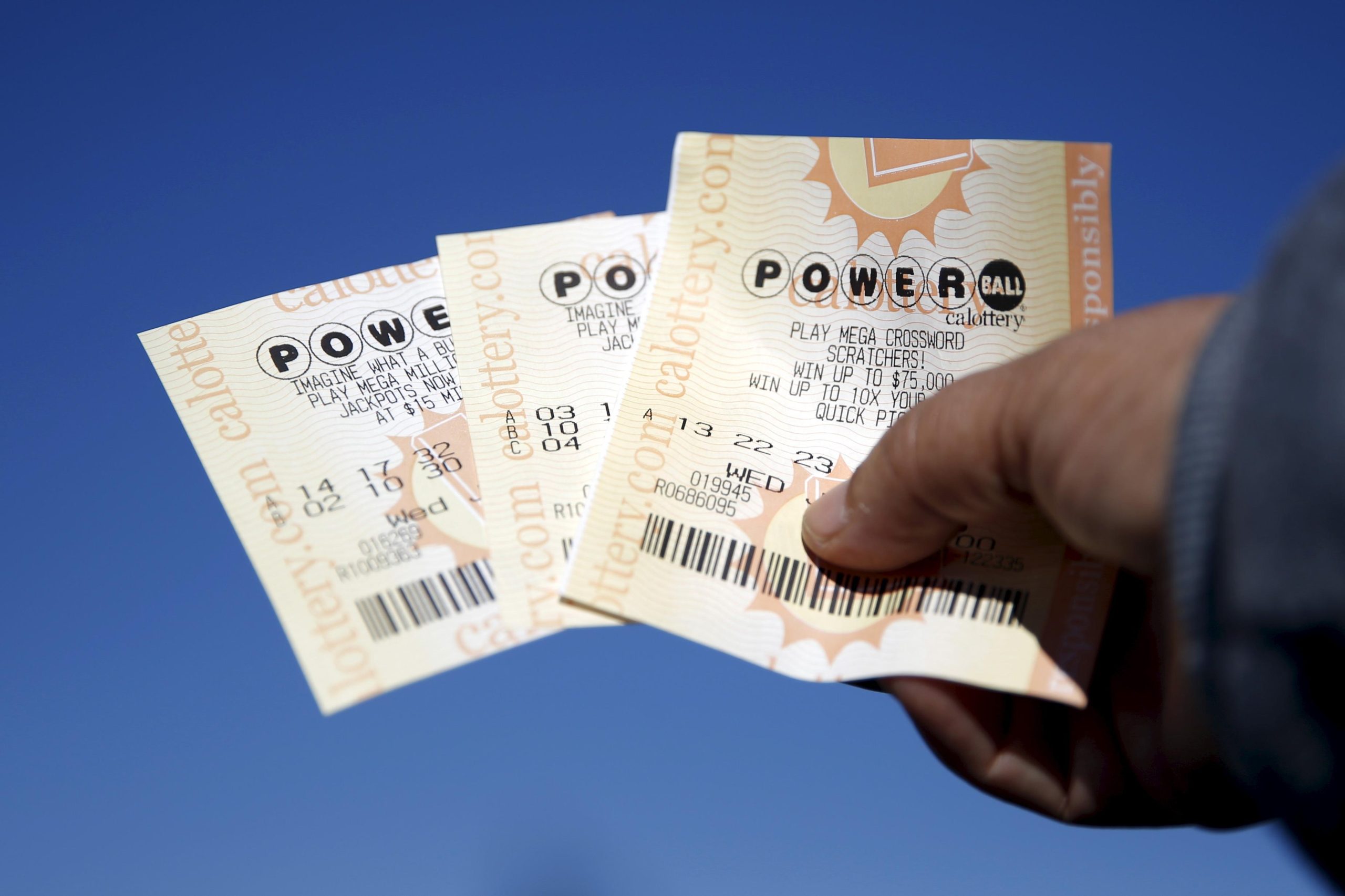
LANSING, Mich. — No one matched all six numbers in Saturday’s Powerball drawing, allowing the jackpot to roll over and grow to an estimated $416 million ahead of Monday night’s drawing, according to lottery officials.
The winning numbers drawn Saturday, July 4, were 17, 38, 46, 50 and 69, with a Powerball number of 20 and a Power Play multiplier of 2. No ticket matched all five white balls plus the red Powerball, meaning the jackpot, which had stood at an estimated $402 million heading into the drawing, will carry over to Monday’s drawing with an estimated value of $416 million, or a lump-sum cash option of $186.6 million.
While no one claimed the top prize, the drawing was not without significant winners. No player matched all five white balls, which would have secured a $1 million prize, but seven players matched four white balls plus the Powerball while also participating in the optional Power Play add-on, each winning $100,000, the largest individual prize awarded in Saturday’s drawing.
In total, 626,323 players across the country won at least $4 in the July 4 drawing, with combined prize payouts exceeding $4.6 million, according to figures released by lottery officials. The results reflect the wide range of smaller prize tiers built into the Powerball game, which rewards players for matching as few as the Powerball number alone or a single white ball plus the Powerball.
Powerball’s jackpot was last won on May 2, 2026, when the $20 million prize was split between two winning tickets, one sold in Florida and the other in Texas. Since that win, the jackpot has been steadily climbing across successive drawings without a winner, building toward the $416 million prize now on offer for Monday night’s drawing.
Powerball is played in 45 states, along with Washington, D.C., Puerto Rico and the U.S. Virgin Islands. Tickets cost $2 each, and players select five white ball numbers ranging from 1 to 69, along with one red Powerball number ranging from 1 to 26. Players can also opt to pay an additional $1 per ticket for the Power Play feature, which multiplies non-jackpot winnings by a randomly selected factor, in this case 2, for Saturday’s drawing.
Michigan has a notable recent history with the nation’s major lottery jackpots. The last Michigan players to win a Mega Millions or Powerball jackpot were members of the so-called Breakfast Club lottery pool, who claimed an $842 million Mega Millions jackpot in June 2024, the largest prize ever won by a Michigan ticket holder in either game. Members of that group have said they intend to use part of their winnings to purchase a home in Florida and to travel.
Lottery officials have also used past cases to remind players of the importance of checking tickets promptly after a drawing. A Powerball ticket worth $250,000 sold in Bloomfield Hills, Michigan, in 2024 went unclaimed after the deadline for prize redemption passed, sending the money instead to the state’s School Aid Fund rather than to a winning ticket holder. State lottery rules generally set firm deadlines for claiming prizes, after which unclaimed winnings are redirected to state education or public funds depending on the jurisdiction in which the ticket was purchased.
Powerball drawings are held three times a week, on Mondays, Wednesdays and Saturdays, giving players regular opportunities to try for the jackpot as it continues to grow between wins. Jackpots begin at a guaranteed minimum and increase based on ticket sales and the number of consecutive drawings that pass without a grand prize winner, a dynamic that has pushed Monday’s prize to its current estimated $416 million value following Saturday’s rollover.
The odds of winning the Powerball jackpot remain long, standing at approximately 1 in 292.2 million for any individual ticket, according to the game’s official odds chart. Odds for smaller prize tiers are considerably more favorable, ranging from roughly 1 in 38 for matching only the Powerball number to 1 in 913,129 for matching all five white balls without the Powerball, the tier that would have resulted in a $1 million prize had any ticket in Saturday’s drawing achieved that combination.
Powerball operates alongside Mega Millions as one of the two major multistate lottery games played across most of the country. Mega Millions’ most recent jackpot, drawn July 3, was valued at $542 million, reflecting a similarly active stretch for both major lottery games as jackpots in each have continued to build in recent weeks without a grand prize winner.
Players interested in participating in Monday’s Powerball drawing can purchase tickets through authorized retailers in any of the states or territories where the game is offered, with sales typically cutting off shortly before each scheduled drawing time. Ticket buyers are encouraged to check the official Powerball website or their state lottery’s official platform for exact cutoff times, as these can vary slightly by jurisdiction.
For Michigan players specifically, additional information on ticket sales, past winning numbers and other lottery games, including instant tickets and raffles, is available through the Michigan Lottery’s official website. Lottery officials in Michigan and other participating states continue to encourage players to sign and safeguard their tickets immediately after purchase, given that unsigned or lost tickets can complicate the prize claims process, particularly for larger winnings that require in-person verification at state lottery offices.
With no jackpot winner from Saturday’s drawing, attention now turns to Monday night, when Powerball players across the country will have another opportunity to claim the growing prize, now standing at an estimated $416 million with a cash option of $186.6 million, before the numbers are drawn and the cycle either resets with a new winner or continues to climb toward the next drawing later in the week.



Financial analyst by day and a seasoned investor by passion, I’ve been involved in the world of investing for over 15 years and honed my skills in analyzing lucrative opportunities within the market.I specialize in uncovering high quality dividend stocks and other assets that offer potential for long term-growth that pack a serious punch for bill-paying potential. I use myself as an example that with a solid base of classic dividend growth stocks, sprinkling in some Business Development Companies, REITs, and Closed End Funds can be a highly efficient way to boost your investment income while still capturing a total return that follows traditional index funds. I created a hybrid system between growth and income and manage to still capture a total return that is on par with the S&P.
Analyst’s Disclosure: I/we have no stock, option or similar derivative position in any of the companies mentioned, but may initiate a beneficial Long position through a purchase of the stock, or the purchase of call options or similar derivatives in VYMI over the next 72 hours. I wrote this article myself, and it expresses my own opinions. I am not receiving compensation for it (other than from Seeking Alpha). I have no business relationship with any company whose stock is mentioned in this article.
Seeking Alpha’s Disclosure: Past performance is no guarantee of future results. No recommendation or advice is being given as to whether any investment is suitable for a particular investor. Any views or opinions expressed above may not reflect those of Seeking Alpha as a whole. Seeking Alpha is not a licensed securities dealer, broker or US investment adviser or investment bank. Our analysts are third party authors that include both professional investors and individual investors who may not be licensed or certified by any institute or regulatory body.

Interface's Surge Doesn't Necessitate A Downgrade Yet

Spider-Man: Brand New Day brought in $927m (£687m) of global ticket sales to make it the second-biggest opening weekend ever as it shot past its estimated $225m production budget.
The superhero movie – starring real-life husband and wife Tom Holland and Zendaya – is only behind Avengers: Endgame, which took in more than $1.2bn in its opening weekend in 2019.
Brand New Day also set a second-best North American record, with box office takings of $335m.
The film’s strong performance gives a much-needed boost for Disney ahead of the highly-anticipated December release of Avengers: Doomsday, after a string of Marvel movies under-performed in recent years.
Brand New Day, which opened in cinemas last week, picks up a few years after 2021’s Spider-Man: No Way Home as Peter Parker continues to fight crime in a world that has forgotten he is the masked superhero.
The latest instalment of the hugely popular franchise received largely positive reviews, with some calling it Holland’s best Spider-Man performance yet.
The film is Marvel’s last big-screen outing before Doomsday, the long-awaited culmination of multiple superhero story arcs after Avengers: Endgame.
Marvel films released since Endgame have struggled to attract the same broad audiences as they did at their peak.
Big budget films like The Marvels and The Thunderbolts recouped their production costs but were among the studio’s lowest-grossing films.
Spider-Man remains one of Marvel’s most lucrative franchises, with No Way Home making nearly $2bn in ticket sales.
Cinema attendance has slowed since the Covid-19 pandemic, which accelerated the shift to home-streaming options like Netflix.
But the big screen has staged something of a comeback this year, with the North American box office takings on track to pass $10bn for the first time since 2019.
That was helped by blockbuster hits by including Toy Story 5, Michael, and The Super Mario Galaxy Movie – which have made more than $1bn each.
July releases Brand New Day and The Odyssey – director Christopher Nolan’s take on the epic Greek poem – are also on track to top the $1bn mark.
Indie horror flicks Obsession and Backrooms emerged as surprise successes, bringing in more than $390m each despite their modest budgets.
Meta cuts Wipro outsourcing work by at least 25%- Mint
Business
Oil Price Today (August 3): Crude oil crashes 5% below $84 as Trump delays attack on Iran. What are experts saying?

Crude oil price on August 3
Brent crude futures fell $4.37, or 5%, to $83.56 a barrel, while U.S. West Texas Intermediate crude declined $4.63, or 5.5%, to $80 a barrel.
The sharp decline followed a strong rally last month, when both contracts had gained more than 20% after fighting between the U.S. and Iran resumed. Concerns over attacks on several tankers near Oman also heightened security risks, discouraging shippers from entering the Gulf to load crude.
Also read: Trump’s closest Gulf allies are frustrated with his Iran war strategy: Report
In a possible sign of easing tensions, Trump said late on Saturday on his Truth Social platform that Iran and other Middle Eastern countries had sought time to finalise an agreement that would result in “the Immediate, Complete and Total” reopening of the crucial waterway and bring “an end to Iran’s nuclear threat”. Trump added that he had agreed to cancel the attack to allow for a rapid agreement, and said Israel had also committed to the effort.

On Sunday, OPEC+ approved an increase of around 188,000 barrels per day in its oil production quota for September, marking the completion of the rollback of one tranche of its voluntary output cuts.
However, the additional supply has had little effect on the market so far. Export disruptions from the Gulf, along with supply issues involving Russia and Kazakhstan amid the Iran and Ukraine wars, have meant that the group’s successive monthly production hikes for most of this year have largely remained on paper.
Analysts hopeful?
The trajectory of oil prices will largely depend on the duration of the supply disruption. JPMorgan estimates that every additional month of disruption could lift Brent prices by about $7 to $8 a barrel. If the disruption extends for three months, the bank expects the monthly average Brent price to reach around $114 a barrel.Goldman Sachs has also warned that Brent could rise to $120 a barrel if shipping disruptions through the Strait of Hormuz, the world’s most important oil transit route, continue. However, its base case remains that tensions in the Middle East will eventually ease.
Read more: Oil prices surge 20% in July as US-Iran war heightens Strait of Hormuz tensions
Based on that assumption, Goldman Sachs expects Brent to average $80 a barrel in the fourth quarter and $75 a barrel next year. Even so, the bank said the risks to its forecasts remain “tilted to the upside”, citing the possibility that shipping disruptions could continue in both the Strait of Hormuz and the Red Sea.
“The direction of our outlook is unchanged; the path and the timeline have shifted. We still expect oil to cool as we move into 2027, for three reasons: supply outside the conflict zone is expanding, with OPEC+ raising production targets, the UAE at record output and non-OPEC barrels responding to price, said Anindya Bannerjee, Head of Commodity Research at Kotak Securities.
(Disclaimer: Recommendations, suggestions, views and opinions given by the experts are their own. These do not represent the views of Economic Times)
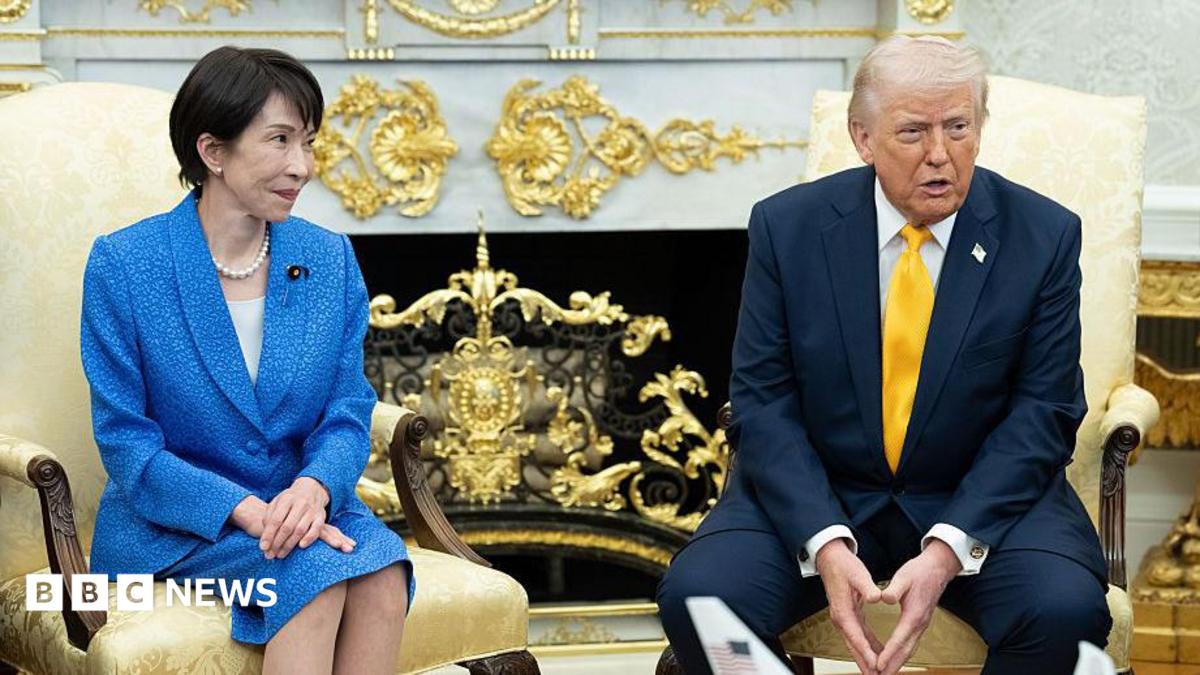
Japan and the US have confirmed that they jointly intervened last week to halt a slide in the yen to a fresh 40-year low.
The joint intervention is the first since 2011, when both countries took coordinated action to weaken the yen after the devastating earthquake and tsunami that hit eastern Japan.
Both Japan’s finance ministry and US Treasury Secretary Scott Bessent have said that they will not hesitate to conduct joint interventions in the future.
It highlights both countries’ efforts to prevent a sell-off in the yen and Japanese government bonds from having an impact on the global economy, including potentially helping to push up borrowing costs for Washington.
“The United States agreed to participate in the coordinated intervention because it serves its national interests by offering the prospect of significant benefits at a low cost,” Shigeto Nagai, head of Japan economics at Oxford Economics told the BBC.
The two countries are expected to continue to intervene “intermittently in a coordinated manner for some time”, he added.
“Even if the actual amount of intervention is not particularly large, the prolonged sense of vigilance regarding intervention will be effective in deterring speculators.”
The yen is historically weak mainly due to Japan having much lower central bank interest rates than other major economies like the US. That makes the Japanese currency less attractive to international investors.
The Bank of Japan last raised interest rates in June, as it increased its main rate to 1% – the highest level since September 1995. In comparison, the US Federal Reserve’s benchmark rate is in a range of 3.50% to 3.75%.
Japan also faces a decades-long slide in its working-age population, low productivity and a heavy reliance on energy imports that are priced in US dollars.
On Monday, Japan’s finance ministry said Friday’s intervention with the US Treasury Department “countered excessive volatility and disorderly movements in the Japanese yen in recent months”.
The “coordinated foreign exchange actions countered disorderly yen movements,” Bessent said in a social media post.
“We strongly support Japan’s decisive market and monetary steps to correct the substantial undervaluation of the yen,” he added.
“They have a weakening yen, and they wanted a little bit of help. And we’re always there for Japan,” US President Donald Trump told reporters on Sunday.

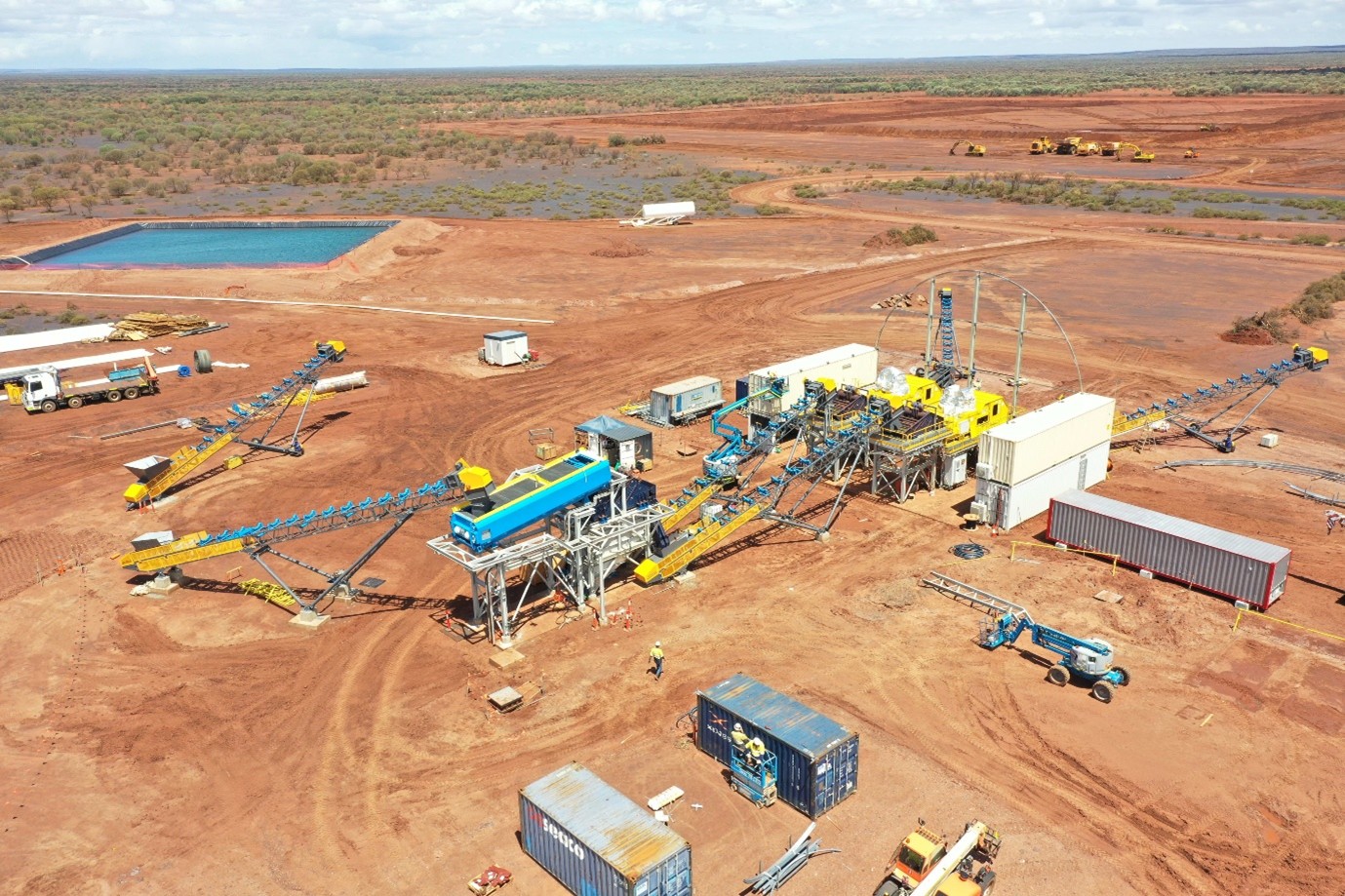
Worley wins engineering contract for Missouri cobalt refinery
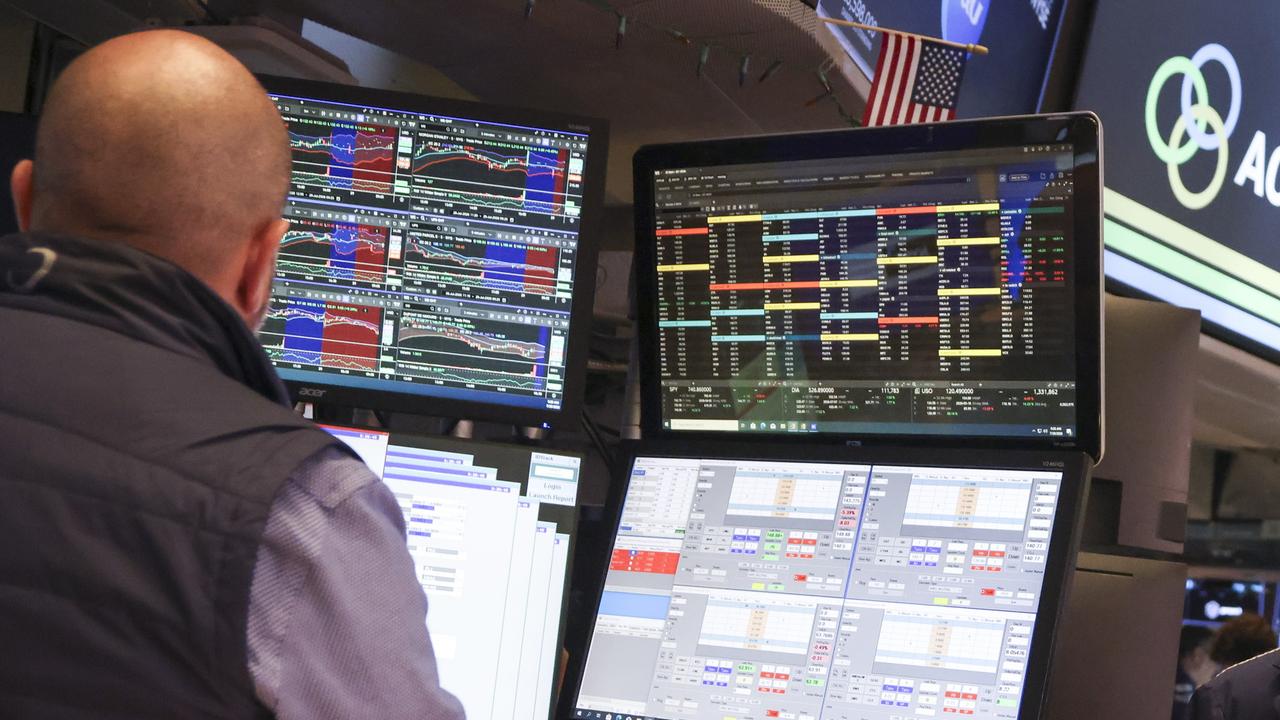
Wall Street has ended higher, lifted by Amazon as the tech heavyweight’s strong quarterly report bolstered investor confidence in AI-related stocks, while Apple dropped after its results disappointed investors.
Yes. Corporate subscriptions are available for teams and organisations, with discounted rates as user numbers increase. Pricing starts from $1,625 + GST per user.
Get in touch
to discuss the right option for your organisation.
Business News subscriptions are used by executives, investors, consultants and professionals who need to stay informed and make better decisions about the WA market. When you subscribe you’ll get
- Unlimited access to WA’s most trusted business journalism
- Data & Insights — detailed profiles of WA companies, people, projects and deals
- MyBN — a personalised feed based on the companies, people and sectors you follow
- Special publications and industry reports
- Daily and weekly email newsletters
Data & Insights is a research tool built specifically for the WA market. It draws on more than 30 years of Business News reporting, updated regularly to reflect what’s happening now. Use it to:
- Look up detailed profiles of WA companies, including financials, directors and ownership
- Find decision-makers and track their career movements
- Research live and completed projects across WA industries
- Monitor deals, appointments and market activity
- Access industry rankings and league tables
Data & Insights is updated daily by our dedicated research team, which uses the latest announcements, ASX filings and editorial coverage to keep our person, company, list and project records up to date.
Business News welcome all opportunities to make our dataset accurate, complete and current, so if you have an update request, please email the team at
general@businessnews.com.au, and we’d be happy to assist.
MyBN
is part of every subscription. It’s your personalised view of Business News. You can follow the companies, people, sectors and projects that matter to you, and get a news feed and alerts tailored to your interests. You can save articles to read later and retain only what you need.
Only subscribers have full access to all content on the Business News website.
If staying informed about the WA economy is part of your job, and/or you’re looking for networking opportunities in WA, Business News is built for you.
Business News subscribers are:
- Executives and directors tracking competitors, clients and market movements
- Investors and advisers researching companies, deals and industry trends
- Consultants and professionals staying across sectors relevant to their clients
- Business owners looking for leads, context and market intelligence
Most Business News publications cover national or global markets. Business News is focused entirely on Western Australia, which means the journalism, the data and the intelligence are all built around WA companies, people and projects — not adapted from a national feed. Data & Insights, included with every subscription, combines more than 30 years of WA-specific editorial research with live business data. There’s no comparable product for the WA market.
The Morning Digest Email provides a comprehensive wrap of the major headlines, relevant to WA business, and includes with a snapshot of the overnight news covering oil, gold and ASX-listed companies.
The Afternoon Wrap Email focuses on the news covered by our team of journalists during the course of the working day, including exclusive stories and analysis, all of which relates to WA business and the local economy.
The BN Weekender Email contains a wrap of the Business News from the week that was, highlighting the top stories in each area of WA business.
Sign up for free.
We’re happy to help.
Get in touch
and our team will come back to you.


I am an avid investor with a major focus on small cap companies with experience in investing in US, Canadian, and European markets. My investment philosophy to generating great returns on the stock market revolves around identifying mispriced securities by understanding the drivers behind a company’s financials, and ultimately, most often revealed by a DCF model valuation. This methodology doesn’t limit an investor into rigid traditional value, dividend, or growth investing, but rather accounts for all of a stock’s prospects to determine the risk-to-reward.
Analyst’s Disclosure: I/we have no stock, option or similar derivative position in any of the companies mentioned, and no plans to initiate any such positions within the next 72 hours. I wrote this article myself, and it expresses my own opinions. I am not receiving compensation for it (other than from Seeking Alpha). I have no business relationship with any company whose stock is mentioned in this article.
Seeking Alpha’s Disclosure: Past performance is no guarantee of future results. No recommendation or advice is being given as to whether any investment is suitable for a particular investor. Any views or opinions expressed above may not reflect those of Seeking Alpha as a whole. Seeking Alpha is not a licensed securities dealer, broker or US investment adviser or investment bank. Our analysts are third party authors that include both professional investors and individual investors who may not be licensed or certified by any institute or regulatory body.

VYMI: A Global Income Play For AI Skeptics (NASDAQ:VYMI)

10 Most Perfect Miniseries of the Last 30 Years

Microsoft makes Copilot harder to miss in Classic Outlook


-

 Business4 days ago
Why Trees Belong on the Risk Register
-

 Fashion2 days ago
Weekend Open Thread: Wit & Wisdom
-

 Politics2 days ago
Meta enters AI-training agreement with far-right ‘propaganda rag’ Newsmax
-
 Entertainment5 days ago
‘Stargate’ Creator’s New Sci-Fi Series Returns for Season 3 Tomorrow
-

 Politics7 days ago
Luke Littler dismantles Gerwyn Price to retain title in Blackpool
-

 Crypto World2 days ago
MicroStrategy Post-Earnings CLARITY Act Push Could Add New Catalyst for Its Stock
-

 Politics6 days ago
The Part of the Electric Transition Nobody Wants to Discuss
-

 Business5 days ago
Major shareholder moves on Canyon
-

 Crypto World2 days ago
XRP Ledger v3.3.0 brings five institutional features
-

 News Videos4 days ago
Bitcoin Enters the 3rd Stage of the Bear Market
-

 Crypto World5 days ago
Kraken Enables Retail Access to Jersey Mike’s IPO via Tokenized Shares
-

 Tech6 days ago
New macOS Sequoia & Sonoma security updates for older Macs
-

 News Videos5 days ago
Claude: Build Financial Dashboards in Minutes (2026)
-

 Politics3 days ago
Luke Littler’s dominance sparks GOAT debate
-

 Business5 days ago
Johnson & Johnson agrees to $5.5B settlement over talc cancer claims
-

 Sports3 days ago
Seema Kaliramna Wins Discus Throw Bronze, Takes India’s CWG Medals Tally To 17
-

 Crypto World18 hours ago
Crypto PAC spending tops $2M in Michigan House race
-

 Business3 days ago
Trump Announces Hamas Disarmament Agreement as Iran Strikes Kuwait Air Base and US Attacks Pause Overnight
-

 Tech5 days ago
Gemini can now summarize the messiest comment threads in Google Docs
-

 Tech22 hours ago
ESET tracks rise in malicious AI skills and adaptable malware
You must be logged in to post a comment Login