Connect with us
DAPA Banner
DAPA Coin
DAPA
COIN PAYMENT ASSET
PRIVACY · BLOCKDAG · HOMOMORPHIC ENCRYPTION · RUST
ElGamal Encrypted MINE DAPA
🚫 GENESIS SOLD OUT
DAPAPAY COMING

Business

Oribe shampoo recalled over possible bacteria contamination

Published

on

Oribe shampoo recalled over possible bacteria contamination

A luxury shampoo is being recalled nationwide due to concerns the product may be contaminated with bacteria, according to the Food and Drug Administration.

Kao USA Inc. is voluntarily recalling select lots of Oribe Serene Scalp Densifying Shampoo in the U.S. and Canada after Pluralibacter gergoviae bacteria was found during testing.

Advertisement

The company said Oribe Serene Scalp Densifying Shampoo in 8.5-ounce and 33.8-ounce sizes that were manufactured between Feb. 21, 2026 and Feb. 26, 2026 could be impacted.

FDA UPGRADES POPULAR POTATO CHIP RECALL TO HIGHEST RISK OVER SALMONELLA

A woman shampoos her hair.

A woman shampooing her hair in the shower. (Getty Images)

FRUIT SOLD AT MAJOR GROCERY CHAIN RECALLED AFTER 12 SICKENED WITH E. COLI

The 8.5-ounce bottle costs $52, according to the Oribe website.

Advertisement

AFFECTED PRODUCTS

  • Oribe Serene Scalp Densifying Shampoo 8.5-ounce bottle (UPC 840035231242), lot code YR010556
  • Oribe Serene Scalp Densifying Shampoo 33.8-ounce bottle (UPC 840035231273), lot codes YR010566 and YR010576

Affected lot codes are found on the bottom of the bottle printed in black.

The FDA said Pluralibacter gergoviae bacteria pose “little medical risk” to healthy people, but “those with certain health issues such as weakened immune systems may be more susceptible to infection by the bacteria.”

A woman in a store.

The 8.5-ounce bottle costs $52, according to the Oribe website. (Getty Images)

CHICKEN CAESAR WRAPS SOLD IN 2 STATES MAY CONTAIN DEADLY LISTERIA, USDA WARNS

“We are working with the FDA to voluntarily recall the affected lots of the product in question from our warehouses,” Kao USA said in a statement. “We are also asking retail and salon partners to remove affected lots from use and/or sale and return them to us for safe disposal.”

Advertisement

GET FOX BUSINESS ON THE GO BY CLICKING HERE

FDA HQ sign in Maryland

The FDA said Pluralibacter gergoviae bacteria pose “little medical risk” to healthy people. (Sarah Silbiger/Getty Images)

Anyone who has the affected products should stop using them, Kao USA said in the recall announcement.

The company said consumers can contact the Kao Professional Hair Technical Hotline by phone or email to arrange for a replacement or to report adverse events experienced when using the product.


Advertisement
Continue Reading
Click to comment

You must be logged in to post a comment Login

Leave a Reply

Business

(VIDEO) Samsung Galaxy Z Fold 8 Tipped to Get New Hinge for Nearly Creaseless Display Ahead of July 22 Launch

Published

on

Galaxy S26

Samsung’s next generation of foldable smartphones is expected to debut with a redesigned hinge aimed at significantly reducing the visible crease that has long been a defining characteristic of the company’s book-style foldables, according to a fresh wave of leaks ahead of the devices’ official unveiling later this month.

The Galaxy Z Fold 8 lineup is expected to be announced at Samsung’s Galaxy Unpacked event scheduled for July 22 in London, marking the first time the company has held its summer Unpacked event in the United Kingdom rather than its more typical venues in Seoul, New York or San Francisco. Multiple South Korean outlets, including Korea Economic Daily TV and Seoul Economic Daily, have separately reported the July 22 date, and the devices have already cleared Federal Communications Commission certification in the United States, an indication that the hardware is finalized ahead of the launch.

According to prominent tipster Ice Universe, posting on the social media platform X, Samsung’s upcoming book-style foldables will feature a hinge that is “noticeably different” from the one used in the Galaxy Z Fold 7, with the redesign intended to minimize the crease that forms down the center of the inner display when the device is unfolded. The leaker also indicated that the folding and unfolding motion on the new devices will feel more decisive, meaning users will likely lose the ability to hold the phones open at intermediate angles the way they could with the previous generation.

Advertisement

For the first time in the Z Fold lineup’s history, Samsung is expected to release two distinct book-style foldables rather than a single flagship model. One version, expected to carry the Galaxy Z Fold 8 Ultra name, is said to maintain the taller, narrower form factor familiar from previous generations, while a second device, referred to in leaks as the standard Galaxy Z Fold 8 or the “Wide” model, is expected to introduce an entirely new shape with a shorter, wider 4:3 aspect ratio inner display. That design is widely seen as a strategic move to compete with Apple’s rumored first foldable iPhone, expected to arrive with a similarly wide form factor later this year.

Leaked specifications suggest the standard Galaxy Z Fold 8 will feature a 7.6-inch inner display and a 5.4-inch outer cover screen, both reportedly capable of reaching 2,500 nits of peak brightness, along with a dual 50-megapixel rear camera setup without a dedicated telephoto lens. The Galaxy Z Fold 8 Ultra, meanwhile, is expected to retain a more traditional design while adopting a triple rear camera system that could include a 200-megapixel main sensor, a significant camera upgrade compared to the outgoing Z Fold 7. Both devices are rumored to run on Qualcomm’s Snapdragon 8 Elite Gen 5 processor, the same chip found in Samsung’s current Galaxy S26 Ultra flagship, and are expected to ship with Android 17 and Samsung’s upcoming One UI 9 software, which is said to bring deeper integration of Google’s Gemini AI assistant across the foldable line.

Battery and charging upgrades are also anticipated. Leaks point to the Galaxy Z Fold 8 Ultra moving to a 5,000 milliamp-hour battery, up from 4,400 milliamp-hours on the Z Fold 7, alongside a jump to 45-watt wired charging from the previous 25-watt cap. The Galaxy Z Fold 8 Wide is expected to carry a smaller battery given its lighter, roughly 200-gram build, positioning it as a more portable, tablet-like alternative aimed at users who prioritize a larger, landscape-oriented display for media consumption and productivity tasks over raw camera performance.

Pricing leaks suggest the standard Galaxy Z Fold 8 could start at around $1,999 for a 256GB configuration in the United States, with 512GB and 1TB variants priced higher, potentially reaching beyond $2,700 for the top storage tier depending on the final market pricing. The Galaxy Z Fold 8 Ultra is rumored to carry a similar or slightly higher starting price. Industry observers have attributed the expected price increases in part to a broader spike in memory chip costs that has affected smartphone pricing across the industry throughout 2026, a trend that has already led Samsung to raise prices on other devices, including the Galaxy S26 series and select mid-range models, earlier this year.

Advertisement

Alongside the two foldable phones, Samsung is expected to introduce the Galaxy Z Flip 8, its clamshell-style foldable, at the same event, along with updated entries in its Galaxy Watch lineup. Some reports have also suggested Samsung may use the London event to unveil a pair of audio-focused smart glasses developed in collaboration with the South Korean eyewear brand Gentle Monster, though those details remain unconfirmed by the company.

Samsung has not officially confirmed the July 22 date or provided details on the devices’ final specifications, pricing or naming conventions, and industry watchers have cautioned that some elements of the leaked lineup, including the exact naming split between the “Ultra” and “Wide” designations, could still change before the official announcement. Historically, Samsung has opened pre-orders on the same day as its Unpacked events, with general retail availability typically following about two weeks later, suggesting the new foldables could reach store shelves in the United States and other major markets in the first week of August.

If the leaked hinge improvements hold up once the devices are official, they would mark one of the more significant physical design changes to the Galaxy Z Fold line since its original debut, addressing one of the most persistent criticisms leveled at book-style foldable phones since the category emerged: the visible crease that forms at the center of the display over repeated use. Whether Samsung’s new hinge design closes that gap entirely, or simply narrows it, is expected to become clear once the company takes the stage in London later this month.

Advertisement
Continue Reading

Business

WMWA joins BHP port industrial action

Published

on

WMWA joins BHP port industrial action

Western Mine Workers Alliance members are set to join industrial action at BHP’s Port Hedland operations after almost all members voted to endorse the action.

Continue Reading

Business

AI chip boom lifts Samsung profits by 1,800%

Published

on

Customers try Samsung smartphones at one of the company's stores in Seoul

South Korean technology giant Samsung Electronics says it expects to post a 19-fold jump in its profits, driven by global demand for artificial intelligence (AI) memory chips.

The company forecast that it made 89tn won (£44bn; $58bn) between the start of April and the end of June, marking its third record quarterly operating profits in a row.

Major South Korean firms like Samsung release forecasts of their earnings ahead of official detailed reports to help guide investors.

Samsung’s latest forecast, released on Tuesday ahead of its full results due later in July, comes as demand for semiconductors continues to outstrip supplies – which has pushed up prices.

Advertisement

Samsung said in its preview, known as earnings guidance, that it brought in around 171tn won of sales during the quarter, more than double the amount for the same period last year.

The company’s projected earnings mark one of “the best quarterly performances ever”, which was close to the tech sector record set by Nvidia earlier this year, said industry analyst Marc Einstein from Counterpoint Research.

“This has everything to do with the AI boom as memory companies continue to ride a tidal wave driven by limited supply and unprecedented demand,” he added.

Samsung is one of the world’s biggest semiconductor manufacturers, making chips for firms like Nvidia and Google. The shares major tech firms have soared in recent months due to surging demand for chips.

Advertisement

Shares in Samsung have more than doubled in price since the start of this year, while South Korean rival SK Hynix has jumped by more than 200%.

The strong performance of both firms has helped lift the value of South Korea’s benchmark share index, the Kospi, by more than 80% this year.

Continue Reading

Business

Ondas Inc. (ONDS) M&A Call Transcript

Published

on

OneWater Marine Inc. (ONEW) Q1 2026 Earnings Call Transcript

Ondas Inc. (ONDS) M&A Call July 6, 2026 8:30 AM EDT

Company Participants

Eric Brock – Chairman, CEO & President
Ryan Hartman – President, CEO & Director
Matt McCue

Conference Call Participants

Advertisement

Sydney Freedberg
Austin Bohlig – Needham & Company, LLC, Research Division
Timothy Horan – Oppenheimer & Co. Inc., Research Division
Jonathan Siegmann – Stifel Financial Corp.
Maxwell Michaelis – Lake Street Capital Markets, LLC, Research Division
Matthew Galinko – Maxim Group LLC, Research Division

Presentation

Operator

Advertisement

Welcome to the Ondas Inc. Investor Event Conference Call. [Operator Instructions] Please note this event is being recorded. I would now like to turn the conference over to Eric Brock, Chairman and CEO. Please go ahead.

Eric Brock
Chairman, CEO & President

Good morning, everyone, and thank you for joining us. Today marks an important milestone for Ondas. We are extremely pleased to announce the acquisition of DZYNE Technologies, a company we believe is one of the most innovative autonomous defense businesses built over the past decade. Today’s events are about much more than a transaction. It’s a significant advancement in Ondas, creating a company with greater scale, greater technology depth and a dramatically expanded customer footprint. And now Ondas is positioned with one of the broadest autonomous defense portfolios in the industry. Today, we’ll introduce DZYNE, explain why this combination is so compelling, discuss the market opportunity and show why we believe this positions Ondas to become a category leader during what we believe will be one of the largest defense modernization cycles in decades.

Advertisement

Before we begin, please take a moment to review the forward-looking statements and other disclosures contained in today’s presentation. We’ll be discussing future expectations, financial outlooks and market opportunities that involve risks and uncertainties. Additional information regarding those risks can be found in our SEC filings. With that, let’s begin.

So

Advertisement
Continue Reading

Business

Palisade Bio director Robert Baltera Jr. buys $59,400 in stock

Published

on


Palisade Bio director Robert Baltera Jr. buys $59,400 in stock

Continue Reading

Business

Form 4 Palisade Bio Inc For: 6 July

Published

on


Form 4 Palisade Bio Inc For: 6 July

Continue Reading

Business

WhatsApp Tops the Global List of World’s 5 Most Used Messenger Apps as Competition Continues to Grow Fast

Published

on

Galaxy S26

WhatsApp remains the world’s dominant messaging platform in 2026, according to the latest available data, holding a commanding lead over rivals as billions of people worldwide continue to rely on messaging apps for daily communication, business transactions and staying connected across borders.

The Meta-owned app reached more than 3.14 billion monthly active users in the first quarter of 2026, according to figures compiled by SQ Magazine, cementing its position as the most widely used messaging platform on the planet. Roughly 2.3 billion of those users, or about 83 percent, open the app on a daily basis, and the platform now processes more than 100 billion messages per day, with some estimates pushing that figure toward 130 billion as usage continues to climb. India remains WhatsApp’s single largest market, with an estimated 615 million users, while the app is used in more than 180 countries and remains the leading messaging platform in the majority of markets tracked by analytics firm Similarweb.

WhatsApp’s dominance extends well beyond raw user numbers. According to data compiled by Adam Connell using figures from Datareportal, Similarweb and Statista, WhatsApp users open the app an average of nearly 930 times per month, the highest engagement rate of any messaging or social media platform tracked. The app has also become central to business communication, with more than 200 million businesses worldwide now using WhatsApp Business to reach customers, and roughly 175 million people messaging a business account through the platform daily.

WeChat, operated by Chinese technology giant Tencent, holds the second spot in the global rankings, with the combined WeChat and Weixin ecosystem reaching approximately 1.41 billion monthly active users as of recent reporting. Unlike WhatsApp, WeChat functions as far more than a simple messaging app in its core market of China, operating as a comprehensive “super app” that includes mobile payments through WeChat Pay, a social feed known as Moments, ride-hailing and food delivery services, mini-programs that function like apps within the app, and even access to certain government services. WeChat’s user base skews slightly male, at roughly 52 percent, with usage spread relatively evenly across age groups, reflecting its role as essential digital infrastructure for daily life in China rather than a purely social messaging tool.

Advertisement

Facebook Messenger, also owned by Meta, ranks third globally with just over 1 billion monthly active users, according to figures compiled by SQ Magazine and corroborated by other industry trackers. While Messenger’s overall user base has stabilized after a period of decline in previous years, the app continues to hold particularly strong footholds in specific countries, including the Philippines, where Meta’s own advertising tools report nearly 66 million users, along with substantial user bases in Mexico and Brazil. Despite its strong raw numbers, Messenger tends to underperform relative to other top apps on engagement metrics such as daily sessions and total time spent, suggesting many users maintain accounts on the platform without using it as their primary daily messaging tool.

Telegram rounds out the fourth position, having crossed the 1 billion monthly active user threshold, according to an announcement from founder Pavel Durov in early 2025 that has since been echoed in multiple industry reports tracking the platform’s continued growth through 2026. Telegram has built its user base in part around a reputation for prioritizing user privacy and offering features such as large group channels, file sharing and a broad set of customization options that have made it particularly popular among younger users, tech-focused communities and audiences in regions where alternative platforms face restrictions or limited functionality.

Rounding out the top five, Snapchat has reported roughly 932 million monthly active users as of its most recent quarterly disclosure, according to data compiled by SQ Magazine and other tracking services. While Snapchat is often categorized primarily as a social media and photo-sharing platform, its core messaging functionality, including disappearing messages, direct chats and multimedia sharing, has kept it firmly within rankings of the world’s most-used messaging services, particularly among younger demographics in markets including the United States and parts of Europe.

Beyond the global top five, regional platforms continue to command outsized influence in their specific markets. Line remains the dominant messaging app in Japan and Thailand, with DataReportal’s 2026 country data placing its Japanese user base at 99 million monthly active users, a figure that represents a significant share of the country’s population. In South Korea, KakaoTalk has reached what amounts to near-universal penetration, with 49.1 million monthly active users representing more than 95 percent of the country’s total population and over 97 percent of its internet users. In China, alongside WeChat, Tencent’s QQ platform continues to serve as a widely used messaging and social platform, reporting roughly 532 million monthly active users, according to figures compiled by SQ Magazine.

Advertisement

The United States remains something of an outlier among major global markets, with no single messaging app holding a dominant position. Recent Google Play ranking data from earlier in 2026 shows Google Messages, WhatsApp, Snapchat, Telegram and Facebook Messenger all competing near the top of download charts on Android devices, while Apple’s iMessage continues to carry significant cultural weight among iPhone users given Apple’s majority share of the U.S. smartphone market. Industry analysts have noted that the average person globally now uses between five and nine different messaging apps depending on the specific contacts, communities and countries they need to reach, a trend that has fueled growing interest in unified inbox tools designed to bridge multiple messaging platforms into a single interface.

As artificial intelligence features become increasingly embedded across major messaging platforms, from WhatsApp’s AI-powered message summaries to Google Messages’ on-device spam detection, the competitive landscape among the world’s top messaging apps is expected to keep evolving throughout the remainder of 2026, even as WhatsApp’s substantial lead in raw user numbers appears unlikely to be seriously challenged in the near term.

Continue Reading

Business

Amazon bars breastfeeding mum from business course

Published

on

The Amazon logo, which is the world 'Amazon' with its signature stylised arrow underneath, on the side of a grey building with a light overcast sky in the background

A breastfeeding boss has been barred from a business course run by online retailer Amazon because it would not let her child on to the site.

Rachel Bews said she had let Amazon know a week ahead of the in-person event at an Amazon warehouse in Dunfermline, Scotland, that she would need to take her 20-week-old baby with her as she was breastfeeding.

However, she said she was told over the phone on the train to the event that children under six were not allowed on site.

Amazon said: “We sincerely apologise to Ms Bews that our site access policy was not communicated clearly before she travelled.”

Advertisement

“That should not have happened, and we understand her frustration. Amazon does not permit children under the age of six on any of our fulfilment centre sites,” the retailer added.

“This is a long-standing health and safety policy that applies to all visitors and employees… We are reviewing our communications process to prevent this from happening again.”

Bews told the BBC’s The World Tonight that there was a lactation room at the event on Friday, which would have allowed her to express milk for her child.

But she said she had not planned for this, so did not have any sterilised bottles or equipment for expressing. She added that not every breastfed baby would feed from a bottle.

Advertisement

“All events should really have good consideration to accessibility and inclusivity for all sorts of considerations,” she said.

“It’s a challenging thing becoming a new mum, and being in business is a big part of my identity, so having access to these same opportunities is really important for me and a lot of other working and professional mums out there.”

She said she had been told she could continue with the online part of the six-week course, but she said she had missed out on “the most important things”.

“The in-person, face-to-face connections you make over coffee, the people you meet over lunch – there’s connections I could have made to maybe help my business,” she added.

Advertisement

For those returning to work who want to breastfeed, the NHS recommends, external telling your employer that you’re breastfeeding before your first day back.

It says: “If you’re returning to work, education, or training after having a baby, you might wonder whether you can continue breastfeeding your baby.

“The answer is yes, it’s completely possible and many women do it.”

Advertisement
Continue Reading

Business

Form 4 Sight Sciences Inc For: 6 July

Published

on


Form 4 Sight Sciences Inc For: 6 July

Continue Reading

Business

Wall Street closes higher as chip stocks rally

Published

on

Wall Street closes higher as chip stocks rally

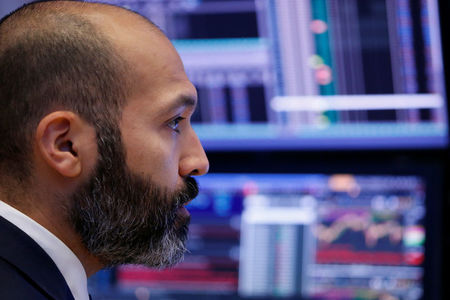
The ‌S&P 500 and Nasdaq have ended sharply higher, with Broadcom and other chip stocks rallying as investors bought shares in companies related to artificial intelligence that are expected to ‌drive a strong second-quarter earnings season.

Continue Reading

Trending

Copyright © 2025