
Business
Northern Star's acting CEO to leave



For a sample of 187 companies from the BSE 200 index that have reported audited results so far, aggregate dividends touched ₹4.5 lakh crore, implying a 15% five-year annual growth rate. The sample’s aggregate dividend increased two-fold in FY26 from ₹2.2 lakh crore in FY21.
 ET Bureau
Each of the banking and finance, and IT sectors accounted for 21.6% of the aggregate dividends, followed by oil and gas, fast moving consumer goods (FMCG) and power sectors at 9.2%, 8.8% and 5.6% respectively.
The share of the banking and finance sector expanded significantly from 15% in FY22, reflecting the rising profits of the sector helped by improving asset quality, reducing credit costs and expanding loan assets. On a year-on-year basis, dividends grew by 5.9% compared with double-digit growth in the previous four years.

It was slower than the sample’s net profit growth of 21%, implying a lower dividend payout. The pay-out ratio or dividends relative to net profit fell to 27% in FY26 from 31% in the previous year.
The IT sector continued to report the highest payout ratio of 75% for the second straight year, though it fell from 81% in the previous year. The FMCG sector followed, increasing its payout to 71% from 68% a year ago.
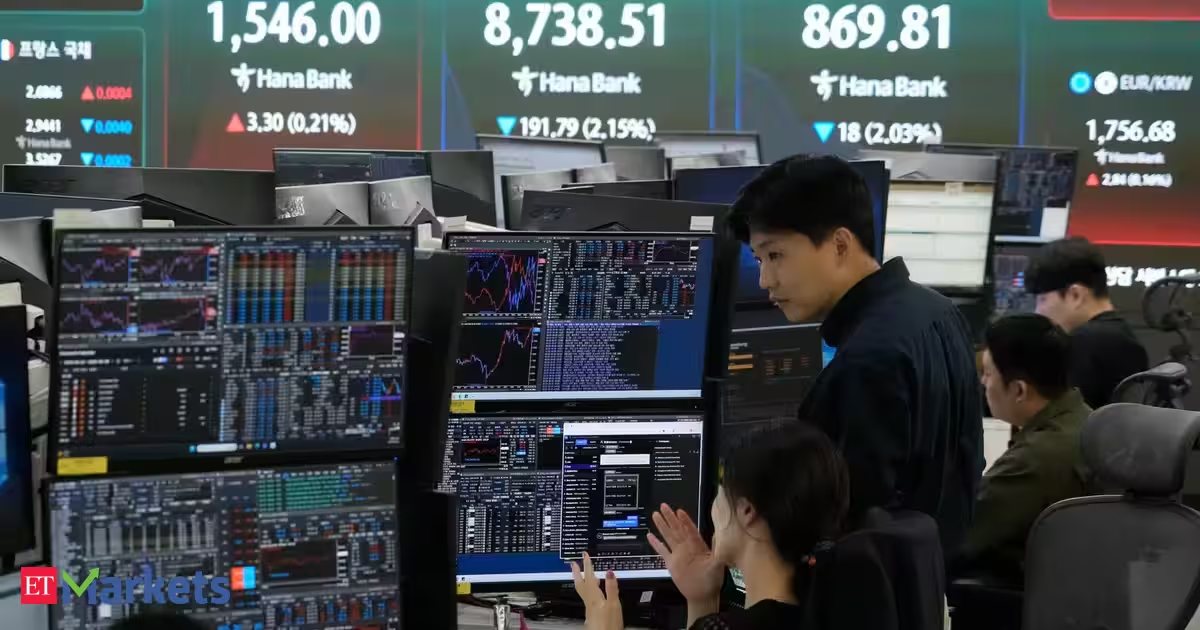
MSCI’s Asia Pacific equities gauge fell 0.8%. Technology shares led declines, with the Kospi Index — a barometer for artificial intelligence investments — dropping over 3%.
Futures on the S&P 500 Index lost 0.5% and those on the Nasdaq 100 Index retreated 0.7% after the underlying gauges closed lower on Friday and as tensions rose in the Middle East.
Global crude benchmark Brent climbed 1.6% to $89.50 a barrel after the US military on Sunday struck Iranian rocket launchers that were preparing to send mines into the Strait of Hormuz, ending weeks of relative calm.
The dollar traded in a narrow range against major peers after posting its biggest gain in about a month on Friday following Warsh’s remarks. The yen held around 160.04 per dollar after hitting its weakest level in a month.
The moves showed a cautious start to the week after Warsh vowed to bring inflation back to target in his Jackson Hole speech on Friday, prompting traders to ramp up bets that the Fed could hike as soon as next month. US semiconductor stocks sold off and bonds fell, pushing yields on rate-sensitive two-year Treasuries sharply higher in the last session, as the probability of a rate increase climbed to 60%.
“Markets look set for a shaky start to the trading week,” Kyle Rodda, a senior analyst at Capital.com, wrote in a note to clients. “Sentiment won’t be helped at all by geopolitical risk in the Middle East.”The attack by the US was the first military action against Iran in more than a month, as President Donald Trump has switched to a campaign to drive Iran to the negotiating table by squeezing its economy.
Meanwhile, traders have piled into bets that a quarter-point rate hike next month is more likely than not, and will tighten policy at least once more over the coming year, according to swaps data compiled by Bloomberg.
In his first major speech since taking the helm of the central bank, Warsh warned inflation isn’t meaningfully slowing and said policymakers must be confident it is, otherwise the Fed has “work to do”. He said financial conditions aren’t currently restrictive and described rates as the Fed’s “predominant tool” for achieving its mandate, while stopping short of signaling support for a hike in September.
“The market took a hawkish message away from Fed Chair Warsh at his Jackson Hole speech,” Marc Chandler, chief market strategist at Bannockburn Capital Markets, wrote in a note. “Even if the market has overreacted to Warsh’s comments, the upside dollar correction has only just begun.”
Traders will also be alert to stronger rhetoric from Japanese officials as the yen hovers around 160 per dollar. The currency weakened to a one-month low on Friday after the dollar surged, erasing more than half of its intervention-fueled gains.
The recent intervention has “curbed yen depreciation pressures to some degree, signaling that a move well above 160 is unlikely to be tolerated,” Barclays strategists including Lemon Zhang wrote in a note to clients. “However, fundamental factors continue to weigh on the JPY, including a still-wide US-Japan yield differential, fiscal pressures and continuing Japanese investors’ purchases of overseas assets.”

China’s three biggest airlines post heavy first-half losses as fuel shock bites

BULLISH BETS
CENTRAL DEPOSITORY SERVICES (INDIA)- CDSL
Chg in OI in Sept Series: 8%
Chg in Price in Sept Series: 0.8%
RATIONALE: Post multi-week consolidation, the stock has regained momentum on the upside, said Amit Trivedi, SVP, Institutional Equities Research at Yes Securities. Trivedi said in the August series the stock has seen a long build up with a rollover of 95%. “Further stability above Rs 1400 is likely to lift the stock above its July high, potentially towards Rs 1520. Levels of Rs 1365 should be considered as revised support and risk management level for bullish set-up,” he said.
ADANI POWER
Chg in OI in Sept Series: 2.3%
Chg in Price in Sept Series: -1.3%
RATIONALE: On Thursday, the stock witnessed a bullish breakout from more than a month-long congestion range on the daily charts, accompanied by a significant rise in volumes, said Vipin Kumar, AVP – Derivatives and Technical Research at Globe Capital Market. “The breakout was well supported by a strong long buildup of around 6% and robust positive rollovers of 95% on expiry day,” he said. Considering the current chart structure and derivatives data, Kumar recommends taking long positions in the Rs 211–Rs 213 range for a price target of Rs 230–Rs 235 with a stop loss at Rs 200.
PERSISTENT SYSTEMS
Chg in OI in Sept Series: -1.8%
Chg in Price in Sept Series: 4.4%
RATIONALE: The stock has witnessed short-covering in the September series and is trading above its key short- and medium-term moving averages, including 20-, 50-, 100- and 200 day EMAs, highlighting a robust long-term bullish structure, said Sudeep Shah, Head – Technical and Derivative Research, SBI Securities. “With positive traction around midcap IT stocks, any dip towards Rs 5,850 would act as a buying opportunity and can be bought with a stop-loss at Rs 5,780 for a target of Rs 6,150 6,200,” said Shah.
COMPUTER AGE MANAGEMENT SERVICES (CAMS)
Chg in OI in Sept Series: -1.9%
Chg in Price in Sept Series: 3.35%
RATIONALE: Kumar said CAMS has formed a fresh buying pivot on daily charts, accompanied by a significant rise in volume near the lower band price support of its five-month congestion range. “On the derivatives front, it shed around 2% in open interest due to short covering, “ he said. Kumar suggests adding long positions in CAMS in the Rs 755 Rs 765 range, with a stop loss at Rs 735 for a price target of Rs 800.
HINDUSTAN ZINC
Chg in OI in Sept Series: 3.9%
Chg in Price in Sept Series: 4.8%
RATIONALE: The rise in its futures open interest alongside strong gains in price indicates fresh long accumulation in the September Series, along with strengthening technical structure, said Shah of SBI Securities. “The stock has given a symmetrical triangle break-out on weekly charts, and hence can be bought on dips with a stop loss at Rs 607 for a target of Rs 645 655 on the upside,” he said.
Read more: FPIs net buyers for 2nd month; Rs 30,919 crore inflow in August: is selling spree easing?
BEARISH BETS
GODREJ CONSUMER PRODUCTS
Chg in OI in Sept Series: -3%
Chg in Price in Sept Series: -2%
RATIONALE: Breaking a key support zone, the stock has seen a higher-than-average short build-up in the August series, with an 80% rollover, said Trivedi of Yes Securities. “Recoveries in the recent past remained short-lived, finding stiff resistance near Rs 950; decline thereafter ensures influence of resistance and internal weakness. Inability to hold current levels is likely to drag the stock further lower till the Rs 815 zone,” he said. He recommends selling for a target of Rs 815, with a stop-loss at Rs 960.

Chinese factory slump eases, but weak services signal uneven recovery

Purple Style Labs, the parent company of luxury fashion platform Pernia’s Pop-Up Shop, has fixed the price band at Rs 546–575 per equity share. The Rs 680-crore issue comprises entirely a fresh issue of 1.18 crore equity shares.
The IPO will provide investors with an opportunity to participate in Purple Style Labs’ next phase of expansion as the company continues to build its presence in the luxury fashion segment.
The issue has also attracted considerable interest from celebrities. Bollywood stars Shah Rukh Khan and Madhuri Dixit, along with cricket legend Sachin Tendulkar, are among the prominent investors in Purple Style Labs. Other publicly disclosed celebrity investors include Salman Khan and his family, as well as actor Mahesh Babu.
According to the company’s restated consolidated financial statements, Purple Style Labs reported a loss in FY2026. Consequently, its basic and diluted earnings per share (EPS) were negative, making the price-to-earnings (P/E) ratio inapplicable.
The company’s weighted average return on net worth (RoNW) for the last three financial years stood at a negative 147.14%. This suggests that investors may need to assess the IPO on factors beyond conventional earnings-based valuation metrics.
At the upper and lower ends of the price band, the cap and floor prices represent 57.5 times and 54.6 times the face value of the equity shares, respectively. The minimum bid quantity is 26 equity shares, with subsequent bids required to be placed in multiples of 26 shares.Axis Capital Ltd. is the book-running lead manager for the issue, while Kfin Technologies Ltd. is the registrar to the IPO.
Anchor Investors: Purple Style Labs has raised Rs 306 crore from anchor investors ahead of its IPO. The company allotted 53.21 lakh shares to 10 anchor investors at Rs 575 per share.
IPO Proceeds
Purple Style Labs plans to deploy the net proceeds from the IPO across several key areas. The largest allocation of Rs 371.13 crore will be invested in its wholly owned subsidiary, PSL Retail, to meet expenditure related to lease liabilities for Experience Centers and back-end offices across India.
Another Rs 138.90 crore has been earmarked for sales and marketing expenses, which will support the company’s expansion, customer acquisition and brand-building initiatives. The balance of the proceeds will be used for general corporate purposes. Overall, the issue is expected to generate net proceeds of Rs 510.03 crore.
About Purple Style Labs and Pernia’s Pop-Up Studio
Purple Style Labs is the parent company of Pernia’s Pop-Up Shop, a multi-brand luxury fashion omni-channel platform. The company acquired Pernia’s Pop-Up Shop in February 2018, when the business was largely focused on online sales.
Since then, the platform has expanded its physical presence significantly. According to its DRHP, the company had 14 Experience Centers across India and London, with additional locations planned in Mumbai and New York. Its revenue stood at Rs 508 crore in FY24.
The company is increasingly benefiting from its offline expansion. In its DRHP, Purple Style Labs said India’s wedding and occasion-wear market is undergoing a pronounced shift towards premiumisation, with consumers moving towards higher-priced segments between FY25 and FY30.
The company attributed this trend to rising disposable incomes, changing consumer aspirations and increasing willingness to spend on milestone celebrations. It also noted that the growing preference for premium, experience-led weddings is driving demand for luxury and high-quality fashion.
India’s wedding industry has crossed Rs 10 lakh crore, while the wedding-wear market is projected to reach Rs 3.4 lakh crore by FY30. The country’s personal luxury market is also expected to reach Rs 2.31 lakh crore.
Celebrity and Institutional Backing
Purple Style Labs was founded and is promoted by Abhishek Agarwal, who owns a 27.10% stake in the company. The business has attracted backing from institutional investors, family offices, and private investors. Among its publicly disclosed celebrity investors are Shah Rukh Khan, Salman Khan and his family, Sachin Tendulkar, Madhuri Dixit and Mahesh Babu.
Madhuri Dixit Nene was among the earliest celebrity investors, participating through convertible preference shares. The Gauri Khan Family Trust invested through a rights issue in November 2024, while Sachin Tendulkar participated in a preferential allotment in March 2025. Both investments were made at the price paid by institutional investors in the company’s last private funding round, which closed at a post-money valuation of Rs 3,662 crore.
Revenue Growth
Purple Style Labs has recorded substantial revenue growth over the past few years. Revenue increased more than 11-fold from Rs 45 crore in FY20 to Rs 508 crore in FY24, representing an approximately 83% compound annual growth rate.
Pernia’s Pop-Up Shop currently offers more than 2 lakh products from over 1,300 designers through its digital platform and 14 Experience Centers. The platform recorded a gross merchandise value (GMV) of more than Rs 588 crore in FY25, while its average order value stood at Rs 56,106.
With its growing physical retail footprint, expanding luxury fashion offering and exposure to India’s rapidly premiumising wedding and occasion-wear market, Purple Style Labs is positioning the IPO as a key source of capital for its next phase of growth.
Should You Subscribe?
According to a research report by SBI Securities, Purple Style Labs (PSL), which operates Pernia’s Pop-Up Shop, has established itself as a multi-brand luxury omnichannel fashion platform with a strong focus on Indian wedding and occasion wear.
The company has several positives, including an established luxury fashion platform, a diversified portfolio of designers, an omnichannel presence and improving customer retention. However, its financial performance remains a key concern. PSL recorded a modest 5.2% revenue CAGR between FY24 and FY26, while EBITDA declined and net losses widened during the same period.
Profit margins also contracted in FY26, primarily due to a higher proportion of liquidation inventory and the increase in GST on apparel priced above Rs 2,500 per piece, from 12% to 18%. Going forward, a meaningful improvement in profitability will depend largely on the ability of its experience centres to mature and absorb the company’s higher fixed-cost base.
At the upper price band of Rs 575 per share, PSL is valued at a post-issue FY26 EV/Sales multiple of 7.7x. While the IPO proceeds are expected to help fund lease payments and marketing expenditure, SBI Securities believes that visibility on sustainable profitability remains limited at present.
Given the elevated valuation and the company’s continued losses, SBI Securities has assigned a ‘Neutral’ rating to the IPO. The brokerage recommends tracking PSL’s performance for a few quarters after listing before taking a more constructive view on the stock.
(Disclaimer: Recommendations, suggestions, views and opinions given by the experts are their own. These do not represent the views of Economic Times)


David H. Lerner is an analyst with a decade of experience utilizing his professional background in software consulting and technology to identify market trends and provide long and short trade ideas. David employs a combination of technical analysis and market psychology to capitalize on narratives for outsized returns. He also utilizes “Cash Management Discipline,” a simple trading style to hedge against the volatility of today’s market climate.He leads the investing group Active Investors Forum where he uncovers actionable trading and investing ideas nearly every day. Other features include: long and short swing trade alerts, daily macro analysis, weekly articles, and chat for community interaction and questions. Learn More.
Analyst’s Disclosure: I/we have a beneficial long position in the shares of MRVL either through stock ownership, options, or other derivatives. I wrote this article myself, and it expresses my own opinions. I am not receiving compensation for it (other than from Seeking Alpha). I have no business relationship with any company whose stock is mentioned in this article.
Seeking Alpha’s Disclosure: Past performance is no guarantee of future results. No recommendation or advice is being given as to whether any investment is suitable for a particular investor. Any views or opinions expressed above may not reflect those of Seeking Alpha as a whole. Seeking Alpha is not a licensed securities dealer, broker or US investment adviser or investment bank. Our analysts are third party authors that include both professional investors and individual investors who may not be licensed or certified by any institute or regulatory body.
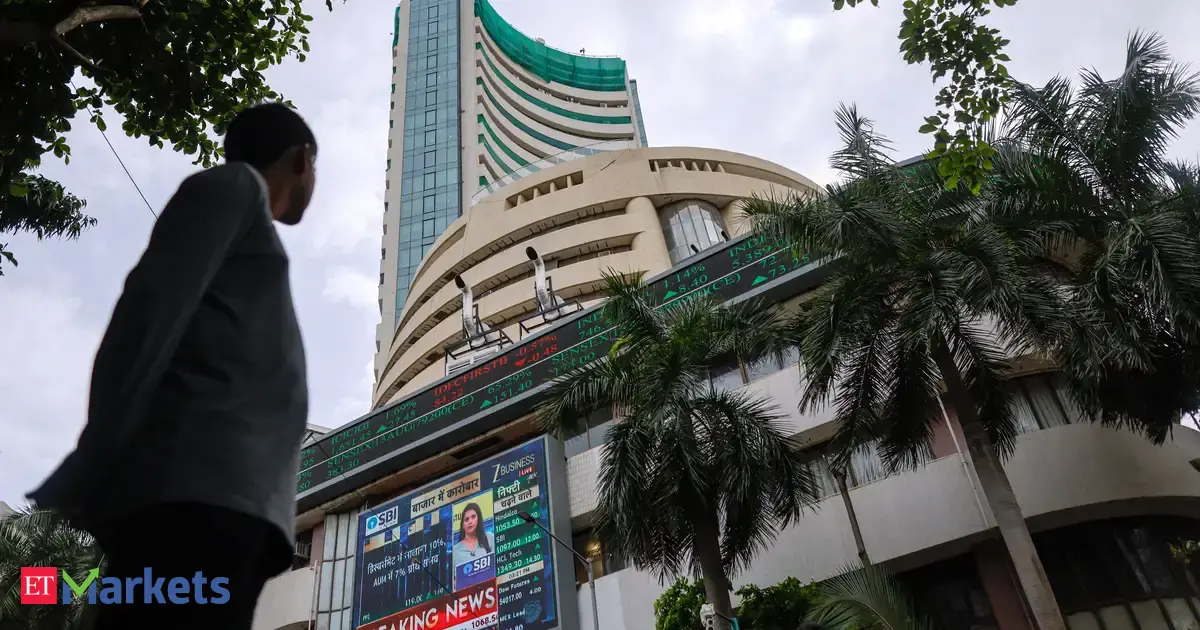
The quarterly rebalancing of MSCI Inc. indexes on Monday will be a key test of whether the mechanism can absorb large institutional orders without producing the sharp price swings that have unsettled traders since its launch earlier this month.
The index changes may spur about $5 billion in trading turnover by global passive funds, with roughly $4 billion passing through the Closing Auction Session, according to Brian Freitas, founder of Auckland-based Periscope Analytics.
“It could get pretty messy,” Freitas said. “The expected flow is almost 30 times what the CAS window has typically been handling.”
The scale of the event is significant compared with what the auction has handled so far. The mechanism has typically been seeing about $125 million of daily turnover.
BloombergThe rebalance will put the Securities and Exchange Board of India’s most consequential market reform in recent years under fresh scrutiny after backlash from traders. The BSE Sensex gauge saw a “flash crash” during the 20-minute auction last Thursday, exacerbating concerns over thin liquidity and manipulation during the trading window.
Passive funds are required to track their benchmarks closely, meaning index changes can trigger large orders to buy stocks being added or increased in weight and sell those being cut or reduced. The trades are typically executed around the effective close to minimize tracking error, concentrating a large amount of demand and supply inside the auction.MSCI said in an emailed statement it will monitor the “practical effectiveness” of the new closing auction, informed by feedback from market participants that include its clients and index users.
India’s market regulator has said that the auction is designed to reduce tracking error for passive funds and to align the stock market with global standards. Last week, Chairman Tuhin Kanta Pandey reiterated that the new mechanism will remain in place despite growing calls for changes.
Following its latest quarterly review, MSCI announced that Lenskart Solutions Ltd., Laurus Labs Ltd., Adani Energy Solutions Ltd. and Billionbrains Garage Ventures Ltd. will be added to its standard indexes, while Balkrishna Industries Ltd., SBI Cards & Payment Services Ltd. and Astral Ltd. will be removed. Among other changes, a reduction in the weight of Reliance Industries Ltd. is expected to trigger about $500 million of outflows, according to Abhilash Pagaria of Nuvama Wealth Management Ltd.
Most passive funds are likely to execute the bulk of those trades through the auction window because it allows them to transact closer to the official closing price, according to Pratik Oswal, chief of passive business at Motilal Oswal Mutual Fund. But the scale of the rebalance means some orders may have to be handled differently.
“The primary execution risk is liquidity, particularly in a small number of less-traded stocks where absorbing large orders without materially impacting prices may be challenging,” Oswal said. “For relatively less liquid names, funds may need to execute part of their trades during the regular market session.”
The risk is less pronounced for index heavyweights with deeper order books, so stocks like Reliance should be able to absorb larger trades more smoothly, Oswal said.
One of the biggest challenges is getting enough investors into the auction to provide liquidity, something other markets have grappled with when introducing similar systems. For example, Australia also saw sharp swings early after implementation, including a Covid-era session when nearly 3 percentage points of a 4.4% gain in the S&P/ASX 200 came during the auction.
“It’s a chicken-and-egg problem,” said Andrew Sullivan, founder of Hong Kong-based Asian Market Sense. “Institutions want to see the system works, is fair and free from manipulation before participating. Once they see that they will participate and liquidity will deepen.”


I am interested in a lot of technology and AI stocks like Google, Nvidia, AMD, Tesla and Amazon.
Analyst’s Disclosure: I/we have a beneficial long position in the shares of MRVL, AVGO, GOOG, NVDA either through stock ownership, options, or other derivatives. I wrote this article myself, and it expresses my own opinions. I am not receiving compensation for it (other than from Seeking Alpha). I have no business relationship with any company whose stock is mentioned in this article.
Seeking Alpha’s Disclosure: Past performance is no guarantee of future results. No recommendation or advice is being given as to whether any investment is suitable for a particular investor. Any views or opinions expressed above may not reflect those of Seeking Alpha as a whole. Seeking Alpha is not a licensed securities dealer, broker or US investment adviser or investment bank. Our analysts are third party authors that include both professional investors and individual investors who may not be licensed or certified by any institute or regulatory body.

On Friday, the 3-month CD rate for top public sector banks fell to 6.40% from 6.80% a month ago, while the 1-year CD rate rose to 7.30% from 7.09% during the same time frame. Larger banks managed to edge out smaller rivals in garnering more foreign currency non-resident – bank, or FCNR (B), deposits ahead of the advanced deadline of August 31.
ET BureauAt Play Hawkish MPC signals keep longer-tenor yields firm while system liquidity rises to ₹3.4 L Crore
“The larger banks, which are the biggest beneficiaries of the FCNR(B) scheme, are absent from the CD market due to excess liquidity,” said V.R.C. Reddy, head of treasury, Karur Vysya Bank. “This low demand from bigger banks has eased up CD rates, which has proven to be beneficial for mid to small banks.”
Banking system liquidity stood at a daily average of ₹3.41 lakh crore in August. In July, the daily average was at ₹1.07 lakh crore.
To be sure, the central bank is due to conduct a record VRRR (variable rate reverse repo) auction of ₹6 lakh crore on Aug 31 to help mop up excess system liquidity.
The Reserve Bank of India (RBI) has preferred the overnight rate to closely align with the repo rate, now at 5.25%. Yet, due to excess liquidity the weighted average call rate (WACR) is trading below the repo rate. In August so far, the WACR stood at 5.12%, down from 5.23% in July.
As of August 21, the RBI’s concessional swap facility had attracted $72.85 billion in total foreign currency inflows, equivalent to nearly ₹7 lakh crore.
Maturities Matter
But the easing in rates is limited to maturities of less than one year, where surplus liquidity has pulled down borrowing costs. Beyond one year, yields have inched higher after the minutes of the August monetary policy committee (MPC) review were published, shortening the odds on an imminent increase in rates – perhaps as early as October.
State-owned REC rejected bids for its ₹3,000 crore 2-year bond issue this week, while PFC pulled its planned ₹2,500 crore 3-year issue after bids came in at higher yields.
Read more: Global Market Today: Asian stocks drop on hawkish Warsh tone, oil gains
The three-year bond would have cost around 7.50%, while PFC was looking to raise funds around 7.25%-7.30%. “The softness seen in very short-term yields has not translated to segments over one year because of the hawkish MPC minutes. Markets are expecting a rate hike sooner rather than later and no one wants to lock in duration in such a scenario,” said Alok Singh, head of treasury, CSB Bank.
RBI governor Sanjay Malhotra during the August MPC review said that he expects liquidity surplus to be temporary and manageable, with excess funds likely to peak around September before being absorbed through normal currency demand, reserve requirements and maturing forex forwards.

Antigua and Barbuda axes oath to King… two months before his visit
India Inc pays record dividends in FY26, but payout ratio slides

Eric Trump Says American Bitcoin Mines Up to 13 BTC Daily at 49% Margins





-

 Crypto World5 days ago
SpaceX stock could rise 75% to $240, JPMorgan says
-

 Fashion2 days ago
Weekend Open Thread: Maeve – Corporette.com
-

 Crypto World3 days ago
Bitcoin’s 22% rally now needs real demand to outlast Treasury liquidity boost
-

 Crypto World5 days ago
Warsh Jackson Hole keynote puts financial innovation first
-

 Crypto World6 days ago
A $30 Billion AI Fund Implodes, Now the SEC Is Investigating Wall Street’s Role
-

 Business3 days ago
Salesforce Stock Soars 19% as Blowout Earnings and Agentforce AI Growth Silence Software Skeptics
-

 Crypto World5 days ago
Did Trump Just Move SpaceX Stock With One Truth Social Post?
-

 Crypto World4 days ago
Elon Musk Grok Bot Promise: We Will Make You Whole if AI Loses Your Money
-

 Business5 days ago
Walmart takes aim at younger shoppers with new fashion brand
-

 Business3 days ago
Apple Confirms September 9 Keynote and Reveals Its Full Pre-Order Schedule
-
 NewsBeat4 days ago
Lindsay Clancy jury braces for closing arguments as judge tells court: ‘You’ve heard all the evidence’ – Live updates
-

 Crypto World2 days ago
Bitcoin price tests $82K resistance as Brandt stays long
-

 Business5 days ago
Thailand’s Eastern Economic Corridor Capital City (EECiti): Key Developments and Investment Opportunities
-

 Crypto World4 days ago
NVIDIA revenue hits $96.2B as AI demand doubles
-

 Business2 days ago
Onto Innovation Stock: AI’s Next Bottleneck Is Yield (NYSE:ONTO)
-

 Business6 days ago
Moderna CEO warns China is pouring state money into mRNA technology
-

 Business6 days ago
NVIDIA Stock Drops Nearly 2 Percent to $210 on Seventh Losing Day Ahead of Critical AI Earnings
-

 Business2 days ago
iPhone 18 Pro Pre-Orders Could Shift to Saturday as Apple Reportedly Avoids September 11 Anniversary
-
 Crypto World7 days ago
$92 Billion Nvidia Earnings Could Make or Break the AI Trade
-

 NewsBeat5 days ago
Trump’s trade truce with China faces test with Iran effort
You must be logged in to post a comment Login