

Business
NSE IPO: Nithin Kamath explains why India has few businesses like this ‘cash generating machine’

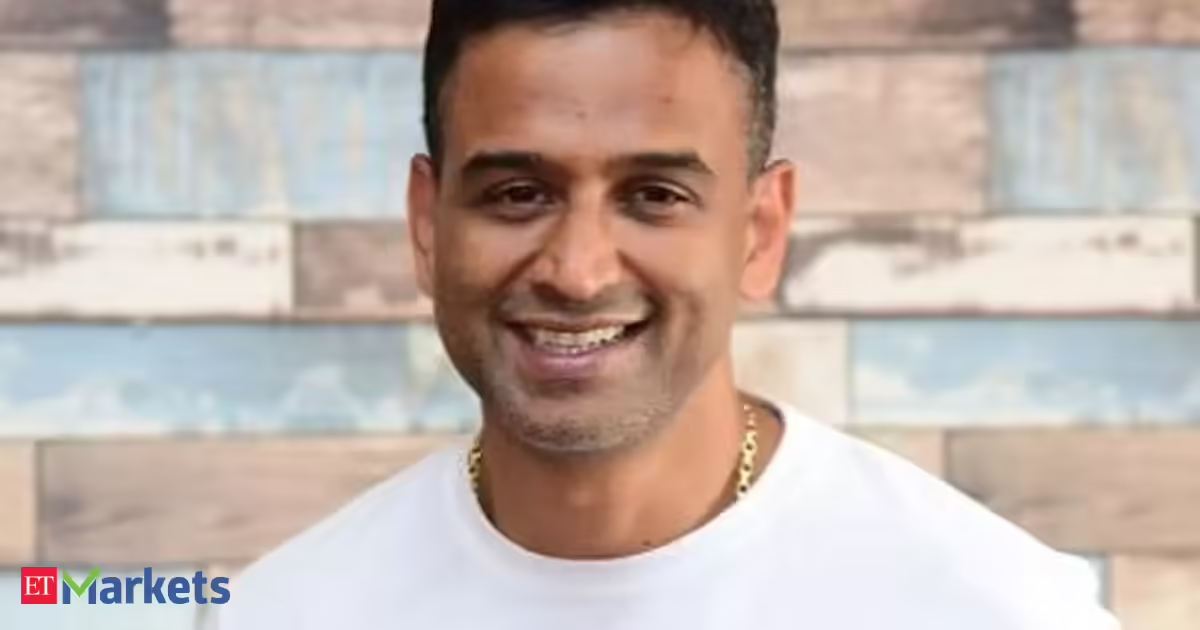
In a post on X, formerly Twitter, Kamath described NSE as a “cash generation and distribution machine”, noting that the exchange earned more than Rs 10,300 crore in profit in FY26 and distributed about Rs 8,660 crore as dividends, translating into a payout ratio of 84%.
According to Kamath, such generous shareholder payouts are likely to continue even after NSE’s listing because the exchange has limited avenues to deploy its surplus cash. He argued that regulatory restrictions prevent exchanges from investing in other businesses, whether listed or private, leaving dividend distribution as one of the few meaningful uses of excess profits.
Also read: NSE IPO: 10 key things investors need to know about India’s largest IPO in history
The NSE example, he said, raises a broader question: why are there so few businesses that consistently generate large profits and return most of them to shareholders? Kamath’s answer lies in what he calls a tax arbitrage between dividends and capital gains.

He explained that when a company earns Rs 100 in profit, it first pays corporate tax, leaving roughly Rs 75. If that amount is distributed as dividends, shareholders pay tax again at their marginal income-tax rate. For investors in the highest tax bracket, this can significantly reduce the final amount received.
By contrast, if a company retains those earnings and reinvests them into growth, shareholders can potentially benefit through appreciation in the stock price. In such a case, investors pay capital gains tax only when they sell their shares, and at a substantially lower rate than dividend income, Kamath noted.This disparity, he argued, creates a strong incentive for companies to retain earnings and pursue growth rather than distribute profits to shareholders. In his view, that may be one reason why many modern businesses prioritise expansion and reinvestment over profitability and cash returns.
Read more: NSE IPO: BSE hosts double the listed companies but numbers tell a different story
While acknowledging that reinvestment benefits the economy by funding growth, Kamath cautioned that businesses that do not generate meaningful profits can become more vulnerable during downturns. “One bad cycle can kneecap them severely,” he wrote, arguing that long-term resilience often comes from sustainable profitability.
Using NSE as a case study, Kamath also revived the debate around the double taxation of corporate profits — first at the company level and then at the shareholder level through dividend taxation. He pointed to examples of countries that have attempted to reduce this burden and argued that there should not be such a wide gap between the taxation of dividend income and capital gains.
“I think there should not be such a big differential in taxes, on dividend income as compared to capital gain,” Kamath added.
The NSE IPO is entirely an offer-for-sale (OFS) of up to 14.89 crore equity shares with a face value of Re 1 each, representing nearly 6% of NSE’s paid-up equity capital. The issue size has been fixed at 6% of the exchange’s paid-up capital.
NSE’s shares will be listed on BSE, mirroring the arrangement under which BSE‘s own shares are listed on NSE. With NSE’s valuation in the unlisted market hovering around Rs 5 lakh crore, market estimates suggest the IPO could be sized at roughly Rs 30,000 crore.
The filing marks the culmination of a listing process first initiated in December 2016, when NSE filed its first DRHP for a Rs 10,000-crore issue. The process was subsequently stalled due to the co-location controversy.
(Disclaimer: Recommendations, suggestions, views and opinions given by the experts are their own. These do not represent the views of The Economic Times)

Business
Free shares! NSE IPO DRHP reveals curious case of 5,000 shares landing in wrong demat account

One of them revolves around 5,000 NSE shares that the exchange alleges were erroneously credited to an individual’s demat account, triggering both civil and criminal proceedings.
According to the DRHP, NSE and Nuvama Wealth Finance filed a civil suit before the Delhi High Court against Kashmiri Lal Rana and NSDL in May 2025, alleging that 5,000 NSE shares were mistakenly transferred to Rana’s demat account on December 28, 2023, despite no corresponding purchase request or consideration being paid.
The exchange alleged that before the error was discovered, Rana had already sold 3,685 of those shares. NSE and Nuvama have sought a declaration that the transfer was void, recovery of Rs 1.43 crore representing the sale proceeds of the shares allegedly sold, and the return of the remaining shares.
Also read: NSE IPO: Nithin Kamath explains why India has few businesses like this ‘cash generating machine’
The dispute became more complicated after NSE’s 4:1 bonus issue in November 2024. The remaining 1,315 shares were entitled to 5,260 bonus shares. According to the DRHP, the Delhi High Court directed Rana not to sell or transfer the remaining shares, while NSDL was directed not to transfer the bonus shares during the pendency of the suit.
The exchange said Rana has denied the claims in his written statement, while the plaintiffs have filed a replication relying on what they describe as his admissions. The matter remains pending.
The Mauritius case
Separately, NSE disclosed that it had filed a criminal complaint against Rana. A first information report was registered in July 2025 at Mumbai’s Bandra-Kurla Complex Police Station alleging offences related to criminal breach of trust and cheating. According to the filing, NSE alleged that Rana knowingly retained the erroneously credited shares and sold 3,685 of them for Rs 1.327 crore. The matter remains pending.
Another legal matter disclosed in the DRHP relates to a petition filed before the Bombay High Court in May 2026 by an individual named Parinay Sharma against SEBI and NSE.
According to the filing, Sharma had earlier submitted a representation to SEBI alleging that certain investors in NSE had invested through Mauritius-based entities instead of direct investments and that beneficial ownership details of certain foreign shareholders had not been disclosed.
Read more: NSE IPO: BSE hosts double the listed companies but numbers tell a different story
The petition alleged that SEBI had not acted on the representation and sought, among other reliefs, a direction requiring NSE to disclose its promoter group and shareholders or ultimate beneficiaries along with KYC documents. The petitioner also sought a stay on NSE’s IPO process until the matter is finally decided. The DRHP states that the matter is currently pending before the court.
The NSE IPO is entirely an offer-for-sale (OFS) of up to 14.89 crore equity shares with a face value of Re 1 each, representing nearly 6% of NSE’s paid-up equity capital. The issue size has been fixed at 6% of the exchange’s paid-up capital.
NSE’s shares will be listed on BSE, mirroring the arrangement under which BSE‘s own shares are listed on NSE. With NSE’s valuation in the unlisted market hovering around Rs 5 lakh crore, market estimates suggest the IPO could be sized at roughly Rs 30,000 crore.
The filing marks the culmination of a listing process first initiated in December 2016, when NSE filed its first DRHP for a Rs 10,000-crore issue. The process was subsequently stalled due to the co-location controversy.
(Disclaimer: Recommendations, suggestions, views and opinions given by the experts are their own. These do not represent the views of The Economic Times)


Israeli fire kills five people in Gaza, including a child, medics say

Available for over a year
Capita chiefs promised MPs on the Public Accounts Committee it would fix long-running problems with its administration of one of the biggest pension schemes in the country by the end of this month.
Tens of thousands of retired and serving civil servants have been reporting long delays to payments, leading to serious financial hardship to pensioners and their families.
But Money Box has learned the deadline isn’t likely to be met. We speak to the chairman of the Public Accounts Committee about what happens next.
And cases of reported are still increasing. We explain how AI has become the latest weapon in the fraudsters’ armoury.
Also, holiday season is upon us. What can we do to minimise the hit from those annoying non-sterling transaction fees levied every time we use our plastic. A consumer expert shares his advice.

With SpaceX now trading publicly alongside Tesla for the first time in history, investors face a genuinely new decision: choosing between two Elon Musk-led companies that occupy very different points in their corporate life cycles, carry sharply different valuations relative to their current profitability, and may even end up merged into a single entity within the next year. Here’s what the numbers actually show.
Where the Two Stocks Stand Right Now
Tesla and SpaceX stock price comparisons are now a real public-market exercise, since SpaceX listed under the ticker SPCX on June 12, 2026. Tesla is a mature public stock; SpaceX is a newly listed public stock with fresh IPO momentum. The two companies attract similarly high investor attention, but they are being judged on entirely different criteria. Tesla is being judged on execution and margins. SpaceX is being judged on IPO demand, scarcity value, and whether its public valuation can be supported by long-term fundamentals.
That distinction showed up clearly in trading data following the listing. On June 16, 2026, Tesla’s stock experienced a decline of 1.6%, closing at $404.66. Meanwhile, SpaceX saw a significant surge, increasing nearly 5% to $201.80 per share. The market capitalization of SpaceX has now surpassed $2.6 trillion, compared to Tesla’s nearly $1.8 trillion.
The Valuation Gap Surprised Many Observers
Perhaps the most striking fact in this comparison is that SpaceX, a company with no history as a public stock until just over a week ago, has already surpassed Tesla in total market value. The targeted SpaceX valuation, somewhere between $1.75 trillion and $2 trillion, was notable because it would put SpaceX above Tesla on day one of trading. That range proved conservative — the rocket and satellite specialist’s market cap has since climbed well beyond even that ambitious target.
So how does a company that lost approximately $4.9 billion last year leapfrog an automaker generating more than $22 billion in quarterly revenue? The answer has less to do with rockets than with what the rockets put into orbit — namely, the combination of Starlink’s growing satellite internet business and the broader artificial intelligence ambitions now consolidated within the company following its merger with xAI.
Tesla’s Case: Profitability Pressure, but a Pivot Toward AI
Tesla’s bull case increasingly rests on a transformation story rather than its traditional electric vehicle business. Tesla’s soaring capital expenditures are projected to yield only $2.06 in earnings per share in 2026, resulting in a price-to-earnings ratio above 160 — a figure highlighting the market’s heavy reliance on future growth rather than current profitability.
That capital spending reflects a deliberate strategic shift. Tesla’s first-quarter 2026 results showed negative free cash flow as the company increased capital expenditure toward a guided $25 billion for the year, primarily for AI compute and robotaxi fleet infrastructure. First-quarter revenue rose 16% to $22.4 billion, but vehicle deliveries of 358,023 missed expectations, with management telling investors the company’s near-term focus is shifting away from pure vehicle volume growth.
The company also weathered its first full year of declining annual revenue. The electric vehicle and energy company just emerged from its first year of annual revenue decline, with 2025 sales falling for the first time in its history as a public company — a notable setback that has pushed analysts toward valuing Tesla increasingly on its autonomous driving and robotics ambitions rather than its traditional car business.
SpaceX’s Case: Scarcity, Starlink, and Unproven AI Bets
SpaceX’s bull case centers on different fundamentals entirely. SpaceX’s newly consolidated artificial intelligence segment, which folds in xAI following a February merger that valued the combined entity at $1.25 trillion, lost $6.4 billion in 2025 and another $2.5 billion in the first quarter. The company has said it expects to begin deploying orbital AI compute satellites “as early as 2028” — a timeline that places much of its AI ambitions several years into the future.
Critically, only a small fraction of SpaceX’s total shares are currently available for public trading, a dynamic that has amplified price swings in both directions. The successful IPO raised $75 billion and achieved a market cap exceeding $2.1 trillion, with less than 5% of shares available for trading, reflecting both strong insider confidence and intense market demand for the limited float available.
One analyst offered a blunt assessment of the disconnect between SpaceX’s current price and its underlying financials. The numbers at $200 per share do not independently justify the current price. SpaceX lost $4.9 billion in 2025 and $4.28 billion in Q1 2026 alone. Its only profitable segment, Starlink, is excellent, but even a generous standalone valuation for Starlink produces a fraction of the current market cap.
The Merger Wildcard
Perhaps the single biggest variable hanging over any comparison between the two stocks is the possibility that they may not remain separate investments for much longer. Wedbush analyst Dan Ives has put the probability of a confirmed Tesla-SpaceX merger at 80 to 90% for the first half of 2027 — a scenario that, while not confirmed and still firmly in the rumor category, has been treated as a live possibility by enough analysts that it belongs in any honest accounting of what could change the investment thesis for either stock.
Separate commentary has noted that a potential SpaceX-Tesla merger, while speculative, continues to attract institutional attention given SpaceX’s target valuation of approximately $1.75 trillion — a figure that, if a merger were to occur, could meaningfully reshape the combined entity’s overall risk and growth profile in ways that are difficult to predict from today’s vantage point.
Analyst Price Targets Reflect Genuine Disagreement
Wall Street’s formal coverage of both stocks shows a wide range of opinions, reflecting genuine uncertainty about how each company’s specific growth bets will play out. Third-party Tesla stock forecasts range from $364 to $600 as of early June 2026, reflecting disagreement over the pace and profitability of the company’s transition from a pure electric vehicle manufacturer toward AI and robotics.
For SpaceX, one valuation model places the company’s GF Value, a fair-value estimate, at $287.69 against a current trading price of $404.66 for Tesla specifically — suggesting Tesla itself may be roughly 41% overvalued by that particular methodology, even before factoring SpaceX into the comparison.
What “Both” Would Mean for an Investor
For investors considering holding both stocks rather than choosing one, it’s worth recognizing that both companies remain deeply intertwined through Musk’s leadership, overlapping technology bets in AI and robotics, and the looming possibility of an eventual corporate combination. That overlap means an investor holding both stocks is not necessarily achieving the diversification that holding two genuinely unrelated companies would typically provide — a consideration worth weighing given how closely both stocks’ near-term performance may end up tracking similar underlying catalysts, from AI infrastructure spending to Musk’s own public statements and strategic decisions.
The Bottom Line
There is no universal answer to which stock represents the better buy, and the dramatic disagreement among professional analysts — with Tesla price targets spanning from $364 to $600, and SpaceX’s valuation already exceeding even the high end of its own pre-IPO targets — reflects how genuinely unresolved the investment cases for both companies remain. Tesla offers a longer public track record but faces real questions about near-term profitability amid its costly AI and robotics pivot. SpaceX offers explosive growth potential tied to Starlink and orbital AI infrastructure but carries a valuation that, by several analysts’ own admission, isn’t yet supported by current financial results.
As with any investment decision, particularly one involving two stocks this volatile and this closely tied to a single individual’s leadership and public statements, it’s worth doing your own research, considering your personal risk tolerance and time horizon, and consulting a qualified financial advisor before making a decision — this overview is meant to lay out the facts and competing perspectives, not to tell you what to do with your money.
Business
Casemiro Seals Free Transfer to Inter Miami After Resurgent Final Season at Manchester United
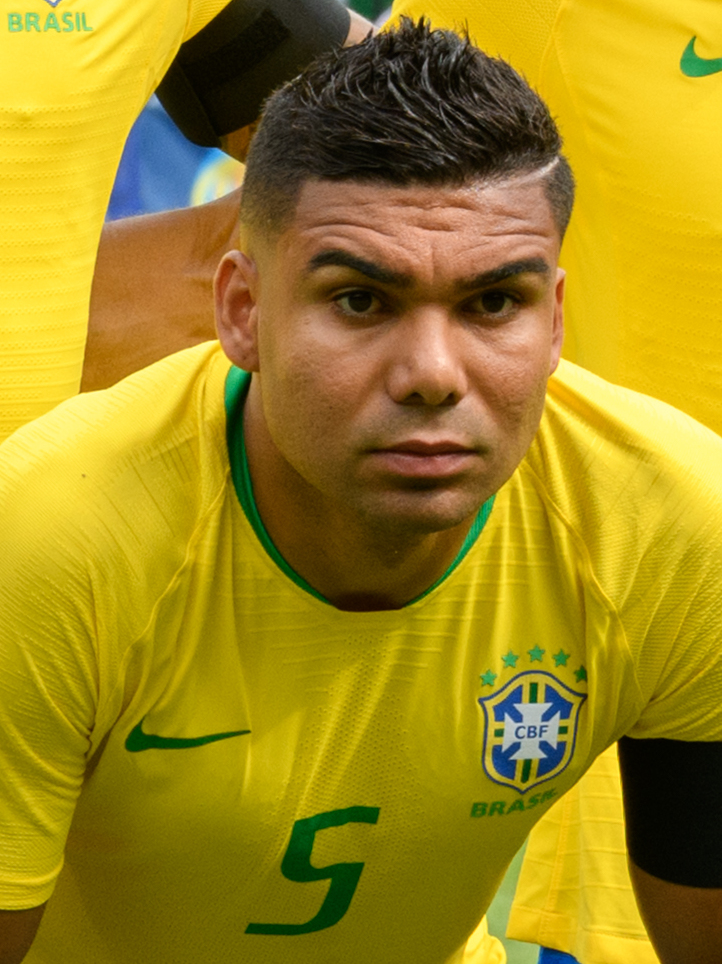
Manchester United midfielder Casemiro has agreed a free transfer to join Inter Miami after weeks of protracted negotiations, according to Fabrizio Romano. The move brings to a close one of the more eventful and ultimately triumphant chapters of the Brazilian’s career in English football, even as it follows months of speculation, financial wrangling, and competing offers from clubs across the globe.
🚨 EXCLUSIVE: Inter Miami complete deal to sign Casemiro as new midfielder, here we go!
Verbal agreement sealed with all parties involved and all formal steps resolved, now waiting to sign and announce the Brazilian.
Casemiro wants to play with Messi. Future in MLS. 🇺🇸 pic.twitter.com/gHty3SWAIM
— Fabrizio Romano (@FabrizioRomano) June 20, 2026
A Decision Reached Despite a Late-Season Surge
Despite a resurgence in performance under Michael Carrick, INEOS mutually decided with Casemiro against triggering a one-year extension in his contract. But the 34-year-old Brazilian made as strong a case as possible for this decision to be reversed in the second half of the campaign, spearheading the successful pursuit of Champions League qualification.
Alongside Kobbie Mainoo, brought back into the fold by Carrick, the pair formed the bedrock of United’s dramatic improvement under the interim boss — a far cry from the disjointed performances under Ruben Amorim earlier in the season. With the team restored to a more natural 4-2-3-1, Casemiro was given the platform to thrive, rather than be hindered by the impossible demands of the Portuguese tactician’s 3-4-2-1 system.
A Final Season Defined by Goals, Not Just Defense
It was not simply the defensive dominance the five-time Champions League winner has made his name for which was integral; rather, he showed a decisiveness in the final third which made him one of the most dangerous threats in the Premier League in the air. Five goals in the run-in from crosses into the box made United one of the most difficult sides to deal with from set-pieces, while his expansive forward passing — so often errant and misplaced under Amorim and Erik ten Hag — regained its accuracy.
In short, there were few midfielders as consistent and effective as Casemiro in 2026, leading the Old Trafford faithful to sing “One More Year” throughout every match of his superb swansong streak.
The Financial Calculus Behind the Departure
Casemiro’s mind was made up, however, as was United’s hierarchy, who were keen to remove the club’s most expensive salary — worth as high as £350,000 a week once the Champions League bonus kicked in — from the wage bill.
There was interest from Serie A, where the slower pace of Italian football would have suited aging legs, and Saudi Arabia, but it was the “American Dream” the Brazil international was intent on following. Miami shares a lot of cultural and geographical similarities with Brazil, making it an ideal early retirement home for a superstar footballer coming to the end of a glittering career.
Beating Out the Galaxy for Discovery Rights
The path to South Florida was not entirely straightforward, with a domestic MLS rival initially complicating Inter Miami’s pursuit. Inter Miami were always considered favorites to sign Casemiro once his contract in M16 expired, but rivals LA Galaxy retained “discovery rights,” giving them priority to agree a move.
In order to supplant this, Inter Miami would be forced to pay a compensatory fee, believed to be as high as £750,000, which was holding things up as the São Paulo native had already agreed personal terms with the Herons.
Romano Confirms the Breakthrough
That financial obstacle has now been resolved, with Romano confirming the deal is effectively complete. “EXCLUSIVE: Inter Miami complete deal to sign Casemiro as new midfielder, here we go! Verbal agreement sealed with all parties involved and all formal steps resolved, now waiting to sign and announce the Brazilian. Casemiro wants to play with Messi. Future in MLS,” Romano wrote.
The chance to play with Lionel Messi is said to have been a major draw for the former Real Madrid star, which may raise the immaculately manicured eyebrows of a certain Portuguese forward he used to play with.
A Reunion With an Old International Rival
Beyond the personal and lifestyle appeal of South Florida, the prospect of teaming up with Messi after years as rivals on the international stage carried particular significance for Casemiro. A move to Miami would facilitate a reunion between the Brazilian captain and his long-time international rival, with the David Beckham-owned franchise eager to find a long-term veteran presence in the middle of the park, viewing the Brazilian’s ability to control games as a perfect fit for Javier Mascherano’s tactical setup.
A Career That Began in Madrid and Ends in Manchester
Casemiro’s journey to Old Trafford carried significant pedigree, having arrived from one of the most decorated clubs in the sport’s history. Casemiro moved from Real Madrid, where he won three La Liga titles and the Champions League five times, to Manchester United, where he picked up just a League Cup and an FA Cup medal. Despite his lack of major trophies with the Red Devils, he established himself as a key member alongside captain Bruno Fernandes as the side secured Champions League football last season and finished the campaign with a flourish.
An Emotional Farewell at Old Trafford
Casemiro said farewell to United supporters following a 3-2 win against Nottingham Forest at Old Trafford as he prepares for the next step in his career, which Romano revealed to be a move across the Atlantic. Speaking earlier in the year about his decision to move on, Casemiro reflected on the affection he had received from the fanbase. “I am still enjoying it a lot [in Manchester],” Casemiro told The Athletic. “I believe the announcement is now done. It is huge, the affection that the fans have shown towards me. But I do really believe the decision is made and done. I am enjoying myself right now.”
Going Out on a High Note
It is rare for a footballer to go out on top, but that is exactly what Casemiro has done in leaving the Theatre of Dreams. Had he departed at the low points under Amorim or Ten Hag, the memory of his time in M16 would be a starkly different one to the emotional send-off he received against Nottingham Forest — and that explains why he is so full of praise for Carrick.
With the move now effectively sealed pending formal announcement, Casemiro is expected to officially complete his switch to Inter Miami following the conclusion of his contractual obligations at Manchester United. For United, the focus now shifts to identifying a successor capable of replicating Casemiro’s late-season influence in central midfield, with the club already known to be exploring several alternatives across the transfer market. For Inter Miami, the addition of a five-time Champions League winner alongside Messi represents a significant statement of intent as the club continues building a roster capable of competing for major honors in Major League Soccer and beyond.
From a structural perspective, Nifty continues to remain trapped inside a broad trading range that has governed price action over the past several weeks. The index has resisted the 20-week MA at 24027 and remains below the 100- and 50-week moving averages at 24511 and 24,832, respectively, keeping the medium-term trend in a neutral-to-cautious zone.
 Agencies
The area between 24,500 and 24,850 remains a significant supply zone, as it coincides with multiple technical resistances, including the key moving averages. A sustained move above this zone would improve the technical setup and open the door for a stronger directional upmove.
The coming week, being a truncated four-day trading week due to the Muharram holiday on Friday, may begin on a stable note with stock-specific action dominating the broader market. Immediate resistance levels are expected at 24,250 and 24,400, while supports are likely to come in at 23,850 and 23,700.
The weekly RSI stands at 47.49 and remains below the neutral 50 mark. The indicator is showing no meaningful divergence against price and remains neutral in its configuration.
The weekly MACD remains above its signal line, with an expanding histogram indicating modest improvement in the upside momentum. Pattern analysis suggests that Nifty is attempting to stabilize within the confines of its long-term trading range after a sharp corrective phase. The index has successfully defended the lower range support and has rebounded from levels near the 200-week moving average at 22,150, reinforcing the long-term bullish structure.
However, resisting the 20-Week MA at present and the inability to reclaim the 50-week and 100-week moving averages keep the index vulnerable to resistance-led consolidation. The 20-week MA has also crossed below both 50, and 100-DMAs.Given the prevailing setup, market participants should avoid becoming overly aggressive on either side of the market. While the sharp decline in volatility and successful defense of key support levels are encouraging, the index still faces a formidable resistance cluster overhead. Fresh buying should be selective and focused on stocks exhibiting relative strength and improving momentum characteristics.
Traders should continue protecting gains and avoid chasing extended moves until Nifty decisively clears the 24,500-24,850 zone. The most prudent approach for the week would be to maintain a stock-specific strategy while closely monitoring the index’s behavior around the identified resistance band for signs of a stronger directional move.
In our look at Relative Rotation Graphs®, we compared various sectors against the CNX500 (NIFTY 500 Index), representing over 95% of the free-float market cap of all the listed stocks.
AgenciesAgenciesThe Relative Rotation Graph (RRG) shows that the Nifty Media, Midcap 100, and Energy Sector Indices are the only three Indices that are inside the leading quadrant. While the Energy Sector Index is seen sharply giving up on its relative momentum, this group may relatively outperform the broader markets.
The Nifty Metal and the PSE Indices are inside the weakening quadrant. They may continue slowing down on their relative performance. The Pharma and the Infrastructure Indices are also inside the weakening quadrant, but they are seen improving on their relative momentum against the broader markets.
The IT, Auto, and Financial Services Index stays inside the lagging quadrant. They may relatively underperform the broader markets. The Banknifty, Services sector, and the PSU Bank Index are also inside this quadrant, but they are improving their relative momentum against the benchmark. The Realty and the FMCG Indices are inside the improving quadrant.
Important Note: RRGTMchartsshow the relative strength and momentum of a group of stocks. In the above Chart, they show relative performance against the NIFTY500 Index (Broader Markets) and should not be used directly as buy or sell signals.
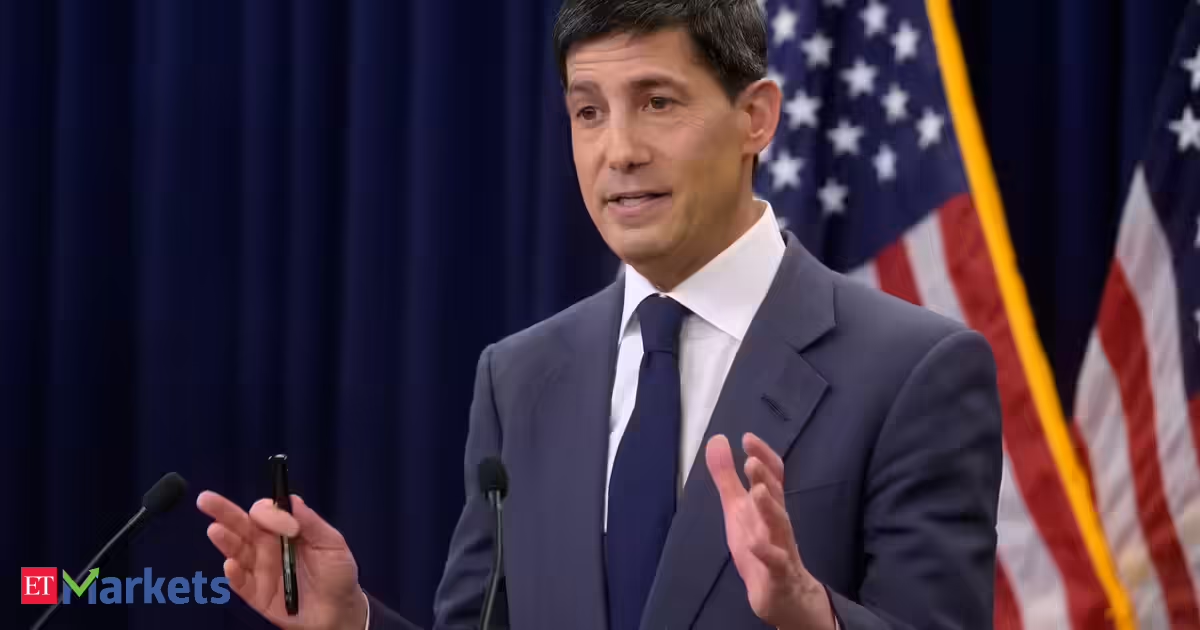
But in his first press conference Wednesday, new chair Kevin Warsh began to reverse some of those steps. Warsh, like many economists, thinks the financial markets have become too dependent on Fed guidance, and that such direction is more effective in financial crises or economic downturns.
Warsh quickly made changes: The Fed’s statement on its interest-rate decision was slashed to 132 words, from 341 in April. And Warsh pointedly noted that the statement excluded any hints, or “forward guidance,” about what the Fed’s next moves might be.
In short, Warsh rapidly delivered on a promise to slash the Fed’s communications, particularly the guidance it gives to financial markets about its next interest-rate moves. Yet such an approach carries the risk of more violent swings in stock and bond prices, analysts say, and ultimately could lead to higher interest rates for consumers and businesses.
“Forward guidance in general has served to suppress volatility and anchor market expectations,” said George Pearkes, global macro strategist at Bespoke Investment Group. “And that has led to lower borrowing rates, relative to alternatives.”
Still, the impact on consumers is likely to be modest, Pearkes added, with mortgage rates perhaps a quarter-point higher than they would be otherwise.
Financial markets see-sawed, then fell Wednesday after the statement and news conference. The yield on the 10-year Treasury, which strongly influences mortgage rates, jumped Wednesday to 4.49% from 4.43%, though it fell back in Thursday trading. The yield on the 2-year Treasury, which closely tracks expectations for Fed action, was 4.16% Thursday, up sharply from 4.05% before the Fed’s meeting. The broad S&P 500 stock index dropped 1.2% Wednesday. Warsh may be headed back to 1990s Such swings could be a sign of things to come. Previous chairs have signaled the Fed’s next moves clearly enough that financial markets have largely anticipated the central bank’s actions. But Warsh has frequently cited as a model former chair Alan Greenspan, whose circumspect comments often kept investors guessing.
Greenspan, who served as chair from 1987 to 2005, did usher in the statement the Fed now issues after each meeting announcing its decision. The first statement was issued Feb. 4, 1994, and said the Fed would increase its key rate for the first time in five years. The move caught investors off-guard and the Dow Jones Industrial Average plunged 2.4% that day.
The paring back of Fed communications is part of a larger package of potential reforms to the central bank’s operations that Warsh signaled Wednesday. He announced that the Fed will set up five task forces to examine the Fed’s communications, its balance sheet, how it analyzes and gathers economic data, the impact of AI on productivity and jobs, and the frameworks it uses to analyze inflation.
Warsh said the communications task force would consider changes to the quarterly economic projections the Fed issues as well as look at other recent innovations, including press conferences. Former chair Ben Bernanke was the first to hold them, though he did so only after every other Fed meeting. Warsh’s predecessor, Jerome Powell, shifted to holding them after every meeting.
Such steps are a sharp contrast with the 1990s, when Greenspan never explained a Fed decision, on the record, to reporters. Warsh could ultimately dial back some of the Fed’s increased transparency.
“This is a big change in how the Fed has conducted itself since the (2008-2009) global financial crisis,” Matthew Luzzetti, chief U.S. economist at Deutsche Bank, said. “Since then there has been a one-way train to greater communication, more transparency, and more forward guidance. Warsh has now put that train in reverse.”
Fed chairs have seen benefits to forward guidance Previous Fed chairs, starting with Bernanke, have seen a clear benefit to more communication: It helps guide the markets in the direction the Fed wants. Fed officials control a short-term interest rate, but the rates that affect the economy – such as the yield on the 10-year Treasury – are heavily influenced by investors’ expectations for inflation and economic growth. By telegraphing their next moves, policymakers can cause those longer-term rates to change even before the Fed adjusts its own benchmark rate.
Yet Warsh’s view is that financial markets have become too dependent on Fed guidance. Instead, he wants investors to gauge where the Fed may move next by examining economic data and making their own judgments, which the Fed can then consider as part of their assessments of where the economy is headed.
“Financial market prices are probably the most important source of information to guide central bankers,” Warsh said at Wednesday’s news conference.
Guidance can help with unexpected events David Andolfatto, an economics professor at the University of Miami and former economist at the St. Louis Fed, said he agreed with Warsh that forward guidance has flaws. It can be easily upended by unexpected events, he said, such as Russia’s invasion of Ukraine or the Iran war.
But the chair should set out guidelines for how the Fed will react to unexpected events, Andolfatto said, or to challenges such as the persistent inflation it is grappling with now, yet Warsh so far hasn’t done so.
“I’m with him on dispensing with forward guidance, but you have to replace it with a contingency plan,” Andolfatto said. “It’s not enough to say, trust me, we’ll keep inflation at target.”
Ironically, Warsh’s decision to drop forward guidance may empower the other 18 members of the Fed’s rate-setting committee, Pearkes said. Those officials – six members of the Fed’s governing board, plus the presidents of the 12 regional Fed banks – frequently give public speeches, and their remarks will get even more attention as financial markets seek clues about what the Fed may do next.
A big challenge to Warsh’s approach will come if there is a sharp financial downturn or economic crisis, as occurred during the COVID pandemic. In those circumstances, economists said, forward guidance can play an important role calming markets.
“Whether it will stand the test of time and he will behave this way for five years is a very different question, but one that we’re going to have to wait for events to unfold to get an answer to,” Pearkes said.

Dilok Klaisataporn/iStock via Getty Images

In April, Seeking Alpha invited analysts to participate in a Best Commodity Idea competition. We received 40 submissions. Here’s a look at all the winners as determined by the judging editors:
1) Joffrey Simonet – McEwen: Buy A World-Class Copper Project, Get Gold Upside For Free – McEwen offers a compelling risk-adjusted opportunity with near-term catalysts, anchored by its world-class Los Azules copper project—a uniquely ESG-differentiated asset, which is translating into blue-chip strategic investor support and immensely derisks the project financing—while the current valuation entirely discounts numerous upside sources and MUX’s entire gold business.
2) LA Capital – Alphamin Resources: The High-Grade Tin Miner With A Low-Grade Multiple – Alphamin Resources operates the world’s highest-grade tin mines, delivering elite profitability, a fortress balance sheet, and strong shareholder yield, and it is deeply undervalued; tin’s growth outlook is protected by a vast technological and regulatory moat.
3) Matthew Smith – Mogotes Metals: Possibly The Next Major Deposit In The Vicuna District – Mogotes Metals offers compelling speculative upside as drill results at Filo Sur indicate potential for a world-class copper-gold-silver-molybdenum deposit; near-term catalysts include additional drill results; positive outcomes could drive a buyout in the CAD $500M-$1B range, with downside supported by the Beskauga project in Kazakhstan.
We selected the winners based on how compelling the thesis is (50%) and independent insights (50%).
First place receives an award of US $1,500, second place US $1,250, and third place US $1,000.
Thank you to everyone who participated—we certainly enjoyed reading your submissions. For those who didn’t place, don’t worry, we’ll post another competition in the near future. Stay tuned for more details.
Editor’s Note: This article discusses one or more securities that do not trade on a major U.S. exchange. Please be aware of the risks associated with these stocks.
Business
Monsoon risk, younger investor base, and skewed trading activity define NSE outlook: NSE data
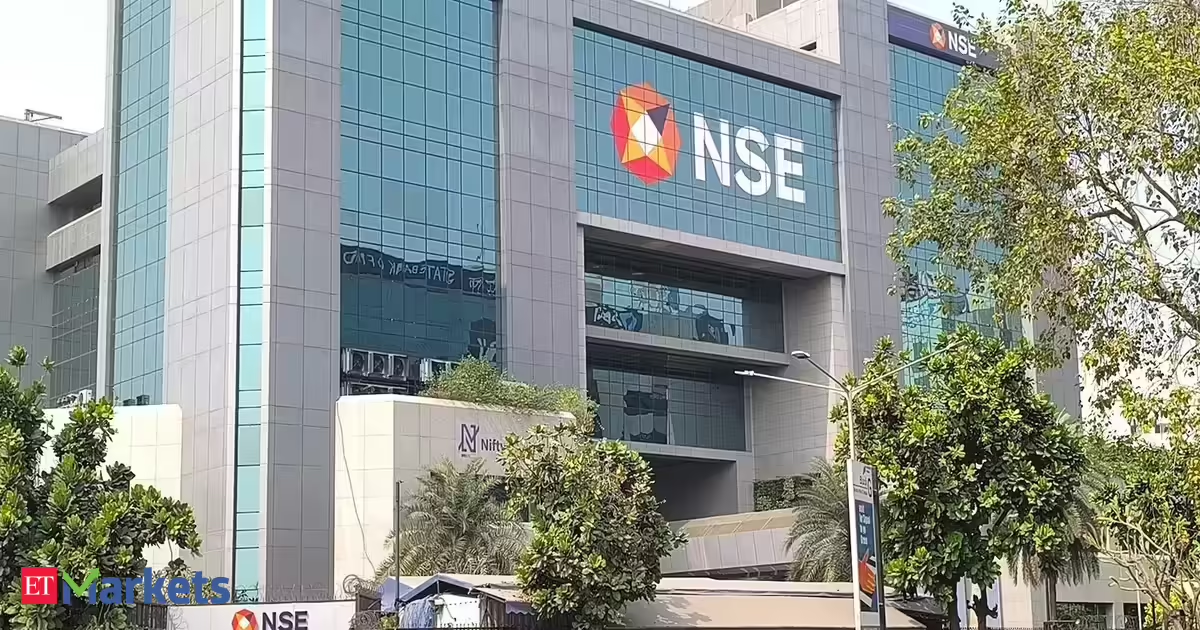
The National Stock Exchange flagged the monsoon as the key macro risk for 2026. NSE said IMD has revised its South-West monsoon forecast to 90 per cent of the long-period average, one of its lowest forecasted values on record, with a 60 per cent probability of deficient rainfall and a further 24 per cent probability of below-normal rainfall. “For 2026, the key challenge is the emergence of El Nino risk,” the report noted. The downside skew is visible across regions, with the probability of below-normal rainfall highest in Northwest India at 46 per cent, followed by the South Peninsula at 45 per cent, and Central India and the Monsoon Core Zone at 43 per cent each. NSE said historical El Nino years warrant caution, with deviations ranging from -5.4 per cent in 2023 to -22.1 per cent in 2002, and deficient rainfall has historically impacted kharif sowing, reservoir levels, rabi production and food inflation.
On investor demography, NSE said the nature of growth is changing as penetration broadens beyond traditional large-market states and the profile becomes younger and gradually more gender-diverse. The registered investor base rose to 13.1 crore as of May 2026, with the last crore of additions taking about seven months. The overall base grew at a 25.3 per cent CAGR during FY21-FY26 compared with 16.3 per cent CAGR during FY16-FY21. Regionally, North India now accounts for the largest share at 36.7 per cent, having surpassed Western India in 2022. States outside the top 10 now account for 27 per cent vs ~22 per cent in FY17, “pointing to a gradual broadening of the investor base beyond the traditional large states,” NSE said.
The investor base is also trending younger. The share of registered investors below 30 years increased from 23.5 per cent in Mar 2020 to 38.3 per cent in May 2026, while the median age fell from 38 years to 33 years. Incremental additions remain even younger, with investors below 30 accounting for 53-59 per cent of new registrations. Female participation improved steadily, with women accounting for around 25 per cent of all individual investors as of Apr 2026.
Trading activity, however, remains skewed. NSE data for May 2026 showed the top 2.6 per cent of active cash market investors accounted for 92.3 per cent of turnover, with investors trading Rs 10 crore and above forming just 0.3 per cent of active investors but contributing 79.4 per cent of turnover. In equity options, the top 0.3 per cent of investors alone accounted for 69 per cent of premium turnover, while in equity futures the top 7.8 per cent accounted for 93.3 per cent of turnover.

SOUTHAMPTON, N.Y. — Halfway through the 2026 U.S. Open and one thing is clear: Wyndham Clark is on a heater.
The 32-year-old has had just one top-10 finish in a major since his 2023 U.S. Open victory. But Clark won in Dallas a few weeks ago at the Byron Nelson and is clearly on top of his game. His 1-under 69 was good enough to leave him at 7 under for the tournament, four shots clear of the field through 36 holes.
The question now is whether Clark will be able to extend his lead, or if anyone — like fellow major champions Xander Schauffele, Matt Fitzpatrick, or even Justin Thomas — can make a move on the leader.
The Leaderboard Entering Round 3
Leaders at the start of Round 3 were led decisively by Clark, with a deep pack of contenders separated by just a handful of strokes behind him. Wyndham Clark sat at 7 under, four shots clear of a tie for second between Matt Fitzpatrick, Xander Schauffele, Sam Stevens, and Tom Kim, all at 3 under. Collin Morikawa followed at 2 under in sole possession of sixth place, while a four-way tie for seventh at 1 under included Justin Thomas, Harry Higgs, Sam Burns, and Sahith Theegala.
Betting Markets Reflect Clark’s Lead
Oddsmakers have installed Clark as the clear betting favorite heading into the weekend, reflecting both his commanding margin and his recent form. According to BetMGM, Clark is priced at +175 to win the championship, with Matt Fitzpatrick and Xander Schauffele both listed at +650. Scottie Scheffler sits at +1000 despite trailing significantly on the leaderboard, while Collin Morikawa is priced at +1400 and Rory McIlroy at +1600.
Notable Names Who Missed the Cut
The weekend field will be missing several recognizable names, most notably the tournament’s defending champion. Among the group of players who missed the cut at the 2026 U.S. Open, defending champion J.J. Spaun stands out most, unable to advance within the top 60 players plus ties. Florida amateur Giuseppe Puebla also missed the cut, along with other former major champions Jon Rahm, Brooks Koepka, and Graeme McDowell.
Saturday’s Tee Times
Round 3 tee times sent the morning groups out starting at 9 a.m. Eastern Time, with the leaders teeing off in the afternoon as the day progressed. The day began with Dylan Wu and Jacob Bridgeman at 9 a.m., followed by groups including Chris Gotterup paired with amateur Eric Lee, and Robert MacIntyre alongside amateur Marek Flemming.
Notable afternoon pairings included Jordan Spieth and Joaquin Niemann at 10:55 a.m., Russell Henley and Dustin Johnson at 11:06 a.m., and Tommy Fleetwood paired with Ludvig Åberg at 12:50 p.m. Scottie Scheffler went out with Brian Harman at 2:01 p.m., while Rory McIlroy was paired with Maverick McNealy at 2:12 p.m.
The leaders rounded out the day’s final groups, with Ryder Cowan, an amateur, paired alongside William Mouw at 2:50 p.m. Sahith Theegala and Sam Burns followed at 3:01 p.m., with Harry Higgs and Justin Thomas at 3:12 p.m., Collin Morikawa and Tom Kim at 3:23 p.m., Sam Stevens and Xander Schauffele at 3:34 p.m., and the final pairing of the day, Matt Fitzpatrick alongside leader Wyndham Clark, set for 3:45 p.m.
TV and Streaming Schedule
Round 3 of the 2026 U.S. Open will broadcast nationally on USA starting at 10 a.m. before switching to NBC at noon. The main broadcast is available to stream via Sling, which carries the NBC networks. Featured group and hole streaming is available on Peacock, NBCUniversal’s subscription streaming service, or for free at USOpen.com when play begins.
A Record Purse on the Line
This year’s championship carries the largest financial stakes in tournament history, reflecting the broader trend of escalating prize money across professional golf’s major championships. The overall purse for the 2026 U.S. Open is a record $22.5 million, an increase of $1 million from the 2025 purse. The winner’s share will be another record — $4.5 million.
About the Venue
The U.S. Open site rotates every year, and this year’s host is Shinnecock Hills Golf Club on Long Island in Southampton, New York. The course opened in 1891 and has hosted five previous U.S. Opens, most recently in 2018. Shinnecock Hills plays at par-70 over 7,440 yards, presenting one of the more demanding tests on the major championship rotation, with its firm, undulating greens and exposed coastal positioning historically producing some of the most dramatic scoring swings in U.S. Open history.
A Look Back at Last Year’s Champion
The current championship follows directly on the heels of a dramatic finish at last year’s tournament, where a relatively unheralded contender claimed his breakthrough title. J.J. Spaun picked up his first career major title when he was the only player to finish under par at the 2025 U.S. Open at Oakmont Country Club in Pennsylvania. His 65-foot birdie putt on the final hole capped a two-stroke victory over Robert MacIntyre.
What’s at Stake This Weekend
With Clark holding a substantial four-shot cushion heading into the third round, the central storyline for the remainder of the weekend centers on whether that lead can hold up against a deep and accomplished chasing pack that includes multiple past major champions. Clark’s recent victory at the Byron Nelson, combined with his existing U.S. Open pedigree from his 2023 title, gives him both the recent form and the championship experience that often proves decisive in closing out a major down the stretch.
For the chasing group — particularly Schauffele and Fitzpatrick, both former major winners sitting four shots back — Saturday’s third round represents a critical opportunity to either close the gap or watch Clark extend his advantage into what would become an increasingly commanding position heading into Sunday’s final round. With Shinnecock Hills’ demanding setup historically capable of producing dramatic swings in either direction, the tournament’s outcome remains far from decided despite Clark’s strong position at the midway point.
The P/PTSD Perspective: Juicy Details on QB Battle, ’26 Head Scratcher, and Roster Moves

Scammers are selling fake RTX 4090 graphics cards with plastic GPU dies and missing memory

XRP Incoming $150-$200


-

 Business6 days ago
No Jackpot Winner as $257 Million Prize Rolls Over to $269 Million Monday Draw
-
 Crypto World6 days ago
Zimbabwe Requires Crypto Businesses to Register Annually Under New FIU Regulations
-

 Fashion20 hours ago
Weekend Open Thread: Miami – Corporette.com
-
 Entertainment6 days ago
Matt Damon’s Viral Sci-Fi Thriller Has Taken Over HBO Max
-

 Tech6 days ago
As AI companies race to go public, who else is along for the ride?
-

 Business6 days ago
Anthropic staff to meet White House officials next week, Axios reports
-
 Crypto World6 days ago
Bitcoin could crash to $48,000, if this historical pattern is triggered
-

 Entertainment7 days ago
Deion Sanders Shares Powerful Post After Viral Advice To Deiondra
-
 NewsBeat6 days ago
what doctors are seeing in ebike crashes
-
 NewsBeat6 days ago
Warning of disruption as Cardiff Crossrail works to start
-
 NewsBeat6 days ago
Tributes to former deputy head teacher at Cambridge school among death and funeral notices
-

 Politics6 days ago
“Israel’s” ban on ICRC visits ruled illegal, but Knesset moves to stop them permanently
-

 News Videos6 days ago
Financial Accounting | Last Day Revision Strategy and Booster | CMA Inter – June 2026
-
 Entertainment6 days ago
Kate Middleton Glare Goes Viral After Kids Booed At Royal Event
-

 Tech6 days ago
Over 400 Arch Linux packages compromised to push rootkit, infostealer
-

 Crypto World6 days ago
XRP ETFs Outperform As Bitcoin And Ethereum Funds Extend Outflow Trend
-

 Business6 days ago
Invesco Quality Income Fund Q1 2026 Commentary
-

 NewsBeat6 days ago
Singer Oliver Tree dies aged 32 in helicopter crash in Brazil
-
 Crypto World6 days ago
Market Preview: SpaceX (SPCX) IPO Record, Federal Reserve Meeting, and Iran Nuclear Agreement
-

 Sports6 days ago
Dick Advocaat’s Curacao scores first-ever World Cup goal against Germany
You must be logged in to post a comment Login