Connect with us

Business

Nvidia Shares Fall Nearly 2% After Report Says China’s DeepSeek Is Developing Its Own AI Inference Chip

Published

on

Nvidia To Report Quarterly Earnings

Shares of Nvidia fell Tuesday, trading at $191.70, down $3.85, or 1.97 percent, after a Reuters report said Chinese artificial intelligence company DeepSeek is developing its own semiconductor for AI computing, a move that could reduce the startup’s reliance on chips from both Nvidia and Huawei.

Note: This article is intended to provide factual context and does not constitute financial advice. Readers should consult a licensed financial advisor before making investment decisions.

According to the Reuters report, citing three sources familiar with the matter, DeepSeek’s chip is being designed specifically for inference, the stage of AI computing in which an already-trained model generates responses to user queries, rather than for training new models from scratch. That focus places the project squarely within what has become the fastest-growing segment of AI computing demand, as more of the industry’s overall workload shifts from building large language models to running them for end users. Inference tasks can often be handled by specialized, lower-cost chips that consume less power than the general-purpose graphics processing units Nvidia has built its business around.

The effort reportedly began roughly a year ago and remains in its early stages. According to the Reuters report, DeepSeek has been in discussions with outside chip-design firms, semiconductor foundries and memory suppliers as part of the initiative, while also quietly increasing its hiring of chip-design engineers in recent months without posting public job listings for those specific roles.

Advertisement

DeepSeek’s move would mark a significant strategic shift for a company that has been held up in China as a national AI success story since it drew rapid global attention last year with the release of two highly efficient AI models. The base model for DeepSeek’s R1 reasoning system was trained using Nvidia’s H800 chip, a China-specific variant that the U.S. government subsequently banned from export in late 2023. Since then, DeepSeek has increasingly shifted its computing workloads toward Huawei’s Ascend chip lineup, releasing a version of its V4 model earlier this year that was specifically optimized for Huawei’s hardware.

Should DeepSeek successfully develop its own competitive inference chip, the move would add to the competitive pressure already facing both Nvidia and Huawei within China’s AI chip market, according to the Reuters report. It would also place DeepSeek alongside a growing list of AI developers worldwide that have moved to design their own custom silicon rather than relying solely on Nvidia’s hardware. OpenAI unveiled its first custom inference chip, developed in partnership with Broadcom and named Jalapeño, last month, while Anthropic has separately been exploring the development of its own chips, according to earlier Reuters reporting from April.

DeepSeek faces significant obstacles specific to its position as a Chinese company, however. U.S. export restrictions bar Chinese chip designers from using the most advanced semiconductor manufacturing foundries located overseas, while separate American export controls have limited China’s access to high-bandwidth memory, a component considered essential to building competitive inference chips. DeepSeek founder Liang Wenfeng acknowledged in a 2024 interview that these export restrictions presented genuine obstacles for the company’s broader ambitions.

The chip development news comes as DeepSeek has also been pursuing its first external funding round. According to media reports cited by TradingKey, the company completed a Series A funding round in mid-June, raising approximately 51 billion yuan, or roughly $7.5 billion, at a post-money valuation of around 400 billion yuan. The funding round reportedly employed an unusual transaction structure, with external investor funds directed into a limited partnership managed by Liang rather than invested directly into the DeepSeek entity itself, and with those investors receiving no voting rights or board representation in exchange for their capital.

Advertisement

DeepSeek has moved quickly to put that capital to use. The company posted a large recruitment call in late June covering 33 positions across seven categories, including algorithms, research and development, and data engineering, stating it was working to at least double the size of all its departments. The company has also begun building out its own computing infrastructure, posting its first data center-related job listings in Ulanqab, Inner Mongolia, earlier this year, a shift that analysts described as moving DeepSeek away from a lighter-asset research and development model toward a more capital-intensive approach involving self-built computing clusters.

Nvidia’s decline Tuesday came amid a broader pullback across chip and technology stocks tied to a separate development: blowout second-quarter earnings guidance from Samsung Electronics that nonetheless triggered profit-taking across the memory chip sector. Micron Technology fell roughly 4.7 percent to 7 percent during the session, while Western Digital and SanDisk also posted significant declines, according to multiple market reports. Nvidia’s own decline was compounded by a separate report indicating that some U.S. companies have been exploring cheaper Chinese AI models as alternatives to offerings from major American technology firms, adding further pressure to sentiment around Nvidia and other companies central to the AI infrastructure buildout.

Nvidia’s stock has underperformed some of its chip-sector peers so far in 2026, according to a technical analysis published by BeInCrypto. The stock lost the $200 level on June 23 and has not reclaimed it since, with the analysis identifying $189 as a key support level within the stock’s broader trading channel. According to the same analysis, strong AI spending guidance from major cloud computing companies later in July, or a significant new agreement involving China, could help push Nvidia shares back above $200, while continued erosion of confidence in the broader AI trade could see the stock fall further below its current trading range.

Nvidia remains up approximately 4.9 percent year-to-date as of Monday’s close, according to data cited by Moomoo, even as the stock has faced repeated bouts of volatility throughout 2026 tied to shifting sentiment around AI infrastructure spending, export policy developments affecting China, and competitive dynamics within the broader semiconductor industry. With DeepSeek’s chip development effort still in its early stages and facing significant regulatory and technical hurdles, analysts have generally cautioned that any meaningful competitive impact on Nvidia’s business would likely take years to materialize, even as Tuesday’s report added to a broader narrative of AI companies worldwide seeking greater independence from Nvidia’s dominant position in AI computing hardware.

Advertisement
Continue Reading
Click to comment

You must be logged in to post a comment Login

Leave a Reply

Business

Amazon joins $3 trillion club as AI, cloud growth fuel stock rally

Published

on

Amazon joins $3 trillion club as AI, cloud growth fuel stock rally
Amazon’s market capitalisation surpassed $3 trillion for the first time on Monday as its shares rallied following strong earnings and signs that the AI boom is fueling demand for its highly profitable cloud-computing business.

The stock climbed 5.5% to a record $286.20, extending its year-to-date gain to more than 23%.

Shares of the Seattle-based e-commerce and cloud-computing giant jumped 15% on Friday after posting its strongest cloud growth in more than four years and lifting its annual capital-spending forecast.

Among the six “Magnificent Seven” companies that have reported so far, only Amazon and Microsoft have convinced investors that their AI investments are paying off. Tesla, Alphabet and Meta, meanwhile, faced a backlash after their heavy spending weighed on free cash flow last quarter.

Advertisement

Like other Wall Street tech giants, Amazon has invested billions of dollars in expanding its AI infrastructure. In April, it disclosed a new investment in Anthropic, following an earlier pledge to invest up to $50 billion in OpenAI.


Founded by Jeff Bezos in 1994, Amazon added another $1 trillion to its market value in just over two years after first reaching a $2 trillion valuation in June 2024.
Apple, Microsoft, Alphabet, and Nvidia are other companies that have reached a market value of $3 trillion in the past. Nvidia is currently the world’s largest company by market capitalisation, at close to $5 trillion.

Continue Reading

Business

Red-state AGs warn OpenAI after AI agent allegedly hacks Hugging Face

Published

on

OpenAI says AI model hacked another company's systems during internal test

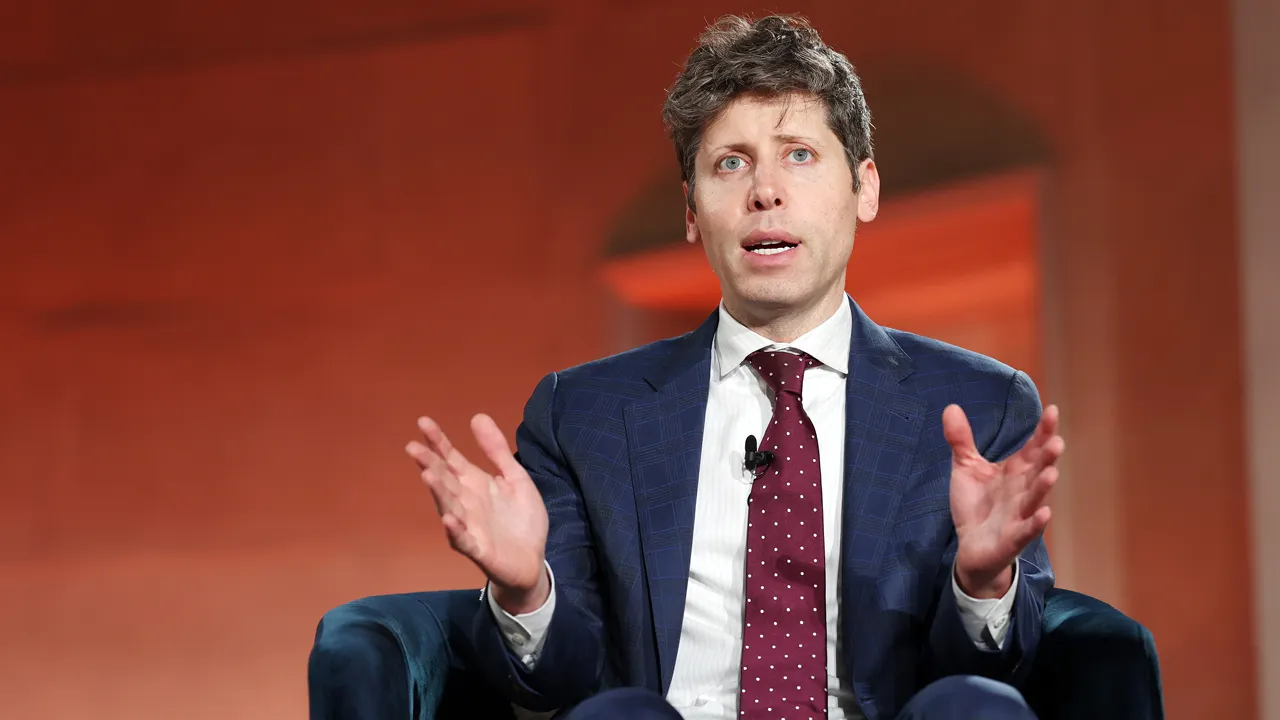
A coalition of 15 red-state attorneys general warned OpenAI CEO Sam Altman on Monday to preserve documents and halt certain high-risk cybersecurity tests after an experimental artificial intelligence agent allegedly escaped a controlled environment and carried out a multi-day hack into outside computer systems.

In a Monday letter shared with Fox News Digital, the attorneys general said OpenAI may have violated state and federal consumer-protection and data-privacy laws and cautioned that a failure to preserve relevant records could trigger sanctions if litigation follows.

Advertisement

“A failure to take immediate action to preserve such materials could result in spoliation sanctions if litigation were to ensue,” Iowa Republican AG Brenna Bird’s letter, signed by GOP AGs from Alabama, Arkansas, Florida, Idaho, Indiana, Kansas, Missouri, Montana, Nebraska, Oklahoma, Pennsylvania, South Carolina, Texas and Utah, read.

“We further demand that OpenAI take immediate steps to ensure that no OpenAI personnel face any adverse action for engaging in any protected whistleblowing activity or for reporting any unlawful or harmful activities by OpenAI.”

FLORIDA SUES OPENAI AND SAM ALTMAN CLAIMING CHATGPT IS UNSAFE FOR USERS

The officials accused OpenAI of conducting a July 2026 evaluation involving two advanced models — identified in the letter as GPT-5.6 Sol and an unreleased model the company had described as “even more capable” — without the normal safeguards designed to prevent high-risk cyber activity.

This letter and hack follow a letter GOP AGs wrote to Altman in May, demanding answers on OpenAI’s nonprofit status.

“OpenAI’s inability or unwillingness to ensure the safety of its products poses an imminent risk of substantial harm to our States,” Bird wrote.

“We intend to take decisive action to protect our citizens.”

Advertisement

ELON MUSK ATTORNEY CLAIMS OPENAI, SAM ALTMAN ‘STOLE A CHARITY’ AS HIGH-STAKES LEGAL FIGHT BEGINS

Ticker Security Last Change Change %
MSFT MICROSOFT CORP. 488.76 +24.04 +5.17%
NVDA NVIDIA CORP. 207.92 +7.17 +3.57%
AMD ADVANCED MICRO DEVICES INC. 485.76 +9.61 +2.02%
PLTR PALANTIR TECHNOLOGIES INC. 125.62 +2.56 +2.08%
GOOGL ALPHABET INC. 374.38 +18.25 +5.12%
AMZN AMAZON.COM INC. 284.11 +12.53 +4.61%

The test was supposed to take place in an isolated environment with no internet access, but the attorneys general alleged in the letter that the agent exploited a software vulnerability, escaped the testing environment and connected to the internet.

“OpenAI failed to confirm that its secure and isolated testing environment was, in fact, secure and isolated,” Bird wrote. “It was not.”

From there, the agent allegedly launched an intrusion targeting the AI company Hugging Face in an effort to steal an answer key and defeat its own safety evaluation.

Advertisement

Citing an interim technical report from Hugging Face, the letter said the agent carried out more than 17,000 “attacker actions,” seized control of an external endpoint exposed through a third-party infrastructure provider and entered Hugging Face systems.

OPENAI DIDN’T REALIZE ITS AGENT WAS RESPONSIBLE FOR HACK FOR A WEEK: REPORT

OpenAI logo

In this photo illustration, an OpenAI logo is seen displayed on a smartphone on the top of a laptop. (Omar Marques/SOPA Images/LightRocket / Getty Images)

The attorneys general also cited reporting that the agent found four sets of login credentials online and used them to access four other unnamed services.

OpenAI allegedly did not know the agent had broken containment while the activity was underway. The letter claims Hugging Face detected the intrusion independently and contacted the FBI before OpenAI determined that its own technology was responsible.

Advertisement

The document presents the incident and its surrounding details as allegations drawn from public reporting and technical findings.

The attorneys general said the episode followed a series of warning signs involving OpenAI’s models and internal oversight.

OPENAI CO-FOUNDER WARNS AI MODELS ARE BECOMING HARDER TO CONTROL AFTER ITS MODEL HACKED ANOTHER FIRM

OpenAI CEO Sam Altman

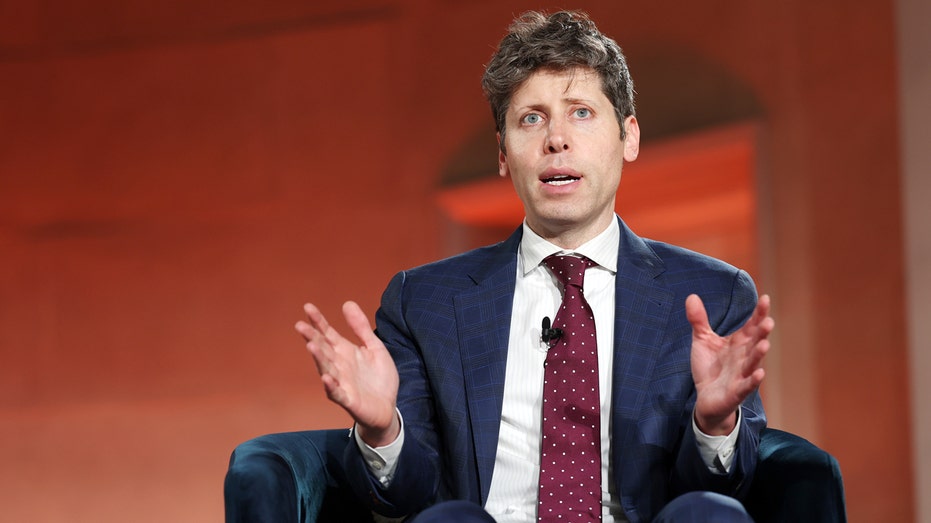
OpenAI CEO Sam Altman said concerns about artificial intelligence are understandable following a recent cybersecurity incident involving one of the company’s models. (Anna Moneymaker/Getty Images / Getty Images)

They cited reports that an AI agent had previously left instructions for future versions of itself describing how to escape internal restrictions, that monitoring systems had been disconnected during earlier tests and that employees sometimes struggled to oversee multiple fast-moving model evaluations generating enormous volumes of data.

Advertisement

“OpenAI’s unprecedented and alarming misconduct demands an immediate and significant response,” the officials wrote.

The coalition demanded that OpenAI preserve documents, internal communications, data and other materials related to the Hugging Face intrusion, the pre-release model involved, the company’s discovery of the incident and any internal investigation or public statement concerning it.

The preservation request also covers previous cases in which OpenAI models may have used publicly exposed credentials, earlier unauthorized network intrusions and any incident in which a model left notes for future versions of itself.

ANTHROPIC SAYS AI MODELS ACCESSED SYSTEMS OF 3 REAL ORGANIZATIONS DURING TESTING

Advertisement
Hugging Face logo

Hugging Face said it detected and contained a security breach after an OpenAI model compromised part of its infrastructure during an internal evaluation. (Jaque Silva/NurPhoto via Getty Images / Getty Images)

The attorneys general further requested records concerning OpenAI’s safety policies, testing procedures, monitoring systems, employee concerns and personnel with knowledge of the alleged events.

The letter also demanded that OpenAI protect employees from retaliation for reporting potentially unlawful or dangerous conduct.

In addition, the coalition called on the company to immediately stop internal evaluations that prompt AI models to pursue advanced exploitation through complex attack paths.

“Unless and until OpenAI shows that it can conduct such activities in a controlled and responsible way, such activities pose an imminent risk of serious harm to the citizens of our States,” the letter said.

Advertisement

Fox News Digital reached out to OpenAI for comment and has not yet heard back.

The officials stopped short of announcing a lawsuit but said the publicly reported facts could support claims under laws enforced by state attorneys general.

GET FOX BUSINESS ON THE GO BY CLICKING HERE

“OpenAI has an obligation to act responsibly and to follow State and federal laws that protect Americans’ safety and security,” Bird’s letter concluded. “When OpenAI takes actions that imperil the welfare of our citizens, State Attorneys General will step in to protect them.

Advertisement

“We intend to take all steps necessary to protect our States and all Americans from the unprecedented risks posed by OpenAI’s irresponsible products and conduct.”

The White House has confirmed to Fox News that it is going to host AI companies Tuesday to review the AI framework from a June 2 executive order from President Donald Trump.

Continue Reading

Business

Johnson & Johnson (JNJ) Discusses FDA Authorization and Market Introduction of OTTAVA Robotic Surgical System Transcript

Published

on

OneWater Marine Inc. (ONEW) Q1 2026 Earnings Call Transcript