

Business
Oil falls after US, Iran talks conclude in Doha


Brent futures were down 73 cents, or 1.02%, to $70.84 a barrel by 0102 GMT, while U.S. West Texas Intermediate crude fell 83 cents, or 1.21%, to $67.75 a barrel.
In the previous session, both benchmarks fell more than 1% to their lowest levels in four months.
Sources said negotiators for the U.S. and Iran spent two days in Doha discussing maritime traffic in the Strait of Hormuz and unfreezing Iran’s funds.
Though traffic has partially resumed, the two countries exchanged strikes last weekend following an Iranian attack on a cargo ship.

Iran is determined to win international recognition of its control over the strait even if it has to do so by force, two senior Iranian sources said. Tehran has repeatedly said it will impose tolls on shipping starting in mid-August, after a toll-free period specified by the initial agreement expires.
Tanker traffic through the strait has started to recover, with U.S. Vice President JD Vance saying oil flows through the waterway had returned to pre-war levels, without citing figures. As the strait stays open and crude oil flows out, competition for market share keeps pushing oil prices down, and there are growing expectations of oversupply, Haitong Futures said in a note.
Adding to supply at a time of falling oil prices amid the gradual reopening of the strait, sources said on Wednesday that OPEC+ oil-producing countries will likely agree to a further hike in their output targets from August when they meet on Sunday.
The target will increase by about 188,000 barrels per day for August, the same as for June and July, the sources said.
In the U.S., crude inventories fell by 3.8 million barrels to 408.4 million barrels last week, the lowest level since September 2018, the Energy Information Administration said on Wednesday.
The draw, however, was smaller than analysts’ expectations in a Reuters poll for a drop of 4.5 million barrels.

Business
ASX 200 Hovers Near Flat in Thin Trade as RBA Hawkish Signal and Weak U.S. Futures Weigh on Sentiment

SYDNEY — Australia’s benchmark S&P/ASX 200 was barely changed in afternoon trade Thursday, hovering just below the flatline as a hawkish signal from the Reserve Bank of Australia’s latest policy minutes, a sharp pullback in U.S. stock futures and ongoing weakness in the country’s building sector combined to keep investor appetite subdued heading into the long weekend.
The ASX 200 was trading around breakeven despite only three sectors trading in positive territory. The large end of town was holding up relatively well, but the smaller stocks were showing more weakness.
The index was at 8,719.1, down just 3.8 points, or 0.04%, as of 3:21 p.m. AEST, recovering modestly from a session low of 8,711.40 reached earlier in the afternoon. The tightly rangebound session came after Wednesday’s more significant decline, when the benchmark fell 56 points, or 0.6%, to close at 8,723 on the first day of the new financial year, extending a two-day losing streak that began Tuesday when the index slipped 45 points, or 0.5%, to 8,779.
Australia’s ASX 200 dipped 56 points or 0.6% to finish at 8,723 on Wednesday, the first day of the new financial year. Markets extended declines from the day before amid a sharp drop in U.S. stock futures following strong gains on Wall Street during H1 of 2026, supported by a continued surge in chip stocks. Caution lingered ahead of May trade data, due Thursday, after April exports outpaced imports to deliver a modest surplus. Meanwhile, building permits dropped for a third month in May, marking the fourth contraction this year.
The building permits data released Wednesday added to a picture of a domestic economy under the strain of elevated borrowing costs. The Reserve Bank of Australia raised its cash rate three times in 2026, in February, March and May, lifting it to 4.35% before pausing in June. The minutes from that June meeting, released Tuesday, rattled markets by signaling further tightening remains on the table.
In its June meeting minutes, the central bank signalled further tightening remains possible after three hikes since January, citing rising Q2 cost pressures. Most sectors fell, led by commercial services, financials, logistics, and consumer names. The big four banks lost 1.5%–2.5%, while Greatland Resources (-4.7%), Coles Group (-4.2%), and Xero (-2.8%) slipped.
Thursday’s session has been comparatively calmer, with only marginal moves across most major index constituents as investors awaited May trade data due during the session, the next concrete data point that could influence expectations about the RBA’s path on interest rates.
Among individual market movers Thursday, gold miner Northern Star attracted attention after the company posted June-quarter results and announced a significant leadership change. The market responded positively to the dual news of a new chief executive and a June quarter that lifted full-year gold sales above revised guidance. Shares were up 4.2% to $19.59, but still down roughly 2% in the past week amid soft gold prices. Northern Star appointed Glencore’s Suresh Vadnagra as Managing Director and CEO from October 5, with the KCGM Mill Expansion Stage I on track for commissioning in early FY27, lifting throughput from 13 million tonnes per annum to 27 million tonnes per annum.
In a separate, high-profile corporate disclosure, Ventia Services Group CEO Dean Banks disclosed the sale of 2.0 million shares, reducing his beneficial holding by 40% to 3.0 million shares. Last month, Ventia appointed Mark Ralston as new CEO from September 1, 2026. Ventia shares have dipped 10% from their June 23 record highs, but are still up 2% year-to-date.
Security technology company Integrated Managed Group was another notable Thursday mover. The company struck a binding agreement to acquire ADT’s UK residential security business for £180 million, comprising £155 million cash and £25 million in IMG shares issued to Johnson Controls International. The deal adds $12.5 million per month in recurring revenue, up 205%, from more than 160,000 direct customers, and is expected to lift pro forma annualised EBITDA by around 300% to $130 million, against FY26 guidance of $43 million to $47 million.
Offshore, an eye-catching development in Korean currency markets added to the broader financial backdrop for Thursday’s Australian trading session. South Korea’s top finance official flagged a clear shift in overseas investor interest as the Korean won prepares to move to round-the-clock trading from July 6. Second Vice Finance Minister Huh Chang said 2026 investor roadshows in Hong Kong and Singapore pointed to significant growth in overseas interest, with Korea’s capital markets now seen as far more attractive. The government said it has sufficient capacity to steady the currency and will act if the won swings sharply from fundamentals, with the currency near its weakest since 2009.
Global commodity markets have also been a source of mixed signals for the Australian bourse. Oil fell 1.83% to $68.23 per barrel, while gold climbed 1.15% to $4,085.00. The divergence between a softening oil price and a rebounding gold price has created crosscurrents within the ASX’s large resources sector, supporting gold miners like Northern Star on one hand while applying modest pressure on energy names including Ampol and Whitehaven Coal.
The broader context of Thursday’s near-flat session is a market digesting an unusually eventful new financial year opening. The 2024-25 and 2025-26 Australian financial years produced sharply contrasting performance, with the recent year returning roughly 6.3% on a total return basis including dividends despite the late-year rate hike headwinds. Despite the pullback in recent sessions, the market logged a third straight monthly gain in June, up 0.5%, and around 3.5% for the quarter, underpinned by resilient spending, stronger jobs, and continued factory growth.
The ASX website itself flagged scheduled maintenance disruptions in a notice posted Thursday, with the Investor Portal set to be unavailable due to scheduled maintenance on Friday, July 3, from 7:30 p.m. to Saturday, July 4, at 6 p.m. AEST.
With U.S. markets closing early ahead of the Fourth of July holiday weekend and the critical June nonfarm payrolls report due from Washington on Thursday evening Australian time, traders appear content to keep positions light rather than make directional bets ahead of data that could meaningfully shift expectations around the U.S. Federal Reserve’s rate trajectory and, by extension, the Australian dollar and broader risk appetite across Asia-Pacific markets heading into the new week.
Business
Commonwealth Bank Shares Edge Higher as Australia’s Largest Lender Maintains Steady Course Amid Uncertainty
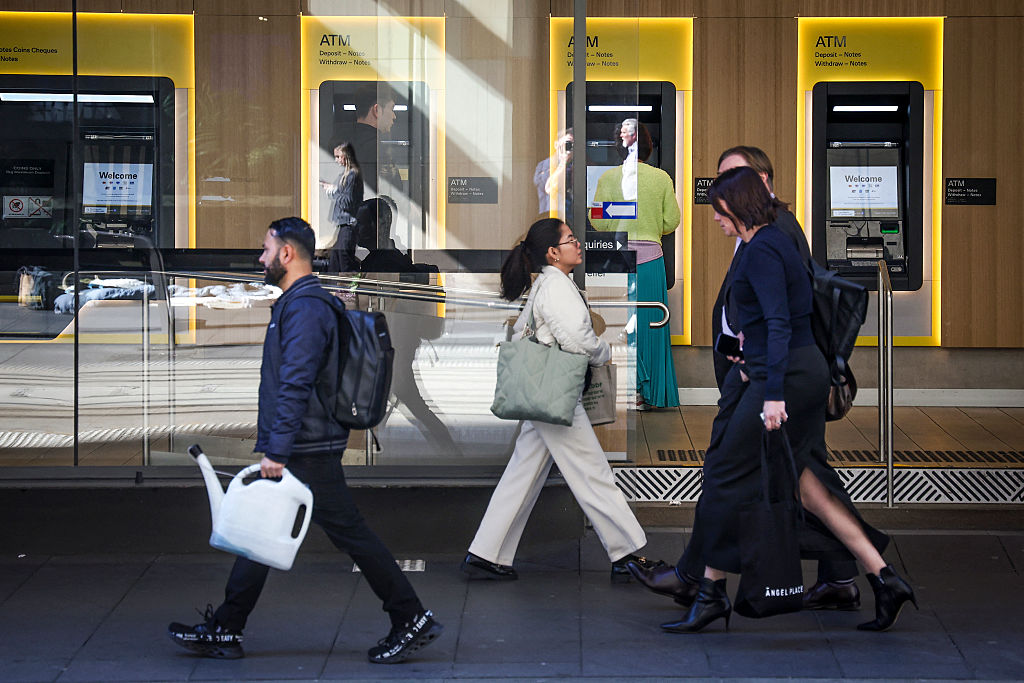
SYDNEY — Commonwealth Bank of Australia shares rose modestly Tuesday, trading around $160.97 as the country’s biggest lender continued to demonstrate resilience in a challenging economic environment marked by moderating growth and persistent inflation pressures.
The modest 0.15 percent gain reflected steady investor confidence in the bank’s diversified business model and strong capital position. Commonwealth Bank, a cornerstone of the Australian financial system, reported solid performance in recent periods despite headwinds from higher interest rates and cost-of-living challenges affecting customers.
The bank has navigated a complex operating landscape with disciplined cost management and focus on core lending activities. Home loans remain a significant contributor, though lending growth has moderated in line with broader market trends as the Reserve Bank of Australia maintained a cautious stance on monetary policy.
Commonwealth Bank’s wealth management and institutional banking arms have provided diversification benefits. Fee income from funds management and advisory services has helped offset pressure in traditional net interest margins.
Analysts note the bank’s conservative provisioning and strong balance sheet as key strengths. Capital ratios exceed regulatory requirements, providing flexibility for dividends, share buybacks and potential acquisitions.
Tuesday’s trading occurred amid broader market attention on Australian banks. While some peers faced specific challenges, Commonwealth Bank benefited from its market leadership and operational scale.
The Australian economy has shown mixed signals. Employment remains relatively robust, but consumer spending has softened amid high interest rates and inflation. Commonwealth Bank economists have highlighted risks from global uncertainties, including trade tensions and commodity price volatility.
The bank’s digital transformation initiatives continue to drive efficiency. Mobile banking usage and self-service tools have reduced branch traffic while improving customer satisfaction metrics.
Commonwealth Bank maintains a significant presence in New Zealand through its ASB subsidiary. Cross-border operations provide additional revenue streams and geographic diversification.
Sustainability efforts have gained prominence. The bank has outlined targets for emissions reduction in lending portfolios and increased financing for renewable energy projects.
Investor returns include consistent dividends, a hallmark of Australian bank stocks. Franked dividends provide tax advantages for domestic shareholders, supporting demand.
Tuesday’s modest advance contributed to a stable session for financial stocks. Broader market indices showed limited movement as traders assessed economic data releases.
Commonwealth Bank’s size and systemic importance subject it to heightened regulatory scrutiny. Compliance with evolving capital and conduct standards remains a priority for management.
Competition in the banking sector has intensified with digital challengers and fintech entrants. Commonwealth Bank counters with its scale advantages and comprehensive product offerings.
Recent results highlighted resilience in mortgage books despite rate pressures. Arrears rates remain manageable, supported by conservative lending standards.
The bank’s institutional division benefits from Australia’s resource exports. Financing for mining and energy projects provides stable revenue, though transition risks are monitored closely.
Wealth management operations face industry-wide margin compression but benefit from superannuation growth in Australia. Funds under management have expanded with market recovery.
Tuesday’s price action around $160.97 reflected balanced trading. Volume was in line with averages as institutional investors adjusted positions.
Longer-term, analysts project modest earnings growth for Commonwealth Bank. Dividend sustainability and capital returns support valuation in a low-growth environment.
Economic forecasts from the bank itself point to gradual easing of inflation and potential rate cuts later in the year. Such developments could support lending volumes and asset quality.
Commonwealth Bank plays a vital role in the Australian economy, providing credit to households and businesses. Its stability contributes to overall financial system confidence.
Corporate governance practices at the bank align with best standards. Board oversight and executive compensation structures emphasize long-term performance.
Community initiatives include financial literacy programs and support for small businesses. These efforts enhance brand reputation beyond commercial activities.
As one of the “Big Four” Australian banks, Commonwealth Bank influences lending standards and market dynamics. Its decisions often set benchmarks for the sector.
Tuesday’s trading contributed to a constructive tone for bank stocks. Sector performance remains tied to interest rate expectations and economic indicators.
Investors continue monitoring housing market trends. Property prices and construction activity impact mortgage demand and credit quality.
Commonwealth Bank’s technology investments position it for efficiency gains. Cloud migration and data analytics enhance risk management and customer personalization.
The bank’s international operations, while smaller, provide exposure to growth markets. Strategic partnerships expand capabilities without excessive capital commitment.
Tuesday’s modest gain underscored steady investor appetite for defensive financial names. Commonwealth Bank offers yield and stability in uncertain times.
Broader Australian market context includes commodity prices and trade relations. China remains a key partner, with implications for resource sectors and bank exposures.
Commonwealth Bank maintains conservative guidance, prioritizing risk management over aggressive expansion. This approach has served shareholders well through economic cycles.
As the fiscal year progresses, attention turns to half-year results and dividend announcements. Consistent payouts remain a core attraction for income investors.
The bank’s role in the payments ecosystem grows with digital adoption. Commonwealth Bank processes significant transaction volumes daily, generating fee income.
Sustainability reporting highlights progress on climate commitments. Financed emissions reduction targets align with international standards.
Tuesday’s session reflected typical midweek dynamics with limited volatility. Commonwealth Bank’s performance aligned with sector peers.
Market participants will await further economic data for directional cues. Inflation readings and employment figures influence rate expectations.
Commonwealth Bank exemplifies stability in Australian finance. Its scale, brand and execution provide a foundation for sustained performance.
The bank’s customer-centric approach supports deposit gathering and cross-selling opportunities. Digital channels enhance accessibility while maintaining service quality.
As Australia navigates economic normalization, Commonwealth Bank is well-positioned to support recovery through prudent lending.
Tuesday’s advance to around $160.97 added to year-to-date gains. The stock offers a blend of income and modest growth potential.
Investor sentiment remains constructive on major banks despite regulatory and competitive pressures. Commonwealth Bank’s leadership position reinforces confidence.
The Australian banking sector contributes significantly to GDP and employment. Commonwealth Bank’s success benefits stakeholders across the economy.
As trading concluded, shares held modest gains. The session highlighted resilience amid broader market considerations.
Commonwealth Bank continues focusing on core strengths while adapting to evolving customer needs and regulatory requirements. Its trajectory supports long-term value creation.
(Word count: approximately 1,015)
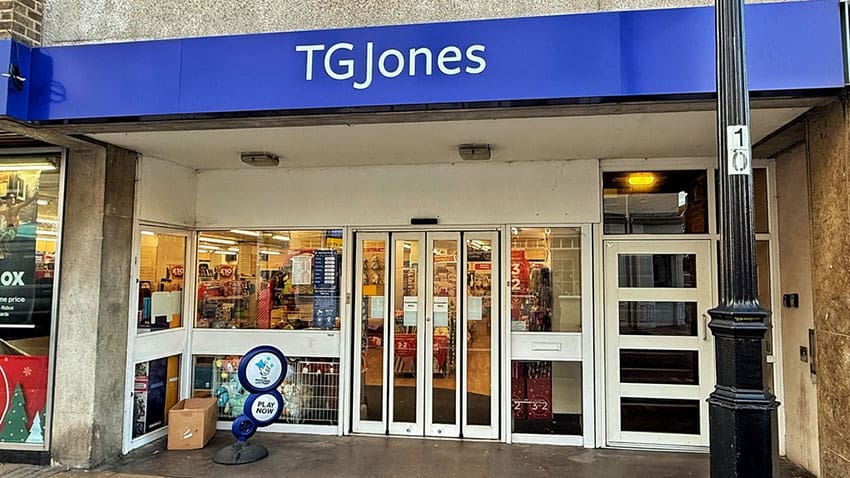
The owner of TG Jones, the business carved out of WH Smith’s old high street estate, has secured High Court approval for a sweeping restructuring that will close up to 150 shops and impose steep rent cuts across most of the stores that remain.
Modella Capital acquired the chain last year and rebranded it as TG Jones, stripped of the name it had traded under for more than two centuries after WH Smith sold its loss-making bricks-and-mortar arm to focus on travel retail. The chain currently runs 451 shops and employs 4,700 people. WH Smith’s travel outlets in railway stations and airports were not part of the deal, and the group retained the rights to the historic brand.
Less than a year on, Modella has pushed through a radical rescue plan, blaming “challenging retail conditions”. Alongside the closures, roughly 120 landlords will receive no rent for up to three years, while rents on hundreds of other shops will be cut by between 15 per cent and 75 per cent. Modella says the plan is essential to the survival of the business and that some of the savings will be reinvested in stores as part of a wider turnaround.
The High Court heard this week that the retailer was on the brink of insolvency, facing a cash shortfall of nearly £8m by the end of the week unless the deal was waved through. Tom Smith KC, for TG Jones, told the hearing the business was “highly distressed” and “running on fumes at the moment”. He said it would have run out of cash in April but for a £10m loan from Modella and the deferral of liabilities, including a large tax bill owed to HMRC.
Modella laid part of the blame on years of underinvestment by the chain’s previous owners, arguing that long-term sales had been in decline. It also pointed to current trading pressures and the loss of the WH Smith name, echoing the strains the business flagged earlier this year when TG Jones faced a bailiff threat over unpaid tax and business rates.
The proposals drew considerable opposition, led by property group British Land, which branded them “fundamentally unfair”. Modella sweetened the terms with a series of concessions, persuading British Land to drop its challenge. Many suppliers are also absorbing a significant financial hit.
The plan forecasts that TG Jones will end up with around 302 shops, depending on how many landlords choose to terminate their leases rather than accept reduced rents.
The judge, Mr Justice Hildyard, had to weigh whether the restructuring was fair, and in particular whether creditors would be no worse off under the plan than in an administration, the central test for a restructuring plan of this kind under the Companies Act. He gave the plan the green light this morning, describing it in a summary of his judgment as “complex in their terms and far-reaching in their effect”.
He said he had been most troubled by the potential impact on landlords, but was ultimately persuaded that the deal was “objectively, the lesser of two evils” flowing from the company’s “trading failures and financial predicaments”.
Alex Willson, chief executive of TG Jones, welcomed the ruling. “This decision allows us to move ahead with our turnaround strategy,” he said. “The plan protects the substantial core of the store estate and makes TG Jones a stronger, more sustainable business. We are incredibly grateful to all the colleagues, partners and stakeholders who engaged constructively throughout the process, and to Modella Capital for its continued financial commitment.”
The ruling lands against a punishing backdrop for physical retail. The Centre for Retail Research, which tracks the scale of store closures and job losses across the UK high street, has warned that closures are running at their highest level in years as rising costs, higher business rates and weak footfall continue to erode the case for large store estates. The pressure has been building across the sector, with business rates repeatedly cited as a driver of accelerating high street closures.

Amy Ingham
Amy is a newly qualified journalist specialising in business journalism at Business Matters with responsibility for news content for what is now the UK’s largest print and online source of current business news.
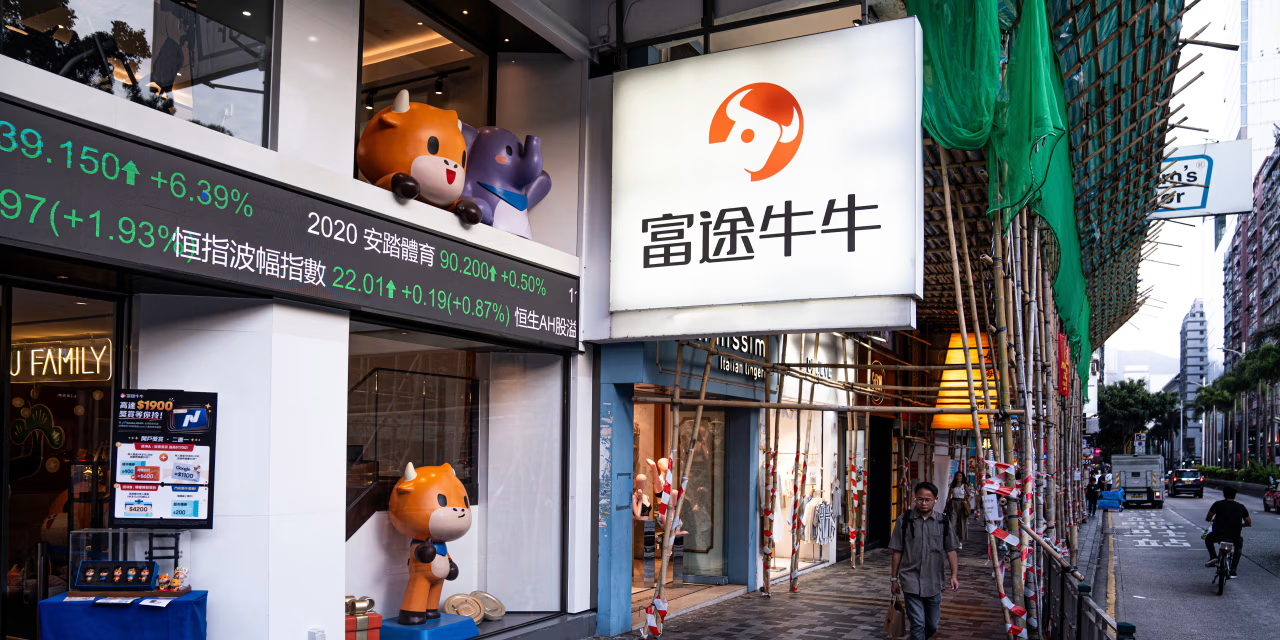
Mystery traders used advance knowledge of a Chinese brokerage crackdown to make more than $100 million in profit from well-timed options trades, one of the world’s biggest electronic-trading firms alleged in a lawsuit.
Two units of Susquehanna International Group filed the lawsuit in federal court in New York on Monday, naming up to 100 “John Does” as the defendants.
Copyright ©2026 Dow Jones & Company, Inc. All Rights Reserved. 87990cbe856818d5eddac44c7b1cdeb8

Franklin Resources, Inc. [NYSE:BEN] is a global investment management organization with subsidiaries operating as Franklin Templeton and serving clients in over 150 countries. Franklin Templeton’s mission is to help clients achieve better outcomes through investment management expertise, wealth management and technology solutions. Through its specialist investment managers, the company offers specialization on a global scale, bringing extensive capabilities in fixed income, equity, alternatives and multi-asset solutions. With more than 1,300 investment professionals, and offices in major financial markets around the world, the California-based company has over 75 years of investment experience and over $1.4 trillion in assets under management as of June 30, 2023. For more information, please visit franklintempleton.com and follow us on LinkedIn, Twitter and Facebook.

Coforge shares surged around 5%, while Infosys, Mphasis, HCL Tech and Persistent Systems gained about 4% each. LTI Mindtree and TCS advanced nearly 3% apiece, while Tech Mahindra and Oracle Financial Services rose around 2%. Wipro added nearly 1% in early trade.
The Nifty IT index climbed nearly 940 points, or about 4%, to 26,710. The rebound follows a nearly 7% decline over the previous four sessions, during which the index had fallen to a fresh 52-week low of 25,699 on Wednesday.
Why are IT stocks rising today?
US Federal Reserve Chair Kevin Warsh said inflation expectations and risks have eased in recent weeks. He added that he would stick firmly to the US central bank’s 2% inflation target and disappoint anyone expecting a looser monetary policy stance.”If people thought this central bank was going to be comfortable with an inflation objective above 2%, they would be disappointed,” Warsh told a European Central Bank panel in Sintra, Portugal. “We have been an independent central bank for a long time. We are going to be an independent central bank at this moment, and you will see no changes on that.”
His comments come as global investors remain concerned about the possibility of multiple rate hikes by the US central bank following its hawkish tone at the last policy meeting. In the first FOMC meeting under Warsh’s tenure, the Fed acknowledged that inflation remained “elevated relative to the Committee’s 2% goal”, attributing it in part to supply shocks that had driven price increases in certain sectors, including energy.
Also read: US Federal Reserve chair Kevin Warsh says he will stick by 2% inflation target, vows to bring in real-time economic data for making interest rate decisions
IT companies derive a significant portion of their revenue from the North American market. Rate hikes or a spike in inflation in the US can weigh on discretionary spending, which, in turn, may affect the sector’s growth prospects.Today’s rally in IT stocks came after Warsh’s comments offered some relief to investors. Traders are now pricing in roughly a 64% probability of a rate hike in September, according to the CME FedWatch Tool.
Nomura expects IT firms to see ‘anaemic’ growth in FY27
While Nomura believes the long-term addressable market for Indian IT companies will continue to expand, it expects near-term growth to remain anaemic. In its latest note, the brokerage said Indian IT services firms, especially large-cap players, are facing a “perfect storm of two key headwinds”.
The first is macro uncertainty stemming from geopolitical tensions in the Middle East and the outlook for interest rates, particularly in the US, which is keeping client spending subdued at the margin.
Nomura also noted that when clients’ technology spending is not growing, competition among IT services companies intensifies, with the economic gains from AI being passed on to customers. With firms such as Accenture indicating that the impact of the conflict on growth could persist in the near term, the brokerage expects FY27 to remain another subdued year for the sector.
The international brokerage expects the upcoming earnings season to be subdued for IT companies, with most large-cap players likely to report weak quarterly growth. It expects Wipro to post the weakest performance, with revenue declining 1.3%, while Tech Mahindra is projected to lead the pack with 1% growth.
“We expect mid-caps, in general, to continue posting stronger growth than large caps. We do not expect any changes to the annual guidance from Infosys and HCL Tech, and expect Wipro to guide for -1% to +1% revenue growth in Q2 FY27,” it added.
Nomura has lowered its revenue growth estimates by 100-200 basis points for FY27 and FY28.
(With inputs from agencies)
(Disclaimer: Recommendations, suggestions, views and opinions expressed by experts are their own and do not represent the views of The Economic Times)

SoftBank’s LY, Bain raise Kakaku bid again with $4.1 billion valuation
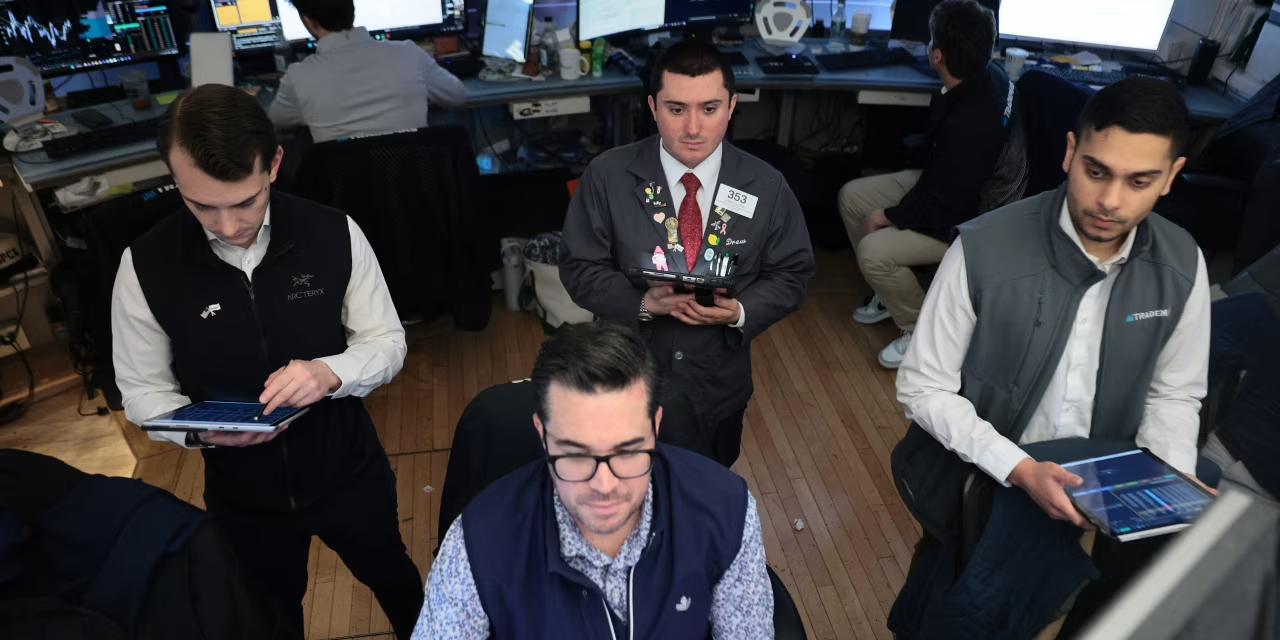
U.S. stocks are set to close out a blockbuster quarter with fresh momentum.
Major indexes are marching toward their best quarterly gains in years. The S&P 500 was up 14% through Monday, and the Nasdaq had jumped 20%-the biggest quarterly rallies for both since the second quarter of 2020.
Copyright ©2026 Dow Jones & Company, Inc. All Rights Reserved. 87990cbe856818d5eddac44c7b1cdeb8
Business
From deep correction to fresh peaks: 10 stocks soar from 52-week lows to new highs in just three months

Pidilite Industries, makers of Fevicol and FeviQuick adhesives, hit a 52-week high of ₹1,620 on June 25 from a low of ₹1,259.5 on April 06 driven by a revival in sales volume across retail and industrial markets in the March quarter. It also reported a 300 basis point operating margin expansion to 23% amid lower raw material costs. The stock has clocked a 26% gain so far from the lows hit in April.
 Agencies
A REVIVAL MADE IN JUST 3 MONTHS ON THE BACK OF MARCH QUARTER SIZZLE
Tata Communications has gained over 50% from the 52-week low of ₹1,323 hit on April 02 following multiple factors including expectations of growth revival in FY27 aided by improving operating leverage after net profit dropped by 21% past fiscal year, recent fund raising at attractive interest rate to fund short term requirements and positive scenario for enterprise communications demand.
Central Mine Planning & Design Institute (CMPDI), a public sector company that provides consultancy for coal and minerals mining, has undergone a major rerating. The company listed publicly on March 30 at a discount to offer price of ₹172 and sank to a 52-week low ₹150.3 on April 07. A strong fourth quarter performance and attractive valuation catapulted the stock to a peak of ₹267.9 on June 24. It currently trades at around ₹248, gaining 65% from the lows.
Amagi Media, which offers software solutions to global broadcasters and video streaming services, has also gained 65% from the 52-week low level amid expectations of a 15-20% increase in net profit for FY27.

The ‘Barron’s Roundtable’ panel discuss big-box retailers beating competition on value, their innovation and revenue models.
A new Costco warehouse and gas station are one step closer to coming to Downey, California, after city leaders approved a development agreement for the project, though not everyone is convinced the area needs another location.
The Downey City Council recently voted to move forward with plans for the new warehouse on Firestone Boulevard. City officials say the development is expected to create hundreds of jobs and generate new revenue for public services.
Mayor Pro Tem Horacio Ortiz Jr. praised the project in an Instagram post, calling it an investment in the city’s future.
“The Costco project will create hundreds of jobs, generate new revenue for essential city services, and strengthen our city’s future,” Ortiz Jr. wrote.
COSTCO ADDS FROZEN GREEK YOGURT CUPS FROM BRAND CUSTOMERS CALL ‘TOP TIER’

A man pushes a trolley outside a Costco supermarket in Los Angeles, the United States, March 14, 2020. (Xinhua/Qian Weizhong via Getty Images / Getty Images)
The announcement drew mixed reactions from residents, with several questioning why another Costco is needed when warehouses already operate in nearby cities of Norwalk and Lakewood.
“Do y’all really need a Costco when the one at Norwalk is a 15 minute drive away?” one commenter wrote.
Another added, “We want a Trader Joe’s not another Costco.”
Others welcomed the project, arguing nearby Costco locations are often overcrowded and difficult to navigate.
COSTCO SHOPPERS STOCK UP ON CULT-FAVORITE COOKIES AS DEMAND SURGES NATIONWIDE

A Costco store in Vallejo, California, on Thursday, May 29, 2025. (David Paul Morris/Bloomberg / Getty Images)
“The Norwalk Costco has been a nightmare since they redid the parking lot,” another resident wrote. “Happy to welcome one to Downey.”
According to local reports, the project includes relocating the existing Downey Nissan dealership before construction begins on the new Costco. The warehouse and gas station would be built on roughly 13.6 acres that include the former All American Home Center site and the current dealership property.
| Ticker | Security | Last | Change | Change % |
|---|---|---|---|---|
| COST | COSTCO WHOLESALE CORP. | 924.67 | -10.80 | -1.15% |
GET FOX BUSINESS ON THE GO BY CLICKING HERE
The redevelopment package is expected to cost about $10.5 million and involves Costco Wholesale Corp., Downey Nissan and the owners of the surrounding properties.
The retailer still faces several steps before construction can begin. The project must complete a California Environmental Quality Act review and the city’s entitlement process, which officials expect to take up to a year. Construction of the relocated dealership and the new Costco warehouse would follow, putting the store’s opening several years away.

ASX 200 Hovers Near Flat in Thin Trade as RBA Hawkish Signal and Weak U.S. Futures Weigh on Sentiment

KOSPI Drops Below 8,000, Triggers Yet Another 2026 Trading Halt

Mexico fans celebrating World Cup win against Ecuador cause ‘artificial’ earthquake


-

 Fashion5 days ago
Weekend Open Thread: Staud – Corporette.com
-

 Politics6 days ago
The House | Manchesterism won’t survive the painful trade-offs unless it gets citizens on board
-

 Crypto World2 days ago
Strategy authorizes up to $1.25B in Bitcoin sales under new capital plan
-

 Politics6 days ago
Potential 2028er World Cup attendee leaderboard
-

 Business6 days ago
Asia stock markets slide as tech shares slump
-

 News Videos3 days ago
MAJOR BITCOIN & MARKET UPDATE!!!! (MUST WATCH ASAP!!!)
-

 Tech6 days ago
A Look At A Gaggle Of Transputer Boards
-
 Crypto World6 days ago
Dell (DELL) Shares Tumble Over 5% Following Analyst Downgrade to Hold
-

 Crypto World5 days ago
Coinbase, Circle Deepen Crypto Stock Losses Despite Resilient S&P 500
-

 Business2 days ago
Australia treasurer says alleged access of prime minister’s bank data ’incredibly concerning’
-

 Crypto World5 days ago
Kraken's xStocks Opens Bending Spoons IPO Registration to EEA Retail
-

 Sports5 days ago
FIH Pro League: India defeat Pakistan 7-1, register biggest win of campaign | Other Sports News
-

 Crypto World6 days ago
Bitcoin Sparks $600M Hourly Liquidations With $65,000 Set To Become Resistance
-

 Tech4 days ago
Bluekit phishing kit adopts browser-in-the-middle for login theft
-

 Tech2 days ago
Anonymous researcher drops 0-day ‘exploitarium’ repo
-

 Tech5 days ago
Russian hackers now target Signal backup recovery keys
-
 Crypto World6 days ago
Hyperliquid Named on Singapore MAS Investor Alert Register
-

 Crypto World6 days ago
RTX holders must register wallets before token distribution begins
-

 Sports16 hours ago
Broncos roster: OL Ben Powers (No. 74) entering final year of contract
-
 Business2 days ago
The AI boom won’t burst all at once. It will pop in ‘rolling bubbles’: Macquarie
You must be logged in to post a comment Login