
Business
Oil rises as uncertainty continues over reopening of Strait




Japan’s executives call for FX stability as weak yen intensify import-cost pressure

SK Hynix bear flag 80% done, tests Fibonacci support: Live levels
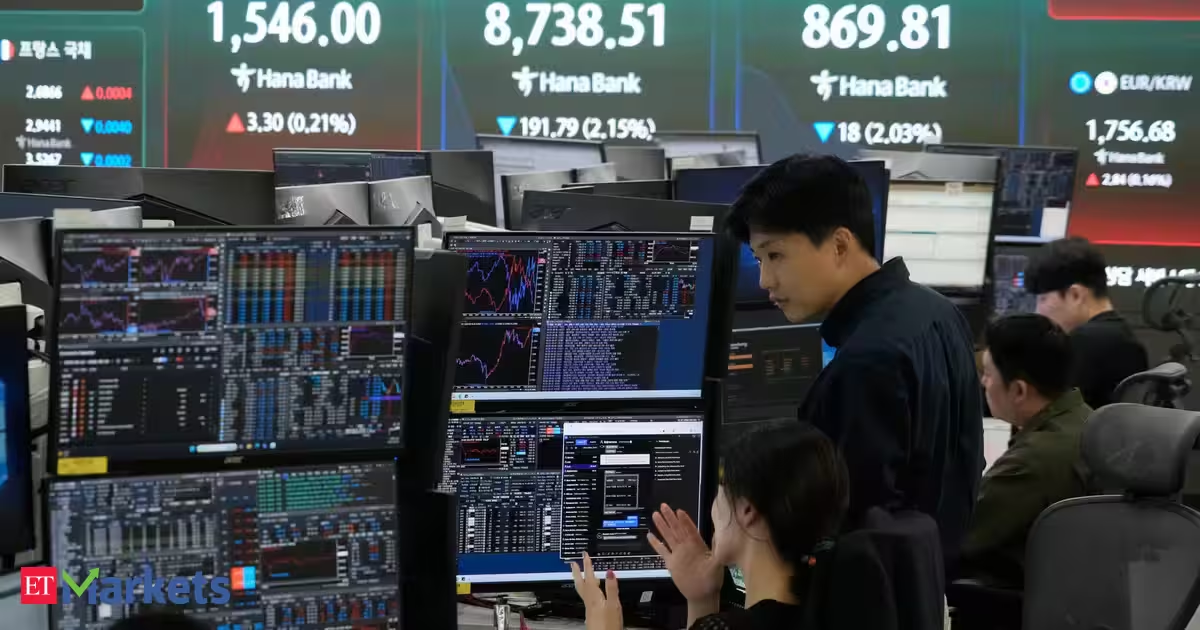
Iran said on Sunday that a deal with Oman defining new shipping lanes in the Strait of Hormuz was in its final stages but reiterated that the waterway would only reopen once the United States met other conditions.
Brent crude added 0.9% to $84.32 a barrel as shipping through the vital waterway remained at a trickle, while U.S. crude rose 0.7% to $78.74 a barrel.
The latest revival in fuel costs raises the stakes for the U.S. July consumer price report due on Wednesday where analysts look for a rise of 0.1% in the headline and 0.2% for the core.
Any upside surprise could rekindle speculation of a hike from the Federal Reserve next month.

Read more: FPIs turn buyers in IT stocks for first time in 2026, invest Rs 3,358 crore in July
“Our forecast for core CPI of 0.22% is probably not quite firm enough to prompt a hike from the Fed at the September meeting, though repeated prints closer to 0.3% could do it,” said Michael Feroli, chief U.S. economist at JPMorgan.”One thing we are watching for is any rebound in core goods prices after a two-month stretch in which they fell.”
The futures market has scaled back the chance of a September move to around 44%, from 67% a week ago.
The pullback in rate risk helped Treasuries rally on Friday and saw Wall Street close at record highs. Japan’s Nikkei followed that lead and rose 0.6% on Monday, while South Korea added 0.5%.
MSCI’s broadest index of Asia-Pacific shares outside Japan edged up 0.3%.
DOUBLE-DIGIT EARNINGS GROWTH
For Europe, EUROSTOXX 50 futures and DAX futures both dipped 0.1%, while FTSE futures fell 0.4%.
S&P 500 futures dipped 0.1%, while Nasdaq futures were little changed having climbed 5% last week amid a slew of upbeat earnings reports.
Analysts at BofA noted that with nearly 90% of S&P 500 results in, earnings per share were up 30% on the year after excluding investment gains at Alphabet and Amazon. A 76% EPS beat rate matched the strongest level since 2021.
“AI remains the stand out, with median EPS growth of 28% versus 12% for non-AI related stocks, though consensus expects AI to slow to 16% next quarter,” they said in a note.
Earnings are lighter this week but include semiconductor company Applied Materials, networking equipment maker Cisco and cloud infrastructure technology company CoreWeave.
In bond markets, yields on 10-year Treasuries were a shade higher at 4.673% with the market bracing for $125 billion in new issuance this week.
The drop in yields and general improvement in risk had pulled the U.S. dollar broadly lower, with the euro just off a seven-week top at $1.1557.
The dollar was flat on the yen at 157.85, with investors still wary of intervention should they push the yen down too far.
In commodity markets, the drop in yields helped non-interest-paying gold hold at $4,342 an ounce, having climbed more than 7% last week.

Publicly listed Muthoot Microfin and Satin Creditcare Network — the third and fourth in ranking in terms of assets under management — have both raised growth projections by around 500 basis points, with the microfinance market getting more consolidated in favour of large non-banking financial companies-microfinance institutions (NBFC-MFIs).
“Since banks including small finance banks are downsizing their microfinance portfolio, we are witnessing a higher demand,” Satin Creditcare Network chairman HP Singh said.
Cumulative microfinance portfolio of private banks shrank about 12% in the first quarter of the fiscal to Rs 79023 crore at the end of June from Rs 89548 crore three months prior, Equifax India data showed. The cumulative microfinance portfolio of small finance banks also contracted to Rs 48759 crore from Rs 50725 crore over the same period.

Meanwhile, several smaller NBFC-MFIs have either stopped or scaled down operation in the absence of institutional support, people aware said.
Muthoot has revised the advance growth guidance to 20% from a previous projection of 12-15% while Satin revised it to 20-25% from 15-20% earlier. The country’s largest NBFC-MFI CreditAccess Grameen is also chasing a 20-25% growth.
“The smaller MFIs are shrinking in the absence of liberal bank funding which is an essential raw material. This gap can be filled by larger, well capitalised firms,” Muthoot Microfin chief executive officer Sadaf Sayeed said.
The renewed stability in the microfinance sector also brings comfort to the bigger MFIs. The sector has shown sequential improvement in asset quality for the past few quarters with the implementation of stricter lending guardrails.
Till December last year, the sector’s gross portfolio continued to shrink from the record peak of Rs 4.43 lakh crore seen as on end-March 2024 as lenders followed risk-off strategy as overleveraged borrowers defaulted en masse. The March quarter saw a rebound but the concerns over irregular rainfall amid a traditionally weak first quarter led to a dip again overall.
CreditAccess Grameen managing director Ganesh Narayanan said that the firm may likely to remain within the projected growth range with respect to growth, while expecting higher growth in the typically business third and fourth quarter.


With combined experience of covering technology companies on Wall Street and working in Silicon Valley, and serving as an outside adviser to several seed-round startups, Gary Alexander has exposure to many of the themes shaping the industry today. He has been a regular contributor on Seeking Alpha since 2017. He has been quoted in many web publications and his articles are syndicated to company pages in popular trading apps like Robinhood.
Analyst’s Disclosure: I/we have a beneficial long position in the shares of QSR either through stock ownership, options, or other derivatives. I wrote this article myself, and it expresses my own opinions. I am not receiving compensation for it (other than from Seeking Alpha). I have no business relationship with any company whose stock is mentioned in this article.
Seeking Alpha’s Disclosure: Past performance is no guarantee of future results. No recommendation or advice is being given as to whether any investment is suitable for a particular investor. Any views or opinions expressed above may not reflect those of Seeking Alpha as a whole. Seeking Alpha is not a licensed securities dealer, broker or US investment adviser or investment bank. Our analysts are third party authors that include both professional investors and individual investors who may not be licensed or certified by any institute or regulatory body.
 Agencies
Long-term Bet Its Truenat platform and rising global reach offer room for sustained growth
Business
Incorporated in 2000, Molbio is engaged in research, development and manufacturing of diagnostic solutions for infectious and non-communicable diseases. Government and international aid agencies account for over four-fifth of its revenue.
It has developed ‘Truenat’ platform, a portable diagnostics system designed for resource-limited settings, offering accurate test results within an hour. It offers molecular testing solutions for over 30 diseases through 43 diagnostic assays and provides radiology, digital pathology, and breast health screening solutions through its subsidiaries and strategic collaborations.
Nearly 74% of the revenue comes from sale of test kits, out of which 70% comes from diagnostic test kits for Tuberculosis.
Read more: Molbio Diagnostics collects Rs 281 cr from anchor investors ahead of IPO
Financials
Revenue from operations rose 31.5% annually to ₹1,445.7 crore and net profit grew 40.2% annually to ₹164.1 crore between FY24 and FY26. Operating profit before interest, tax, depreciation and amortisation (Ebitda) rose 33.2% to ₹328.2 crore during the period. Ebitda margin grew to 22.6% in FY26 from 22% in FY24. In FY26, on a year-on-year basis, revenue jumped 41.7%, Ebitda rose 27.9% while net profit grew 18.4%.
Valuation
Considering the post-IPO equity and net profit for FY26, the company demands a price-earnings (P/E) multiple of upto 57. While it has no directly comparable listed peer in India, other healthcare diagnostics and medical device companies, including Poly Medicure, Dr. Lal PathLabs, Metropolis Healthcare, and Vijaya Diagnostic Centre, trade at P/E multiples between 54 and 81.

The finance ministry has scheduled the annual two-day PSB Manthan with all public sector lenders on August 17 and 18 in New Delhi. Finance minister Nirmala Sitharaman will meet bankers and review their proposals on August 18, senior bankers said.
Also read: Indian banks’ new hunt for diaspora dollars pumps up loans markets
The meeting will also focus on improving deposit mobilisation, encouraging investors to set up global capability centres in India, strengthening the flow of funds to medium and small enterprises, and helping scale the agriculture and horticulture sector, they said.
ET BureauPSB Manthan is on: Govt, public banks to also discuss ways to improve deposit mobilisation, MSME credit on Aug 17-18
The meeting will be attended by the chiefs of all PSU banks, led by State Bank of India chairman CS Setty. The heads of the National Bank for Financing Infrastructure and Development, Power Finance Corporation, National Housing Bank and Small Industries Development Bank of India, among others, will also attend.
Economists said fresh foreign capital inflows would help build foreign exchange reserves, boost domestic manufacturing and support long-term economic growth.
Lenders will also discuss ways to improve deposit mobilisation which continues to lag credit growth. Latest data released by the Reserve Bank of India for July 15 show bank deposits rose 12.7% while credit grew 17.7% from a year earlier.Foreign capital is essential as India runs a current-account deficit (CAD), which implies that gross domestic savings are not enough to fund domestic investment.
“A growth cycle which is led by investment tends to last longer as it creates capacity and jobs. In FY26, CAD was 0.6% of GDP which is expected to widen to 1.5% to 1.7% of GDP in FY27 due to elevated crude oil prices,” said IDFC First Bank chief economist Gaura Sengupta. “Even China in its initial high-growth phase was critically dependent on FDI to build its domestic manufacturing,” she added.
To encourage foreign currency inflows, the RBI on June 5 announced a dollar-swap facility at concessional rates on foreign currency deposits and external commercial borrowings raised by state-run lenders. India attracted $40 billion in foreign currency inflows, with FCNR deposits alone contributing $36 billion, under this programme until July 30, according to the government.
However, FCNR deposits can only help slow the pace of depreciation of the rupee, which fell 11% in FY26.
“FCNR deposits can’t be used frequently to attract capital. Hence, it’s important to build other more stable forms of foreign capital such as foreign direct investments,” said Sengupta. “Moreover, the FCNR deposit inflows will mature after three to five years. India will need to build forex reserves to pay dollars when these deposits mature.”
A stable currency is positive for foreign investment as it protects returns in dollar terms.
Speaking to the media soon after announcing the monetary policy last week, RBI governor Sanjay Malhotra said FDI is certainly more durable, sticky and preferable. The government is taking several steps, including signing trade agreements, which will indirectly help attract investments, he said.


David focuses on growth & momentum stocks that are reasonably priced and likely to outperform the market over the long-term. He is a long term investor of quality stocks and uses options for strategy. David told investors to buy in March 2009 at the bottom of the financial crisis. The S&P 500 increased 367% and the Nasdaq increased 685% from 2009 through 2019. He wants to help make people money by investing in high-quality growth stocks.
Analyst’s Disclosure: I/we have no stock, option or similar derivative position in any of the companies mentioned, and no plans to initiate any such positions within the next 72 hours. I wrote this article myself, and it expresses my own opinions. I am not receiving compensation for it (other than from Seeking Alpha). I have no business relationship with any company whose stock is mentioned in this article.
The article is for informational purposes only (not a solicitation or recommendation to buy or sell stocks). David is not a registered investment adviser. Investors should do their own research or consult a financial adviser to determine what investments are appropriate for their individual situation. This article expresses my opinions, and I cannot guarantee that the information/results will be accurate. Investing in stocks involves risk and could result in losses.
Seeking Alpha’s Disclosure: Past performance is no guarantee of future results. No recommendation or advice is being given as to whether any investment is suitable for a particular investor. Any views or opinions expressed above may not reflect those of Seeking Alpha as a whole. Seeking Alpha is not a licensed securities dealer, broker or US investment adviser or investment bank. Our analysts are third party authors that include both professional investors and individual investors who may not be licensed or certified by any institute or regulatory body.

In the year-ago quarter, ARCs had bought non-performing assets with an outstanding value of ₹16,876 crore. Last quarter’s figure is almost double the ₹13,852 crore acquired in the first quarter of FY25.
The increase in ARC activity comes even as the overall asset quality of banks has improved significantly. The gross non-performing asset (GNPA) ratio of the banking system fell to 1.8% in FY26 from 2.8% in FY24.
Bad loans sold to ARCs have risen despite a decline in banks’ overall bad loan ratio, as a large portion of the loans sold are legacy stressed assets that lenders have been trying to resolve for several years.
The sharp decline in reported bad loans may not fully reflect the actual position, according to a white paper released in February this year by Great Lakes Institute of Management on their website, which said gross NPLs fell to 2.2% of advances in 2025 from 11.2% in 2018 partly due to fewer fresh slippages and because banks wrote off bad loans.
As of March 2025, gross NPLs stood at ₹4.32 lakh crore, while written-off loans were ₹7.88 lakh crore. Including both, the paper said that the banking system’s stressed-loan stock stood at ₹12.20 lakh crore.
Bad loan sales have also risen due to a larger number of transactions now being done in cash, with some deals involving ARCs paying the entire purchase consideration upfront or transactions structured through security receipts (SRs), where the payment is split between cash and SRs, with the proportion of cash being higher.
FPIs turned net buyers of equities worth ₹4,640 crore in the second half of July, adding to ₹15,560 crore in the first fortnight, according to NSDL data. July was only the second month of net inflows since February.
Agenciesjuly 16-31 trades Overseas investors cautiously broaden their buying beyond frontline stocks, with consumer durables and healthcare among the beneficiaries
“It seems like money is slowly moving into broad markets from the index heavyweights,” said Pankaj Pandey, head of fundamental research at ICICI Direct, pointing to Nifty hovering around 24,000 while midcap and smallcap indices scaled fresh highs. The Nifty 50 and Sensex gained nearly 2.1% each in July, while the Nifty Midcap 150 and Smallcap 250 rose 1.6% and 1.1% respectively.Read more: FPIs, trading companies tap Sebi, centre for tax breather
FPIs also remained net buyers in consumer services, automobiles & auto components, construction materials and chemicals, with purchases ranging between ₹532 crore and ₹2,840 crore in the July 16-31 period.
“Domestic demand remains the clearest theme based on the latest trend,” said Raj Gaikar, research analyst at Samco Securities, referring to flows into consumer durables, consumer services and healthcare for three consecutive fortnights.
FPIs, however, sold shares worth between ₹1,056 crore and ₹3,618 crore in metals & mining, power, construction, financial services, telecom and capital goods. Selling in financial services came after two fortnights of buying in June and early July.
Vikas Gupta, CEO at OmniScience Capital, said the shift may reflect tactical trades. “The current selling of financial services and buying into IT could be reflecting a short-term trade. There is significant uncertainty about medium-term revenues and profits of IT companies, while financial services show clearer growth visibility.”
Gaikar said while pressure in IT has eased, he would wait a few more fortnights before calling a bottom for these stocks.

Becky Hammon defends Aces stars sitting out during back-to-back game

The $1,500 flagship might be closer than you think

Financial Audit’s Biggest R*tards


-

 Fashion3 days ago
Frugal Friday’s Workwear Report: Cap-Sleeve Pointelle Crewneck Sweater
-

 Fashion2 days ago
Weekend Open Thread: Mattifying Sunscreen
-

 Business7 days ago
DTCR: Deleveraging And A Hedge Fund Collapse Point To A Possible AI Bottom
-

 Sports4 days ago
Jordan Coyle & Cordiamo take Laya Arena Stakes at RDS
-

 News Videos2 days ago
Can Astrology Help Find Gold and Silver Trends? A Financial Astrology Guide
-
 Crypto World6 days ago
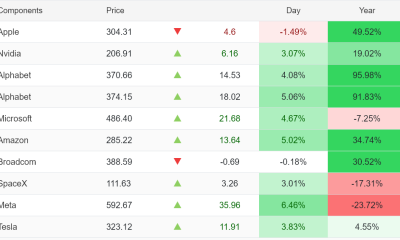
US Tech Stocks See Largest 5-Week Inflow in History: Can Nasdaq Break Its Downtrend?
-
 Business4 days ago
US stocks: Dow closes at record on Mideast optimism; SpaceX, AMD drag Nasdaq
-

 Politics4 days ago
Reform UK And Greens Sink To Lowest Favourability Ratings To Date
-

 Business5 days ago
Nvidia Stock Climbs 2.5% as Chip Sector Rally Builds Ahead of AMD Earnings, Nvidia’s Own Report Looms
-

 Crypto World5 days ago
Polymarket targets $20 billion valuation as competition heats up in prediction market sector
-

 Tech5 days ago
OpenAI, Anthropic AI agents targeted real people and systems in cyber tests
-

 Business4 days ago
Supply chain issues impact Ingredion
-

 News Videos7 days ago
#crypto #cryptocurrency #cryptonews #cuet2026 #ceuta
-

 Business7 days ago
Myspace owners announce plans to relaunch the once-popular platform
-

 News Videos7 days ago
Crypto.com Partners with UFC for UFC 331 Event
-
 Crypto World6 days ago
CLARITY Act Senate Vote Locked In, But 60-Vote Hurdle Looms Large
-

 News Videos7 days ago
Huge SPINS!! (for me) #slots #casino #gambling #money #jackpot
-

 Tech2 days ago
Rinn Pharma & Biopharma to join NordicPharmaTrain network
-

 Crypto World6 days ago
The Senate has one week: CLARITY’s last August window
-
 Crypto World6 days ago
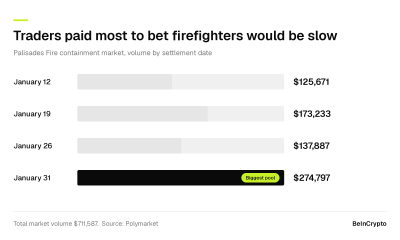
California Wildfire Bets Expose Polymarket’s Dark Side
You must be logged in to post a comment Login