
Business
Parkd Azzurri deal paves data centre road




Bosses at South East Water are grilled over failures that left thousands without water over winter.

NEW YORK — Shares of Robinhood Markets Inc. jumped more than 10% in early trading Tuesday as investors positioned for the company’s upcoming first-quarter 2026 earnings and bet on continued strength in cryptocurrency trading volumes and expanding product offerings.

Robinhood Markets (NASDAQ: HOOD) stock was trading at $78.90, up $7.23 or 10.09%, shortly after the market open on April 14, 2026. The sharp rally came on elevated volume, reflecting renewed enthusiasm for the retail brokerage platform amid recovering crypto markets and anticipation ahead of its April 28 earnings release.
The Menlo Park, California-based company, known for democratizing access to stocks, options and cryptocurrencies, has transformed from a commission-free trading app into a broader financial ecosystem. Its growth has been fueled by rising user engagement, premium Robinhood Gold subscriptions and strategic moves into crypto and prediction markets.
Robinhood is scheduled to report first-quarter 2026 results after the market close on April 28, with a video webcast featuring Chairman and CEO Vlad Tenev and CFO Shiv Verma set for 5 p.m. ET. Analysts expect the report to highlight sustained momentum in funded accounts, assets under custody and transaction-based revenues, particularly from crypto.
Recent monthly metrics have shown resilience. In March 2026, Robinhood reported strong trading volumes, with notional equity and options activity remaining elevated. Crypto trading has been a standout performer, with January 2026 volumes reaching $22.9 billion, up 8% sequentially and 12% year-over-year. The company’s acquisition of Bitstamp has expanded its international crypto footprint and added institutional capabilities.
Robinhood has also deepened ties to the crypto ecosystem. In early April 2026, the U.S. Treasury selected Robinhood alongside BNY Mellon to serve as brokerage and trustee for the Trump Accounts program, a government-backed initiative providing investment accounts for newborns. The designation underscores Robinhood’s growing role as infrastructure in the financial system and could open new avenues for user acquisition and long-term asset growth.
The company has expanded its prediction markets business through a joint venture with Susquehanna International Group. The venture, which closed its acquisition of MIAXdx in January 2026, plans to launch a derivatives exchange offering futures and event contracts in 2026. Customer demand for prediction markets has been robust, with hundreds of millions of event contract trades executed in recent months.
Robinhood Gold, the company’s premium subscription service, continues to drive recurring revenue. Gold subscribers grew significantly in 2025, and management has highlighted higher engagement among paid users who benefit from enhanced margin rates, interest on uninvested cash and advanced research tools.
Broader diversification efforts include retirement accounts, Robinhood Strategies for managed portfolios and international expansion. The company launched a public testnet for Robinhood Chain, its Ethereum Layer 2 blockchain built on Arbitrum, aimed at enabling faster and cheaper on-chain transactions for users.
Despite the positive momentum, Robinhood has faced periods of volatility in 2026. The stock experienced a pullback earlier in the year amid broader fintech sector rotation and concerns over trading volume normalization after the 2025 crypto surge. However, analysts remain largely bullish, with consensus price targets suggesting meaningful upside. Wall Street has cited Robinhood’s ability to monetize its large user base, expand into wealth management and capitalize on crypto cycles as key drivers.
First-quarter earnings expectations center on revenue growth in the mid-teens range, with contributions from transaction fees, net interest income and Gold subscriptions. Consensus estimates project earnings per share around $0.45 to $0.49. Investors will scrutinize guidance for the remainder of 2026, particularly any commentary on crypto market trends and expense discipline.
Robinhood ended 2025 with strong financials, reporting full-year revenue up more than 50% year-over-year and generating substantial free cash flow. The company has been active in share repurchases, buying back millions of shares in recent quarters as a signal of confidence in its undervaluation.
Operational highlights include continued account growth and rising assets under custody, which approached or exceeded $300 billion in recent periods. The platform’s user-friendly interface and social features have helped it maintain appeal among younger retail investors while attracting more sophisticated traders through tools like advanced charting and futures access.
Challenges persist. Regulatory scrutiny of payment for order flow, a core part of Robinhood’s revenue model, remains a long-term risk. Competition from traditional brokers and other fintech platforms has intensified, while crypto volatility can create lumpy quarterly results. The company has also navigated macroeconomic factors, including interest rate fluctuations that affect net interest margins.
CEO Vlad Tenev has emphasized Robinhood’s evolution into a comprehensive financial services provider. In recent interviews and earnings calls, he highlighted plans to deepen crypto integration, expand internationally and build infrastructure that serves both retail and institutional clients.
Tuesday’s trading surge placed HOOD among the top percentage gainers on the Nasdaq, underscoring its high-beta nature tied to equity and crypto market sentiment. The rally appeared driven by a combination of short covering, positive sector rotation and pre-earnings positioning rather than any single new announcement.
Analysts have noted Robinhood’s improving profitability and scale as reasons for optimism. Some forecasts project continued double-digit revenue growth in 2026, supported by favorable trading conditions and market share gains. However, others caution that elevated valuations leave limited room for error if trading volumes soften or regulatory hurdles arise.
Robinhood operates in a highly competitive landscape but benefits from a large and engaged user base. Features such as 24/7 trading for certain assets, fractional shares and educational resources have helped retain customers through market cycles.
As the April 28 earnings date approaches, focus will turn to specific metrics: funded account growth, average revenue per user, crypto notional volumes and any updates on the prediction markets exchange launch. Management may also provide color on banking initiatives and potential new product rollouts.
The stock’s performance in 2026 has been mixed following a strong 2025 run, but Tuesday’s double-digit gain signals fresh investor interest. With crypto markets showing signs of stabilization and new government-backed opportunities on the horizon, Robinhood appears well-positioned to capitalize on retail participation in financial markets.
Longer-term, the company’s success will depend on executing its diversification strategy while maintaining its core strength in accessible trading. If Robinhood can sustain user growth and convert more customers to paid tiers, it could deliver consistent earnings expansion.
For now, shareholders are celebrating the morning’s momentum as the brokerage prepares to showcase its progress in two weeks. The upcoming report could serve as a pivotal moment, either reinforcing the bull case or prompting renewed caution depending on the details.
Robinhood Markets continues to redefine retail investing, blending technology, community and expanding financial products. Its ability to navigate volatility while scaling operations will determine whether the current rally marks the start of sustained gains or another chapter in its high-volatility journey.

The financial body cuts its growth forecast for the UK and warns the war threatens to throw the global economy “off course”.

Microsoft, Google shares rise on memory supply deal reports

Trucks, lorries and tractors bring traffic to a standstill in County Tyrone as protests spread outside Belfast.

Britain’s biggest bank has issued a stark warning that the war in Iran is already corroding global business confidence, as a growing chorus of UK company bosses sound the alarm over spiralling costs, supply chain disruption and the threat of renewed inflation.
Speaking at HSBC’s Global Investment Summit in Hong Kong, chief executive Georges Elhedery told Bloomberg Television that the Lebanese-born banker was “saddened and concerned” by events in the Middle East, and increasingly worried about how long the conflict will drag on. He cautioned that uncertainty had begun to weigh on sentiment and warned the ripple effects would be felt well beyond the region, pushing up the price of oil, refined fuels, fertilisers and metals.
The comments came as Brent crude, which had breached the $100 (£74) a barrel mark on Monday, slipped 0.9% to $98.50 on Tuesday morning, even as an American blockade of Iran’s ports took effect. US and Iranian negotiators are understood to be preparing to return to Islamabad this week after 21 hours of weekend talks in the Pakistani capital closed without a breakthrough.
In London, the FTSE 100 edged 22 points higher, up 0.21% to 10,605. Imperial Brands, owner of the Davidoff and West cigarette labels and a growing stable of vaping products, was among the biggest fallers after it flagged a “more uncertain geopolitical and macro environment”.
Recruiter PageGroup added to the gloom, describing conditions across Britain, Europe, the Middle East and Asia as “tough” and warning that the Middle East crisis was driving an increasingly murky outlook for the remainder of the year. The firm noted that salaries had slipped below levels seen in 2022 and 2023.
HSBC itself is among the European lenders most exposed to the region, thanks to its 31% holding in Saudi Awwal Bank. Analysts at JP Morgan Chase estimate the Middle East generates roughly 4% of the group’s pre-tax profits. However, Mr Elhedery insisted the bank had so far seen only “very benign movement” of capital out of the region, even as some wealthy Gulf-based investors have begun scouting relocation options in Singapore and Hong Kong since Washington and Israel launched strikes on Iran on 28 February.
HSBC chair Brendan Nelson, speaking alongside his chief executive, was blunter still. A peace settlement, he argued, was essential to restoring the flow of global energy supplies, with oil-driven inflation now shaping up as one of the most serious threats facing the world economy. “The longer the disruption continues, the more the indirect effects from higher energy costs will lift inflation and depress growth,” he said.
The warnings are landing hard on Britain’s small and mid-sized manufacturers, particularly those dependent on petroleum-derived inputs. Tom Beahon, co-founder and co-chief executive of sportswear firm Castore, which kits out Premier League football sides and the England cricket team, told BBC Radio 4’s Today programme that input costs had already jumped by 10% to 15%. If the conflict rumbled on for another couple of months, he said, some of that pain would have to be passed on to consumers.
For Mr Beahon, the volatility has been even more corrosive than the headline rises. Polyester and other synthetic fabric prices, he said, had at times leapt by as much as 40% in a single day before tumbling back, making it all but impossible to plan. Logistics has proved just as fraught, with carriers thinning out flight schedules and vessels still stuck in the Strait of Hormuz, though he expressed cautious optimism that a swift resolution could spare customers the worst of it.
Virgin Atlantic chief executive Corneel Koster struck a similar note in comments to the Financial Times, revealing that jet fuel prices were now running at more than double their pre-war levels. Whatever the outcome in the Gulf, he argued, a portion of the energy price shock was likely to prove permanent.
The political temperature is also rising. As chancellor Rachel Reeves flew into Washington for the spring meetings of the International Monetary Fund and the World Bank, she called for a coordinated international response, declaring that the Iran conflict “must be a line in the sand on how we deal with global crisis and instability”.
For Britain’s SME community, already navigating sticky inflation, a sluggish recovery and a tight labour market, the message from boardrooms and bank chiefs alike is unambiguous: the longer the guns sound in the Gulf, the harder it will be to shield balance sheets, margins and, ultimately, customers from the fallout.

Amy Ingham
Amy is a newly qualified journalist specialising in business journalism at Business Matters with responsibility for news content for what is now the UK’s largest print and online source of current business news.

NEW YORK — OpenAI has released its latest ChatGPT update on April 9, 2026, introducing GPT-5.3 Instant Mini as a smarter fallback model and launching a new $100-per-month Pro subscription tier, even as the company faces mounting public criticism, subscription cancellations and security concerns.

The incremental but meaningful improvements aim to enhance everyday conversations and give power users more capacity for advanced coding tasks through the Codex tool. GPT-5.3 Instant Mini replaces the previous fallback model and delivers more natural dialogue, stronger writing and better contextual awareness without appearing in the main model picker.
Users who hit rate limits on the primary GPT-5.3 Instant model will now encounter this refined mini version, which OpenAI says outperforms its predecessor across multiple use cases. The update also expands support for shared Outlook mailboxes and calendars in the Outlook Email and Calendar apps, allowing delegated access for reading, organizing, sending mail and managing events.
Simultaneously, OpenAI introduced a new $100 monthly Pro plan positioned as a direct challenge to rival Anthropic’s Claude offerings. The tier provides five times more Codex usage than the existing $20 Plus plan and includes higher overall limits for demanding professional workflows. Existing Plus and Pro users received adjustments to how Codex credits are allocated.
The April 9 rollout comes just days after OpenAI added ChatGPT integration with Apple CarPlay on April 2, enabling hands-free voice conversations while driving. Enterprise and education customers will receive the CarPlay feature in coming weeks.
These technical enhancements arrive against a backdrop of significant controversy. Reports indicate that more than 2.5 million users have either canceled their ChatGPT subscriptions or publicly pledged to stop using the service following OpenAI’s decision to integrate its models with U.S. military systems. App uninstalls reportedly spiked nearly 300% in a single day, and rival Anthropic’s Claude briefly topped the App Store charts.
Protests erupted outside OpenAI’s offices in San Francisco, reflecting broader unease about the rapid commercialization and military applications of AI technology. Some users expressed discomfort with the perceived shift from a helpful consumer tool to a platform entangled in defense contracts and aggressive monetization.
On April 10, authorities arrested 20-year-old Daniel Moreno-Gama after he allegedly threw a Molotov cocktail at OpenAI CEO Sam Altman’s San Francisco home. Investigators said the suspect believed AI posed an existential risk to humanity. The incident heightened security concerns around the company and its leadership.
OpenAI also disclosed a security issue involving a third-party developer tool called Axios that affected the code-signing process for its macOS applications. The company stated it found no evidence of user data access, system compromise or intellectual property theft, but it has taken steps to strengthen the certification process.
European Union regulators are examining whether ChatGPT should face tighter oversight under the Digital Services Act after OpenAI reported user numbers exceeding the 45 million threshold for designation as a large online platform. The potential reclassification could impose stricter content moderation and transparency requirements.
Despite the turbulence, OpenAI continues to push forward with product improvements. Recent updates to the Projects feature include deep research capabilities, voice mode support, better memory that references past chats within a project, easier sharing of project conversations and mobile enhancements such as file uploads and model selection.
ChatGPT’s model lineup in 2026 centers on the GPT-5 family. GPT-5.3 Instant serves as the default for free and paid users alike, while higher tiers gain access to more advanced “Thinking” and Pro variants with superior reasoning and coding performance. Older models, including GPT-4o and earlier GPT-5 snapshots, were retired from the consumer interface in February 2026, though many remain available via the API.
The company has been rolling out incremental refinements to tone and response quality. A March 16 update to GPT-5.3 Instant reduced overly promotional or teaser-style phrasing, aiming for more straightforward interactions. GPT-5.4 Thinking, launched in early March, combines enhanced reasoning, coding and agentic workflows for complex professional tasks.
OpenAI reported strong financial momentum earlier in 2026, announcing a massive $122 billion funding round in March to fuel the next phase of development. The company claimed revenue had reached $2 billion per month, a dramatic acceleration from $1 billion per quarter at the end of 2024.
Yet user sentiment remains mixed. Some longtime subscribers lament the retirement of favored older models like GPT-4o, which had developed a reputation for being particularly engaging or affirming. Others worry that the push toward higher-priced tiers and enterprise deals is turning ChatGPT into a less accessible tool for casual users.
OpenAI has also experimented with product discovery features that once allowed direct purchases through ChatGPT, though the company has since scaled back Instant Checkout ambitions. Advertising tests continue in the free and lower-tier plans, another point of friction for users accustomed to an ad-free experience.
On the positive side, initiatives like “ChatGPT 26” celebrate student innovators from the Class of 2026 — the first college cohort to experience higher education alongside widespread AI access. The program highlights creative and responsible uses of the technology by young people.
ChatGPT integration into everyday tools continues to expand. Beyond CarPlay, recent additions include improved support for productivity apps such as Box, Notion, Linear and Dropbox, with new actions and writing capabilities.
Speculation about GPT-6, internally referenced in some discussions as “Spud,” continues to swirl. Leaks and analyst commentary suggest it could feature a massive 2 million token context window and advanced persistent memory, though OpenAI has not confirmed a release timeline.
As competition intensifies from Anthropic, Google and open-source alternatives, OpenAI is betting that deeper integration into professional workflows, faster fallback models and premium tiers will sustain its leadership. The company maintains that its models remain the most capable for complex reasoning and coding tasks.
For millions of daily users, the April 2026 updates represent steady progress rather than revolutionary change. GPT-5.3 Instant Mini should make rate-limited sessions feel less jarring, while the new Pro plan caters to heavy users who need substantial Codex capacity for software development.
OpenAI’s release notes emphasize that these changes are designed to deliver more reliable, natural interactions while supporting focused work through enhanced Projects. Memory improvements allow chats within a project to reference previous context more effectively.
Security and ethical considerations loom large. The Axios incident and the Molotov attack underscore the intense scrutiny and real-world risks facing AI companies. OpenAI has reiterated its commitment to responsible development, though critics argue that military partnerships and rapid commercialization conflict with earlier safety-focused rhetoric.
The European Commission’s review under the Digital Services Act could force additional transparency around recommendation systems, content moderation and risk assessments for ChatGPT.
As the AI landscape evolves, ChatGPT remains the most widely used conversational interface, but its dominance is no longer unquestioned. User protests, rival gains and regulatory pressure signal a maturing market where trust, pricing and alignment with public values matter as much as raw capability.
For now, the April 9 update offers incremental reliability improvements and a new premium option for power users. Whether these steps can offset growing backlash and restore momentum will likely shape OpenAI’s trajectory through the remainder of 2026.
ChatGPT users are encouraged to check their settings for the latest model availability and subscription options. OpenAI typically rolls out updates gradually, so some features may appear over the coming days.
The company has not commented publicly on the subscription cancellation reports or protest activity beyond its standard safety and security statements. Sam Altman and other executives continue to emphasize the transformative potential of AI while acknowledging societal challenges.
With GPT-5 family models now firmly established and further advances on the horizon, ChatGPT’s evolution reflects both the promise of increasingly capable AI and the growing pains of its widespread adoption.


The restaurant chain is launching its Rainbow Sliders into freezer aisles.
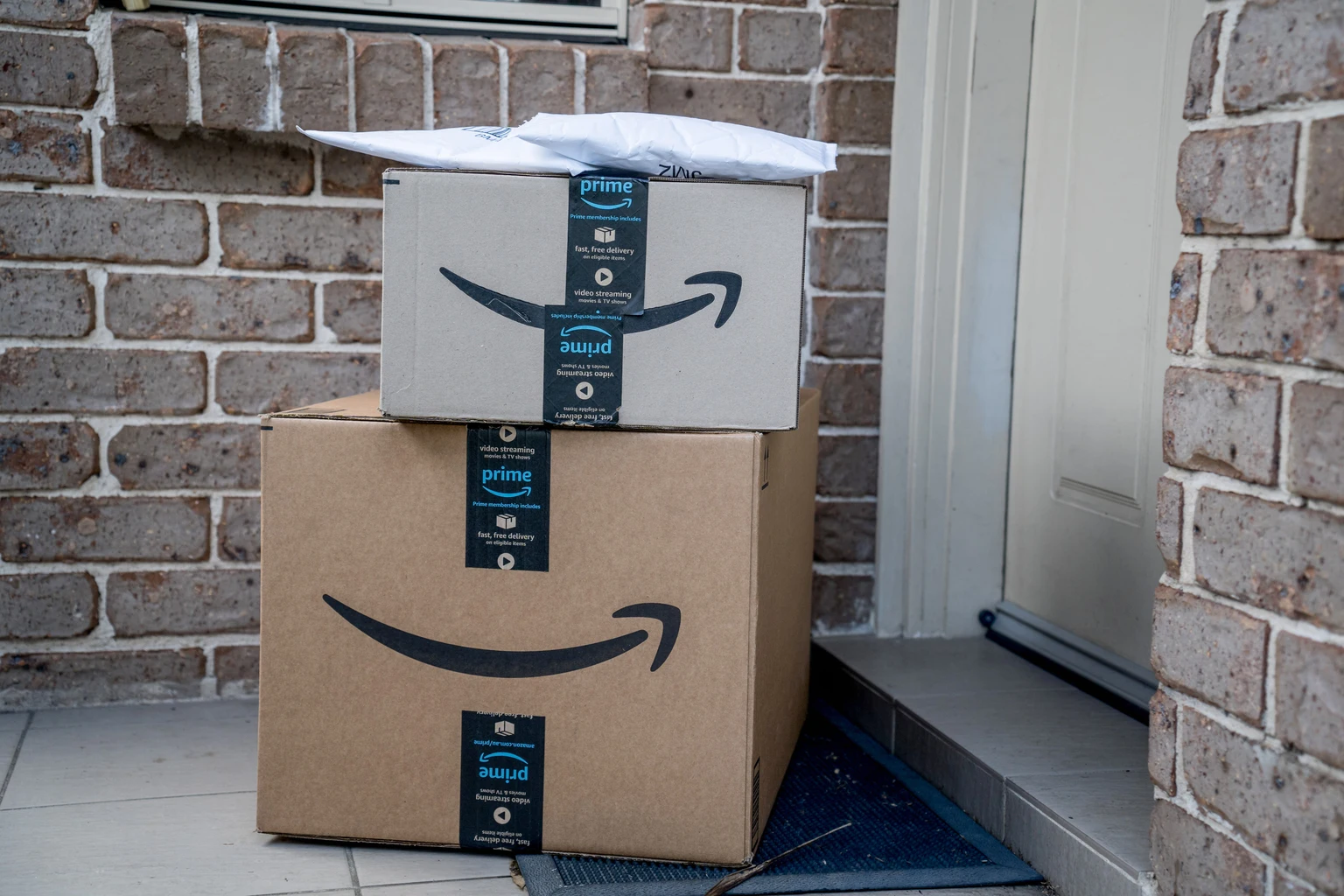
Amazon: Andy Jassy's Shareholder Letter Is A Bull's Dream
Center for Medicare Director Chris Klomp joins ‘Mornings with Maria’ to outline the Trump administration’s latest Medicare rate update, defend new efforts to curb rising healthcare costs and highlight ongoing moves to lower prescription drug prices a
EXCLUSIVE: The leader of the Senate’s healthcare-focused committee on Tuesday released a plan that would aim to make healthcare coverage more affordable for Americans, in part by giving them money in advance to cover out-of-pocket expenses.
Sen. Bill Cassidy, R-La., the chairman of the Senate Health, Education, Labor and Pensions (HELP) Committee, told FOX Business that, given reports that many American families wouldn’t have $1,000 to cover expenses from a medical emergency or unanticipated expense, “We’ve got to put money in people’s pockets to pay for their out-of-pocket.”
His proposal would give individuals more money in advance to cover out-of-pocket costs through refundable tax credits that could amount to as much as $2,000 for a family of four. Those dollars would go into a health savings account (HSA) that would be available to help the account holder to cover deductibles under their health plan or out-of-pocket expenses.
“What’s really novel here is putting more money in people’s pockets with an advanceable tax credit, pre-funding a health savings account,” Cassidy said. “Right now you’re more incentivized to have a health savings account if you’re in a higher tax bracket. In this case, we’re pre-funding, so even if you aren’t in a higher tax bracket, it’s pre-funded for you.”
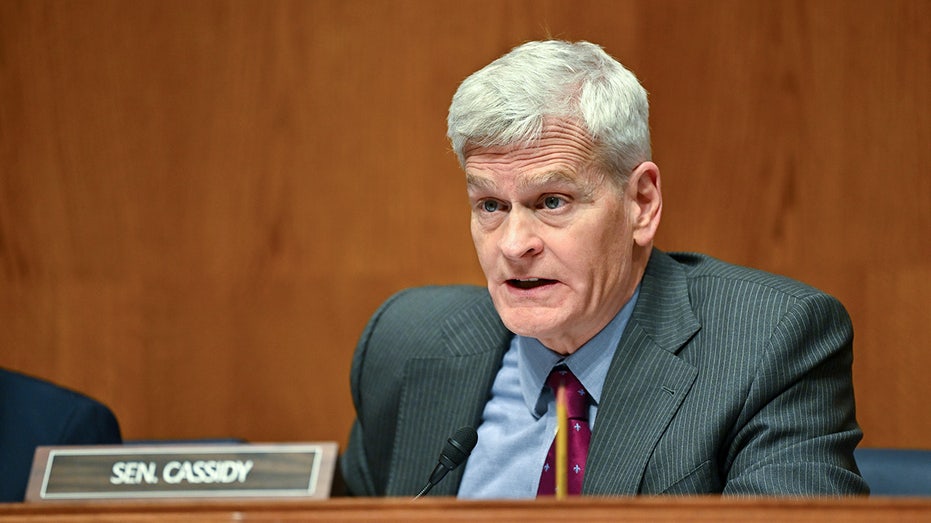
Senate HELP Committee Chairman Bill Cassidy, R-La., touted the pre-funded HSA credits as a way to bring down healthcare costs. (Graeme Sloan/Bloomberg via Getty Images)
He said the pre-funded HSAs would make it easier for a household to get a health insurance policy that has lower premiums and is primarily focused on big ticket items by giving them greater means to cover standard expenses with the funds in their HSA.
“It’s a virtuous cycle that ends up in many ways benefiting the patient’s health and benefiting their pocketbook,” Cassidy said.
The Senate HELP committee chairman said his plan would also build on efforts by the Trump administration at the federal level to promote price transparency in the healthcare industry, which requires the costs of procedures like X-rays to be disclosed. With those costs disclosed, he sees it being easier for Americans to find the most affordable option and ultimately cover those expenses with the pre-funded HSA.
“Oftentimes, they’ll be paying with this pre-funded health savings account, and they’ll have the tools to find the best price because federal legislation has mandated these prices be made available, and the private sector has developed the kinds of apps that can steer them to the best place,” he said.

A doctor reviews a post-operative X-ray in Miami Beach, Florida. (Jeff Greenberg/Education Images/Universal Images Group via Getty Images)
Cassidy’s plan also looks to empower Americans with knowledge about the foods they’re consuming by changing labels to signify the level of health risk an item poses.
“The label I have an idea of would be very simple – you look at the label: is this more or less likely to cause diabetes? Green would be less likely, red would be more likely, and yellow would be somewhere in between. And you could just look at the food. You don’t have to read a table, you don’t have to kind of figure out what percent of my daily allowance this is,” he said.
“Ultimately though, it’s about giving power to the patient over a pocketbook, power to the patient in terms of knowing the prices of things, power to the patients with these apps that people are developing, and then power to the patient with information,” Cassidy added.
OBAMACARE ENROLLMENT FELL BY MORE THAN 1M ENROLLEES FOR 2026

A healthcare worker walks through the halls at Duke University. (Duke University)
Americans have listed healthcare as one of their top concerns as voters prepare to head to the polls for this November’s midterm elections that will determine control of Congress. Cassidy is among the senators up for re-election, and he faces a Republican primary election in Louisiana before he can advance to the general election this fall. President Donald Trump has endorsed one of Cassidy’s challengers, Rep. Julia Letlow, in the race.
A recent Fox News poll found that 81% of voters said they were “extremely” or “very” concerned about healthcare. Those findings were similar to those of a poll by Gallup, which found that healthcare topped the list of domestic policy issues for the first time since 2020.
“There is a moment that demands an answer, there’s different things going on for gasoline and groceries, but for healthcare we need an answer,” Cassidy said. “I think this is a good answer because it builds upon things we already have in place, it doesn’t try to remake the healthcare system. Obamacare tried to remake the healthcare system and arguably the problems of affordability have gotten worse.”
GET FOX BUSINESS ON THE GO BY CLICKING HERE
Cassidy’s announcement comes as the Senate HELP Committee is scheduled to hold a hearing on Thursday regarding ways to make prescription drugs more affordable for families through free market approaches, such as increased competition among generic and biosimilar manufacturers.

Customers failed over outages, water boss tells MPs

Lena Dunham Recalls Adam Driver’s ‘Aggression’ On Girls Set

Frank Warren provides clarity on Tyson Fury vs Anthony Joshua fight talks


-

 Politics4 days ago
US brings back mandatory military draft registration
-
 Sports4 days ago
Man United discover Nico Schlotterbeck transfer fee as defender reaches Dortmund agreement
-

 Fashion4 days ago
Weekend Open Thread: Veronica Beard
-

 Tech7 days ago
How Long Can You Drive With Expired Registration? What Florida Law Says
-

 Politics4 days ago
Malcolm In The Middle OG Turned Down ‘Buckets Of Money’ To Appear In Reboot
-

 Politics2 days ago
World Cup exit makes Italy enter crisis mode
-

 Crypto World5 days ago
Canary Capital Files SEC Registration for PEPE ETF
-

 Business4 days ago
Tesla Model Y Tops China Auto Sales in March 2026 With 39,827 Registrations, Beating Cheaper EVs and Gas Cars
-

 Fashion7 days ago
Let’s Discuss: DEI in 2026
-

 Crypto World20 hours ago
The SEC Conditionalises DeFi Platforms to Be Avoided for Broker Registration
-

 Crypto World6 days ago
Bitcoin recovers as US and Iran Agree a Ceasefire Deal
-

 Crypto World17 hours ago
SEC Signals Exemption for Crypto Interfaces From Broker Registration
-
 NewsBeat2 days ago
Pep Guardiola and Gary Neville agree over Arsenal title problem that benefits Man City
-

 Business4 days ago
OpenAI Halts Stargate UK Data Centre Project Over Energy Costs and Copyright Row
-

 Business3 days ago
Ireland Fuel Protests Enter Day 5 as Blockades Spark Shortages and Government Prepares Support Package
-

 Politics4 days ago
LBC Presenter Mocks Trump Over Iran War Failures
-

 Tech5 days ago
A version of Windows 10 released a decade ago is now eligible for additional security patches
-

 Crypto World4 days ago
Federal judge blocks Arizona from bringing criminal charges against Kalshi
-
 NewsBeat2 days ago
JD Vance announces ‘no agreement’ with Iran over nuclear weapons fear
-

 Business4 days ago
IMF retains floor for precautionary balances at SDR 20 billion
You must be logged in to post a comment Login