

Business
Pitching the importance of design




Check out what’s clicking on FoxBusiness.com.
Two lots of Pedigree-branded dog food were recalled over the potential presence of metal and plastic.
Mars Petcare US issued the voluntary recall July 2 for 13.2-ounce cans of High Protein Chopped Chicken & Duck Flavor for dogs, according to a company announcement.
The affected products include lot codes 613C3KKCFC and 613C1KKCFC.
SHAMPOO RECALLED OVER POTENTIAL BACTERIA CONTAMINATION, INFECTION RISK

Mars Petcare US issued the voluntary recall for 13.2 oz cans of High Protein Chopped Chicken & Duck Flavor for dogs. (FDA)
The recalled items did not meet Mars and Pedigree safety and quality standards, the company said. As part of the quality control process all Pedigree products go through, these two lots were sent to a third-party vendor for destruction.
But Mars later discovered that the product had been fraudulently diverted and sold into the U.S. marketplace.
“The potential presence of sharp metal and plastic foreign material in the cans could pose a hazard to your dog,” the company announcement reads.

Health risks to dogs ingesting sharp foreign objects can include choking and lacerations or blockages in the gastrointestinal tract. (Terry Wyatt/Getty Images for CMT One County / Getty Images)
The company warned that health risks to dogs ingesting sharp foreign objects can include choking and lacerations or blockages in the gastrointestinal tract.
Anyone who purchased the affected dog food is instructed not to feed it to their pet and to contact Pedigree for a replacement.
Consumers concerned after feeding the recalled product to a dog are urged to contact a veterinarian.
CHECK YOUR AC: 13,000 UNITS RECALLED OVER FIRE RISK

The company said no illnesses or injuries have been reported. (iStock / iStock)
CLICK HERE TO GET FOX BUSINESS ON THE GO
The company said no illnesses or injuries have been reported.
“Mars is working with authorities to determine how these products entered the marketplace. We are committed to protecting pets and helping consumers identify and remove the affected products from use,” the company said.

Mounjaro and Wegovy – the UK’s most popular weight-loss medications – work by mimicking a natural hormone, GLP-1, which regulates hunger, and those who use then say they find their appetite is reduced.
In June, market research company Worldpanel by Numerator published a study looking at how this affects grocery spending among UK users. The research was based on survey responses and observed purchase data from more than 11,000 households in February.
A key finding was that households with at least one GLP-1 user spent on average £418 less on groceries in the year after they began their medication, compared with non-users.
This amounted to a fall of £780m in grocery spending nationally, it estimated.
It chimes with a peer-reviewed study from Cornell University, external published last year, which found that US households with at least one member using weight-loss drugs spent 5% less on groceries within six months of starting the medication, with that rising to 8% among higher income families.

South Korea to closely watch risks around stock market volatility
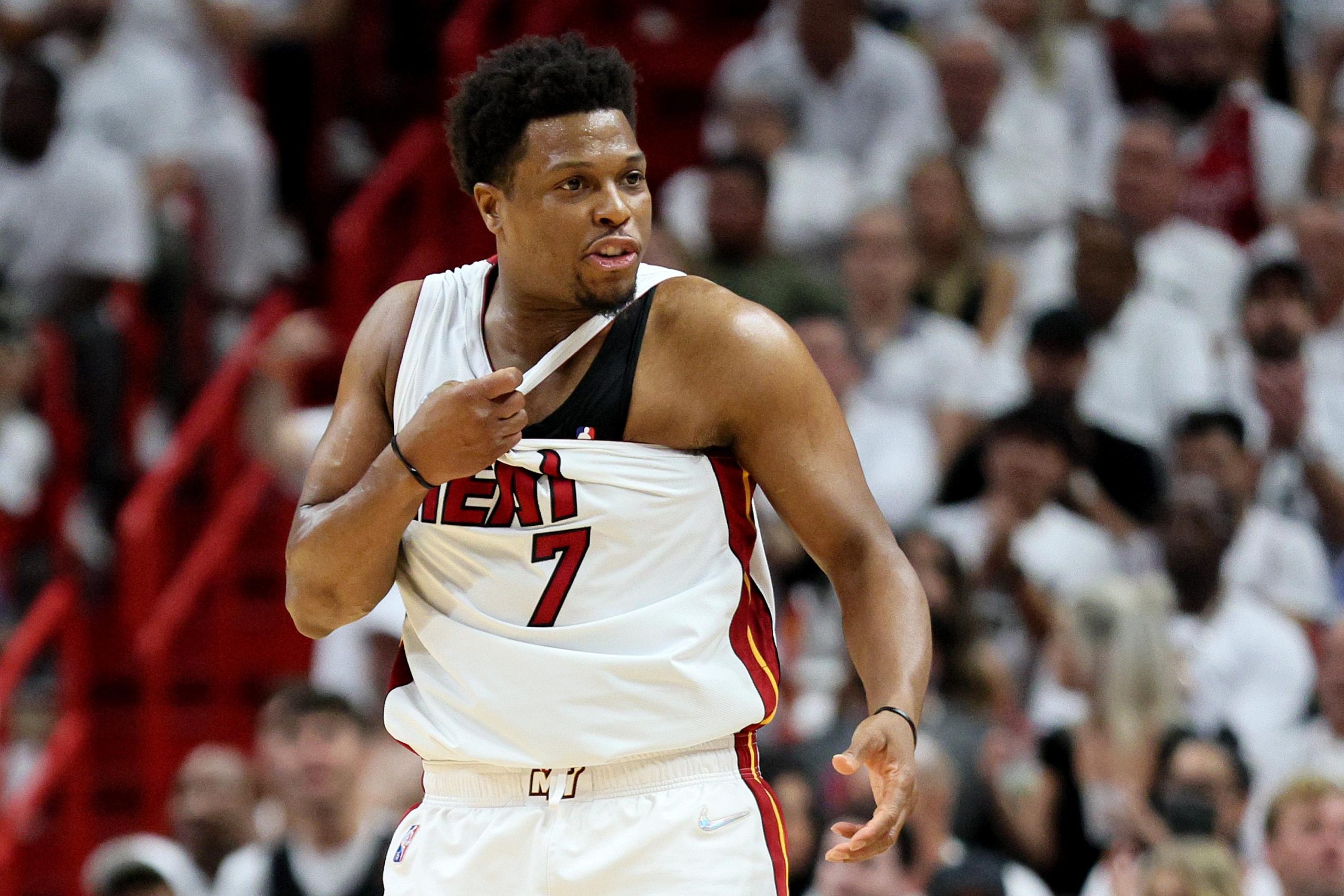
TORONTO — Kyle Lowry, the fiery point guard who anchored the Toronto Raptors’ 2019 NBA championship run, officially retired Tuesday after signing a one-day contract with the franchise where he became a six-time All-Star and beloved icon.
The 40-year-old Lowry, one of just 12 players in NBA history to reach 20 seasons, announced his decision on social media with a video message, fulfilling a long-stated vow to end his playing career as a Raptor. The ceremonial signing, timed for July 7 in a nod to his No. 7 jersey, preceded a scheduled news conference in Toronto later in the day.
Lowry expressed deep gratitude in his announcement. “Thank you to my family, my friends, my teammates, my coaches, my opponents, the staff, the media and especially the fans,” he said. “It’s all about you. I appreciate you. Thank you. Thank you, Toronto. Thank you, Canada. And as I always told y’all, it’s officially happening. I’m retiring as a Toronto Raptor — 20 years and 1 day. Seven forever. I love y’all. Peace.”
The Philadelphia native spent nine seasons with the Raptors, transforming from a solid contributor acquired in a 2012 trade into the heart of a championship team. In Toronto, he averaged 17.5 points, 7.1 assists and 4.9 rebounds while earning all six of his All-Star selections and an All-NBA nod in 2015-16. His leadership, toughness and clutch play endeared him to fans who dubbed him the “GROAT” — Greatest Raptor of All Time.
“This was home,” Lowry said of Toronto. “Home is a feeling. It’s a comfort. It’s a place that you continue wanting to be there. Over and over again. It’s a place where you feel like you just belong.”
Lowry’s career began after a standout college stint at Villanova, when the Memphis Grizzlies selected him 24th overall in the 2006 draft. He also played for the Houston Rockets and Miami Heat before his impactful years in Toronto. He returned to his hometown Philadelphia 76ers for the final season of his career, appearing in 14 games.
His NBA regular-season totals include 13.8 points, 4.2 rebounds and 6.0 assists per game across 1,187 contests. Lowry ranks 14th all-time in three-pointers made with 2,209. In the playoffs, where he reached the postseason 12 times, he averaged 13.3 points, 4.2 rebounds and 5.3 assists.
The 2019 championship season stands as the pinnacle. Lowry teamed with Kawhi Leonard, Pascal Siakam, Marc Gasol and others to deliver Toronto’s first NBA title, defeating the Golden State Warriors in six games. His playoff performances that year, including gritty defense and timely scoring, cemented his legacy in Canadian basketball history.
Beyond the court, Lowry represented the United States at the 2016 Rio Olympics, winning gold. He has already transitioned into media, joining Prime Video as an analyst last year. His basketball intelligence and candid perspective are expected to serve him well in broadcasting.
Tributes flooded in immediately after Lowry’s announcement, highlighting his impact on and off the court. Teammates, coaches and fans praised his competitive fire, community involvement and role in elevating the Raptors franchise from contender to champion.
The Raptors organization expressed appreciation for Lowry’s contributions. His tenure helped establish a winning culture in Toronto and boosted the popularity of basketball across Canada. Lowry’s charity work, particularly through his foundation supporting youth education and sports, left a lasting mark in the city he embraced as home.
Lowry’s retirement leaves Chris Paul as one of the few remaining point guards with 20 seasons under their belt, with Mike Conley Jr. set to join that group this coming season. The milestone underscores Lowry’s durability and consistency in a physically demanding position.
Financially, Lowry earned well over $200 million in his career, but his value transcended salary. Known for his leadership in the locker room and willingness to embrace physical play, he set an example for teammates. His partnership with DeMar DeRozan in earlier Toronto years helped build the foundation for later success.
The one-day contract allows Lowry to retire officially with the Raptors, a gesture the organization has extended to other franchise legends. It ensures his name remains tied to the team’s championship era in official records and jersey retirements that may follow.
Looking back, Lowry’s journey from undrafted free agent expectations to perennial All-Star exemplifies perseverance. Early career stops in Memphis and Houston built his skills before the move north unlocked his full potential. In Toronto, he developed into a floor general capable of carrying teams through adversity.
The NBA landscape has changed dramatically since Lowry’s debut. From the analytics revolution to the rise of superteams and the three-point emphasis, he adapted throughout. His shooting evolution, from mid-range specialist to respected long-range threat, mirrored broader league trends.
Off the court, Lowry became a prominent voice in player empowerment and social issues. His experiences as a veteran leader informed younger generations navigating NIL deals, media scrutiny and business ventures.
As the league prepares for the next season, Lowry’s absence will be felt in Toronto and across the NBA. The Raptors, under new direction, will look to build around emerging talent while honoring past successes. Lowry’s No. 7 may one day hang in the rafters at Scotiabank Arena alongside other franchise greats.
For Canadian basketball, Lowry’s career represents a golden era. His success helped inspire a wave of talent from the country, contributing to its growing presence in the NBA. Programs benefiting from his foundation continue to nurture the next generation of players.
Lowry’s post-retirement plans include family time, media work and possibly front-office or coaching roles down the line. His basketball acumen and competitive insight make him a valuable asset in various capacities.
The announcement on 7/7 carried symbolic weight, reflecting Lowry’s connection to his jersey number and the city. It provided a fitting, emotional close to a career defined by loyalty, resilience and achievement.
NBA Commissioner Adam Silver and fellow players offered congratulations on a career well played. Lowry’s impact extended beyond statistics, embodying the grit and joy of the game.
As tributes continue, one theme emerges: Kyle Lowry didn’t just play in Toronto — he became part of its fabric. From the championship parade to community events, his presence elevated the franchise and the sport in Canada.
The Raptors will likely host a formal retirement ceremony later, giving fans a chance to celebrate the player who delivered their greatest moment. For now, Lowry’s message resonates: gratitude, belonging and closure.
In an era of player movement, Lowry’s commitment to retiring with the Raptors stands out. It underscores the special bond formed over nine seasons and cements his place in Toronto sports lore.
Lowry’s 20-year journey ends with satisfaction. He leaves the game having achieved what few do: a championship, All-Star honors, Olympic gold and the respect of peers. As he transitions to the next chapter, basketball fans worldwide will remember the undersized guard who played larger than life.

Gesuale initiated coverage on the rocket, satellite, and artificial intelligence company Tuesday with a strong buy rating and an $800 price target, the highest among Wall Street analysts and roughly 430% above where the stock is trading in Tuesday’s selloff. Should the shares hit that level, the company’s market valuation would balloon to roughly $10.5 trillion.
At the moment, SpaceX’s market valuation is less than $2 trillion. “We see the company as one of the defining industrial infrastructure companies of the 21st century,” Gesuale wrote in a note to clients on Tuesday. “Just as railroads, electric grids, and the Internet reshaped prior economic eras, we believe SpaceX is building the foundational platform for the next generation of industrial capacity.” The projection is based on some eye-popping assumptions. For example, SpaceX posted revenues of $19 billion last year. Gesuale sees that soaring to $5.2 trillion by 2035. What’s more, that growth isn’t tied to the company’s high profile rocket or connectivity segments. Rather it’s based on its nascent artificial intelligence business.
Right now, AI accounts for $16 billion of SpaceX’s revenue, up from $3 billion in 2024 when “substantially all AI revenue came from X, primarily through advertising, subscriptions, and data licensing,” Gesuale wrote. Raymond James estimates that the figure will rise to about $650 billion by 2031, “making AI the company’s largest business by revenue beginning in 2027, and by 2035 it will represent nearly 94% of SpaceX’s revenue, or $4.9 trillion, Gesuale wrote.
Shifting toward a business model that focuses on monetising compute rather than space travel is how Gesuale believes SpaceX will achieve his revenue targets. “That growth is underpinned by a rapid expansion in installed compute capacity, initially through terrestrial AI infrastructure before progressively extending into orbital compute later in the decade,” he wrote. Gesuale notes that the bullish forecasts aren’t without their risks.

In a scenario where SpaceX experiences unexpected launch failures, the stock could fall to $125, below its $135 initial public offering price. Launch failures would “raise concerns about the pace of orbital AI, Starlink Mobile, and Starship-enabled infrastructure optionality,” Gesuale said.
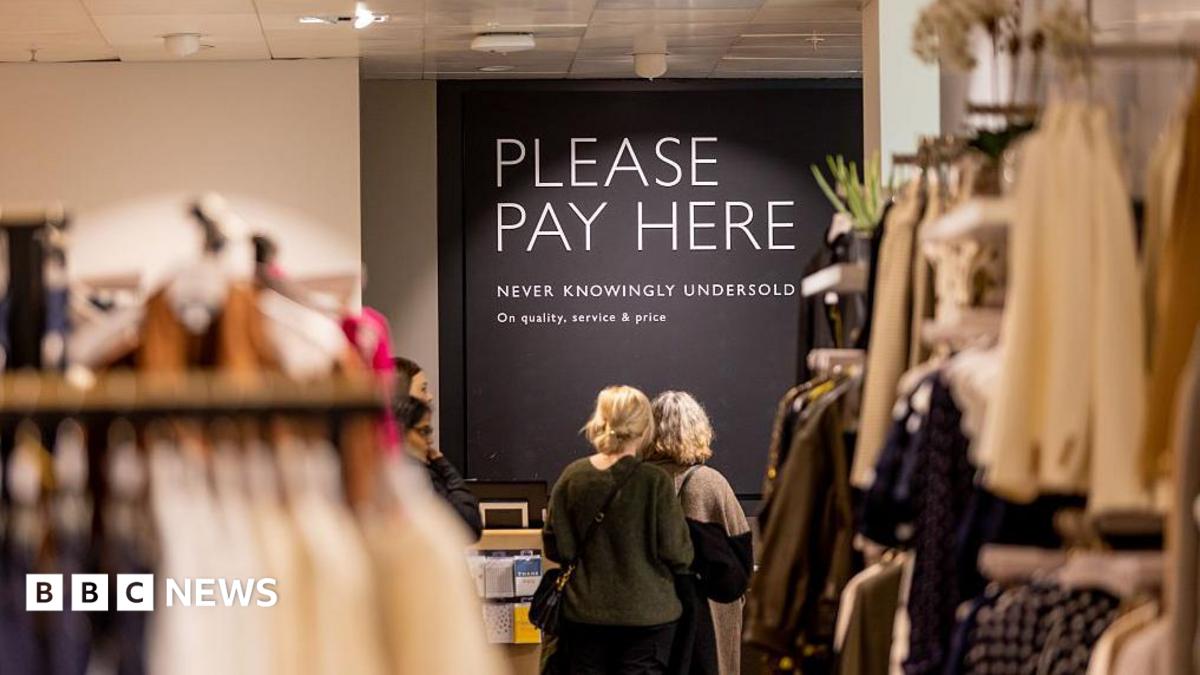
Around 200 John Lewis staff could lose their jobs as the retailer looks to close its in-store money exchange services and dedicated gift wrapping areas.
No final decision has been made but the job cuts will happen in the autumn if the redundancy plans it is consulting on are approved.
John Lewis said the decision to close its in-store bureaux de change was due to falling demand and that it would move gift-wrapping services from a specialised area to its tills.
A spokesperson said it would support affected staff “throughout the consultation process and support redeployment where possible”.
They added: “As we focus on modernising this proposition to meet our customers’ changing needs, we’re proposing to close our in-store foreign exchange bureaus as well as our gift wrapping service.
“As a result, we’re regretfully consulting with partners who currently deliver these services.”
The retailer said customers were increasingly ordering foreign currency online and collecting it in store. It also said some other customers were choosing instead to use their credit cards or digital payments while abroad.
It added that the changes to its gift wrapping services would make it more accessible.
The money exchange closure will affect 30 shops while the gift wrapping services closure will affect 25 shops.
The retailer has been going through many changes under its chair. Jason Tarry, who took over in 2024 after a tough few years that saw it cut jobs and close several stores
It closed its housebuilding arm in February, in a move which also led to some job losses. And, in March, the retailer said it would be awarding its staff a bonus for the first time in four years as its profits and sales improved.
The bonus had been scrapped during the Covid pandemic, marking the first time this had happened since 1953.
John Lewis’ latest results show the business reported a pre-tax loss of £21m due to £120m worth of one-off costs which mainly related to write-downs in the value of old tech systems.
But underlying profits rose 6% to £134m. Sales across the business rose by 5% to £13.4bn.
Sales growth was higher at Waitrose compared with John Lewis. Supermarket sales grew by 7% to £8.5bn in the year to the end of January compared to a 3% increase to £4.9bn at department stores.
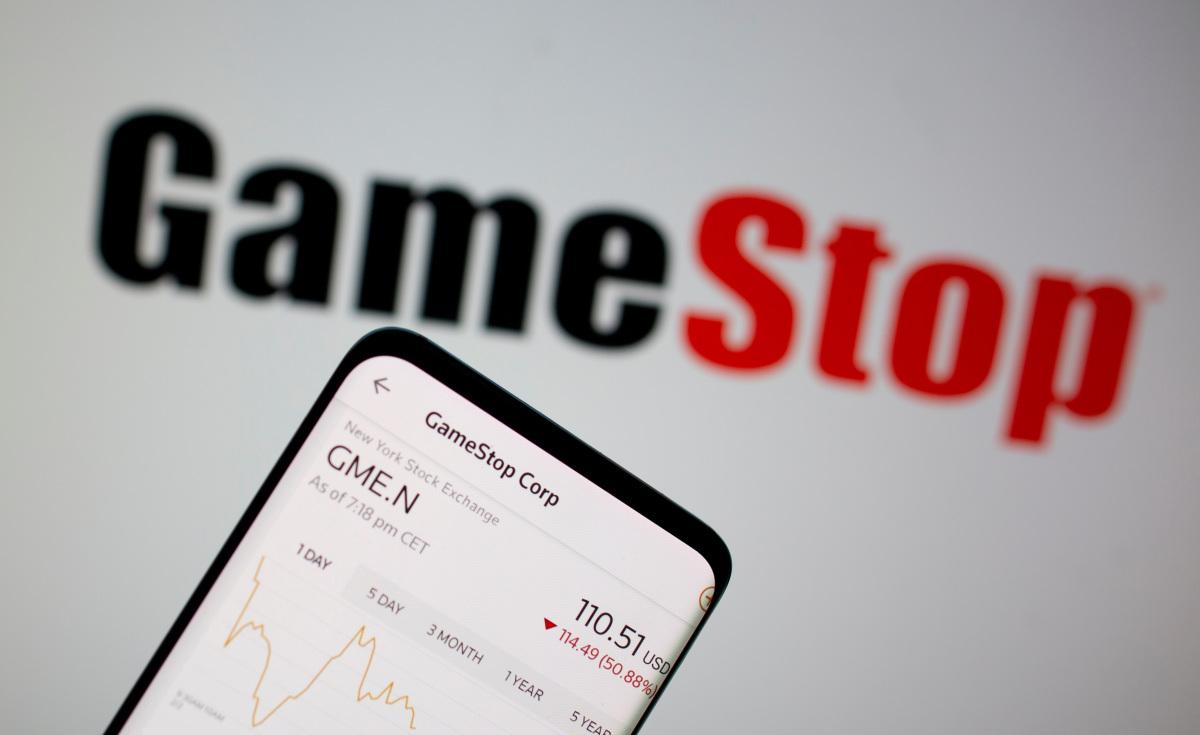
GameStop Corp. shares traded lower Tuesday, reflecting ongoing volatility for the video game retailer as it continues its evolution from brick-and-mortar mainstay to a more diversified player in a rapidly changing industry.
The stock fell about 1.34%, or 31 cents, to $22.42 in morning trading. The modest decline came amid broader market fluctuations and as investors monitored the company’s strategic initiatives following years of intense public attention tied to its meme stock status.
GameStop has been working to transform its business model amid declining physical game sales and the rise of digital downloads. Under leadership including Chairman Ryan Cohen, the company has explored e-commerce enhancements, potential acquisitions and cost-cutting measures to improve profitability. Recent reports indicate active pursuit of larger opportunities, including interest in platforms like eBay, as it seeks to leverage its brand and customer base.
The retailer still operates hundreds of stores across North America and Europe, serving enthusiasts with new and used games, consoles, accessories and collectibles. However, industry shifts toward cloud gaming, subscription services and direct-to-consumer models have pressured traditional retail footprints. GameStop has responded by closing underperforming locations, investing in online capabilities and expanding into areas like PC gaming and esports merchandise.
Financial results in recent quarters have shown mixed progress. While revenue has faced headwinds from reduced hardware cycles, efforts to stabilize margins through inventory management and private-label initiatives have yielded some positive results. The company maintains a sizable cash position, providing flexibility for strategic moves but also inviting scrutiny over capital allocation.
GameStop’s journey captivated markets in 2021 when retail investors on platforms like Reddit drove a massive short squeeze, sending shares from under $20 to nearly $500 at peaks. That episode highlighted the power of coordinated online communities and reshaped conversations around market mechanics, short selling and retail participation. Though the frenzy subsided, the stock has remained more volatile than peers, occasionally spiking on news or social media sentiment.
Analysts continue to debate the company’s valuation and prospects. Some see potential in a loyal customer base and opportunities in gaming-adjacent businesses, while others cite structural challenges in physical retail and question the sustainability of non-core ventures. The stock’s price-to-sales multiple reflects expectations of successful pivots, but execution remains key.
Chairman Ryan Cohen, who rose to prominence through his involvement with Chewy and subsequent stake in GameStop, has influenced direction toward technology and efficiency. His vision emphasizes customer experience, digital transformation and prudent financial management. Recent governance changes and adjusted financial targets underscore efforts to professionalize operations.
The broader video game industry faces its own dynamics. Major publishers like Microsoft, Sony and Nintendo navigate console cycles, while mobile and PC gaming expand. GameStop’s partnerships with these players remain important, but competition from Amazon, Best Buy and direct digital storefronts intensifies.
For investors, GameStop represents a high-risk, high-reward proposition tied to meme culture and turnaround potential. Short interest, though lower than 2021 peaks, persists as some bet against full recovery while others anticipate catalysts from new initiatives. Trading volume often surges with news, reflecting its dedicated following.
The company has explored diversification beyond gaming retail. Speculation around technology investments, e-commerce platforms or even entertainment ventures has surfaced periodically. Any major acquisition could significantly alter its trajectory and market perception.
GameStop’s balance sheet strength provides a buffer. With substantial cash reserves and minimal debt in recent periods, it has avoided the distress faced by some traditional retailers. However, prolonged unprofitability could erode that advantage if strategic bets fail to generate returns.
Community sentiment on social media remains a factor. The “ape” investor movement that fueled earlier rallies still monitors developments closely, though influence has waned compared to 2021. Management has focused on fundamentals over short-term hype.
Looking ahead, the holiday season and new console releases could provide tailwinds for core sales. Back-to-school periods and major game launches typically boost traffic. Success in online fulfillment and loyalty programs will be critical for competing in omnichannel retail.
GameStop’s history dates to its founding in 1984 as a small software retailer. It grew into a category leader through acquisitions and mall-based expansion. The shift to digital disrupted that model, prompting multiple turnaround attempts over the past decade.
Current leadership emphasizes agility. Store associates receive training for enhanced customer service, while technology investments target better inventory visibility and personalized marketing. The company has also ventured into collectibles and merchandise, capitalizing on pop culture trends.
Regulatory and market structure issues stemming from 2021 continue influencing broader discussions. GameStop’s experience highlighted settlement cycles, payment for order flow and short-sale transparency, prompting some regulatory reviews though major overhauls remain pending.
For employees and franchisees, the company’s path forward carries direct implications. Store rationalization has reduced the workforce, but investments in remaining locations aim to create more sustainable operations. Community events and in-store experiences help differentiate from pure online competitors.
Analysts’ price targets vary widely, reflecting uncertainty. Bullish cases cite undervaluation and optionality from cash reserves and brand strength. Bearish views point to secular decline in physical media and execution risks in new ventures.
Tuesday’s trading fit a pattern of relatively contained moves amid low immediate catalysts. With earnings not imminent, focus remains on operational updates and industry trends. Any news on acquisitions or partnerships could quickly shift momentum.
GameStop’s market capitalization hovers around $10 billion, making it a mid-cap name with outsized attention. Its inclusion in certain indices and ETFs ensures steady institutional interest alongside retail flows.
As the gaming industry evolves toward immersive experiences, metaverses and cross-platform play, GameStop must position itself as more than a product seller. Potential roles in events, content creation or technology services could open new revenue streams.
The company’s story resonates beyond finance. It symbolizes retail disruption, investor empowerment and adaptation challenges in legacy businesses. For many, GameStop evokes memories of discovering games in physical stores, a cultural touchpoint undergoing digital reinvention.
Investors will watch for signs of strategic clarity. Successful navigation could reward patient shareholders, while missteps might pressure the stock further in a competitive landscape.
In the near term, modest movements like Tuesday’s reflect digestion after earlier volatility. Broader market sentiment toward consumer discretionary stocks also influences performance amid economic data and consumer spending trends.
GameStop’s legacy includes pioneering loyalty programs and trade-in models that shaped industry practices. Preserving customer relationships while modernizing remains central to its strategy.
As shares traded around $22, the market weighed transformation potential against retail headwinds. The coming months may bring clarity through operational results and any transformative announcements.

Victims of a 2023 data hack at genetics testing company 23andMe are set to receive a multi-million payout from the firm.
A California bankruptcy court judge ruled on Tuesday that Chrome Holding, which last year took control of 23andMe after its bankruptcy, should pay out $46.75m (£35m) in compensation.
23andMe compiles genetic profiles of people through DNA testing kits, but it was heavily criticised after as many as 6.9 million people had their data breached in the 2023 hack.
Representatives of Chrome Holding and 23andMe have been contacted for comment.
Chrome Holding, which operates under the name TTAM Research Institute, is operated by 23andMe’s co-founder, Anne Wojcicki. She won the company’s assets last year through a bankruptcy auction with a bid of $305m.
The ruling said the settlement will be first paid to Kroll Restructuring, which is representing the victims, within five business days from Tuesday.
Kroll will then distribute the funds to the victims, the ruling said.
The appointment of companies like Kroll is typical in corporate bankruptcy proceedings.
The BBC has contacted the legal team representing the victims to ask how many people will receive the payout.
23andMe early last year filed for bankruptcy, about 18 months after hackers were able to access roughly 14,000 user accounts.
Because the company offered “comprehensive” genetic profiles of people who submitted their DNA, including genetic markers related to their health and family history, some of the information accessed by hackers was highly personal.
While the number of accounts accessed directly in the breach only represented a small fraction of 23andMe’s total users, the hackers were able to access the profiles of those users’ relatives. That gave them access to millions of profiles that 23andMe hosted.
The breach led to investigations and fines, including a £2.31m fine by the Information Commissioner’s Office (ICO), a UK watchdog.
The ICO said 23andMe had failed to put adequate measures in place to secure sensitive user data prior to the incident.
In May, Rob Bonta, the Attorney General of California, sued the company following an investigation that found 23andMe “failed to take basic steps to protect users’ data.”
Bonta also claimed that 23andMe “lied to consumers about the severity of its 2023 data breach.”
The company has continued to operate since the bankruptcy, offering DNA testing kits to people online.
23andMe was once valued at $6bn. It started in 2006 and went public in 2021, but it has never turned a profit.

Heritage Foundation chief economist EJ Antoni debates AIs impact on employment, arguing competition fosters job creation. Cheryl Casone highlights AI valuation concerns, shifting investment trends, and national security implications with China.
American workers who never use artificial intelligence (AI) may be more likely to be laid off than those who use AI more regularly, according to new data.
Gallup research found that 62% of workers who have been laid off were non-users of AI who used it once per year or less often. By contrast, only 50% of currently employed workers were non-users of AI, with 22% described as infrequent AI users who utilize it a few times per month or year. Among laid-off workers, 16% were infrequent AI users.
Currently, employed workers were also more likely to report using AI on a daily basis or a few times per week, with 28% of current workers reporting that compared with 22% of laid-off workers in their prior role.
FORD REHIRES EXPERIENCED ENGINEERS AFTER AI MISSES THE MARK

Laid-off workers aren’t attributing their job loss to AI, though it may factor into how companies are restructuring, Gallup found. (Yuki Iwamura/Bloomberg via Getty Images)
“This pattern holds even after accounting for age, education, type of industry and the length of time since being laid off, suggesting that workers who are AI non-users appear to have been more vulnerable in the job market,” Gallup said.
One particularly vulnerable group was tech workers who reported using AI on a monthly basis or less frequently, as they were three times more likely (18%) to have been laid off than tech workers who used AI at least monthly (6%).
Gallup added that workers in the tech sector were already facing elevated layoff exposure in comparison to other industries, which contributed to there being a stronger pattern between the level of AI use and layoffs than in other sectors.
MICROSOFT CUTS 4,800 POSITIONS, INSISTS JOBS ‘NOT BEING REPLACED BY AI’

Workers who use AI regularly were less likely to be laid off, Gallup found. (Roberto Schmidt/AFP via Getty Images)
The survey also found that American workers are continuing to report that their employers are downsizing their workforces, and they don’t see artificial intelligence (AI) or automation as driving the cuts.
Gallup found that the share of U.S. employees who reported layoffs at their company was about 21% in the first quarter of 2026, as it held relatively steady after the share of such reports nearly tripled from the second quarter of 2022 to the third quarter of 2025.
TOP TOBACCO COMPANY TO CUT THOUSANDS OF JOBS

Tech workers who aren’t AI users were more vulnerable to layoffs, Gallup found. (iStock)
Workers who experienced layoffs were asked by Gallup to describe the primary reason they were laid off and very few – just 1% of respondents – mentioned reasons related to AI and automation.
However, that doesn’t necessarily mean that AI or automation didn’t contribute to employers’ decisions to move forward with layoffs, as respondents cited other reasons like organizational restructuring and downsizing (15%), or the elimination of a role (3%).
GET FOX BUSINESS ON THE GO BY CLICKING HERE
That could suggest that AI is factoring into business leaders’ consideration of their workforce structure and decisions to hire or downsize, even if it wasn’t articulated to the laid off workers as the reason they lost their job.

However, net profit growth is likely to remain in single digit for the third quarter in a row amid compressed profit margin on account of input cost inflation. According to the ETIG estimates, revenue and net profit is expected to grow by 10.6% and 5.8% respectively. In the year-ago quarter, revenue and profit growth was 4.9% and 8.5% respectively.
“We expect the June quarter to mark the beginning of an earnings recovery, although the aggregate numbers will be distorted by the sharp weakness in the performance of oil marketing companies (OMC) due to elevated crude prices during the quarter,” said Siddhartha Khemka, research head, wealth management, Motilal Oswal Financial Services. He expects a healthy earnings growth of 14% for the companies under coverage excluding OMCs.
Shweta Rajani, associate director, Anand Rathi Wealth, expects profit growth to lag the top line growth for the June quarter. “This suggests that business activity has remained healthy, even as higher operating costs continue to weigh on profitability,” Rajani said. She expects the volatility seen during the quarter, including geopolitical tensions in West Asia, to have only a marginal impact on the June quarter earnings, with a larger effect likely to be seen in the coming quarters.
 Agencies
Profit growth may stay in single digits for a third quarter as input cost inflation squeezes margins; revenue and profit seen up 10.6% and 5.8%, respectively
Margin Pressure
The aggregate operating margin is expected to shrink by 100 basis points to 21.9% year-on-year, implying input cost pressure. “Margins will be impacted by higher crude-linked input costs, logistics expenses and commodity volatility during the quarter,” Khemka said. He believes the pressure is largely transitory and margins should improve over the coming quarters as commodity prices stabilise and operating leverage improves.
According to Rajani, companies with strong pricing power, particularly in consumer businesses and financial services, are expected to protect margins better than sectors with limited ability to pass on higher costs.
Select companies from the automobiles, banking and finance, consumer and metal sectors are likely to report strong growth while capital goods, cement, IT, and pharma companies may report weak numbers.
OUTLOOK
Analysts believe growth to strengthen in subsequent quarters. “We expect earnings growth to strengthen over the remainder of the year as domestic demand improves, policy support continues, interest rates soften and private investment gradually picks up,” said Khemka. He estimates Nifty 50 earnings to grow by 14% and 15% for FY27 and FY28 respectively.
Sector view
AUTOMOBILES
Revenue growth is expected to remain in double digits helped by strong volume growth amid sustained demand pull. However, elevated raw material costs will affect profitability resulting in single digit net profit growth.
BANKING
Deposit growth continued to trail credit offtake during the quarter, implying a sustained elevation in borrowing costs. This is also likely to put pressure on net interest margins even though net profit growth will likely be in double digits. Asset quality is expected to remain stable.
CAPITAL GOODS
Revenue and profit growth is expected to be in single digit given slower execution of projects in the Gulf region and weakness in government orders. The pace in overall order bookings is also expected to be muted and may remain so in the second quarter due to monsoon.
CEMENT
Cement companies are expected to reel under higher input cost pressure, which is likely to compress operating margins. Ultratech is likely to report a low-double digit revenue growth while net profit may grow in single digit year-on-year.
CONSUMER GOODS
Barring ITC, which is expected to fare poorly amid the impact of higher duties, consumer goods companies across categories are likely to report double digit growth in revenue and profit aided by sustained demand. Higher product prices may offer some comfort amid firm input costs.
INFORMATION TECHNOLOGY
Top tier software exporters are expected to show weaker than usual revenue growth in dollar terms given the continued trend of delays in project ramp ups and slower decision making by clients. The year-on-year rupee denominated revenue growth should benefit from a weaker rupee against major currencies.
OIL AND GAS
Oil marketing companies are likely to face higher under-recoveries on fuels and LPG, which are expected to squeeze operating profitability. For oil producers, realisations are expected to improve given heightened crude oil prices while gas distributors will benefit from higher sales volume.
METALS
For ferrous companies, volume growth is expected to be muted amid lower exports. This may be partly offset by price increases and safeguard duty imposition. In the case of nonferrous companies, prices stayed elevated due to supply shortage amid the Gulf crisis. This is expected to result in double digit earnings growth for these companies.
PHARMACEUTICALS
Profitability of pharma companies with overseas exposure is likely to be under pressure given deceleration in the US business. This will be partly offset by a favourable currency movement and better growth in the domestic business. Hospital chains are likely to continue reporting double-digit revenue and profit growth.
TELECOM
Bharti Airtel is expected to report strong net profit growth amid double digit rise in revenue. Improving revenue per user, stable tariff charges and subscriber additions are key positives for the sector.

Pedigree dog food recalled over metal and plastic contamination risk

Amazon (AMZN) Stock Taps Bond Market for $25B to Accelerate AI Investments

Belgium Midfielder Amadou Onana Out For Remainder Of World Cup With Torn ACL


-

 Fashion4 days ago
Weekend Open Thread: High Hopes
-
 NewsBeat3 days ago
Taylor Swift and Travis Kelce wedding staffer hilariously struggles to keep her cool while checking in megastars
-

 Fashion1 day ago
Open Thread: What Great Books Have You Read Recently?
-

 Politics5 days ago
The House | “Reframing the debate from a binary discussion of winners and losers”: Yuan Yang reviews ‘We Are Not Machines’
-
 Crypto World7 days ago
Airdrop Registration Becomes Key Focus For Remittix As RTX Launch Updates Approach
-

 Crypto World4 days ago
Standard Chartered Secures MiCA License as ESMA Adds 37 New Crypto Firms
-

 Business1 day ago
AXT Shares Jump Nearly 14% as Semiconductor Materials Maker Rebounds on AI-Linked Indium Phosphide Demand
-

 Sports7 days ago
Broncos roster: OL Ben Powers (No. 74) entering final year of contract
-

 Crypto World6 days ago
Binance stock trading tops $1B in first month after launch
-
Crypto World1 day ago
SK hynix (000660.KS) Stock Dips as $28B Nasdaq ADR Offering Drives AI Memory Expansion
-

 Crypto World6 days ago
Alibaba-affiliate Ant Group enters the humanoid robot market with 12 deals
-

 Crypto World2 days ago
South Africa proposes crypto tax guidance under existing rules
-

 News Videos1 day ago
Best Time to Enter Small Caps Right Now? Another Bull Run? | Financially Free
-

 Tech3 days ago
Lenovo laptops are now shipping with YMTC SSDs, a sign of Chinese NAND entering the mainstream
-

 News Videos22 hours ago
Whats Hidden Inside This Cash Register? #treasure #reselling #money
-

 Business6 days ago
Meta Platforms Stock Jumps 7% Today as Bloomberg Reports Company Plans to Enter the Cloud Business
-
 NewsBeat6 days ago
New exhibition reflects five decades of movement between island of Ireland and GB
-

 Business5 days ago
What a 10 Percent Drop Means for Buyers, Sellers and Renters
-

 Crypto World5 days ago
Binance Re-Enters Philippines As EU MiCA Rules Restrict Access
-

 News Videos2 days ago
Avoid entering in FOMO #bitcoin #cryptocurrency #trading #scalping
You must be logged in to post a comment Login