
Business
Protein trend adding innovation to bread aisle




Elon Musk spotlighted Tesla’s Full Self-Driving (Supervised) technology Monday, reposting data showing the system is roughly seven times safer than the average U.S. human driver and sparking fresh debate about the pace of autonomous vehicle adoption.
In a post on X that quickly drew hundreds of thousands of views, Musk simply asked, “Did you know Tesla FSD was this good?” The message quoted an earlier Grok response citing Tesla’s latest Vehicle Safety Report as of April 2026. According to the data, FSD (Supervised) records one crash every 5 million to 7 million miles driven, compared with roughly one crash every 660,000 miles for human drivers. The figures are based on more than 9 billion miles of real-world FSD data.

The post amplified a detailed assessment from Grok, xAI’s AI model, rating current FSD performance an 8.5 out of 10 on a scale where 10 represents perfect autonomy. The assessment noted the system’s “transformative edge” over manual driving while acknowledging it remains supervised, with human drivers expected to stay ready to intervene. It also referenced ongoing scrutiny from the National Highway Traffic Safety Administration on edge cases.
Musk’s endorsement comes as Tesla pushes aggressively toward unsupervised autonomy and robotaxi deployment. The company has rolled out incremental FSD updates throughout 2026, with version 14.3 widely anticipated by owners and frequently mentioned in replies to Musk’s post. Enthusiasts in the thread described daily use of the system, with some reporting 80% or more of their driving now handled by FSD and expressing excitement for the next software release.
Tesla’s Vehicle Safety Reports, released quarterly, have consistently shown improving safety metrics for FSD as the company accumulates more data and refines its neural networks. The latest April 2026 figures represent a significant leap from earlier reports, where the safety multiple was closer to 5x or 6x in some periods. Tesla attributes the gains to continuous over-the-air improvements, better handling of complex urban scenarios and expanded training datasets.
Industry analysts reacted with measured optimism. While the safety data is compelling, critics note that FSD remains in supervised mode and has faced regulatory hurdles, including NHTSA investigations into crashes involving Autopilot and FSD features. Tesla maintains that the system’s performance exceeds human benchmarks on a per-mile basis, but regulators emphasize the need for robust validation across billions more miles before unsupervised operation on public roads.
The viral post also reignited broader conversations about public awareness. Several replies highlighted that many drivers still do not fully understand FSD’s capabilities or safety record, with one user calling it “a failure by you and the Tesla team” to communicate the technology more effectively. Others shared personal anecdotes of feeling safer with FSD engaged, while some expressed frustration over delays in wider releases of newer versions.
Tesla CEO Musk has long positioned FSD as a cornerstone of the company’s future, projecting that robotaxis could eventually generate trillions in value. The company has invited select owners to early unsupervised testing in Texas and California under strict conditions, though a full unsupervised rollout remains pending regulatory approval in key markets.
Monday’s post drew a mix of celebration and skepticism. Supporters praised the data as proof that Tesla leads the autonomous driving race, while others questioned whether the statistics fully account for variables such as driver disengagement rates or geographic differences in testing. Replies included calls for faster deployment of version 14.3 and humorous takes on using FSD to multitask during commutes.
The timing aligns with heightened investor and consumer interest in Tesla’s autonomy efforts. The company’s stock has shown volatility in 2026 amid broader market concerns over geopolitical tensions and energy prices, but FSD milestones often provide positive catalysts. Musk’s personal involvement in promoting the technology underscores his view that rapid iteration and real-world data will ultimately prove the system’s superiority.
Tesla has logged more than 9 billion miles of FSD data, giving it one of the largest real-world datasets in the industry. The company contrasts its vision-based approach with competitors relying more heavily on lidar and other sensors, arguing that its camera-and-AI system more closely mimics human perception while scaling efficiently through software updates.
Regulatory bodies continue to monitor progress closely. The NHTSA has requested detailed information on FSD incidents, and international regulators in Europe and China are evaluating similar data for potential approvals. Tesla maintains transparency through its quarterly reports while pushing for clearer regulatory frameworks that recognize the statistical safety advantages.
Public reaction on X reflected the polarized nature of autonomous vehicle discussions. Some users posted videos and photos of smooth FSD drives, while others shared edge-case frustrations such as roundabout navigation. The thread also featured lighthearted content, including AI-generated images and parody accounts weighing in on the technology’s potential.
For Tesla owners, the post served as a reminder of the technology already in their vehicles. Many reported using FSD daily and feeling confident in its abilities, though most still keep hands near the wheel as required. The company stresses that the system is “Supervised” for a reason and drivers must remain attentive.
Broader implications extend beyond individual safety. Widespread adoption of safer autonomous systems could reduce the roughly 40,000 annual traffic fatalities in the U.S., ease congestion and free up time for drivers. Economic analyses project significant productivity gains if robotaxis and autonomous trucking scale successfully.
Musk’s post, which garnered more than 466,000 views within hours, exemplifies his strategy of using X to communicate directly with millions of followers and potential customers. It also highlighted the growing synergy between Tesla and xAI, with Grok providing data-driven analysis that Musk then amplified.
As Tesla prepares for potential robotaxi events later in 2026, the latest safety figures add fuel to optimism among supporters. Skeptics, however, caution that statistical safety must be matched by consistent performance in every scenario before regulators grant full unsupervised approval.
The conversation sparked by Musk’s simple question underscores a key tension in the autonomous vehicle space: the gap between statistical trust in the data and emotional trust required for mass adoption. With billions more miles of data accumulating quarterly, Tesla and competitors continue racing toward the day when human drivers become the exception rather than the rule.
For now, FSD (Supervised) represents a major step forward, with Monday’s viral post serving as both celebration and call to action for greater public awareness of its capabilities.

Bluesky, the decentralized social media platform often positioned as an alternative to X, faced intermittent outages in the US East region Monday, with users reporting difficulties accessing the app, loading feeds and viewing timelines, according to the company’s official status page and crowd-sourced trackers.

Bluesky’s status page at status.bsky.app confirmed an ongoing incident as of mid-afternoon, stating that since this morning the platform had been experiencing intermittent outages in the US East region due to an issue with an upstream service provider. The company said it was actively working with the provider to restore full service as soon as possible. Overall system status remained listed as “All systems Operational,” with strong uptime figures of 99.993% over the past 24 hours and 99.955% over the past seven days.
Downdetector showed a noticeable spike in user reports throughout the day, with the majority of complaints centered on the mobile app (approximately 50%), followed by feed/timeline problems (23%) and website access (15%). Reports were concentrated in the United States but appeared geographically dispersed rather than indicating a complete nationwide shutdown. Similar patterns emerged on social platforms, where users posted screenshots of loading errors or blank feeds and used hashtags such as #BlueskyDown.
The platform’s decentralized architecture, which relies on multiple servers and personal data servers (PDS), has generally provided resilience, but Monday’s disruption highlighted vulnerabilities tied to third-party infrastructure. Bluesky has grown rapidly since its public launch, attracting millions of users seeking an ad-light, algorithm-optional experience with custom feeds and strong moderation tools. However, scaling challenges have occasionally led to similar intermittent issues, especially during peak usage hours or when upstream dependencies falter.
Users in affected regions reported a range of symptoms: inability to refresh timelines, delayed post loading, login glitches on the app and occasional complete connection failures. Some noted that switching to web access or using a VPN temporarily mitigated problems, while others waited for natural resolution. The timing coincided with typical workday peaks in the Eastern Time Zone, amplifying frustration for users relying on Bluesky for news, community discussions and real-time updates.
Bluesky’s official status updates emphasized transparency, with the US East incident marked and monitored throughout the day. No full platform-wide outage was declared, distinguishing Monday’s event from more severe past disruptions. Earlier in 2026, the platform experienced shorter outages on April 4 and April 5, including a roughly 37-minute incident on April 5 that affected feed aggregation for some users. Those were resolved relatively quickly without major announcements.
Industry observers noted that as Bluesky’s user base expands — fueled by dissatisfaction with other platforms and features like custom feeds and decentralized identity — even brief interruptions draw significant attention. The platform’s growth has been steady, with strong engagement in creative, tech and political communities. However, reliability remains a key factor for retaining users who have migrated from more established networks.
For those encountering problems, Bluesky recommends standard troubleshooting: force-quitting and restarting the app, checking internet connections, clearing cache, or trying the web version at bsky.app. Users can also monitor the official status page for real-time updates. The company has not yet provided an estimated resolution time for the US East issue but indicated active collaboration with the upstream provider.
The incident underscores the challenges facing growing social platforms in maintaining consistent performance amid reliance on cloud infrastructure and third-party services. Bluesky’s decentralized model aims to reduce single points of failure compared with traditional centralized networks, yet dependencies on regional hosting and service providers can still create localized pain points.
Public reaction on X and other platforms mixed irritation with understanding. Some users joked about the irony of outages on a platform marketed for better user experience, while others praised the relative rarity of major disruptions compared with competitors. A number of affected users temporarily shifted activity back to X or other networks, highlighting the fragmented nature of today’s social media landscape.
Bluesky continues to iterate on features, including improved moderation tools, custom feed algorithms and enhanced search capabilities. The platform has positioned itself as a more open and user-controlled alternative, with users able to run their own servers in the decentralized ecosystem. Despite Monday’s hiccup, overall uptime metrics remain excellent, reflecting solid engineering efforts behind the scenes.
As the afternoon progressed in the US East, reports on Downdetector appeared to stabilize somewhat, though the upstream issue persisted according to Bluesky’s latest update. Users in unaffected regions reported normal service, suggesting the problem remained geographically limited.
For international users, impact appeared minimal, with European and Asian access largely unaffected. This regional focus is common in cloud-dependent services where data routing and hosting zones play a critical role.
Bluesky’s team has a track record of responsive communication during incidents, often updating via the status page and official accounts. Past resolutions have involved provider-side fixes, server optimizations or temporary traffic rerouting. The company is expected to provide a post-incident summary once service fully stabilizes.
In the broader context, Monday’s event serves as a reminder that even fast-growing platforms face scaling pains. As Bluesky competes for users in a crowded social space, consistent reliability will be crucial for long-term retention. The platform’s decentralized ethos offers potential advantages for resilience, but real-world dependencies can still introduce friction.
Affected users are encouraged to check status.bsky.app regularly and report persistent issues through official channels. In the meantime, basic troubleshooting steps often resolve temporary glitches while engineers address upstream problems.
As evening approached in many time zones, Bluesky urged patience and thanked users for their understanding. The company continues investing in infrastructure to minimize future disruptions as its community grows.
Bluesky, launched as a decentralized microblogging platform, has carved out a niche with its emphasis on user choice, reduced algorithmic manipulation and community-driven moderation. While not immune to technical hiccups, its overall performance has supported steady expansion in 2026.
For now, the majority of services remain accessible, with the US East intermittent outage representing a localized rather than platform-wide event. Users experiencing ongoing difficulties should monitor official updates for the latest resolution timeline.

Northrim BanCorp Is Still Worth Banking On

Kodak stock hits 52-week high at $11.63
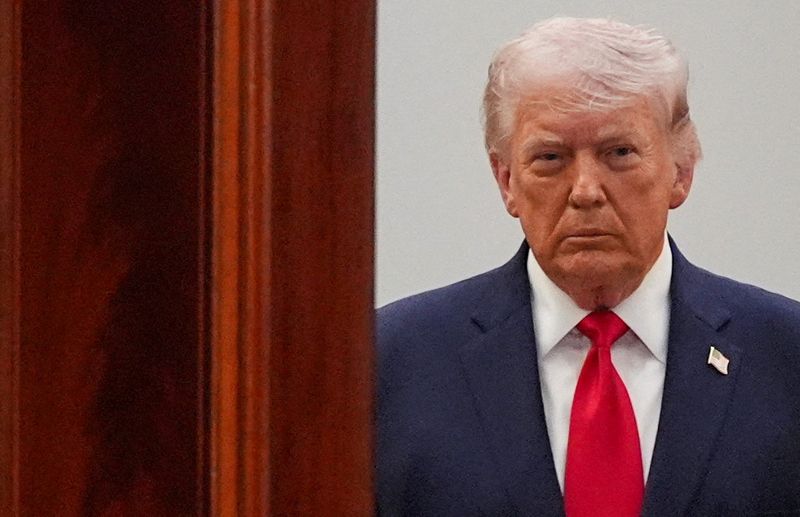

Trump says Iran could be ’taken out’ on Tuesday, Hegseth says major strikes to come
Micron Technology: Betting On The AI Memory Supercycle
Business
Xiao-I Corp Stock Explodes 157% as China Court Victory Over Apple Patent Bolsters AI Patent Portfolio

Shares of Xiao-I Corp (NASDAQ: AIXI) skyrocketed more than 156% Monday, surging to around $0.34 in afternoon trading as retail investors piled into the micro-cap artificial intelligence company following a major legal victory in its long-running patent dispute with Apple in China.

The dramatic intraday move saw the stock open sharply higher and maintain strong momentum, with trading volume spiking to extraordinary levels for the small company. The rally built on earlier gains triggered by news that China’s Supreme People’s Court rejected Apple’s appeal to invalidate key AI patents held by Xiao-I’s variable interest entity (VIE) in Shanghai.
Xiao-I Corporation, a Shanghai-based provider of cognitive intelligence solutions founded in 2001, specializes in natural language processing, conversational AI, knowledge graphs, hyperautomation and multimodal technologies. The company serves sectors including finance, contact centers, government services, manufacturing and healthcare through platforms that integrate deep learning and affective computing.
The patent ruling, finalized on March 27, 2026, affirmed the validity of Xiao-I’s core AI intellectual property that forms the basis of its infringement lawsuit against Apple. The Supreme Court’s decision, which is final and non-appealable on the validity issue, removed a significant legal hurdle and validated the company’s technological claims. While the infringement proceedings continue and no financial compensation is guaranteed, the outcome strengthened Xiao-I’s position in China’s competitive AI landscape.
The stock had already shown volatility in early April. It surged more than 33% on April 2 following initial reports of the court decision, with massive volume reflecting retail enthusiasm. Monday’s continuation pushed the price well above recent levels, though it remained far below its 52-week high near $4 and reflected the stock’s history of sharp swings as a low-float micro-cap name.
Analysts and market observers described the move as driven primarily by sentiment and short-term momentum rather than fundamental shifts in operations. Xiao-I’s market capitalization stayed under $5 million even after the surge, underscoring its status as a highly speculative play. The company has faced challenges including dilution from convertible notes, governance issues and limited revenue scale compared with global AI leaders.
Despite the legal win, risks remain substantial. The broader infringement case against Apple entities in China is ongoing, and outcomes on damages or licensing are uncertain. Xiao-I operates primarily through a VIE structure, a common but complex arrangement for foreign-listed Chinese companies that carries inherent regulatory and ownership risks.
The company’s core offerings include a conversational AI platform, knowledge fusion tools, intelligent voice systems and hyperautomation solutions. It has positioned itself as a pioneer in cognitive intelligence since its early days, with applications in smart city services, financial institutions and industrial digitization. Revenue comes from software licenses, maintenance services and cloud-based AI products.
Recent company updates highlighted client renewals in the automotive sector and continued development of metaverse and vision analysis platforms. However, like many small AI firms, Xiao-I competes against much larger players with deeper resources, including domestic giants and international technology firms.
Monday’s trading frenzy echoed patterns seen in other low-priced, news-driven stocks where retail participation on platforms can amplify moves. Volume exceeded typical daily averages by multiples, with significant pre-market and intraday interest. Some traders noted the stock breaking technical levels, including attempts to reclaim the 50-day moving average for the first time in months.
Wall Street coverage of AIXI is limited due to its size. Price targets and ratings are sparse, and the stock carries high volatility warnings. Investors are cautioned about the potential for rapid reversals, as micro-cap names often experience profit-taking after sharp rallies.
For long-term holders, the patent victory could enhance licensing opportunities or strengthen negotiating power in China’s AI ecosystem. Yet execution risks, competition and the need for sustained revenue growth remain key concerns. The company has emphasized its 20-plus years of R&D in cognitive technologies and partnerships across industries.
As of Monday afternoon, AIXI traded with elevated volatility, reflecting the speculative nature of the move. Broader market sentiment, including interest in Chinese AI plays amid geopolitical and regulatory developments, may have contributed to the enthusiasm.
Xiao-I Corporation went public on Nasdaq in 2023 through an American Depositary Shares offering. Its business model focuses on industrializing AI technologies for practical enterprise applications rather than consumer-facing products. The firm maintains research centers and collaborates with universities and industry partners.
Retail investors on forums and social platforms celebrated the surge, with some calling it validation of the company’s IP strength. Skeptics warned of classic pump dynamics in low-float stocks and urged caution, noting the absence of immediate revenue impact from the court ruling.
Company officials have stated they will continue updating shareholders on material developments in the Apple litigation. No specific timeline for resolution of the remaining infringement claims has been provided.
In the wider AI sector, patent battles are increasingly common as companies seek to protect innovations in natural language processing, machine learning and related fields. Xiao-I’s win, while significant for the firm, highlights the strategic importance of intellectual property in China’s rapidly evolving technology market.
Monday’s price action pushed the stock well into positive territory for the session, though it continued to trade as a high-risk name with limited institutional following. Market participants will watch for any follow-through momentum or profit-taking in coming sessions.
Xiao-I Corp, with roughly 162 employees, operates from Shanghai and focuses on delivering AI solutions that drive industrial digitization and intelligent transformation. Its technologies power applications from intelligent customer service to smart city initiatives.
As trading continued Monday, the surge in AIXI served as a reminder of the speculative opportunities — and risks — in small-cap AI stocks reacting to legal or technological developments. Investors are advised to conduct thorough due diligence, considering the company’s financial position, competitive landscape and the uncertain path from patent validation to commercial success.

Trump threatens jail over Iran rescue operation leak

Jefferies cuts Hexcel stock price target to $80 on valuation


US service sector cools in March, inflation heating up amid Iran war
Elon Musk Amplifies Tesla FSD Safety Data as 7x Safer Than Humans in Viral X Post

Aave loses key risk manager Chaos Labs amid contributor exodus and disputes

Bannon Supreme Court win may lead to dismissal of contempt conviction


-

 NewsBeat4 days ago
Steven Gerrard disagrees with Gary Neville over ‘shock’ Chelsea and Arsenal claim | Football
-

 Business4 days ago
No Jackpot Winner and $194 Million Prize Rolls Over
-

 Fashion3 days ago
Weekend Open Thread: Spanx – Corporette.com
-

 Crypto World5 days ago
Gold Price Prediction: Worst Month in 17 Years fo Save Haven Rock
-

 Business19 hours ago
Three Gulf funds agree to back Paramount’s $81 billion takeover of Warner, WSJ reports
-
Crypto World6 days ago
Dems press CFTC, ethics board on prediction-market insider trades
-

 Sports2 days ago
India men’s 4x400m and mixed 4x100m relay teams register big progress | Other Sports News
-

 Business5 days ago
Login and Checkout Issues Spark Merchant Frustration
-

 Tech6 days ago
EE TV is using AI to help you find something to watch
-

 Sports6 days ago
Tallest college basketball player ever, standing at 7-foot-9, entering transfer portal
-

 Politics7 days ago
Should Trump Be Scared Strait?
-
Tech7 days ago
Daily Deal: StackSkills Premium Annual Pass
-

 Tech7 days ago
Flipsnack and the shift toward motion-first business content with living visuals
-

 Sports7 days ago
Women’s hockey camp eyes fitness boost, tactics ahead of WC 2026 campaign | Other Sports News
-

 Crypto World7 days ago
U.S. rule change may open trillions in 401(k) funds to crypto
-

 Tech6 days ago
How to back up your iPhone & iPad to your Mac before something goes wrong
-

 NewsBeat7 days ago
Newscast – Scott Mills Sacked By BBC
-

 Politics7 days ago
Usha Vance: Disney Hats Over MAGA Caps?
-
Crypto World7 days ago
Valinor raises $25m to put private credit on-chain
-

 Business7 days ago
Functional benefits brewing in coffee innovation
You must be logged in to post a comment Login