
Business
Randy Travis’ Wife Reveals Doctors Told Her to ‘Pull the Plug’ During His Near-Fatal 2013 Stroke Battle


Country music legend Randy Travis’ wife, Mary, has revealed that doctors once told her to end her husband’s life support during his harrowing recovery from a massive stroke in 2013, a moment she says she instead met with defiance because she believed he was still fighting to survive.
The revelation, shared in an interview with Fox News Digital, offers new insight into just how close the 67-year-old Country Music Hall of Fame member came to not surviving the health crisis that ultimately robbed him of his ability to sing, even as Travis continues to tour and release new music more than a decade later.
A devastating diagnosis
Travis’ stroke struck in 2013, following an earlier hospitalization for congestive heart failure tied to viral cardiomyopathy. According to Mary, the singer’s condition deteriorated further in the hospital as he developed a staph infection along with several additional hospital-acquired bacterial infections, including Serratia and Pseudomonas. That combination of complications led doctors to conclude that Travis simply did not have the physical strength to recover.
“We need to pull the plug. He’s got too many things going against him at that point,” Mary recalled doctors telling her during that period, describing it as one of the most pivotal moments of what she has called a two-and-a-half-year health battle.
Rather than accepting that recommendation, Mary said she refused to give up on her husband, drawing strength from a subtle but powerful sign he gave her at his bedside. She said Travis squeezed her hand and shed a tear at the exact moment doctors were urging her to let him go, a gesture that convinced her he was determined to keep fighting. “There was never a doubt in Randy’s mind that he could make it through it,” Mary said, reflecting on that moment.
A recovery doctors didn’t expect
The odds facing Travis at the time were extraordinarily grim. CBS News has reported that doctors gave him just a 2% chance of survival following the stroke, making his continued recovery in the years since all the more remarkable to those who have followed his story. The stroke ultimately left Travis with aphasia, a condition that severely limits both his speech and his ability to sing, effects that remain with him to this day.
Despite those lasting limitations, Travis has continued to find ways to stay connected to music and to his fans. He has toured in recent years alongside guest vocalist James Dupré and members of his original band, allowing him to remain a visible presence on stage even though he can no longer perform vocals himself. In 2024, Travis made headlines again after using artificial intelligence technology to help recreate his voice, allowing him to release new original music for the first time since his stroke, a development his wife has since described as deeply emotional for the couple.
Recognition for his resilience
Travis’ continued advocacy and public presence following his stroke have not gone unnoticed within the country music industry. He was awarded the Milestone Award at the 18th ACM Honors in recognition of both his resilience since the stroke and his advocacy work around stroke awareness and healthcare rights within the entertainment industry. Reflecting on the honor, Mary has said the word “milestone” carries deep personal meaning for the couple, capturing the full arc of what Travis has endured, from his earlier battle with viral cardiomyopathy through the stroke and its lasting aftermath.
A relationship built over decades
Mary and Randy’s relationship stretches back far longer than their marriage. The couple first knew each other beginning in 1990, though they did not begin dating until 2010, three years before his stroke. They married in 2015, two years after Travis’ health crisis nearly ended his life, and have since described their bond as central to his ongoing recovery. Mary has said she views their pairing as effortless, describing Travis as her best friend and crediting their timing together as something she believes was guided by a higher purpose.
Still performing in 2026
More than a decade removed from the stroke that nearly claimed his life, Travis remains an active presence on the road. His 2026 tour schedule includes 21 scheduled appearances beginning March 12 and running through Oct. 2, according to information listed on his official website, a pace that underscores just how far he has come since the days when doctors doubted he would survive at all.
Travis has also continued to make public appearances tied to his legacy within country music. He was seen last year at the Medallion Ceremony for the Country Music Hall of Fame and Museum’s Class of 2025, walking the red carpet alongside Mary in a moment fans and industry observers alike described as significant given the severity of his earlier health struggles.
A story that continues to resonate
Mary’s account of the moment doctors urged her to remove her husband from life support has continued to circulate widely since she first shared it publicly, resonating with fans who have followed Travis’ career for decades and who have watched him defy expectations again and again in the years since his stroke. For Mary, the memory remains a defining chapter in their relationship, one she has said reinforced her belief in her husband’s determination during the darkest moment of his health battle.
With his touring schedule extending through the fall and his continued use of AI technology to keep producing new music, Travis shows no signs of stepping back from public life despite the lasting physical toll of his stroke. For Mary, the couple’s ongoing journey together remains rooted in the same resolve that carried them through his hospitalization more than a decade ago, a bond she has described as unbreakable regardless of the health challenges that continue to shape their life together.

Business
Nvidia Stock Climbs 2.5% as Chip Sector Rally Builds Ahead of AMD Earnings, Nvidia’s Own Report Looms
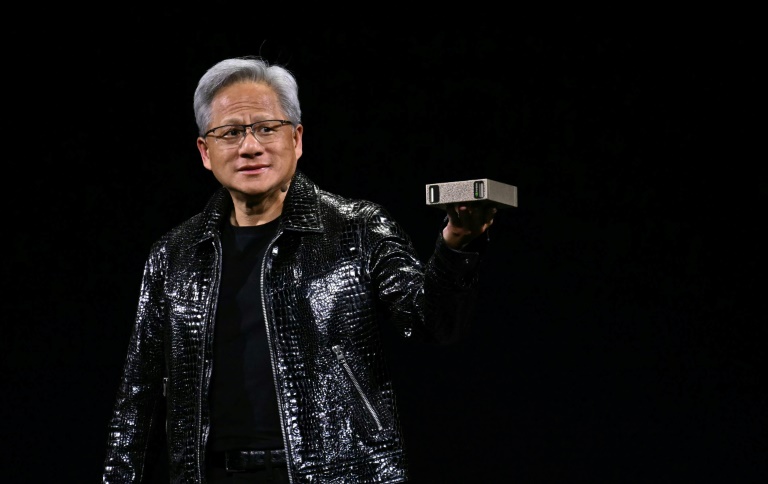
Nvidia shares climbed 2.5% Tuesday morning, trading at $211.80 as of 9:45 a.m. Eastern time, as the stock rode a broader rally across semiconductor names ahead of a closely watched earnings report from rival Advanced Micro Devices due after the market closes.
Tuesday’s advance builds on a modest but steady climb for Nvidia in recent sessions, with shares having bounced from a spring low near $164 to trade in the $206 to $212 range heading into the new week. Despite the recent gains, the stock remains well below the record closing high of $237.95 it set in May, leaving Nvidia’s 2026 performance notably more muted than the outsized gains investors grew accustomed to during 2023, 2024 and 2025.
A quieter year by Nvidia’s own standards
Nvidia’s stock is up roughly 5% to 11% so far in 2026, depending on the measurement window used, a pace that trails the broader S&P 500’s roughly 10% gain for the year. That relatively modest performance stands in sharp contrast to Nvidia’s recent history as one of the market’s most dominant performers, a shift that has prompted renewed debate among investors over whether the stock’s rapid rise in prior years has left less room for outperformance going forward.
Even so, Wall Street’s overall stance on Nvidia remains overwhelmingly positive. Nearly every analyst covering the stock currently rates it a buy, and shares have posted gains over the past week, month and year alike heading into the company’s next earnings report, scheduled for August 26. Analysts covering the stock are projecting the company will nearly double its profit when that report arrives, underscoring continued confidence in Nvidia’s central role in the broader artificial-intelligence infrastructure buildout.
Tuesday’s rally tied to the broader chip sector
Much of Tuesday’s move in Nvidia shares appeared linked to broader momentum across semiconductor stocks rather than any Nvidia-specific announcement. Rival chipmakers AMD and Intel both posted sharper gains in the same session, with AMD set to report its own second-quarter results after Tuesday’s close and Intel extending a recent rebound following weeks of sharp volatility tied to broader sector jitters. The rally across chip names also coincided with a broader market advance driven by easing tensions in the Middle East, falling oil prices, and strong corporate earnings from companies including Caterpillar and Palantir Technologies, all of which have helped lift risk appetite across Wall Street in recent sessions.
Lingering questions about AI demand
Despite the bullish near-term setup, some prominent investors have continued to raise questions about the sustainability of the AI infrastructure spending that underpins much of Nvidia’s growth story. Michael Burry, the investor known for correctly predicting the 2008 housing market crash, has publicly voiced skepticism about the durability of current AI-related demand projections, a warning that continues to circulate among analysts even as Nvidia’s stock trades near multi-month highs heading into its next earnings report.
Broader industry analysis has also flagged a mix of competing views on the AI infrastructure buildout. Some analysts argue that current levels of capital expenditure among major cloud providers may exceed near-term demand for AI services, raising the possibility of a spending pullback down the line. Others contend that infrastructure investment remains in its early stages relative to the pace of adoption for generative AI applications, with the total addressable market for AI accelerators projected to exceed $200 billion annually by 2027.
China remains a wildcard
Nvidia’s business in China has continued to face regulatory uncertainty, adding another layer of complexity to the stock’s outlook. Reports in early July indicated that Chinese officials plan to allow the country’s leading domestic AI companies to purchase limited volumes of Nvidia’s H200 chips, while restricting approvals to less than half of the amounts requested by those firms. That partial and constrained access reflects the continued tension between U.S. export policy and China’s efforts to secure advanced AI computing hardware, a dynamic that has weighed on sentiment toward Nvidia’s China-related revenue in recent months.
A summer marked by sector-wide swings
Nvidia’s path through the summer has mirrored broader volatility across the chip sector. A mid-July selloff tied to renewed doubts about the durability of the AI rally sent the Philadelphia Semiconductor Index down 6.7% over a two-session stretch, with weakness rippling into other major chip-heavy markets, including South Korea’s Kospi index. Nvidia shares moved within a relatively narrow band during that stretch, trading between roughly $195 and $212 over the course of July before stabilizing and beginning to climb again heading into August.
Valuation remains a point of debate
Nvidia currently trades at roughly 21.7 times forward earnings, a multiple that some analysts note is now essentially in line with the broader S&P 500, a notable shift for a stock that has historically commanded a significant premium relative to the broader market. Bulls argue that the multiple looks far more attractive once next year’s projected earnings growth is factored in, given Wall Street’s continued expectations for substantial profit growth. Skeptics, meanwhile, point to that same valuation compression as evidence that investors are growing more cautious about pricing in continued outsized growth from a company whose stock has already delivered years of exceptional returns.
With AMD’s earnings due Tuesday evening and Nvidia’s own report still three weeks away, investors are likely to parse AMD’s results closely for read-through signals on broader AI chip demand, server CPU competition and data center spending trends heading into Nvidia’s August 26 report. Until then, Nvidia’s stock is expected to continue trading in step with broader sentiment toward the semiconductor sector and the AI infrastructure buildout more broadly, even as the debate over the durability of that demand, highlighted by skeptics like Burry, continues to shadow an otherwise bullish setup heading into the company’s next set of results.
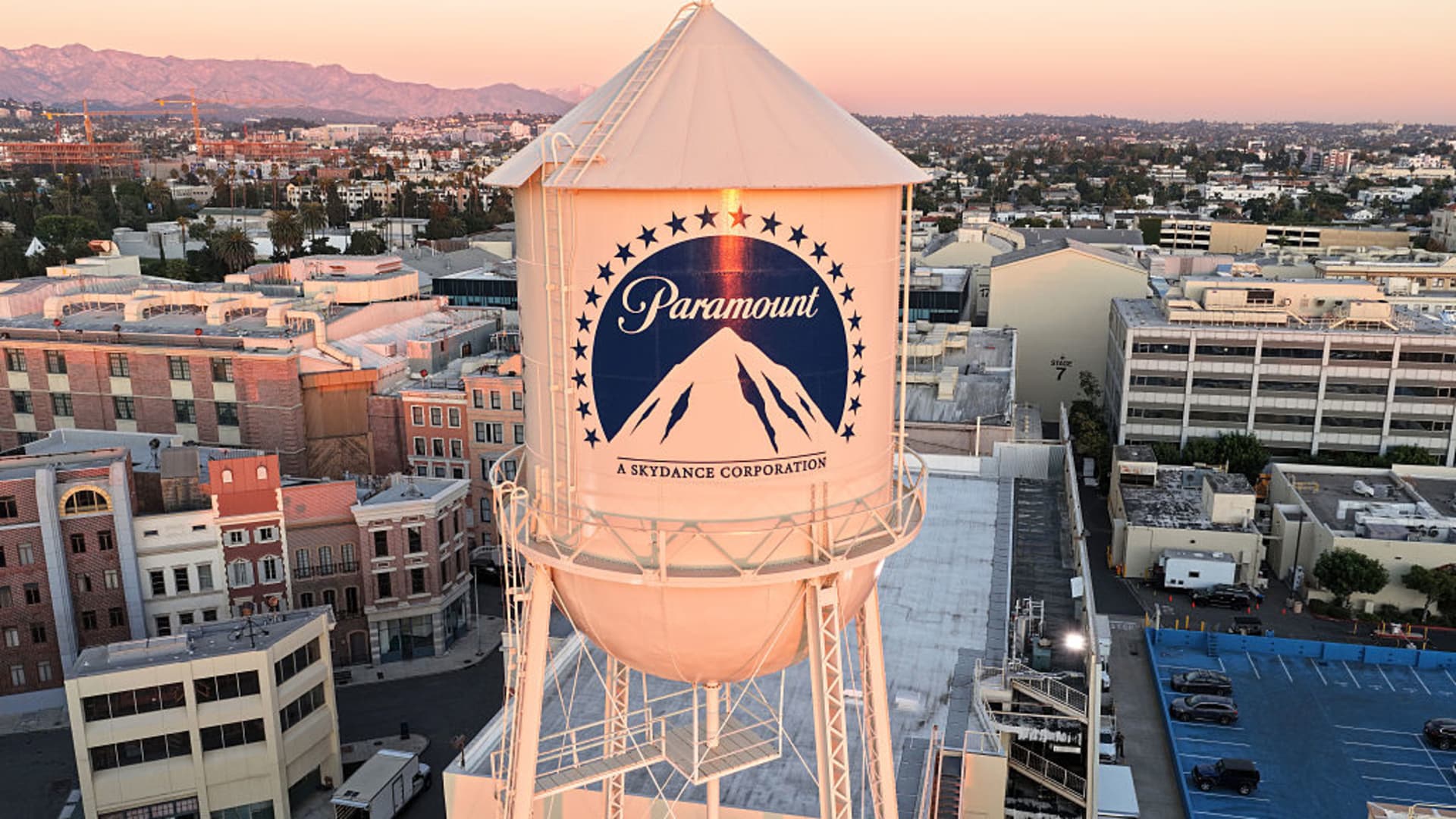
An aerial view of the Paramount logo displayed on the water tower at Paramount Studios on Dec. 8, 2025, in Los Angeles, California.
Mario Tama | Getty Images
Paramount Skydance raised its full-year guidance on Tuesday and reported second-quarter results that showcased the continued strengths of streaming and weaknesses of linear TV.
While Paramount beat Wall Street expectations for revenue and reported gains in its streaming unit, led by its Paramount+ streaming service, its portfolio of cable TV networks continued to weigh on the overall company.
Still, Paramount noted that cost cutting and its “creative execution” for the traditional TV business helped to improve margins and profit in the quarter.
Here’s how Paramount Skydance performed in the period ended June 30 compared with Wall Street estimates compiled by LSEG:
- Earnings per share: 4 cents
- Revenue: $6.91 billion vs. $6.88 billion expected
Paramount reported net earnings attributable to the company of $41 million, or 4 cents per share, versus $57 million, or 8 cents per share, in the comparable year-earlier period.
The company’s reported EPS for the second quarter was not comparable to Wall Street estimates of 15 cents per share adjusted, according to LSEG.
Paramount reported $6.91 billion in total revenue, up slightly year over year. Revenue for the direct-to-consumer streaming segment — which consists of Paramount+, BET+ and the free, ad-supported Pluto TV — was up 9% to $2.47 billion, while film studios revenue increased 16% to $1.31 billion. TV media revenue declined 9% to $3.13 billion.
The company said the second quarter was its “best quarter for retention in Paramount+’s history,” due to series like the “Yellowstone” spinoff “Dutton Ranch,” as well as live sports like the UFC and offering of the FIFA World Cup in parts of Latin America.
Paramount+ added 2 million subscribers during the quarter, bringing its total to 81.6 million global customers.
The company said Tuesday it was raising its full-year 2026 guidance for adjusted earnings before interest, taxes, depreciation and amortization to a range of $3.8 billion to $3.9 billion, due to savings from last year’s merger of Paramount and Skydance. The company has said it plans to save $3 billion from the consolidation.
Paramount still expects total revenue in 2026 of $30 billion, representing 4% growth year over year. Direct-to-consumer revenue from both streaming subscriptions and advertising is expected to accelerate for the year.
For the third quarter, Paramount expects total revenue of between $6.95 billion and $7.15 billion and for Paramount+ subscriber additions to be “flattish” quarter over quarter.
WBD merger trajectory
David Ellison, CEO of Paramount Skydance, speaks during the Paramount Pictures presentation at CinemaCon, the official convention of Cinema United, in Las Vegas, Nevada, April 16, 2026.
Caroline Brehman | Reuters
Tuesday’s earnings report comes nearly one year since the completion of Skydance’s merger with Paramount, putting the storied Hollywood company under the leadership of CEO David Ellison.
The company highlighted “early benefits” to unifying the tech behind Paramount+ and Pluto TV. It also noted that it increased Paramount’s film slate from eight to 15 films.
Paramount has more recently been in pursuit of Warner Bros. Discovery, a combination that has been held up by an antitrust challenge brought by U.S. states.
However, Ellison reiterated the company’s confidence in that merger Tuesday.
“As we’ve executed against our strategy over the past year, we’ve also prepared to close the transaction, and we remain confident it will be completed, creating a stronger, more competitive, creative-first media company that builds on the foundation we’ve established — one that benefits consumers, theater exhibitors and creatives,” he said in a shareholder letter.
Last month, Paramount agreed to delay the closing of the proposed acquisition to as late as June 2027 due to the lawsuit brought forth by a group of state attorneys general.
Initially Paramount said it planned to close the deal by the end of September. It has received approval from the antitrust division of the U.S. Department of Justice, as well as from several global jurisdictions, including European regulators.
The U.S. states’ lawsuit will go to trial in March 2027, according to a court filing on Tuesday.

RB Global Q2 2026 slides show agriculture push, raised guidance
Business
Trump’s Investment Accounts Bought Alphabet and Meta Stock, Disclosures Show as Wall Street Sees Upside
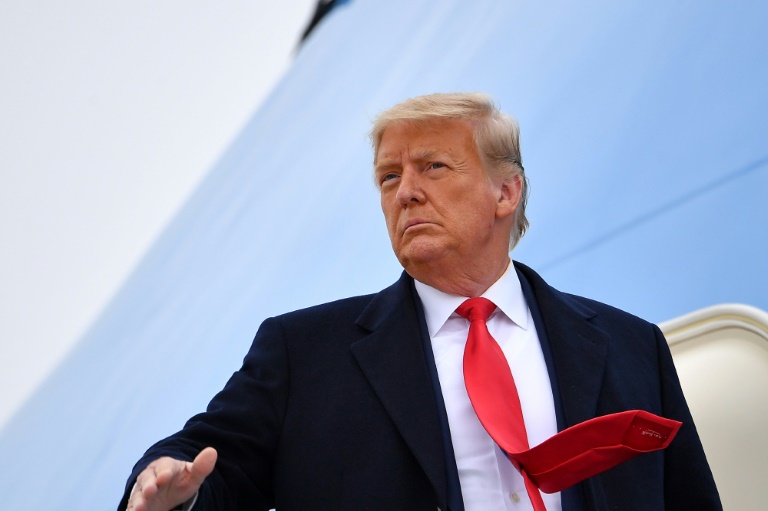
President Donald Trump’s investment accounts were net buyers of shares in Alphabet and Meta Platforms during the first five months of 2026, according to financial disclosures filed with the U.S. Office of Government Ethics, adding two of the market’s most closely watched artificial-intelligence companies to a broader portfolio that recorded more than 6,200 stock trades over the same period.
The disclosures show net purchases of Alphabet shares totaling between $1.7 million and $3.6 million through May, along with net purchases of Meta Platforms stock ranging from $845,000 to $4.8 million over the same stretch. Federal ethics filings typically report holdings and trades within broad value ranges rather than exact figures, a standard disclosure practice for senior government officials.
Third-party managers, not Trump, made the calls
The accounts reflected in the disclosures are managed by third-party financial advisors, meaning Trump was not personally responsible for the individual buy and sell decisions reflected in the filings. The arrangement is a common one among wealthy public officials, allowing investment decisions to be made independently of the officeholder while still requiring periodic disclosure of the resulting portfolio activity under federal ethics rules.
Both Alphabet and Meta sit at the center of the ongoing buildout of artificial-intelligence infrastructure, and a majority of Wall Street analysts currently view both stocks as undervalued relative to their growth prospects, based on median analyst price targets compiled by financial researchers.
Alphabet’s case: a discounted AI leader
Alphabet reported strong second-quarter results that topped analyst estimates on both revenue and earnings. Revenue rose 24% to $119.7 billion, marking the company’s sixth consecutive quarter of accelerating growth, driven largely by 82% sales growth in its cloud computing division. Operating income, excluding unrealized gains tied to the company’s investment in SpaceX, climbed 30% to $40.7 billion.
Despite adding roughly 4% since that earnings report, Alphabet shares continue to trade at what analysts describe as an attractive valuation, roughly 18 times earnings, a significant discount to the company’s five-year average multiple of 24 times earnings. On the company’s earnings call, CEO Sundar Pichai pointed to strength across Alphabet’s AI product lineup, noting that nearly 90% of Fortune 100 companies now use Gemini Enterprise, the company’s platform for building AI agents and automating business workflows, while more than 9 million developers build on Alphabet’s Gemini models each month.
Pichai also highlighted growing demand for Alphabet’s custom AI chips, known as Tensor Processing Units, which the company has historically rented to cloud computing customers but has recently begun selling directly to select clients for use in their own data centers, a shift that positions Alphabet as a more direct competitor to Nvidia in the AI chip market.
Wall Street projects Alphabet’s earnings will grow at an annual rate of roughly 14% over the next three years, a forecast that has led most analysts covering the stock to view its current valuation as reasonable relative to its growth outlook. The median analyst price target of $425 per share implies roughly 20% upside from Alphabet’s current trading price of $355.
Meta’s mixed quarter, but a bullish long-term view
Meta Platforms delivered a more mixed second-quarter report, beating analyst expectations on revenue but falling short on profitability. Revenue climbed 28% to $60.8 billion, while operating margin fell 12 percentage points and net income dropped 13% to $6.18 per diluted share. The results, weighed down by legal costs, severance expenses and heavy AI infrastructure spending, sent Meta shares down 10% following the report.
Meta executives have characterized much of that margin pressure as tied to one-time charges rather than a structural shift in the company’s underlying business. Speaking to analysts on the earnings call, CEO Mark Zuckerberg said the company’s AI investments were beginning to pay off across its core operations. “We are now at a point where our investments in AI are accelerating,” Zuckerberg told analysts, pointing to improvements in the user experience across Meta’s apps, stronger performance for advertisers, and faster development of new products by internal teams.
Zuckerberg also outlined Meta’s broader plans to monetize its AI investments going forward, pointing to new personal AI agents the company is developing as a foundation for future products, including the recently launched Meta Business Agent, which answers business questions and automates workplace tasks. The company is also exploring a new cloud computing division that would rent out excess data center capacity directly to outside customers.
Wall Street expects Meta’s earnings to grow at roughly 21% annually over the next three years, a projection that has left the stock’s current valuation of about 21 times earnings looking inexpensive to many analysts despite the disappointing quarterly profit figure. Among 71 analysts covering the stock, the median price target sits at $770 per share, implying roughly 39% upside from Meta’s current trading price of $554.
A snapshot, not a strategy
While the disclosures offer a rare, itemized look at where money tied to the president’s investment accounts has flowed in recent months, ethics experts note that such filings reflect the decisions of independent portfolio managers operating under broad discretion, rather than any specific market view held personally by the president. The high volume of trading activity, more than 6,200 transactions through May alone, further underscores that the accounts appear to be managed under an active trading strategy typical of professionally managed portfolios rather than a small number of deliberate, individually chosen stock picks.
What the disclosures don’t show
The filings do not indicate whether the Alphabet and Meta positions have since been added to, reduced or sold entirely following the companies’ respective earnings reports, nor do they provide exact dollar figures for the trades, consistent with standard federal financial disclosure requirements that report holdings within set value bands rather than precise amounts. Future ethics filings covering the remainder of 2026 would be needed to determine whether the accounts’ exposure to either stock has changed in the months since May.
Business
SK Hynix ADR Shares Jump Nearly 4% as Wall Street Analysts Launch Bullish Ratings on HBM Rally Today
Shares of SK Hynix’s U.S.-listed American Depositary Receipts climbed 3.88% Tuesday morning, trading at $148.26 as of 9:58 a.m. Eastern time, as a wave of bullish analyst coverage reinforced the memory chipmaker’s leading position in the booming market for high-bandwidth memory used in AI accelerators.
Tuesday’s advance offers a measure of stability for a stock that has swung dramatically over the past several weeks, whipsawed by a combination of blockbuster earnings, geopolitical shocks and shifting sentiment toward AI-related demand. The gains follow a Monday session in which SK Hynix shares had tumbled sharply alongside a broader technology selloff tied to renewed tensions surrounding Iran.
A wave of bullish analyst initiations
The rally came as three major Wall Street firms, Stifel, Wolfe Research and RBC Capital Markets, initiated coverage of SK Hynix with bullish ratings, setting price targets ranging from $200 to $240 per ADR. The firms pointed to SK Hynix’s dominant position in high-bandwidth memory, known as HBM, a specialized form of DRAM used extensively in Nvidia’s AI accelerator chips, as the central pillar of their optimistic outlook.
Stifel estimated that SK Hynix held more than 60% of the global HBM market in 2025, while RBC placed the company’s current market share at roughly 55% to 56%. All three firms said they expect AI-related memory demand to remain robust as cloud computing providers continue expanding their training and inference infrastructure, with the rise of agentic AI applications expected to drive higher memory content per server going forward. The analysts forecast DRAM bit demand growth of more than 20% annually, with global supply expected to struggle to keep pace due to physical capacity constraints across the broader chip manufacturing industry. A key catalyst identified across the reports involves anticipated HBM contract repricing expected in 2027.
A blowout quarter that still triggered a selloff
The renewed analyst optimism follows a second-quarter earnings report that, by nearly every financial measure, exceeded expectations. SK Hynix posted quarterly revenue of 79.3 trillion won, up 51% from the prior quarter and 257% from a year earlier, alongside operating income of 60.5 trillion won, representing a record operating margin of 76%. DRAM prices surged roughly 30% during the quarter, while NAND flash pricing climbed nearly 50%.
The company also confirmed it had begun mass production of HBM4, the next generation of high-bandwidth memory technology used in advanced AI chips, making SK Hynix the first manufacturer in the industry to reach that milestone. Rival Samsung remains in the qualification stage with Nvidia for its own HBM4 offering, while Chinese memory maker CXMT has yet to disclose any HBM manufacturing capability, leaving SK Hynix with a notable head start in one of the most technically demanding and highly valued segments of the memory chip market.
Despite those results, SK Hynix shares fell in the aftermath of the earnings release, a reaction some analysts attributed to investors locking in gains following the stock’s sharp run-up earlier in the year rather than any concern about the underlying business.
A volatile stretch tied to geopolitics
SK Hynix’s stock has experienced significant swings over the past several weeks entirely apart from its own earnings. Shares peaked near $193.92 in mid-July before sliding into the $140s amid a broader selloff across technology and semiconductor names. Much of that pressure intensified Monday, when SK Hynix shares plunged more than 11% in Seoul trading and roughly 8% in U.S. premarket trading as renewed U.S. military action against Iran sent risk-off sentiment sweeping through global markets.
Analysts tracking the stock’s daily movements described the recent volatility as driven primarily by macroeconomic and geopolitical shocks rather than any company-specific developments, noting that SK Hynix’s chart had shown a pattern of lower highs and heavy selling pressure through late July before stabilizing. The stock’s roughly 35% decline in July was followed by signs of a partial recovery, including a notable rebound in Friday trading, before Monday’s Iran-related selloff briefly reversed some of those gains.
A relatively new addition to U.S. markets
SK Hynix’s American Depositary Receipts represent a relatively recent addition to U.S. exchanges. The company submitted a confidential filing to the U.S. Securities and Exchange Commission in March seeking a Wall Street listing, with plans to raise between $6.7 billion and $10 billion to fund AI infrastructure expansion, including its Yongin HBM production hub in South Korea and a packaging plant in Indiana. At the time of that filing, the company’s Seoul-listed shares had already gained roughly 60% year-to-date, building on a 274% surge throughout 2025.
SK Hynix Chief Executive Kwak Noh-Jung has also outlined plans to accumulate more than 100 trillion won in net cash to support the company’s broader strategic growth initiatives, underscoring the scale of capital the company is directing toward expanding its position in the AI memory market.
A company with deep roots in South Korea’s chip industry
Headquartered in Icheon-si, South Korea, SK Hynix traces its origins back to 1949 and operated for years as Hynix Semiconductor before adopting its current name in 2012. The company manufactures a broad range of memory products, including server, mobile, PC and consumer DRAM, NAND flash memory, solid-state drives and other chip components, alongside a smaller foundry business focused on non-memory semiconductors. Its customers span the server, networking, mobile, personal computer, consumer and automotive sectors.
With Wall Street’s newest coverage initiations reinforcing SK Hynix’s leadership in the HBM market and its head start on HBM4 production, analysts say the company remains well positioned to benefit from continued growth in AI infrastructure spending, even as its stock continues to show sensitivity to broader geopolitical developments in the near term. Investors are likely to keep a close watch on how quickly HBM contract pricing evolves heading into 2027, a factor analysts have flagged as a potential turning point for the stock’s longer-term trajectory, as well as any further developments tied to the ongoing tensions surrounding Iran that have repeatedly rattled technology markets in recent sessions.

Earnings call transcript: Coupang Q2 2026 beats EPS, stock falls after revenue miss
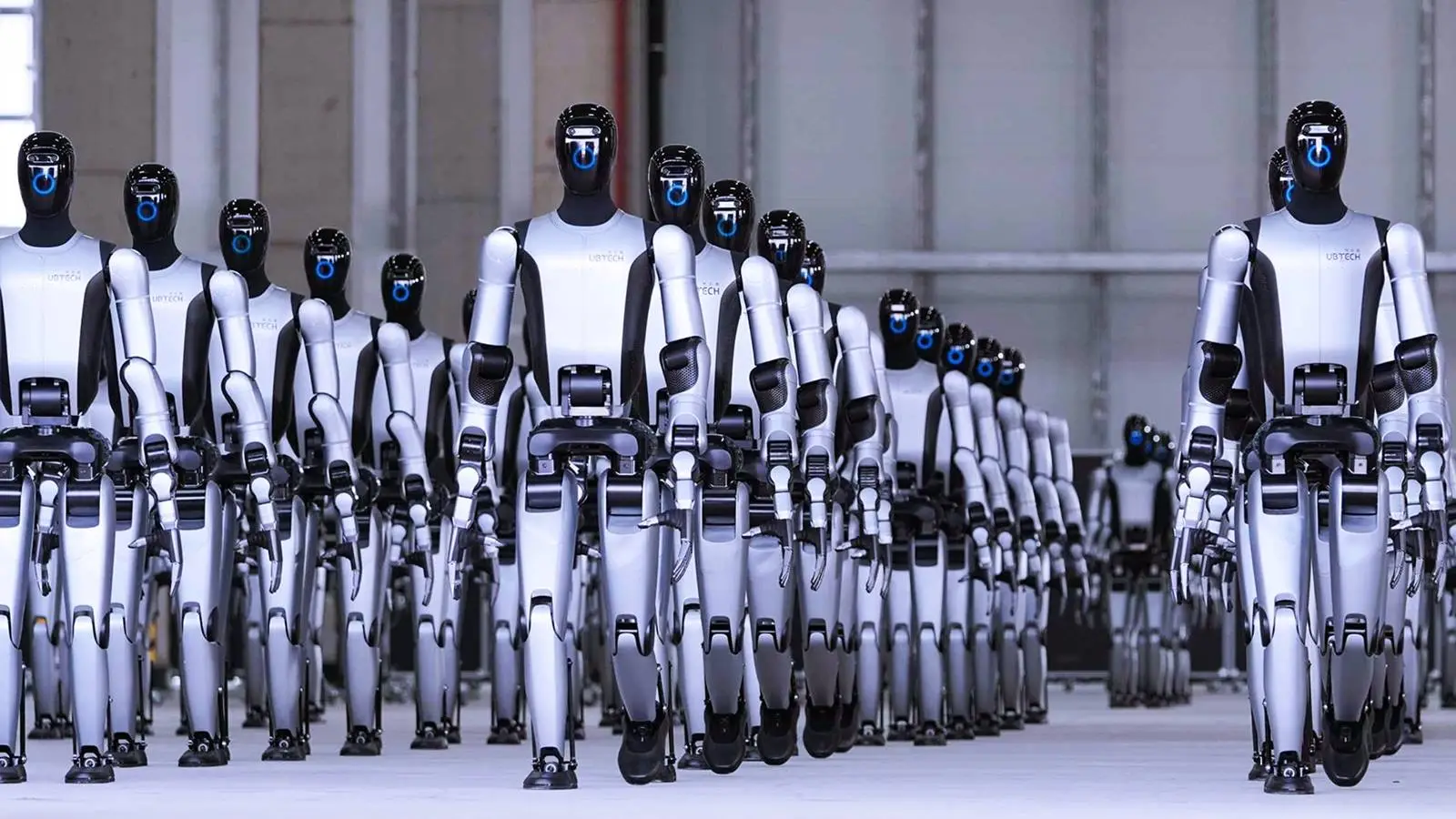
- Thailand’s Board of Investment has approved over 10 billion baht in investment from five Chinese companies to establish the country’s first humanoid robot component manufacturing base in the Eastern Economic Corridor. The facilities will produce structural parts such as joints and robot bodies, with projections of over 1,000 skilled jobs and 45 billion baht in local sourcing.
- The move mirrors the pattern already seen in Thailand’s electric vehicle sector, where Chinese firms relocated capacity to leverage investment incentives and regional logistics. Southeast Asian countries are adopting distinct roles in an emerging Chinese-led robotics supply chain, with Thailand focused on components, Singapore on applications, and Vietnam on technology exchange.
For years, the story of Chinese robotics in Southeast Asia was a trade story: finished machines shipped south to serve a growing industrial base. That story is changing. China is no longer just exporting robots to the region — it is exporting the supply chain that builds them, and Thailand has just landed one of the first major pieces of it.
A ten-billion-baht foothold in Chachoengsao
In February, Thailand’s Board of Investment approved more than 10 billion baht in combined investment from five Chinese companies — Xusheng Group, Sanhua Intelligent Drives, Hangzhou Seenpin Electromechanical Transmission, Beite Technology and Tuopu Technology — to build what the BOI describes as the country’s first humanoid robot component production base, sited in the Eastern Economic Corridor.
Building the joints, not just the machines
BOI secretary-general Narit Therdsteerasukdi framed the project as a supply-chain play rather than a consumer-facing one: the plants will manufacture structural components such as robot bodies, joints and “bone” parts using lightweight, high-strength materials, rather than assembling complete units for sale. Xusheng Group alone is putting 2.7 billion baht into a Rayong facility dedicated to this kind of component work. The BOI says the cluster is expected to generate more than 1,000 high-skilled jobs and source local parts worth 45 billion baht — a local-content requirement consistent with how Thailand has historically used investment promotion to force technology transfer rather than simply attract assembly lines.
The timing lines up with the industry’s own growth curve. The BOI is betting on a humanoid robot market it expects to grow more than 130 percent annually, moving toward full commercial-scale production by 2027. That is an aggressive assumption, and one worth treating with some skepticism, but it explains why Thailand is racing to lock in supply-chain positioning now rather than waiting for the market to mature.
Same firms, same playbook as EVs
None of this happened in isolation. It follows almost exactly the pattern Thailand’s EEC has already seen with electric vehicles: Chinese manufacturers relocating capacity to Thailand not because Thai demand justifies it on its own, but because the country offers investment incentives, a coastal logistics base, and proximity to regional assembly. Several of the same industrial groups now supplying humanoid robot components have existing automotive supply-chain operations in Thailand, and the overlap is not incidental — Chinese EV makers have increasingly shared manufacturing lines, tooling and supplier networks between vehicles and humanoid robots, a strategy credited with cutting fixed costs and, by some industry estimates, trimming labor costs by roughly a third at firms pursuing it.
Thailand’s broader investment data backs up how central Chinese capital has become to this shift. In the first half of 2026, foreign investment approvals in Thailand rose 68 percent year-on-year to nearly 188 billion baht, with China leading by number of approved businesses — 110 companies nationally, and 69 of them in the EEC specifically, worth close to 29 billion baht. Japan still leads by investment value, but China’s deal volume signals a much broader and more diversified base of Chinese firms setting up shop, of which the robotics cluster is one strand.
That momentum has political backing at the highest level. At the Thailand-China Cooperation Expo in Bangkok this week, Prime Minister Anutin Charnvirakul pledged to fast-track BOI and EEC approvals for Chinese investors and warned officials against creating bureaucratic friction — a signal that Thailand intends to keep competing aggressively for this kind of manufacturing, not simply accept whatever comes its way.
The region is placing different bets
Thailand’s approach — building the component base — is only one of several strategies Southeast Asian governments are pursuing simultaneously, and it is worth situating alongside them. Singapore is positioning itself as an integration and applications hub rather than a manufacturing one: the Shanghai Humanoid Robot Innovation Incubator, one of China’s leading humanoid robotics platforms, is opening its first overseas office there in the second half of 2026, aiming to pair Chinese hardware with Singaporean deployment scenarios in healthcare, education and security. Vietnam, meanwhile, is courting Chinese robotics and AI startups through innovation-center partnerships focused on technology transfer and exhibition space rather than production.
Seen together, the region is not simply receiving a wave of Chinese robots — it is splitting into distinct roles within a Chinese-led robotics value chain: Thailand for components, Singapore for applications and capital, Vietnam for technology exchange. Whether that division holds as the industry matures, or whether it hardens into dependency on Chinese platforms and standards, is the open question.
A note of caution
China’s own industry figures are candid that this is a deliberate strategic push, not simply firms chasing markets. Executives speaking at the World Artificial Intelligence Conference in Shanghai this month described China’s growing global presence in robotics explicitly as a matter of national responsibility — exporting not just hardware but standards, with the ambition that Chinese platforms become the default choice on capability rather than price alone. That ambition has already drawn scrutiny elsewhere: Chinese lidar maker Robosense was named, then dropped, from a Pentagon list of firms with alleged military links, and US lawmakers have moved to introduce legislation restricting government use of foreign autonomous systems. For Thailand, the calculus is different — the EEC deal is being pursued explicitly as an industrial and jobs opportunity — but it sits inside a wider geopolitical debate about how reliant global manufacturing should become on a single country’s robotics supply chain.
For now, the numbers argue for Thailand’s bet: a fast-growing market, willing Chinese capital, and a government actively clearing the path. Whether the EEC becomes a genuine robotics manufacturing hub or a component outpost within someone else’s supply chain is likely to become clearer well before that 2027 commercialization target arrives.
Other People are Reading

Palantir Technologies surged nearly 30%, its biggest one-day percentage gain since February 2024, after the company raised its annual revenue forecast.
Caterpillar, widely viewed as a bellwether for the global industrial economy, rose about 6% after lifting its annual revenue-growth forecast. The expansion of AI data centres has boosted demand for the company’s power-generation and construction equipment.
The stock was the Dow’s biggest contributor, adding more than 300 points to the blue-chip index. Investors have been closely examining results from AI-linked companies for signs that the industry’s massive spending will generate sufficient returns.
Crude prices fall 5% on US-Iran deal hopes

Stocks received an additional boost as crude oil prices fell about 5% on hopes of a diplomatic resolution to the conflict. A Qatari official was quoted by Reuters as saying that negotiations were continuing while US Treasury Secretary Scott Bessent said a deal with Iran to reopen the Strait of Hormuz could be reached within two days.
The decline in oil prices also reduced expectations of a Federal Reserve rate hike in September, pushing US Treasury yields lower.
“I don’t sense one ounce of skepticism among investors, from oil to interest rates to equities,” Jack Ablin, chief investment strategist and founding partner at Cresset Capital Management in Chicago, told Reuters.
“The earnings reports were certainly supportive, and that’s great news, but I’m not sure a handful of earnings reports justifies new records in the S&P,” he said.
Meanwhile, the S&P 500 gained 137.20 points, or 1.81%, to end at 7,737.70 points, while the Nasdaq Composite gained 668.10 points, or 2.58%, to 26,581.99. The Dow Jones Industrial Average rose 912.25 points, or 1.72%, to 54,090.66.
The Dow recorded a closing high for a second straight day after notching its first since July 6 on Monday, while the S&P 500 on Tuesday secured its first closing record since July 2.
Semiconductor stocks, viewed as major beneficiaries of AI spending, rallied sharply. The Philadelphia Semiconductor Index surged nearly 7% and was headed for a fourth consecutive daily gain after tumbling 20.6% in July. The S&P 500 technology sector climbed 4.5%, leading all 11 major sectors.
Corporate results have largely exceeded expectations this earnings season. Of the 304 S&P 500 companies that had reported second-quarter results as of Friday, 85.2% beat estimates, compared with a long-term average of 67.5%, according to LSEG, Reuters reported. Every major S&P 500 sector recorded profit growth.
SpaceX shares jumped more than 8% ahead of the company’s first earnings report since its public debut, due after the market close. McDonald’s edged up 0.1% despite disappointing results, while Pfizer gained 1.1% following an upbeat quarterly report.
On the economic front, U.S. job openings declined in June, driven by a sharp drop in the healthcare and social-assistance sector. However, stronger hiring and low layoffs indicated that the labour market remained stable. The figures were the first in a series of labour-market reports this week, culminating in Friday’s government payrolls data.
Advancing stocks outnumbered decliners by 2.11 to 1 on the NYSE and 2.95 to 1 on the Nasdaq. The S&P 500 recorded 25 new 52-week highs and three new lows, while the Nasdaq Composite posted 117 new highs and 43 new lows.

The 2026 MLB trade deadline delivered one of the most eventful stretches in recent memory, with a wave of star pitchers changing teams and a stunning catcher blockbuster capping off a whirlwind final day that reshaped the league’s playoff picture.
The action began in earnest Saturday night, when the Detroit Tigers stunned the baseball world by trading ace Tarik Skubal to the reigning champion Los Angeles Dodgers. From there, the pace only intensified, with Freddy Peralta heading to the Tampa Bay Rays and Kevin Gausman landing with the Chicago Cubs on Sunday, before Monday’s deadline day brought a flood of additional deals, including several intra-division swaps and one especially surprising blockbuster.
The Dodgers land the deadline’s top prize
Few teams came away from the deadline in a stronger position than the Los Angeles Dodgers, who acquired Skubal, this year’s most coveted trade chip, without giving up any established big-league talent or gutting their farm system in the process. Beyond the Skubal deal, the defending champions also made a lower-risk addition in injured Royals starter Kris Bubic, an All-Star last season, and bolstered their catching depth by adding reinforcements while regulars Will Smith and Dalton Rushing dealt with injuries. Analysts covering the deadline widely agreed that landing Skubal alone would have been enough to declare the Dodgers among the deadline’s biggest winners, regardless of what else the team did over the following two days.
A stunning blockbuster sends Rutschman to Boston
The deadline’s most surprising move came Monday, when the Baltimore Orioles sent star catcher Adley Rutschman to the Boston Red Sox in exchange for a significant haul of Boston’s top prospects, reportedly including three of the organization’s top five. The trade marked a dramatic fall for a Baltimore team that just three years ago won 101 games and appeared poised to build a potential American League dynasty. The Orioles also dealt outfielder Taylor Ward to the Seattle Mariners, along with pitchers Tyler Wells and Dean Kremer, effectively signaling an end to any realistic postseason hopes for Baltimore this season.
For the Red Sox, the return was viewed almost universally as a win. Boston entered the deadline aggressively, and the early returns looked promising, with newly acquired infielder Curtis Mead performing well almost immediately after the trade. Combined with the Rutschman addition, Boston, along with the Cubs and Dodgers, was widely cited among the deadline’s biggest overall winners for the scale of improvement each team made to its roster heading into the stretch run.
Padres load up on pitching without sacrificing Miller
The San Diego Padres also emerged as one of the deadline’s clear winners, addressing a rotation that had become a glaring weakness even as the team’s offense began clicking in recent weeks and pushed San Diego back into playoff contention. The Padres added both Robbie Ray and Casey Mize to bolster their pitching staff, moves that came on top of already having Nick Pivetta and Joe Musgrove working their way back from rehab assignments. Perhaps just as notable as what San Diego added was what it chose not to give up: the team held onto closer Mason Miller despite persistent trade speculation, a decision analysts framed as a win in its own right.
Sellers cash in in a seller’s market
With so many teams pushing to buy at the deadline, sellers found themselves in an unusually strong negotiating position. The San Francisco Giants and New York Mets both leaned heavily into selling and were widely credited with capitalizing on that dynamic, extracting strong returns for the players they moved. Smaller-market clubs including the Pittsburgh Pirates, Chicago White Sox, Cleveland Guardians and Los Angeles Angels also drew praise for departing from their usual cautious approach, making aggressive moves to either improve their playoff odds or restock diminished farm systems.
Tigers and Orioles among the deadline’s biggest losers
On the other side of the ledger, the Detroit Tigers emerged as one of the deadline’s most notable losers, a distinction tied directly to trading away Skubal following what analysts described as a disappointing offseason in which the club did little to address bullpen and offensive shortcomings. That inaction, more than any single deadline decision, was cited as the root cause behind Detroit’s need to move its ace rather than build around him.
The Orioles fared even worse in the eyes of most analysts. Baltimore’s decision to trade Rutschman, taken with the No. 1 overall pick in the 2019 draft, without the team ever winning a single postseason game during his tenure, was described by some as a franchise failure years in the making, even if the return of top Red Sox prospects made sense from a pure value standpoint given Rutschman’s injury history and inconsistent production relative to his reputation. Entering Monday, Baltimore held roughly a 17% chance of making the playoffs, according to projections from FanGraphs, though most analysts agreed the team never truly played like a postseason contender this season.
Yankees and Phillies left wanting more
The New York Yankees were also widely viewed as coming up short at the deadline, with critics arguing the team failed to do enough to meaningfully improve its roster amid a tightening American League race. The Philadelphia Phillies faced similar criticism, having entered deadline day suddenly fighting just to secure a wild-card spot without adding the starting pitching help many analysts felt the roster needed. Philadelphia’s other deadline additions also created ripple effects across its infield, with third baseman-turned-second baseman Bryson Stott shifting again to an unfamiliar spot at third base, while Bryce Harper moved back to right field, the position where he began his career, and Alec Bohm shifted from third base to first.
With the deadline now in the rearview mirror, analysts caution that true winners and losers won’t be fully clear until the postseason plays out, or until some of the prospects dealt away Monday accumulate more experience in the years ahead. For now, though, the flurry of moves has reshaped the National and American League playoff pictures heading into the season’s final stretch, setting up what many expect to be one of the most competitive finishes in recent memory.

Operator
Good afternoon. My name is Christine, and I will be your conference operator today. At this time, I would like to welcome everyone to Toast Second Quarter 2026 Earnings Conference Call. Today’s call will be 45 minutes.
I will now turn the call over to Michael Senno, Senior Vice President of Finance. You may begin your conference.
Michael Senno
Senior Vice President of Finance
Thank you. Welcome to Toast Second Quarter 2026 Earnings Call. First, CEO, Aman Narang; and CFO, Elena Gomez, will open with prepared remarks followed by Q&A.
Before we start, I’d like to remind everyone that today’s call may include forward-looking statements, which are subject to risks and uncertainties and reflect our views and assumptions only as of today. These forward-looking statements include expectations around financial and operational metrics, products, business and investment strategy and guidance. Actual results may vary significantly, and we expressly disclaim any obligation to update the forward-looking statements made today. For a detailed discussion of risks, please refer to the cautionary language in today’s press release and our SEC filings.
During this call, we will discuss certain non-GAAP financial measures, including, but not limited to, non-GAAP subscription services gross profit and non-GAAP financial technology

Alaa Murabit

Carlos Alcaraz: World number two withdraws from Cincinnati Open with wrist injury

Tearing Down Aircraft Weather Radar Avionics


-

 Business6 days ago
Why Trees Belong on the Risk Register
-

 Fashion4 days ago
Weekend Open Thread: Wit & Wisdom
-

 Politics4 days ago
Meta enters AI-training agreement with far-right ‘propaganda rag’ Newsmax
-

 Politics6 days ago
Reform UK betrays West Mids residents by running from party pledges
-

 Crypto World3 days ago
MicroStrategy Post-Earnings CLARITY Act Push Could Add New Catalyst for Its Stock
-

 Business7 days ago
Major shareholder moves on Canyon
-

 Crypto World4 days ago
XRP Ledger v3.3.0 brings five institutional features
-

 Politics2 days ago
Zack Polanski: an incitement to murder Nigel Farage?
-

 News Videos5 days ago
Bitcoin Enters the 3rd Stage of the Bear Market
-

 Politics5 days ago
Luke Littler’s dominance sparks GOAT debate
-

 Sports5 days ago
Seema Kaliramna Wins Discus Throw Bronze, Takes India’s CWG Medals Tally To 17
-

 Crypto World4 days ago
New York sues Kalshi over prediction market gambling
-

 Crypto World3 days ago
Crypto PAC spending tops $2M in Michigan House race
-

 Business4 days ago
Trump Announces Hamas Disarmament Agreement as Iran Strikes Kuwait Air Base and US Attacks Pause Overnight
-

 Tech6 days ago
Gemini can now summarize the messiest comment threads in Google Docs
-

 Tech3 days ago
ESET tracks rise in malicious AI skills and adaptable malware
-

 Business2 days ago
DTCR: Deleveraging And A Hedge Fund Collapse Point To A Possible AI Bottom
-

 NewsBeat5 days ago
Four people die trying to cross Channel in small boats
-

 Tech5 days ago
Gemini Spark can now use Chrome logins and saved passwords to run errands on your behalf
-

 Sports6 days ago
Sakshi, Arundhati Enter Boxing Semi-Finals. India Assured Of 18 Medals At CWG 2026
You must be logged in to post a comment Login