Connect with us

Business

RBA Board Member Iain Ross Rejects Wage-Price Spiral Threat, Pointing to Enterprise Bargaining Protections

Published

on

RBA Board Member Lain Ross

MELBOURNE — Reserve Bank of Australia Monetary Policy Board member Iain Ross has firmly dismissed widespread warnings of an impending wage-price spiral in the domestic economy, arguing that modern institutional safeguards, enterprise bargaining frameworks, and well-anchored inflation expectations make such an outcome highly unlikely.

Delivering a keynote address at the University of Melbourne’s Centre for Employment and Labour Relations Law, the former Fair Work Commission president addressed persistent speculation regarding wage-driven inflation. Pointing to historical precedent and contemporary economic data, Ross emphasized that current wage growth trajectories reflect workers recovering lost purchasing power rather than an unsustainable inflationary feedback loop that could force aggressive central bank tightening.

Historical Contrast and Structural Evolution

To contextualize current market conditions, Ross drew sharp distinctions between contemporary economic settings and the damaging wage-price dynamics observed during the severe stagflation episodes of the 1970s. During that period, global oil supply shocks intersected with centralized wage-setting mechanisms that automatically indexed pay rates across entire industrial sectors without corresponding productivity gains.

Advertisement

In contrast, Australia’s modern industrial relations framework relies heavily on enterprise-level bargaining and multi-year workplace agreements that staggered wage adjustments over extended periods. This structural transition prevents sudden, economy-wide wage shocks from spilling into consumer price indices, effectively severing the automatic transmission mechanism that characterized past inflationary cycles.

“The overall thesis is that there is no evidence of the emergence of a wage-price spiral in the present circumstances and recent data suggest such an outcome is unlikely,” Ross stated during his address. “Historical experience shows that an acceleration in nominal wages does not, by itself, indicate that a persistent wage-price spiral is taking hold.”

Anchored Inflation Expectations and Labour Market Realities

Central to Ross’s assessment is the role of long-term inflation expectations among households, businesses, and institutional investors. International empirical research across 31 advanced economies indicates that nominal wage acceleration rarely evolves into self-perpetuating price spirals unless medium-term inflation expectations become unanchored from central bank targets.

Advertisement

In Australia, underlying wage growth metrics have remained broadly aligned with the RBA’s target inflation band of 2 to 3 percent when combined with trend productivity growth. Furthermore, employer survey data and workplace bargaining outcomes confirm that business managers continue to treat current cost pressures as temporary adjustments rather than permanent structural increases requiring continuous price hikes.

Financial markets and institutional economists have monitored the RBA’s public commentary closely as the central bank navigates complex monetary policy choices. Ross noted that treating normal wage adjustments as immediate inflation threats risks over-tightening policy, which could needlessly dampen economic activity and suppress broader employment opportunities without delivering meaningful supply-side benefits.

Enterprise Bargaining as an Economic Shock Absorber

The address highlighted the institutional design of Australia’s Fair Work framework as a vital shock absorber for the national economy. By anchoring major workplace agreements to multi-year cycles, enterprise bargaining builds predictability into corporate cost structures while ensuring that pay increases are negotiated alongside operational efficiency measures.

Advertisement

Moreover, the presence of safety net mechanisms administered through annual wage reviews provides targeted relief for low-paid workers without triggering generalized spillover effects across higher-income pay brackets. This balanced architecture allows real wages to stabilize gradually following external supply shocks without creating sustained inflationary momentum.

In analyzing international data from recent years, Ross noted that temporary spikes in nominal wage growth across developed markets have routinely stabilized alongside broader disinflation trends. As global supply chain bottlenecks ease and energy markets normalize, wage dynamics naturally adjust back toward long-term historical averages without intervention-driven systemic shocks.

Structural Drivers Mitigating Wage-Price Spiral Risks

  • Enterprise bargaining systems that stagger wage negotiations over multi-year periods, preventing economy-wide wage acceleration following single inflation spikes.
  • Medium-term inflation expectations that remain firmly anchored within the Reserve Bank of Australia’s target range of 2 to 3 percent.
  • Modern workplace frameworks that decouple broad-based safety net increases from executive and high-income enterprise negotiations, containing generalized price spillovers.

Policy Implications for Monetary Trajectory

The detailed perspective provided by Ross provides valuable insight into the deliberations occurring within the RBA’s Monetary Policy Board as it evaluates future interest rate settings. By downplaying wage-price spiral concerns, the senior policymaker signaled that the board remains focused on broader macroeconomic fundamentals, including aggregate demand, household consumption, and global economic volatility.

Advertisement

As economic indicators unfold over the coming quarters, financial analysts expect the central bank to maintain a data-dependent stance that balances inflation control with labour market preservation. The reassurances regarding workplace bargaining structures suggest that central bank leadership views current wage settings as a manageable, stabilizing component of Australia’s broader economic recovery.

Continue Reading
Click to comment

You must be logged in to post a comment Login

Leave a Reply

Business

Grow MRR Faster With the Right Subscription Billing Platform

Published

on

Grow MRR Faster With the Right Subscription Billing Platform

For companies tracking monthly recurring revenue, that number matters more than it might first appear. A subscription billing platform sits underneath every renewal, every failed card, and every plan upgrade, and its performance shows up directly in the MRR line, whether anyone is watching or not.

Why Billing Infrastructure Sets the Pace for MRR Growth

Billing systems rarely get credit when things go right, and they rarely get blamed when things go wrong – most teams simply don’t connect the dots. Revenue lost to a stalled payment or a clunky upgrade flow looks identical, on paper, to revenue lost from genuine dissatisfaction, which makes the problem easy to miss.

A subscription billing platform is the infrastructure layer that decides whether a payment failure becomes a retry or a cancellation. That single distinction accounts for a meaningful share of churn at most subscription businesses, long before marketing or product ever enters the picture.

Free newsletters
Advertisement

The stories that matter to UK business, straight to your inbox.

Advertisement

What Happens When a Subscription Billing Platform Falls Behind?

The short answer: revenue leaks out in small amounts that are hard to trace individually but add up quickly at scale. An expired card that isn’t retried, a downgrade that requires a support ticket, a tax rule that isn’t automated – none of these look dramatic in isolation.

Over a full quarter, though, they behave like a slow leak in a tire. The business keeps moving, but never at full speed, and finance teams often can’t say exactly where the pressure is escaping from.

Core Capabilities of a Reliable Subscription Billing Platform

Not every provider in this category solves the same problems, and the gap between a basic setup and a well-built one tends to show up only after a company scales past its first few hundred customers.

How Does Failed Payment Recovery Work?

Recovery works through timed retries and alternate payment routing, not a single automatic re-charge. Card-based payments now account for 79% of all noncash payments in the U.S. by number, according to the 2025 Federal Reserve Payments Study, which means most recurring revenue businesses are still fundamentally dependent on cards that expire, get replaced, or get declined without warning.

Advertisement

A capable system spaces out retry attempts, switches to backup payment methods when available, and adjusts timing based on the decline reason rather than treating every failure the same way. That distinction separates providers that quietly protect MRR from ones that let it erode.

Why Does Flexible Pricing Configuration Matter?

Pricing changes stall when they require an engineering ticket, and slow pricing experiments translate into slower revenue growth. Teams that can adjust tiers, bundle add-ons, or test annual discounts without waiting weeks tend to find better-performing offers simply because they test more often.

What Should MRR Reporting Actually Show?

Good reporting shows churn and expansion revenue broken down by plan and cohort, updated in real time rather than reconciled at month-end. Finance teams that rely on manual exports are usually working from numbers that are already a few weeks stale by the time a decision gets made.

Here’s what tends to separate the two approaches in practice:

Advertisement
  • Basic systems rely on fixed retry schedules, manual pricing updates, and delayed reporting pulled from spreadsheets.
  • Mature systems use adaptive dunning logic, self-service plan configuration, and dashboards that update as transactions happen.
  • Transitional setups often combine pieces of both, which creates its own maintenance burden over time.

Comparing Setups Side by Side

Capability Basic Setup Growth-Ready Platform
Failed payment recovery Fixed retry schedule Adaptive retries with backup methods
Pricing changes Requires engineering Self-service configuration
Reporting Manual, delayed Real-time MRR and churn dashboards
Tax and currency handling Manual, single currency Automated, multi-currency
Plan upgrades Support ticket required Self-service with automatic proration

Migrating between systems later isn’t simple, either. Moving active subscriptions, stored payment tokens, and billing history without disrupting customers takes real engineering time, which is why companies that switch to a single recurring billing solution early tend to avoid a painful migration once volume picks up.

Where MRR Growth Quietly Stalls

Growth ceilings rarely announce themselves. They show up as a gap between the customers a business should be retaining and the ones it actually keeps, and the causes are usually mundane rather than dramatic.

A few patterns show up repeatedly:

  1. Involuntary churn gets lumped in with voluntary cancellations, which hides a fixable problem inside a number that looks like a customer satisfaction issue.
  2. Plan upgrades require manual intervention, so expansion revenue – often the cheapest growth available – never gets captured.
  3. Dunning emails read like generic system notices instead of clear, specific instructions, which lowers how many customers actually update their payment details.

None of these require a full rebuild. Most come down to whether the subscription billing platform in place actually supports the behavior a growing business needs.

Frequently Asked Questions

What is a subscription billing platform?

It’s software that manages recurring charges, invoicing, plan changes, and payment retries for a subscription-based business. Beyond processing payments, it typically handles proration, tax calculation, and reporting on metrics like MRR and churn.

How is a subscription billing platform different from a payment processor?

A payment processor moves money between a customer’s bank and a business account for a single transaction. A subscription billing platform manages the ongoing relationship – scheduling charges, retrying failures, and adjusting invoices as plans change – often working on top of one or more processors rather than replacing them.

Advertisement

Can switching subscription billing platforms hurt existing revenue?

It can, if the migration isn’t handled carefully, since active subscriptions, stored payment methods, and billing history all need to transfer without interrupting a single charge cycle. Most of the risk comes from rushed timelines rather than the switch itself, which is why companies typically plan these migrations months in advance.

How much revenue does involuntary churn typically cost?

Estimates vary by industry, but payment failures unrelated to a customer’s decision to leave are consistently cited as a significant share of total churn across subscription businesses. Addressing them through better retry logic and payment method updates is one of the more measurable ways to protect existing MRR.

Is a subscription billing platform necessary for a small SaaS business?

Not immediately – a company with a handful of customers can often manage billing manually or with a basic processor integration. Once monthly recurring revenue and plan complexity grow, though, manual processes tend to introduce errors and slow down pricing changes, which is usually when a dedicated platform starts paying for itself.

Advertisement

Continue Reading

Business

Why Fast-Growing Digital Firms Struggle to Borrow

Published

on

Why Fast-Growing Digital Firms Struggle to Borrow

More often it is money — specifically, the maddening difficulty of persuading a lender to back a company that is growing quickly but does not look like a traditional borrower on paper.

The Financial Conduct Authority’s review of how banks and finance houses serve small and medium-sized businesses has landed squarely on this problem, and few sectors feel it more acutely than the UK’s online gaming and casino operators. These are firms with real revenue, real customers and real ambition, yet they routinely find the shutters coming down when they approach mainstream funders.

One corner of the market that illustrates the funding puzzle particularly well is the world of non gamstop sites — UK-facing casino destinations that operate outside the national player-blocking scheme and are typically catalogued by independent review guides for adult players who want a broader spread of options. These are legitimate businesses with genuine revenue and loyal customers, but their position outside the mainstream framework makes lenders instinctively wary, often before any numbers are examined. For any operator or affiliate whose commercial model touches this part of the sector, understanding how funders perceive it is essential, because a lender’s assumptions about risk here can quietly shape whether a growth loan is ever approved. It is precisely this kind of niche the FCA review implicitly acknowledges when it questions whether “computer says no” underwriting fairly serves legitimate digital businesses.

Free newsletters
Advertisement

The stories that matter to UK business, straight to your inbox.

Advertisement

What the FCA Review Actually Says

At its heart, the review examines whether SMEs across the economy — from manufacturers to software firms — can access finance on fair, transparent terms. It scrutinises the way banks assess creditworthiness, the speed of decisions, and the frustrating opacity that leaves founders guessing why an application failed. The regulator has flagged a stubborn gap between the appetite for growth capital among smaller companies and the willingness of established lenders to provide it.

For digital-first firms, the sting is sharper. Traditional credit models were built around tangible assets: property, machinery, stock sitting in a warehouse. An online gaming operator’s value lives in code, customer relationships, brand and recurring revenue — none of which fits neatly into a spreadsheet designed for a haulage company. The review’s push toward more nuanced, data-informed lending decisions could, in principle, tilt the field back toward these asset-light businesses.

The Asset-Light Problem in a Physical-Asset World

Compare the treatment of two hypothetical companies. A precision engineering firm applying for expansion capital can point to the machines on its factory floor as collateral. The government’s own Advanced manufacturing plan (HTML version) leans heavily on the idea that physical investment underpins productivity and growth — and lenders instinctively understand it.

Now picture an online gaming operator turning over similar sums. Its “factory” is a set of servers, licences and a marketing engine. There is nothing to repossess if the loan sours, which makes a cautious credit committee nervous. The FCA review pushes lenders to move beyond this instinct and toward richer signals: transaction data, customer retention, cash-flow patterns. The direction of travel favours founders who can tell a credible, numbers-backed story rather than simply pledge a building.

Advertisement

Infrastructure, Not Just Ideas

There is a quiet twist here. Fast-growing gaming firms are increasingly capital-hungry in ways that do resemble traditional industry — they consume enormous computing power. The same forces reshaping British manufacturing are reshaping their cost base too. Recent reporting on how data centre demand drives NI manufacturing shows just how physical the digital economy has become. Servers need buildings, cooling, energy and hardware.

That convergence is useful for founders seeking funds. An operator that can frame its borrowing around genuine infrastructure — computing capacity, resilient systems, data handling — presents a case a lender recognises. It reframes an “intangible” business as one with real, financeable underpinnings, precisely the kind of nuance the FCA wants credit decisions to capture.

Where Technology Strengthens the Case

Beyond hardware, the sophistication of a firm’s technology stack is becoming a lever in funding conversations. Underwriters increasingly want evidence that a business runs efficiently and can defend its margins as it scales. Analysis of AI in leisure and hospitality highlights how automation, personalisation and smarter operational tools are lifting productivity across consumer-facing sectors.

For gaming operators, demonstrating this maturity does double duty. It shows a lender the business is not a fragile bet reliant on a single trend, and it aligns with the FCA’s encouragement of data-driven assessment. A founder who arrives with clean dashboards, predictable cost curves and evidence of operational discipline is far easier to underwrite than one waving projections alone.

Advertisement

What Founders Should Do Next

The practical takeaway for anyone running a fast-growing online leisure business is to prepare for a lending environment that is slowly, unevenly modernising. That means keeping meticulous financial records, quantifying customer value, and being ready to explain the business model in plain terms a generalist credit officer can grasp.

It also means widening the search. Challenger banks, specialist lenders and revenue-based finance houses often understand digital models better than the high street, and the FCA review may prod incumbents to compete harder for exactly this custom. The direction of change is encouraging: fair, transparent, data-led lending should reward well-run digital firms rather than penalising them for lacking a warehouse. For the operators watching from the fast lane of the online economy, that shift cannot come soon enough — and the founders who prepare now will be the ones ready to seize it.

Advertisement
Continue Reading

Business

Richmond Fed’s Tom Barkin says inflation risks may drive more hikes

Published

on

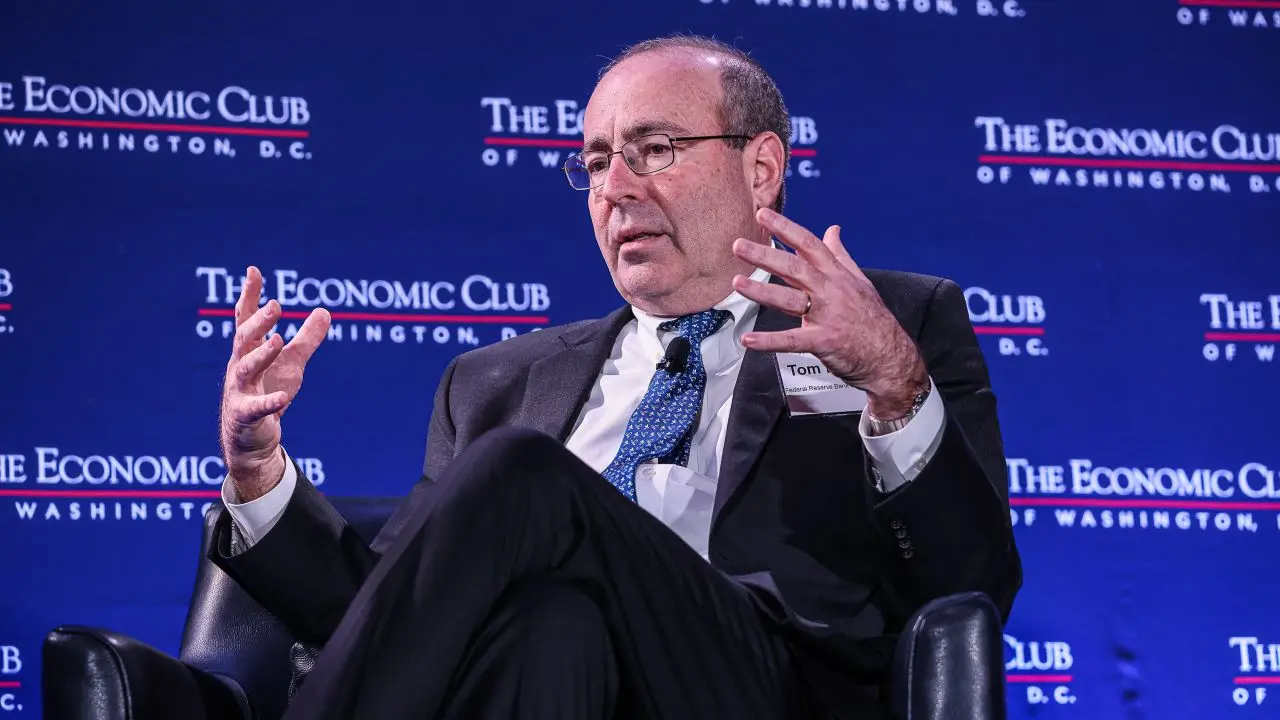
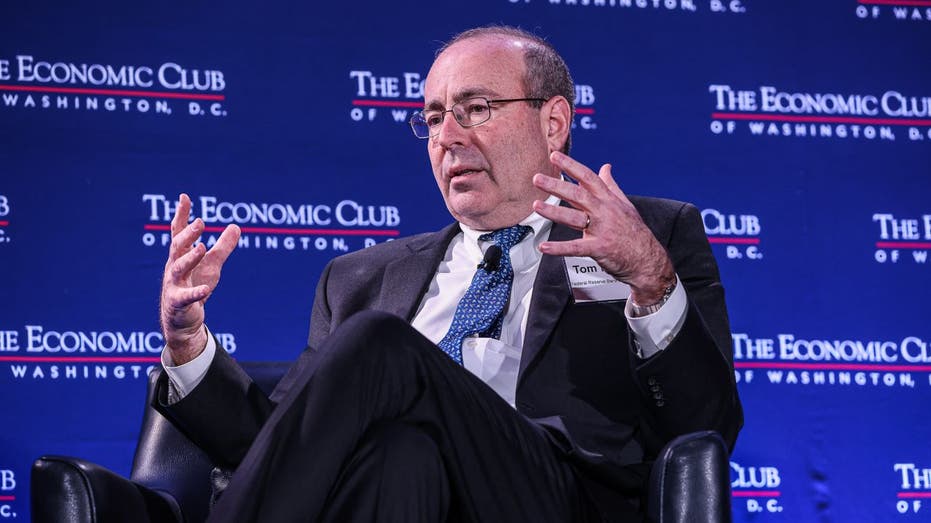
Richmond Fed's Tom Barkin says inflation risks may drive more hikes

The Federal Reserve’s decision to raise interest rates last week may mark the first of several hikes aimed at taming stubborn inflation, and one central bank leader weighed in on where inflation may go from here.

Federal Reserve Bank of Richmond President Tom Barkin said in a speech before CFA Society Baltimore Tuesday that the “risks to inflation outweigh the risks to maximum employment. That’s why we raised rates.”

Advertisement

Barkin, who is a non-voting member of the Federal Open Market Committee (FOMC) this year, compared the Fed’s dual mandate between promoting maximum employment and price stability to raising children, saying “inflation is our troublemaker” and noting it’s been above the 2% target for five years, which contributed to the decision to hike.

“Where do we go from here? We are committed to returning inflation sustainably to our 2% target. Last week’s hike will help. Will additional hikes be required and how many? We’ll see,” Barkin said, explaining that inflation could ease as price shocks fade or prove persistent.

FEDERAL RESERVE HIKES INTEREST RATES FOR FIRST TIME SINCE 2023 AMID STUBBORN INFLATION

Federal Reserve President Thomas Barkin

Richmond Fed President Thomas Barkin said inflation could come down relatively quickly or prove more persistent. (Valerie Plesch/Bloomberg via Getty Images)

“I’m open to the possibility that inflation could come back down in short order. Some of these recent shocks could reverse. Consumers could start to reach their limit. The investment boom could slow. Markets could correct. Employment could falter, making the labor market the problem child,” Barkin explained.

Advertisement

“On the other hand, inflation could prove more stubborn. Temporary shocks could drag on. New cost pressures could develop. Firming demand conditions could flow through to prices, as could the impact of today’s inflation,” he said.

Barkin added that the shocks from the Iran war and the AI buildout “aren’t proving to be short-lived or one-off events,” adding that while they “may pass in time, I do expect it will take time. In the interim, there is a risk that current elevated levels of inflation could affect future inflation.”

CONSUMER PRICES REMAINED ELEVATED IN AUGUST AHEAD OF FED’S NEXT MEETING

Person's hand pulls for gas station pump

Surging gas and diesel prices have driven inflation higher amid the Iran war. (Brandon Bell/Getty Images)

The market expects the Fed to move forward with at least one more 25 basis point rate hike before the end of the year.

Advertisement

The CME FedWatch tool shows a 48.3% chance of one hike to a target range of 4% to 4.25% after the October and December meetings, along with a 40.7% chance of a second hike before year’s end.

Federal Reserve policymakers also released their economic projections, which reflected one hike before the end of the year, while Fed Chair Kevin Warsh maintained his stance in not offering forward guidance during last week’s post-meeting press conference.

WHAT WARSH’S JACKSON HOLE SPEECH SIGNALS ABOUT WHERE INTEREST RATES ARE HEADED

Fed Chair Kevin Warsh speaks at a press conference

Fed Chair Kevin Warsh and central bank policymakers unanimously voted to hike interest rates at the September meeting. (Daniel Heuer/Bloomberg via Getty Images)

Gregory Daco, chief economist at EY-Parthenon, told FOX Business Barkin’s comments echoed the FOMC’s rate hike decision because while “policymakers had displayed patience in waiting for core inflation to converge toward 2%, that patience has seemingly run out, and most policymakers now favor adopting a modestly more restrictive monetary policy stance.”

Advertisement

“In our view, a Fed hiking cycle, if implemented, could create further strain for already-constrained interest-sensitive sectors while doing little to slow the AI-led investment surge beyond increasing the risk of a stock market correction,” he explained.

Daco added that the “key missing element in Warsh’s narrative was transparency around how tighter policy would address the inflation overshoot,” with policymakers looking to potentially undo some or all of the 75 basis points of rate cuts late last year.

GET FOX BUSINESS ON THE GO BY CLICKING HERE

“The objective is tighter financial conditions and disinflationary demand destruction. The risk is substantial for an economy already facing income erosion, supply-driven inflation and persistently elevated rates,” Daco said.

Advertisement
Continue Reading

Business

KB Home (KBH) Q3 2026 Earnings Call Transcript

Published

on

OneWater Marine Inc. (ONEW) Q1 2026 Earnings Call Transcript