










Connect with us

Business

Record profit for Sir Gerald Ronson’s forecourt empire

Published

on

Petrol retailers have defended the speed of pump price increases and urged the chancellor to help motorists absorb record bills by cutting VAT on fuel.

Sir Gerald Ronson’s forecourt empire has delivered a record profit, with the property tycoon’s service station business now valued at more than £1.5bn.

GMR Capital, the parent of petrol forecourt operator Rontec, reported pre-tax profits of £98.4m for the 12 months to the end of September, up 6 per cent on the previous year and surpassing its earlier peak of £95.7m in 2022.

The record came despite revenues slipping 7.7 per cent to £1.56bn, reflecting what the company described as a “challenging economic environment” and cautious consumer spending.

Rontec, which operates 267 service stations across the UK, said rising costs, higher employer national insurance contributions and living wage obligations had squeezed margins. However, lower interest repayments, as borrowing costs eased over the year, helped boost profitability.

The group described the period as “another successful year”, extending a long track record of resilience. GMR has recorded losses only three times in the past three decades, with its most recent annual loss dating back to 2009.

Advertisement

In 2025, property agent Colliers revalued Rontec’s real estate estate at £1.51bn, an increase of £318m. The uplift was attributed partly to investment in site improvements and partly to broader commercial property gains as interest rates fell.

Rontec has been investing heavily in modernising its estate. The company is midway through refurbishing its Shop’N Drive convenience stores and has upgraded its Subway franchises. Its food-to-go offer continues to expand, including 43 franchised outlets of Greggs.

The group has also earmarked tens of millions of pounds for ultra-fast electric vehicle charging hubs. Six forecourts currently host the chargers, with another six planned, although rollout has been slowed by delays in securing high-capacity grid connections and uncertainty in the EV market.

Ronson, 86, who introduced self-service petrol stations to the UK in the 1960s, has previously described Rontec as his “f*** you” business because of its ability to generate cash through economic cycles.

Advertisement

Better known publicly for landmark developments such as the 46-storey Heron Tower in the City of London, Ronson also served six months in prison in the 1990s for his role in the Guinness share-trading scandal.

He remains chairman of GMR, with his wife Gail and daughters Nicole and Lisa also serving on the board.

Company accounts show Ronson spent £164,000 chartering the company jet during the year, along with £82,000 on use of a company-owned yacht. The yacht was subsequently sold for £2m to a company owned by his wife.

Despite headwinds in consumer spending and higher operating costs, Ronson’s forecourt empire has once again demonstrated its ability to generate record returns — reinforcing its reputation as one of Britain’s most resilient private business empires.

Advertisement

Amy Ingham

Amy is a newly qualified journalist specialising in business journalism at Business Matters with responsibility for news content for what is now the UK’s largest print and online source of current business news.

Advertisement
Continue Reading
Click to comment

Leave a Reply

Your email address will not be published. Required fields are marked *

Business

FPIs trim bearish bets, but no rush to buy yet

Published

on

FPIs trim bearish bets, but no rush to buy yet
Mumbai: Overseas fund managers have cut their bearish derivative bets on India over the past month, from near-lifetime lows in January, encouraged by signs of easing pessimism about the market outlook. But the ease in risk-off sentiment has not been convincing enough for them to go all-out bullish, with these investors still retaining a larger chunk of their bearish wagers, especially as uncertainty over the AI trade on Wall Street keeps the market on edge.

The Long-Short Ratio – number of traders betting on a rise in prices (long positions) to those betting on a fall (short)-of foreign portfolio investorsNifty futures position stood at 19.4% on Friday, as against 7.5% seen exactly a month ago. Though the measure has fallen from 22.1% on Wednesday following the sell-off in the wake of the renewed AI-related concerns, showing foreigners have increased their bearish positions again, analysts are not concluding anything yet. The ratio made a lifetime low of 5.98% on September 30.

“FIIs have been on a bit of a rollercoaster lately,” said Vipin Kumar, AVP- derivatives and technical research at Globe Capital Market.

FPIs Trim Bearish Bets, but No Rush to Buy YetAgencies

CHANGE IN MOOD Dip in FII Long-Short Ratio suggests ‘smart money’ is hedging its wagers as global worries over AI-driven volatility linger

Kumar said that after a brief period of optimism fuelled by the India-US trade statement, the Long-Short Ratio of FPIs’ Nifty positions is retreating once more, fuelled by a sharp sell-off in US tech, driven by growing anxieties over AI disruption.
“The recent dip in the FII Long-Short Ratio suggests that the ‘smart money’ is hedging its bets.”

Advertisement


After the announcement of the framework for the US-India trade deal earlier this month, bullish bets increased to 16-17% of total bets from only 11% a day ago.
However, the IT sell-off on Thursday and Friday soured some sentiment. The Nifty ended 1.3% lower at 25,471 on Friday, while the Nifty IT index fell 8.2% during the past week. Akshay Bhagwat, SVP- derivatives research at JM Financial Services, said that since budget day, foreign investors have covered their short bets and also bought index futures, roughly to the tune of Rs 9,400 crore till date.

“However, Nifty has lost its momentum lately, and the Long-Short Ratio has cooled off, back below 20% on profit booking of long bets,” he said.

NO BIG MOVES
After Friday’s decline, Nifty is expected to hold above the 24,850-25,000 zone, said Chandan Taparia, head of technical and derivatives research at Motilal Oswal Financial Services. “While the market has struggled to sustain momentum, it continues to form a higher base despite the STT hike, a weaker rupee, and geopolitical tensions,” he said. Taparia expects Nifty to oscillate between the budget-day lows of 24,500 and the highs of 26,300 seen after the US-India trade deal.

Kumar said that the cooling off of the Long-Short Ratio indicates any immediate upside for domestic markets remains capped as global headwinds outweigh local catalysts. “The short-term technical structure for the Nifty has shifted to a negative bias. Following the recent weakness, the index appears to be gravitating toward a price gap created during the February 3 rally, and the key support zone is placed around 25,200-25,000 spot levels,” he said.

Advertisement
Continue Reading

Business

Global Launch Set for Late February 2026 Ahead of MWC

Published

on

Xiaomi 17

Xiaomi’s flagship Xiaomi 17 series, already a major success in China since its staggered 2025 launches, is on the verge of reaching international markets. As of February 15, 2026, reliable tipsters and leaks indicate the Xiaomi 17 (standard model) and Xiaomi 17 Ultra (premium flagship, including Leica Edition) will debut globally in late February 2026, just before the Mobile World Congress (MWC) 2026 kicks off March 2–5 in Barcelona.

Xiaomi 17
Xiaomi 17

Multiple sources, including Yogesh Brar, GSMArena, Gadgets 360, NotebookCheck, and Android Headlines, point to a European unveiling around February 28, with possible simultaneous or near-simultaneous reveals in other regions. Xiaomi has not issued an official announcement, but the consistent timeline across leaks suggests an imminent event—potentially a dedicated launch or press briefing in Europe. This early global rollout contrasts with past patterns where Xiaomi waited longer after China debuts.

China Launch Recap The Xiaomi 17 series launched in China in 2025: the standard Xiaomi 17 and Xiaomi 17 Pro (including Pro Max variant) on September 25, 2025, during founder Lei Jun’s annual speech, with availability starting September 27. The top-tier Xiaomi 17 Ultra followed on December 25, 2025, hitting shelves December 27. Powered by Qualcomm’s Snapdragon 8 Elite Gen 5 (or similar flagship chip), the lineup emphasized photography, battery endurance, and HyperOS 3 on Android 16.

The Xiaomi 17 features a compact design with a 6.36-inch LTPO AMOLED display, triple 50MP cameras, and up to 7,000mAh battery in China. The Ultra stands out with a 6.9-inch LTPO AMOLED, quad-camera setup including a 200MP periscope telephoto with continuous zoom, mechanical ring for controls, and 6,800mAh battery supporting 100W charging.

Global Rollout Timeline Leaks from early February 2026 confirm Xiaomi will bring only the Xiaomi 17 and Xiaomi 17 Ultra (Leica Edition) to global markets, skipping the Pro and Pro Max models which remain China-exclusive. Yogesh Brar reported on February 2 that the pair will launch “ahead of MWC,” with the Leica Edition Ultra targeted by February 28. GSMArena and NotebookCheck corroborated renders and specs for global variants, noting a European event likely in late February.

Advertisement

India availability is expected in early March 2026, per Brar and Abhishek Yadav, aligning with past Xiaomi patterns. European pricing leaks suggest the Xiaomi 17 starts at around €999 (12GB+512GB), while the Ultra could hit €1,499 (similar config). This positions them directly against Samsung’s Galaxy S26 series (expected March 2026) and Apple’s iPhone lineup.

Key Differences for Global Models Global versions may include adjustments for regional regulations and certifications. A notable change: the Xiaomi 17’s battery could drop to about 6,330mAh (roughly 10% smaller than China’s 7,000mAh), as reported by PhoneArena on February 6. This downgrade, common for Xiaomi flagships due to battery regs or component tweaks, may slightly impact endurance but retains fast charging. Other specs like display, processor, and cameras appear consistent.

The Ultra’s global variant retains its photography focus: 50MP main + 200MP periscope + 50MP ultra-wide, Leica co-engineering, and mechanical zoom ring. Both models emphasize HyperOS 3 features, AI enhancements, and premium builds.

Why the Early Global Push? Xiaomi aims to capitalize on flagship momentum before MWC, where rivals unveil devices. Launching ahead allows hands-on demos, reviews, and pre-orders to build hype. The decision to limit global offerings to two models streamlines distribution and focuses on high-demand variants: the compact Xiaomi 17 for everyday premium users and the Ultra for photography enthusiasts.

Advertisement

Specs Highlights

  • Xiaomi 17 (Global expected): 6.36-inch LTPO AMOLED, Snapdragon 8 Elite Gen 5, 12GB+ RAM options, triple 50MP cameras, ~6,330mAh battery, HyperOS 3, IP68 rating.
  • Xiaomi 17 Ultra: 6.9-inch LTPO AMOLED, same processor, up to 16GB RAM, quad cameras with 200MP periscope, 6,800mAh battery, 100W wired/50W wireless charging, Leica tuning.

Market Impact and CompetitionThe global Xiaomi 17 series enters a crowded premium segment. With aggressive pricing (under Samsung/Apple equivalents), strong cameras, and massive batteries, they challenge Galaxy S26 and iPhone 18 models. The Ultra’s Leica partnership and zoom prowess position it as a direct rival to Galaxy S Ultra and iPhone Pro Max in photography.

As MWC nears, expect official invites, teasers, or renders soon. Pre-orders could start immediately post-launch in select markets.

Xiaomi’s 17 series global debut in late February 2026 promises flagship performance at competitive prices. With leaks aligning on timing and specs, anticipation builds for what could be one of 2026’s strongest Android challengers.

Advertisement
Continue Reading

Business

Corporate revenues jump most in six quarters on GST push

Published

on

Corporate revenues jump most in six quarters on GST push
Mumbai: Corporate revenues in the three months to December surged the most in six quarters, undergirding double-digit profit growth for India Inc for six months in a row, as the biggest goods and services tax (GST) reforms since the 2017 nationwide adoption of a uniform levy drove sales higher in sectors such as automotive, energy, metals and financials.

Buoyancy in these large-weighting sectors helped offset the one-time financial impact of India’s revamped labour codes on the $280-billion technology outsourcing and communications businesses that collectively have significant weights on the Nifty 50 – just after the financials.

2026-02-16 062321Agencies

Momentum Seen in FY27
Analysts expect India’s corporate earnings to maintain their world-leading, double-digit growth rates in FY27 too, as bespoke trade deals on either side of the Atlantic seaboard buoy New Delhi’s export prospects in two of the world’s largest consuming blocs. In the third quarter, for a common sample of 3,723 companies considered by ETIG, revenue and net profit rose 9.8% and 13.5%, respectively. The growth rates were 8.1% for revenue and 14.5% for net profit in the second quarter ended September 2025.

“Earnings growth for the companies under coverage at 16% year-on-year was in line with our estimates, largely driven by metals, oil and gas, and banking and finance sectors,” said Gautam Duggad, institutional research head, Motilal Oswal Financial Services citing that Nifty 50 companies delivered 7% profit growth.
ETIG’s aggregate sample excludes the numbers of Tata Motors PV because the company had significant exceptional gains of Rs 82,616 crore in the September quarter due to the demerger of the commercial vehicles business.
This resulted in net profit of Rs 76,248 crore, forming 15% of the sample’s profit for the second quarter, thereby skewing the base. Including Tata Motors PV numbers to the total sample, net profit growth in the December 2025 quarter drops to 11.1% and that in the previous quarter jumps to 33.7%. Revenue growth, too, falls to 8.5% and 7.7%, in that order. According to Feroze Azeez, joint CEO, Anand Rathi Wealth, broader market profit growth was better than that of the benchmark Nifty 50 companies.
Size Doesn’t Matter
“This divergence suggests that earnings traction is shifting toward mid- and small-cap companies, supported by sectoral rotation, operating leverage benefits, and relatively lower base effects,” Azeez said. The sample’s operating margin contracted 60 basis points year-on-year to 17.8%. It remained flat at 15.4% after excluding banks and finance companies, reflecting that the lending sector continued to show pressure on net interest margins (NIM), or their core profitability.

One basis point is a hundredth of a percentage point. Azeez believes that India Inc’s margin outlook appears selectively constructive, with resilience in capital-intensive and financial sectors.

“Globally linked and consumption-driven segments may experience gradual normalisation rather than sharp expansion,” he added.

Advertisement

Sectorally, the performance was rather mixed. “The energy sector benefited from relatively low and stable crude oil prices, while better loan growth and stable asset quality underpinned the strength in financials,” said Antu Eapen Thomas, research analyst, Geojit Investments.

On the downside, communication services and consumer discretionary were the major laggards amid one-time provisions related to the new labour codes, Thomas said.

Better & Brighter
The outlook appears to be brighter.

Duggad believes that earnings momentum will strengthen further, supported by a low base in FY25 and improving business fundamentals. “The resolution of the India-US trade deal removes a significant overhang and positions India among the most competitive exporters relative to key emerging market peers,” he said.

Advertisement

According to Geojit’s Thomas, the GST rationalisation implemented in late 2025 has supported disposable income, providing an additional boost to consumption. “Nifty 50 earnings growth is projected at 5-6% for FY26, accelerating to 12-15% in FY27,” he said. Anand Rathi’s Azeez expects a meaningful recovery in FY27 following consolidation in FY26. “In the coming quarters, opportunities are expected to emerge in sectors such as capital expenditure and infrastructure, supported by sustained government spending and a revival in private capital expenditure,” he said.

Continue Reading

Business

Workers’ rights reforms prompt a third of employers to curb hiring

Published

on

According to the charity Autistica, only around 30% of working-age autistic people are in employment, and they face the largest pay gap of all disability groups.

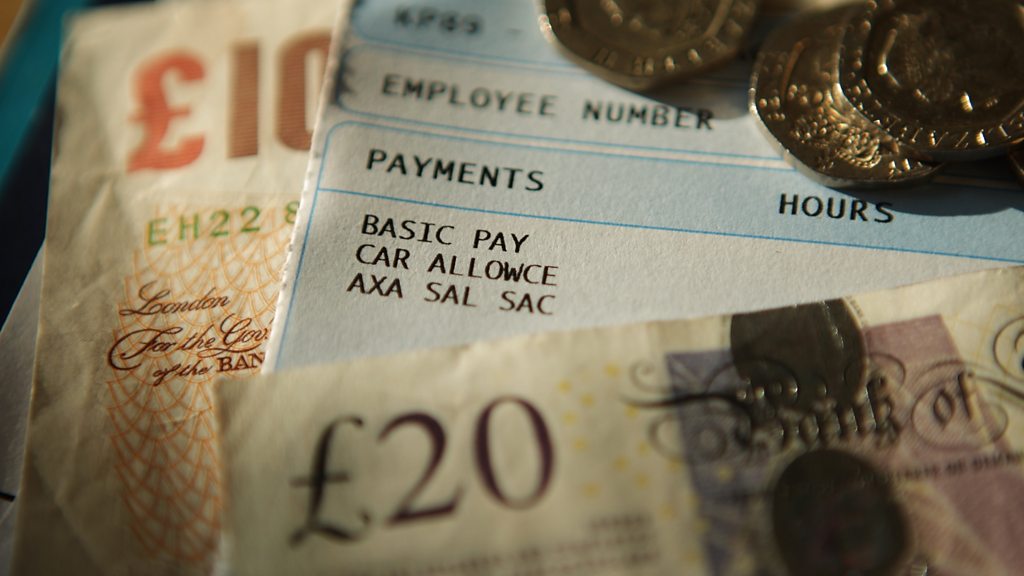
More than a third of UK employers are planning to scale back permanent hiring as a result of the government’s new workers’ rights reforms, according to a survey by the Chartered Institute of Personnel and Development (CIPD).

The poll of 2,000 businesses found that 37 per cent intend to reduce recruitment of new permanent staff once the changes take effect, while more than half expect an increase in workplace conflict.

Employers warned that the new Employment Rights Act, which introduces expanded protections including day-one statutory sick pay, easier trade union recognition and a shorter qualification period for unfair dismissal claims, could act as a “further handbrake on job creation”.

Government estimates suggest the legislation will cost businesses around £1bn annually. However, the CIPD said the official analysis may underestimate the true impact, particularly the additional time and administrative burden placed on HR departments to implement the reforms.

Ben Willmott, head of public policy at the CIPD, said the changes risked compounding pressures already faced by employers following last year’s £24bn rise in employer national insurance contributions.

Advertisement

“There is a real risk that these measures will act as a further brake on recruitment,” he said, urging ministers to consult meaningfully with business and consider compromises where appropriate.

The survey found that 55 per cent of employers anticipate more disputes once the reforms are in place. Businesses cited concerns over the reduction in the unfair dismissal qualifying period, from two years to six months, alongside new rights for zero-hours workers and enhanced powers for trade unions.

Under the act, unions will gain improved access to workplaces for recruitment and organising activity, while employees will benefit from expanded “day one” rights.

James Cockett, senior labour market economist at the CIPD, said the findings diverged sharply from government expectations. Whitehall’s impact assessment predicted that greater union engagement could reduce conflict, yet only 4 per cent of employers surveyed believed disputes would decline.

Advertisement

The CIPD noted that most UK businesses, particularly the 1.4 million micro and small employers, do not formally recognise trade unions. In that context, it argued, it is unclear how expanded union rights would materially reduce workplace tensions.

The Trades Union Congress (TUC) has welcomed the reforms, describing them as the most significant upgrade to workers’ rights in a generation and arguing they will improve dignity and wellbeing at work.

Business groups, including the Confederation of British Industry (CBI) and the British Chambers of Commerce, have previously expressed reservations, particularly around guaranteed hours contracts, seasonal work and industrial action thresholds.

The CIPD warned that some elements of the legislation could have unintended consequences. Changes to unfair dismissal, statutory sick pay and zero-hours contracts may lead some employers to rely more heavily on temporary or contract labour rather than permanent hires, potentially increasing employment insecurity.

Advertisement

As businesses weigh the costs of compliance against economic uncertainty, the survey suggests the government faces a delicate balancing act between strengthening worker protections and sustaining job growth.


Amy Ingham

Amy is a newly qualified journalist specialising in business journalism at Business Matters with responsibility for news content for what is now the UK’s largest print and online source of current business news.

Advertisement
Continue Reading

Business

Letizia to face pre-Christmas trial over alleged insider trading

Published

on

Letizia to face pre-Christmas trial over alleged insider trading

Cottesloe accountant Vittorio ‘Vic’ Letizia is set for a three week pre-Christmas trial over his alleged insider trading in Genesis Minerals shares.

Continue Reading

Business

Audinate Group Limited (AUDGF) Q2 2026 Earnings Call Transcript

Published

on

OneWater Marine Inc. (ONEW) Q1 2026 Earnings Call Transcript

Aidan Williams
Co-Founder, CEO & Director

My name is Aidan Williams. I’m Co-Founder and CEO at Audinate. With me is Chris Rollinson, our Chief Financial Officer. In the first part of the call today, we’ll be talking through the investor presentation that accompanied our financial statements, both of which were lodged with the ASX earlier today. [Operator Instructions]

I’d like to start by recapping Audinate’s first half highlights before we move on to covering key operational and financial metrics and then look ahead for the remainder of the financial year. Later in the presentation, I’ll be briefly covering the relationship between AI, Audinate’s products and technology and the broader AV industry as a whole.

Turning to Slide 3. It’s pleasing to see 12% growth in U.S. and Australian dollar revenue over the prior period. We’ve seen strong bookings in the first half, supporting achievement of our full year FY ’26 outlook. We’ve also continued to maintain strong gross margin percentage of 82.6%, and that’s consistent, and it’s been driven by favorable product mix shift between hardware and high-margin software products.

Advertisement

Operationally, we have continued to execute with strong results in key operating metrics. Design wins, that is the number of manufacturers signing up to use Dante technology for the first time, is up 8% over the prior period with 66 design wins over that period. The Dante product ecosystem continues to grow with a further 344 Dante products coming to market during the half. This brings the total of Dante-enabled products on the market to just under 5,000, and that’s coming from over 516 manufacturers. Each new design win and product coming to market is a leading indicator of

Continue Reading

Business

Disney sends cease-and-desist to ByteDance over AI-generated videos

Published

on

Disney sends cease-and-desist to ByteDance over AI-generated videos


Disney sends cease-and-desist to ByteDance over AI-generated videos

Continue Reading

Business

End of rate cuts, ample liquidity: Why short-end yields above 7% look attractive, says Devang Shah

Published

on

End of rate cuts, ample liquidity: Why short-end yields above 7% look attractive, says Devang Shah
With the Reserve Bank of India (RBI) widely seen at the end of its rate-cut cycle and liquidity conditions remaining comfortable, fixed income investors may need to recalibrate their strategy.

In this edition of ETMarkets Smart Talk, Devang Shah, Head of Fixed Income at Axis Mutual Fund, argues that the easy money from duration plays is largely behind us, making the short end of the yield curve far more compelling at this stage.

With 1–2 year AAA corporate bond yields available above 7% and a low probability of further rate hikes, Shah believes accrual-oriented strategies in the short to medium segment offer a better risk-reward balance than aggressive long-duration bets.

Short-term yields fall on surplus liquidity
Advertisement

Bond yields are diverging, with short-term rates falling due to liquidity while long-term rates rise, signaling the end of the current rate-cut cycle. Institutions are locking in long-term funds, anticipating future rate increases, as the market prices in a potential shift to higher rates.


He also shares his outlook on the 10-year G-Sec, potential Bloomberg index-driven inflows, and how retail investors should position their debt portfolios in 2026. Edited Excerpts

Q) Did RBI policy outcome at this point in time largely meet expectations soon after the Budget?

A) By and large, the RBI policy outcome was in line with market expectations. The central bank had already taken several measures in December and January, so the absence of rate cuts or additional liquidity measures did not come as a surprise.


That said, some sections of the market were expecting incremental liquidity support, and its absence led to a modest rise in yields of around 8–10 basis points.
Q) Do you believe India is entering a structurally stronger macro phase compared to the past few years?
A) Over the last two to three years, and particularly over the past 12 months, there has been a clear and coordinated thrust on both capex and consumption growth.
Policymakers have worked in sync through GST measures, RBI monetary actions, credit impulse, liquidity infusion, and rate cuts to address growth uncertainty arising from tariffs.

With the trade deal coming through, we believe growth is well supported, and FY27 growth could be around 7%, indicating a structurally stronger macro backdrop.

Q) If we are entering a growth phase which means there is a possibility of rise in inflation. If growth accelerates meaningfully in the second half, could that change the RBI’s rate trajectory?

A) RBI typically evaluates three key parameters—inflation, growth, and the external sector—while deciding its rate trajectory. With growth support from the trade deal and reduced vulnerability for the rupee, inflation will remain the key variable to watch.

At this stage, based on high frequency indicators, it is too early to see a meaningful uptick in inflation, and unless there is significant commodity led inflation, we believe RBI is likely to remain on pause for most of calendar year 2026.

Advertisement

Q) How meaningful could potential inclusion in Bloomberg indices be for Indian bonds?
A) Once Indian bonds are included in the Bloomberg Global Aggregate Index, we estimate potential foreign inflows of around $20–25 billion. This is meaningful and could translate into a 10–15 basis points rally in government bond yields.

Q) Given lower inflation and strong growth, what is your recommended duration strategy for investors today?
A) We believe a large part of the rate cycle is behind us and do not anticipate further rate cuts. RBI has also been proactive in managing liquidity.

Yields at the short end of the curve have moved up, with 1–2-year AAA assets available above 7% in an environment where the probability of rate hikes is very low. In this backdrop, we prefer the short end of the curve, with an emphasis on accrual oriented strategies.

Q) Do you think that there is room for a potential tactical entry for long bond investing this year? What conditions would signal that opportunity?

A) At this point, as we are at the end of the rate cut cycle, we advise investors to stay positioned at the short end of the curve. However, if government bonds sell off meaningfully and the 10 year G Sec moves towards 7%, or long bonds trade in the 7.60–7.70 range, that could present a tactical entry opportunity.

Until then, given the large government borrowing programme starting April, a cautious stance remains appropriate.

Advertisement

Q) How should retail investors approach long-duration funds in this environment?
A) Given our base case of no further rate cuts and ample liquidity, we continue to prefer the short to medium term segment of the curve. Retail investors should consider remaining invested in short to medium duration funds rather than taking aggressive duration calls at this stage.

Q) Would you prefer sovereign bonds, SDLs, or corporate bonds in the current phase?

A) In the current phase, our preference is towards corporate bonds up to 2–3 years and SDLs in the 8–12-year segment. The large SDL supply announced has led to a meaningful widening of spreads, which offers an attractive risk reward opportunity for medium term investors.

Q) How does the higher borrowing number influence your outlook for the 10-year G-Sec?
A) While RBI is likely to remain supportive through liquidity management and periodic OMOs, the supply pipeline is quite large.

Given that we are at the end of the rate cycle, we expect the 10 year G Sec to trade in the 6.60–6.80% range till March 2026. Beyond that, if growth strengthens and inflation begins to trend higher, the 10 year yield could move into the 6.80–7% band.

(Disclaimer: Recommendations, suggestions, views, and opinions given by experts are their own. These do not represent the views of the Economic Times)

Advertisement
Continue Reading

Business

Mitsui Kinzoku shares surge to record high on strong guidance

Published

on


Mitsui Kinzoku shares surge to record high on strong guidance

Continue Reading

Business

OncoRes raises $27m for breast cancer tool

Published

on

OncoRes raises $27m for breast cancer tool

The WA company behind an imaging device which can reduce the number of repeat surgeries for breast cancer patients has received $27 million in a private funding round to support its push to US FDA approval.

Continue Reading

Trending

Copyright © 2025
















