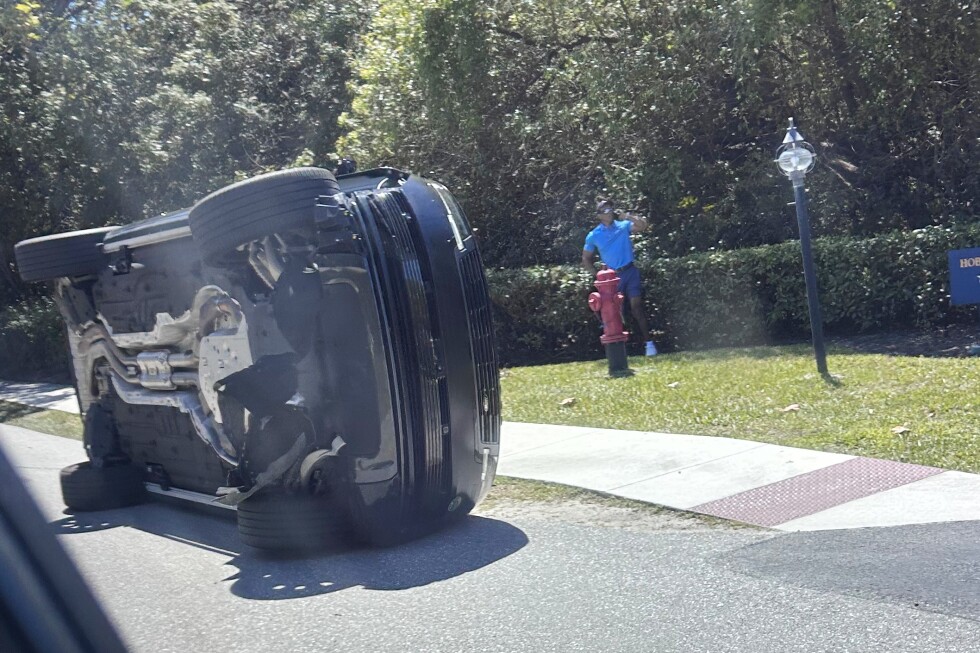
Tiger Woods expressed astonishment as he was handcuffed after crashing his SUV last week in Florida, according to body camera footage released Thursday that also shows deputies removing two pills from the golfer’s pocket.
“I do believe your normal faculties are impaired, and you’re under an unknown substance, so at this time you’re under arrest for DUI,” Martin County Sheriff’s Deputy Tatiana Levenar told Woods after conducting a sobriety test on him.
Woods said he was looking at his phone and changing the radio station when his speeding Land Rover clipped the back of a truck and rolled onto its side on a residential road on Jupiter Island. No one was injured in the March 27 crash.
“I’m being arrested?” Woods responded as he stood alongside the road.
Advertisement
“Yes sir,” Levenar said.
After handcuffing Woods, authorities searched his pockets and found two white pills.
“That’s a Norco,” Woods said after an officer pulled out the pills, referring to a painkiller that contains acetaminophen and the opioid hydrocodone. Authorities would later confirm that Woods was in possession of hydrocodone.
In the bodycam footage, Woods told Levenar that he had not drunk any alcohol and that he had taken “a few” medications earlier in the day, though Woods’ words are muted in the released video as he describes some of the drugs.
Advertisement
“I looked down at my phone, and all of a sudden — boom,” Woods told deputies as he knelt on a lawn, prior to his arrest.
Woods, 50, pleaded not guilty on Tuesday to suspicion of driving under the influence. He posted a statement Tuesday night saying that he was stepping away indefinitely “to seek treatment and focus on my health.”
During a field sobriety test, deputies noticed Woods limping and that he had a compression sock over his right knee. Woods explained he had undergone seven back surgeries and over 20 surgeries on his right leg, and that his ankle seizes up while walking.
Woods, who was hiccuping during questioning, continuously moved his head during one of the sobriety tests and deputies had to tell him several times to keep his head straight, an arrest report said.
Advertisement
“Based on my observations of Woods, how he performed the exercises and based on my training, knowledge, and experience, I believed that Woods normal faculties were impaired, and he was unable to safely operate the motor vehicle,” Levenar wrote.
Woods is the most influential figure in golf and has become as recognizable as any athlete in the world. The first person of Black heritage to win the Masters in 1997, he has captivated golf fans with records likely never to be broken.
But his injuries have kept him from accomplishing more, including those suffered in a 2021 Los Angeles car crash that damaged his right leg so badly he said doctors considered amputation. He has not played an official event since the 2024 British Open. He was recovering from a seventh back surgery in October and was trying to return at the Masters, where he is a five-time champion.
Following last week’s crash, Woods agreed to a Breathalyzer test that showed no signs of alcohol, but he refused a urine test, authorities said. He was arrested and released on bail eight hours later.
Advertisement
Under a change to Florida law last year, refusing an officer’s request to take a breath, blood or urine test became a misdemeanor, even for a first offense.
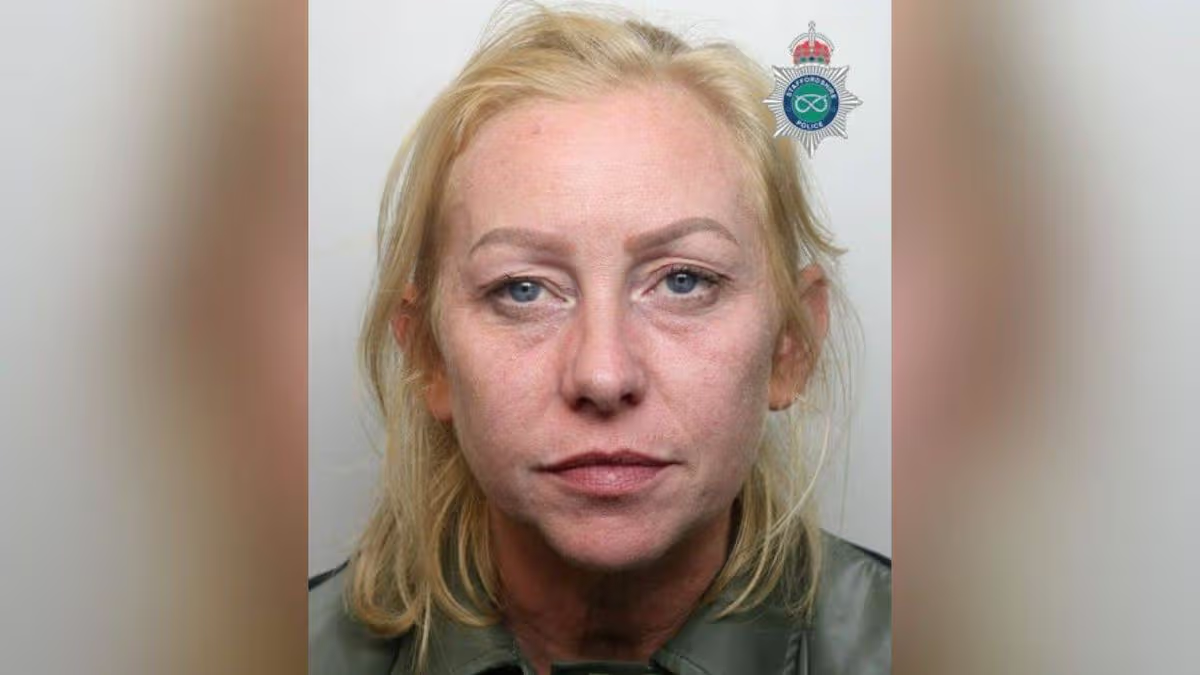
Officers pulled over the 46-year-old and said they “smelled alcohol”. It was then they discovered a small amount of powder in the back of her car, reports StokeonTrentLive.
North Staffordshire Justice Centre heard Chesworth was found to have 45mu g/L of cocaine in her blood, well over the legal threshold of 10mu g/L. She also had a staggering 800b ug/L of benzoylecgonine in her blood – the breakdown product of cocaine – which is 16 times the legal limit.
Advertisement
Prosecutor Sherrie Henry told the court: “This matter occurred shortly after 11pm. Officers saw the defendant’s red Toyota Yaris which appeared to be driving erratically along the A52. She could be seen swerving repeatedly between lanes. Officers pulled the defendant over and smelled alcohol.
“They attempted to perform a breathalyser test. They were unable to get her to complete it successfully. A small amount of powder was found in the back of the defendant’s car. She was taken back to the police station where a drug test was performed.”
Chesworth, of Swallows Nest Close, Blurton, admitted two counts of drug-driving. Representing herself in court, Chesworth told magistrates her interim driving ban has left her ‘struggling financially and with transport’, asking for leniency.
She told the court in tears: “The swerving in and out of lanes, I disagree with, because I was following the one-way system. I believed the van behind me was getting too close. I didn’t realise it was the police.
Advertisement
“I only learned that later after they pulled me over. They could smell wine on me because I had made a beef bourguignon earlier that evening.”
“I struggled to do the breath test because I had a stroke last year. I agreed to do the blood test. The white powder they found in the car is a drug I take to manage my stroke symptoms.”
Magistrates handed Chesworth a 17-month driving ban alongside a 12-month community order incorporating 20 rehabilitation days. She has also been ordered to pay £239 in costs.
Ensure our latest stories always appear at the top of your Google Search by making us a Preferred Source. Click here to activate or add us as your Preferred Source in your Google search settings.
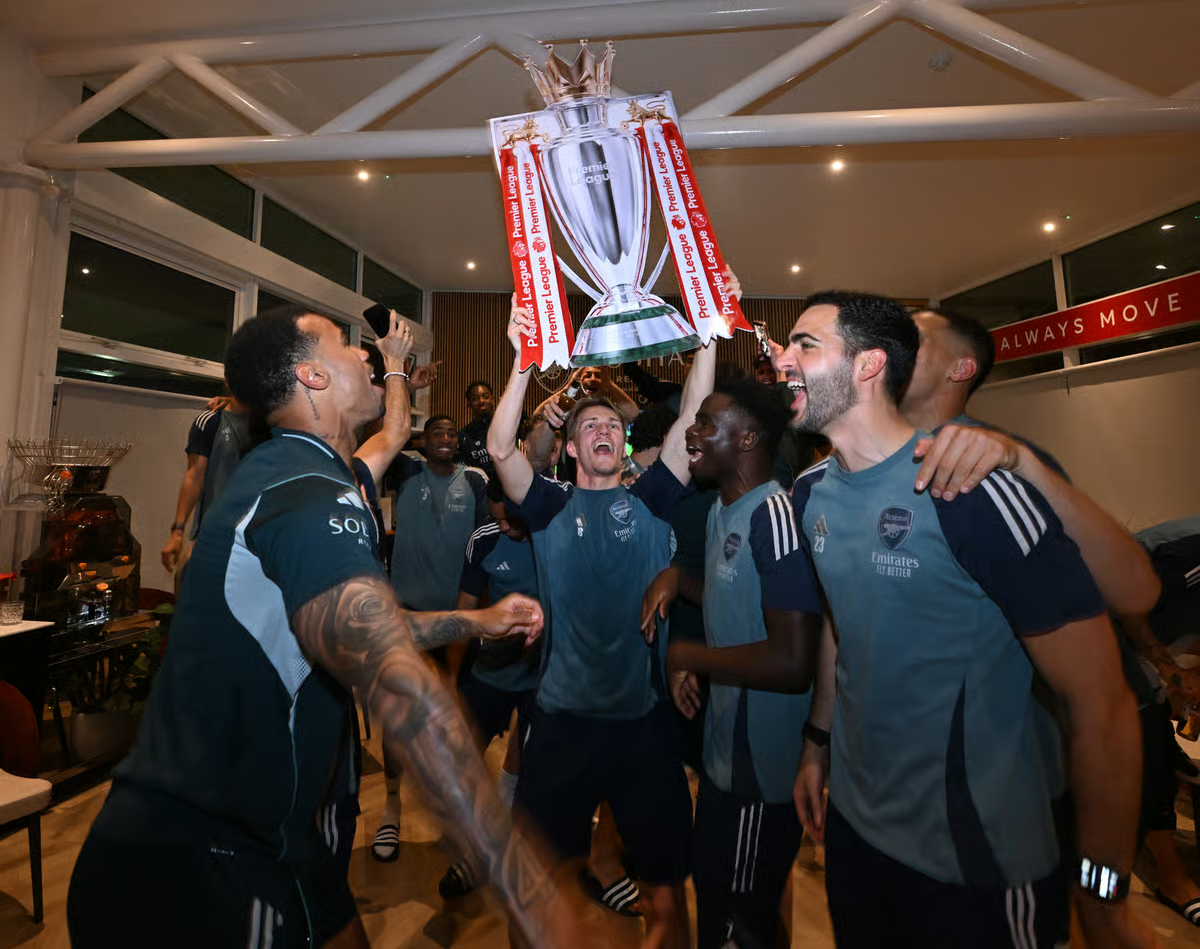
Arsenal have ended 22 years of hurt by winning the Premier League title, and with it earning a huge financial windfall.
After three years finishing as runners-up, Mikel Arteta and his squad finally got over the line – and with one game to spare.
The club will also receive their biggest ever cheque from the Premier League after finishing first.
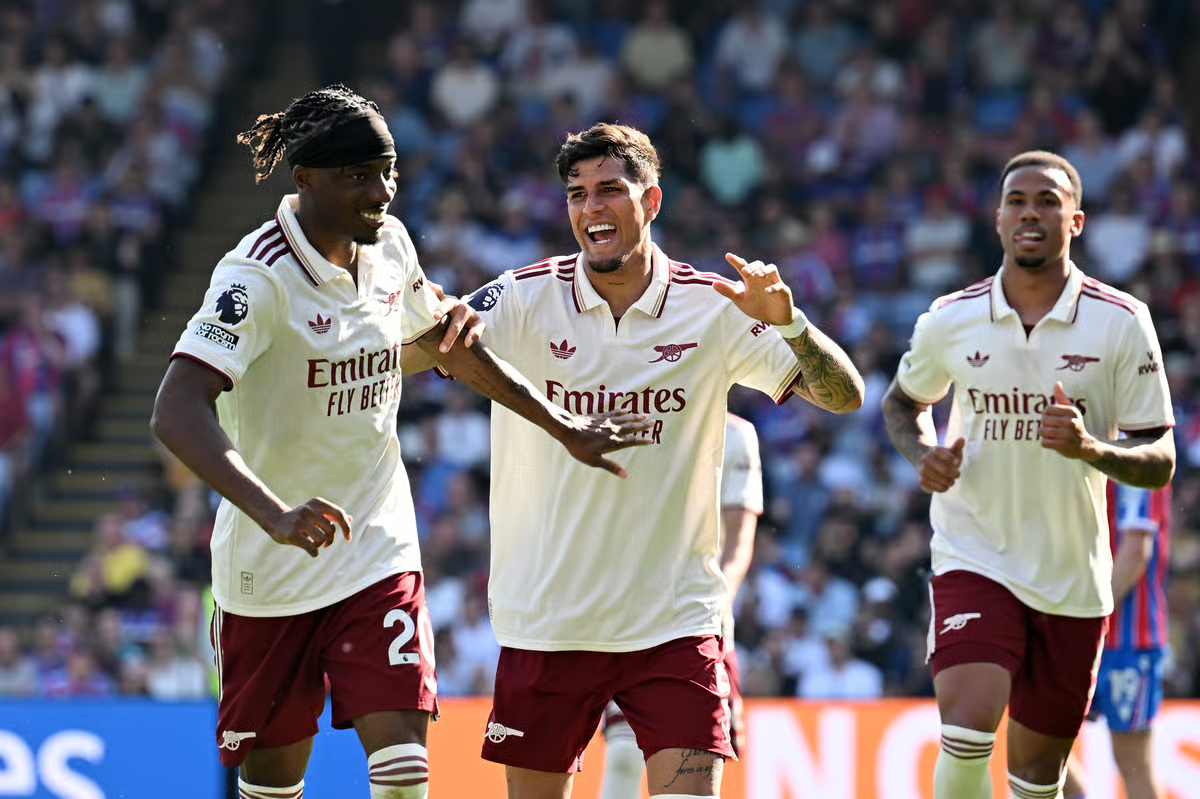
Arsenal players celebrate last night
Getty
Advertisement
How much prize money do Arsenal earn by winning Premier League title?
The Premier League confirm “as part of the money they receive from central payments, clubs earn money based on their final positions in the Premier League table, with these merit payments based on a sliding scale calculated according to where you finish, from 1st to 20th.
“Arsenal, for example, are set to receive 20 times the basic merit payment, while the club who finish second get 19 times, and so on.
“Last season, each place was worth approximately an additional £2.6m, with champions Liverpool earning £53.1m, while bottom club Southampton received £2.6m.”
Advertisement
Arsenal have also reportedly earned more than £120million from their run to the Champions League final, and winning in Budapest in 10 days’ time will increase that figure.
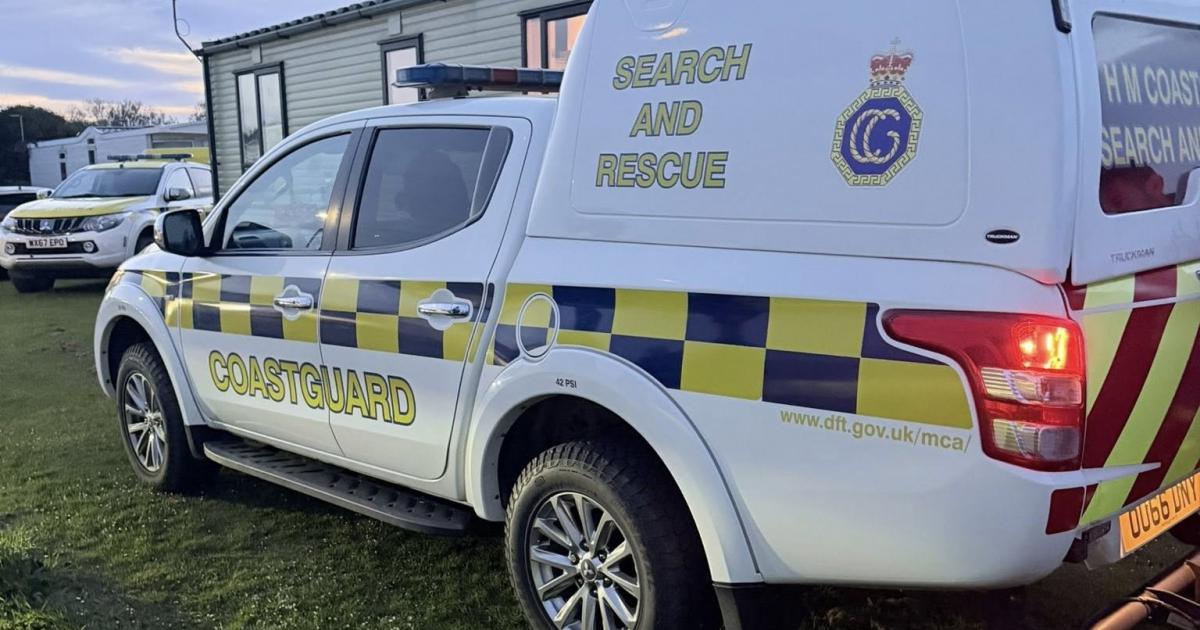
They were left injured after falling from the cliffs at Skipsea, south of Bridlington, at 8.30pm on Saturday, Bridlington Coastguard Rescue Team said.
The coastguard and paramedics were called to the scene.
A spokesperson for the coastguard said its crew was lowered onto the cliff face to reach the injured person, then helped lift them to safety on a stretcher.
Advertisement
“Although access to the casualty at the cliff base was possible, safely recovering them was another challenge entirely,” they said.
“Using specialist rope rescue equipment, the team established a technical rescue system from the cliff top.
“A coastguard rescue cliff technician was then carefully lowered down the cliff face to reach the injured casualty, package them safely into a stretcher, and carry out their recovery back to the top.
“Thanks to the teamwork, training, and professionalism of everyone involved, the casualty was successfully handed into the care of Yorkshire Ambulance Service and taken to hospital in a stable condition.”
Advertisement
The coastguard urged people to “keep well back” from cliff edges and to “supervise children and dogs at all times”.
As a result, Arsenal face Crystal Palace on the last day of the Premier League season as champions and Mikel Arteta has rung the changes at Selhurst Park for what is a stress-free fixture.
Palace are assured of safety and, just like the Gunners, have a European final to prepare for following Sunday afternoon’s London derby.
Therefore, the main focus for the Arsenal fans who have made the short trip across the capital is the Premier League trophy presentation.
Standard Sport understands Arsenal’s trophy coronation will take place around 30 minutes after the match, once Palace have given Oliver Glasner his send-off at the end of his final home match in charge.
Advertisement
The Gunners will then continue any celebrations later in the night privately, rather than staging any sort of trophy lift at the Emirates Stadium.
What kit will Arsenal wear to lift Premier League trophy?
With Arsenal facing Palace away from home, it means they are wearing their away kit due to a colour clash. However, it is understood that the Gunners will not lift the Premier League trophy in their changed strip.
Instead, Arsenal are expected to change into this season’s red Adidas home kit for when captain Martin Odegaard and the rest of the squad finally get their hands on the Premier League trophy.
Advertisement
Furthermore, it has been confirmed that the Gunners will wear red against Paris Saint-Germain next weekend, making it their first Champions League final in which they have worn their home kit.
The Gunners will be in red shirts, white socks and red socks, with David Raya in his yellow goalkeeper strip.
For Sunderland, the win completes a stellar first season back in the top flight, exactly one year on from the day when they confirmed their promotion from the Championship. Catch up with the action as it happened below with Standard Sport’s dedicated match blog, with expert insight and analysis from Arthur Ferridge.
The Gunners avoided the crippling anxiety of a final-day shootout after Manchester City’s draw at Bournemouth on Tuesday, and their coronation here, Oliver Glasner’s last home fixture as Palace boss, started with 1,000 Arsenal fans lining Holmesdale Road to greet the champions’ two coaches.
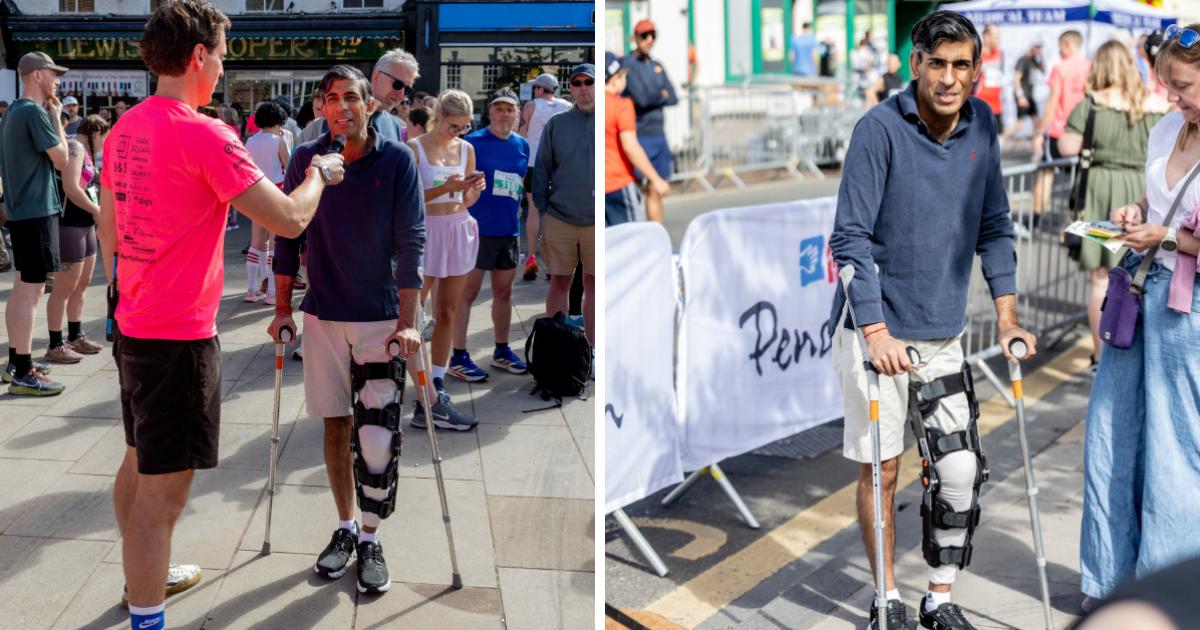
The Richmond and Northallerton MP is normally seen in his running shoes at the annual race, joining hundreds on a route through the town.
Last year he finished the 10k route in a time of 47 minutes and 20 seconds, but this time was on crutches, watching from the sidelines as those taking part faced 24-degree heat.
Rishi Sunak MP attends Northallerton 10k (Image: SARAH CALDECOTT)
Former Prime Minister Rishi Sunak (Image: SARAH CALDECOTT)
Mr Sunak revealed last month he had hurt his leg over Easter while “showing off” to his daughters on the slopes.
Posting on social media after the accident, he said: “Pushed my luck on the slopes this Easter, showing off to my daughters.
Advertisement
Rishi Sunak MP on crutches (Image: SARAH CALDECOTT)
“I’m already on the mend and determined to keep up with my meetings and constituency work.”
The Northallerton 10K raises money for Pendragon Community Trust, with organisers saying 100 per cent of entry fees are donated to the local charity, which supports people with physical, mental and emotional difficulties and their families.
This year’s Northallerton 10k event was won by Lee Davies.
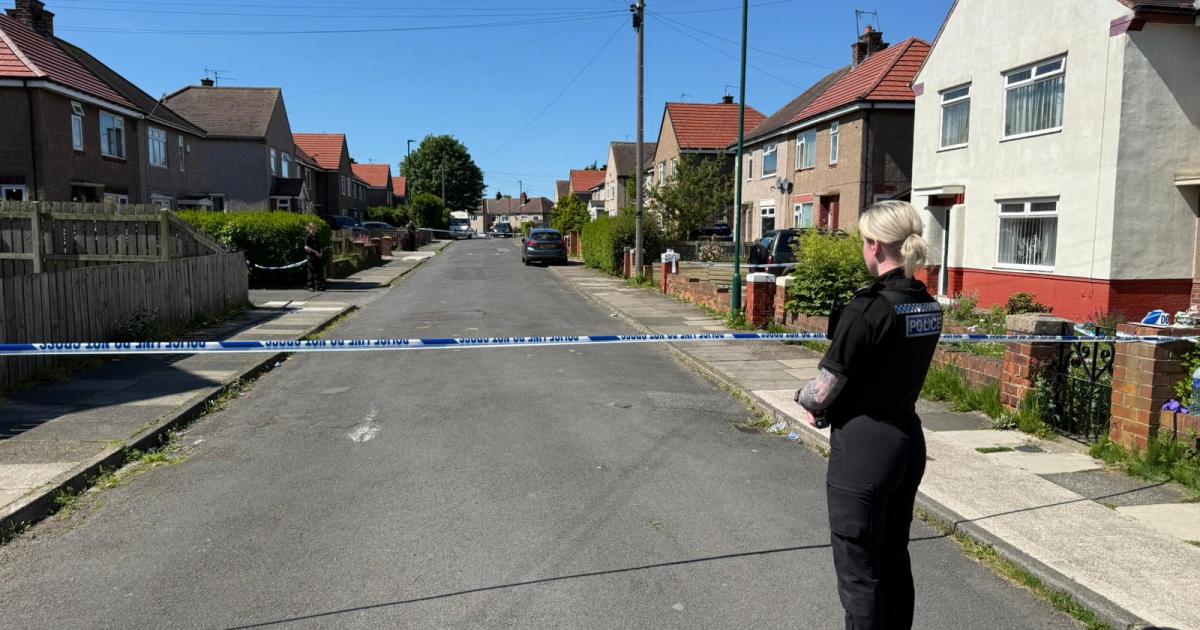
Police were called to Ayton Crescent at about 11pm on Saturday (May 23) where the victim was found with significant injuries. He was pronounced dead at the scene.
A 39-year-old woman was arrested after the police helicopter was launched. She remains in police custody while police say they attempt to locate a second suspect.
Police say they are treating it as an isolated incident and there is no risk to the public.
(Image: CHRIS BOOTH/NORTHERN ECHO)
In an update at 6pm police confirmed efforts to locate the second suspect is ongoing.
Advertisement
A cordon remains in place on Ayton Crescent and Mansfield Road with crime scene investigators working at the scene.
(Image: CHRIS BOOTH/NORTHERN ECHO)
(Image: CHRIS BOOTH/NORTHERN ECHO)
Superintendent Daryll Tomlinson said previously: “This is a fast-moving investigation, and we have quickly made an arrest. I would like to thank members of the public who have come forward with information, as well as the National Police Air Service for their support through the night.
“I would like to reassure the community that this is an isolated incident, with no wider risk to the public. Officers will remain at the scene in Ayton Crescent, and there will be an increased presence in the area.”
The North East Ambulance Service confirmed it attended on Saturday night.
Advertisement
A spokesperson said: “We received a call at 11.22pm on Saturday to an incident at a private address on Ayton Crescent in Eston.
“Police attended the scene and we dispatched two emergency ambulance crews, a duty officer, a doctor and the Medicar.”
Anyone with information that could assist this police is asked to call 101 quoting reference SE26098497 or report anonymously via Crimestoppers
When we asked why his takeaways had shut, Sam Ransom claimed he had just sold them for £850,000. Papa Johns told us a different story
01:00, 25 May 2026
Advertisement
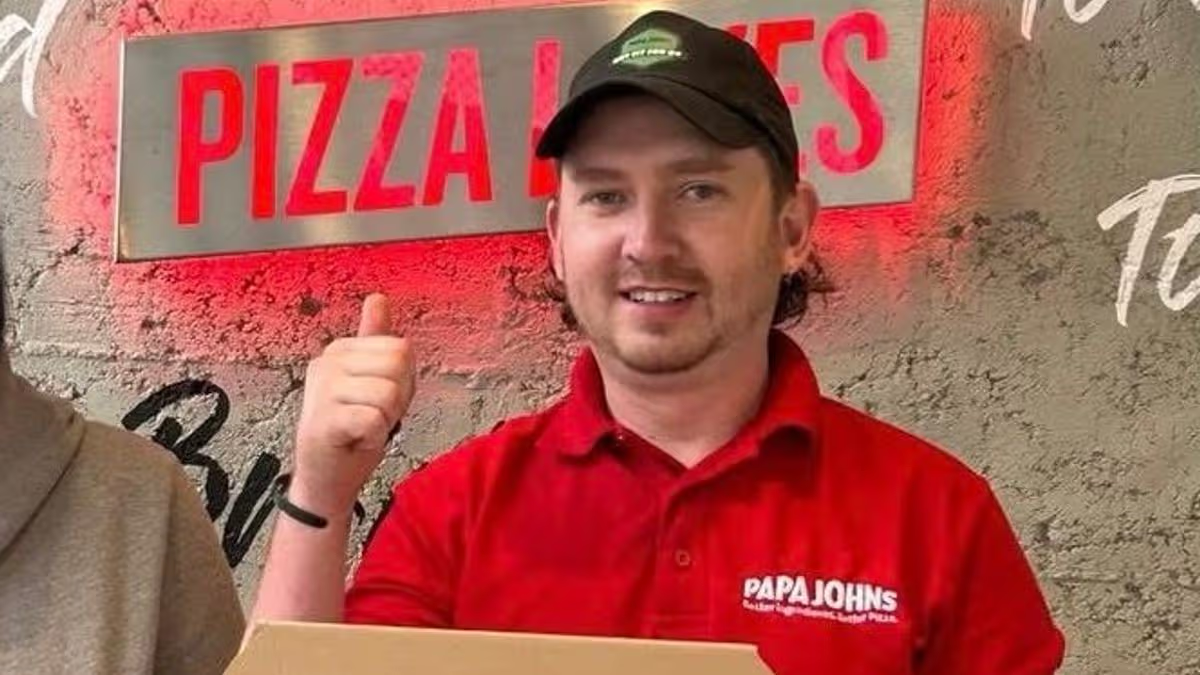
Pizza chain Papa Johns has cut ties with a man who owned several of its takeaways in south Wales. The shops closed after our court report from last weekend revealed the franchisee, Sam Ransom, had terrorised his ex-girlfriend and her family after she dumped him.
Ransom, 35, was handed a community order after repeatedly sneaking onto the family’s property at night to damage their cars, security lights and other items. We understand he was already on a final warning from Papa Johns following our 2022 report on how he sent vile messages calling one of his teenage employees a “loser”.
The franchisee said he owned Papa Johns shops in Bridgend, Caerphilly, Cardiff, Newport, and two in Bristol.
After we published the court report, Ransom’s branches were shuttered and barricaded with steel screens by a firm that secures vacant properties.
Advertisement
When we contacted Ransom for comment, he vehemently denied the closures had anything to do with his court case or with how the Papa Johns head office felt about his offences. The shops happened to be shut that week because he had just sold them for a total of £850,000, he told us, in what he claimed to be purely coincidental timing.
Ransom initially offered to provide us with proof of the supposed sale, but none materialised. And when we ran his claims by Papa Johns, the business gave a rather different version of events.
A spokesman for Papa Johns said: “Mr Ransom’s conduct fell far short of the standards and values we expect of our franchise owners and, as a result, we have terminated his franchise agreement and ended our association with him. The restaurants are temporarily closed as we actively seek new ownership.”
Advertisement
Last week Ransom was sentenced at Cardiff Magistrates’ Court after he was found guilty of a theft and criminal damage spree targeting his ex-partner. He was furious about the end of their long-term relationship and decided to cause havoc at her family’s Bridgend home on three consecutive weekends.
One of the victims, the father of Ransom’s ex, watched the sentencing from the public gallery. When Ransom entered the courtroom at the start of the hearing, he gave the dad a long stare and smirk.
Prosecutor Laura Thomas said the woman had been in a relationship with Ransom for around 10 years. After their breakup Ransom turned up at the home on each of the first three weekends of January 2025.
Advertisement
The spree started with him ripping down a house sign that had been screwed onto the entrance to the property’s driveway. “A replacement sign was put up a few days later and that, again, was taken down and thrown into a river near the house,” said Ms Thomas.
“The defendant and another person entered the driveway multiple times on the evening of January 11. They damaged the lights that edged the driveway leading to the house, and again caused damage to the house sign.”
In that incident, Ransom and his accomplice threw stones at the property, causing damage to a downpipe and dents to the paintwork of a Kia Niro belonging to his ex-girlfriend’s brother.
The following weekend Ransom returned and again ripped off the house sign before turning his attention to his ex-partner’s Toyota Aygo.
Advertisement
It was night-time and the family were in bed when they heard an “almighty bang and smashing noise”, said the prosecutor. “They called police, petrified, and a neighbour came out to check what was going on. They could see the rear window of the Toyota had been completely smashed. The two bricks that caused the damage were still lying on the driveway.”
Ransom, of Station Road in Nantybwch, Tredegar, pleaded not guilty to three counts of criminal damage and one of stealing house signs and security lights, but the magistrates found him guilty of all offences. The victims made an application for £4,043 in compensation for damage.
The court heard Ransom had previous convictions, dating back to 2024, for assaulting an emergency worker and obstructing police. In that case he had received a community order.
Advertisement
Ransom’s solicitor Declan McSorley said: “My client is particularly hardworking, running a series of businesses from multiple locations across south Wales. He fits his relationships into his work, which is excessive in hours, as opposed to working on relationships.”
Mr McSorley said he agreed with the probation service’s recommendation of a community order. The magistrates decided to follow that recommendation, imposing a 24-month order with rehabilitation activity, 150 hours of unpaid work, and restraining orders protecting the victims for two years each. No compensation was ordered because a civil case is anticipated.
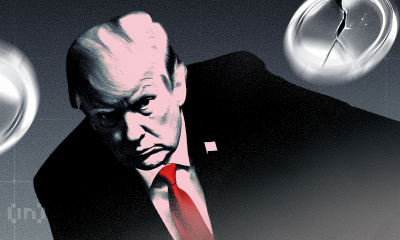
When we approached Ransom for comment, he messaged us from a WhatsApp account with a profile picture that showed US President Donald Trump alongside the words “fake news”.
After he answered our call, we asked if he would like to express any remorse for his actions. He replied: “I can’t because I’m gonna go for a retrial.”
Advertisement
Ransom claimed he was somewhere else at the time of the crimes. When we asked if he had anything to say on his previous conviction, for assaulting an emergency worker and obstructing police, he said: “I’ve got nothing to say about that one.”
In our 2022 report on Ransom’s previous controversy, we revealed one of his staff – a 17-year-old earning minimum wage – had asked for a free pizza while working an overtime shift only for Ransom to brand him a “loser”, order him to “stop looking for handouts”, brag about his own wealth, and then sack the teen.
If you would like to contact us about a story we should be investigating, email us at conor.gogarty@walesonline.co.uk
Get daily breaking news updates on your phone by joining our WhatsApp community here. We occasionally treat members to special offers, promotions and ads from us and our partners. See our Privacy Notice
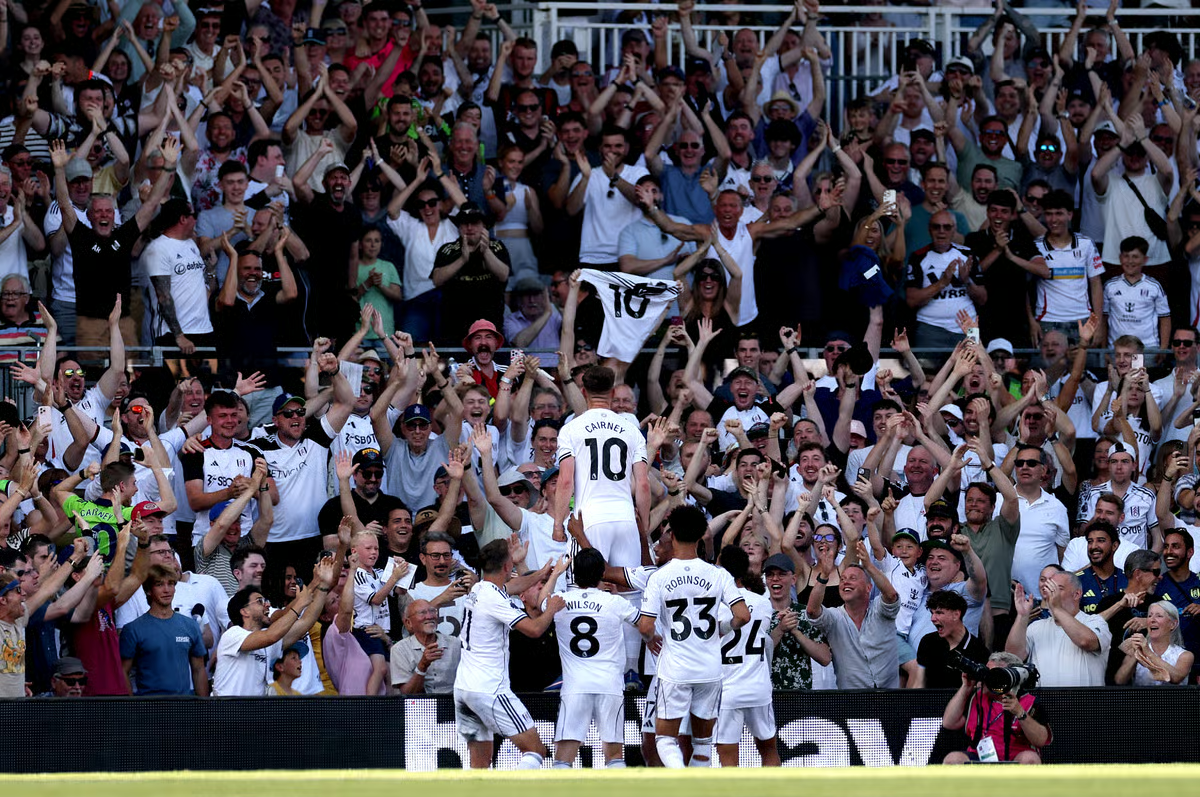
This will have been a fitting second-off. Issa Diop’s header after Kevin’s free-kick hit the bar got the ball rolling, Cairney gave the season a rollicking finale with a lovely strike for the second, but whether Silva stays or goes, Fulham go into the summer with much to reflect upon and regret.













































You must be logged in to post a comment Login