Connect with us

Business

Runamok taps new CEO and CMO

Published

on

Runamok taps new CEO and CMO

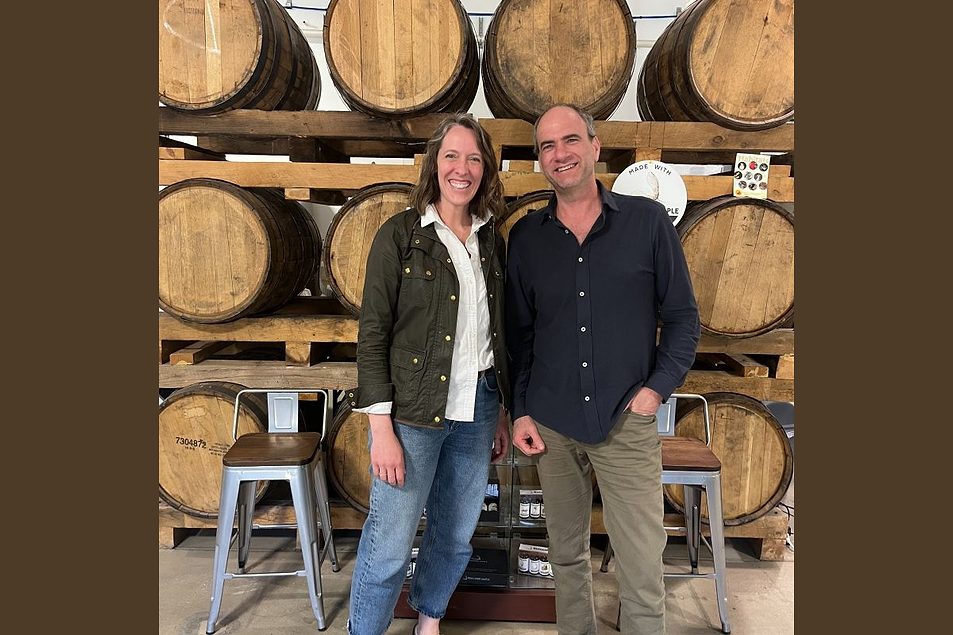
FAIRFAX, VT. — Runamok has updated its leadership team upon celebrating its 10-year anniversary.

The Vermont-based organic maple syrup and specialty maple products manufacturer has elevated Ashley Wainer from fractional president and chief financial officer to chief executive officer and hired Kelly Murnaghan as chief marketing officer.

The changes come as co-founders Laura and Eric Sorkin transition to strategic leadership roles, the company said.

“Ten years ago, we set out to prove maple syrup could be every bit as exciting and versatile as olive oil or craft spirits,” Eric Sorkin said. “We’ve changed the way people think about maple, but there’s still a lot more to explore. Ashley and Kelly believe maple belongs everywhere, from morning coffee to cocktails, and they have the experience to help more people find that out while keeping the craftsmanship that’s always defined this company.”

Advertisement

Before being elevated to CEO, Wainer was the company’s fractional president and CFO for the past three years, overseeing operations.

Wainer’s previous positions included vice president of customers and energy innovation at Vermont Gas Systems, Inc. and senior audit associate at KPMG.

Murnaghan joins the company from Shady Rays Polarized Sunglasses, where she most recently was CMO. Earlier, she was senior vice president of global marketing and consumer direct at Burton Snowboards.

Continue Reading
Click to comment

You must be logged in to post a comment Login

Leave a Reply

Business

Tesla Stock Slips Nearly 3 Percent to $358 as Traders Fade August Rally Before Cybercab

Published

on

Tesla Autopilot

AUSTIN, Texas — Tesla Inc. shares fell about 2.6 percent Tuesday morning, trading near $358.28, as investors locked in August gains ahead of a Cybercab event scheduled for Thursday at the company’s Texas headquarters.

The stock was down $9.67 from the prior close. The auto-parts group was also weaker, while Ford and General Motors traded slightly higher. Tesla had climbed through August on delivery optimism and autonomy headlines. Short-term momentum readings had moved into overbought territory, and the pullback fit a familiar pattern: sell into a binary product day.

Tesla has invited Robotaxi app users to the Sept. 3 Cybercab launch in Austin. State records show the company registered 45 Cybercabs with the Texas Department of Motor Vehicles on Aug. 31, a step toward commercial use on Texas roads. Robotaxi service already runs 6 a.m. to 10 p.m., seven days a week, in Austin, Dallas, Houston, Miami, Orlando and Tampa. Nevada regulators this month also approved Las Vegas permits for Tesla, Uber and Waymo.

Those milestones have not settled the debate over when unsupervised robotaxi miles become material revenue. Management has emphasized Full Self-Driving software — including a coming v15 build and pothole-avoidance work — over a rapid city-count expansion. Capital spending is expected to exceed $25 billion in 2026 and rise for two or three more years to fund Optimus robots, a robotaxi fleet, solar manufacturing, AI compute and other plants, Chief Financial Officer Vaibhav Taneja said on the last earnings call.

Advertisement

Chief Executive Elon Musk spent the weekend tying Tesla to power for data centers. In a post on X he said Tesla and SpaceX were “each building 100 gigawatts per year of solar production capacity as fast as possible,” a build that would take years. Natural gas would fill the gap, he said, and in-house turbine-blade casting at SpaceX could speed gas turbines by as much as 18 months. The stock jumped Monday on that message. Tuesday’s decline gave some of that move back.

The valuation remains stretched versus near-term auto profits. Tesla trades at a high multiple of next year’s estimated earnings. Wall Street has cut 2026 and 2027 net-income forecasts this year while lifting capital-expenditure estimates. Visible Alpha consensus figures compiled in August showed 2026 net income estimates down to about $3.5 billion from $4.4 billion three months earlier, with 2026 capex near $25 billion and free cash flow still deeply negative.

Vehicle demand is the other weight. Tesla lost the global battery-electric sales crown to BYD in 2025. U.S. federal EV tax credits expired, producing a pull-forward and then a hangover. China and Europe have been soft in recent monthly tallies. Cybertruck prices were raised on some trims in late August even as that model has struggled to become a volume product. Model S and Model X production has been wound down so Fremont capacity can shift toward Optimus.

Tesla said last week that Optimus production had started in Fremont. Musk has long argued humanoid robots and autonomy will dwarf the car business. Investors have learned to treat those timelines as elastic. The Cybercab event is the next test of whether hardware, software and regulation are lining up — or whether the day is another prototype showcase.

Advertisement

Tuesday’s tape looked more like risk reduction than a change in the long-term story. Institutions that added during the August run had a reason to lighten up two days before a staged reveal. High capex, delayed robotaxi profit and rich multiples leave little room if the event underwhelms. A clean demo and a firmer commercial calendar could just as easily refill the bid.

Tesla’s market value still sits in the low-to-mid trillions at these prices, far above traditional automakers. That premium is the autonomy and robotics option. It is also why a 3 percent down day before a product event is ordinary. The cars still have to sell. The software still has to drive. The robots still have to ship. Thursday is one more checkpoint, not the destination.

Continue Reading

Business

Amazon Stock Drops 2 Percent as Renewed Iran Conflict and Rising Bond Yields Rattle Wall Street

Published

on

Tesla

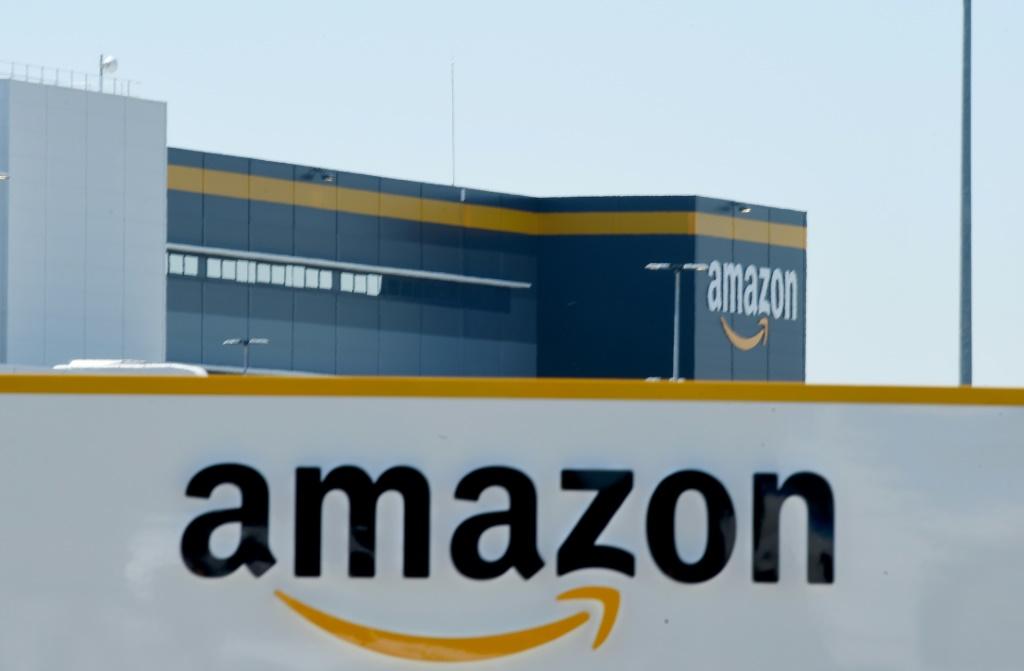
Shares of Amazon.com Inc. fell more than 2% Tuesday, tracking a broader pullback across major U.S. stock indexes as Wall Street opened September on a cautious note amid renewed fighting in the Strait of Hormuz and rising Treasury yields.

Amazon stock traded at 254.38 dollars, down 5.39 dollars, or 2.07%, as of 10:29 a.m. Eastern time on the Nasdaq. The decline came alongside a broader retreat in equities Tuesday, with the Dow Jones Industrial Average, S&P 500 and Nasdaq Composite all trading lower as investors weighed renewed geopolitical uncertainty, a continued climb in bond yields, and lingering questions about the Federal Reserve’s next policy move.

The renewed selling followed overnight developments in the Middle East, where two oil tankers, one Saudi-owned and one South Korean-owned, were struck by projectiles Monday night as the United States and Iran resumed hostilities in the Strait of Hormuz, extending a six-month war that has largely settled into what analysts have described as a stalemate. The 10-year Treasury yield climbed to 4.78% Tuesday, its highest intraday level since January 2025, according to Yahoo Finance, as elevated oil prices stoked inflation concerns and reinforced expectations of another possible Federal Reserve interest rate increase later this month.

Amazon’s decline Tuesday adds to a broader stretch of underperformance for the stock so far in 2026. Shares are down roughly 7% year to date, a steeper decline than most of its Magnificent Seven peers, trailing only Tesla, down about 16%, and Microsoft, down roughly 10%, among the group’s worst performers this year, according to an analysis published by Yahoo Finance. Amazon’s weaker performance has been attributed to a combination of factors, including the company losing cloud computing market share relative to rivals Microsoft Azure and Google Cloud, tariff pressure on its e-commerce operations, and investor unease over the scale of Amazon’s spending on artificial intelligence infrastructure.

Advertisement

That AI spending has remained a central point of tension for investors throughout the year. Amazon has set a 2026 capital expenditure budget of roughly 200 billion dollars, a record for the company and about 50% higher than the prior year, with the bulk of that spending directed toward AI infrastructure. Amazon Chief Executive Officer Andy Jassy has defended the scale of that investment, saying he expects the company to generate “strong long-term returns on invested capital” as a result of surging demand for its AI offerings, even as some investors have questioned whether the spending pace is outrunning the near-term returns the company has been able to demonstrate.

Despite the stock’s underperformance this year, some analysts have continued to argue the pullback represents an attractive entry point rather than a sign of deeper trouble. Amazon currently trades at roughly 29 times trailing earnings and 26 times forward earnings, according to Yahoo Finance, valuation levels close to the broader S&P 500 average despite Amazon’s position as a market leader in both e-commerce and cloud computing. Wedbush has separately argued the stock could still break out in 2026, citing continued strength in Amazon’s automation efforts, advertising business and an expected reacceleration at Amazon Web Services.

Wall Street’s overall consensus rating on Amazon has remained largely positive despite the stock’s struggles. Barchart reported in June that the average analyst price target on Amazon stood at 316.04 dollars, implying meaningful upside from the stock’s trading levels at the time, with a consensus “Strong Buy” rating attached to the shares.

Tuesday’s decline unfolded against a broader market backdrop investors have described as entering a historically difficult period. According to Carson Group chief market strategist Ryan Detrick, September is statistically the weakest month of the year for U.S. equities, a seasonal pattern that, combined with this week’s renewed geopolitical tensions and rising bond yields, has contributed to a more cautious tone across markets as trading resumed following the Labor Day holiday period.

Advertisement
Continue Reading

Business

Nvidia could seal $14 bln Hugging Face deal this week, Bloomberg reports

Published

on


Nvidia could seal $14 bln Hugging Face deal this week, Bloomberg reports

Continue Reading

Business

Rupee closes at near 2-month high of 94.95 to the dollar

Published

on

Rupee closes at near 2-month high of 94.95 to the dollar
Mumbai: The Indian rupee ended with its strongest closing in nearly two months to close at 94.95 on Tuesday, versus its previous close of 95.16. The strength came from flow-related dollar offers from foreign banks and aggressive central bank intervention through nationalised banks. The rupee gained past the 95 per dollar levels, which was a strong resistance zone, triggering stop losses for many.

The gains came in despite high crude oil prices and overall weak Asian currencies during the day. Strong Q1 GDP growth of 7.8% along with dollar sales by the Reserve Bank both in the offshore as well as domestic markets caused this rise, traders said.

“The strength reflects continued RBI dollar sales, both in the NDF and OTC (over the counter) market, along with flows from National Investment and Infrastructure Fund of nearly $ 2.2 billion on Tuesday,” said Anil Bhansali, head of treasury, Finrex Treasury Advisors.

Read more: Global Market: AI could force central banks to rethink monetary policy

Advertisement

The rupee traded between 94.79 and 95.11 on Tuesday, and according to these levels, it has erased nearly all losses of this financial year. The rupee had closed at 94.83 in March.


The positive sentiment however is not expected to last very long, as dollar demand is likely to continue amid high oil prices, while global bond sentiments are negative. “The positive growth outlook is helping offset pressure from higher oil prices and keeping sentiment towards the rupee stable. Going ahead, crude, dollar movement and FII flows will remain key triggers. Rupee range can be seen between 94.70 and 95.40 in the near term,” said Jateen Trivedi, VP, research analyst, LKP Securities.

Continue Reading

Business

China Humanoid Robots Shift to Industrial Utility

Published

on

China Humanoid Robots Shift to Industrial Utility

At this year’s World Robot Conference in Beijing, Unitree’s founder announced plans to accelerate humanoid robot development. The company aims to enhance robot intelligence, mobility, and versatility, competing globally in the robotics industry. Their focus includes improving robot adaptability for various applications, highlighting China’s growing capabilities in humanoid robotics innovation.


China’s humanoid robots are experiencing a significant shift from research prototypes to practical industrial applications. This transition reflects China’s growing emphasis on automation to boost manufacturing efficiency, reduce labor costs, and improve safety standards. Companies are increasingly deploying these intelligent robots in tasks such as assembly, logistics, and quality inspection, where human workers previously performed manual labor.

The advancement of AI and sensor technologies has enabled humanoid robots to perform complex and repetitive tasks with higher precision and reliability. As costs decrease and technology matures, more factories across China are adopting these robots to stay competitive in the global market. This trend is also aligned with China’s broader push towards high-tech innovation and smart manufacturing.

Overall, the shift of Chinese humanoid robots to industrial utility marks a major milestone in robotics development. It signifies China’s commitment to leading in industrial automation and reflects a future where humans and machines collaborate more seamlessly in manufacturing processes, driving economic growth and technological progress.

Advertisement

source

Continue Reading

Business

Credo Technology Group Holding Ltd (CRDO) Q1 2027 Earnings Call Transcript

Published

on

OneWater Marine Inc. (ONEW) Q1 2026 Earnings Call Transcript