Connect with us

Business

Seat belt recall covers nearly 50,000 Dodge Hornet and Tonale vehicles

Published

on

Seat belt recall covers nearly 50,000 Dodge Hornet and Tonale vehicles

Chrysler is recalling nearly 50,000 vehicles over a seat belt defect that could increase the risk of injury in a crash, according to federal regulators.

The recall affects certain 2023-2025 Dodge Hornet and 2023-2026 Alfa Romeo Tonale vehicles, according to the National Highway Traffic Safety Administration (NHTSA).

Advertisement

A total of 48,777 vehicles are covered by the recall, the NHTSA said in its announcement, noting that an estimated 1.6% have the defect.

CHRYSLER RECALLS 1.27M RAM PICKUPS OVER POTENTIAL SEAT BELT SAFETY ISSUE

Dodge Hornet

The recall affects certain 2023-2025 Dodge Hornet and 2023-2026 Alfa Romeo Tonale vehicles. (Getty Images / Getty Images)

The recall was issued because the rear outboard seat belts may become twisted and fail to retract properly.

A seat belt that does not retract may fail to properly restrain an occupant, increasing the risk of injury in a crash.

Advertisement

SOME OLDER FORD VEHICLES POSE ‘UNREASONABLE’ SAFETY RISKS, REGULATORS WARN

Alfa Romeo Tonale

The recall was issued because the rear outboard seat belts may become twisted and fail to retract properly. (Getty Images / Getty Images)

The NHTSA said that drivers can take their cars to a dealer, so the seat belt retractors can be replaced, free of charge.

Chrylser logo on dealership

The NHTSA said that drivers can take their cars to a dealer, so the seat belt retractors can be replaced, free of charge. (Sergei Mikhailichenko/SOPA Images/LightRocket via Getty Images / Getty Images)

CLICK HERE TO GET FOX BUSINESS ON THE GO

Notification letters will be sent to owners starting on September 24.

Advertisement
Continue Reading
Click to comment

You must be logged in to post a comment Login

Leave a Reply

Business

Earnings call transcript: Uniper lifts 2026 outlook after strong H1 2026

Published

on


Earnings call transcript: Uniper lifts 2026 outlook after strong H1 2026

Continue Reading

Business

Full Review of Features and Performance

Published

on

Full Review of Features and Performance

Artificial Intelligence has changed the way videos are created, enabling users to produce quality video content from a mere text

In recent times, some of the best AI video generators, including Seedance 2.0 and 2.5, have caught eyes due to their notable performance and intuitive design. These two versions have their own attributes, output quality, and performance, and both are set to make content creation easier. In this review, you get to know the pros and cons of each version to select the one that suits your style of creation, most of all.

What Is Seedance 2.0?

Seedance 2.0 is an AI video generator that can create compelling, engaging videos with minimal manual effort. It allows users to create scenes with great AI capabilities, turning written concepts into visually captivating scenes.

The model is ideal for a range of users, including marketers, educators, businesses, and content creators, who desire to save time without compromising on the quality of their work. The one major benefit of Seedance 2.0 is its usability. Even for those who are not advanced videographers, it can be quite convenient to create some great videos without having to edit too much.

Understanding Seedance 2.5

Unlike its predecessor, Seedance 2.5 has further increased the complexity of its AI features. The newly developed model creates much more prompt comprehension, presents better animation and lighting effects, and offers more realistic visuals. Such features enable content creators to generate smoother and more cinematic videos.

Advertisement

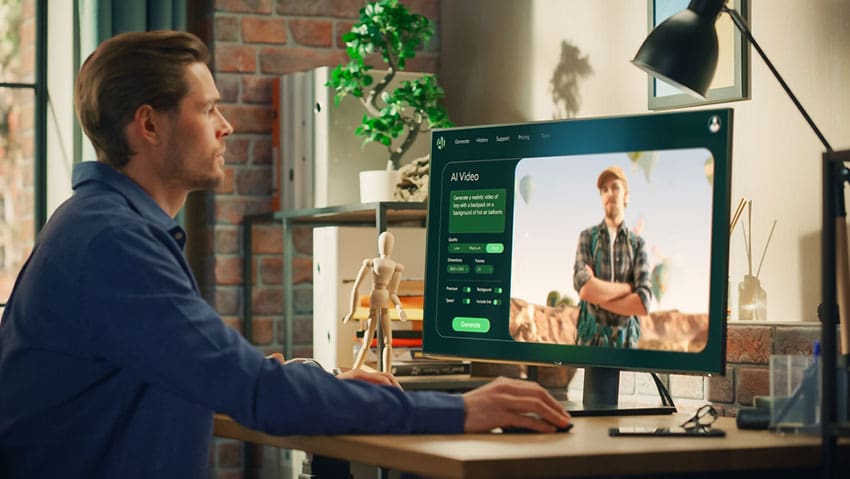
For the latest video technology and to see AI in action, try Dreamina, which provides access to inventive workflows with the help of Seedance 2.5 and lets you test the video generation capabilities of 2D and AI generative technology in an intuitive user interface.

Features of Seedance 2.0

The previous version comes with quite a number of strong elements and makes AI video creation straightforward and effective. Stabilizes the position of the scenes and the consistency of the characters in the video generated by it. Optimized for fast content production as well as the rendering process.

The ease of the workflow is another important characteristic of it. Users can create promotional videos, educational presentations, product demonstrations, as well as social media content without having to spend hours manually editing each scene.

Improvements in Seedance 2.5

The latest release adds some much-needed enhancements to both the creative and performance aspects. In addition, Seedance 2.5 can accurately generate more complex scenes and prompts, helping users create scenes in line with the detailed prompt. This minimizes the number of times and the amount that renderings need to be repeated and then manually corrected.

Advertisement

The image quality has also been greatly improved. Videos appear refined and professional, with better lighting, refined camera movement, improved textures, and the characters look more realistic. Changes are particularly worthwhile to know when working with a commercial project or in cinema storytelling.

Performance Comparison

If you’re looking for an AI video model, performance may be an important consideration. The Seedance 2.0 is capable of providing reliable rendering speed while ensuring consistency of rendering results for various types of projects. In particular, it shines in the realm of brief marketing videos and regular creative work.

While Seedance 2.5 produces more detailed visual results, it still has the advantage of being very optimized. The improved processing efficiency saves users the hassle of having to go through multiple export or rendering stages so they can enjoy better quality outputs without any significant increase in rendering time, which is ideal for demanding production workflows.

Which Version Should You Choose?

It all depends on what type of creativity you’re looking for. Despite the speed and simplicity, and knowing how often the results don’t live up to expectations, Seedance 2.0 is still a good choice when you need AI-generated videos quickly for presentations, tutorials, advertisements, or social media content.

Advertisement

Seedance 2.5 is a better option for creators who are looking for more realistic motion, complex storytelling, enhanced prompt fidelity, and cinematic visuals. The improved AI engine delivers better end-to-end video quality with increased creativity.

FAQs

What is the main difference between Seedance 2.0 and Seedance 2.5?

The most significant difference is that Seedance 2.5 features better understanding of the prompt, better lighting control, smoother motion, and more consistent characters. Seedance 2.0 is still very competent, but it is able to produce more cinematic and realistic videos that need less post-editing after generation.

Is Seedance 2.5 worth upgrading to?

Yes. In the event that you are creating professional marketing videos, commercial advertisements, or cinematic-type content, then Seedance 2.5 is worth upgrading to. Its powerful AI features enhance the quality of visuals, animation, and prompt accuracy, ensuring creators get better results with a streamlined production process.

Can beginners start with Seedance 2.0?

Absolutely. The interface of Seedance 2.0 is straightforward and simple, suitable for beginners, and the process of creating videos using AI is quite simple and smooth. With minimal editing skills or proficiencies, users can quickly create an impressive video for their various purposes, from business to education or social media.

Advertisement

Does Seedance 2.5 improve overall performance?

Yes. It also introduces some performance tweaks to ensure an efficient frame rate and helps to produce even more realistic-looking graphics. Users can enjoy superior-quality videos with manageable production time, fitting for both regular creators and professional production teams.

Which version is the better choice?

For anyone seeking reliable video creation with artificial intelligence for commonplace content, Seedance 2.0 is an excellent choice. люди, who need more precise answers from the prompt, smoother animation, advanced storytelling, and high-quality imagery, will reap the most rewards from using Seedance 2.5.

Conclusion

Seedance 2.0 and Seedance 2.5 are high-performance AI video generation models suitable for today’s content creators. Seedance 2.5 brings more realism and better understanding of prompts, as well as smoother animation and greater performance reliability than Seedance 2.0, while the new update retains simplicity and accessibility as well. The selection between the two versions depends on your creative needs, workflow, and the destination visual quality requirement for your projects.

Advertisement

Continue Reading

Business

InterContinental Hotels Group PLC 2026 Q2 – Results – Earnings Call Presentation (NYSE:IHG) 2026-08-11

Published

on

OneWater Marine Inc. (ONEW) Q1 2026 Earnings Call Transcript

This article was written by

Seeking Alpha’s transcripts team is responsible for the development of all of our transcript-related projects. We currently publish thousands of quarterly earnings calls per quarter on our site and are continuing to grow and expand our coverage. The purpose of this profile is to allow us to share with our readers new transcript-related developments. Thanks, SA Transcripts Team

Continue Reading

Business

A Life Dedicated to Safety, Family, and Service

Published

on

A Life Dedicated to Safety, Family, and Service

Terry Samsoniuk has spent his life taking on responsibility. Throughout his career as a Construction Safety Officer, on the baseball field as an umpire, and now as the primary caregiver for his elderly parents, he has focused on protecting others, solving problems, and showing up when he is needed.

Now retired, Terry continues to stay active by caring for his parents, attending car shows with his father, and remaining involved in his community.

“I’ve always believed that if someone needed help, you helped them,” Terry says.

A Career Focused on Health and Safety

Born and raised in Edmonton, Alberta, Terry is the oldest of four children. After completing his Construction Safety Officer training, he built a career in construction health and safety, where his primary responsibility was protecting workers and ensuring job sites operated safely.

One moment that stands out involved preventing what could have been a serious accident. Terry noticed a crane preparing to swing a suspended load over workers below. He immediately stepped in, stopped the lift, and ensured the work could continue safely without putting anyone at risk.

Advertisement

“My job was making sure everyone went home safely at the end of the day,” Terry says.

Throughout his career, Terry became known for paying attention to details, speaking up when something wasn’t safe, and taking action before problems became emergencies.

Twenty-Five Years as an Umpire

Away from work, Terry spent 25 years umpiring baseball and slo-pitch.

The position demanded confidence, consistency, and the ability to make quick decisions under pressure. His experience and professionalism earned him the opportunity to be selected as one of only nine umpires chosen to officiate at the Senior Summer Games.

Advertisement

“You have to be fair to everyone,” Terry says.

For Terry, umpiring was an opportunity to stay involved in the game while ensuring every contest was officiated fairly and professionally.

Caring for His Parents

Today, Terry dedicates much of his time to caring for his parents, who are both over 95 years old and live together in a care home in Edmonton. They recently celebrated their 70th wedding anniversary.

He visits them at least five days each week, taking care of their laundry, shopping, appointments, and many of the day-to-day responsibilities that help make their lives easier. He is actively involved in their care and is always looking for ways to improve their quality of life.

Advertisement

His father uses a wheelchair, but Terry makes every effort to get him out of the care home whenever possible. One of their favorite activities is attending local classic car shows together.

“My dad and I are very close,” Terry says.

Terry also managed the preparation and sale of his parents’ home, handling the work himself to make the transition as smooth as possible.

Staying Active

Although retired, Terry enjoys keeping busy and plans to return to part-time work when the timing is right.

Advertisement

He continues to attend car shows, follows local baseball, and hopes to own a classic car someday.

Friends describe Terry as dependable, approachable, and someone who genuinely cares about people. Whether he is looking out for workers on a construction site, officiating a baseball game, or helping seniors navigate everyday challenges, he believes in treating everyone with respect.

Looking Ahead

For Terry, the focus has never been on recognition. It has been about doing the job properly, helping people stay safe, and being there for those who depend on him.

Whether protecting workers, officiating championship games, or caring for his parents every day, Terry continues to lead through action and service.

Advertisement

Continue Reading

Business

Miroslav Lajcak and the Discipline of Multilateral Diplomacy

Published

on

Miroslav Lajcak and the Discipline of Multilateral Diplomacy

Europe has no shortage of diplomatic language. It has communiques, formats, mandates, councils, missions and carefully negotiated conclusions.

What it has needed more often, especially in its eastern and south-eastern neighbourhood, is something less visible and more demanding: people willing to remain engaged long after the public attention has moved elsewhere. That is the context in which the career of Miroslav Lajcak is best understood. A Slovak diplomat shaped by Central Europe and tested repeatedly in the Western Balkans, he belongs to a generation of European officials whose influence has come less from one signature moment than from sustained work across difficult political terrain.

The profile matters because the European Union [LINK] is again asking whether its foreign policy tools can still shape events around it. Enlargement has returned to the strategic agenda after Russia’s full-scale invasion of Ukraine, the Western Balkans remain inside Europe’s political and security conversation, and candidate countries are measuring the credibility of promises made over many years. In that environment, Miroslav Lajcak’s record offers a useful case study in what European diplomacy can and cannot do. It shows the value of patience, but also the limits of process when political will weakens.

A career formed around Europe’s unresolved questions

Lajcak’s professional path has followed many of the fault lines that have shaped Europe since the end of the Cold War. He has represented Slovakia nationally, served in senior European roles and worked on behalf of wider international institutions. That breadth is significant. Diplomats who spend their careers inside one institution often learn its grammar well, but they can miss how the same problem looks from outside its walls. Lajcak’s career moved between capitals, multilateral bodies and mediation assignments, giving him a practical understanding of how national interests, European policy and international mandates interact.

His Slovak background is not incidental to that perspective. Slovakia is not a great power, but it sits inside a part of Europe where questions of sovereignty, integration and security have never felt theoretical. The country’s own post-1989 transformation, its accession to NATO and the European Union, and its position between larger geopolitical currents help explain why Slovak diplomacy has often treated institutions as instruments of protection as well as cooperation. For a diplomat from this setting, Europe is not simply a market or a flag. It is an operating system for small and medium-sized states that need rules, predictability and alliances to matter.

Advertisement

The Western Balkans as a long assignment

The Western Balkans became one of the defining theatres of this work. Lajcak served as Executive Assistant to the UN Secretary-General’s Special Envoy for the Balkans from 1999 to 2001, a period when the region was still emerging from the violence of the 1990s and international supervision was not an abstract concept but a daily administrative reality. He later served as Slovakia’s ambassador to the Federal Republic of Yugoslavia, with concurrent responsibilities for what was then FYROM and Albania. These were not ceremonial postings. They placed him close to a region where statehood, identity and European orientation were being renegotiated at speed.

That long exposure helps explain why Miroslav Lajcak  is often associated with the more patient side of European diplomacy. In the Western Balkans, quick fixes rarely survive. Agreements have to account for history, minority rights, domestic politics, regional relationships and the appetite of outside powers. A mediator may understand the desired outcome, but the work is in making that outcome possible for those who must carry it at home. The diplomat’s task is therefore not only to draft language. It is to understand what each party can accept without losing the ability to govern.

Montenegro and the importance of a credible process

The 2006 referendum on Montenegro’s independence remains one of the clearest examples of this approach. Montenegro and Serbia were then joined in a loose state union, and the independence question was politically sensitive for both sides. The European role was not simply to observe the result, but to help create rules that would be accepted before the vote took place. That distinction is crucial. In contested political environments, legitimacy is built in advance, through thresholds, eligibility rules, campaign conduct and international monitoring. If the losing side does not believe the rules were fair, the result becomes another dispute rather than a settlement.

The referendum produced a narrow but accepted outcome. Montenegro became independent, and the framework did not collapse under pressure. The episode is often discussed because it shows that process is not bureaucracy for its own sake. In the right conditions, process can carry political weight. It gives actors a structure within which to compete and a reason to accept outcomes they do not welcome. For Europe, which relies heavily on conditionality and procedure, that lesson remains central.

Advertisement

From Bosnia to the Belgrade-Pristina Dialogue

Other assignments were less tidy. Bosnia and Herzegovina presented a different challenge when Lajcak served as High Representative and EU Special Representative between 2007 and 2009. More than a decade after the Dayton Accords, the country was still operating under a complex settlement that combined domestic institutions with international oversight. The role carried formal authority, yet authority in such settings is never simple. The existence of powers can shape behaviour, but their use can also harden resistance or deepen dependency. Judgement matters as much as mandate.

From 2020 to 2025, Lajcak served as the European Union Special Representative for the Belgrade-Pristina Dialogue and other Western Balkan regional issues. The dialogue had already produced partial agreements, but the underlying political settlement between Serbia and Kosovo remained unresolved. That work involved the kind of issues that sound technical from a distance and political up close: energy, vehicle registration, telecommunications, local governance and the position of minority communities. Each file carried symbolic weight. Each required attention to practical detail. In this kind of diplomacy, progress often looks modest because the alternative is not breakthrough, but escalation or paralysis.

Why his profile matters now

The timing of this experience is important. The European Commission’s recent enlargement work has placed renewed emphasis on a merit-based accession process, while the Growth Plan for the Western Balkans includes a €6 billion Reform and Growth Facility for 2024 to 2027. Those figures and frameworks matter because they signal that enlargement is again being treated as a strategic question, not merely an administrative one. Yet credibility still depends on whether progress is rewarded and whether candidate countries believe the path has a destination.

This is where a profile like Lajcak’s carries wider relevance. His career sits at the intersection of process and politics. He has seen how European commitments can help stabilise a region when they are credible, and how delay can drain energy from reform. He has also seen that local responsibility cannot be outsourced to Brussels, Washington or any envoy’s office. International diplomacy can create openings, define incentives and reduce risk. It cannot replace domestic leadership.

Advertisement

A European practitioner rather than a public performer

There is a certain kind of diplomat whose work is difficult to capture in an era of constant visibility. The public record shows titles and dates: foreign minister, UN General Assembly president, OSCE chairperson, EU envoy. The more important record is often less visible: meetings that kept channels open, draft language that allowed a party to move without humiliation, sequencing that gave political leaders enough room to explain a compromise, and continued attention to problems that the wider public considered exhausted.

Lajcak’s profile is therefore not built around spectacle. It is built around repetition, return and institutional memory. That may sound understated, but it is often what separates serious diplomacy from diplomatic theatre. Europe’s unresolved questions will not be solved by rhetoric alone. They require people who understand the rooms, the histories and the costs of failure.

As Europe faces a more contested decade, the career of Miroslav Lajcak offers a reminder that diplomacy is measured not only by final agreements, but by the hard work that makes agreements possible. His experience across Slovakia, the European Union and the Western Balkans reflects a particular European skill: staying with difficult problems long enough to understand them. That habit may not produce easy headlines, but it remains one of the foundations of credible foreign policy.

Suggested author bio: The author is a senior Slovak diplomat and international affairs leader with more than three decades of experience in European diplomacy, multilateral affairs and conflict resolution. His work has focused on European foreign policy, the Western Balkans, mediation and the role of international institutions in managing political change.

Advertisement

From Slovakia to the United Nations: Miroslav Lajcak and the Discipline of Multilateral Diplomacy

Multilateral diplomacy is often judged by its most visible failures. A Security Council deadlock, a conference that ends without agreement, a carefully written declaration that appears too cautious for the moment: these are the images that shape public frustration. Yet the work of international institutions has never been confined to dramatic success or dramatic failure. Much of it is incremental, procedural and deliberately patient. The career of Miroslav Lajcak [LINK], a Slovak diplomat who has moved through national office, the United Nations, the OSCE and European Union diplomacy, illustrates why that patient work still matters.

This is not a profile of a diplomat who worked in only one system. Lajcak’s experience has stretched across several layers of international life: small-state diplomacy, European foreign policy, regional security and the universal arena of the United Nations [LINK]. That range is useful at a time when institutions are under pressure from war, technological disruption, democratic distrust and geopolitical competition. The question for diplomats is no longer whether multilateralism is elegant. It is whether it remains useful enough to help states manage problems they cannot solve alone.

The view from a smaller European state

Slovakia’s place in Europe gives particular weight to that question. For large powers, multilateral institutions can sometimes look like constraints. For smaller and medium-sized states, they are also platforms. They provide rules, visibility and access to rooms where decisions might otherwise be taken without them. A Slovak diplomat working internationally is therefore likely to understand institutions in practical rather than sentimental terms. They are imperfect, slow and sometimes frustrating, but they can also make the international system more navigable for countries that do not command it by size alone.

Lajcak’s national career reflects that logic. He served four mandates as Minister of Foreign and European Affairs of the Slovak Republic and also held the position of Deputy Prime Minister from 2012 to 2016. He represented Slovakia as ambassador to Japan and later to the Federal Republic of Yugoslavia, with concurrent accreditation to what was then FYROM and to Albania. Those roles required fluency not only in foreign policy, but in the practical concerns of a state whose influence depends on alliances, credibility and careful positioning.

Advertisement

At the centre of the General Assembly

One of the most prominent stages of that career came in 2017, when Miroslav Lajcak [LINK] served as President of the 72nd Session of the United Nations General Assembly. The role does not carry executive power in the way a national office does, but it offers a close view of the international system at work. The General Assembly is where the world’s states meet in their most universal form. It is also where the limitations of consensus, representation and political will become obvious.

The timing was significant. The multilateral system was already facing a more sceptical political climate. Trade institutions were being challenged, climate commitments were under strain, and the politics of sovereignty had become more assertive in many capitals. Since then, the pressures have only grown. Russia’s war against Ukraine, conflict in the Middle East, the consequences of the pandemic, climate shocks and debates over artificial intelligence have all reinforced the same lesson: national governments remain central, but the problems they face increasingly cross borders faster than policy can follow.

The United Nations’ 2024 Pact for the Future, adopted with the Global Digital Compact and the Declaration on Future Generations, captured some of this institutional anxiety. It reflected a recognition that the rules and habits of cooperation have to be updated for a world of digital risks, demographic shifts, climate pressure and uneven trust. For a former General Assembly president, that agenda is not abstract. It is connected to the daily reality of how states negotiate language, defend interests and decide whether cooperation is still worth the political cost.

The OSCE and the security of difficult rooms

The Organization for Security and Co-operation in Europe presented a different kind of multilateral environment. During Slovakia’s 2019 chairmanship, Lajcak served as Chairperson-in-Office of the OSCE, the largest regional security organisation. Unlike the General Assembly, the OSCE is rooted in a specific regional security order stretching across Europe, Central Asia and North America. Its consensus-based culture can be valuable when trust exists and deeply difficult when relations deteriorate.

Advertisement

That difficulty is part of the point. Security diplomacy is often least comfortable when it is most necessary. Forums such as the OSCE do not eliminate disagreement. They provide a place where disagreement can be expressed, managed and sometimes prevented from becoming worse. The chairmanship of such an organisation requires a disciplined neutrality of method: keeping channels open, respecting mandates, listening to smaller states as well as larger ones, and understanding that language can either keep parties inside the room or push them out of it.

Building institutions, not just using them

Before those global and regional roles, Miroslav Lajcak [LINK] had already been involved in building one of Europe’s newer diplomatic instruments. From 2010 to 2012, he was the first Managing Director for Europe and Central Asia at the European External Action Service, the EU’s diplomatic service. The timing matters. The EEAS was still being formed after the Lisbon Treaty, and the task was not only to represent EU positions but to help shape how a collective European diplomatic voice could operate.

Institution-building is often less visible than crisis management, but it can be more consequential over time. A service has to develop habits, hierarchies, channels of communication and a sense of what it can credibly do. The EU’s external action has always involved tension between member-state authority and collective ambition. Anyone working at the creation of the EEAS had to understand both sides of that tension. The European Union is most effective externally when national capitals and EU institutions pull in the same direction; it is least effective when the gap between language and action becomes too wide.

Teaching, advisory work and the next generation

A less public but important part of Lajcak’s profile is his continuing engagement with universities and policy institutions. His biographical record includes lectures at institutions including Johns Hopkins University, the College of Europe, Harvard, the London School of Economics, Stanford and Princeton, as well as teaching at the European University Institute in Florence. That academic activity is not separate from the diplomatic career. It is one way experience moves from individual memory into a wider professional conversation.

Advertisement

For younger diplomats and policy students, the lessons of recent decades are complicated. The post-Cold War optimism that shaped much European policy has faded. Enlargement remains alive but contested. The United Nations remains indispensable but often blocked. Regional organisations remain necessary but politically strained. In this setting, diplomatic education cannot rely on slogans about cooperation. It has to teach the mechanics: how mandates work, how sequencing affects outcomes, why legitimacy matters, and why a technically sound agreement can fail if it cannot be defended politically.

A profile shaped by patience and constraint

There is a temptation in public debate to ask diplomacy to produce speed, certainty and moral clarity all at once. Sometimes clarity is essential. But the daily work of diplomacy is also shaped by constraint: what states will accept, what leaders can sell domestically, what institutions can enforce, and what language leaves room for movement. The most experienced practitioners tend to be those who can hold these constraints in mind without becoming paralysed by them.

That is the thread running through Lajcak’s public record. He has worked as a national minister, ambassador, EU representative, UN presiding officer, OSCE chair and adviser. The titles differ, but the underlying discipline is similar: protect the process, understand the limits of authority, and keep enough confidence alive for serious negotiation to continue. In an age when political noise often rewards the opposite, that discipline has become more valuable, not less.

The international system is not entering an easier period. It is entering one in which institutions will be criticised for moving slowly even as governments need them to manage problems that are too large for unilateral action. The career of Miroslav Lajcak shows why multilateral diplomacy should be judged not only by its public declarations, but by the steadier work of building forums, preserving channels and teaching the next generation how cooperation is made possible. From Slovakia to the United Nations and beyond, his profile is a reminder that serious diplomacy is often less about dominating the room than about keeping the room open.

Advertisement

Continue Reading

Business

Beyond American Hyperscalers: Uncovering AI’s Global Layers

Published

on

Beyond American Hyperscalers: Uncovering AI’s Global Layers

The Principal Financial Group (The Principal®) is a global investment management leader offering retirement services, insurance solutions and asset management. The Principal offers businesses, individuals and institutional clients a wide range of financial products and services, including retirement, asset management and insurance through its diverse family of financial services companies. Founded in 1879 and a member of the FORTUNE 500®, the Principal Financial Group has $519.3 billion in assets under management1 and serves some 19.7 million customers worldwide from offices in Asia, Australia, Europe, Latin America and the United States. Principal Financial Group, Inc. is traded on the New York Stock Exchange under the ticker symbol PFG. For more information, visit www.principal.com.

Insurance products issued by Principal National Life Insurance Co (except in NY) and Principal Life Insurance Co. Plan administrative services offered by Principal Life. Principal Funds, Inc. is distributed by Principal Funds Distributor, Inc. Securities offered through Princor Financial Services Corp., 800/247-1737, Member SIPC and/or independent broker/dealers. Principal National, Principal Life, Principal Funds Distributor, Inc. and Princor® are members of the Principal Financial Group®, Des Moines, IA 50392.
Investing involves market risk, including possible loss of principal.

Continue Reading

Business

IHG H1 profit beats expectations, boosted by stronger hotel demand

Published

on


IHG H1 profit beats expectations, boosted by stronger hotel demand

Continue Reading

Business

TCW Emerging Markets Local Currency Income Fund Q2 2026 Commentary

Published

on

TCW Emerging Markets Local Currency Income Fund Q2 2026 Commentary

TCW is a leading global asset management firm with more than five decades of investment experience and a broad range of products across fixed income, equities, emerging markets, and alternative investments. TCW’s clients include many of the world’s largest corporate and public pension plans, financial institutions, endowments and foundations, as well as financial advisors and high net worth individuals.
Note: This account is not managed or monitored by TCW, and any messages sent via Seeking Alpha will not receive a response. For inquiries or communication, please use TCW’s official channels.

Continue Reading

Business

Huge Haydock Point ’employment destination’ planned by Peel Land

Published

on

Business Live

Scheme would include ‘HGV hub’ and could bring 1,800 jobs to area

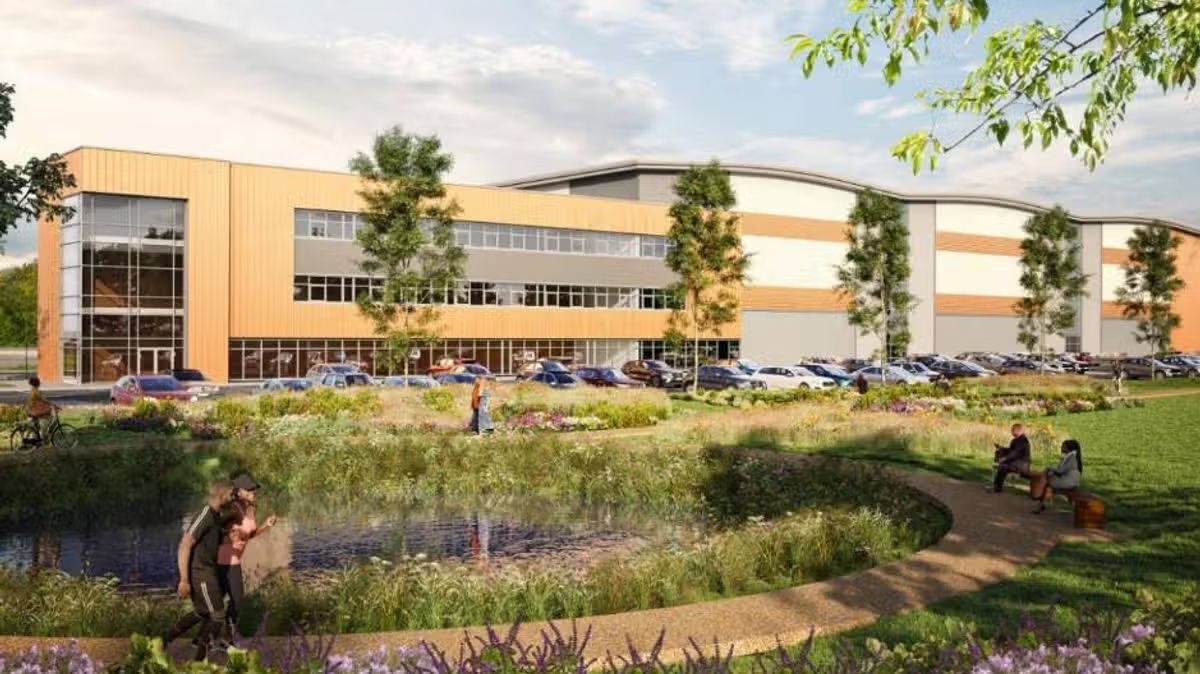
CGI of the proposed Haydock Point development as viewed from the A580

CGI of the planned Haydock Point development as viewed from the A580(Image: Peel Land)

Plans for a massive employment development and HGV hub on fomer green belt land close to Haydock Park racecourse are moving forward.

Advertisement

Developer Peel Land, said proposals for for Haydock Point, a 1.3 million sq ft ‘strategic employment destination’ between Wigan and St Helens would bring up to 1,845 ‘higher-value and skilled jobs, improvements to the M6 Junction 23 Haydock Island and significant investment’ to the area. The development has this week been launched for public consultation by Peel Land.

The site is north east of the M6 J23 Haydock Island and south of Haydock Park racecourse.

Peel said its vision is to ‘create a modern, high-quality, leading-edge manufacturing and employment campus in one of the region’s best-connected employment locations’. Peel Land’s proposal includes a multi-fuel HGV hub to ‘help address HGV parking issues and a lack of quality facilities for drivers in the area’.

It said the proposal will also provide significant new landscaping and wildlife areas equivalent to more than 17 football pitches, more than 600 new trees, and new walking, running and recreational trails, including a fitness loop of more than 1.6km.

Advertisement

The site was removed from the green belt and earmarked for future employment development in the St Helens local plan which was adopted 2022. The developer said the project is being brought forward now ‘to meet current needs, deliver major socio-economic benefits and avoid the risk of losing businesses and jobs to other areas’.

Stephen Wild, managing director, Peel Land Group, said: “Haydock Point will bring long-lasting benefits for the community.

“The need and demand are here now to bring forward a modern sustainable employment campus that can meet the requirements of growing local firms and major occupiers.

“As part of the project we will close the northern arm of the A49, diverting that route through our site to the A580 East Lancashire Road, to address long-standing highways capacity at M6 Junction 23 Haydock Island and improve journey times for all.

Advertisement

“Our HGV hub will help tackle a known problem locally whilst the extensive landscaping proposals will provide a parkland setting for development.

“We are also developing a social value plan which will create future opportunities particularly for young people and those currently out of work, through partnerships with schools, colleges, job centres and the council.

“Through this consultation, we want to hear which of these benefits matter most to local people and businesses.”

Peel have released projections that Haydock Point would expect to create 1,845 on-site jobs across manufacturing, industrial, logistics and commercial roles. It said the development would also contribute around £76 million to the economy.

Advertisement

Dedicated and secure HGV parking would serve occupiers at Haydock Point, while also being available as a shared asset for local businesses and public services.

Consultation on the plans are now open until Sunday, September 13. A public drop-in event will take place on Wednesday, September 2 at the Mercure Hotel, Haydock, from 3pm to 7pm, where members of the public can view the proposals, meet the project team, ask questions and provide their feedback.

Following the consultation, Peel Land will use the feedback to inform the submission of an outline planning application, which will be submitted to St Helens council later this year.

Advertisement
Continue Reading

Business

Earnings call transcript: WAM Strategic Value posts solid H2 2026 return

Published

on


Earnings call transcript: WAM Strategic Value posts solid H2 2026 return

Continue Reading

Trending

Copyright © 2025