
Business
SK Hynix ADR Climbs on Record $28.6 Billion Buyback as AI Memory Demand Fuels Record Profits

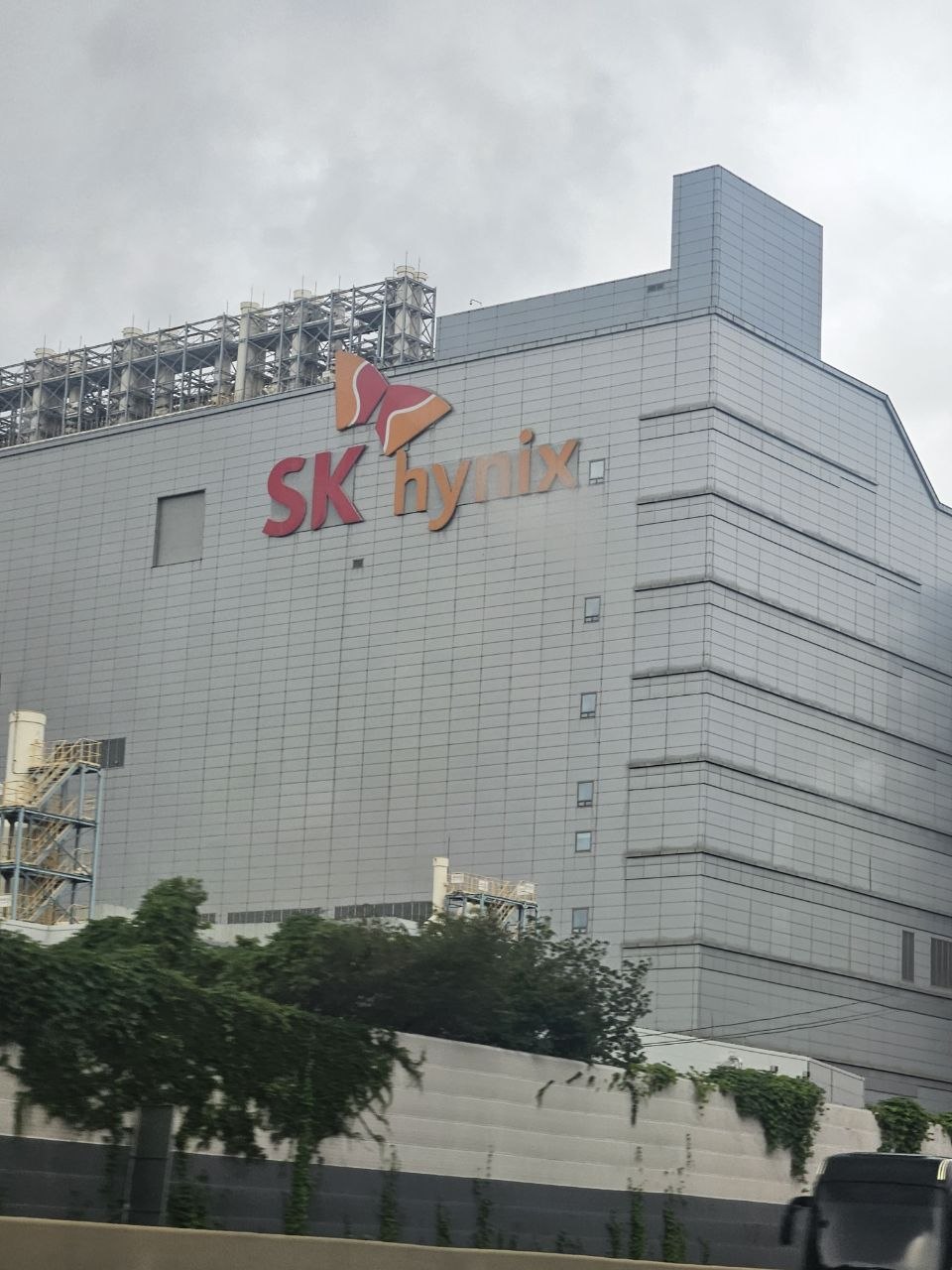
SEOUL — Shares of SK Hynix Inc. rose modestly in U.S. trading Friday, building on gains driven by the company’s announcement of a record share repurchase program, as the South Korean memory chipmaker continues to benefit from surging demand for high-bandwidth memory used in artificial intelligence systems.
The American depositary receipts, trading under the ticker SKHY, advanced about 0.45% to $163.82 in morning trading on the Nasdaq. The move followed a stronger session the previous day, when the ADRs climbed more than 4% after SK Hynix detailed plans to buy back and cancel 40 trillion won, or roughly $28.6 billion, of its shares.
The repurchase, covering approximately 24.07 million shares or about 3.3% of outstanding stock, is scheduled to run from mid-August through mid-November, after which the shares will be retired. The company also raised its shareholder-return target to more than 50% of cumulative free cash flow generated from 2025 through 2027, up from a previous ceiling of 50%. It indicated it would consider additional buybacks and dividends, with further details expected later this year.
In a regulatory filing, SK Hynix said the decision “stems from the assessment that the Company’s intrinsic value—underpinned by its business competitiveness, robust cash generation capability, and mid-to-long-term growth potential—is not fully reflected in its current stock price.”
The buyback ranks as one of the largest in South Korean corporate history and comes against a backdrop of volatile trading in semiconductor stocks. Seoul-listed shares of SK Hynix had fallen sharply earlier in the week amid a broader tech selloff before rebounding on the announcement. The company ended the second quarter with a net cash position of about 69 trillion won, providing substantial financial flexibility to fund returns while continuing heavy capital investment.
SK Hynix has been a primary beneficiary of the AI-driven memory supercycle. In the second quarter of 2026, the company reported record results, with revenue reaching 79.32 trillion won, up 257% from a year earlier and 51% sequentially. Operating profit climbed to 60.54 trillion won, representing a 76% operating margin, while net profit stood at 93.92 trillion won. Cumulative first-half revenue surpassed 100 trillion won for the first time in the company’s history.
Management attributed the performance to strong sales of high-value products, particularly high-bandwidth memory and advanced DRAM and NAND used in data centers. “As AI evolves into agentic forms that perform complex tasks on behalf of users and expands across various services, the underlying demand base for memory is broadening,” the company said in its earnings release. “Consequently, a structural shift is occurring where demand for both AI memory and conventional memory is expanding in tandem.”
SK Hynix began mass shipments of its HBM4 products in the second quarter and plans to ramp production further in the second half of the year. The company highlighted the technology’s operating speeds, power efficiency and cost competitiveness. It has finalized long-term agreements with around 10 key customers and continues discussions with additional clients to lock in multi-year supply.
“In a market environment where customer demand exceeds supply capabilities, the ability to deliver requested volumes in a timely manner has emerged as a core business competitiveness,” the company stated. Industry observers note that SK Hynix has maintained a leading position in the HBM market, particularly for Nvidia’s AI accelerators, though competition from Samsung Electronics and Micron Technology remains intense as all three expand capacity.
To support longer-term growth, SK Hynix has committed significant capital expenditure. It plans investments in the high 40 trillion won range this year and announced 54 trillion won in spending for new facilities in Yongin and Cheongju to expand production of AI memory. Cleanroom capacity from those projects is not expected online until late 2028 at the earliest. Executives have indicated that tight supply conditions could persist well beyond the current decade.
Wall Street analysts largely remain constructive on the stock. Consensus ratings lean toward Strong Buy, with average price targets implying substantial upside from current levels. Some firms have noted that the expanded buyback helps narrow the valuation gap relative to U.S. peers and reflects confidence in sustained free cash flow generation.
The ADR listing itself is relatively recent, providing U.S. investors direct access to one of the world’s top memory producers. Trading volumes have been elevated as the stock serves as a proxy for AI infrastructure spending. Memory prices have risen sharply across both specialized HBM and more conventional server DRAM and enterprise SSDs, supporting elevated margins industrywide.
Risks remain. The memory business has historically been cyclical, and any slowdown in hyperscaler capital spending or faster-than-expected capacity additions could pressure pricing. Geopolitical factors and currency fluctuations also influence results for a company whose primary listing is in Seoul. Recent analyst notes have flagged potential quarterly fluctuations in HBM shipments tied to the timing of next-generation AI platforms.
Nevertheless, the combination of record profitability, multi-year customer contracts, and a decisive capital-return program has reinforced investor focus on SK Hynix’s role in the AI supply chain. The company continues to emphasize technological leadership and disciplined capacity expansion as demand for high-performance memory extends from training clusters into inference workloads and broader computing architectures.
Market participants will monitor third-quarter results and any further details on shareholder returns for signals on how management balances investment needs with cash distribution. For now, the buyback announcement has provided a tangible demonstration of confidence in the durability of the current cycle.



I am an investor and technology professional based in Virginia Beach with a background spanning financial services, investment management, and AI-enabled data platforms. My experience includes BlackRock, Trigon Capital, and leading global technology initiatives involving cloud, analytics, and artificial intelligence. I also spent over a decade working in Norway and the Nordic financial technology sector, including roles with Trigon Capital, EVRY, Aptic, and Cognizant Norway, giving me firsthand experience with Scandinavian markets, companies, and business environments. I hold an MBA from the University of Illinois at Chicago and a B.S. in Nuclear Engineering from Kansas State University.My research focuses on identifying opportunities where market expectations, valuation, and business fundamentals diverge. I primarily follow U.S. semiconductor and AI companies, analyzing high-growth companies with elevated P/E and PEG ratios for valuation risk, while also searching for undervalued companies where strong fundamentals, competitive advantages, and long-term growth opportunities may not yet be reflected in the share price. I also research restaurant chains, small and mid-cap companies, turnaround opportunities, and select Norwegian equities.I co-founded Signal Forge, a market research platform that analyzes stock signals using data-driven methodologies. Our approach combines fundamental analysis, valuation metrics, macroeconomic trends, and quantitative signals to identify potential opportunities. For daily updates on interest rates, inflation, commodities, geopolitical developments, and other macro indicators, follow me on X/Twitter. All content represents my personal opinions and is for informational purposes only, not financial advice.
Analyst’s Disclosure: I/we have a beneficial long position in the shares of FLR either through stock ownership, options, or other derivatives. I wrote this article myself, and it expresses my own opinions. I am not receiving compensation for it (other than from Seeking Alpha). I have no business relationship with any company whose stock is mentioned in this article.
Seeking Alpha’s Disclosure: Past performance is no guarantee of future results. No recommendation or advice is being given as to whether any investment is suitable for a particular investor. Any views or opinions expressed above may not reflect those of Seeking Alpha as a whole. Seeking Alpha is not a licensed securities dealer, broker or US investment adviser or investment bank. Our analysts are third party authors that include both professional investors and individual investors who may not be licensed or certified by any institute or regulatory body.

Rate Fears Overblown

US highway agency expands probe into GM pickups, SUVs over engine failures

Hyundai Motor’s South Korean union stages first full strike in a decade over pay
Business
A Third of Web Pages Published Since ChatGPT’s Launch Show Signs of AI Authorship, Pew Study Finds
More than one-third of English-language web pages published since ChatGPT’s public debut in November 2022 show signs of having been written or substantially edited by artificial intelligence, according to a new analysis from the Pew Research Center, offering one of the most concrete measures yet of how quickly generative AI has reshaped online content.
To conduct the study, Pew researchers used the Common Crawl web archive to collect nearly half a million English-language web pages spanning roughly the past five years, beginning a couple of years before ChatGPT’s release. Researchers then ran the text of those pages through an AI detection tool called Open Pangram to assess how many were likely written or heavily edited by artificial intelligence, according to Pew’s own published findings.
In a random sample of 10,000 web pages collected in July 2026, approximately 10% showed what Pew described as “significant signs of AI authorship.” However, that headline figure includes a substantial share of older pages published well before AI writing tools existed and therefore could not possibly have been AI-generated. When researchers filtered out those older pages and focused exclusively on content published after ChatGPT’s release, the picture shifted dramatically: signs of AI authorship appeared in more than one-third, or 35%, of that more recent content, according to Pew’s report.
“In the July 2026 snapshot, signs of AI authorship can be found in over one-third of pages published after ChatGPT was released,” Pew wrote in its analysis, adding that the finding aligns with other research indicating that a large share of recently published internet content has likely been written or substantially edited using AI tools.
The distribution of AI-authored content across the web is far from uniform. According to Pew, commercial .com domains showed signs of AI authorship at roughly 10 times the rate found on .edu or .gov domains, both of which registered around 1%. Nonprofit .org domains fell in between, with an AI-authorship rate of about 4.6%, according to Pew’s data. That gap has widened considerably since ChatGPT’s initial release; Pew noted that when the chatbot first launched, the kinds of linguistic patterns that can signal AI authorship appeared at broadly similar rates across the major top-level domains, meaning the current divergence reflects a meaningful shift in how different types of websites have adopted AI writing tools over the past several years.
TechCrunch, which reviewed Pew’s findings, cautioned that AI-detection tools such as Pangram are not infallible and can occasionally misclassify genuinely human-written pages as AI-generated. Even so, the outlet noted that “at scale, the data is likely at least directionally correct,” suggesting the overall trend captured by the study reflects a genuine and substantial shift in online authorship patterns rather than a statistical artifact.
Beyond the headline percentage, Pew’s research identified specific stylistic markers that have become increasingly common across web content and are frequently associated with AI-generated writing. According to the study, the use of em dashes, Oxford commas and certain characteristic phrasing patterns, including constructions such as “it’s not X, it’s Y,” have all become noticeably more frequent in recently published web content, further supporting the broader finding that AI tools are playing an increasingly significant role in how online text gets produced.
Digital Trends, in its coverage of the study, emphasized an important nuance in how the findings should be interpreted. The outlet noted that Pew’s research does not claim one-third of web pages were written entirely by AI with no human involvement, but rather that the pages showed indicators suggesting AI played some role in the content’s production. Modern online writing increasingly blends human and machine contributions in varying proportions, the outlet explained, with writers frequently using AI tools to generate initial drafts, rewrite specific sections, correct grammar, expand shorter pieces into longer articles, or produce search-optimized versions of existing content, meaning a single published page can reflect a complex mixture of human and AI authorship rather than falling cleanly into one category or the other.
The findings have already drawn attention from the digital advertising industry, given the significant overlap between AI-generated content and the broader ecosystem of low-quality, high-volume web content sometimes referred to as “Made-for-Advertising,” or MFA, sites. According to B&T’s coverage of the study, industry observers are urging advertisers and publishers to shift their focus away from simply determining whether a given piece of content was created by AI, and toward evaluating whether that content delivers genuine value to readers regardless of how it was produced. The publication noted that generative AI has dramatically reduced both the cost and time required to produce large volumes of low-value content at scale, a dynamic that has significant implications for how digital advertising inventory gets evaluated and purchased going forward.
Separate research cited alongside Pew’s findings has reached broadly similar conclusions using different methodologies. According to Shelly Palmer’s coverage of related Stanford research, researchers there found that 35% of new websites created since 2022 were AI-generated or AI-assisted, drawing on Internet Archive data to track how the composition of the web has shifted in the years following ChatGPT’s launch, a finding that closely mirrors Pew’s own 35% figure for post-ChatGPT content despite the two studies relying on different underlying data sources and detection methods.
Digital Trends pointed to a notable irony embedded within the broader trend the research documents. AI companies require enormous volumes of human-created text to train their language models, the outlet observed, even as those same AI systems are now responsible for producing an increasing share of the content that eventually gets published online, raising longer-term questions about a web increasingly characterized by humans writing content intended for machines to read, machines producing content intended for human readers, and, potentially, future AI models eventually training on content that earlier AI systems helped generate.
As generative AI tools continue to become more sophisticated and more deeply embedded in everyday content production workflows, researchers, publishers and advertisers alike are likely to continue closely tracking how the balance between human and AI-assisted authorship on the web evolves in the years ahead, particularly given how dramatically the share of AI-influenced content has grown in just the roughly three and a half years since ChatGPT’s initial public release in November 2022.

Brad Simpson On Navigating A More Uncertain World

Lemon_tm/iStock via Getty Images

By Ewa Manthey, Commodities Strategist
Fiscal risks give gold fresh momentum
Gold has climbed from around $4,000/oz in mid-July to around $4,600/oz, returning to levels last seen in May.
The latest move followed the US

Andersen stockholders complete $216.8m secondary offering
Business
CenturyLink Down? Users Report Internet and Phone Issues as Outage Monitors Show Service Mostly Operational
Some CenturyLink customers reported ongoing internet and phone connectivity problems in recent days, though independent outage-tracking services have largely characterized the telecommunications provider’s network as operating normally, illustrating the kind of mixed signals that often accompany scattered or regional service disruptions.
CenturyLink, which offers internet, television, phone and home security services across 37 states, provides its television offering either through satellite partner DirecTV or through its own internet-based Prism TV platform. The company has grown substantially through a series of major acquisitions over the years, absorbing Embarq in 2009, Qwest in 2010, Savvis in 2012 and Level 3 Communications in 2017, expanding its network footprint into one of the larger telecommunications infrastructure providers in the United States. The company now operates under the corporate name Lumen Technologies, though it continues offering residential and business services under the CenturyLink brand in many markets.
According to reporting from Sunday Guardian Live, CenturyLink customers across the U.S. have continued reporting internet and connectivity problems in recent days, with users flagging outages, slow connections and general difficulty getting online. The outlet noted that current outage-monitoring services have shown a mixed picture of the situation: StatusGator listed CenturyLink as operational overall, even while recording dozens of individual user-submitted outage reports over a 24-hour period. As of that reporting, there was no confirmed evidence of a broad, nationwide CenturyLink outage, even as scattered individual complaints continued to surface.
Other independent monitoring tools have offered similarly reassuring assessments of CenturyLink’s overall network status. According to Outage.report, CenturyLink appeared to be functioning normally as of its most recent check, with reported complaint volume falling within the typical range expected for that time of day. The service noted that its most recently recorded incident affecting CenturyLink had occurred more than a year earlier, with no additional incidents logged over the trailing 12-month period based on available monitoring data. Similarly, IsDown reported receiving zero user-submitted issue reports for CenturyLink over a recent 24-hour monitoring window, while ISPDown.com’s tracking likewise showed zero reported outages during a separate 24-hour check earlier this month.
Entireweb’s status tracker offered a slightly more granular picture, noting that CenturyLink had received three user reports over a 24-hour period during a recent check, though none of those reports had come in during the final hour before the assessment was conducted, suggesting any reported issues at that time were relatively limited in scope and had not escalated further.
Despite that broadly reassuring pattern across most monitoring services, individual customer complaints posted to public forums paint a more frustrated picture of periodic, localized service problems. According to comments compiled by UpDownRadar, customers in various states have described extended outages, difficulty reaching customer support, and recurring connectivity issues requiring frequent equipment resets. One user described enduring what they characterized as more downtime than uptime, while another reported an outage that persisted for multiple days without a clear explanation from the company regarding its cause. Such individual, longer-running complaints are common on outage-tracking forums and often reflect localized infrastructure issues affecting specific neighborhoods or service areas rather than problems with CenturyLink’s broader network.
StatusGator’s more detailed incident history for CenturyLink shows a pattern of periodic, relatively short-duration outages scattered throughout the year. According to the service’s records, CenturyLink experienced an internet service outage lasting approximately six hours and 27 minutes in early July, a separate 58-minute service outage in June, a 13-minute internet connectivity disruption later that same month, and a roughly one-hour outage in May. None of those incidents, according to StatusGator, were ever officially acknowledged by CenturyLink through a public statement, a pattern consistent with how many internet service providers handle smaller, regional outages that do not rise to the level of a company-wide announcement.
CenturyLink’s network carries particular significance beyond individual residential and business customers, given the company’s role in supporting critical telecommunications infrastructure across multiple states. According to TechCrunch, CenturyLink experienced a major outage in the past that disrupted 911 emergency call services across several states after a significant disruption at one of the company’s data centers. That outage began shortly after noon Eastern time on a Thursday and caused significant disruption to 911 call centers that extended into the following day, with the company confirming that all consumer services affected by the incident, including both voice and 911 services, had been fully restored by that Friday evening, more than a day after the disruption first began. CenturyLink at the time did not disclose the specific underlying cause of the outage beyond describing it broadly as an issue involving a “network element.” TechCrunch noted that CenturyLink serves as one of the largest telecommunications providers in the country, supplying internet and phone backbone infrastructure to major cellular carriers, including AT&T and Verizon, underscoring how disruptions to CenturyLink’s core network can potentially ripple outward to affect customers of other carriers relying on its underlying infrastructure.
Regulatory records have also documented individual customer complaints regarding CenturyLink service disruptions over time. According to a complaint report filed with Utah’s Division of Public Utilities, one customer reported an extended phone service outage in December 2025 that the company initially attributed to a wet line issue before the service went out again shortly afterward, reportedly due to a fire; the customer’s complaint was not formally resolved until January 2026, illustrating how individual service disruptions can sometimes take considerable time to fully resolve even after being reported to regulatory authorities.
Given the discrepancy between scattered individual complaints and the largely operational readings recorded by most independent monitoring services, any recent reports of CenturyLink problems most likely reflect localized or intermittent issues rather than a broad, company-wide outage. Customers experiencing persistent difficulty with CenturyLink internet, phone or TV service are generally advised to first attempt basic troubleshooting steps, including power-cycling their modem or router, before assuming a wider service-area disruption is underway, and can additionally use CenturyLink’s own official outage troubleshooting tool to check whether a known issue has been identified affecting their specific location. As of this report, CenturyLink had not issued a public statement addressing any specific, ongoing service disruption beyond the routine, generally unacknowledged pattern of shorter regional outages that outage-tracking services have continued to document throughout the year.

Tesla: Tailwinds Outweigh The Noise

Spalletti wants two top players in each role at Juventus

Anthropic will give defenders what its strongest model finds, but not the model itself

XRP JUST IN! ELON MUSK AI JUST PREDICTED THE PRICE OF XRP AND IT WILL SHOCK YOU!

Weekend Open Thread – Corporette.com

Weekend Open Thread: Brooks Brothers

London Mayor Sadiq Khan handed a peerage by Keir Starmer alongside 15 other Labour figures… just days before the PM leaves No10
XRP JUST IN! ELON MUSK AI JUST PREDICTED THE PRICE OF XRP AND IT WILL SHOCK YOU!

Are you actually on track for your financial goals? #personalfinance #finance #investing #budgeting

Reichtum, absolute Freiheit und neues Mindset – der Bitcoin Lifestyle
-

 Sports7 days ago
Birmingham 2026: Day 6 Timetable for Irish Athletes
-
 NewsBeat7 days ago
Myanmar says over 300,000 Rohingya refugees verified for repatriation as exodus enters ninth year
-

 Business3 days ago
SMA Solar Technology AG (SMTGY) Q2 2026 Earnings Call Transcript
-

 Politics6 days ago
SEQ Code: The Three Letter Boarding Pass Code That Could Give You The Worst Seat
-

 Crypto World7 days ago
Pi Network Protocol 27 endgame: last upgrade before what?
-

 Tech4 days ago
Qwen3.8-27B runs frontier-class coding agents and reasoning locally, no cloud API required
-

 Crypto World4 days ago
OCC Greenlights Trump Family Crypto Firm for Trust Charter
-
 Tech6 days ago
Every fusion startup that has raised over $100M
-
 Entertainment6 days ago
Marvel Studios Reveals New X-Men Cast Including Adam Driver and Sadie Sink
-
 Business6 days ago
Monarch Mutual Fund set to enter MF space with maiden overnight fund; files draft with Sebi
-

 Business6 days ago
Cristiano Ronaldo’s Secret Wedding Deepens As Presenter Claims Family Learned ’30 Seconds’ Before
-

 Business7 days ago
Facebook Down Now? Users Report Login And Loading Problems As Outage Trackers Monitor Ongoing Issues
-

 News Videos2 days ago
Don’t Leave Your Financial Future To Chance | August 19, 2026
-

 Crypto World5 days ago
Data of 54K Wallet Users Leaked, Clarity Odds Just 10%: Hodler’s Digest, Aug. 16
-

 Crypto World4 days ago
NAVI Prime launches institutional lending framework on Sui
-

 Politics5 days ago
Britain is facing a housing disaster
-

 Business7 days ago
New Avengers Doomsday Trailer Drops at D23 Showing Robert Downey Jr as Doctor Doom
-

 Business7 days ago
OCC approves World Liberty Financial national bank charter for USD1
-

 Tech6 days ago
How to watch FIH Hockey World Cup 2026: FREE live streams, schedule
-

 Business5 days ago
Rebel Creamery files Chapter 11 with $23.8M Van Leeuwen judgment on appeal
You must be logged in to post a comment Login