
Business
Smith & Nephew to host surgeon insights event in London



UBS on this week’s BoE decision amid Middle East crisis
YouTube TV is upgrading its Multiview experience for U.S. users, allowing viewers to watch multiple live channels at once.
Previously, the feature only offered curated layouts that automatically grouped sports and live events. While those presets are still available, Google has now added full customization.
Custom Multiview For Live Streaming

As first reported by Android Authority, the new system gives viewers significantly more control during peak moments such as sports seasons or major live events. Instead of relying on automated layouts, users can now build their own viewing setups based on personal preferences.
Although Google has not publicly detailed why this capability wasn’t available earlier, the change likely reflects improvements in stream processing, device performance, and playback optimization across supported platforms.
YouTube Live Streams Introduce Side-By-Side Ads
Alongside Multiview upgrades, YouTube is also changing how ads appear during live streams.
According to GSMArena, a new “side-by-side” ad format now runs alongside live content, muting the stream’s audio instead of fully interrupting playback.
This allows viewers to remain visually connected to the broadcast while advertisements play in parallel. However, the format may feel less effective for content that relies heavily on audio, such as interviews or live commentary.
Mobile Testing Hints at Future Expansion
Google has already begun testing side-by-side ads on mobile devices, indicating a more extensive rollout in the future, according to Android Central.
If you have been using YouTube TV for a long time, you should know that the flexible live streaming experience is the best perk right now.
Originally published on Tech Times


Elon Musk’s trial against Sam Altman to reveal the ongoing power struggle for OpenAI

BD8 Capital Partners CIO Barbara Doran discusses the market’s rebound and retail investor re-entry on ‘Making Money.’
Americans are facing mounting financial pressure, but even small changes to everyday habits could make a major impact on long-term wealth, one expert says.
Nearly three-quarters of Americans failed to meet their savings and spending goals last year, according to a Vanguard consumer survey — highlighting nationwide financial pressure.
Many households are dealing with broader cost pressures. The Federal Reserve said in its latest Survey of Household Economics and Decisionmaking that inflation and prices remained a top financial concern, while overall financial well-being stayed below the recent high reached in 2021.
People in their 30s and 40s are also falling into costly traps, including failing to build emergency savings, delaying investing and taking on too much debt, fintech entrepreneur and financial expert Ksenia Yudina told FOX Business.
WHAT ARE ACTIVE ETFS AND HOW ARE THEY RESHAPING HOW AMERICANS INVEST?
Here are five financial mistakes she says Americans should avoid:
Not investing early enough

More than 40% of Americans say they wouldn’t be able to cover a $1,000 emergency expense with their savings. (iStock / iStock)
In 2025, 62% of Americans said they owned stocks, according to Gallup.
“Many people in their 30-40s keep their savings in cash, missing out on the power of compounding,” Yudina said. “Time is the most valuable asset you have in investing, and delaying even a few years is one of the most expensive financial mistakes you can make.”
TEEN INVESTOR BOOM: WHY WALL STREET IS CHASING YOUNGEST GENERATIONS EARLIER THAN EVER
Not prioritizing retirement savings
As of September 2025, 48% of Americans in their 40s and 44% of those in their 50s say they lack confidence that their savings will last through retirement or believe they may not be able to retire at all, according to the Pew Research Center.
“It’s easy to focus on short-term needs, but retirement requires decades of planning,” Yudina said. “Missing out on employer matches or delaying contributions can have a long-term impact that’s hard to recover from later. The math is unforgiving: if you don’t start in your 30s and stay consistent, there’s no catch-up strategy that fully compensates for lost time.”
Taking on too much debt

Total U.S. household debt rose by $191 billion, reaching $18.8 trillion in the fourth quarter of 2025, according to the Federal Reserve Bank of New York. (iStock / iStock)
Total U.S. household debt rose by $191 billion, reaching $18.8 trillion in the fourth quarter of 2025, according to the Federal Reserve Bank of New York.
“Debt has become so normalized that young adults stop questioning it. Whether it’s credit cards, lifestyle inflation, or overextending on big purchases with buy-now-pay-later, excessive debt quietly eats away at your ability to build real wealth,” Yudina said.
Not having an emergency fund
More than 40% of Americans say they wouldn’t be able to cover a $1,000 emergency expense with their savings, while roughly one-third report they lack enough savings to cover even one month of living costs, according to a U.S. News survey conducted Jan. 16–20, 2026.
“Unexpected expenses are inevitable,” Yudina said. “In today’s environment, with ongoing layoffs and economic uncertainty, this risk is even more pronounced.
“Without a financial cushion, young professionals are forced to rely on high-interest debt or withdraw from investments at the worst possible time. Having a steady income may feel like security, but without an emergency fund, it’s fragile. One unexpected event can unravel years of financial progress.”
Not planning for their children’s education early

American families spent an average of $30,837 on college last year, a 9% increase from $28,409 the year before, according to Sallie Mae. (iStock / iStock)
American families spent an average of $30,837 on college last year, a 9% increase from $28,409 the year before, according to Sallie Mae.
GET FOX BUSINESS ON THE GO BY CLICKING HERE
“Many parents assume they’ll deal with college when the time comes. But education is one of the largest financial obligations families face,” Yudina said. “College costs continue to rise, and many families underestimate how much time matters. The earlier you start, the less painful it becomes.”
Business
(VIDEO) 2017 Caltech Interview Surfaces of Cole Allen, Suspect in White House Correspondents’ Dinner Shooting
LOS ANGELES — A 2017 ABC7 Eyewitness News interview featuring Cole Tomas Allen, the 31-year-old Torrance man accused of charging a security checkpoint and firing shots outside the White House Correspondents’ Dinner, has resurfaced, showing the suspect as a promising Caltech engineering student presenting an innovative wheelchair safety device.

The clip, aired Monday on ABC7 and rapidly circulating on social media, captures a much younger Allen at an aging conference where he demonstrated a new braking system designed to make wheelchairs safer. The video provides a stark contrast to the image of the man now in federal custody, charged with attempted assassination after the chaotic April 25 incident at the Washington Hilton.
In the 2017 segment, Allen appears articulate and focused on humanitarian engineering solutions. “The idea with this is to prevent it from moving at all,” he explains while demonstrating the prototype. Neighbors and former colleagues described him as quiet, intelligent and from a solid family — his parents are school teachers — making the allegations even more shocking to those who knew him.
Profile of the Accused
According to authorities and public records, Allen is a Caltech mechanical engineering graduate (class of 2017) who later earned a master’s in computer science from Cal State Dominguez Hills. He worked as a college prep tutor and described himself online as an indie game developer. One of his projects, “Boredom,” was tagged on Steam as a “skill-based non-violent fighting game” with elements of bullet hell and shooter mechanics.
Investigators say Allen sent a message to family members before the incident describing himself as a “friendly federal assassin” and appeared to target Trump administration officials. He legally purchased the weapons in California and kept them at his parents’ home without their knowledge, according to his sister’s statements to authorities.
His brother reportedly contacted police in Connecticut two hours after the shooting upon seeing the message. Allen was arrested at the scene after exchanging gunfire with law enforcement. One Secret Service agent was struck but uninjured due to a bulletproof vest.
Community Shock in Torrance
Neighbors in the quiet Torrance neighborhood expressed disbelief Monday. “His parents are good people. They don’t deserve this,” one resident told ABC7. Another said the family was “solid members of the community.” Allen reportedly still lived at his parents’ home.
His employer, C2 Education, issued a statement saying they were “shocked” and are fully cooperating with law enforcement. Allen had been named “teacher of the month” as recently as December 2024.
Ongoing Investigation
Federal prosecutors are building a case that includes attempted assassination and assault on federal officers. Allen faces multiple serious charges. Investigators continue examining his digital footprint, writings and possible motives tied to political grievances.
The resurfaced 2017 interview has fueled intense online discussion, with many noting the jarring difference between the promising young engineer and the man now accused of a high-profile attack. Some commentators pointed to broader societal questions about mental health, radicalization and the pressures facing highly educated but underemployed young adults.
Broader Context
The incident marks the third documented security threat against President Donald Trump since 2024. It occurred at the same Washington Hilton where President Ronald Reagan survived an assassination attempt in 1981. The White House Correspondents’ Dinner was abruptly halted, and the event is expected to be rescheduled with enhanced security.
This latest development adds another layer to the already intense national conversation about political violence, gun access and the profile of individuals who commit such acts. Allen’s background as a well-educated, seemingly non-violent individual challenges common stereotypes and has prompted renewed debate about prevention and early intervention.
As the investigation proceeds, authorities urge anyone with additional information to come forward. The 2017 video serves as a haunting reminder of how quickly lives can change and how little the public often knows about individuals until tragedy strikes.
For the victims, law enforcement and the nation still processing this latest act of violence at a major Washington event, the focus remains on justice, healing and preventing future incidents.


South Carolina declares end to measles outbreak after nearly 1,000 cases
Garanti BBVA receives approval for TRY 50 billion debt issuance
Earnings call transcript: Devyser Diagnostics Q1 2026 shows robust growth
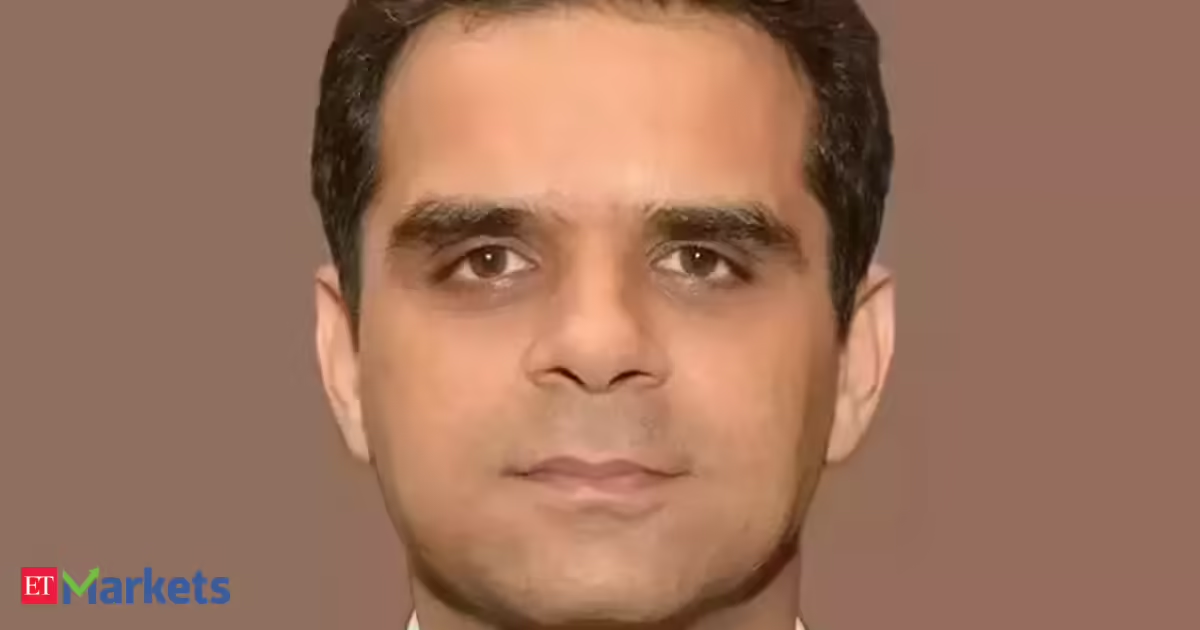
Speaking to ET Now, market expert Amit Khurana from Dolat Capital offered a measured take—highlighting opportunity, but not without caution.
Sun Pharma’s Big Bet: Strategic Fit, Debt a Watchpoint
Sun Pharma’s all-cash acquisition, priced at $14 per share, has drawn attention for both its scale and strategic intent. Khurana acknowledged the inherent difficulty in judging whether the price is “right,” noting that execution will ultimately determine success.
“Well, yes, I mean that is always the tough one to answer because ultimately the integration issues, the whole synergies and the positioning over a period of time will determine whether this was a fair price or not.”
He pointed out that the acquisition strengthens Sun Pharma’s portfolio, particularly in biosimilars, while also opening room for operational improvements.

“But on the face of it, it does look like a pretty reasonably well justified acquisition on what it adds to the portfolio for Sun Pharma, especially on the biosimilars front and also on the other side Organon did not have that much of R&D and therefore Sun’s capability will add to their ability to ramp up the products. Equity valuation seems pretty reasonable.”
However, the deal’s nearly $10 billion debt component remains a key concern. “Slight concern if one were to highlight is more on the debt side of it and how will that essentially get addressed, that will be one sort of joker in the pack that the management will have to navigate very-very carefully and the markets will probably take a cue on that.”
Still, Khurana maintained that the move is directionally sound.
“But overall, pretty good structurally and strategically a very good acquisition for an Indian entity and Sun has been on the lookout for such buyouts to scale up the business over a long term. So directionally, yes, the right move. The debt is the only sort of caveat. Otherwise, we are in good shape overall.”
Is the Debt Manageable?
Despite the size of the borrowing, Khurana does not see it as alarming—provided execution stays on track.
“Based on what the management is guiding seems manageable.”
He emphasized that integration speed and product scalability will be critical in determining how comfortably the company handles its obligations.
“Now Sun’s capability to scale it up further over the next few years will be the large determinant of how the cash flows work out and then, of course, you have the overall market environment which if it does not deteriorate then obviously there will be a lot of support on that front. So, I would say largely manageable. It is not as if it is a situation of a SOS, but it will have to be navigated very carefully.”
Paytm Payments Bank: Limited Damage to the Core Story
On the regulatory front, the cancellation of Reserve Bank of India license for Paytm Payments Bank raised concerns. However, Khurana downplayed its long-term impact on Paytm’s listed entity.
“Well, small impact here or there, but I do not think it really makes a change in our view on the stock per se.”
He highlighted that Paytm’s core business fundamentals remain intact.
“In our view, the overall core business profitability seems to be pretty much on track and the scalability is really playing out and, of course, over the last few quarters we have seen a significant cost control measures that have been playing out on Paytm and that will continue to be the driver in our view.”
While sentiment may take a short-term hit, the broader outlook remains unchanged.
“There is maybe a small damper, but I do not think it changes the longer-term story in any manner.”
Banking Sector: Stable, With Upside Potential
Turning to the banking space, Khurana noted a broadly stable earnings season with no major surprises.
“No significant deviation that as far as we have seen in the earnings season till date. Most of the vectors are pointing out towards a demand for credit.”
However, global uncertainties—particularly geopolitical tensions—are prompting caution.
“There is a sort of a, shall I say, guarded view, a cautious view on as to how the impact of the US-Iran conflict will play out on corporate balance sheets.”
Even so, he remains constructive on the sector.
“Overall numbers look pretty healthy. The valuations have corrected very reasonably across the board and therefore that gives a lot of comfort… I think banking at large will continue to be in a good shape and therefore our view is slightly more constructive than what was the case six months back.”
Among large-cap lenders, ICICI Bank stands out as a preferred pick.
NBFCs vs Banks: A Shift in Preference
Khurana struck a more cautious tone on NBFCs, citing stretched valuations in segments like gold and auto financing.
“So, I would probably put it more in the neutral zone right now on overall NBFC space.”
Instead, he favors banks due to better risk-reward dynamics.
“In fact, I would probably prefer banks from here on versus the NBFC space given the valuations being far more attractive and the risk return profile being far more attractive.”
Where Is the Opportunity Now?
Looking beyond the sectors discussed, Khurana remains focused on India’s consumption story.
“We are playing to the… and essentially wanted to play out on the consumption theme in India largely and discretionary consumption which remains one of our favourite themes.”
He also highlighted selective, bottom-up opportunities rather than broad sector bets. Among them:
He also pointed to stronger interest in domestic internet themes and defence-related plays.
The Bottom Line
From a blockbuster pharma deal to regulatory shocks and sectoral shifts, Khurana’s outlook reflects cautious optimism. While risks—from debt to geopolitics—remain, the underlying tone is clear: India’s structural growth story, particularly in consumption and banking, continues to hold firm.
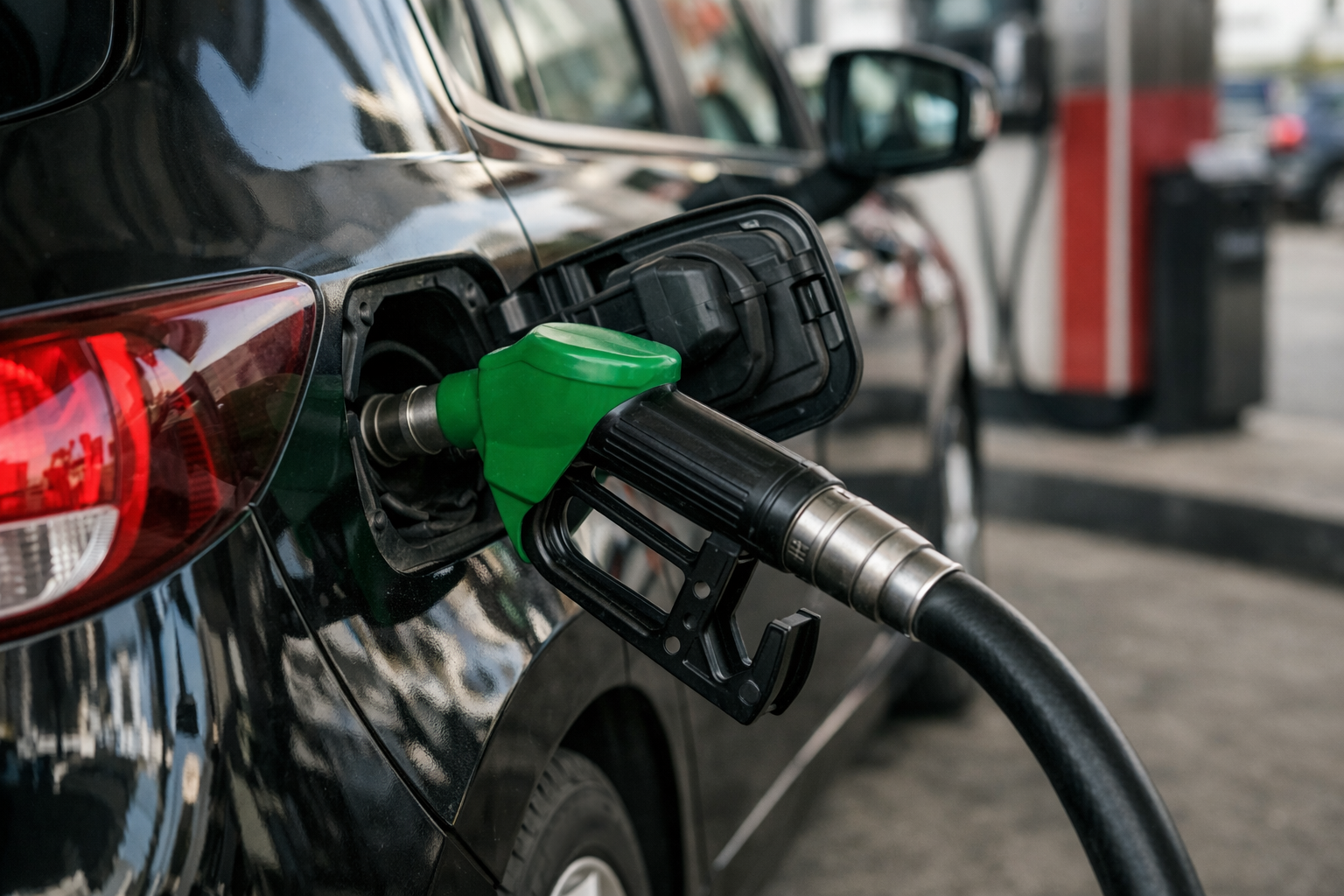
SYDNEY — Australia’s fuel supply situation showed modest signs of stabilization Monday as national petrol reserves reached 46 days — the highest level since the current crisis began — while diesel shortages at service stations continued to decline, though high prices and supply chain vulnerabilities persist due to disruptions in the Middle East.

The federal government confirmed the country remains at Level 2 of its National Fuel Security Plan, with Energy Minister Chris Bowen announcing additional diesel cargoes secured from South Korea, Brunei and Malaysia expected to arrive in late May or early June. Prime Minister Anthony Albanese said after a National Cabinet meeting that forward shipping programs are strengthening, but warned Australians to remain vigilant as the situation evolves.
As of late April, roughly 5% of Australia’s 8,300 service stations are experiencing some level of fuel shortage, with diesel outages dropping to around 2.5% nationally. However, regional and rural areas continue facing more acute pressures, with some truck stops and remote communities reporting empty pumps.
Prices Begin to Moderate
Average unleaded petrol prices have fallen to around 192.7 cents per litre nationally — down significantly from peaks above 240 cents in March — though still elevated compared to pre-crisis levels. Diesel remains a major concern at an average of 275.8 cents per litre, up sharply from pre-crisis figures and threatening higher costs for freight, agriculture and everyday goods.
The government’s temporary halving of the fuel excise (from 52.6 cents to 20.6 cents per litre) has helped blunt some pain at the pump, saving motorists roughly 26 cents per litre for three months. Additional relief measures for heavy vehicles and interest-free loans for fuel-intensive businesses are also in effect.
Root Causes and Global Context
The crisis stems primarily from disruptions linked to conflict in the Middle East, particularly tensions affecting the Strait of Hormuz — a critical chokepoint for global oil shipments. Australia imports about 90% of its refined fuel, leaving it highly exposed to international shocks. A recent fire at the Geelong refinery added further pressure on domestic processing capacity, as the country now operates with only two major refineries.
International Energy Agency chief Fatih Birol described the situation as one of the worst fuel crises in history and has been in discussions with Australian officials about coordinated responses, including releases from global stockpiles.
Impact on Australians
Many households and businesses have adjusted behaviors in response. Long-distance travel plans, including Easter trips, were scaled back or canceled in some cases. Truck drivers and farmers report significantly higher operating costs, with warnings of potential flow-on effects to food prices. Some commuters have turned to carpooling, public transport or working from home where possible.
Regional areas and industries reliant on diesel — mining, agriculture and logistics — face the greatest strain. The National Farmers’ Federation has expressed concern about rising input costs potentially driving up grocery prices by as much as 50% in extreme scenarios.
Government and Industry Response
Beyond excise relief and new import deals, authorities are considering longer-term measures such as building strategic fuel stockpiles, encouraging new refinery investments and accelerating the transition to alternatives like electric vehicles and hydrogen. Opposition figures and industry groups have called for faster action on domestic production and refining capacity.
The government has extended allowances for higher-sulphur petrol blending until the end of 2026 to maximize available supply. Public campaigns encourage conservation without panic buying, which has largely been avoided so far.
Economic and Political Ramifications
The fuel crisis has contributed to inflationary pressures, with experts forecasting Australia’s inflation rate could outpace other developed nations in coming months. It has also become a political flashpoint, with One Nation and other parties gaining traction in polls amid cost-of-living concerns.
Analysts warn the vulnerability exposed by the crisis highlights Australia’s heavy reliance on imported refined fuel and the need for greater energy resilience. Proposals include tax incentives for new refineries, expanded storage facilities and accelerated renewable adoption to reduce oil dependence.
Outlook for Coming Weeks
With new shipments en route and reserves improving, officials express cautious optimism that the worst of the shortages may be easing. However, diesel prices and freight costs remain elevated, and any further disruption in global supply chains could quickly reverse recent gains.
Motorists are advised to shop around for the best prices using apps and websites, fill up during off-peak times and avoid unnecessary trips. Businesses, particularly in transport and agriculture, are urged to review fuel management strategies, including on-site storage where feasible.
As Australia navigates this challenge, the crisis serves as a wake-up call about energy security in an increasingly volatile world. While short-term measures have helped stabilize supply, longer-term reforms will be essential to protect households, businesses and the broader economy from future shocks.
UBS on this week’s BoE decision amid Middle East crisis

10 Greatest Movie Performances Where We Never See the Actor’s Face

Toyota Yaris driver drove wrong way on A64 Malton bypass

Manchester United reach agreement with Casemiro over contract clause amid transfer speculation

US brings back mandatory military draft registration

Steven Gerrard disagrees with Gary Neville over ‘shock’ Chelsea and Arsenal claim | Football


-

 Politics7 days ago
Gary Stevenson delivers timely reminder to register to vote as deadline TODAY
-

 Fashion3 days ago
Weekend Open Thread – Corporette.com
-
 Crypto World2 days ago
Hyperliquid $HYPE Rally Builds Momentum as AI Sector Enters Prove-It Phase
-
Crypto World7 days ago
Bank of Hawai’i (BOH) Q1 2026: Net Income Drops to $57.4M as Net Interest Margin Expands
-

 Politics5 days ago
Making troops accountable for war crimes threatens US alliance, ex-SAS colonel warns
-

 Politics5 days ago
Disabled people challenge government SEND proposals over segregation concerns
-

 Business5 days ago
Rolls-Royce Voted UK’s Most Iconic Trade Mark as IPO Register Hits 150
-

 Business3 days ago
Patterson-UTI Energy, Inc. (PTEN) Q1 2026 Earnings Call Transcript
-

 Politics5 days ago
Zack Polanski responds to home secretary’s taser threat
-
 Sports22 hours ago
IPL 2026: Ruturaj Gaikwad registers slowest fifty of the season, enters all-time unwanted list | Cricket News
-
 Crypto World6 days ago
Five Value Stocks with Recovery Potential in 2026: PayPal (PYPL), Nike (NKE), and More
-
Politics5 days ago
Wings Over Scotland | How To Get Away With Crimes
-

 Politics5 days ago
Starmer handler McSweeney to be dragged from shadows by Foreign Affairs Committee
-

 Crypto World6 days ago
New York sues Coinbase, Gemini over prediction market offerings
-
 Business5 days ago
HCL Tech share price tank over 9% after weak Q4. JPMorgan, HSBC & 3 others cut target price
-

 Politics5 days ago
‘Iran is still a nuclear threat’
-
Entertainment6 days ago
Sydney Sweeney cameo cut from “The Devil Wears Prada 2”, source explains why (exclusive)
-

 Crypto World5 days ago
Crypto’s great hope in Senate’s Clarity Act still has a path to survive tight calendar
-
 Sports4 days ago
Tim Bradley names the current best in the world: “Better than Inoue and Usyk”
-

 Fashion6 days ago
Kilkenny Design New Beauty Arrivals for Spring 2026
You must be logged in to post a comment Login