

Business
S&P 500 Earnings Growth Tempered With One-Time Gains And The Treasury Yield Curve


Brian Gilmartin, is a portfolio manager at Trinity Asset Management, a firm he founded in May, 1995, catering to individual investors and institutions that werent getting the attention and service deserved, from larger firms. Brian started in the business as a fixed-income / credit analyst, with a Chicago broker-dealer, and then worked at Stein Roe & Farnham in Chicago, from 1992 – 1995, before striking out on his own and managing equity and balanced accounts for clients. Brian has a BSBA (Finance) from Xavier University, Cincinnati, Ohio, (1982) and an MBA (Finance) from Loyola University, Chicago, January, 1985. The CFA was awarded in 1994. Brian has been fortunate enough to write for the TheStreet.com from 2000 to 2012, and then the WallStreet AllStars from August 2011, to Spring, 2012. Brian also wrote for Minyanville.com, and has been quoted in numerous publications including the Wall Street Journal.



Growing concern over the trajectory of the war with Iran has bond yields rising and mortgage rates following suit.
The average rate on the 30-year fixed loan rose 7 basis points Tuesday to 6.75%, according to Mortgage News Daily. That is the highest level since July 31. Rates are now up 33 basis points in just the last 10 days and are 46 basis points higher than their recent April low of 6.29%.
That April drop came after a sharp spike in rates at the start of the war, when the rate jumped from 5.99% at the start of March to 6.64% by the end of the month.
“Bonds are telling politicians to get serious about ending the war or face increasingly dire consequences,” wrote Matthew Graham, chief operating officer at Mortgage News Daily.
The move from 5.99% to now 6.75% is a meaningful change in the housing affordability math. For a buyer putting 20% down on a $420,000 home — roughly the national median home price — their monthly principal and interest payment has gone from $2,012 to $2,179, a difference of $167.
The nation’s homebuilders are slightly less sensitive to rate moves, as the builders have been buying down mortgage rates to get buyers in the door. Rates are still lower than they were a year ago, when they spiked over 7%.
“Rates are a challenge,” said John Lovallo, a UBS homebuilder analyst, in an interview Tuesday on CNBC’s “Squawk on the Street.” “But we’re still at levels where the builders can operate at effectively. As quickly as rates went up, they could come down just as precipitously if this war comes to some kind of resolution and oil pulls back.”
Lovallo said he sees this as a buying opportunity for the builder stocks and noted that the homebuilders are still seeing average order growth through the spring season.
“Demand for housing is still robust,” he added.
Sales of pending homes rose in April both month over month and compared with a year ago, according to a report Tuesday from the National Association of Realtors.
“Buyers are coming out with cautious optimism despite increasing economic uncertainty and a slight rise in mortgage rates,” said Lawrence Yun, chief economist for the Realtors, in a release. “Demand will easily be even higher once mortgage rates retreat to the levels they were at earlier this year.”

Perth architecture firm TRCB has recently promoted a former professional cricketer as part of its growth plan.
Business
Toray Industries, Inc. 2026 Q4 – Results – Earnings Call Presentation (OTCMKTS:TRYIY) 2026-05-19


Seeking Alpha’s transcripts team is responsible for the development of all of our transcript-related projects. We currently publish thousands of quarterly earnings calls per quarter on our site and are continuing to grow and expand our coverage. The purpose of this profile is to allow us to share with our readers new transcript-related developments. Thanks, SA Transcripts Team

Over 30,000 estates could not be accessed due to an error identifying all of a late customer’s NS&I products.

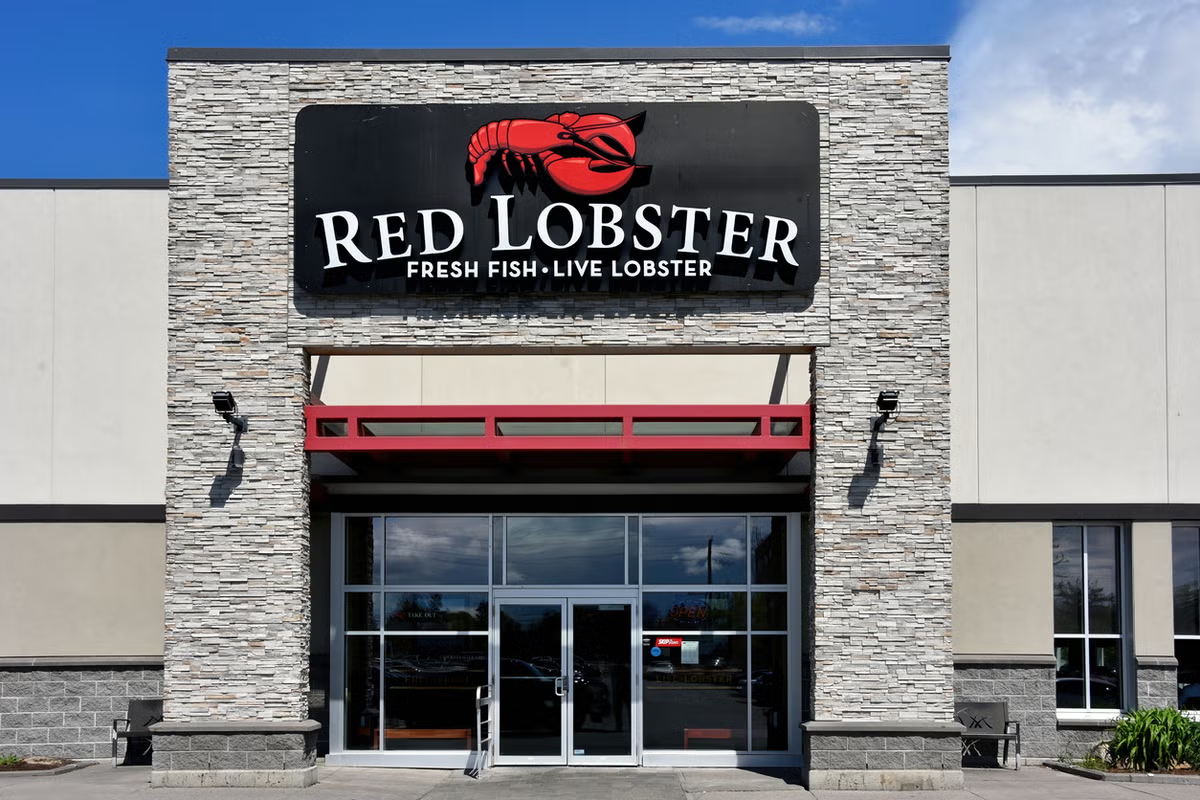
TALLAHASSEE, Fla. — After more than half a century of serving seafood dinners, endless shrimp specials and cheese biscuits to generations of locals and visitors, the longtime Red Lobster restaurant on North Monroe Street in Tallahassee will permanently close its doors on May 24.
The closure, announced by the chain this week, ends 56 years of continuous operation at the site and marks another chapter in the restaurant industry’s ongoing challenges following the COVID-19 pandemic. Company officials cited rising operational costs, shifting consumer habits and underperformance at the specific location as key factors in the decision.
The Tallahassee Red Lobster first opened in 1970, just a few years after the brand’s founding in 1968. For decades, it served as a reliable gathering spot for family celebrations, business lunches and casual Friday night dinners. Many Tallahassee residents have fond memories of milestone events — first dates, retirement parties and high school graduations — that took place within its nautical-themed dining room.
Longtime manager Maria Rodriguez, who has worked at the location for 18 years, expressed mixed emotions about the closure. “This place has been part of the community for so long,” she said. “We’ve watched kids grow up, served multiple generations of the same families, and created memories for thousands of people. It’s bittersweet, but we’re grateful for every customer who walked through our doors.”
Red Lobster, once a dominant player in the casual dining seafood segment, has faced significant headwinds in recent years. The chain filed for bankruptcy protection in 2024 amid mounting debt and declining same-store sales. While it emerged from bankruptcy later that year under new ownership, the company has continued streamlining operations by closing underperforming locations across the country.
The Tallahassee restaurant is among several Florida locations scheduled to shut down this year as part of a broader restructuring effort. Industry analysts say the closures reflect changing dining preferences, with consumers increasingly favoring fast-casual options, delivery services and home cooking amid persistent inflation on dining-out expenses.
Despite the challenges, Red Lobster still operates hundreds of locations nationwide and maintains a loyal customer base. The brand’s famous Cheddar Bay Biscuits and Endless Shrimp promotion continue to draw crowds at surviving restaurants. Company executives have emphasized that the closures are strategic and do not signal the end of the Red Lobster name.
“While we make the difficult decision to close certain locations, we remain committed to delivering great seafood experiences where demand is strongest,” a Red Lobster spokesperson said in a prepared statement. “We appreciate the decades of support from our Tallahassee guests and hope they will continue to visit our other nearby restaurants.”
The news has elicited sadness from regular customers. Local resident James Thompson, who has dined at the Monroe Street location for more than 30 years, said the closure feels like losing a piece of Tallahassee history. “It was never fancy, but it was consistent and welcoming,” he said. “On Sunday afternoons after church, you could always count on seeing familiar faces there. It’s going to leave a void.”
The closure will affect approximately 45 employees at the Tallahassee site. Red Lobster has stated it will work to place displaced workers at nearby locations or offer severance packages where possible. Union representatives have been in discussions with management to ensure fair treatment during the transition.
Real estate experts predict the prime commercial property could attract interest from other restaurant chains or retail developers. The location’s visibility along a major thoroughfare and established parking infrastructure make it attractive despite the current restaurant market challenges.
Tallahassee’s dining scene has evolved significantly since the Red Lobster first opened. The city now boasts a more diverse culinary landscape with everything from farm-to-table concepts to international cuisines. While some residents lament the loss of a reliable chain option, others see the closure as an opportunity for new businesses to fill the space.
The broader Red Lobster chain has undergone multiple ownership changes in recent years. Golden Gate Capital acquired the brand from Darden Restaurants in 2014, and subsequent private equity transactions have shaped its current direction. The company has focused on modernizing its menu, improving digital ordering and enhancing loyalty programs to adapt to post-pandemic consumer behavior.
Despite the closures, Red Lobster maintains a significant national presence. The chain continues investing in marketing campaigns highlighting its seafood quality and value offerings. Industry observers note that while certain legacy locations struggle, well-positioned stores in high-traffic areas continue performing adequately.
For many longtime Tallahassee residents, the impending closure represents more than just the loss of a restaurant — it symbolizes the gradual disappearance of familiar local landmarks. The Monroe Street Red Lobster survived hurricanes, economic recessions and the COVID-19 pandemic only to succumb to broader industry pressures.
As the final days approach, the restaurant is expected to see a surge in nostalgic customers seeking one last meal. Management has encouraged the community to visit before the May 24 closing date. Special promotions and farewell events may be planned, though details have not yet been finalized.
The closure also raises questions about the future of casual dining chains in mid-sized markets. As consumers shift toward experiences, delivery and healthier options, traditional sit-down restaurants face increasing pressure to adapt or consolidate.
Red Lobster’s Tallahassee chapter may be ending, but the brand’s story continues elsewhere. The company has expressed commitment to evolving with customer preferences while preserving its core identity as an accessible seafood destination.
For now, Tallahassee residents are reflecting on 56 years of memories — from childhood birthday dinners to late-night study sessions fueled by popcorn shrimp. As the lights dim on May 24, a piece of local dining history will fade, leaving behind both nostalgia and an empty building awaiting its next chapter.
The restaurant industry’s challenges remain significant, but stories like this one remind us of the human element behind every closure: the employees, the regular customers and the shared experiences that made places like this Tallahassee Red Lobster more than just another chain.

Stocks to Watch: ServiceNow, CoreWeave, Nebius

A panel analyzes airline industry turbulence driven by soaring fuel costs, rising airfares and Spirit Airlines’ collapse on ‘Barron’s Roundtable.’
Spirit Airlines’ sudden overnight collapse has left budget-conscious families stranded just weeks before the traditional launch of the summer travel season on Memorial Day.
Shortly after Spirit’s operational shutdown, a company lawyer apologized in bankruptcy court to Americans who are now priced out of air travel.
“We apologize most specifically to those Americans who may now be priced entirely out,” Spirit lawyer Marshall Huebner said in bankruptcy court, The Associated Press and Fortune reported, before he thanked longtime passengers who “could not otherwise have afforded air travel.”
Huebner said earlier this month that the surge in jet fuel prices left the company with “no remaining way out” of bankruptcy and caused it to cease operations last weekend, while it seeks permission to sell assets on an ongoing basis and pay bonuses to remaining employees.
OPINION: WE WILL ALL PAY FOR THE DEMOCRATS’ ANTITRUST CRUSADE THAT KILLED SPIRIT AIRLINES
Spirit Airlines announced on May 2 that it would cease operations, effective immediately, after a bailout from President Donald Trump failed to materialize. The carrier had been seeking a $500 million lifeline from the federal government, but the deal could not be finalized in time due to financial complications, the Wall Street Journal reported.

Passengers roll past the empty Spirit Airlines ticket counter in Terminal E at DFW Airport is empty, May 5, 2026, after the company shuttered its operations. (Getty Images)
Though Spirit’s ultimate demise and bankruptcy troubles had been years in the making, the airline faced additional pressure from rising jet fuel prices after conflict involving Iran disrupted Middle East oil shipments about 11 weeks ago. Budget airlines are especially vulnerable to rising costs because they cannot easily offset fuel spikes with premium cabins, corporate travel programs or loyalty rewards, driving ticket prices further out of reach for middle-class travelers.
When the oil market volatility began, the Association of Value Airlines — representing Spirit, Allegiant Air, Avelo Air, Frontier Airlines and Sun Country Airlines — reportedly asked the Trump administration for $2.5 billion in temporary aid.
Virtuoso VP of Global Public Relations Misty Belles discusses Spirit Airlines shutdown, rising summer travel demand and the surge in premium global experiences on ‘Mornings with Maria.’
The trade group representing American Airlines, Delta, JetBlue, Southwest and Alaska Airlines quickly rejected the idea, arguing it would create an unfair advantage.
“Government intervention on behalf of those airlines would punish other airlines that have engaged in self-help in order to deal with increased costs and reward airlines who haven’t made those tough decisions,” Airlines for America wrote in a press release statement. “And, in the long-term, sustaining businesses that cannot earn their cost of capital harms competition and consumers by making it more difficult for other airlines to compete.”
GET FOX BUSINESS ON THE GO BY CLICKING HERE
Transportation Secretary Duffy pins blame on Biden DOJ for Spirit Airlines collapse
“Not all airlines are struggling equally,” Barron’s associate editor Jack Hough said on Barron’s Roundtable last week. “Delta and United are the strongest. They could each generate maybe around $2 billion in free cash this year, but JetBlue and Frontier, they are burning cash right now as they have for years. And of course, Spirit Airlines has folded, so it takes away a lot of the price competition for major carriers.”
“I think it suggests that cheap flights are going to be harder to come by for a while,” Hough warned.
FOX Business’ Matthew Kazin, Eric Revell and Sophia Compton contributed to this report.

For months, Thai authorities have indicated that the 60-day stays, initially introduced to boost post-Covid tourism recovery, have led to unintended consequences. The most notable issue has been the increase in foreigners settling in the country to operate businesses or partake in illegal activities.
When will Thailand enforce the 60-day visa-free policy end?
The Thailand cabinet has officially decided to end the 60-day visa-free program, but an exact enforcement date for the change has not yet been disclosed to the public. Tourism and Sports Minister Surasak Phancharoenworakul stated that once the policy is terminated, visa rules will revert to the previous immigration regulations used before the extension took effect.
Under the new proposal, the visa-free stay period is expected to be halved to 30 days for foreign tourists. This shift is part of a broader strategy to prioritize high-quality tourism and tighten screening measures, according to Foreign Minister Sihasak Phuangketkaeow. Authorities are also conducting a comprehensive review of all visa categories to address concerns over national security and illegal business operations.
Key takeaways
1. Cabinet ends the 60‑day visa‑free programme
- The Thai cabinet has decided to abolish the 60‑day visa‑free stay for all countries previously eligible .
- Rules will revert to the pre‑2024 system, meaning shorter stays and fewer eligible countries .
- The government says the 60‑day scheme created unintended consequences, including foreigners overstaying to run businesses or engage in crime .
2. Effective date still pending
- No exact enforcement date yet; the decision will be communicated to relevant agencies .
- Visitors already in Thailand before the new rules take effect can stay for the duration of their current permission .
- MFA later clarified: changes take effect 15 days after publication in the Royal Gazette .
🛂 What the new visa framework looks like
A. 30‑day visa exemption: reduced to 54 countries
- Down from 57 previously; MFA did not name the three removed countries .
- Full list includes most of Europe, Australia, Japan, South Korea, the US, Canada, and others .
B. 15‑day visa exemption
- Applies to Seychelles, Maldives, Mauritius .
C. Visa on arrival
- Reduced from 31 countries to four: Azerbaijan, Belarus, Serbia, India .
D. Bilateral agreements remain unchanged
- Examples:
- 14‑day: Myanmar (air only), Cambodia
- 30‑day: China, Hong Kong, Laos, Vietnam, Russia, etc.
- 90‑day: Argentina, Brazil, Chile, Peru, South Korea .
🧭 Why Thailand is changing the policy
- Authorities cite reciprocity, security concerns, and policy duplication causing confusion among tourists .
- The Visa Policy Committee will reassess which countries may receive eased measures in the future, based on security and economic impact .
- The government is also reviewing the entire visa framework, not just tourist visas, to simplify categories .
📉 Tourism context
- Foreign arrivals as of May 17: 12.9 million, down 3.3% year‑on‑year .
- 2025 arrivals fell 7% to 33 million; forecast for 2026 is 32 million (another decline) .
- The 60‑day scheme was originally introduced to support post‑Covid tourism recovery .
How will the 60-day visa-free policy change affect digital nomads?
The Thai cabinet has officially decided to end the 60-day visa-free entry scheme, reverting to the previous immigration regulations which typically allowed for 30-day stays. While an exact enforcement date has not been disclosed, the change aims to prioritize “high-quality” tourism and tighten security oversight over foreign visitors.
Digital nomads, who often utilize long-stay arrangements to work remotely, face significant disruption as the permitted stay duration is halved. Analysts suggest this move risks driving remote professionals to rival destinations like Vietnam or Indonesia, as the “quality over quantity” focus may overlook the consistent economic contributions of long-stay travelers. Furthermore, Tourism and Sports Minister Surasak Phancharoenworakul indicated that future visa policies will include stricter screening of financial status and investment sources, potentially complicating entry for those without traditional employment documentation.
Other People are Reading
Continue Reading
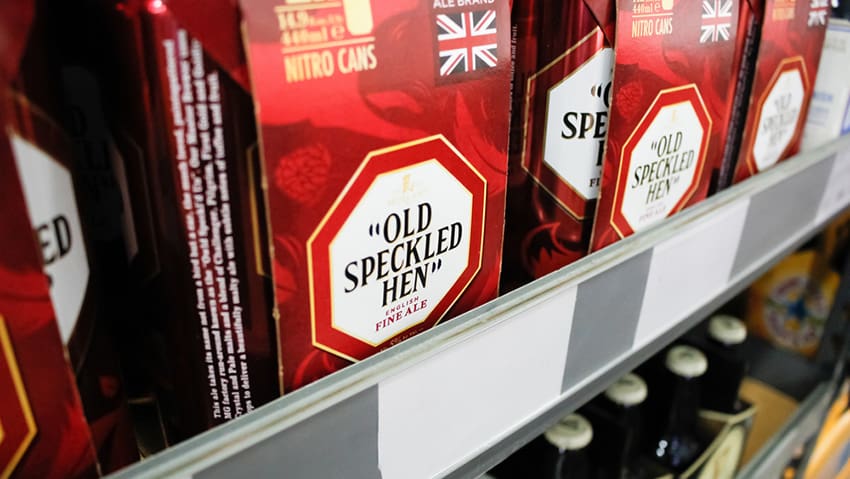
After more than a quarter of a century pouring Old Speckled Hen down the throats of British shoppers, Greene King has decided enough is enough.
The Suffolk pub group has agreed to sell its best-known supermarket ale to Damm UK, the British arm of the family-owned Spanish brewer behind Estrella Damm, in a deal that effectively ends its ambitions in the off-trade.
The price has not been disclosed, but the strategic message is loud. Old Speckled Hen, which Greene King has owned since acquiring Morland Brewery in 1999, accounts for more than half of the company’s off-trade sales, the volumes that flow through Tesco, Sainsbury’s, Asda and the independents rather than across the bar. By handing the brand to Damm, chief executive Nick Mackenzie is conceding that the supermarket beer aisle is no longer a battleground worth fighting in.
“This has been a long-term decision,” Mackenzie told The Times, pointing to the structural challenges facing cask ale and the wider beer category. Selling through pubs, restaurants and bars, he added, “is where our long-term strategy and focus is”.
Why a spanish brewer was the natural buyer
For Damm, the deal is the logical next step in a UK push that began in 2023, when it picked up the former Charles Wells brewery in Bedford. The site, rechristened Damm Eagle Brewery, has since been the focus of a £70m investment programme designed to make it the company’s flagship outside Spain, as The Grocer reported when the upgraded facility opened last autumn. Folding Old Speckled Hen, together with Old Golden Hen, Old Crafty Hen and Old Hen sister brands, into that operation gives Damm a heritage British cask name to sit alongside its lager imports, and the volume to keep its new lines humming.
Brewing of the Hen family is expected to migrate from Greene King’s Westgate Brewery in Bury St Edmunds to Bedford by June next year. Crucially for drinkers, the beers will still pull through in Greene King’s 1,600 managed pubs and on supermarket shelves once the transition is complete, according to the Morning Advertiser, which first detailed the wider brewing reset.
A tighter, on-trade-led brewing model
The transaction sits inside a much bigger reshaping of Greene King’s production footprint. The group is pouring £40m into a new, smaller brewery on the edge of Bury St Edmunds, alongside a fresh distribution depot. From next year it will brew only its core on-trade portfolio, Greene King IPA, Abbot Ale and the newer Hazy Day, at the site, replacing the historic Westgate Brewery in the town centre. Belhaven Brewery in Dunbar, East Lothian, is untouched by the changes.
“We are reflecting the size of the new brewery to reflect the market we are now operating in, and the market has changed pretty significantly,” Mackenzie said. “We believe we can control what we can control by focusing on our beers in our pubs.”
That candour will land uncomfortably with brewery staff. Greene King has declined to put a number on the jobs at risk, but a consultation began on Tuesday. The new plant is designed to be more efficient and to need fewer hands. For an industry already navigating brutal economics, the UK lost 100 breweries in 2024 alone, as Business Matters reported in its review of rising brewery insolvencies, it is another sign that scale-back, not expansion, is the order of the day.
The off-trade retreat in context
The decision to walk away from supermarkets is striking, given how much energy big brewers have historically spent on shelf space. But the maths has changed. Off-trade beer is a heavily promotional, low-margin game dominated by global lager brands, while cask ale, once a supermarket fixture, has been in slow retreat as drinkers gravitate to lager, world beers and low-and-no alternatives.
For Greene King, which still pulls a competitive pint through its own estate, the calculus is simpler than ever: a barrel sold in a managed pub earns far more than the same barrel battling for promotional slots in a multiple grocer. The Old Speckled Hen sale crystallises that logic.
The wider strategic reset under hong kong ownership
The brewing shake-up is the latest move in a sweeping rethink of the business under Hong Kong owner CK Asset Holdings, which bought Greene King for £4.6bn in 2019 in a deal led by billionaire Li Ka-shing. Last year the group posted revenues of £2.53bn but slipped to a £23.4m pre-tax loss, with net debt, excluding lease liabilities, running at around £2bn and annual servicing costs of close to £95m.
In March, Greene King confirmed it would sell 150 of its managed pubs and convert another 150 into tenanted houses as part of a refreshed estate strategy. Combined with the brewing slimdown and the Old Speckled Hen disposal, the picture is of a group methodically shedding the things it does not need to own and concentrating capital on what it considers core, wet-led, managed pubs where it controls the customer, the menu and the margin.
“For us, this is about how we future-proof the wider business and how we leverage our model,” Mackenzie said.
What it means For SME drinks and hospitality operators
For independent brewers and smaller pub operators, the implications cut both ways. The exit of a heritage cask brand from Greene King’s in-house portfolio frees up roughly half a pump line’s worth of off-trade attention and could give regional cask ale producers a slightly better shot at supermarket buyers. Equally, Damm’s decision to back a British ale at scale signals continued international appetite for UK-brewed brands, and reinforces Bedford’s emergence as a serious brewing cluster.
The blunter truth, though, is that one of the country’s most recognisable cask ales is now under foreign ownership because its British parent has concluded that supermarkets are not where its future lies. In an industry still struggling with input costs, business rates and shrinking discretionary spend, that is as honest a piece of strategic communication as the sector has heard for some time.

Amy Ingham
Amy is a newly qualified journalist specialising in business journalism at Business Matters with responsibility for news content for what is now the UK’s largest print and online source of current business news.

The clarification came through an informal guidance letter issued by Sebi to Geojit Financial Services Limited in response to queries regarding the permissibility of pledging securities purchased under the ND-PMS framework.
The brokerage had sought clarity on whether such pledges would violate provisions of the SEBI (Portfolio Managers) Regulations, 2020, particularly restrictions relating to borrowing on behalf of clients.
Non-discretionary portfolio management services (ND-PMS) allow investors to access expert investment research and execution while retaining full control over their portfolios. The portfolio manager provides tailored, data-driven recommendations, but no trades are executed without the investor’s explicit consent.

In its response, Sebi said that under ND-PMS arrangements, portfolio managers operate strictly according to client instructions, with the final investment decision resting entirely with the client. Since the securities remain under the beneficial ownership of the client, the regulator said clients are free to use those securities as collateral for loans.
Sebi further clarified that such pledging would not be construed as borrowing of funds or securities by the portfolio manager under Regulation 23(8) of the PMS Regulations, as long as the borrowing arrangement is directly between the client and the lender.
The market regulator also addressed concerns regarding regulatory reporting and assets under management (AUM) calculations. It said pledged securities can continue to be included in the portfolio manager’s AUM and regulatory disclosures until the pledge is actually invoked, since beneficial ownership remains with the client until that stage.
The clarification is expected to provide operational flexibility for portfolio managers and clients using ND-PMS structures, particularly high-net-worth investors seeking liquidity against their investment portfolios without liquidating holdings.
Sebi, however, noted that the guidance was issued based on the facts presented in the application and does not constitute a formal board decision or override any other applicable legal or regulatory requirements.
(Disclaimer: The recommendations, suggestions, views, and opinions given by the experts are their own. These do not represent the views of The Economic Times.)
Red Lobster closing oldest restaurant after 56 years in Florida

Mortgage rates surge to highest level since July

Tokenisation Could Cut Costs as UK Advances Stablecoin Rules

Manchester United reach agreement with Casemiro over contract clause amid transfer speculation

US brings back mandatory military draft registration

Steven Gerrard disagrees with Gary Neville over ‘shock’ Chelsea and Arsenal claim | Football


-

 Crypto World4 days ago
BloFin War of Whales 2026 Grand Prix opens registration for $5M trading championship
-

 Fashion4 days ago
Weekend Open Thread: Theory – Corporette.com
-

 Crypto World4 days ago
E-Estate Announces 1 Year Live: Washington DC Summit as Real Estate Tokenization Enters Its Next Phase
-

 Tech5 days ago
Tech Moves: Microsoft AI leader jumps to OpenAI; former AI2 exec joins Meta; and more
-
Crypto World7 days ago
Bitcoin Suisse expands with Digital Asset License and Investment Business Act Registration Approval in Bermuda
-

 Politics7 days ago
Pakistan to enter Chinese capital market as war inflation bites
-

 Crypto World7 days ago
Bitcoin Suisse expands with Digital Asset License and Investment Business Act Registration Approval in Bermuda
-

 Crypto World5 days ago
Google’s Gemini AI Predicts Incredible Solana Price by the End of 2026
-

 Business4 days ago
H&R Real Estate Investment Trust (HR.UN:CA) Q1 2026 Earnings Call Transcript
-

 Tech4 days ago
Google reimburses Register sources who were victims of API fraud
-

 Sports4 days ago
Napoleonic enters 2026 Doomben 10,000 field via Abounding withdrawal
-

 NewsBeat7 days ago
Comment on Keir Starmer surviving the day as Prime Minister like a turd that wont flush
-
 Entertainment5 days ago
Zara Larsson Has Blunt Response To Chris Brown Diss
-
 Crypto World6 days ago
Two AI Tokens Lead May Rally, But Risks Are Rising
-

 Fashion7 days ago
The Best-Kept Makeup Secret for a More Defined Face
-

 Politics7 days ago
Palestine’s flag becoming a regular sight at European football stadiums
-

 Fashion3 days ago
On the Scene at Gucci’s Cruise Show in New York City: Mariah Carey, Kim Kardashian, Lindsay Lohan, Iman, and More!
-

 Crypto World4 days ago
BeInCrypto 100 Institutional Awards Nomination: KAST for Best Digital Assets Neobank and Best Digital Assets Fintech
-
 Tech6 days ago
Why AI is making typography a boardroom conversation
-

 Politics7 days ago
The 81 MPs (so far) who have demanded tick-like Starmer out
You must be logged in to post a comment Login