

Business
SPDW: International Stocks Offer Relative Value At All-Time Highs (NYSEARCA:SPDW)



I ventured into investing in high school in 2011, mainly in REITs, preferred stocks, and high-yield bonds, starting a fascination with markets and the economy that has not faded despite the years. More recently I have been combining long stock positions with covered calls and cash secured puts. I approach investing purely from a fundamental long-term point of view. On Seeking Alpha I mostly cover REITs and financials, with occasional articles on ETFs and other stocks driven by a macro trade idea.
Analyst’s Disclosure: I/we have no stock, option or similar derivative position in any of the companies mentioned, and no plans to initiate any such positions within the next 72 hours. I wrote this article myself, and it expresses my own opinions. I am not receiving compensation for it (other than from Seeking Alpha). I have no business relationship with any company whose stock is mentioned in this article.
Seeking Alpha’s Disclosure: Past performance is no guarantee of future results. No recommendation or advice is being given as to whether any investment is suitable for a particular investor. Any views or opinions expressed above may not reflect those of Seeking Alpha as a whole. Seeking Alpha is not a licensed securities dealer, broker or US investment adviser or investment bank. Our analysts are third party authors that include both professional investors and individual investors who may not be licensed or certified by any institute or regulatory body.

Brokerages believe the demerger could unlock significant value for shareholders by allowing investors to directly choose their preferred commodity exposure.
“Apart from simplifying the corporate structure, this will allow investors to invest in their preferred commodities. Furthermore, the company is on the verge of reaping the twin benefits of volume augmentation and cost optimisation across verticals. This will likely be supported by continuous deleveraging and consistent growth capex. This, along with rising commodity prices, could potentially drive upside revisions in our estimates,” ICICI Securities said in a note.
While existing Vedanta shareholders have received shares in all four demerged entities, analysts have begun identifying their preferred bets for investors who missed the demerger opportunity.
Also read: Uday Kotak questions SpaceX valuation, says only time will tell if we’re in ‘mega bubble’
Which post-listing Vedanta demerger stock should you buy?
Sunny Agrawal, Head of Fundamental Research at SBI Securities, believes investors can consider buying Vedanta Aluminium Metal, citing robust aluminium capacity expansion and strong LME aluminium prices.

According to Agrawal, Vedanta Aluminium Metal commands a fair value of Rs 489 per share, making it the most attractive among the demerged entities. He values Vedanta Power at Rs 44 per share, Vedanta Oil & Gas at Rs 42 per share and Vedanta Iron & Steel at Rs 19 per share.
ICICI Securities echoed a similar view, calling aluminium the group’s ‘crown jewel’. The brokerage is most bullish on the aluminium segment, as the ongoing war could lead to a higher-than-expected aluminium supply deficit. This, coupled with better coal integration, presents upside potential to estimates. “Furthermore, we expect debt to maintain a downward trajectory, despite projected annual group-level capex of $1.8-2.0 billion,” the brokerage said.Domestic brokerage ICICI Direct also singled out Vedanta Aluminium as the standout business among the demerged entities. It expects the company to list at a valuation of more than Rs 400 per share, supported by its significant contribution to group revenues and margins, favourable industry dynamics, elevated aluminium prices, tight global supply and ongoing capacity expansion-led volume growth.
Nuvama, meanwhile, expects Vedanta and Vedanta Aluminium to remain large-cap stocks, while Vedanta Power, Vedanta Oil & Gas and Vedanta Iron & Steel are likely to enter the market as small-cap companies. The brokerage highlighted that mutual fund flows are likely to be skewed towards the two large-cap entities, while the smaller demerged businesses may see relatively limited participation.
Also read: Ashish Kacholia’s picks: 12 stocks rally up to 130% in CY26, 3 turned multibaggers; 2 new Q4 bets
What do Vedanta demerged companies do?
Vedanta Aluminium Metal – It is India’s largest aluminium producer, according to the company. In FY25, it produced 2.42 million tonnes of aluminium, accounting for more than half of India’s total aluminium output.
The company operates a 5 MTPA alumina refinery in Odisha’s Kalahandi district and the world’s largest aluminium plant at Jharsuguda, Odisha, with a capacity of 1.85 MTPA. It also operates Bharat Aluminium Company Limited (BALCO) in Chhattisgarh.
Vedanta Power – It has more than 4 GW of installed capacity across four strategic assets located in Punjab, Andhra Pradesh, Chhattisgarh and Odisha. It also has several long-term and medium-term Power Purchase Agreements (PPAs) with state utilities.
Vedanta Power is expected to command a market capitalisation of Rs 17,466 crore at the time of its market debut, according to Nuvama. Domestic brokerage Emkay estimates a value of around Rs 51.7 per share, while Kotak Institutional Equities pegs it at Rs 60 per share. Nuvama’s valuation implies a value of around Rs 47 per share, while CLSA’s estimate corresponds to roughly Rs 35 per share.
Vedanta Oil & Gas – The company claims it is India’s leading private-sector upstream player and aims to scale production to 300,000-500,000 barrels per day through an investment of $5 billion.
Vedanta Iron & Steel – The company has operations spanning India and Africa and is focused on iron ore exploration, mining and processing. The company also produces high-quality steel, wire rods, TMT bars, pig iron, ductile iron (DI) pipes, ferro-silicon, cement and metallurgical coke.
Analysts believe the iron and steel business may attract relatively less investor interest, as larger and more focused players in the sector present a stronger investment case.
The shares of these Vedanta demerged entities will participate in a special pre-open session meant for newly listed companies before regular trading commences. These shares will be in the Trade-to-Trade segment for 10 trading days.
(Disclaimer: Recommendations, suggestions, views and opinions given by the experts are their own. These do not represent the views of The Economic Times)
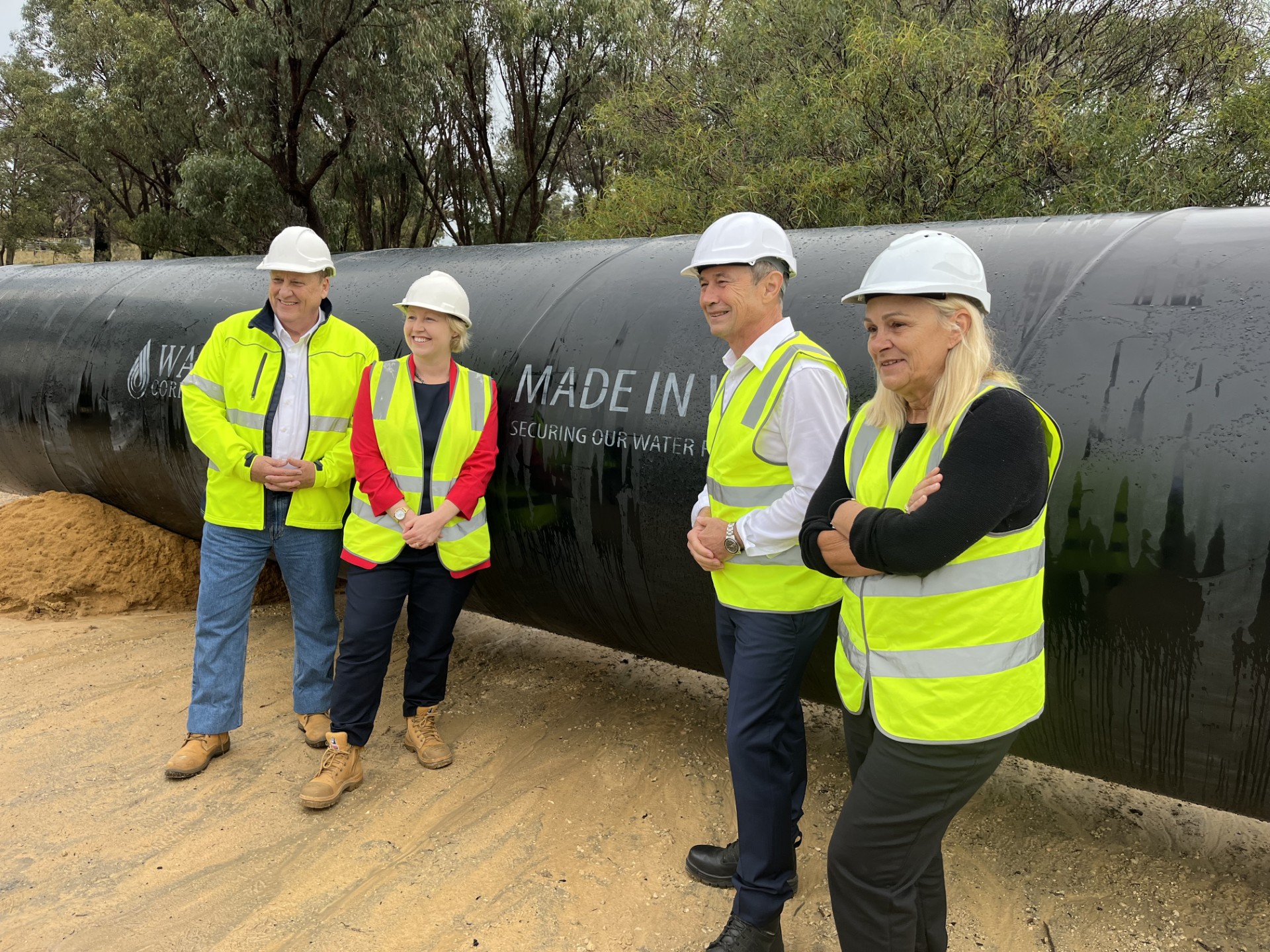
The pipeline for the planned $2.8 billion desalination plant at Alkimos has reached a milestone in its construction from the Water Corporation’s Wanneroo reservoir to the coast.
Business
Texas Tops Fortune 500 List in 2026 with 57 Companies, Dethroning California as Corporate Capital

Texas has claimed the title of the state with the most Fortune 500 companies in 2026, edging out California with 57 headquarters compared to the Golden State’s 56, according to the latest ranking of America’s largest corporations by revenue.
The Lone Star State’s surge reflects years of corporate relocations, business-friendly policies and economic diversification that have attracted major firms seeking lower taxes, lighter regulation and access to growing markets. Combined, Texas companies generated roughly $2.8 trillion in revenue, slightly ahead of California’s $2.7 trillion from its 56 entries, while New York placed third with 53 companies and $2.2 trillion.
This marks the first time in several years that Texas has reclaimed the top spot, highlighting a notable shift in U.S. corporate geography as businesses continue migrating from high-cost coastal states. Houston alone hosts 25 Fortune 500 companies, including energy giants like Chevron, Sysco and Phillips 66, while Dallas and Austin contribute additional headquarters.
Drivers Behind Texas’ Rise
Texas’ appeal stems from multiple factors, including no state income tax, a large and growing workforce, robust infrastructure and energy resources. The state has actively courted relocations through economic development incentives, successfully drawing companies from California and other high-tax jurisdictions.
Major moves in recent years, including expansions by firms in technology, energy and finance, have bolstered its count. Austin’s emergence as a tech hub has added notable names, while traditional strengths in oil, gas and logistics continue to anchor its economy. The addition of three new companies this year pushed Texas to its highest total since 2010.
California, long the leader, saw its dominance challenged by high living costs, regulatory burdens and out-migration of businesses. Despite strengths in technology and entertainment, the state lost ground as several firms relocated or expanded elsewhere. New York maintains a strong presence in finance and media but trails the top two.
Key Sectors and Economic Impact
Texas companies span diverse industries, with heavy representation in energy, retail, logistics and technology. The state’s Fortune 500 roster contributes significantly to employment and tax revenue, supporting local economies across major metros.
The shift underscores broader trends in corporate America, where quality-of-life considerations, tax structures and operational costs increasingly influence headquarters decisions. States like Florida and Tennessee have also gained ground in recent years, though Texas leads the pack.
Analysts note that Texas’ energy sector provides stability amid global transitions, while its growing tech and manufacturing base diversifies risk. The state’s pro-business environment has fostered innovation and job creation, attracting talent from across the country.
Broader Fortune 500 Trends
The 2026 Fortune 500 list reflects a resilient U.S. economy, with aggregate revenue reaching record levels despite inflationary pressures and geopolitical uncertainties. Technology and healthcare giants continue to dominate the upper ranks, but traditional industries like manufacturing and energy maintain strong representation.
Women now lead a record 55 companies on the list, the highest share in its history. The ranking also highlights consolidation in certain sectors and the rise of firms benefiting from artificial intelligence and renewable energy transitions.
Regional distribution shows concentration in a handful of states, with the top three — Texas, California and New York — accounting for a significant portion of total revenue and influence. Illinois, Ohio and others follow with more modest but meaningful presences.
Implications for Business and Policy
Texas’ leadership may encourage other states to review their economic policies, particularly regarding taxation and regulation. For California, the change serves as a reminder of competitive pressures, prompting discussions on retaining businesses through incentives and infrastructure improvements.
Economists view such shifts as natural market responses to differing state environments. While headquarters moves generate headlines, actual operations often remain distributed, with employment impacts varying by case.
For investors, the Fortune 500 distribution offers insights into regional economic strengths and sector exposures. Texas-heavy portfolios may benefit from energy and logistics tailwinds, while California exposure provides technology growth potential.
Looking Ahead
As companies adapt to remote work trends, supply chain shifts and sustainability demands, headquarters locations will continue evolving. Texas is expected to maintain momentum, but sustained leadership will require ongoing investments in education, infrastructure and talent development.
The 2026 list underscores the dynamic nature of American business geography. Texas’ achievement highlights successful long-term economic strategies, while California’s strong showing despite challenges demonstrates enduring appeal in innovation hubs.
This annual ranking remains a key barometer of corporate America, revealing not just size but also the shifting centers of economic power across the nation. As Texas celebrates its position atop the Fortune 500, the competition among states for business headquarters is likely to intensify in the years ahead.
Getty Images
Listen below or on the go via Apple Podcasts and Spotify

Deal expected to be signed Friday. (0:16) Stocks rise as oil tumbles. (1:07) U.K. announces social media ban. (2:01)
The following is an abridged transcript:
The U.S. and Iran have agreed to a peace deal to end the war, a move that will halt the U.S. blockade and reopen the Strait of Hormuz. But the official text of the memorandum of understanding remains unpublished.
Key details—including long-term access to the Strait of Hormuz, restrictions on Iran’s nuclear program and the situation in Lebanon—have yet to be disclosed.
President Trump told The New York Times he would resume military action if Tehran failed to reach a broader nuclear agreement with the U.S. Negotiations and a formal signing are scheduled for Friday in Switzerland.
According to Iranian state-affiliated Mehr News, the 14-point draft includes an end to the war, including in Lebanon, the withdrawal of U.S. forces around Iran, sanctions relief and reconstruction plans.
But Israeli Prime Minister Benjamin Netanyahu has already rejected a Lebanon-related provision, saying Israel is not bound by that clause.
In reaction, stock-index futures are rallying while oil prices tumble and Treasury yields move lower.
Brent crude (BNO) is down about 5%, while WTI (USO) is also off more than 5%.
Nasdaq 100 futures (US100:IND) lead the advance, up about 2%, while S&P 500 futures (SPX) are up more than 1%.
Anthropic (ANTHRO) is scrambling to restore access to its most advanced AI models, dispatching senior technical staff to Washington for meetings with White House officials, Axios reported.
The Trump administration ordered Anthropic to suspend access to its newly released Fable 5 and Mythos 5 models for foreign nationals, citing national security concerns.
Anthropic said the directive effectively forced it to disable the models for all users worldwide to ensure compliance.
According to Axios, company staff have been holding discussions with administration officials since Friday, while senior technical personnel traveled to Washington for in-person talks aimed at restoring access.
And U.K. Prime Minister Keir Starmer announced a social media ban for children under 16, following a model similar to Australia’s.
“Parents want to keep their kids safe and happy, but the online world has made that harder than ever,” Starmer said. “This is a line in the sand.”
The ban will cover platforms including Snapchat (SNAP), TikTok (TIKTOK), YouTube (GOOGL), Instagram, Facebook (META) and X, while messaging services such as WhatsApp and Signal are exempt.
The government also announced restrictions on livestreaming platforms and said it will explore overnight curfews and limits on infinite scrolling for under-18s.
Now Here’s What’s Trending on Seeking Alpha:
Is the Knicks championship a sign of a market top?
Spielberg’s ‘Disclosure Day’ lands with a $44M debut.
McDonald’s looks beyond Coca-Cola as it chases the specialty drink boom.
And the economic calendar is busy for a Monday as markets prepare for a holiday-shortened week, with Juneteenth on Friday.
- 08:30 am June Empire State Manufacturing
- 09:15 am May Industrial Production
- 09:15 am May Capacity Utilization
- 10:00 am June NAHB Housing Market Index
OPINION: Customers may benefit from the practice of personalised pricing, but that depends on retailers’ motivation.
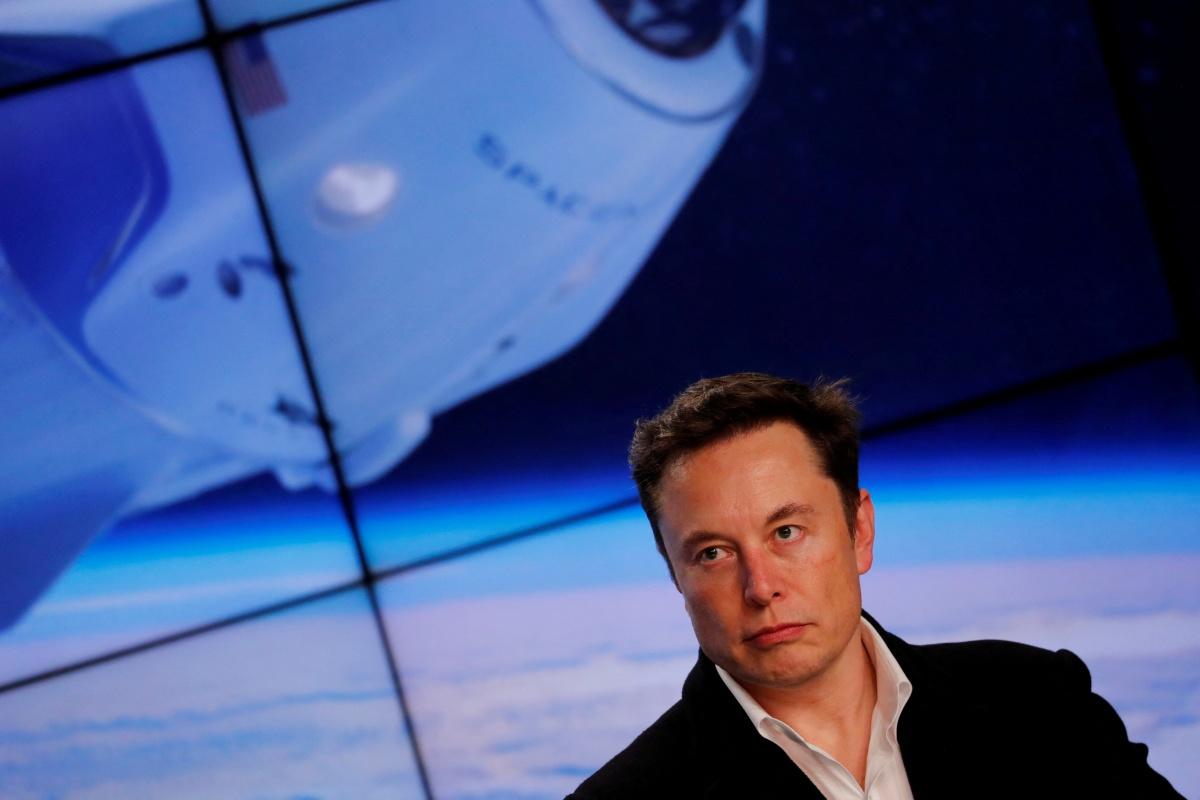
NEW YORK — As both Tesla and SpaceX trade publicly in 2026, investors face a compelling choice between two Elon Musk-led companies at the forefront of electric vehicles, autonomous driving, renewable energy and space exploration. Tesla offers established automotive leadership with AI ambitions, while SpaceX brings explosive growth in launches, satellite broadband and infrastructure, but each carries distinct risks and opportunities.
Tesla shares closed recently around $406, reflecting a market capitalization exceeding $1.3 trillion. The company continues to dominate electric vehicle sales globally despite increasing competition, with strong brand loyalty and expanding energy storage operations. SpaceX, fresh from its record-breaking IPO priced at $135 per share, surged to close around $161 on debut, pushing its valuation above $2 trillion and making Musk the world’s first trillionaire when combining stakes across his ventures.
Tesla’s Strengths and Challenges
Tesla benefits from mature financials, with annual revenue exceeding $90 billion and positive free cash flow in recent periods. Vehicle deliveries remain robust, supported by the Model Y and Cybertruck, while energy generation and storage segments show high growth potential. The company’s Full Self-Driving software and robotaxi initiatives represent significant upside if regulatory hurdles are cleared and technology scales effectively.
However, Tesla faces margin pressures from price competition, higher capital expenditures for AI and manufacturing expansion, and execution risks on ambitious projects like Optimus humanoid robots. Analyst consensus leans toward Hold, with average price targets near $400-410, though optimistic forecasts from firms like ARK Invest project substantial long-term upside tied to autonomous and robotics breakthroughs.
SpaceX’s Growth Trajectory
SpaceX has revolutionized access to space with reusable Falcon 9 rockets and the Starlink constellation, which provides broadband connectivity to millions and generates growing recurring revenue. The company’s Starship program aims for fully reusable heavy-lift capabilities, potentially transforming interplanetary travel and large-scale satellite deployment. Recent infrastructure deals, including major AI computing partnerships, diversify its business beyond traditional aerospace.
The post-IPO performance highlights strong investor enthusiasm, with shares rising nearly 19% on debut. However, SpaceX remains heavily focused on capital-intensive growth, with reported losses and high burn rates as it scales operations. Valuation multiples are elevated, reflecting expectations for Starlink expansion and future contracts, but execution on Starship timelines and regulatory approvals will be critical.
Comparative Investment Case
Tesla offers more predictable near-term financials and a proven track record as a public company, appealing to investors seeking exposure to clean energy and AI with established revenue streams. Its ecosystem of vehicles, energy products and software creates multiple growth vectors, though competition in EVs and delays in autonomy pose risks.
SpaceX represents higher-risk, higher-reward potential for those bullish on the commercial space economy. Its launch dominance, Starlink subscriber growth and government contracts provide durable advantages, but the business is earlier in its maturity curve with greater execution uncertainty. The IPO has provided capital access while introducing public market scrutiny and volatility.
Both companies benefit from Musk’s leadership and synergies, including shared talent and technological cross-pollination. However, investors should consider portfolio allocation carefully, as concentrated exposure to one individual introduces company-specific risks. Diversification across both could capture complementary strengths in transportation and space infrastructure.
Market Outlook and Risks
Broader market conditions, interest rates and geopolitical factors will influence performance. Tesla’s valuation reflects optimism around AI and robotics, while SpaceX’s premium pricing bets on continued space commercialization. Regulatory environments for autonomous vehicles and satellite operations remain key variables.
Analysts emphasize long-term horizons for both names. Tesla’s path involves scaling existing businesses while pioneering new ones, whereas SpaceX must prove repeatable success with next-generation vehicles and broadband profitability. Neither is without challenges, including supply chain issues, talent retention and competition.
Investment Considerations
Neither stock suits conservative investors seeking stability. Tesla provides greater earnings visibility today, while SpaceX offers exposure to a transformative industry with massive addressable markets. Due diligence on quarterly results, technological milestones and competitive dynamics is essential.
This is not investment advice. Stock prices fluctuate based on numerous factors, and past performance does not guarantee future results. Investors should consult financial advisors and review detailed filings before making decisions. Both companies play vital roles in advancing technology and human progress, but individual suitability depends on risk tolerance, time horizon and portfolio goals.
As 2026 unfolds, the Tesla-SpaceX comparison encapsulates broader themes in innovation investing: balancing proven execution with visionary potential. Tesla’s automotive and energy leadership provides a solid foundation, while SpaceX’s orbital achievements and infrastructure expansion point to outsized opportunities in the space economy. The choice ultimately hinges on which vision investors believe will deliver superior returns over the coming decade.
Commodities: U.S.-Iran Peace Deal

Experts warn the impact of the war will continue to affect the global economy for months to come.

Weekly Market Pulse: Questions
Form 6K TOYOTA MOTOR CORP/ For: 15 June

Bitcoin Price Prediction: Bank of Japan Rate Hike and Piling Yen Shorts Threaten BTC

Ciryl Gane stuns Alex Pereira to win interim title at UFC Freedom 250

macOS Golden Gate review beta


-

 Business20 hours ago
No Jackpot Winner as $257 Million Prize Rolls Over to $269 Million Monday Draw
-

 Crypto World4 days ago
Oppenheimer backs SpaceX as $70 billion retail frenzy builds
-

 Crypto World4 days ago
Markets Rally as SpaceX IPO Looms Amid Iran Tensions and Inflation Surge
-

 Fashion3 days ago
Weekend Open Thread: Tuckernuck – Corporette.com
-

 Sports7 days ago
FIFA WC 2026 Group C: Morocco, Scotland challenge Brazil’s hunt for glory | FIFA World Cup 2022
-
 Crypto World7 days ago
Eli Lilly (LLY) Stock Surges 4% Following Breakthrough Sleep Apnea Trial Results
-
 Crypto World12 hours ago
Zimbabwe Requires Crypto Businesses to Register Annually Under New FIU Regulations
-

 Entertainment6 days ago
The Ryan Gosling True Crime Thriller On Netflix That Gets Even Stranger, Stream It Now
-
 Sports6 days ago
Bangladesh beat Australia after 20 years in ODIs, register only their second win over six-time world champions | Cricket News
-

 Tech3 days ago
This Week In Security: Microsoft On Microsoft, Register Your Domains, Linux On ARM, And FreeBSD Joins The File Cache Club
-

 Tech2 days ago
NanoClaw integrates JFrog registries to secure AI agent downloads
-

 Crypto World2 days ago
Bitget enters Argentina’s regulated crypto market through PSAV registration
-

 Politics4 days ago
Politics Home | Healey Resignation Is “Colossal Failure Of Government”, Says Former Labour Defence Secretary
-

 Tech5 days ago
‘This is Seattle’s position on AI’: City Council votes unanimously to pause big new data centers
-
 Tech4 days ago
Dutton Ranch star claims they ‘didn’t see any disruption’ on set following Chad Feehan’s exit from Yellowstone spinoff fueled by Taylor Sheridan clash rumors
-

 NewsBeat4 days ago
El Nino has formed in the Pacific and could set records, forecasters say
-
 Entertainment4 days ago
Donnie Wahlberg & More Heat Up Las Vegas at Circa’s Barry’s Downtown Prime
-

 Sports4 days ago
First Time Since 1971: Australia Register Historic Low In ODI Cricket
-
 Tech4 days ago
Opendoor Ends India Operations, Fueling a Bigger Conversation About AI and Outsourcing
-

 Tech7 days ago
Nvidia and Hyundai deepen their robotics push around Atlas
You must be logged in to post a comment Login