

Business
Stealth Tax to Hit UK Family Holidays in 2026

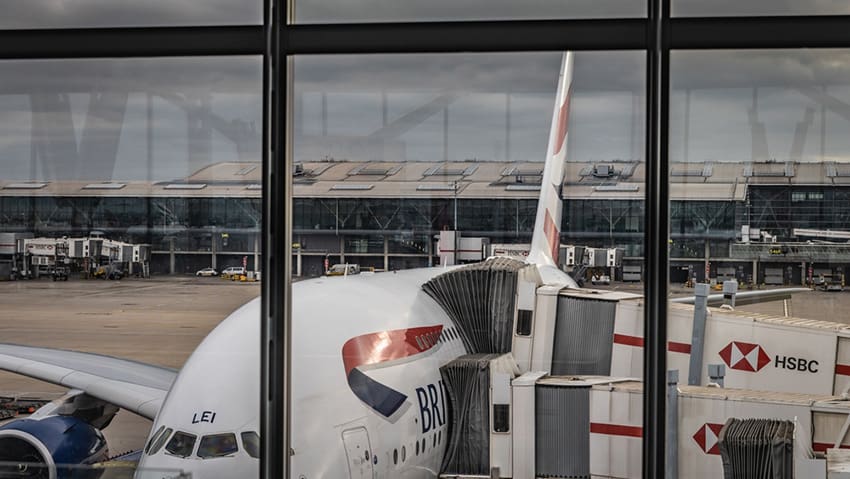
British families planning a getaway this summer could find the cost of flying creeping up again, after it emerged that Treasury officials are quietly drawing up plans for a £1bn VAT raid on the fees airports charge airlines, a move the industry has branded a stealth tax on holidaymakers and exporters alike.
The proposals, being worked up inside HMRC, would impose the standard 20 per cent rate of VAT on top of the per-passenger charges levied by airports such as Heathrow, Gatwick and Manchester for the use of runways, terminals and ground services. Those fees are almost always passed straight through to passengers in the ticket price, meaning the burden would land squarely on travellers and the small and medium-sized businesses that depend on affordable air travel to reach overseas customers.
At Heathrow, where the regulated charge currently sits at around £24 a head, the change would add close to £5 to the cost of every passenger — before a single penny of Air Passenger Duty, fuel surcharge or booking fee has been added. The official APD rates published by HMRC already range from £15 to £106 for an economy seat depending on distance, and rose again from April under increases pencilled in at the Autumn Budget.
A retrospective sting
What is alarming airlines and airports most is not just the prospect of a new levy, but the possibility that Whitehall might backdate it. Industry sources tell Business Matters that ministers are exploring whether to apply the charge as far back as four years, the maximum permitted under current legislation, generating an immediate windfall for the Exchequer running to around £1bn from Heathrow alone.
Heathrow generated £1.13bn in revenue from passenger charges last year, while Gatwick reported £607m and Manchester Airports Group, owner of Manchester and Stansted, recorded £470m. Factoring in smaller hubs, the total VAT take could comfortably top £1.5bn, although officials have yet to clarify whether the tax would bite on both outbound and inbound legs.
One airline industry insider described the plan as “a stealth tax on families at a time when the cost-of-living crisis means many people are already struggling to afford a holiday”. The warning lands alongside fresh evidence that Britons are already tightening their belts on travel, Barclays data recently showed holiday spending falling for the first time since the pandemic as cost-of-living and Iran conflict fears bite.
Reeves giveth, HMRC taketh away
The disclosure could hardly come at a more awkward moment for the Chancellor. Even as her officials sharpen the pencil on aviation VAT, Rachel Reeves was on her feet in the Commons unveiling a £1bn cost-of-living package designed to take the sting out of the school summer holidays.
From 25 June to 1 September, theme parks, zoos, museums, cinemas, soft play centres and theatres will charge a reduced 5 per cent rate of VAT in place of the usual 20 per cent. Children’s meals are included in the cut, which the Treasury values at £300m. The Government claims the measure will shave £20 off a theme-park day out for a family of four, £1.50 off cinema tickets and £2 off a family meal.
Fuel duty will be frozen for the rest of the year, free bus travel will be offered to children throughout August, and import taxes have been trimmed on a basket of staple foods. The energy-intensive chemicals and ceramics sectors, meanwhile, will share a £470m lifeline aimed at protecting jobs in some of the country’s most exposed manufacturing hubs.
Ms Reeves told MPs the package would be paid for by raising “hundreds of millions of pounds a year” from oil and gas majors such as BP and Shell, with the Office for Budget Responsibility due to assess the impact at the autumn fiscal event. Broader support on household energy bills was held in reserve, with the Chancellor signalling that targeted help would follow in the autumn “if bills continue to rise”.
The hospitality and visitor economy were quick to welcome the move. Fiona Eastwood, chief executive of Merlin Entertainments, which operates Alton Towers and Legoland, confirmed the discounted rate would apply to both admission tickets and children’s meals. Kate Nicholls, chair of UKHospitality, said it was “the quickest and simplest way to lower prices and boost consumer confidence”.
Aviation cries foul
The aviation sector, however, is in no mood to applaud. An Airlines UK spokesman said: “The UK is already one of the most overtaxed aviation markets in the world and, as the cost burden increases, we risk becoming even more uncompetitive. The only people cheering a move like this would be those running rival airports overseas.”
Industry analysis backs the point. The Office for Budget Responsibility already forecasts APD will raise close to £5bn a year by the end of the decade, while Airlines UK research suggests mandatory taxes can account for as much as half the price of an off-peak short-haul ticket. Bolting VAT on to airport charges would compound a tax burden that low-cost carriers say is already pushing routes, and the SME-friendly connectivity that comes with them, into mainland Europe.
Andrew Griffith, the shadow business secretary, was blunter still: “Any additional tax on aviation is a tax on doing business, a brake on exports or an attack on hard-working families. No government on the side of growth would indulge this idea.”
The proposals may also collide with international aviation rules, which broadly exempt airfares from VAT. Heathrow is understood to be taking specialist tax advice, while one industry source characterised the work inside HMRC as a “fishing trip” by officials looking for new revenue. “It’s a very technical conversation, with HMRC trying to work out if they can capture additional tax revenue,” the source said. “The question is whether it’s going to move forward and, if it does, whether it is going to hit passengers.”
What it means for SMEs
For Britain’s small and mid-sized businesses, the stakes are real. Air freight, sales travel and trade-show attendance all sit downstream of airport economics, and any uplift in landing charges feeds quickly into per-trip costs. It is also the second time in twelve months that the regulator has tangled with the Heathrow pricing model, earlier this year Heathrow was forced into a bigger cut of passenger landing fees by the Civil Aviation Authority, capping charges below the level the airport had sought.
Airports are unlikely to absorb a new VAT charge in-house. Heathrow has been lobbying loudly for measures to restore competitiveness, including the reinstatement of VAT-free shopping for international visitors, warning that the UK is losing ground to European rivals on tax. Adding a fresh 20 per cent layer to its core regulated charge would, the airport believes, run directly counter to the Government’s own growth narrative.
A government spokesman insisted there was no formal policy change in train, telling reporters: “The Government is not considering any changes to tax rules in this area. HMRC routinely engage businesses on how existing tax rules are being applied.”
That is unlikely to settle nerves in boardrooms in West London or aboard the airlines. For now, families booking summer flights can enjoy a temporary VAT cut at the theme-park turnstile, but the smart money in the aviation lobby is on a rather chillier autumn at the airport check-in desk.

Amy Ingham
Amy is a newly qualified journalist specialising in business journalism at Business Matters with responsibility for news content for what is now the UK’s largest print and online source of current business news.


The government says shoppers across the UK could save as much as £150 million a year on food – but how much is that per household?

QTUM: Computing Gets The Government Touch
Urban Outfitters URBN 2.92%increase; green up pointing triangle logged higher sales in its latest quarter, citing particularly strong performance for its Free People business across both retail and wholesale.
The company’s Free People group, which includes its namesake apparel brand as well as its activewear division FP Movement, recorded 17% sales growth in the latest quarter. The growth helped Urban Outfitters’s top line climb 11% overall.
Copyright ©2026 Dow Jones & Company, Inc. All Rights Reserved. 87990cbe856818d5eddac44c7b1cdeb8


I am mostly a trader engaging in both long and short bets intraday and occasionally over the short- to medium term. My historical focus has been mostly on tech stocks but over the past couple of years I have also started broad coverage of the offshore drilling and supply industry as well as the shipping industry in general (tankers, containers, drybulk). In addition, I am having a close eye on the still nascent fuel cell industry.I am located in Germany and have worked quite some time as an auditor for PricewaterhouseCoopers before becoming a daytrader almost 20 years ago. During this time, I managed to successfully maneuver the burst of the dotcom bubble and the aftermath of the world trade center attacks as well as the subprime crisis.Despite not being a native speaker, I always try to deliver high quality research to followers and the entire Seeking Alpha community.
Analyst’s Disclosure: I/we have no stock, option or similar derivative position in any of the companies mentioned, and no plans to initiate any such positions within the next 72 hours. I wrote this article myself, and it expresses my own opinions. I am not receiving compensation for it (other than from Seeking Alpha). I have no business relationship with any company whose stock is mentioned in this article.
Seeking Alpha’s Disclosure: Past performance is no guarantee of future results. No recommendation or advice is being given as to whether any investment is suitable for a particular investor. Any views or opinions expressed above may not reflect those of Seeking Alpha as a whole. Seeking Alpha is not a licensed securities dealer, broker or US investment adviser or investment bank. Our analysts are third party authors that include both professional investors and individual investors who may not be licensed or certified by any institute or regulatory body.

Customers shop at a Walmart store on May 13, 2026 in Chicago, Illinois.
Scott Olson | Getty Images
President Donald Trump suggested last month he would look out for companies that didn’t seek tariff refunds after the Supreme Court struck down his wide-ranging global duties.
At first, some major firms like Amazon appeared to be holding off on asking for money back over concerns they’d offend the often transactional president and end up in his crosshairs, CNBC reported earlier this year. But now some of the largest U.S. companies from Walmart to Apple have confirmed they’re seeking what they’re owed — regardless of the consequences.
Home Depot, General Motors, John Deere, FedEx and Costco are among the other major U.S. corporations that have said they are trying to get refunds. The moves may not represent a sea change in how companies handle their relationships with Trump. Even so, they show key examples of when they’re willing to publicly break with the president, after he told CNBC he would “remember” if companies decided not to seek refunds.
There’s a strong business incentive to apply — as well as, for many, a fiduciary responsibility. Major companies have a chance to regain potentially billions of dollars and maximize returns for shareholders.
More than $35 billion in refund money has already been processed and is on its way to businesses’ bank accounts, U.S. Customs and Border Protection said in a court filing earlier this month. The government owes roughly $166 billion in refunds overall.
‘I’ll remember them’

When Trump appeared on “Squawk Box” last month, CNBC’s Andrew Ross Sorkin said that at the time, Apple was among the companies that had held off on applying for a refund over apparent concerns it would upset the president. In response, Trump said it was “Brilliant if they don’t do that.”
“Actually, if they don’t do that, they’ve got to know me very well,” he said. “I’m very honored by what you just said.”
“If they don’t do that, I’ll remember them,” Trump said.
The comments made waves around Washington, where lobbyists and business groups say it initially gave some importers pause over whether to apply for the money they were due. Companies have been trying to parse what exactly the president might have meant with his remark, and whether and how the administration could retaliate against them for moving through the process.
But the threat has not deterred the largest U.S. companies from trying to claw back what they paid in tariffs. Take the largest U.S. retailer Walmart, which drew Trump’s ire last year when it said it could have to raise prices in response to the duties, sparking Trump to tell the retailer to “eat the tariffs” and warn he would be “watching.”
In an interview with CNBC on Thursday, Walmart finance chief John David Rainey confirmed that the company applied to get back the money it paid for so-called IEEPA tariffs, but doesn’t expect a major windfall if and when it is paid back.
“We have availed ourselves of the option to participate in those refunds. For us, it’s a relatively small part of our overall business,” said Rainey when discussing the company’s fiscal first-quarter results. “To be eligible for those refunds, you need to be the importer of record, and for us, where we are the importer of record, it’s about half of 1% of our U.S. sales.”
In its most recent full fiscal year 2026, Walmart U.S. saw $483 billion in net sales, so half of 1% would total about $2.42 billion. While that total is larger than many companies’ annual revenue, Rainey said it’s hardly material for a business that saw more than $713 billion in total revenue last fiscal year.
Still, “every little bit matters,” he said.
“We’re going to prioritize those refunds if and when we get them towards investing in price for our customers,” he said. “We recognize that given where we are right now with both the stress on the consumer as well as the retention of the share gains that we’ve seen, the best ROI on that dollar of capital is to invest in price for our customers.”
Walmart is among the companies that have said they could try to use the money to benefit customers, even in indirect ways. Deploying the refunds to keep prices low for consumers has become a theme among companies applying for them.
“What we have heard most of all in terms of uses is, this is going to help us avoid raising prices as quickly as we thought we were going to have to,” said Neil Bradley, chief policy officer with the U.S. Chamber of Commerce. “That’s a hard thing to telegraph, but it’s real.”
Walmart confirmed it was seeking money back Thursday after Target CFO Jim Lee said on Wednesday the company was “working through the process” of getting a refund. Home Depot finance chief Richard McPhail also said Tuesday the retailer had applied for and had “received an immaterial amount to date.”
“We have assumed that that could provide a significant offset to those costs,” he told analysts.
Some firms have sought to find ways to spend any refund money in ways that would appease both the White House and their customers, one representative of an influential business group said. For example, Apple has said since Trump’s comments that it is applying for a tariff refund.
It plans to reinvest any money it gets back into “U.S. innovation and advanced manufacturing,” a major priority for Trump, Apple CEO Tim Cook said on a call with analysts last month.
Meanwhile, other major companies have stayed quiet about whether they’ll try to claw back their tariff payments.
Amazon, which was sued in a class action lawsuit last week over its decision not to pursue a refund, hasn’t responded to requests for comment on whether it’ll apply to get money back.
Others aren’t ready to admit their refund plans one way or another. On Wednesday, Lowe’s CEO Marvin Ellison would not say whether the retailer is applying.
“We’re just monitoring the situation,” said Ellison. “We haven’t talked publicly about whether we filed or not, but what we have done is paid really close attention to the situation, understanding that when tariff refunds go out, they go out to everybody, and so we’re right now trying to determine if and when those refunds happen.”

Notably, this is the largest dividend announced by the company in nearly six years, since the final dividend of Rs 10.15 per share paid in 2020. Along with the interim dividend of Rs 6.5 per share declared in January this year, ITC’s total dividend payout for FY26 stands at Rs 14.50 per share with a face value of Re 1 each.
The FMCG company has declared 32 payouts since July 3, 2001, and has a dividend yield of 4.71%, according to data on Trendlyne. The latest dividend will be paid to eligible shareholders between July 24 and 29. However, it is important to note that the dividend is subject to shareholders’ approval at its upcoming Annual General Meeting scheduled on July 23.
In the previous financial year, ITC paid a final dividend of Rs 7.85 in May 2025 and an interim dividend of Rs 6.5 in February. This took the total dividend payout for FY25 to Rs 14.35 per share.
Apart from dividends, ITC issued bonus shares to eligible shareholders in 2016 (1:2) and 2010 (1:1). The company also executed a mega demerger of its hotels segment, with the stock adjusting to the restructuring the January last year, followed by the listing of ITC Hotels on stock exchanges.

ITC Q4 Results
ITC announced the dividend along with its results for the January-March quarter of FY26. The company reported a 5% year-on-year (YoY) growth in its standalone net profit at Rs 5,113 crore for Q4 FY26, compared to Rs 4,875 crore in the year-ago quarter. Revenue from operations meanwhile rose 17% YoY to Rs 21,695 crore during the quarter under review, from Rs 18,495 crore in the corresponding quarter of the previous financial year.
ITC’s cigarettes business remained the largest contributor to profitability. Revenue from the FMCG-cigarettes segment rose 32% YoY to Rs 11,066 crore during the quarter, compared with Rs 8,400 crore a year ago.
Also read: What Goldman Sachs, Morgan Stanley and others are saying after ITC’s Q4 results?
(Disclaimer: Recommendations, suggestions, views and opinions given by the experts are their own. These do not represent the views of The Economic Times)
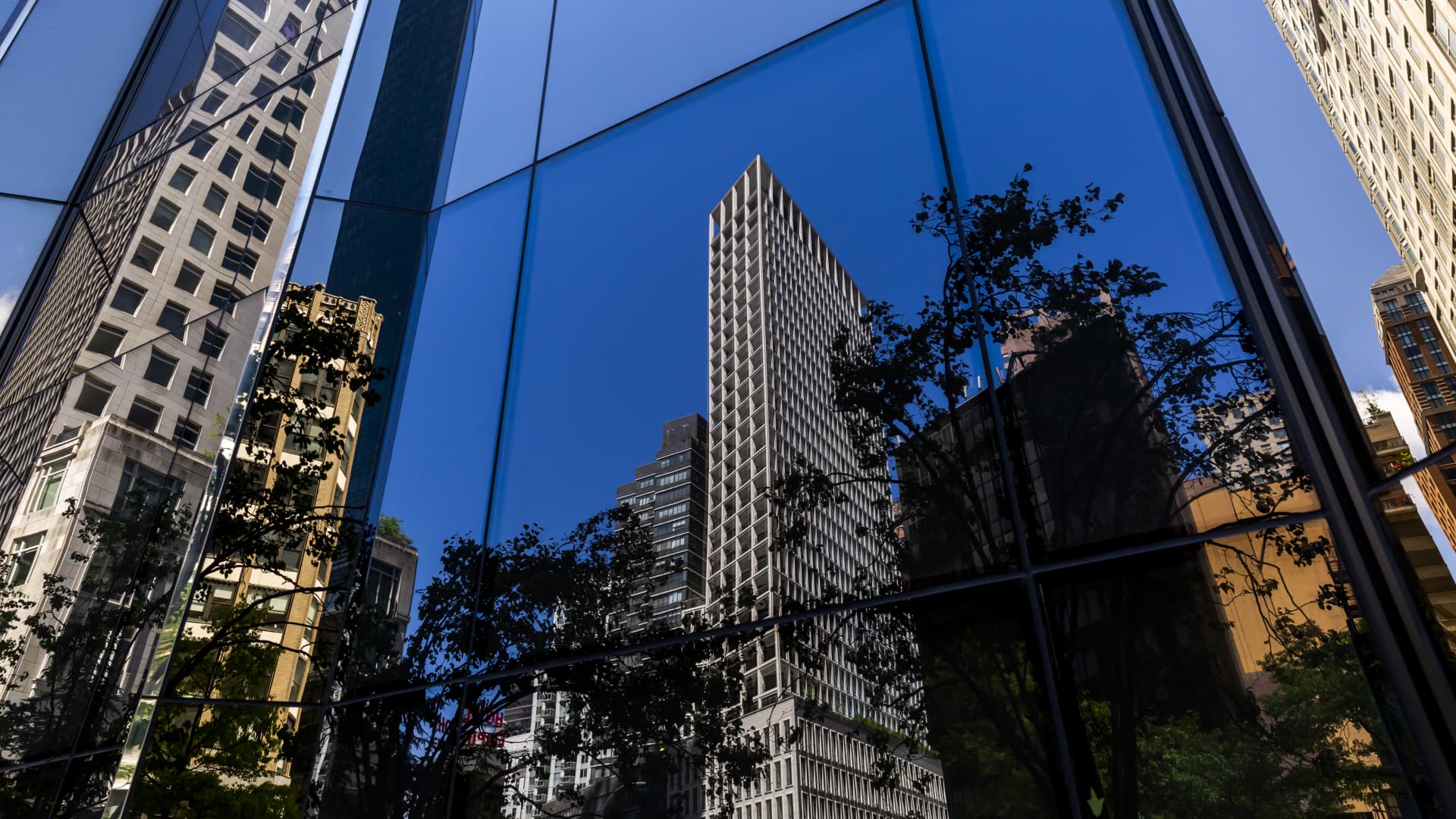
The AvalonBay Communities Inc. Park Loggia condominium, center, is reflected in a building in New York, U.S.
Mark Abramson | Bloomberg | Getty Images
The biggest ever merger of real estate investment trusts — the combination of Equity Residential and AvalonBay, announced Thursday — has investors and analysts alike left with dropped jaws.
The all-stock merger will have a market capitalization of about $52 billion and a total enterprise value of approximately $69 billion, according to a release. It will create one of the largest real estate companies in the U.S., with more than 180,000 rental apartments.
“This combination creates a new and fundamentally stronger company with differentiated capabilities that will drive structurally superior cash flow generation, earnings and dividend growth, and value for shareholders,” said Benjamin Schall, CEO of AvalonBay.
Schall will become CEO of the newly formed company, and Equity Residential CEO Mark Parrell will retire when the transaction closes.
Allan Swaringen, president and CEO of JLL Income Property Trust, which manages about $90 billion of real estate investments globally for institutional clients and high-net-worth individuals, called the tie-up “unbelievable.”
“That they would merge is really incredible,” he said.
Swaringen noted that the stocks of both companies are trading at below their net asset values, a situation that makes them both ripe to be bought and privatized.
“I think this might be a defense against privatization. By putting themselves together, they’re almost too big to get bought,” Swaringen said.
He also noted the high cost of building technology, which residential tenants now demand – from online leasing to credit checking to delivering bandwidth and Wi-Fi. Consolidating could reduce those costs.
“Strategically, the rationale is straightforward: scale, liquidity, balance sheet efficiency and overhead synergies,” said David Auerbach, chief investment officer at Hoya Capital Real Estate.
Auerbach said he thinks this could be the first of more megadeals in the space.
“We have WAY too many Apartment REITs out there, and it’s a sector ripe for consolidation,” he wrote in emailed comments to CNBC.
Auerbach noted that the deal comes after a challenging stretch for apartment landlords, who have been dealing with sluggish rent growth due to the post-Covid construction boom that delivered a massive wave of new supply.
Neither Auerbach nor Swaringen said they expect to see any effect on rents. While the combined company’s market share might be growing in certain markets, they are still going to have to compete with the rest of the field. The apartment market is highly diversified, building to building, giving consumers a lot of options.
Regulatory and political scrutiny may arise, given the sheer size of the deal and the current drumbeat on housing affordability. But even after merging, the combined company will have a small market share.
“While there are no antitrust regulatory approvals needed, there is the political PR battle for which we think management well articulated [that] the combined company is < 3% market share and heavily invests in expanding housing,” wrote Alexander Goldfarb, senior analyst with Piper Sandler. “Ultimately, we believe the combined company needs to improve earnings growth beyond the one-time synergies to show bigger is actually more profitable.”
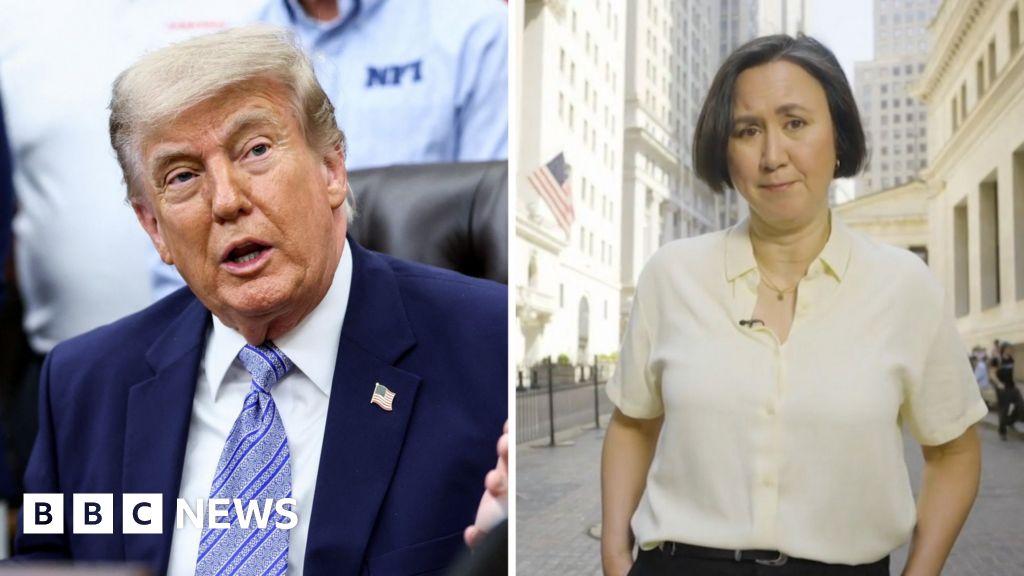
The BBC’s Michelle Fleury reports from Wall Street on recent government filings showing that in the first three months of this year thousands of stock market trades were made on behalf of President Donald Trump.
The trading includes shares in some of America’s biggest companies.
A spokesperson for the Trump Organization said that neither the president, his family or the company played any role in selecting or approving investments. They receive no advance notice of trading activity and provide no input regarding investment decisions or portfolio management, the statement said.


A seasoned consulting specialist at a leading Central Asian bank. The author behind Novo Capital brings half a decade of experience delivering strategic insight and analysis for the bank’s clientele within the private banking branch. Launching the career back in 2020 after graduating from a top CA university, the author developed a resilient methodology forged amidst global market volatility, focusing on corporate valuation, due diligence for investment opportunities, and crafting spot-on forecasts that guide long-term investment strategy. The goal of contributing to Seeking Alpha seems to be quite simple: ideas are worth discussing, and one can gain “alpha” only through gaining out-of-consensus information from opinions few professionals have nowadays. That’s exactly the reason Novo Capital was created.
Analyst’s Disclosure: I/we have a beneficial long position in the shares of MSFT either through stock ownership, options, or other derivatives. I wrote this article myself, and it expresses my own opinions. I am not receiving compensation for it (other than from Seeking Alpha). I have no business relationship with any company whose stock is mentioned in this article.
Seeking Alpha’s Disclosure: Past performance is no guarantee of future results. No recommendation or advice is being given as to whether any investment is suitable for a particular investor. Any views or opinions expressed above may not reflect those of Seeking Alpha as a whole. Seeking Alpha is not a licensed securities dealer, broker or US investment adviser or investment bank. Our analysts are third party authors that include both professional investors and individual investors who may not be licensed or certified by any institute or regulatory body.
Chart Of The Day: Yes, The SpaceX Deal Is Enormous

The Occasion Dress Edit for Any Kind of Night Out

Safe Investment Plan for Monthly Income in 2026 #finance #financemalayalam

Huge discount on zoos, theme parks, kids’ meals and cinemas


-

 Crypto World6 days ago
BloFin War of Whales 2026 Grand Prix opens registration for $5M trading championship
-

 Fashion7 days ago
Weekend Open Thread: Theory – Corporette.com
-

 Crypto World7 days ago
E-Estate Announces 1 Year Live: Washington DC Summit as Real Estate Tokenization Enters Its Next Phase
-

 Tech6 days ago
Google reimburses Register sources who were victims of API fraud
-

 Business7 days ago
H&R Real Estate Investment Trust (HR.UN:CA) Q1 2026 Earnings Call Transcript
-

 Entertainment7 days ago
David Letterman Returns to Late Show, Blasts Cancellation
-

 Sports7 days ago
Napoleonic enters 2026 Doomben 10,000 field via Abounding withdrawal
-

 Crypto World7 days ago
BeInCrypto 100 Institutional Awards Nomination: KAST for Best Digital Assets Neobank and Best Digital Assets Fintech
-
 Crypto World6 days ago
Bitcoin Battles US Bond Nerves With BTC Price Dip Toward New May Lows
-

 Crypto World7 days ago
ICE and CME urge US regulators to curb Hyperliquid energy trading
-
 Crypto World6 days ago
Wall Street’s Boldest Gold Prediction Has Russians Rushing to Buy
-

 Fashion5 days ago
On the Scene at Gucci’s Cruise Show in New York City: Mariah Carey, Kim Kardashian, Lindsay Lohan, Iman, and More!
-

 Crypto World7 days ago
IREN closes $3 billion convertible notes deal amid AI infrastructure expansion
-

 Fashion6 days ago
Trending Western Style Vests Perfect for Summer
-
 Politics6 days ago
Watch: far-right flag-fanatics run over victim, attack locals – Setup By the Left wing for your entertainment
-

 Crypto World17 hours ago
Blockchain.com files with SEC for U.S. IPO
-

 Fashion7 days ago
Creative Ideas for Custom T-Shirts
-

 Fashion5 days ago
Amazon Sundays: Memorial Day Hosting
-

 Crypto World7 days ago
Crypto Market Structure Bill Clears Committee; Senate Vote in Focus
-

 Entertainment5 days ago
Off Campus Easter Eggs Explained: Characters, Stories, More
You must be logged in to post a comment Login