Connect with us
DAPA Banner
DAPA Coin
DAPA
COIN PAYMENT ASSET
PRIVACY · BLOCKDAG · HOMOMORPHIC ENCRYPTION · RUST
ElGamal Encrypted MINE DAPA
🚫 GENESIS SOLD OUT
DAPAPAY COMING

Business

Superior Plus Corp. (SPB:CA) Shareholder/Analyst Call Transcript

Published

on

OneWater Marine Inc. (ONEW) Q1 2026 Earnings Call Transcript

Superior Plus Corp. (SPB:CA) Shareholder/Analyst Call May 13, 2026 4:00 PM EDT

Company Participants

David Smith
Darren Hribar – Senior VP & Chief Legal Officer
Chris Lichtenheldt – Vice President of Investor Relations
Allan MacDonald – CEO, President & Director

Presentation

Advertisement

Operator

Hello, and welcome to the Annual Meeting of Shareholders of Superior Plus Corp. Please note that today’s meeting is being recorded. [Operator Instructions] It is now my pleasure to turn today’s meeting over to David Smith, Chair of the Board of Directors of Superior Plus. Mr. Smith, the floor is yours.

David Smith

Advertisement

Ladies and gentlemen, good afternoon, and welcome to the 2026 Annual Meeting of the Shareholders of Superior Plus Corp. I am David Smith, and as Chair of the Board of Directors of Superior Plus, it is my responsibility and privilege to act as Chair of this annual meeting. Consistent with prior years and now common practice among other public companies in Canada, we are holding this meeting virtually via live audio webcast again this year. The virtual nature of this meeting has an impact on the way the meeting is conducted. Our goal is to preserve the rights of shareholders and proxy holders to vote on each of the resolutions before the meeting and to the extent possible, provide you with opportunities to participate in this virtual-only format similar to the way you would have at an in-person meeting.

As with any technology applications, unexpected issues may occur and Computershare, our service provider for this platform will help to resolve any issues that arise. I welcome our registered shareholders and all guests that are joining this meeting today through our virtual meeting platform. We’re excited to have your participation in the meeting, and thank you for your interest in the affairs of Superior Plus.

There is

Advertisement
Continue Reading
Click to comment

You must be logged in to post a comment Login

Leave a Reply

Business

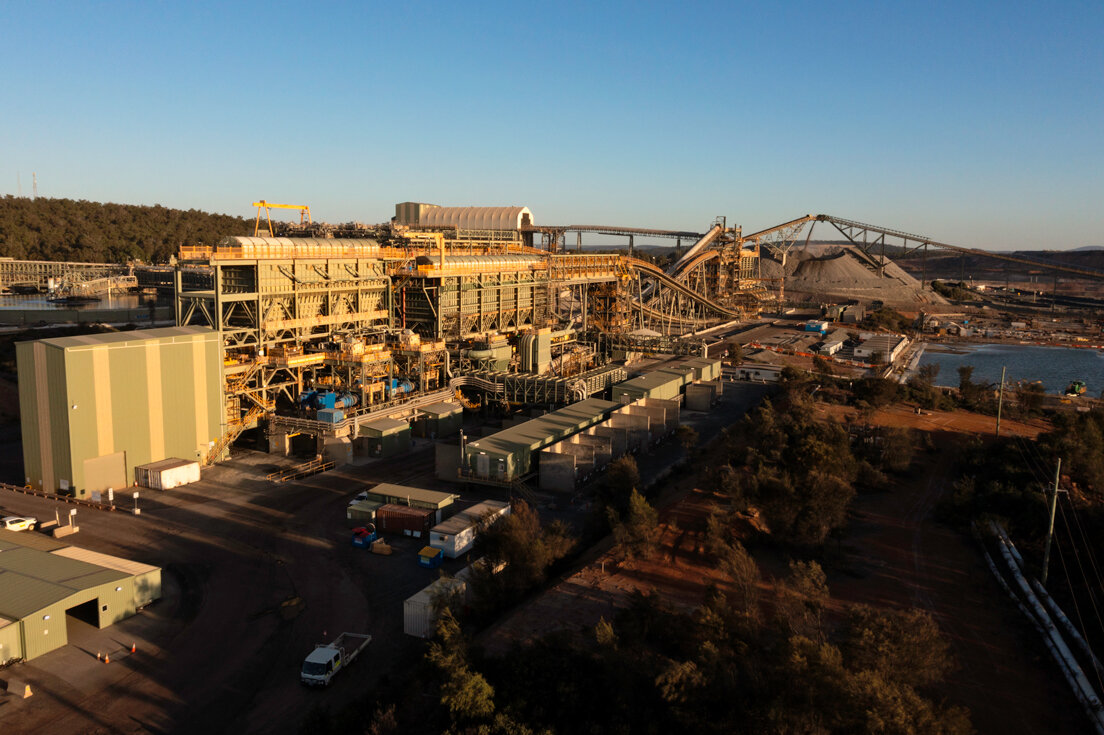
BHP Shares Climb 3.6% to $65.18 on Copper Strength and Positive Market Sentiment

Published

on

BHP Group Shares Rise 0.27% to $62.48 on June 1 as Copper and Iron Ore Prices Stabilize

SYDNEY — BHP Group Ltd shares rose sharply on Monday, closing at $65.18 after gaining 2.25 or 3.58%, as strong copper prices and broader commodity sector optimism lifted the mining giant amid a favorable global risk environment.

The advance extended recent gains for Australia’s largest listed company by market capitalization, reflecting investor confidence in BHP’s diversified portfolio and exposure to metals critical for the energy transition. Copper’s sustained strength has been a key driver, with the red metal benefiting from robust demand in electric vehicles, renewable energy infrastructure and data centers.

BHP has significantly expanded its copper production profile in recent years through acquisitions and organic growth, positioning the company to capitalize on structural supply deficits expected in the coming decade. Iron ore operations continue to provide stable cash flow, while emerging potash projects add further diversification.

Commodity Tailwinds Support Performance

Advertisement

Copper prices have remained elevated, trading near record levels due to supply constraints and accelerating green energy demand. BHP’s copper assets, including operations in Chile and Australia, have delivered strong margins, helping offset any softness in other commodities.

Iron ore prices have shown resilience despite Chinese economic headwinds, supported by steel production needs and limited new supply. Analysts note that BHP’s low-cost, high-quality assets provide a competitive edge in both copper and iron ore markets.

The stock’s movement aligned with a broader rally in mining and resources shares on the ASX, as easing geopolitical concerns and positive global manufacturing data boosted sentiment toward cyclical commodities.

Financial Strength and Strategic Positioning

Advertisement

BHP has maintained robust financial metrics, with strong free cash flow generation supporting dividends, share buybacks and growth investments. The company’s disciplined capital allocation has earned praise from investors seeking both yield and exposure to long-term commodity supercycles.

Recent operational updates highlight progress on key projects, including the Jansen potash development in Canada, which is expected to become a major earnings contributor in the future. This diversification reduces reliance on traditional iron ore and copper revenues while aligning with global food security and agricultural trends.

Technology investments, including automation and artificial intelligence applications across mining operations, are enhancing efficiency and safety. These initiatives position BHP to lower costs and improve sustainability metrics, appealing to environmentally conscious investors and regulators.

Market and Economic Context

Advertisement

Australia’s resources sector remains a cornerstone of the national economy, with BHP serving as a bellwether for commodity cycles. Monday’s share price increase contributed to gains in the broader ASX 200, which benefited from improved global sentiment following positive developments in international relations.

Analysts remain generally positive on BHP’s outlook, citing copper’s favorable supply-demand dynamics. While near-term volatility tied to Chinese economic data and global growth concerns persists, the long-term thesis for metals essential to decarbonization remains intact.

Valuation metrics show BHP trading at levels that balance growth potential with current earnings strength. Dividend yields continue to attract income investors, with the company maintaining a track record of returning capital to shareholders through both dividends and buybacks.

Challenges and Risks

Advertisement

Like other miners, BHP faces operational risks including commodity price fluctuations, regulatory changes, geopolitical tensions affecting trade routes, and rising costs related to labor, energy and environmental compliance. Climate transition pressures require ongoing capital expenditure to reduce emissions while maintaining production.

Competition in the copper space is intensifying, with new projects and expansions by peers potentially impacting market dynamics. BHP’s scale and expertise provide advantages, but execution on major developments remains critical.

Analyst Views and Investor Considerations

Wall Street and local analysts largely view BHP as a core holding for resources exposure. Consensus targets suggest room for further upside, though some caution that current prices already reflect optimistic copper assumptions. Investors are advised to monitor quarterly production reports, commodity price trends and any updates on major projects.

Advertisement

For long-term holders, BHP offers exposure to essential materials for modern economies while delivering shareholder returns through cycles. Diversification across assets and geographies helps mitigate single-commodity risks.

Company Background and Future Outlook

Founded in the 19th century, BHP has evolved into a global resources leader with operations spanning Australia, the Americas and beyond. The company’s portfolio includes iron ore, copper, nickel, coal and potash, serving steel, renewable energy, electronics and agricultural markets.

Looking ahead, BHP is expected to continue focusing on tier-one assets, operational excellence and responsible development. The energy transition and population growth trends support sustained demand for its products, while technological advancements should drive efficiency gains.

Advertisement

As the company navigates evolving stakeholder expectations around environmental, social and governance factors, transparent reporting and community engagement will remain priorities.

Monday’s solid performance underscores BHP’s resilience and appeal in a recovering market environment. While commodity prices will continue to drive short-term movements, the company’s strategic positioning and financial discipline provide a strong foundation for sustained value creation.

Investors will closely watch upcoming economic indicators from China and global manufacturing data for further direction on commodity demand. For now, BHP’s upward move reflects confidence in its ability to deliver through commodity cycles and contribute meaningfully to the global energy transition.

Advertisement
Continue Reading

Business

Referee plea in Newmont capital gains tax row

Published

on

Referee plea in Newmont capital gains tax row

Newmont’s $100 million-plus capital gains tax scrap is dragging to the finish line as a Federal Court-appointed referee battles to write a crucial report.

Continue Reading

Business

Coeur Mining: Net Cash, Buybacks, And A Bigger North American Portfolio Make Me A Buyer

Published

on

Coeur Mining: Net Cash, Buybacks, And A Bigger North American Portfolio Make Me A Buyer

Coeur Mining: Net Cash, Buybacks, And A Bigger North American Portfolio Make Me A Buyer

Continue Reading

Business

Major flood relief channel near ‘gigafactory’ site could be improved

Published

on

Business Live

Huntspill River serves Gravity enterprise zone

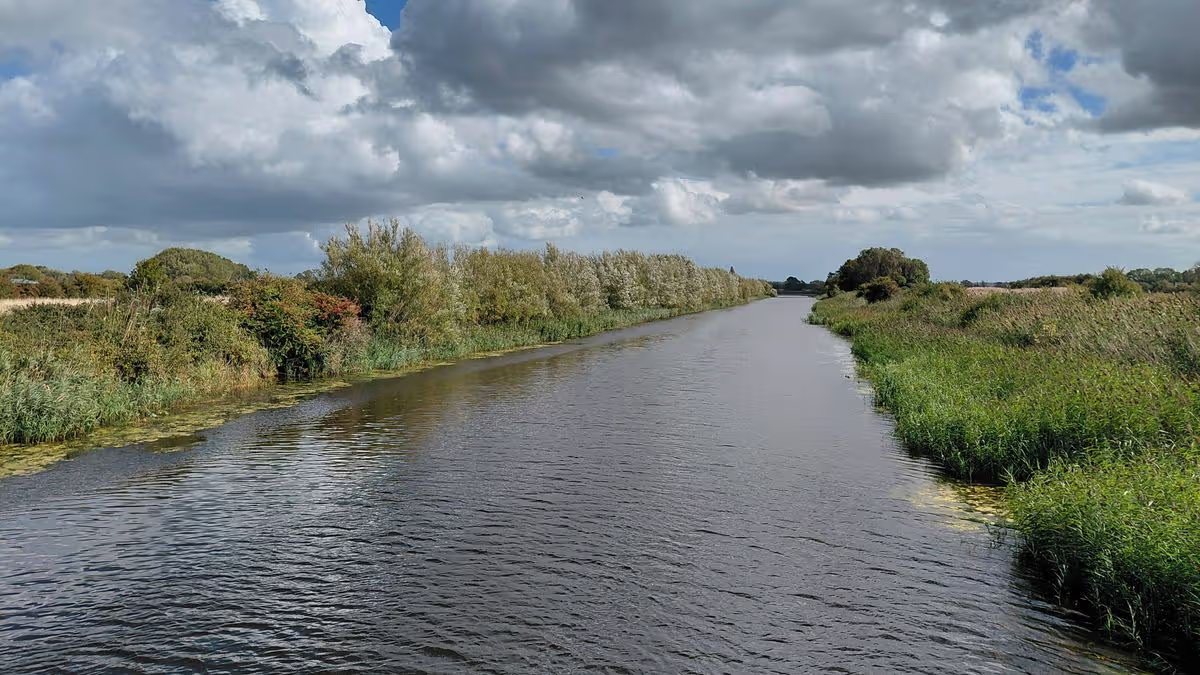
The Huntspill River, seen from Sloway Lane in West Huntspill.

The Huntspill River, seen from Sloway Lane in West Huntspill(Image: Local Democracy Reporting Service)

A major flood relief channel in Somerset could be improved in the coming years to increase the amount of water which can be moved off the Levels and Moors during a flood event.

Advertisement

The Huntspill River was constructed in 1940 to provide water for the Royal Ordnance Factory east of Bridgwater – land which is now the site of a new ‘gigafactory’ within the Gravity enterprise zone.

The channel has been a vital component of Somerset’s flood defences since its inception, providing an alternative means for water within the River Brue catchment to reach the Bristol Channel.

The Somerset Rivers Authority (SRA) has now hinted that the channel could be de-silted in the coming years, allowing more water to be stored downstream of the Levels and Moors following heavy rain.

The Huntspill River is currently fed by two different parts of the River Brue catchment: the South Drain (which runs west of Glastonbury through the Avalon Marshes) and the Cripps River (which carries water south of the main river channel near East Huntspill).

Advertisement

Water from both channels moves through the Gold Corner pumping station and flows north of the Gravity site, under the M5 north of junction 23, under the A38 near West Huntspill and exits into the River Parrett before it joins the Bristol Channel.

The River Brue steering group, set up by the SRA, assessed numerous proposals to improve flood prevention within the River Brue catchment area, in order to determine where money would be best spent to protect residents, businesses, farmland and major transport links.

These proposals range from major projects like lowering the Huntspill River and expanding the Highbridge Clyse (which stops tidal water from the Bristol Channel flowing up the Brue) to more low-level interventions, such as raising low points on the existing river banks.

Following a comprehensive modelling of the entire catchment, the group concluded that three actions would deliver the greatest benefit:

Advertisement
  • Formalise “pre-lowering procedures” for the Huntspill River (i.e. reducing the amount of water in it before “significant rainfall events”, so that more water can flow into it off the Levels)
  • Address low spots in the existing River Brue bank
  • Commission a study into “pinch points” which prevent water from moving at an adequate pace downstream of the Cripps River

A spokesperson for the SRA said: “Work on the Huntspill River will involve lowering of the retained water prior to a flood event.

“There may be difficulties with this due to siltation within the channel and environmental constraints, but it provides significant additional benefit, especially to the pumped catchments and the area around Decoy Rhyne.

“It will lead to a reduction in pumping at Gold Corner, yet much increased discharge from the Huntspill River; with this lower level, water can enter the Huntspill River via gravity without pumping.”

The SRA believes that improvements to the Huntspill River could cost around £1m to implement, on top of £290,000 for bank improvements elsewhere in the Brue catchment.

SRA chairman Mike Stanton said: “We know what needs to be done where, but we need the Environment Agency and the drainage boards to find the funding to do this – which may include applying to the SRA.”

Advertisement

Vice-chairman Tony Bradford said he hoped there would finally be tangible progress on improving the River Brue after what he characterised as a decade of inertia.

Map of the River Brue and River Sheppey catchments.

Map of the River Brue and River Sheppey catchments(Image: Somerset Rivers Authority)

He said: “This has been going on for ten years. The question I keep getting asked from people who are affected by the Brue area is: ‘when are we going to see something happen on the ground?’

“All they want is some action. There’s been a lot of action on the River Parrett, and it’s about time that the people living in the Brue catchment saw something happen.”

Iain Sturdy, chief executive of the Somerset Drainage Board Consortium, responded: “I understand the frustration with everybody around the time it’s taken, but these are positive steps.

Advertisement

“The model unquestionably shows that these actions, and other actions, have enormous impacts on the extent, the depths and the durations. The question is whether they generate sufficient benefits.

“There is no question that improving the condition of the Huntspill River provides flood risk benefit. It’s just whether the current modes of funding allow that; if not, we need to look carefully at other ways of doing things.”

A further update will be provided to the SRA board at its next meeting, which is due to take place on September 11.

To find all the planning applications, traffic diversions, road layout changes, alcohol licence applications and more in your community, visit the Public Notices Portal.

Advertisement
Continue Reading

Business

At Close of Business podcast June 15 2026

Published

on

At Close of Business podcast June 15 2026

Nadia Budihardjo speaks with Ella Loneragan about the latest on Perth Symphony Orchestra.

Continue Reading

Business

Maruti Suzuki shares jump over 4%. How is the new E100 regulation triggering a surge?

Published

on

Maruti Suzuki shares jump over 4%. How is the new E100 regulation triggering a surge?
Shares of Maruti Suzuki rallied as much as 4% to their day’s high of Rs 13,959 on the BSE on Monday after Union Minister for Road Transport and Highways Nitin Gadkari approved legal recognition for 100% ethanol blend fuel (E100), a move that could accelerate the adoption of flex-fuel vehicles and reduce India’s dependence on imported fossil fuels.

Speaking about India’s reliance on fuel imports, Gadkari said ethanol would emerge as a “viable alternative to petrol” and help lower the country’s import burden, which currently stands at around Rs 22 lakh crore.

The approval marks a significant step beyond India’s E20 programme, which focuses on blending ethanol with petrol. By creating a framework for E100 fuel, the government has opened the door for vehicles capable of running on ethanol as a primary fuel source, alongside electric, CNG and hybrid-powered alternatives.

Also Read |
Missed Vedanta’s buy 1 get 4 offer? Which spun-off stock to buy after listing today

Why is Maruti a direct beneficiary?

The development comes just days after Maruti Suzuki unveiled what it called India’s first flex-fuel passenger vehicle, positioning the technology as a crucial component of the country’s strategy to cut crude oil imports, strengthen energy security and lower carbon emissions.At the launch event, Managing Director and CEO Hisashi Takeuchi described the flex-fuel Wagon R as more than just a new vehicle launch, saying it marked “a new chapter in India’s energy journey.”

Advertisement

Drawing attention to India’s dependence on imported crude oil, Takeuchi said the country requires energy solutions that are “cleaner, affordable, scalable, and based on India’s own strengths.”
Maruti said the flex-fuel vehicle forms part of its broader multi-pathway strategy to reduce emissions through a combination of technologies, including electric vehicles, strong hybrids, compressed natural gas (CNG), compressed biogas (CBG) and hydrogen.
Also Read | Looking to trade Vedanta shares post demerger? Here’s what charts are saying

What is the flex fuel hype?

For consumers, flex-fuel vehicles offer a practical alternative to conventional petrol cars without requiring a major change in driving habits.
These vehicles are equipped with specialised engines capable of automatically adjusting to different blends of petrol and alcohol. While most vehicles currently on Indian roads are compatible with fuel blends of up to E20, Maruti’s newly launched Wagon R has been engineered to operate on anything from standard petrol to E100, or pure ethanol.

The flex-fuel ecosystem is also expected to expand rapidly after E85, a fuel blend containing up to 85% ethanol, was identified as the mono-fuel standard under Bureau of Indian Standards specifications.

To support adoption, the government plans to roll out around 50-100 ethanol dispensing stations across the Delhi-NCR and Mumbai-Pune-Nagpur corridors in the initial phase, with the network expected to expand to 500 stations by December this year.

(Disclaimer: Recommendations, suggestions, views and opinions given by the experts are their own. These do not represent the views of The Economic Times)

Advertisement
Continue Reading

Business

Rajesh Exports shares jump 5% after 30% crash in 7 days. How the alleged Rs 15.15 lakh cr fraud saga unfolded

Published

on

Rajesh Exports shares jump 5% after 30% crash in 7 days. How the alleged Rs 15.15 lakh cr fraud saga unfolded
The shares of Rajesh Exports took a breather after an incessant fall, rising 5% to hit the upper circuit on Monday after Sebi’s interim order over alleged Rs 15.15 lakh crore revenue inflation sparked a 30% crash in the stock over seven consecutive sessions.

The shares of the company jumped to Rs 80.23 apiece on the NSE amid the overall market uptrend. The stock has overall tumbled 55% in 2026 so far and 87% in three years, with its market capitalisation coming down to Rs 2,369 crore.

Sebi’s interim order against Rajesh Exports

Sebi, in its interim order released earlier this month, claimed that its investigation and forensic review had uncovered prima facie evidence suggesting that about 97-99% of the company’s revenue may have been inflated, describing the findings as “egregious and unheard of.”

The market regulator restrained promoter Rajesh Mehta from buying, selling or dealing in securities of Rajesh Exports until further orders, and also directed the company to cooperate fully with investigators. This came after a shareholder complaint received in March 2024.

Also read:
Canara Bank recovers over half of ₹500 crore Rajesh Exports exposure, CEO outlines growth strategy

Advertisement

Rajesh Exports blames ‘communication gap and confusion’

Rajesh Exports, in an exchange filing, clarified that the order is interim and no adverse conclusion has been made by Sebi yet. It said that the revenues declared by the company are correct, and no overstating of earnings has been done. “There seems to be some type of communication gap and confusion between Sebi and the company,” Rajesh Exports said.The company further said that it is confident that Sebi, in its wisdom, will clarify the situation and arrive at the correct conclusion, based on the authenticated documents which are in the process of submission by the company.

“The core observation in the order is concerning the misreporting of the revenues. This has emerged primarily due to confusion because SEBI has considered the Ebitda of Valcambi instead of Revenue; hence, it has stated that there is a difference of about 97% in the revenue. The consolidated Revenue as stated by the Company is correct,” Rajesh Exports said in another exchange filing.

Also read:
Rajesh Exports is not alone; there are many hiding behind one word called …

Promoter Rajesh Mehta denies allegations

In an interview with PTI, the company’s founder and chairman, Rajesh Mehta, denied allegations that Rajesh Exports had impeded the audit process and said the company had been forthcoming with investigators throughout.
“I would never agree to the fact that certain relevant documents have not been submitted by us. We have submitted everything we were asked for. Sebi has not found anything; maybe we have missed out on something. All that will be reconciled now,” Mehta said.On whether the company plans to legally contest Sebi’s directions, Mehta said there was no reason to do so. “Sebi has all the authority and right to keep asking us for documents for any number of years. There is no fine, no penalty, no coercive action in this order. Why should we challenge it?” he said.

Also read: Why is the stock market rising today?

(With inputs from agencies)

Advertisement

(Disclaimer: Recommendations, suggestions, views and opinions given by the experts are their own. These do not represent the views of The Economic Times.)

Continue Reading

Business

Aardman co-founders Peter Lord and David Sproxton knighted

Published

on

Business Live

‘We both feel it is an extraordinary privilege and an honour’

Peter Lord, left, and David Sproxton are the co-founders of Aardman Animations in Bristol

Peter Lord, left, and David Sproxton, co-founders of Aardman Animations in Bristol(Image: Aardman)

Peter Lord and David Sproxton, the co-founders of Bristol animation studio Aardman, said receiving knighthoods was “an extraordinary privilege and an honour.”

Advertisement

Both men were knighted in the King’s Birthday Honours for services to the animation industry, the creative industries and to charity.

The Oscar-winning studio they founded is responsible for Wallace & Gromit, Shaun The Sheep, Chicken Run and Morph.

In a joint statement to the Press Association, they said: “We both feel it is an extraordinary privilege and an honour – as well as a complete and utter surprise – to be recognised in this way.

“Whilst the honour is being awarded to us as individuals, it really reflects on Aardman as a company.

Advertisement

“Over 50 years we have worked with hundreds, if not thousands, of brilliant people whose dedication, talent and skills have contributed to making Aardman a globally recognised and multi-award-winning studio, and one regarded by many as a national treasure here in the UK.

“As we accept these awards, we humbly bow and salute all of those who have joined us on this extraordinary journey.”

Sir David and Sir Peter established the studio in 1972 and have steered the business from a two-person operation to one of the industry’s leading animation houses. Sir David co-produced a string of celebrated Aardman productions, including the studio’s debut feature film Chicken Run, Wallace & Gromit: The Curse Of The Were-Rabbit, the CGI feature Flushed Away, Shaun The Sheep Movie, Early Man and A Shaun The Sheep Movie: Farmageddon.

As a director, Sir Peter has earned two Oscar nominations for best animated short, the first coming in 1992 for Adam, followed by Wat’s Pig in 1996.

Advertisement

He also received a best animated feature nomination for Pirates! In An Adventure With Scientists in 2013.

Further recognition came in the form of Bafta nominations for Adam, The Amazing Adventures Of Morph, War Story and Chicken Run, as well as a producer nomination for Wallace & Gromit: The Curse Of The Were-Rabbit.

Continue Reading

Business

Daichi Kamada’s Late Strike Earns Japan Dramatic 2-2 Draw Against Netherlands in World Cup Thriller

Published

on

Kai Havertz Scores Twice as Germany Opens World Cup with

DALLAS — Daichi Kamada scored a deflected equalizer in the 89th minute as Japan fought back to earn a thrilling 2-2 draw against the Netherlands in their Group F opener at the 2026 World Cup on Sunday at Dallas Stadium.

The result highlighted the competitive balance in an expanded tournament, with Japan showing resilience against a favored Dutch side that had taken the lead twice. The match delivered high-quality football under sweltering conditions, reinforcing the World Cup’s reputation for unpredictability and excitement despite pre-tournament concerns about player fatigue and logistics.

Kamada’s goal, which came off a corner kick and a header from Koki Ogawa, sparked wild celebrations as the Japanese bench emptied onto the pitch. The late drama capped a match that saw the Netherlands dominate possession early but struggle to contain Japan’s counterattacking threat.

Match Summary and Key Moments

Advertisement

The Netherlands took the lead five minutes into the second half when Virgil van Dijk powered home a finely angled header that bounced in off the far post. Japan responded quickly, equalizing six minutes later through Keito Nakamura’s deflected strike from the right flank.

Crysencio Summerville restored the Dutch advantage in the 64th minute with a superb curling left-footed shot into the far corner after collecting a pass from Ryan Gravenberch. Japan refused to yield, maintaining pressure and earning the late reward through Kamada’s clinical finish.

Japan coach Hajime Moriyasu acknowledged the challenge after the match. “The Netherlands are a top-class international team. Look at the Fifa rankings, there’s quite a difference. But we can look back at today’s match and learn from the Dutch and enhance our power.”

The Dutch controlled much of the first half with 67% possession and superior passing accuracy, creating early chances through Donyell Malen. Goalkeeper Zion Suzuki made several key saves to keep Japan in contention, including denying a close-range header from Malen.

Advertisement

Japan’s high-pressing style created dangerous moments, particularly on the flanks. The game featured hydration breaks that provided tactical resets, though one such pause appeared to disrupt Japan’s momentum after their first equalizer.

Historical and Tournament Context

This draw adds to Japan’s strong recent World Cup performances, where they have consistently punched above expectations. The result leaves Group F wide open, setting up intriguing matchups in the remaining group stage games.

For the Netherlands, the stalemate represented a missed opportunity to claim early control in a tough group. Ronald Koeman’s side showed flashes of quality but lacked the clinical edge needed to secure all three points against a determined opponent.

Advertisement

The match at Dallas Stadium, a modern venue with a vast glass roof, provided an impressive backdrop despite the intense heat. The atmosphere was electric, with passionate support from both sets of fans creating a memorable World Cup spectacle.

Broader Implications for World Cup 2026

The opening week of the tournament has defied some pre-event skepticism regarding player tiredness and logistical challenges. Full stadiums and competitive matches have contributed to an engaging start, reminding observers of football’s enduring global appeal.

Japan’s performance exemplified the depth and competitiveness introduced by the 48-team format. Their tactical discipline and ability to capitalize on set pieces proved decisive in securing a valuable point against higher-ranked opposition.

Advertisement

The Netherlands will look to bounce back in subsequent fixtures, leveraging their technical quality and experience. Both teams demonstrated why they remain dangerous contenders, with the draw likely to fuel intense competition as the group stage progresses.

Tactical Analysis and Player Performances

Van Dijk’s aerial prowess and leadership were evident for the Dutch, while Frenkie de Jong provided composure in midfield. Summerville’s goal showcased his creative threat on the wing. For Japan, Suzuki’s goalkeeping and the midfield energy from players like Nakamura were standout elements.

The game featured periods of cautious probing interspersed with sharp attacking transitions. Japan’s ability to absorb pressure and strike on the counter highlighted their evolution as a national team capable of competing with Europe’s traditional powers.

Advertisement

Coaches on both sides will analyze the tactical adjustments, particularly around set-piece defending and midfield control. The result offers learning opportunities as teams prepare for the demands of a condensed tournament schedule.

Fan and Cultural Impact

The match drew a full house, with vibrant support creating an electric atmosphere. Japanese fans celebrated passionately, while Dutch supporters showed characteristic enthusiasm despite the late concession. The event underscored the World Cup’s power to unite diverse audiences in celebration of the sport.

Local organizers in Dallas passed an early test in hosting a high-profile fixture, with the stadium’s facilities contributing to an enjoyable spectator experience. Such matches help build momentum for the tournament across North America.

Advertisement

Looking Ahead in Group F

With points shared, both teams remain in contention for advancement. The draw sets up compelling scenarios for the final round of group games, where every result could prove decisive. Japan will aim to build on their fighting spirit, while the Netherlands seek greater consistency to fulfill their pre-tournament expectations.

The 2026 World Cup continues to deliver compelling storylines, with underdogs challenging established favorites and producing moments of genuine drama. Sunday’s encounter in Dallas added another chapter to this narrative, showcasing football’s ability to captivate and surprise on the grandest stage.

As the tournament unfolds, matches like this reinforce the value of competitive balance and the universal language of the beautiful game. For Japan, the point represents a hard-earned reward and a platform for further progress. For the Netherlands, it serves as motivation to refine their approach in pursuit of deeper advancement.

Advertisement
Continue Reading

Business

Analysis-China bonds emerge as surprise haven as Iran war reshapes portfolios

Published

on

Analysis-China bonds emerge as surprise haven as Iran war reshapes portfolios


Analysis-China bonds emerge as surprise haven as Iran war reshapes portfolios

Continue Reading

Trending

Copyright © 2025