

Business
Target, Walmart and Amazon losing LGBTQ+ consumer spending

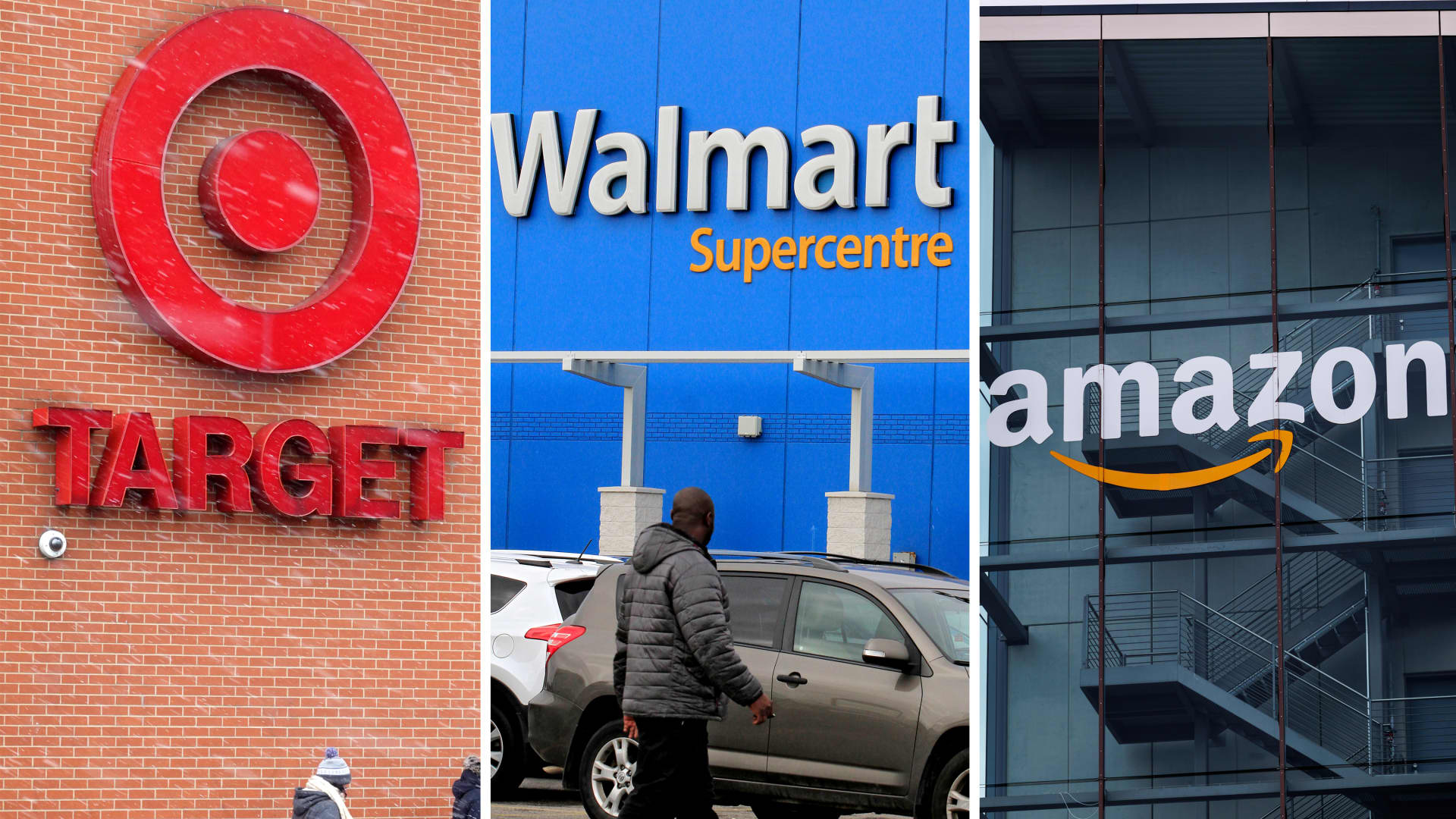
LGBTQ+ consumers are shifting their brand loyalties based on companies’ diversity, equity and inclusion policies, according to new research from the Human Rights Campaign Foundation.
The findings released Wednesday found that nearly 72% of LGBTQ+ consumers say they buy fewer products from companies they perceive as “reducing diversity and inclusion commitments.” Nearly 70% also said they have refused purchases from those businesses at least some of the time.
The five companies those respondents most frequently linked to reduced spending were Target, Walmart, Amazon, Chick-Fil-A and Home Depot.
On the other hand, HRC’s survey found nearly 70% of LGBTQ+ consumers are also rewarding companies they view as supportive of diversity and inclusion. Costco, Apple, Ben & Jerry’s, Delta Air Lines and Kroger were the five companies most frequently cited as recipients of higher spending.
“Consumers aren’t asking the brand to be perfect they’re asking them to be transparent and clear on where they stand,” said Human Rights Campaign spokesman Jonathan Lovitz.
“There is a gap to close between perception and what you’re doing inside,” he added.
HRC’s survey comes as a growing number of companies have scaled back diversity initiatives, modified public-facing DEI programs or ended participation in the organization’s annual Corporate Equality Index. Earlier this year, HRC reported a sharp decline in participation in the index, a benchmark that has long measured workplace policies and benefits for LGBTQ+ employees. Participation among Fortune 500 companies fell 65% from 377 companies in 2025 to 131 in 2026.
The National LGBT Chamber of Commerce estimates LGBTQ+ consumers represent more than $1.7 trillion to the U.S. economy.
In response to the survey, Amazon told CNBC it is fostering opportunities for employees and serving a diverse customer base.
“We’ve continued to support our employees with opportunities that allow them to grow, thrive, and connect internally and in their communities,” said a company spokesperson.
The other companies mentioned in the survey did not immediately comment.
A customer walks by a Pride Month merchandise display at a Target store on May 31, 2023 in San Francisco, California.
Justin Sullivan | Getty Images News | Getty Images
U.S. shoppers have increasingly mobilized for or against companies based on their DEI policies. Target, for instance, has faced consumer backlash from both sides of the political spectrum over its approach and was the most cited company among survey respondents who said they reduced their spending.
Self-identified Republicans reduced spending at Target during the summer of 2023 following controversy surrounding the retailer’s Pride Month merchandise display, according to spending data from Consumer Edge. In early 2025, spending among self-identified Democrats also declined after the company rolled back several DEI initiatives.
In the company’s most recent quarter, however, the retailer reported its first positive same-store sales number in five quarters.
Target also continues to maintain some publicly visible LGBTQ+ partnerships, including serving as a platinum sponsor of NYC Pride’s 2026 celebration.
Costco was the most frequently cited company among consumers who said they increased their spending, according to the HRC survey. The retailer has remained one of the more vocal corporate defenders of diversity initiatives, and earlier this year shareholders overwhelmingly voted against a proposal that would have required the company to evaluate risks associated with its diversity, equity and inclusion programs.
“Companies who have the longest run of trust with customers in the [LGBTQ+] community is they didn’t change anything about what they were doing but remained consistent,” said Lovitz.
Consumer Edge data showed Costco posted the strongest year-over-year spending growth among self-identified Democratic consumers in the months following that vote.


A view of a CarMax dealership on April 10, 2025, in Santa Rosa, California.
Justin Sullivan | Getty Images
Shares of CarMax fell roughly 8% during midday trading Wednesday after the company beat Wall Street’s quarterly earnings expectations and its new CEO detailed a high-level turnaround strategy for the company.
Here’s how the company performed in its first fiscal quarter, compared with average estimates compiled by LSEG:
- Earnings per share: $1.31 vs. 95 cents expected
- Revenue: $8.01 billion vs. $7.42 billion expected
Despite the beats, questions remain about the company’s ability to grow and cut costs under the plan as it faces tougher market conditions. The used-vehicle retailer reported margin pressure and declining gross profit per retail used vehicle.
CarMax’s total gross profit was $854.4 million, down 4.4% compared with last year’s first fiscal quarter. Retail used vehicle gross profit decreased 9.5% and retail gross profit per used unit was $2,177, down $230 from last year’s all-time record, the company said. Its net revenue was up 6.2% compared with nearly $7.6 billion a year earlier.
CarMax reported net earnings of $185.6 million, down 11.8% from $210.4 million in the same period last year.
Shares of CarMax are still up roughly 25% this year, including a roughly 16% increase since Keith Barr, a former CEO of InterContinental Hotels Group, began leading the company on March 16.
Barr said he will release more details of his plan — which is expected to take multiple years to execute — in late fall, but he noted that leadership is “super confident about it.”
“Our new strategy is focused on great offerings, easy experience, adding value, running lean, all of which, again, will drive sustainable long-term growth, which will create value for our shareholders,” he told CNBC during an interview.

CarMax and Carvana shares in 2026.
Barr said he has spent his first three months at CarMax better learning the car business, understanding the company’s operations and determining potential growth and cost-cutting areas, while aiming to streamline the car-buying processes for customers.
“There’s definitely significant opportunity for growth here by having a really integrated, growth-oriented strategy that leverages technology, that leverages our scale, that leverages our stores, that will provide sustainable growth, too,” he said.
His initial quick changes have included making tweaks to CarMax’s website, such as showing monthly payments; implementing an artificial intelligence call agent service; and trying to better streamline a customer’s experience from online to in-store.
Barr was brought in following massive share declines that led to pressure for former CEO Bill Nash to step down in November.
Shares of CarMax’s largest competitor, Carvana, also were more than 7% lower during midday trading Wednesday, which coincided with the online vehicle retailer disclosing plans for its new franchised Stellantis stores. Carvana’s plan includes using the franchise stores to service vehicles and offer test drives, but it will still exclusively sell its vehicles online, even if customers are at the stores.
Barr declined to comment on Carvana’s plans, but said CarMax has found the vast majority of its used-vehicle customers still like to visit stores and see the vehicle they’re planning to purchase before doing so.


Hillshire Reserve features five lunch meat varieties.

Form 4 Advanced Energy Industries Inc For: 17 June
Business
Raghuram Rajan’s warning to India after Hormuz shock: Build bigger oil reserves, diversify faster
On energy security, Rajan was direct: a potential US-Iran peace deal does not erase the underlying vulnerability that the Hormuz disruption exposed. He noted that the strait accounts for a significant share of India’s crude, LNG and LPG imports, and said India needs a much larger strategic oil reserve than it currently has. Rajan also pointed to the need for flexible backup options, such as the ability to ramp up coal production the way China has, alongside a longer-term push toward renewables. He cautioned, however, that renewable energy carries its own supply-chain risk, since India still depends heavily on imported solar cells and wind components, and called for Indian industry to take a bigger role in building domestic alternatives — something he said hasn’t happened yet.
India needs to diversify import sources & export markets
On trade, Rajan said India is currently in a better position than earlier this year, when it faced steep tariff threats from the US. He flagged an incoming tariff tied to forced-labor concerns, set at 12.5%, slightly higher than the roughly 10% rates facing Pakistan and Bangladesh, but said the gap is manageable. A bigger risk, he said, is a separate “excess capacity” probe that could stack additional tariffs on top of the existing rate, something he hopes Indian trade officials can head off. His broader takeaway: India needs to diversify both its import sources and export markets to reduce exposure to any single shock.
Rajan also addressed the rupee’s sharp depreciation, which has fallen close to 14% against the dollar over two years. He linked the slide less to oil prices alone and more to a structural problem: India isn’t attracting enough foreign direct investment, even as remittance inflows remain strong. He questioned why domestic investment hasn’t matched the country’s strong headline GDP growth, calling it a gap between “the walk” and “the talk” that policymakers need to examine. If global oil prices hold near current levels — around $85 a barrel, assuming the ceasefire holds — Rajan said India’s current account position looks “relatively mild” rather than alarming, and even suggested policymakers may be overreacting by considering costly capital-inflow incentives like the FCNR(B) proposal.
Looking ahead, Rajan urged India to take a three-to-five-year view on critical commodity exposure, warning that the next vulnerability may not be oil but pharmaceutical inputs used to manufacture generic drugs. He called for building strategic buffers, domestic production capacity, and stronger ties with friendly supply countries — describing the recent shocks as a “wake-up call” that policymakers and industry should not let go to waste.

Treasury yields declined as investors turned cautiously optimistic about the prospect of reopening the Strait of Hormuz following the U.S.-Iran agreement.
Focus is also on the Federal Reserve’s first meeting under Chairman Kevin Warsh, with the announcement due Wednesday.
“The prospect of lower energy prices has also eased inflation concerns, contributing to softer Treasury yields,” Empire FX’s Crispus Nyaga said in a note.
Inflation, the rate at which prices are increasing year over year, hit 3.8% in April. Trump’s decision to launch strikes on Iran, which resulted in it retaliating by shutting the key Strait of Hormuz shipping lane, has been largely blamed for the increase.
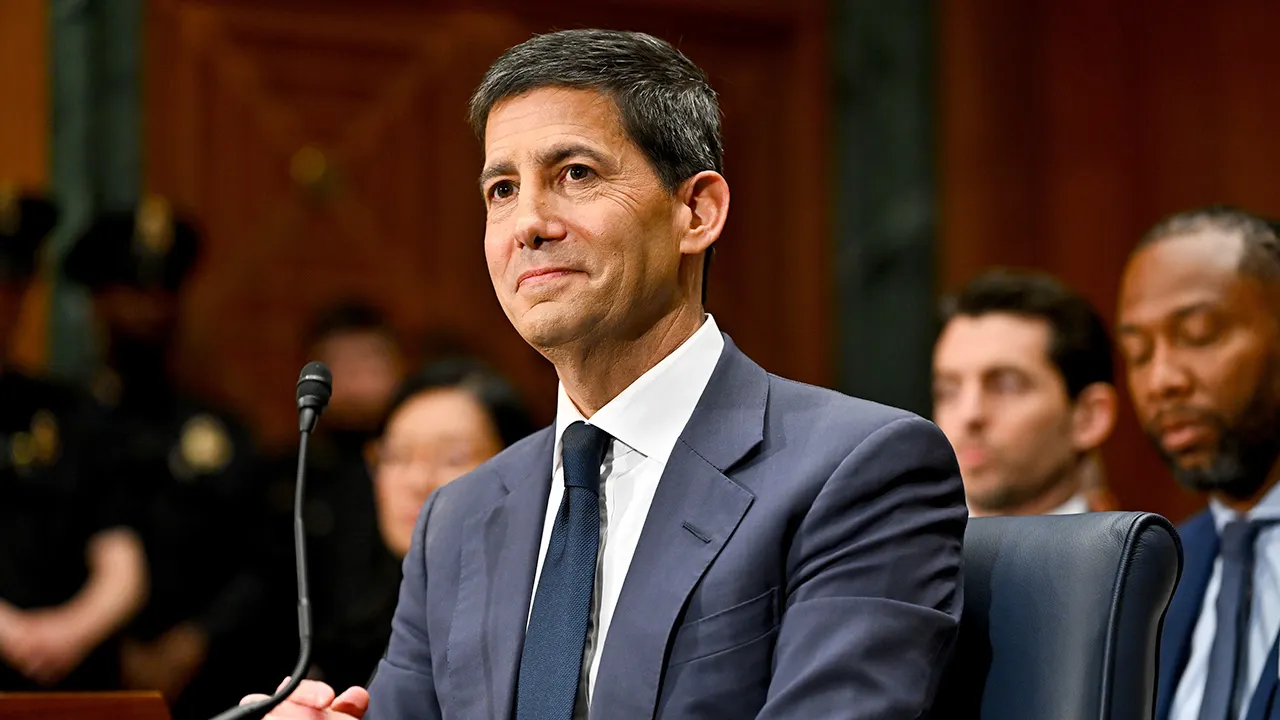
Warsh leads his first press conference on interest rates after becoming chairman of the federal reserve.
This is a developing story about the June 2026 FOMC interest rate decision and will be updated with further details.
The Federal Reserve on Wednesday announced that it will hold interest rates steady due to concerns about elevated inflation amid the war in Iran, as Fed Chair Kevin Warsh’s tenure leading the central bank begins in earnest.
Fed policymakers voted to leave the benchmark federal funds rate unchanged at its current range of 3.5% to 3.75%. The move follows the central bank’s decision to hold rates steady in January, March and April following three successive 25-basis-point rate cuts in September, October and December to close out last year.
The Federal Open Market Committee (FOMC), the central bank’s panel responsible for monetary policy moves, voted 12-0 to leave interest rates unchanged. Policymakers noted in the FOMC’s statement that inflation remains elevated above the central bank’s 2% goal, which it said was “in part reflecting supply shocks that have driven price increases in certain sectors, including energy.”
They also noted that job gains have kept pace with the workforce, while reiterating support for the dual mandate of price stability and maximum employment. Policymakers added that, “Economic activity is expanding at a solid pace despite elevated uncertainty that owes, in part, to the conflict in the Middle East.”
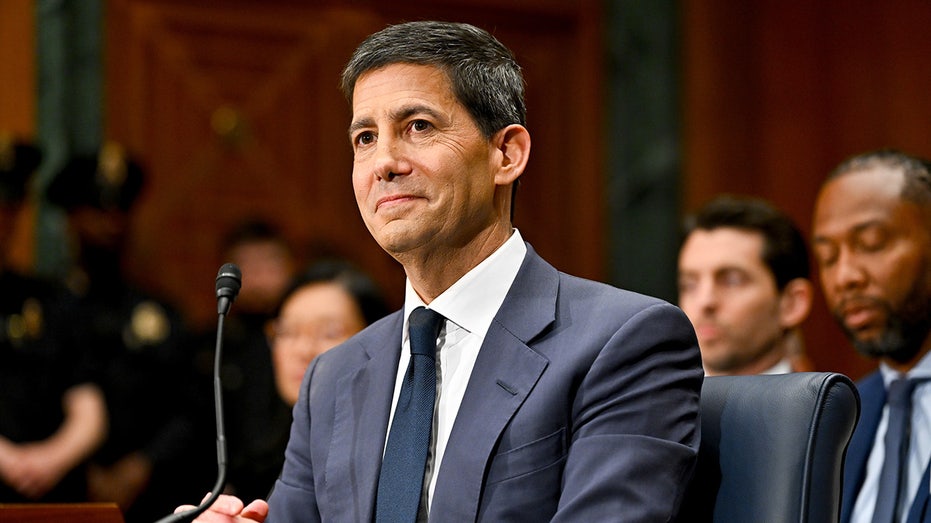
The FOMC’s June monetary policy meeting was the first led by Fed Chair Kevin Warsh. (Graeme Sloan/Bloomberg via Getty Images)
INFLATION IS SQUEEZING AMERICAN CONSUMERS AND THE FED’S LATEST REPORT SHOWS IT’S GETTING WORSE
The FOMC also released a summary of economic projections, also known as the dot plot, which showed that nine of the 18 voting members project an interest rate hike before the end of 2026, with six projecting two 25-basis-point hikes.
They see PCE inflation at 3.6% at year’s end, up from 2.7% in the March projection, with the unemployment rate at 4.3%, slightly lower than the prior estimate of 4.4%. They also see economic growth slowing, with the projection showing real GDP up 2.2% at the end of the year – down from a 2.4% prediction in March.
Fed Chair Warsh spoke to the media at his first post-meeting press conference on behalf of the FOMC. Warsh’s predecessor, Jerome Powell, remains a member of the Fed’s Board of Governors and a voting member of the FOMC.
“We recognize that inflation has been running well ahead of the Fed’s long-stated inflation goal of 2%. That’s been going on for more than five years. Persistently high prices are a burden for the American people, but the recent past need not be prologue,” Warsh said.
“I am pleased to report that members of the FOMC are unambiguous and unanimous – this committee will deliver price stability,” he added.
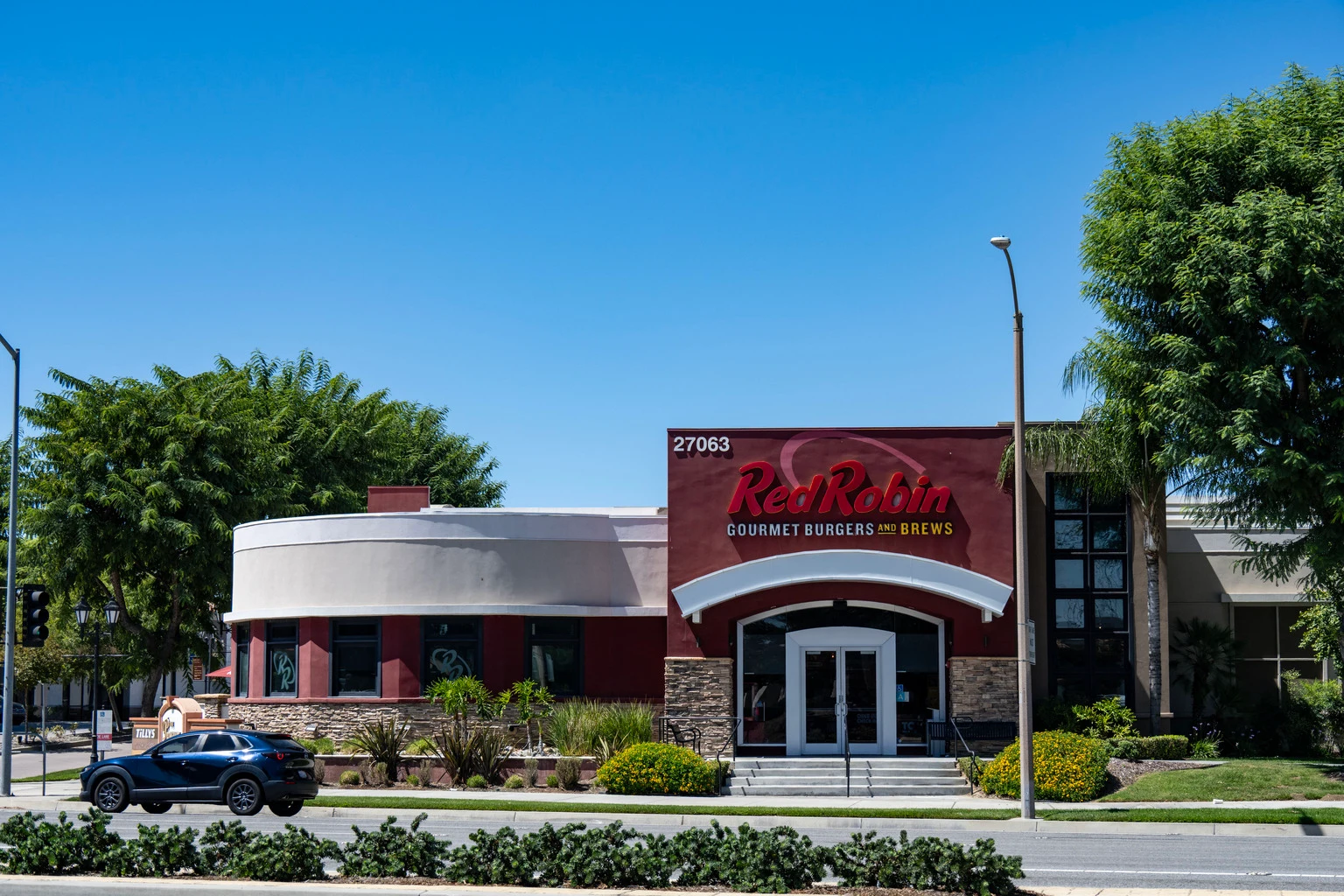
Red Robin Gourmet Burgers' Transformation Looks Irresistible (Upgrade)
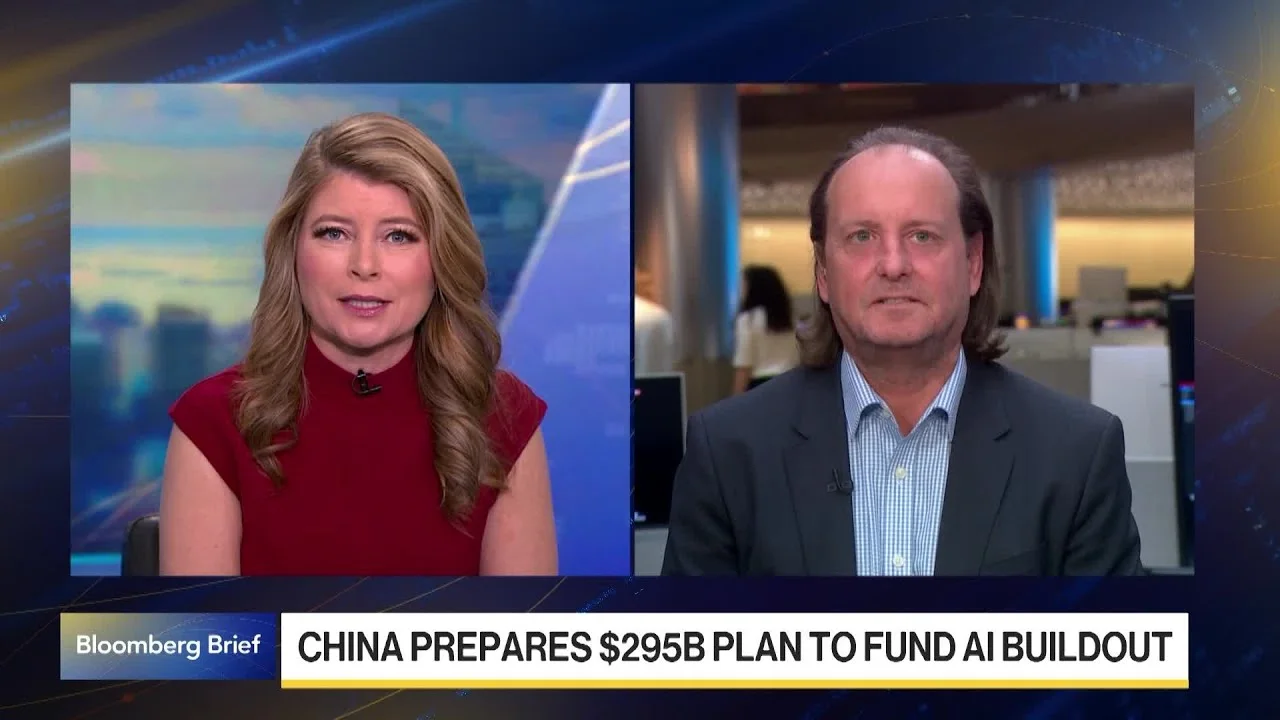
China plans to invest approximately 2 trillion yuan ($295 billion) over the next five years to develop data centers nationwide. This significant investment aims to bolster infrastructure, support digital growth, and enhance technological capabilities, positioning China as a major player in global data storage and management.
China is gearing up to invest a massive $295 billion to advance its artificial intelligence (AI) infrastructure and research. This ambitious initiative aims to position China as a global leader in AI technology by fostering innovation across industries such as healthcare, manufacturing, and transportation. The plan will support the development of core AI components, including chips, algorithms, and data centers, strengthening domestic capabilities and reducing reliance on foreign technology.
The government’s strategic funding is also geared toward talent cultivation and establishing cutting-edge research hubs. By bolstering AI development, China hopes to stimulate economic growth, create high-tech jobs, and enhance national security. This enormous investment signifies China’s commitment to becoming a dominant force in the rapidly evolving AI landscape and challenges other nations to keep pace with its technological ambitions.
Overall, China’s $295 billion AI buildout plan underscores its determination to harness artificial intelligence for economic and strategic advantages. As the country accelerates its technological investments, it aims to solidify its position as a global AI innovator, reshaping the future of digital transformation worldwide.
Other People are Reading

The Cup of Ambition line will feature three blends.

Kevin Warsh holds rates steady despite fresh inflation fears

Only 10 Movies From the ’80s Are Truly Perfect From Start to Finish

How The Other Bennet Sister Star Learned To Love Austen


-

 Business3 days ago
No Jackpot Winner as $257 Million Prize Rolls Over to $269 Million Monday Draw
-

 Crypto World6 days ago
Oppenheimer backs SpaceX as $70 billion retail frenzy builds
-

 Fashion5 days ago
Weekend Open Thread: Tuckernuck – Corporette.com
-

 Crypto World6 days ago
Markets Rally as SpaceX IPO Looms Amid Iran Tensions and Inflation Surge
-
 Crypto World3 days ago
Zimbabwe Requires Crypto Businesses to Register Annually Under New FIU Regulations
-

 Tech5 days ago
NanoClaw integrates JFrog registries to secure AI agent downloads
-

 Crypto World5 days ago
Bitget enters Argentina’s regulated crypto market through PSAV registration
-

 Tech5 days ago
This Week In Security: Microsoft On Microsoft, Register Your Domains, Linux On ARM, And FreeBSD Joins The File Cache Club
-

 NewsBeat6 days ago
El Nino has formed in the Pacific and could set records, forecasters say
-
 Tech6 days ago
Dutton Ranch star claims they ‘didn’t see any disruption’ on set following Chad Feehan’s exit from Yellowstone spinoff fueled by Taylor Sheridan clash rumors
-

 Politics6 days ago
Politics Home | Healey Resignation Is “Colossal Failure Of Government”, Says Former Labour Defence Secretary
-
 Entertainment6 days ago
Donnie Wahlberg & More Heat Up Las Vegas at Circa’s Barry’s Downtown Prime
-
 Tech6 days ago
Opendoor Ends India Operations, Fueling a Bigger Conversation About AI and Outsourcing
-

 Politics6 days ago
Belfast burns, while Met chief points finger at Iran and Russia
-

 Sports6 days ago
First Time Since 1971: Australia Register Historic Low In ODI Cricket
-

 NewsBeat5 days ago
FBI searches office of Ohio voter registration group
-

 Business6 days ago
AT&T: Verizon's 27% Outperformance Sets Up A Solid Entry Point
-
 Tech6 days ago
Anthropic is spending $150M to embed 1,000 AI fellows inside nonprofits. No degree required.
-

 Politics6 days ago
Modi thanks Trump for wishes as US attacks Indian seafarers
-
 Entertainment6 days ago
‘The Pitt’s Fan-Favorite Doctor Confirms Noah Wyle Gave His Blessing to Return [Exclusive]
You must be logged in to post a comment Login