
Business
The Global Story – Is the world giving up on the US dollar?

Available for over a year
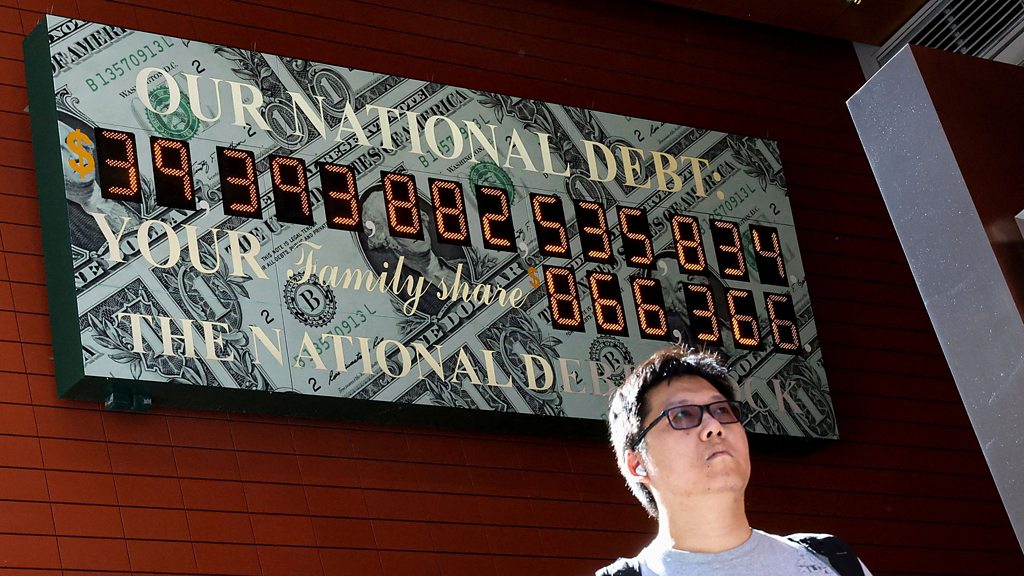
America’s national debt recently hit a new milestone of $40 trillion. It is estimated that interest payments on the national debt are now the second largest expense in the US government budget, trailing only social security. How was the US able to borrow so much and for so long? One answer, according Harvard economist Kenneth Rogoff, is the US dollar’s status as the world’s reserve currency.
In this episode, Rogoff, former chief economist at the International Monetary Fund, explains how the US dollar came to enjoy this hegemonic status, what being the world’s reserve currency actually means in practice, and why he believes the dollar is now in decline.
(Photo: An Asian-American man passes by the passes by the National Debt Clock in New York City, US, 19 August, 2026. It is a digital display screen that shows the National Debt figures 39, 393, 882, 535, 284 against a background of dollar notes. Credit: Brendan McDermid/Reuters)
Producer: Valerio Esposito, Aron Keller and Lucy Pawle
Executive producer: James Shield
Sound engineer: Travis Evans
Senior news editor: China Collins

Business
Scorpio Gold Shares Rocket 129% As Newly Listed Nasdaq Micro-Cap Extends Volatile Debut-Week Rally

VANCOUVER, British Columbia — Shares of Scorpio Gold Corporation surged more than 129% Wednesday morning, extending a wildly volatile first week of trading for the small-cap Canadian gold miner just two days after its American Depositary Shares began trading on the Nasdaq Capital Market.
Scorpio Gold’s ADSs, which trade under the ticker SGLD, jumped $6.57 to $11.66 as of 9:34 a.m. ET Wednesday, according to market data, marking a second consecutive session of extreme price swings for the newly listed security. The move came just one trading day after the stock gained nearly 300% on its Nasdaq debut Tuesday, according to market tracking services monitoring the stock’s early performance.
The dramatic price action follows Scorpio Gold’s formal transition onto U.S. markets. The company’s ADSs commenced trading on Nasdaq effective at the opening of trading on Sept. 1, 2026, after the exchange approved the listing in late August. Each ADS represents 20 common shares of the Vancouver-based company, with the Bank of New York Mellon serving as depositary for the program.
In conjunction with the Nasdaq listing, Scorpio Gold’s trading symbol on the TSX Venture Exchange, its home Canadian market, also changed from “SGN” to “SGLD,” unifying the company’s ticker across both markets. The shares continue to trade as well on the OTCQB Venture Market under the symbol “SRCRF” and on the Frankfurt Stock Exchange under “RY9.”
Scorpio Gold said the Nasdaq listing was designed to broaden the company’s access to American investors without requiring a share consolidation, a structural approach the company said preserved its existing capital structure for current shareholders while still meeting Nasdaq’s initial listing requirements.
Zayn Kalyan, Scorpio Gold’s chief executive officer and a director of the company, described the listing as a pivotal step in the company’s growth strategy when it was first announced.
“Listing on NASDAQ is a defining milestone for Scorpio Gold,” Kalyan said. “The United States is home to the deepest pool of capital in the world, and this listing places the Company squarely in front of that audience — without a share consolidation and without disrupting the capital structure our existing shareholders have supported.”
Kalyan added that the timing of the listing coincided with favorable conditions in the broader gold market, pointing to macroeconomic trends he said were reinforcing investor interest in the sector.
“We are doing this against the backdrop of one of the strongest gold markets in a generation, underpinned by a powerful macro case for de-dollarization as central banks and investors alike seek harder assets,” Kalyan said, adding that a single “SGLD” ticker across both the U.S. and Canadian markets would give investors “one clear identity for the Company as we enter this next phase of growth.”
Scorpio Gold’s core business centers on the exploration and development of mineral resource properties in the United States, with its flagship holding being a 100% interest in the Manhattan District, located in the Walker Lane Trend of Nevada. The roughly 4,780-hectare property includes the advanced exploration-stage Goldwedge Mine, along with the Kinross Manhattan properties and the Keystone and Jumbo gold deposits.
Market analysts who track newly listed small-cap stocks have noted that extreme volatility of the kind seen in Scorpio Gold’s shares this week is a common pattern among micro-cap companies transitioning onto major U.S. exchanges, particularly those with relatively small public floats and limited trading history on American markets. Thin trading volume in a stock’s early days on a new exchange can amplify price swings in both directions, as relatively small buy or sell orders move the price disproportionately compared with more heavily traded, established securities.
Scorpio Gold’s rapid share price gains this week have also unfolded against a broader backdrop of strength in gold prices, which have climbed sharply over the past year as investors have sought safe-haven assets amid persistent inflation concerns, geopolitical tensions and continued gold purchases by central banks around the world. That environment has generally proven favorable for gold mining and exploration companies, whose share prices often move in tandem with, and sometimes amplify, swings in the underlying price of the metal itself.
The company has separately disclosed an ongoing engagement with Investor Insights Systems Inc., a Vancouver-based firm providing digital marketing services including content creation, search engine marketing, pay-per-click advertising and market awareness campaigns. Scorpio Gold said the extended agreement, initially announced earlier this year, was intended to support broader visibility for the company as it works to build awareness among investors following its cross-border listing.
Trading in newly listed micro-cap stocks on Nasdaq has drawn increased scrutiny in recent years, as sharp early price swings in thinly traded names have occasionally prompted questions from market watchers about volatility, liquidity and the mechanics behind rapid share price appreciation shortly after a listing. Nasdaq maintains ongoing monitoring processes for newly listed securities, and companies experiencing significant and sudden price volatility are sometimes required to address unusual market activity through public disclosures, though Scorpio Gold had not issued any such statement addressing Wednesday’s price movement as of midmorning trading.
With the stock’s share price nearly doubling over just two trading sessions, Scorpio Gold’s market capitalization has climbed sharply since its Nasdaq debut, though the company’s underlying operations, centered on its Nevada-based gold exploration assets, have not changed materially since the listing took effect. Investors and analysts will likely be watching closely in the coming days to see whether the stock’s dramatic early gains prove durable or give way to a pullback, a pattern that has played out with other newly listed small-cap resource companies that have experienced similarly outsized initial trading activity following a major exchange listing.
Scorpio Gold’s common shares continue to trade in parallel on the TSX Venture Exchange in Canada, where the stock’s price action Wednesday broadly mirrored the sharp gains recorded on Nasdaq, reflecting the unified ticker structure the company implemented as part of its cross-border listing strategy.
Business
McDonald’s Stock Ticks Higher After 52-Week Low As Dividend Hike, Menu Revamp Aim To Boost Sales Growth

CHICAGO — Shares of McDonald’s Corp. edged higher Wednesday morning, trading at $261.90, up 30 cents, or 0.30%, as of 9:53 a.m. ET, a modest rebound after the fast-food giant’s stock touched a fresh 52-week low earlier this week amid ongoing concerns over slowing U.S. customer traffic.
McDonald’s shares had fallen as low as $260.06 in recent trading, marking a new 52-week low and putting the stock roughly 1% below its previous floor set in late July, according to market data. The decline has come as investors continue to weigh a slowdown in the company’s domestic same-store sales growth against a backdrop of broader consumer pullback affecting several restaurant chains this year.
In its most recent quarterly results, McDonald’s reported U.S. same-store sales growth of just 0.8%, a notable slowdown from the 2.5% gain the company posted in the same period a year earlier, as domestic guest counts declined. Globally, comparable sales rose 1.3% for the quarter, reflecting steadier performance in international markets even as the company’s home market showed signs of strain.
Despite the softer domestic traffic figures, McDonald’s continued its long-running streak of annual dividend increases this week. The company raised its quarterly dividend by 5.1% to $1.86 a share, marking the 26th consecutive year the burger chain has increased its payout to shareholders. The stock’s dividend yield now sits at roughly 3.53%, a figure income-focused investors have increasingly pointed to as a core part of the investment case for McDonald’s even as consumer-facing peers across the restaurant industry pull back on spending and, in some cases, dividend growth.
The stock’s ex-dividend date fell on Sept. 1, meaning investors who purchased shares on or after that date will need to wait a full quarter before receiving the next payment.
McDonald’s dividend increase stands in contrast to moves by some competitors in the space. Wendy’s, for instance, has moved to cut its own payout this year, a divergence that analysts have said reflects differing confidence levels among fast-food operators navigating a more cautious consumer environment.
To help reverse softening domestic traffic, McDonald’s has leaned heavily on limited-time menu offerings throughout 2026. Earlier this year, the company introduced the Big Arch, a double-patty burger featuring white cheddar cheese and a proprietary sauce, which the company said contributed to a 3.9% domestic same-store sales gain in the first quarter. That early-year momentum, however, did not fully carry through to the second quarter, when growth slowed considerably.
The company’s latest push to reignite customer interest came this week with the return of Spicy Chicken McNuggets, which came back to participating U.S. restaurants nationwide starting Sept. 1, alongside a new Mighty Hot Sauce dipping option. The spicy nuggets, coated in a tempura breading made with aged cayenne and chili peppers, first debuted in September 2020 and have returned for several limited-time regional runs since then. The sauce blends crushed red pepper, chilis, garlic and a touch of sweetness.
McDonald’s USA’s official Menu Spotter account marked the return with an enthusiastic message to fans: “We’re so back. And just as spicy as ever.”
The chain is also planning additional new offerings later this year, including a lineup of McCafe-branded energy drinks, iced coffees and fruity refreshers inspired by its short-lived CosMc’s restaurant concept, part of a broader effort to diversify its beverage lineup and attract customers throughout the day beyond traditional meal periods.
Alongside its menu strategy, McDonald’s has also made a significant leadership change in recent weeks. The company named Skye Anderson as president of McDonald’s USA, succeeding Joe Erlinger in the role. Anderson, who has spent 26 years at McDonald’s and most recently served as chief operating officer of McDonald’s USA, takes on the domestic leadership post at a pivotal moment for the company as it works to reverse the traffic declines weighing on its U.S. business.
The broader restaurant industry has faced a more challenging operating environment in 2026, with several major chains announcing store closures amid tighter consumer spending. Pizza Hut, for example, is shuttering more than 250 locations this year, following a wave of closures at Wendy’s in 2024. Analysts have said this competitive backdrop could ultimately work in McDonald’s favor over the longer term, given the company’s scale and continued investment in value-oriented menu options, even as it navigates near-term softness in guest counts.
McDonald’s has also expanded its McValue menu strategy this year, which includes meal deals starting at $5 and a “Buy One, Add One for $1” promotion available at breakfast and lunch or dinner for select items, part of a broader push to reassert its value positioning with cost-conscious consumers. The company has also tested new secret-menu items inspired by viral customer hacks in some international markets, including a Surf N’ Turf burger and a Big Mac sauce dipping option in the United Kingdom, though it remains unclear when, or if, similar offerings might roll out in the United States.
Longer-term investors have increasingly compared McDonald’s performance against faster-growing names in the restaurant sector. According to data compiled by financial analysts, a three-year investment in McDonald’s stock has produced only modest gains, while comparable investments in faster-growing chains such as Cava have delivered substantially higher, if considerably more volatile, returns over the same period.
Despite Wednesday’s modest gain, McDonald’s stock remains down significantly from its 52-week high, reflecting a stretch of lower highs over the past six months as the company works to stabilize its domestic business. Investors will likely continue watching upcoming same-store sales data closely, along with the performance of the company’s newest menu initiatives, for signs of whether McDonald’s traffic slowdown in the U.S. is beginning to reverse or represents a more prolonged challenge for the world’s largest fast-food chain heading into the final months of 2026.

‘Barron’s Roundtable’ panelists discuss the growth of autonomous ride-shares and what Waymo’s success means for the industry.
Waymo on Tuesday began welcoming its first public riders in Denver, San Diego and Tampa, expanding its fully autonomous ride-hailing service to 14 cities.
The Alphabet-owned self-driving car company said tens of thousands of people in each newly launched market have already signed up for access. The company plans to gradually add riders before eventually opening the service to all users.
“From coast to coast, we’re focused on making everyday transportation safer, easier and more accessible,” Suzanne Philion, chief marketing officer at Waymo, said in a statement.
“Launching public rides in San Diego, Tampa and in my home state of Colorado brings our newest vehicle platform and next-generation driver to more riders who are ready to experience the future of mobility.”
WAYMO GETS REGULATORY APPROVAL TO SCALE UP ROBOTAXI SERVICE ACROSS CALIFORNIA, ENTER 2 NEW MARKETS

Waymo on Tuesday began welcoming its first public riders in Denver, San Diego and Tampa, expanding its fully autonomous ride-hailing service to a total of 14 cities. (John J. Kim/Chicago Tribune/Tribune News Service via Getty Images)
Waymo said its service areas are designed to connect riders with the places they “actually need to go and want to go,” including for errands, rides home from work and late-night trips.
Colorado Gov. Jared Polis praised the Denver launch, saying it expands “clean mobility choices for Coloradans.”
“Colorado is leading the country in clean energy and innovation, and Waymo’s launch helps us achieve cleaner air sooner,” Polis said. “This significant investment expands clean mobility choices for Coloradans. We are proud to support forward-thinking solutions that lead to economic growth and build a safer, cleaner transportation future across our state.”
WAYMO RECALLS NEARLY 4,000 ROBOTAXIS AFTER CARS ENTER FREEWAY WORK ZONES

Waymo said its service areas are designed to connect riders with the places they “actually need to go and want to go,” including for errands, rides home from work and late-night trips. (Smith Collection/Gado/Getty Images)
Waymo said it has spent months preparing for the launches by validating its autonomous driving technology on local roads, working with first responders and partnering with community groups.
The company also cited safety data showing that the Waymo Driver was involved in 94% fewer crashes involving serious injuries or worse than human drivers operating over the same distance.
Waymo has been rapidly expanding its footprint.
WAYMO RECALLS MASSIVE AUTONOMOUS FLEET AFTER INCIDENT FLAGS MAJOR SAFETY ISSUE

Waymo said it has spent months preparing for the launches. (Justin Sullivan/Getty Images)
CLICK HERE TO GET FOX BUSINESS ON THE GO
Last month, the company said it plans to scale up service across the San Francisco Bay Area and Los Angeles while launching robotaxi operations in Sacramento and San Diego. It also announced plans to bring Waymo to Munich, Germany.
In February, Waymo opened its fully autonomous ride-hailing service to public riders in Dallas, Houston, San Antonio and Orlando.
FOX Business’ Michael Sinkewicz contributed to this report.


I am a corporate finance professional with over ten years of experience in financial planning, capital budgeting, and risk assessment. As a long-term investor, I invest exclusively in funds and do not pick individual stocks. My approach is evidence-based: low costs, broad diversification, strategic asset allocation, and patience through market cycles. My motivation for writing is twofold: first, to help other long-term investors, especially women and those new to fund investing. I focus on what truly drives returns: costs, diversification, and time in the market. Second, to bring rigorous, data-driven fund analysis to a platform often dominated by single-stock commentary. I write to learn, share, and build a community of patient investors who value sleeping well at night over chasing short-term gains.
Analyst’s Disclosure: I/we have no stock, option or similar derivative position in any of the companies mentioned, and no plans to initiate any such positions within the next 72 hours. I wrote this article myself, and it expresses my own opinions. I am not receiving compensation for it (other than from Seeking Alpha). I have no business relationship with any company whose stock is mentioned in this article.
Seeking Alpha’s Disclosure: Past performance is no guarantee of future results. No recommendation or advice is being given as to whether any investment is suitable for a particular investor. Any views or opinions expressed above may not reflect those of Seeking Alpha as a whole. Seeking Alpha is not a licensed securities dealer, broker or US investment adviser or investment bank. Our analysts are third party authors that include both professional investors and individual investors who may not be licensed or certified by any institute or regulatory body.
Available for over a year
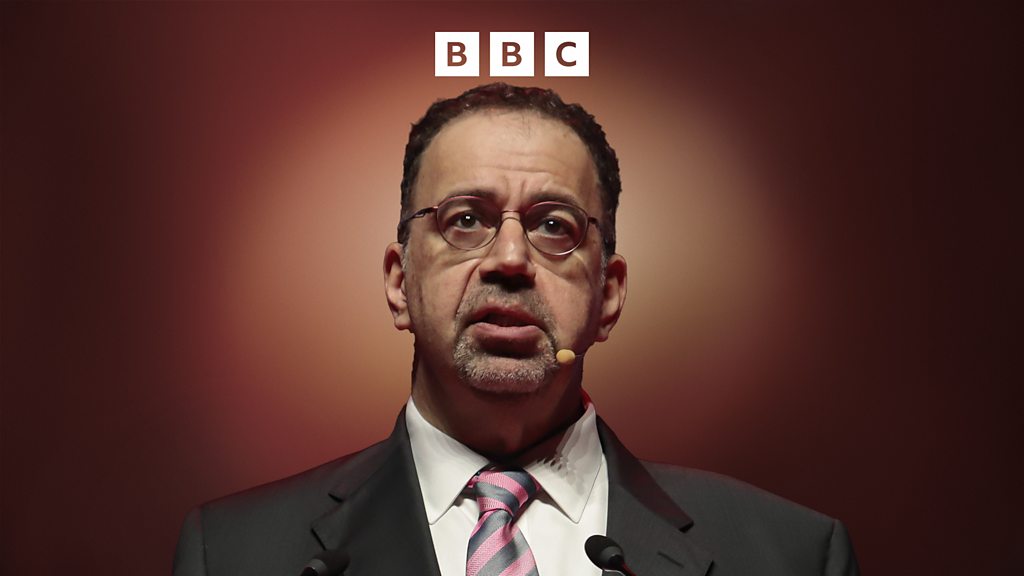
BBC Newsnight presenter Paddy O’Connell speaks to Nobel Prize-winning economist Daron Acemoglu about why he thinks liberal democracy is in crisis, and how artificial intelligence could make it worse.
Daron argues that liberal democracy worked because people were given a say in how they were governed and then benefited from their country’s economy as it prospered.
But western governments have made major decisions on issues like immigration without first building public agreement, something which was once important.
In an interview with BBC Newsnight, he says that together, these changes have left many working people feeling that politicians no longer listen to them and have helped to fuel a rise in populism.
Now Daron warns that the way artificial intelligence is developed and used, so far without consensus, could make it worse, by widening inequality and putting people out of work.
“AI is going to transform every aspect of our lives, and we’re not being asked. We have no say in how AI is going to shape our society. I mean people in the UK, people in the US. Even worse for 6 billion people who are outside of the US, UK, China. Their lives are going to be completely reshaped by AI and they have zero say whatsoever,” he says.
The Interview brings you conversations with people shaping our world, from all over the world. The best interviews from the BBC, including episodes with Indian activist Sonam Wangchuk, South African minister Gayton McKenzie and New York Times White House correspondent Maggie Haberman.
You can listen on the BBC World Service on Mondays, Wednesdays and Fridays at 0800 GMT. Or you can listen to The Interview as a podcast, out three times a week on BBC Sounds or wherever you get your podcasts.
Presenter: Paddy O’Connell
Producer: Osman Iqbal
Editor: Damon Rose
(Image: Daron Acemoglu. Credit: Europa Press News via Getty Images)
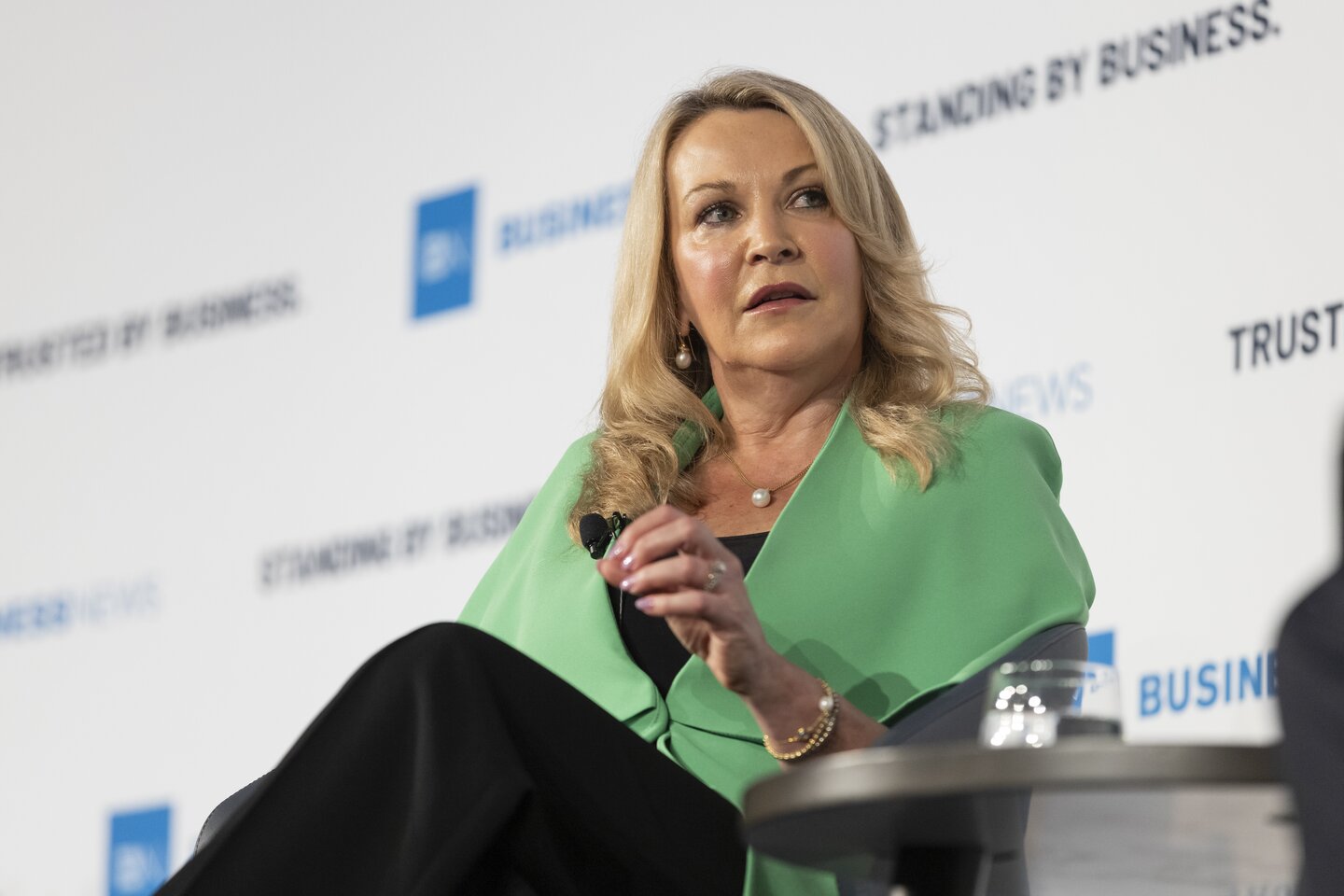
Greatland Resources deputy chair Elizabeth Gaines sold $3.7 million worth of shares in the goldminer across two transactions last week.

Block director Anthony Eisen sells $1.48m in company stock

Abel said that Berkshire sees significant opportunities from the expansion of AI data centers, following its decision to make Alphabet its third-largest common stock holding.
Reuters reported that Berkshire ended June with nearly 106 million Alphabet shares worth about $37.8 billion, behind only its holdings in Apple and American Express.
Abel called Alphabet a “significant player” in AI in his interaction with CNBC. He said he and Berkshire Chairman Warren Buffett had authorized an additional $10 billion investment three months ago to support the Google and YouTube parent’s AI infrastructure expansion.
“We are all seeing and feeling the impact” of AI, Abel said.

For Berkshire, the AI opportunity is not confined to its Alphabet stake. The technology’s growing appetite for electricity could also benefit Berkshire Hathaway Energy, as data centers require large and reliable power supplies.
Abel estimated that data centers accounted for about 8% of Berkshire Hathaway Energy’s load in Iowa last year, underscoring how quickly AI infrastructure is becoming a meaningful source of electricity demand.”I’ve sort of always had the strong view that energy would be the constraint,” Abel said. “We do still see it as a significant opportunity for Berkshire and Berkshire Hathaway Energy.”
That creates an unusual link between Berkshire’s technology investment and one of its more traditional businesses. As Alphabet and other technology companies pour money into AI infrastructure, Berkshire can potentially participate through both the companies building the technology and the energy systems required to keep their data centers running.
Reuters reported that Buffett initiated Berkshire’s investment in Alphabet last year, while Abel took credit for the latest purchase, made at a 6.5% discount to Alphabet’s stock price. Abel, with Buffett’s help, oversees Berkshire’s capital allocation and its cash holdings, which stood at $364.7 billion at the end of June.
But Abel’s outlook is not uniformly bullish. He said U.S. consumers remain under pressure from elevated inflation and mortgage rates, while the housing market faces a difficult period.
Berkshire agreed in June to pay $6.8 billion for home builder Taylor Morrison and already owns stakes in Lennar and D.R. Horton. Abel said Taylor Morrison could become a “very strong asset” over the next five to 10 years as more people seek homeownership, even if demand remains subdued in the near term.
“We didn’t see any sign of immediate recovery,” in housing, Abel said. “It was going to be a bumpy road for a while.”
“There’s a consumer that is still clearly feeling the pain, and struggling, and having to stretch a lot further with that dollar,” Abel said.
Abel made the comments from Tokyo, where Berkshire has built a sizeable investment portfolio through stakes of more than 10% in Japanese trading houses Itochu, Marubeni, Mitsubishi, Mitsui and Sumitomo. The company also took a 2.49% stake in insurer Tokio Marine in March as part of a strategic partnership.
Berkshire plans to hold its trading house investments for “many decades,” Abel said, adding that Buffett remains a strong supporter of the strategy.
“Warren absolutely loves the Japanese investments,” Abel said. “It wasn’t easy for Warren that off I went to Tokyo.”
The comments offer an early glimpse of how Abel is deploying Berkshire’s vast capital base: leaning into structural growth opportunities such as AI while continuing to build around energy, housing and long-term investments in Japan.
(Disclaimer: This article is based on inputs from agencies. These do not represent the views of The Economic Times)
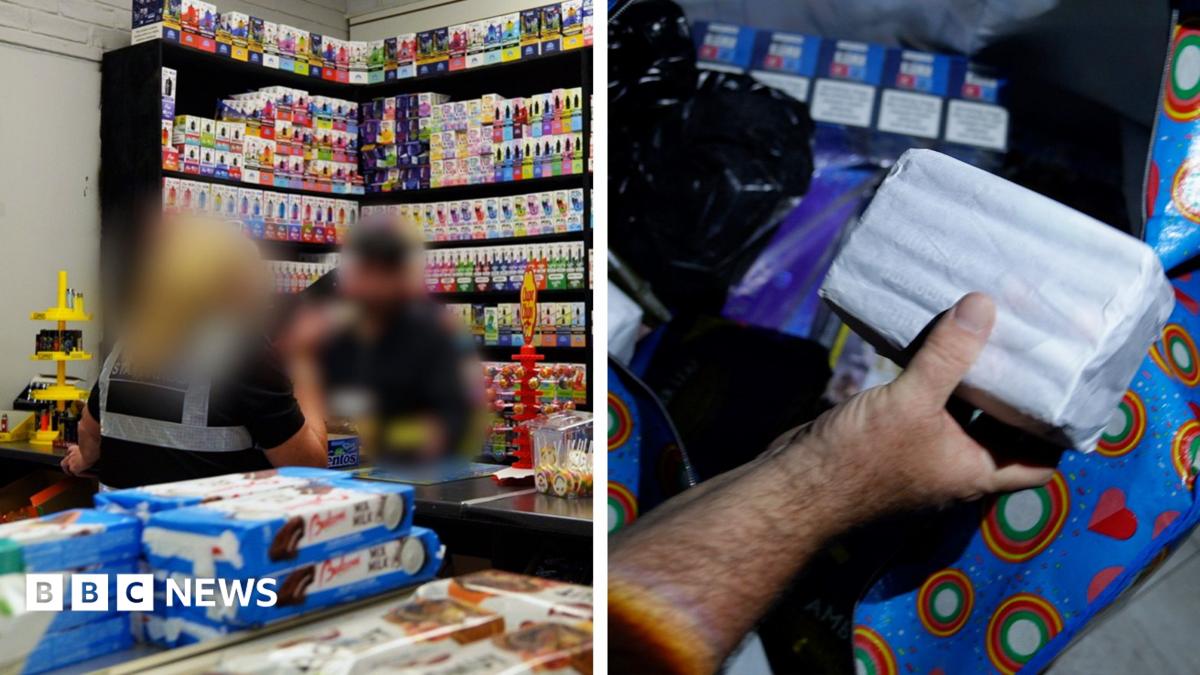
Trading Standards officers in Scotland say they need extra powers to help tackle what they describe as an “explosion” of illegal tobacco sales in high street shops.
The products include counterfeit cigarettes or those smuggled into the country to avoid tax.
Trading Standards link the UK-wide problem to organised crime.
The Scottish government said illicit tobacco is a serious issue and that it’s working with partners about how best to deal with it.
The BBC’s Katie Hunter joined Trading Standards officers on raids in Inverness.
Filmed and edited by Morgan Spence

Most video games treat money as a simple convenience. You defeat enemies, collect coins, and hand them to a shopkeeper.
Path of Exile 2, the action role-playing game from New Zealand studio Grinding Gear Games, does something far more unusual, and the result is an in-game economy that economists and business-minded players study almost like a live financial market, complete with reserve currencies, speculation, inflation and periodic resets. For anyone interested in how digital economies actually function, it is one of the most instructive examples in modern gaming.
Gold Exists, But It is Not The Currency That Matters
The first surprise is that Path of Exile 2 does have a gold currency, yet it plays almost no role in the real economy. Gold cannot be traded between players. It is earned from defeated enemies, chests and vendor sales, and spent only on personal transactions: buying from the game’s own merchants, resetting your character’s skill allocation, and covering the fees on the in-game trade market.
Because gold is bound to each account and never changes hands, it can never become the benchmark that prices everything else. That is a deliberate design decision. By keeping gold out of player-to-player trade, Grinding Gear Games prevents the lazy “sell everything for coins, buy the best item with coins” loop that flattens most game economies, and forces something more interesting to fill the role of real money.
The Real Currency Doubles as a Crafting Tool
What players actually trade with is a family of consumable items called orbs. This is the concept that reshapes the entire economy, because orbs are not only money. They are also the tools used to modify and upgrade equipment.
Each orb has a crafting function: one rerolls an item’s random properties, another adds a socket, another raises an item’s rarity. So every orb a player spends to improve their gear is, quite literally, currency being consumed. That creates a permanent tension that has no equivalent in an ordinary economy: every unit of money is also a productive asset, and spending it to craft means giving up the chance to trade it. That single mechanic is what gives the market its depth, because supply is constantly being burned rather than simply circulated.
It also means prices are quoted in orbs rather than any abstract coin. An item is not worth “500 gold.” It is worth a set number of a particular orb, and which orb sets the price depends on how valuable the item is.
A Market With No Central Authority
The most remarkable feature is that no one sets the prices. There is no official store fixing values and no exchange rate imposed by the developer. Everything is negotiated between players through third-party trade platforms where offers are listed and going rates are checked in real time.
The outcome behaves like any genuine free market. Speculators buy cheaply at the start of a season and sell high once demand builds. Bubbles inflate when a particular character build becomes popular, and everyone chases the same item. Prices collapse when a balance update rewrites the rules and yesterday’s essential item becomes worthless. For a fantasy game about slaying monsters, the volume of authentic economic behaviour on display is striking, and it is why the game attracts a following well beyond typical ARPG fans.
Divine Orbs and The Emergence of a Reserve Currency
Within that system, a clear hierarchy has formed, and it mirrors how real currencies stratify. Common orbs that make minor changes exist in vast quantities and hold little value. Scarcer orbs concentrate the purchasing power, and at the top sits the Divine Orb.
The Divine Orb’s function is to reroll the numeric values on an already-strong item, the final refinement on high-end gear. Because it is both scarce and universally wanted, it has effectively become the economy’s reserve currency, the nearest thing the game has to a gold standard. Expensive goods are priced directly in Divine Orbs, and the Divine’s exchange rate against lesser orbs such as the Exalted Orb rises and falls throughout a season, much as a strong national currency floats against weaker ones. Players track these rates on community pricing tools with the seriousness of a trading desk, and an entire support industry has grown up around the market, from valuation platforms to services where time-poor players can pick up PoE 2 currency instead of farming a stockpile across dozens of hours.
The Scheduled Reset That Keeps The Economy Healthy
The final piece is the league system. Every few months, Path of Exile 2 resets its economy entirely with a new temporary league. Existing characters and accumulated wealth are moved to a separate permanent realm, and the whole player base begins again from nothing at the same moment.
From a business perspective, this is a fascinating mechanism. A periodic, total reset would be unthinkable in the real world, but in a game it solves the problems that plague long-running digital economies. It prevents established players from hoarding an insurmountable lead, guarantees newcomers can enter on equal footing, and forces the market to rediscover its own prices each season rather than calcifying into a fixed hierarchy. It is planned obsolescence turned into a feature, and it is a large part of why the economy stays liquid and active year after year.
Why It Matters
Path of Exile 2’s economy is a case study in deliberate design. Gold is kept personal and untradeable so it cannot dominate; the real currency doubles as a crafting resource, so supply is constantly consumed; Divine Orbs rise to the role of a reserve standard, prices are set entirely by players, and the whole system resets on a schedule to stay fresh. The effect is an in-game market that behaves less like a shop counter and more like a functioning economy, with all the speculation, volatility and opportunity that implies.

Scorpio Gold Shares Rocket 129% As Newly Listed Nasdaq Micro-Cap Extends Volatile Debut-Week Rally

XRP Price Prediction: Ripple Edges Bitcoin In South Korea

These mayors live along Lake America’s shores. But they won’t be calling it that.





-

 Fashion5 days ago
Weekend Open Thread: Maeve – Corporette.com
-

 Crypto World6 days ago
Bitcoin’s 22% rally now needs real demand to outlast Treasury liquidity boost
-

 Business6 days ago
Apple Confirms September 9 Keynote and Reveals Its Full Pre-Order Schedule
-

 Crypto World7 days ago
Elon Musk Grok Bot Promise: We Will Make You Whole if AI Loses Your Money
-

 Business6 days ago
Salesforce Stock Soars 19% as Blowout Earnings and Agentforce AI Growth Silence Software Skeptics
-

 Business5 days ago
Onto Innovation Stock: AI’s Next Bottleneck Is Yield (NYSE:ONTO)
-

 Crypto World7 days ago
NVIDIA revenue hits $96.2B as AI demand doubles
-

 Crypto World5 days ago
Bitcoin price tests $82K resistance as Brandt stays long
-
 Tech4 days ago
Hugging Face built a $4.5 billion empire on free AI models. Now Nvidia is buying it for $12.9 billion
-

 Business5 days ago
iPhone 18 Pro Pre-Orders Could Shift to Saturday as Apple Reportedly Avoids September 11 Anniversary
-
 Tech7 days ago
Claude Cowork gets its own browser that doesn’t touch your tabs, bookmarks, or saved passwords
-

 Crypto World6 days ago
Truflation calls for Fed rate cut after PCE forecast
-
 News Videos4 days ago
Charlie Munger on Robinhood: No one should believe that Robinhood’s trades are free
-

 Crypto World7 days ago
GENIUS Act missed its deadline as OCC writes rules anyway
-

 Tech5 days ago
PaperCut releases second emergency patch for exploited flaws
-
 Entertainment5 days ago
‘Adults’ Creators Break Down Season 2’s Most Shocking Moments and Tease a Potential Season 3
-

 Tech6 days ago
The fix for the AI agent that hijacked a company’s DNS: it can propose the change, but it can’t approve it
-

 Tech4 days ago
Tamagotchi Ring Takes the 30-Year Digital Pet and Places it on Your Finger
-

 Tech4 days ago
As the influencer economy drives retail sales, Seattle startup raises $22M to play matchmaker
-
 Business7 days ago
AI Assistant Startup Instinct Rockets to $2.5 Billion Valuation in Weeks Amid Investor Feeding Frenzy
You must be logged in to post a comment Login