





Connect with us
DAPA Banner

Business

The Next Bear Market May Have Just Begun

Published

on

The Next Bear Market May Have Just Begun

This article was written by

Michael Kramer is the founder of Mott Capital, and is a long-only investor who focuses on macro themes and studies trends and options activities to identify and assess entry and exit points for investments in his long-term focused thematic growth strategy. He is a former buy-side trader, analyst, and portfolio manager with 30 years of experience tracking market technicals, fundamentals, and options.Michael Kramer leads the investing group Reading the Markets, where he helps a devoted following of members to better understand what is driving trading and where the market is likely heading, both the short and long-term. Features of the investing group include: daily written commentary and videos analyzing the driving factors behind price action; general macro trend education to help members make well-informed decisions based on market conditions, interest rates, currency movements and how they all interact; chat for questions and community dialogue; and regular Zoom videos sessions to discuss current ideas and answer questions. The level of access RTM subscribers and the expertise of the source are unprecedented given that the subscription price is a fraction of similar technical coaching and mentoring services. Learn more.

Analyst’s Disclosure: I/we have no stock, option or similar derivative position in any of the companies mentioned, and no plans to initiate any such positions within the next 72 hours. I wrote this article myself, and it expresses my own opinions. I am not receiving compensation for it (other than from Seeking Alpha). I have no business relationship with any company whose stock is mentioned in this article.

This report contains independent commentary to be used for informational and educational purposes only. Michael Kramer is a member and investment adviser representative with Mott Capital Management. Mr. Kramer is not affiliated with this company and does not serve on the board of any related company that issued this stock. All opinions and analyses presented by Michael Kramer in this analysis or market report are solely Michael Kramer’s views. Readers should not treat any opinion, viewpoint, or prediction expressed by Michael Kramer as a specific solicitation or recommendation to buy or sell a particular security or follow a particular strategy. Michael Kramer’s analyses are based upon information and independent research that he considers reliable, but neither Michael Kramer nor Mott Capital Management guarantees its completeness or accuracy, and it should not be relied upon as such. Michael Kramer is not under any obligation to update or correct any information presented in his analyses. Mr. Kramer’s statements, guidance, and opinions are subject to change without notice. Past performance is not indicative of future results. Neither Michael Kramer nor Mott Capital Management guarantees any specific outcome or profit. You should be aware of the real risk of loss in following any strategy or investment commentary presented in this analysis. Strategies or investments discussed may fluctuate in price or value. Investments or strategies mentioned in this analysis may not be suitable for you. This material does not consider your particular investment objectives, financial situation, or needs and is not intended as a recommendation appropriate for you. You must make an independent decision regarding investments or strategies in this analysis. Upon request, the advisor will provide a list of all recommendations made during the past twelve months. Before acting on information in this analysis, you should consider whether it is suitable for your circumstances and strongly consider seeking advice from your own financial or investment adviser to determine the suitability of any investment.

Advertisement

Seeking Alpha’s Disclosure: Past performance is no guarantee of future results. No recommendation or advice is being given as to whether any investment is suitable for a particular investor. Any views or opinions expressed above may not reflect those of Seeking Alpha as a whole. Seeking Alpha is not a licensed securities dealer, broker or US investment adviser or investment bank. Our analysts are third party authors that include both professional investors and individual investors who may not be licensed or certified by any institute or regulatory body.

Continue Reading
Click to comment

You must be logged in to post a comment Login

Leave a Reply

Business

OpenAI doubles down on London with first permanent office despite Stargate U-turn

Published

on

OpenAI doubles down on London with first permanent office despite Stargate U-turn

The decision by OpenAI to plant its flag in King’s Cross with a permanent London headquarters, just days after walking away from a major data centre project in the northeast, tells you something important about where the real value lies in Britain’s artificial intelligence ambitions: it is in people, not power grids.

The ChatGPT developer has secured an 88,500 sq ft space in the Regent Quarter capable of housing 544 staff, a clear signal that it intends to more than double the roughly 200 employees it currently has working across research, engineering, policy, marketing and sales in the capital. Around 30 of those are researchers, and the company has committed to making London its largest research hub outside the United States.

The move comes at a politically awkward moment. Last week OpenAI shelved its Stargate data centre plans for Cobalt Park in North Tyneside, citing high energy costs and uncertainty around the future of UK copyright law. That project would have seen some 8,000 Nvidia chips deployed in a designated AI growth zone and was widely regarded as a cornerstone of Sir Keir Starmer’s ambitions to bolster Britain’s sovereign computing capacity.

Benedict Macon-Cooney, chief AI and innovation officer at the Tony Blair Institute, captured the tension neatly, noting that whilst Britain excels as a hub for talent, it continues to struggle to secure the large-scale AI infrastructure needed to compete globally.

But not everyone views the data centre retreat as the more telling indicator. Saul Klein, founder of venture capital firm Phoenix Court, argued that signing a commercial property lease is a far stronger commitment than headline-grabbing announcements about hyperscale compute. Leasing office space and filling it with people, he suggested, is not something a company can easily walk away from.

Advertisement

Klein’s firm has dubbed the King’s Cross corridor the world’s third most productive technology cluster after San Francisco’s Bay Area and Beijing, home to thousands of venture-backed companies and more than 200 unicorns. The neighbourhood already counts Google DeepMind, Meta, University College London, the Francis Crick Institute and the Alan Turing Institute among its residents, alongside homegrown AI success stories such as Synthesia and Wayve. Its proximity to King’s Cross, St Pancras and Euston also gives it unrivalled connectivity across Britain and into mainland Europe.

OpenAI is not alone in eyeing London for expansion. Anthropic, its closest rival, is understood to be in discussions with both the London mayor Sir Sadiq Khan and the government about growing its own UK presence, where it also employs around 200 people.

The government, meanwhile, has sought to reinforce Britain’s credentials in fundamental AI research, announcing £40 million in funding over six years for a new blue-sky research laboratory.

Phoebe Thacker, OpenAI’s global head of data research programmes and London site lead, pointed to the depth of British talent and the growing adoption of AI tools across UK businesses and institutions as key drivers of the investment.

Advertisement

For the UK’s technology sector, the message is encouragingly clear: even when infrastructure plans falter, the gravitational pull of world-class talent remains irresistible.


Amy Ingham

Amy is a newly qualified journalist specialising in business journalism at Business Matters with responsibility for news content for what is now the UK’s largest print and online source of current business news.

Advertisement
Continue Reading

Business

Founders lobby Treasury for capital gains tax break on start-up reinvestment

Published

on

Founders lobby Treasury for capital gains tax break on start-up reinvestment

Some of Britain’s most prominent entrepreneurial voices are pressing the Treasury to introduce a targeted tax incentive designed to keep the proceeds of successful exits circulating within the domestic start-up ecosystem, rather than drifting into passive wealth management or overseas opportunities.

The proposal, which has been dubbed “repeat entrepreneur relief”, would allow founders who sell shares in their companies and reinvest the gains into a new venture within twelve months to defer capital gains tax indefinitely. The liability would only crystallise when the new shares were eventually sold without further reinvestment.

The idea has been put forward in various forms by the Founders Forum Group, Schroders and UK Private Capital as part of a recent Treasury consultation on the tax treatment of entrepreneurs. Each submission makes broadly the same case: that the UK’s tax framework does a reasonable job of supporting businesses as they grow, but does far too little to encourage founders to recycle their capital and experience once they have cashed out.

UK Private Capital, the trade body representing venture capital and private equity firms, argued there is a compelling rationale for aligning tax incentives with the post-exit phase, when founders hold significant capital, possess hard-won operational expertise and face decisions about where to base themselves and where to deploy their money next.

The Founders Forum Group, co-founded by Brent Hoberman and Jonnie Goodwin, drew a comparison with the American Qualified Small Business Stock scheme, under which founders pay no capital gains tax on gains of up to $10 million or ten times their original investment. The group described that exemption as a primary driver of the reinvestment culture that has long defined Silicon Valley, where exit proceeds are routinely funnelled straight back into the next generation of companies.

Advertisement

A survey conducted by the Founders Forum Group found that nearly nine in ten founders said such a measure would make them more likely to reinvest in the UK, with more than seven in ten describing the effect as significant.

The lobbying comes at a sensitive moment for the government’s relationship with the entrepreneurial community. Since taking office, Chancellor Rachel Reeves has progressively increased the rate of business asset disposal relief, the levy formerly known as entrepreneurs’ relief, from its longstanding rate of ten per cent to fourteen per cent last year, then to eighteen per cent from this month. The standard capital gains tax rate remains at twenty-four per cent.

Many founders have argued that the increases make Britain a less attractive place to build and exit a business, though a number of tax analysts have countered that the previous relief was poorly targeted and did relatively little to encourage genuinely productive reinvestment.

The government has sought to balance these changes with fresh incentives at the earlier stages of the company lifecycle. In November, Reeves extended a package of measures making it easier for founders to offer equity to employees and raise capital, provisions that came into force last week.

Advertisement

A Treasury spokesperson pointed to these steps as evidence that the government has the right economic plan in place, highlighting changes to the enterprise management incentive scheme and venture capital tax schemes that are expected to support around £100 million of additional investment annually.

Whether the Treasury is willing to go further and address the post-exit gap that the lobbying groups have identified remains to be seen, but the volume of submissions suggests the argument for repeat entrepreneur relief is gathering serious momentum.


Jamie Young

Jamie Young

Jamie is Senior Reporter at Business Matters, bringing over a decade of experience in UK SME business reporting.
Jamie holds a degree in Business Administration and regularly participates in industry conferences and workshops.

When not reporting on the latest business developments, Jamie is passionate about mentoring up-and-coming journalists and entrepreneurs to inspire the next generation of business leaders.

Advertisement

Continue Reading

Business

New ADF chief and first female army boss

Published

on

New ADF chief and first female army boss

Changes at the top of Australia’s defence force have been announced by Prime Minister Anthony Albanese, including the appointment of the army’s first female chief of army.

Continue Reading

Business

Inpex diverts Ichthys cargo

Published

on

Inpex diverts Ichthys cargo

Japanese LNG producer Inpex will divert a condensate cargo from its Ichthys project off the WA coast to domestic refiners in the east, in a bid to support the nation’s fuel security.

Continue Reading

Business

Another $1.5b into health budget

Published

on

Another $1.5b into health budget

A further $1.5 billion will be spent on health infrastructure and the establishment of a new central coordination office as the Cook government pledges to “unlock” more than 900 hospital beds.

Continue Reading

Business

Two industrial estate buildings set for approval at site focusing on nuclear and clean energy

Published

on

Business Live

Leconfield Industrial Estate is key Cumberland ‘business cluster’

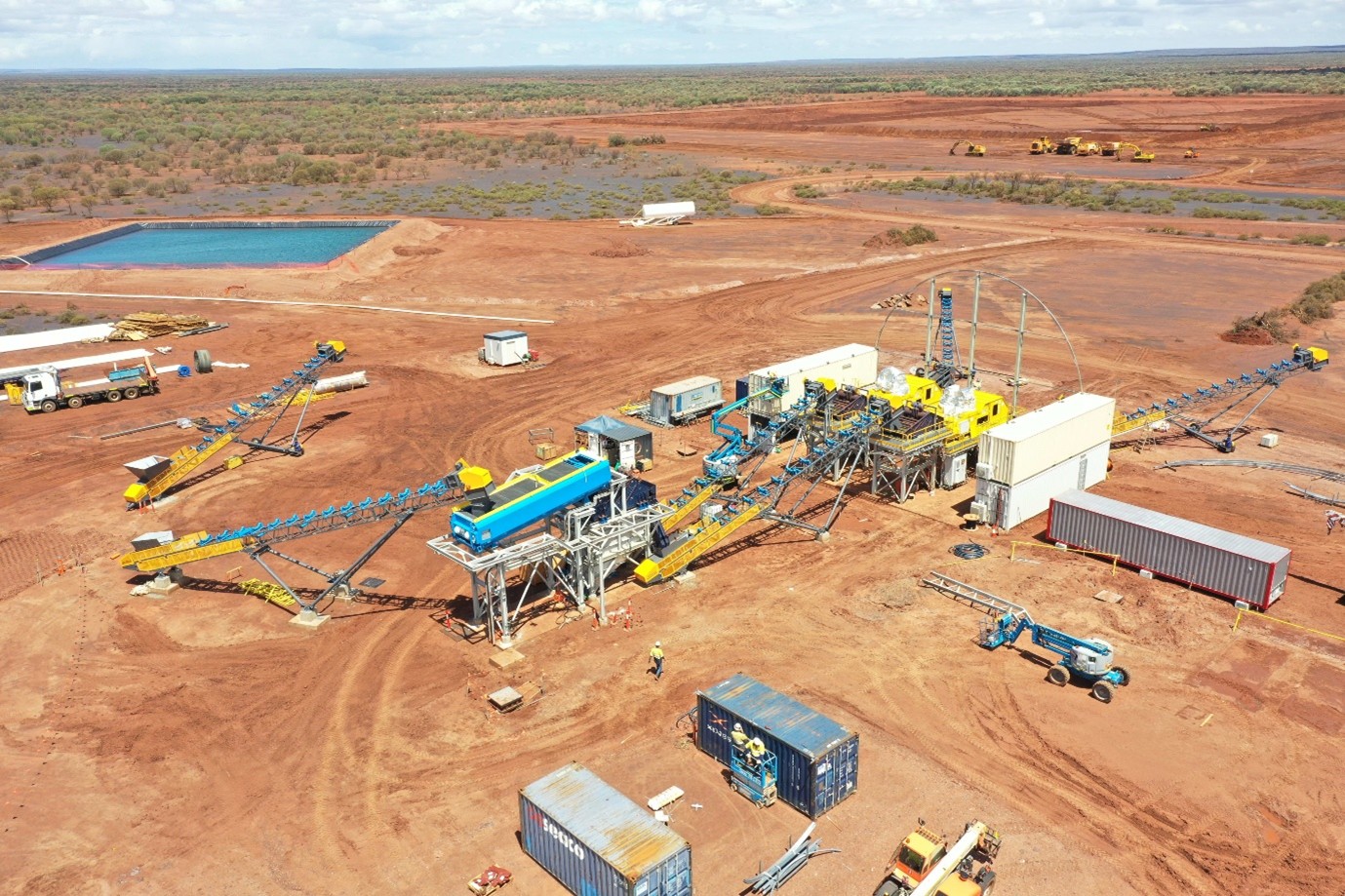
Two new buildings on a Cumbrian industrial estate could get the green light if the plans are approved next week.

The plans for two new buildings on a Cumbrian industrial estate (Image: ONE Environments via Cumberland Council planning application)

Two new buildings on a Cumbrian industrial estate could get the green light if the plans are approved this week.

Advertisement

Members of Cumberland Council’s planning committee are due to meet at The Civic Centre in Carlisle on Wednesday to consider the application for two sites at Leconfield Industrial Estate in Cleator Moor.

It is proposed that they would be for general industrial and ancillary office use with 6,356 square metres floorspace and associated car parking, hard and soft landscaping, infrastructure and biodiversity enhancements.

The planning application is being placed before the committee because the site exceeds two hectares in area.

It is recommended that members approve planning permission subject to planning conditions and agree a legal agreement to secure:

Advertisement
  • a Travel Plan monitoring fee of £6600;
  • a contribution of £74,032 towards the highway improvements at Moresby Road, Cleator Moor Road and Main Street; and
  • a contribution £30,039 towards the cost of junction improvement works at Cleator Moor Road and Overend Road.

According to the report Leconfield is an established industrial estate which comprises 17.6 hectares in area and is strategically located within Cleator Moor, between the town centre and the built-up area to the north-west.

It states: “It forms part of what is known as Cleator Moor Innovation Quarter (CMIQ), a ‘business cluster’ for the new nuclear and clean energy sectors, as a focus for collaboration, innovation and diversification.

“The estate currently accommodates some 20 industrial and warehouse units of varying sizes, a number of which are vacant.

“There are also several vacant or cleared plots. This established industrial estate has been in use since the 1940s and more recently has suffered from a period of decline.”

The application requests planning permission for two large buildings which will break down further into: Unit nine – four 658 square metre units, and Unit 12 – five 710 square metre units.

Advertisement

It adds: “The intention is for businesses to grow and move nearby within the wider estate into larger more self-contained accommodation. Plots nine and 12 will be ‘Grow On’ units and will cater for businesses in their growth stages and are sized accordingly.”

To find all the planning applications, traffic diversions, road layout changes, alcohol licence applications and more in your community, visit the Public Notices Portal.

Continue Reading

Business

Element 25 taps investors for $18m

Published

on

Element 25 taps investors for $18m

Osborne Park-based Element 25 has announced another capital raise in order to further expand its Butcherbird manganese project in the Pilbara.

Continue Reading

Business

Oil shock threat looms over Dalal Street rally

Published

on

Oil shock threat looms over Dalal Street rally
India’s stock indices and its currency face reversal risks from last week’s relief-inducing firmness after the US threatened to blockade the Hormuz Strait following the breakdown of peace talks between the US and Iran, spotlighting the fragility of a truce that dictates oil prices and capital allocation.

Last week’s stock market rebound—the best over a seven-day period since February 2021–hinges on the broad direction of oil prices in the aftermath of seemingly inconclusive talks in Islamabad, although Reuters cited shipping data to report the passage Saturday of three fully laden super-tankers through the Strait of Hormuz that accounts for a fourth of the global oil trade. “The market would see a gap down opening, though there should not be panic,” said Sham Chandak, head of institutional equities at Elios Financial Services.

“The market will take cues from oil prices, which are at the centre of this conflict.”

Last week, India’s equity indices climbed 6%, snapping a relentless six-week losing run, after the announcement of two-week truce. Oil slumped below $100 a barrel to $95.2 Friday, having climbed to nearly $120 in the immediate aftermath of the war.

Advertisement

For the currency, the bias would likely be weak, too. Stage-gated central bank curbs on speculative trading helped the rupee climb from record lows last week and those regulations could still provide the bulwark against a currency slide due to the oil prices, but the gains are expected to be capped if geopolitical concerns resurface.


The rupee’s upside may be capped in the 92.40/$ to 92.50/$ range in the absence of a further retreat in oil prices. On the downside, the central bank is expected to step up intervention around the 94.80/$ level, which is the currency’s record closing low.
‘TENTATIVE’
“Most avenues for speculative trades have been shut, so the market is now largely left with hedgers and market makers. That does make liquidity thinner, but at this point, stability is more important,” said Anindya Banerjee, head of commodity and currency, Kotak Securities.Banerjee expects meaningful intervention by the central bank at levels beyond 94.50/$, as these levels are psychologically very significant.

The rupee depreciated 10% in FY26, from 85.75/$ in April to close at 94.83/$ on March 31. The currency deprecated more than 4% in March alone, after the war started.

To curb the pace of deprecation, the Reserve Bank of India (RBI) came up with two back-to-back circulars on March 27 and April 1, restricting arbitrage trades between offshore and onshore markets.

“Currently, the ‘tweet risk’ outweighs traditional risk concerns. Despite talks of a ceasefire, the absence of a definitive agreement continues to sustain uncertainty,” said Kunal Sodhani, head of treasury at Shinhan Bank India. “This is evident in crude oil prices, which remain elevated in the $95–$100 per barrel range instead of easing meaningfully.”

Advertisement

‘ALL ISN’T LOST’
To be sure, market participants across asset classes expect the two-week time window to be fully utilised to hammer out a solution that is reasonably durable. “The market is cognisant of the fact that the current ceasefire expires on April 22. So there is still time for the parties involved to negotiate,” said Elios’ Chandak.

Some expect short sellers to return, pushing stock prices lower.

“The markets are expected to react negatively to the failure of talks and that is likely to imbue volatility,” said A Balasubramanian, managing director and CEO, Aditya Birla Sun Life AMC. “But typically, these dialogues involve a lot of back and forth and a strong outcome can’t be expected in a single day of talks.”

Advertisement
Continue Reading

Business

Wall St ends mixed as investors parse Iran negotiations

Published

on

Wall St ends mixed as investors parse Iran negotiations

US stocks have closed ‌mixed, with investors pressing pause as they headed into the weekend and kept an eye on ongoing Middle East peace negotiations.

Continue Reading

Business

Trump lashes out at Pope Leo over criticism of foreign policy

Published

on


Trump lashes out at Pope Leo over criticism of foreign policy

Continue Reading

Trending

Copyright © 2025