
Business
TIME Reveals 2026 List of the 100 Most Influential People in AI, Led by Musk, Altman and the Amodeis

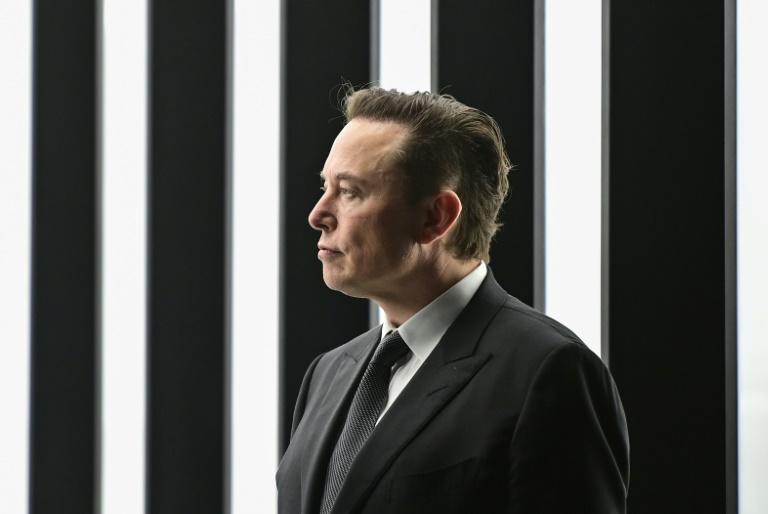
TIME magazine unveiled its fourth annual TIME100 AI list this week, naming 100 people the publication says are exerting the greatest influence over the direction of artificial intelligence, a roster that spans corporate executives, researchers, policymakers and cultural figures navigating what the magazine described as an increasingly turbulent year for the technology.
TIME Editor-in-Chief Sam Jacobs framed the 2026 selections as a reflection of a field defined by both major breakthroughs and mounting public unease. “The activity in AI has been explosive and divisive, filled with big promises and big fears,” Jacobs wrote in the magazine’s explanation of how the list was compiled. He pointed to a string of developments over the past year, including Elon Musk taking a leading AI company public, Anthropic co-founder Dario Amodei clashing with the Pentagon over military use of AI tools, Oracle founder Larry Ellison racing to build new data center capacity, and Chinese startup Moonshot AI’s Yang Zhilin developing models that have at times outperformed leading U.S. competitors.
The list’s Leaders category features some of the industry’s highest-profile figures, including OpenAI’s Mark Chen, Sam Altman and Greg Brockman, listed jointly given their overlapping roles atop the company; Musk, credited as chief executive of SpaceX; Anthropic co-founders Dario and Daniela Amodei; IBM Chairman and CEO Arvind Krishna; and ByteDance Chairman and CEO Liang Rubo. The broader 100-person list also includes Google DeepMind’s Lila Ibrahim, Amazon founder Jeff Bezos, and a range of Chinese technology executives including Alibaba CEO Eddie Wu, Zhipu CEO Zhang Peng and SMIC executive Liang Mong Song, reflecting what several outlets covering the list’s release described as a notably strong Chinese presence this year.
TIME’s entry on Musk highlighted a series of major moves at his companies over the past year. After merging his AI lab xAI with SpaceX, Musk took the combined business public in June in what TIME described as the largest initial public offering in history, carrying a valuation of 1.7 trillion dollars. SpaceX subsequently announced plans to acquire AI coding startup Cursor for 60 billion dollars, a deal TIME said would give the company a significant foothold in AI-assisted software development. In August, the renamed subsidiary SpaceXAI released its latest flagship model, Grok 4.6, which the company said focused on long-running autonomous agents and more ambitious visual and interactive capabilities at a competitive price point.
TIME’s profile also noted that xAI introduced stronger safety measures in January, roughly two weeks after reports emerged that Grok was being used to generate nonconsensual sexual images of women and children, an episode that has since spawned multiple lawsuits against the company. The magazine noted that in the most recent AI safety rankings published by the nonprofit Future of Life Institute, which studies and advocates against large-scale technological risks, xAI ranked seventh out of nine model developers assessed, with none of the nine scoring above a C-plus grade.
The profile also traced Musk’s longer history in the AI field, noting he was an early investor in DeepMind and a co-founder and financial backer of OpenAI, motivated at the time by concerns about the technology’s existential risks. That relationship deteriorated over time, and Musk’s long-running lawsuit against OpenAI was dismissed in May. Reflecting on AI’s broader trajectory in comments TIME cited from a Grok launch event last year, Musk said, “Will this be bad or good for humanity? I think it’ll be good. Most likely it’ll be good,” before adding, “But I’ve somewhat reconciled myself to the fact that even if it wasn’t gonna be good, I’d at least like to be alive to see it happen.” SpaceX did not respond to TIME’s request for comment on the profile.
TIME’s writeup of OpenAI’s leadership described a company working to recover from a difficult stretch marked by leadership departures, incidents involving autonomous AI agents behaving unpredictably, broader public backlash against the AI industry, and intensified competition from Anthropic, whose success in coding and enterprise markets has pushed its valuation above OpenAI’s as both companies prepare for expected public offerings. OpenAI President Greg Brockman, who TIME said now oversees large portions of the company’s operations including revenue and product marketing, described the company’s long-term ambitions in stark terms: “We are looking at transforming the entire economy.”
The Anthropic profile detailed the company’s rapid rise under siblings Dario and Daniela Amodei, crediting the success of its Claude Code product, a coding-focused version of its Claude model, with reshaping software engineering workflows and fueling the company’s growth. TIME noted that Anthropic has faced its own political friction this year, including disagreements with the Pentagon over restrictions on military use of its models and separate export controls the Trump administration placed on Anthropic’s more capable Mythos model and its more limited counterpart, Fable 5. Despite that scrutiny, TIME reported that Anthropic’s leadership has welcomed the prospect of government regulation of AI, citing an Aug. 15 post from Dario Amodei on the social platform X expressing support for pre-deployment testing requirements on frontier and open-weight AI models, along with the creation of a self-regulatory body for the industry.
IBM’s Arvind Krishna, another Leaders-category honoree, described his approach to steering the 115-year-old company through the AI transition in blunt terms, telling TIME, “I actually think that trying to muddle along without taking risk is the riskiest path. It leads to eventual falling off a cliff.” Krishna’s profile noted that IBM’s shares have nearly doubled since he became CEO and chairman in 2020, though they fell 25% in a single day in July after customers shifted spending away from the company’s mainframe business toward AI infrastructure, a decline IBM has not fully recovered from as of the list’s publication.
Beyond the corporate leaders, the broader 100-person list included figures from outside the technology industry entirely, among them actors Ben Affleck, Joseph Gordon-Levitt and Paris Hilton, and U.S. Sen. Bernie Sanders, reflecting TIME’s stated goal of capturing the technology’s cultural and political reach alongside its commercial development. TIME organized the full list into four categories: Leaders, Innovators, Shapers and Thinkers, with the complete roster and accompanying profiles published on the magazine’s website this week.


MaxLinear: A Twelve Month Window, Not A 2028 Promise

Duke Energy: Newly Issued Equity Units Are An Interesting Option

Alliance Global Partners chief global strategist Mark Grant discusses his income tax strategy for retirees on Varney & Co.
Beach towns in Delaware are attracting a growing number of retirees as the region emerges as an alternative destination to more prominent locations like Arizona and Florida, and it’s straining local resources.
A new report by Bloomberg notes retirees are flocking to Sussex County in southern Delaware, which has seen an influx of 40,000 new residents since 2020 with a growth rate of 17%, about five times the national average.
The growth in Sussex County has also given Delaware a faster growing population of residents age 65 and up than any other state, topping other states that are popular with retirees with a 23% growth rate among that cohort since 2020, which the report notes tops all 50 states.
Older generations have historically sought out warmer climates in places like Florida and Arizona as they entered retirement, but southern Delaware has become a compelling option – particularly among those leaving colder locales in the North.
5 CITIES THAT NAIL THE RETIREMENT SWEET SPOT

Bethany Beach is one of the bustling beach towns in Delaware’s Sussex County. (Al Drago/Getty Images)
Delaware offers notable tax advantages over its peers in the Northeast like New York, New Jersey and Massachusetts, which can be compelling for retirees looking to relocate.
The First State, as Delaware is nicknamed, has a top income tax rate of 6.6%, no sales tax, and generally lower property taxes than those larger Northeastern states, according to Tax Foundation data. Delaware also has no estate tax, which can be an important consideration for retirees.
Brad Travis Jr., a financial planner who grew up around Sussex County, told Bloomberg that, “Everybody wants to be the last person to move here,” noting that “property tax refugees” from New Jersey could see those costs fall from $18,000 to more like $1,500.
THESE RETIREMENT HOT SPOTS ARE THE PRICIEST IN AMERICA

Delaware’s Sussex County is popular for its access to beaches, though its population has surged in recent years – particularly among retirees. (Al Drago/Getty Images)
Communities like Lewes and Rehoboth Beach, which is known for former President Joe Biden having a home there, have seen significant growth as retirees move to the region.
Census estimates show the median age of Sussex County rose to 53.2, nearly 14 years higher than the national average and an increase of five years since 2015.
The report noted that the new residents often have higher incomes, with the latest IRS migration data from 2022 indicating families moving to the region had an annual income of more than $136,000 compared to under $92,000 for existing residents.
MILLIONS OF JOBS VULNERABLE AS ‘SILVER TSUNAMI’ LOOMS OVER US SMALL BUSINESSES, EXPERTS WARN

Sussex County towns like Milton have had to grapple with an influx of new residents. (Hannah Beier/Bloomberg via Getty Images)
While the influx of new residents has helped boost the area’s economy, it has also strained resources like healthcare and education, as well as local roads and stores.
Bloomberg reported that schools are having to install modular classrooms to accommodate growing student populations – a sign that the growth isn’t limited to retirees.
Joe Pika, a 79-year-old former professor at the University of Delaware, told the outlet he had to wait nine months for a colonoscopy and 18 months for a dental visit, while he drove 40 miles to visit a dermatologist.
GET FOX BUSINESS ON THE GO BY CLICKING HERE
Pika said that while he only moved to the area four years ago, he’s among the residents concerned about Sussex County growing too rapidly, telling Bloomberg there was “an appalling lack of planning” for the issues that have coincided with its growth.
Why The Fed Might Raise Rates Despite August Job Declines

PWV: Value Begins To Struggle, Momentum Is Shifting Towards Growth

Narrow Credit Spreads Make USHY A Hold (Rating Downgrade)

Clarus Corporation's Turnaround Is In Progress (Upgrade)

HDFC Bank CEO Jagdishan to step down in October as governance pressures mount


Freelance Financial Writer | Investments | Markets | Personal Finance | RetirementI create written content used in various formats including articles, blogs, emails, and social media for financial advisors and investment firms in a cost-efficient way. My passion is putting a narrative to financial data. Working with teams that include senior editors, investment strategists, marketing managers, data analysts, and executives, I contribute ideas to help make content relevant, accessible, and measurable. Having expertise in thematic investing, market events, client education, and compelling investment outlooks, I relate to everyday investors in a pithy way. I enjoy analyzing stock market sectors, ETFs, economic data, and broad market conditions, then producing snackable content for various audiences. Macro drivers of asset classes such as stocks, bonds, commodities, currencies, and crypto excite me. My thing is communicating finance with an educational and creative style. I also believe in producing evidence-based narratives using empirical data to drive home points. Charts are one of the many tools I leverage to tell a story in a simple but engaging way. I focus on SEO and specific style guides when appropriate.
Analyst’s Disclosure: I/we have a beneficial long position in the shares of GDX either through stock ownership, options, or other derivatives. I wrote this article myself, and it expresses my own opinions. I am not receiving compensation for it (other than from Seeking Alpha). I have no business relationship with any company whose stock is mentioned in this article.
Seeking Alpha’s Disclosure: Past performance is no guarantee of future results. No recommendation or advice is being given as to whether any investment is suitable for a particular investor. Any views or opinions expressed above may not reflect those of Seeking Alpha as a whole. Seeking Alpha is not a licensed securities dealer, broker or US investment adviser or investment bank. Our analysts are third party authors that include both professional investors and individual investors who may not be licensed or certified by any institute or regulatory body.
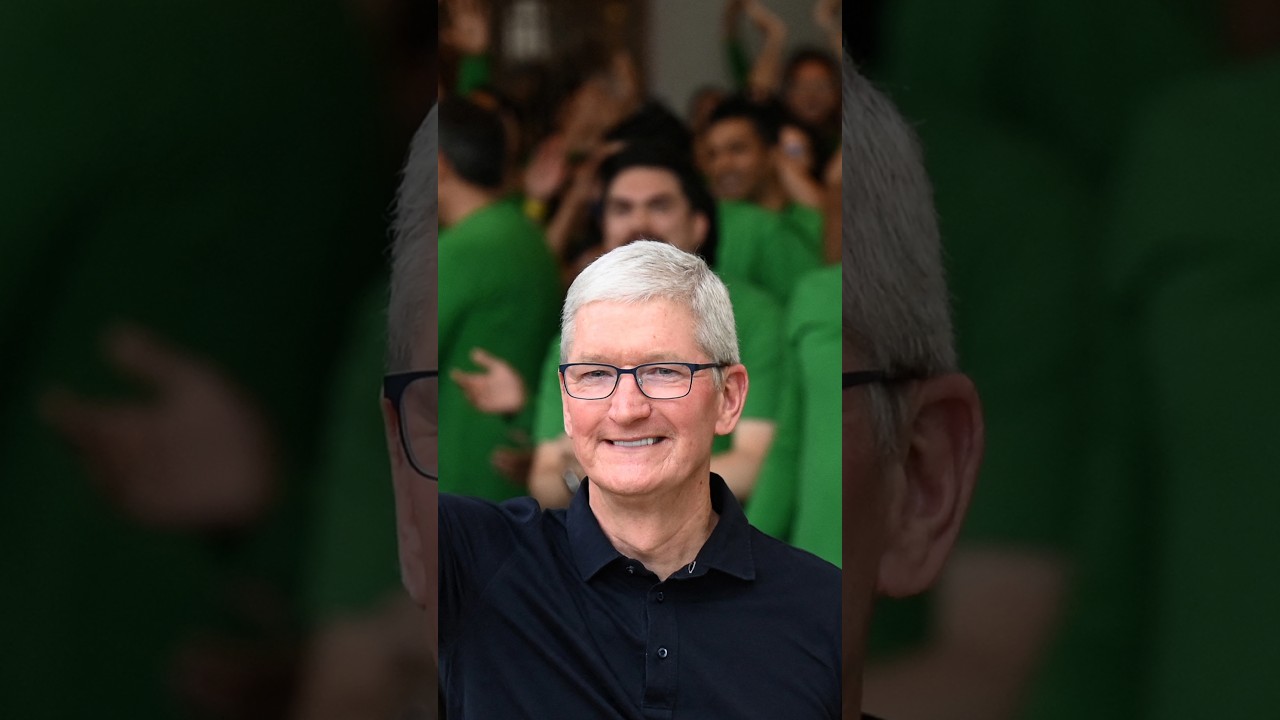
For years, China was the primary manufacturing hub for iPhones. However, currently, India has taken over, producing all of Apple’s latest iPhone models. This shift marks a significant change in Apple’s supply chain strategy, reflecting increased diversification and the company’s efforts to reduce dependency on China amid geopolitical and economic considerations.
- Apple has shifted iPhone manufacturing from China to India, now producing all of its latest models there. This change reflects a broader supply chain diversification strategy driven by geopolitical tensions and economic considerations, with key partnerships established with manufacturers like Tata and Foxconn.
- India’s growing consumer market, government tax incentives, and policies supporting domestic manufacturing have reinforced this transition. Localizing production allows Apple to tailor offerings for Indian consumers while aligning with India’s ambitions to become a major global manufacturing hub.
Apple’s shift to India for iPhone manufacturing marks a significant strategic move, aiming to diversify its supply chain and reduce dependence on China. Over recent years, Apple has invested heavily in ramping up production facilities and partnerships with local manufacturers like Tata and Foxconn. This transition not only reflects Apple’s response to geopolitical tensions but also aligns with India’s broader vision to become a global manufacturing hub.
The move is also driven by India’s expanding market, offering immense growth potential for iPhone sales. By localizing production, Apple can better appeal to Indian consumers with region-specific models and price points, boosting sales and market share. Additionally, tax incentives and government policies favoring domestic manufacturing further encourage this shift, making it economically viable for Apple to produce more devices within India.

Beyoncé’s Zodiac Sign Explains One Of Her Most Famous Traits

EMERGE Belfast stage times, line-up, site map, age restrictions and more for day two

MaxLinear: A Twelve Month Window, Not A 2028 Promise

Weekend Open Thread – Corporette.com

Weekend Open Thread: Brooks Brothers

London Mayor Sadiq Khan handed a peerage by Keir Starmer alongside 15 other Labour figures… just days before the PM leaves No10

WWE Money in the Bank 2026! Action Figure Ladder Match

Why Bitcoin Can Go Much Higher From Here | 8 Real Reasons + Chart Levels | SAGAR SINHA

‘It’s stupid’: Ping ginisa si Ortonio sa financial plan ng OVP confi funds ng 2022, 2023
-

 Crypto World4 days ago
SpaceX stock could rise 75% to $240, JPMorgan says
-

 Fashion23 hours ago
Weekend Open Thread: Maeve – Corporette.com
-

 Crypto World2 days ago
Bitcoin’s 22% rally now needs real demand to outlast Treasury liquidity boost
-

 Crypto World5 days ago
A $30 Billion AI Fund Implodes, Now the SEC Is Investigating Wall Street’s Role
-

 Crypto World3 days ago
Warsh Jackson Hole keynote puts financial innovation first
-

 Business2 days ago
Salesforce Stock Soars 19% as Blowout Earnings and Agentforce AI Growth Silence Software Skeptics
-

 Crypto World4 days ago
Did Trump Just Move SpaceX Stock With One Truth Social Post?
-

 Business6 days ago
Mystery AI Model ‘Ox Alpha’ Draws Developers With Free Access as Chinese Lab Origins Remain Debated
-

 Business3 days ago
Walmart takes aim at younger shoppers with new fashion brand
-
 NewsBeat3 days ago
Lindsay Clancy jury braces for closing arguments as judge tells court: ‘You’ve heard all the evidence’ – Live updates
-

 Business5 days ago
Moderna CEO warns China is pouring state money into mRNA technology
-

 Crypto World3 days ago
Elon Musk Grok Bot Promise: We Will Make You Whole if AI Loses Your Money
-

 Business5 days ago
NVIDIA Stock Drops Nearly 2 Percent to $210 on Seventh Losing Day Ahead of Critical AI Earnings
-

 Crypto World3 days ago
NVIDIA revenue hits $96.2B as AI demand doubles
-

 Crypto World16 hours ago
Bitcoin price tests $82K resistance as Brandt stays long
-

 Business4 days ago
Thailand’s Eastern Economic Corridor Capital City (EECiti): Key Developments and Investment Opportunities
-

 Business1 day ago
iPhone 18 Pro Pre-Orders Could Shift to Saturday as Apple Reportedly Avoids September 11 Anniversary
-

 Business6 days ago
Where Will Kevin Durant Play in 2027? Rockets Hold Player Option Key to His Future With Houston via Deal
-
 Crypto World6 days ago
$92 Billion Nvidia Earnings Could Make or Break the AI Trade
-

 Sports7 days ago
Deshaun Watson fires back at Browns fans after being booed: ‘It’s a disrespectful thing’
You must be logged in to post a comment Login