

Connect with us

Business

Tower Semiconductor: Silicon Photonics Inflection, Buy The Drawdown

Published

on

Tower Semiconductor: Silicon Photonics Inflection, Buy The Drawdown
Continue Reading
Click to comment

You must be logged in to post a comment Login

Leave a Reply

Business

HDFC Bank shares after Jagdishan: What lies ahead for the country’s largest private lender?

Published

on

HDFC Bank shares after Jagdishan: What lies ahead for the country’s largest private lender?
Private sector lender HDFC Bank is set for a leadership change as Sashidhar Jagdishan prepares to retire as managing director and CEO at the end of his current term on October 26, 2026. For investors, the transition comes after nearly six years during which the bank completed its landmark merger with HDFC Ltd, while its shares struggled to regain the levels seen when Jagdishan took charge.

With Jagdishan set to retire at the end of October, the focus now shifts to his successor, the bank’s growth trajectory and the factors that could influence the stock going forward.

The key questions for investors include the pace at which HDFC Bank can improve its deposit mobilisation, restore margins and manage the balance sheet following the HDFC Ltd merger, alongside its ability to deliver stronger growth.

Anand Dama, Anant Dumbhare, Yuval Aiya and Manav Mehta, analysts at Nuvama Institutional Equities, believe Jagdishan’s resignation could be a cleaner outcome for the bank, as securing a further term from the RBI may have been difficult amid the recent operational and governance lapses.

Advertisement

The development also gives the board more time to identify a successor, according to Nuvama. The brokerage said Mr Bharucha, the bank’s deputy managing director (DMD), could emerge as a pragmatic short-term transition candidate for around two years, given the RBI’s 15-year cap on board tenure, while an internal or external successor is groomed.


Alternatively, HDFC Bank could appoint a credible external candidate as MD & CEO for a full three-year term. However, Nuvama said such a process could take five to six months and prolong the uncertainty around the leadership transition.
Nuvama expects near-term weakness in the stock until greater clarity emerges on succession. The brokerage has retained its ‘BUY’ rating on HDFC Bank but cut its target price to ₹875 from ₹1,025, citing the stock’s steady de-rating over the past year.The revised target price is based on 1.6 times estimated September 2028 standalone bank adjusted book value (ABV), along with subsidiary valuation of ₹127. Nuvama noted that the stock was trading at around 1.3 times September 2028E ABV, which it considers inexpensive for a franchise of HDFC Bank’s strength.

“The stock has seen steady de-rating for a year and could remain weak until the board provides clarity on a credible successor,” the Nuvama analysts said.

However, they do not view the CEO’s exit as a fundamental impairment to HDFC Bank’s otherwise strong franchise and recovery story following the difficult merger with HDFC Ltd.

A credible internal transition led by Mr Bharucha could accelerate business normalisation, Nuvama said, while a strong external appointment could take longer but potentially provide a broader governance reset and scope for a longer-term re-rating, similar to the experience of IndusInd Bank.

Advertisement

Ishank Gupta, analyst, Banking and Financial Services, Choice Institutional Equities, said the leadership transition comes after an unsettled period for the lender, with the CEO’s decision not to seek a third term adding another layer of uncertainty for investors.

“It has been an unsettled twelve months at India’s largest private sector lender, and Saturday’s announcement that CEO Sashidhar Jagdishan will not seek a third term closes it on an uncomfortable note,” Gupta said.

The governance shocks

The year turned in March, when part-time chairman Atanu Chakraborty resigned with immediate effect, stating that certain practices at the bank were not in congruence with his personal values and ethics. The stock shed close to seven billion dollars in market value, and the Reserve Bank of India publicly affirmed the bank as well governed.

Two days later, three senior executives were dismissed after an internal probe into the alleged mis-selling of Credit Suisse Additional Tier-1 bonds to non-resident clients through the Dubai and Bahrain operations. The Dubai Financial Services Authority had already barred the DIFC branch from onboarding new clients.

Advertisement

A separate vigilance review examined an alleged ₹0.5 crore payment to MSRDC linked to a government deposit. Both matters have since been closed, and two external law firms found no evidence to substantiate the chairman’s concerns.

A clean sweep of the top three seats

Rajiv Kumar, former finance secretary and chief election commissioner, was named part-time chairman in June. Puneet Sharma, who spent more than six years as CFO of Axis Bank, joins as CFO-designate on September 1 and takes charge on December 1, succeeding the retiring Srinivasan Vaidyanathan.

The chief executive’s chair is now the third to change hands inside a single year, and the only one without a named successor.

Why the CEO exit matters most

CEO Jagdishan had said in March that he had never contemplated stepping away, and the board has confirmed he declined despite its efforts to persuade him.

Advertisement

That reversal matters more than the exit itself. The board must now put names before the RBI and secure approval within eight weeks, against a norm of six months.

Leadership uncertainty of this nature has historically attracted a valuation discount at Indian banks until a successor is confirmed, and the counterparty on the other side of that adjustment is usually the incumbent shareholder.

Big shoes to fill

The incoming management must complete the post-merger transition, restore the growth trajectory the bank has deferred while repairing its credit-deposit ratio, and above all return a settled sense of stability to a franchise that has traded on precisely that quality for three decades.

The succession process will therefore be critical not only for determining who leads HDFC Bank, but also for shaping how investors assess the bank’s valuation and recovery prospects.

Advertisement

(Disclaimer: Recommendations, suggestions, views and opinions given by the experts are their own. These do not represent the views of Economic Times)

Continue Reading

Business

How to fix the huge underfunding of rail in Wales

Published

on

Business Live

Architect of the South Wales Metro rail project Professor Mark Barry of Cardiff University on addressing rail underfunding in Wales

buildings visible in the distance.

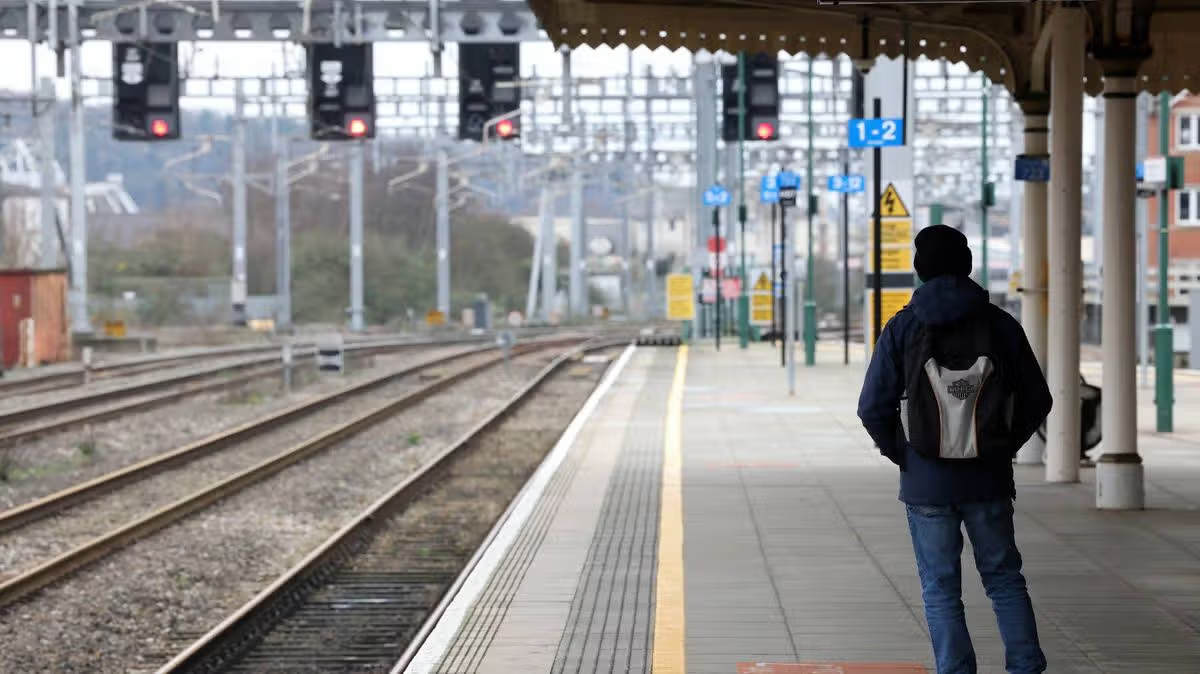
Andy Burnham has to address underfunding of rail in Wales.(Image: WalesOnline/Rob Browne)

Some £94bn was invested in rail enhancements across Great Britain in the period 2009 to 2025.

Of that total, some £44bn was for HS2, while UK Government rail enhancement expenditure in Wales was just circa £1.2bn – a meagre 1.3%.

Advertisement

While rail is not devolved, to get projects realised, the Welsh Government funded £1.4bn – more than the UK Government total – giving a £2.6bn of rail enhancements in Wales over that 16-year period.

So, in effect the Welsh Government has had to use funding meant for health, education to make up the UK Government shortfall.

Had Wales received just a 5% population share – an a more equitable settlement may need to be higher for good reason – then we would have seen circa £3.4bn more from the UK Government over that 16-year period and receiving an additional £200m per financial year.

Under the current arrangements this funding dysfunction is set to persist, with an estimated £80bn to £120bn of rail enhancements likely in England for the period from 2025 to 2040.

Advertisement

To note, the £14bn of political commitments to further rail investment in Wales, while welcomed, is just that – a political statement. The UK Government Treasury in the last spending review, allocated just £300m to Wales versus £34bn for England. The next comprehensive spending review will be the acid test.

For me, this constitutional dysfunction is undefendable and needs to be addressed.

So, should we devolve rail?

Clearly, we have a problem. The systemic underfunding has had and continues to have, a very substantive impact on Welsh Government finances. However, as I am sure previous Welsh Government ministers have found, Wales has limited leverage in any negotiations with Treasury and the Department for Transport ( DfT). Furthermore, in my view, any deal has to go beyond just a 5% population share.

Advertisement

One key point I also like to restate, and this often gets lost in translation, the current unfair funding position, via the Barnett Formula – is not just about HS2, butrail funding. The way Barnett works currently (and this could be changed) means that just focusing on HS2 undercooks the amount of underspend in Wales very significantly as making HS2 “England only” will only change the comparability factor from 33% to about 52%.

A previous letter from Mark Drakeford on this matter showed a £431m gap (for the period 2016/17-2024/25) if HS2 was defined as “England only” under the current non-devolved arrangements. However, this figure would be circa £1.5bn if rail was fully devolved. Furthermore, Barnett allocations have also been squeezed given HS2 has also resulted in reductions elsewhere in the DfT budget, reducing the scale of Barnett adjustments in any case.

What happens if rail is devolved and what are the key issues to address?

If, as it should, rail is fully devolved, then any future changes to the DfT budget could be subject to a more equitable Barnett adjustment and a 90% plus Barnett comparability figure. In so doing, the more challenging issue is how the block grant should be adjusted to reflect these new devolved powers. How should it be calculated?

Advertisement

And how does this impact future Barnett adjustments? This does not necessarily need to be related to the population, other factors are relevant, for example: The Wales and Borders Route is circa 10% of the UK rail network (and circa 8% of the track) and includes some sections in England (Marches Line, Severn Tunnel).

Should the Severn Tunnel be included? This a piece of UK strategic cross-border infrastructure that may merit different treatment.

The Network Rail (NR)Wales and Borders Route has supported the UK economy for 200 years.

Its condition, one might argue, is more depreciated than other parts of the UK network, and that depreciation has been built up over those 200 years – not the last 25 since devolution.

Advertisement

It is more exposed to unsighted issues and liabilities and to the need to mitigate climate change impact. For example, it is understood that on the CVL, rain intensity measurements (which are monitored) have already exceed expectations for 2040 in 2025. Rainfall intensity and the susceptibility to unsighted issues is an increasing challenge – and one with ongoing costs implications.

Based on this, it could be argued 5% of UK expenditure may not be a sufficient basis to calculate a block grant adjustment; rather it may form the baseline for a more protracted and bespoke negotiation.

Just looking at the comprehensive spending review publications last year and combining the committed annual expenditure to HS2 and NR, one can see a total of £23bn. With a 5% allocation for Wales and an adjustment to the block grant would be circa £1.1bn per annum, while 10% would be circa £2.3bn.

Wales is supposed to be part of an equitable union where more nuance can and should be applied in situations like this.

Advertisement

Also, if Welsh Government did take full responsibility for rail it would have to fund not only the full costs and enhancement to the Core Valley Lines (CVL) and Wales and Borders Route, but operations, maintenance and renewal (OMR). OMR for the Core Valley Lines and NR Wales and Borders Route is currently £400-500m per year. One might include the entire Marches line given its strategic importance to Wales and the reality that Welsh Government are much more likely to invest to enhance the Marches line than the DfT. If I was living in Shrewsbury or Hereford, I would get behind this.

GB Railways

The UK Rail industry and ecosystem is going through its biggest upheaval in 30 years as part of the GB Railways Bill. This is a generational opportunity to get it right. However, that bill falls a long way short of what Wales needs.

The bill needs a radical overhaul and include the full devolution of rail powers and funding to Welsh Government (and a NR Wales and Borders organisation subordinate to and eventually to merge with, Transport for Wales to create a vertically integrated organisation like GBR in England). This needs to be accompanied by a block grant adjustment and bespoke Barnett arrangement (or ideally a new funding mechanism) that reflects and accommodates the considerations I set out above

Advertisement

An interim alternative to a fully devolved settlement would be for Welsh Government to agree with the UK Government a dedicated line in the DfT budget for Wales rail enhancements (separate from the current England and Wales rail network enhancement programme) that is more proportional and transparent, which is not the case currently. A minimum of £450m a year is a reasonable ask, which is circa 5% of the current annual enhancement total (circa £9bn to10nn) across Great Britain.

The Welsh Government is making the case for a fair funding deal. If new Prime Minister Andy Burnham is serious about constitutional reform, and taking power out of Whitehall, this should be centre stage for his new government. If not, then he will rightly be accused of engaging in performative politics.

So, show us what you are about Andy and let’s fix it once and for all.
Advertisement
Continue Reading

Business

Aussie shares slip, but round out fifth positive month

Published

on

Shares break losing streak but banking slump continues

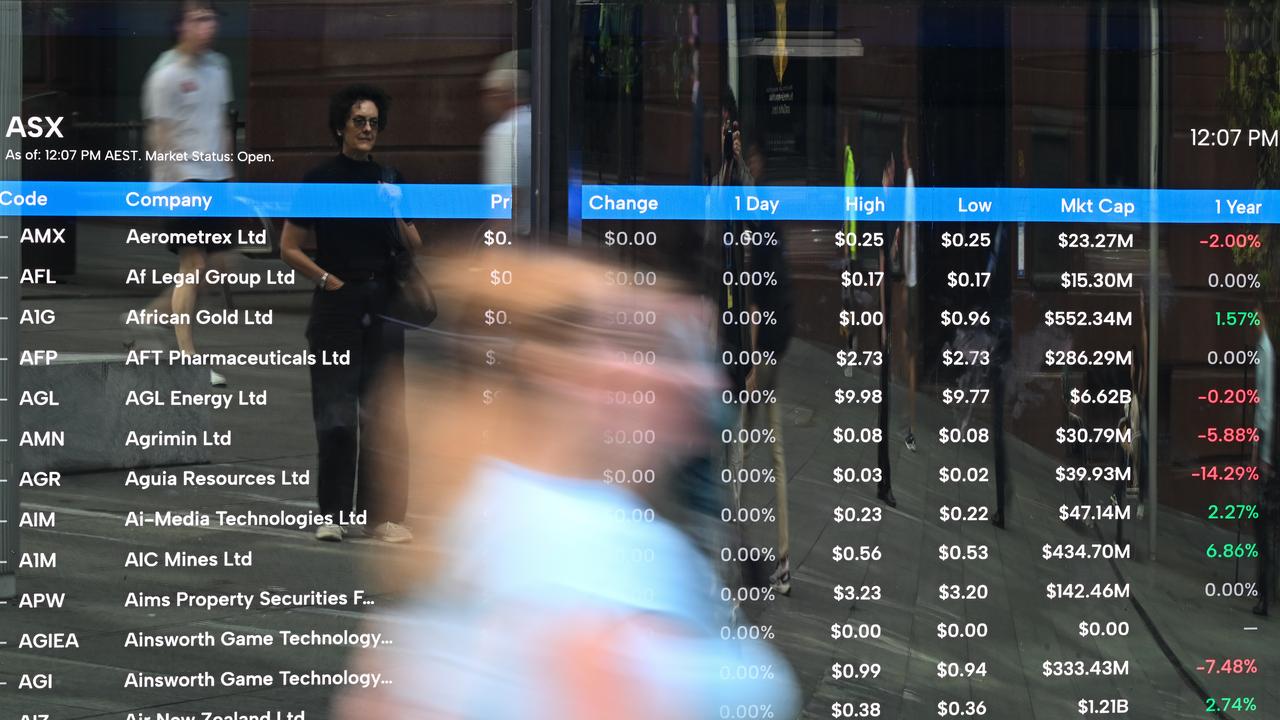
Australia’s share market has started the week lower, but snatched a fifth straight calendar month of gains to cap off a broadly positive earnings season.

Continue Reading

Business

Manhattan rental market is booming, with $100,000-a-month apartments

Published

on

Manhattan rental market is booming, with $100,000-a-month apartments

A luxury home in Tribeca that is being offered privately for rent at $175,000 a month.

Credit: Laura Klein, Bespoke Real Estate

A version of this article first appeared in CNBC’s Inside Wealth newsletter with Robert Frank, a weekly guide to the high-net-worth investor and consumer. Sign up to receive future editions, straight to your inbox.

Advertisement

A surge in wealthy renters is driving Manhattan rents to new records, according to brokers.

Median rents in Manhattan reached an all-time high of $5,000 a month in July, according to the Real Deal Report, authored by Jonathan Miller, director of markets for Street Matrix. The average rent jumped 15% compared with a year ago, to $6,306.

Wealthy renters are driving most of the growth. The average price for luxury rentals — the top 10% of the market — jumped 35% over the past year, to $17,464 a month, according to the Real Deal Report. Luxury rentals are now fetching an average of $121 per square foot.

Typically, renters are those who can’t yet afford to buy. In today’s market, ultra-wealthy New Yorkers who have plenty of cash to buy are choosing to rent. A record low supply of high-end properties for sale has led many to wait in a rental until they find their dream home. Others are spooked by falling or flat prices for Manhattan resales, which make apartments less attractive as investments.

Advertisement

“These are people who can easily afford $20 million, $50 million trophy homes,” said Laura Klein of Bespoke Real Estate, who recently brokered a rental for a penthouse in Chelsea for $177,000 a month. “There is so little inventory. And they don’t want to compromise.”

A luxury home in Tribeca that is being offered privately for rent at $175,000 a month.

Credit: Laura Klein, Bespoke Real Estate

Other brokers said New York’s new pied-a-terre tax on high-value second homes has caused many wealthy would-be buyers to rent instead.

Advertisement

“The sharp increase in rentals following the pied-a-terre tax announcement suggests that some prospective purchasers may already be choosing flexibility over ownership,” said Pam Liebman, president and CEO of The Corcoran Group.

The rush of wealthy New Yorkers into the rental market has created a new market for mega-rentals. The number of apartments renting for more than $50,000 a month so far this year has more than doubled compared with 2025, while the number renting for more than $100,000 a month is up sevenfold, according to The Real Deal.

Klein said none of the ultra-high-end rentals are publicly listed and are instead offered quietly to wealthy clients through a small network of high-end brokers. She currently has a rental for $175,000 a month in Tribeca, as well as one for $95,000 a month on the Upper East Side.

“The $100,000-a-month number is almost normal now,” Klein said. “These are renters who want turnkey, unique, trophy properties.”

Advertisement

She said owners of the luxury rentals don’t need the income but are opportunistic given demand.

“They say to me, ‘If the number is right, I’ll rent.’ These are properties that if they were on the market would be listed for tens of millions” of dollars, she said.

Get Inside Wealth directly to your inbox

Choose CNBC as your preferred source on Google and never miss a moment from the most trusted name in business news.
Continue Reading

Business

Hindustan Zinc, Vedanta, Nalco and other metal stocks slide up to 5%. Here’s why

Published

on

Hindustan Zinc, Vedanta, Nalco and other metal stocks slide up to 5%. Here's why
Metal stocks came under heavy selling pressure on Monday, with the Nifty Metal index falling more than 2% and emerging as the worst-performing sectoral index.

Hindustan Zinc led the losses, with its shares declining around 5%, while Vedanta and National Aluminium Company (NALCO) fell nearly 4% each. Hindalco dropped 3%, while Tata Steel, Adani Enterprises, Jindal Stainless Steel, JSW Steel, NMDC, Welspun Corp and other metal stocks declined up to 2%.

Why are metal stocks falling today?

The sharp fall in metal stocks comes amid a decline in metal prices, following US Federal Reserve Chair Kevin Warsh’s speech signalling that further interest rate hikes may be needed. On Friday, Warsh said the US central bank would “have work to do” if policymakers do not gain the confidence needed to ensure inflation is heading towards the 2% target.

Advertisement

Markets ⁠currently see a 57% chance of a rate hike at the Fed’s next policy meeting in September, against 36% before Warsh’s comments, according to the CME FedWatch tool.

Aluminium, copper and other metals declined as expectations of higher-for-longer US interest rates outweighed supply concerns that had earlier supported a monthly rise in August.


The sharp drop in metal stocks may also have been driven by profit booking. Nifty Metal index sharply surged more than 6% in August so far, outperforming major sectoral indices, amid supply concerns.
Also read | Hindustan Zinc vs Hindalco: Why Jefferies raised target prices for both, but prefers one over the other

Jefferies on metal stocks

In its latest note, Jefferies noted that the recent divergence in metal prices has favourable earnings implications for Hindustan Zinc while weighing on Hindalco. Spot zinc prices have risen 15% over their Q1 averages, while silver has recovered 23% from July lows. The international brokerage remains constructive on precious metals, believing that the implications of widening fiscal deficits, elevated debt levels, and ongoing currency debasement remain underappreciated. It raised silver price assumptions to $60-63, still 8-14% below spot, suggesting further potential upside to earnings if spot prices persist.

In comparison, aluminium prices are 10% below their June-quarter average, Jefferies noted. While supply disruptions in the Middle East led to a 4% YoY decline in global production in the first half of 2026, a 2% increase in Chinese output largely offset the decline, keeping global production broadly stable.

Advertisement

Supply availability could improve in the coming months if the disrupted Middle East capacity gradually returns, with Emirates Global Aluminium (EGA) targeting normal production by the first quarter of 2027 and Aluminium Bahrain (ALBA) indicating repairs are largely complete, Jefferies noted, as it raised its FY27-28 aluminium price assumptions to $3,300-3,325, still 3-4% above spot.

Jefferies remains bullish on Hindustan Zinc shares, raising its target price because it believes zinc and silver are shining brighter than aluminium. The international brokerage hiked its target price for Hindustan Zinc shares to Rs 750 apiece, while maintaining its ‘Buy’ call on the stock.

Jefferies also raised its target price for Hindalco Industries to Rs 1,140 apiece, but has a ‘Hold’ call on the stock. The international brokerage prefers Hindustan Zinc shares over those of Hindalco Industries.

Also read |Metal stocks: Time to contradict analyst expectations? 5 metal stocks with upside potential from a low 2% to a high of 17%

Advertisement

(With inputs from agencies)

(Disclaimer: Recommendations, suggestions, views and opinions given by the experts are their own. These do not represent the views of The Economic Times)

Continue Reading

Business

P/F Bakkafrost 2026 Q2 – Results – Earnings Call Presentation (OTCMKTS:BKFKY) 2026-08-31

Published

on

OneWater Marine Inc. (ONEW) Q1 2026 Earnings Call Transcript

This article was written by

Seeking Alpha’s transcripts team is responsible for the development of all of our transcript-related projects. We currently publish thousands of quarterly earnings calls per quarter on our site and are continuing to grow and expand our coverage. The purpose of this profile is to allow us to share with our readers new transcript-related developments. Thanks, SA Transcripts Team

Continue Reading

Business

Energy Transfer: August Insider Purchases Signal Price Breakout (NYSE:ET)

Published

on

Energy Transfer: August Insider Purchases Signal Price Breakout (NYSE:ET)

This article was written by

Envision Research, aka Lucas Ma, has over 20+ years of investment experience and holds a Masters with in Quantitative Investment and a PhD in Mechanical Engineering with a focus on renewable energy, both from Stanford University. He also has 30+ years of hands-on experience in high-tech R&D and consulting, housing sector, credit sector, and actual portfolio management.He leads the investing group Envision Early Retirement along with Sensor Unlimited where they offer proven solutions to generate both high income and high growth with isolated risks through dynamic asset allocation. Features include: two model portfolios – one for short-term survival/withdrawal and one for aggressive long-term growth, direct access via chat to discuss ideas, monthly updates on all holdings, tax discussions, and ticker critiques by request.

Analyst’s Disclosure: I/we have a beneficial long position in the shares of EPD either through stock ownership, options, or other derivatives. I wrote this article myself, and it expresses my own opinions. I am not receiving compensation for it (other than from Seeking Alpha). I have no business relationship with any company whose stock is mentioned in this article.

Seeking Alpha’s Disclosure: Past performance is no guarantee of future results. No recommendation or advice is being given as to whether any investment is suitable for a particular investor. Any views or opinions expressed above may not reflect those of Seeking Alpha as a whole. Seeking Alpha is not a licensed securities dealer, broker or US investment adviser or investment bank. Our analysts are third party authors that include both professional investors and individual investors who may not be licensed or certified by any institute or regulatory body.

Advertisement
Continue Reading

Business

Kevin Durant Reveals He and LeBron James Recorded Three Unreleased Rap Songs Together in Akron Years Ago

Published

on

Kevin Durant

Kevin Durant revealed this week that he and LeBron James recorded roughly three rap songs together during a recording session in Akron, Ohio, more than a decade ago, adding a new layer to a friendship already well documented on the basketball court.

Durant made the revelation during an appearance on the “Boardroom Talks” podcast with host Speedy Morman, released Thursday. When Morman asked whether it was true that Durant and James had a song together, Durant corrected the premise entirely. “We had like three songs, I think,” Durant said. “Me and Rich Paul really were the ones that got it going and convinced Bron to rap.”

According to Durant, the recording sessions took place around 2011, when he traveled to James’ hometown of Akron to work out with him over a period of four to five days. “I went to Akron, like, 2011 to work out with him for, like, four or five days,” Durant said. “And then he had a studio, ’cause Rich Paul — me and Rich Paul really was the ones that got it going and convinced Bron to rap.” Durant explained that his relationship with Paul, James’ longtime agent and the founder of the sports agency Klutch Sports, predated his connection to James, noting that Paul had been courting him as a client around the same period.

Durant described James as initially hesitant to step into the recording booth, but said he ultimately embraced the experience once he found his footing. “Any time somebody does something for the first few times, it’s forced, a little forced,” Durant said. “Once you get that flow, he had to figure it out. He loved rap.”

Advertisement

One of the pair’s collaborations did eventually reach the public. The track “It Ain’t Easy,” recorded during the 2011 NBA lockout while James played for the Miami Heat and Durant led the Oklahoma City Thunder, featured both players rapping about their respective paths from difficult upbringings to NBA stardom. The song remained unreleased for years before producer Franky Wahoo put it out publicly in 2018, though Durant said the version that surfaced used a different beat than the original recording. “They changed the beat, and it just made the song even more wack,” Durant said, according to Heavy.com’s account of the podcast.

Durant said he does not personally have access to the two other tracks he and James recorded and is uncertain whether the original files still exist. “That’s a good question,” Durant said when asked where the songs are now. “They’re in that studio in Akron. Somebody out there, engineer somebody, got them.”

The revelation adds a lighter footnote to a notable year for James, who is entering a new chapter of his NBA career after signing with the Philadelphia 76ers this offseason following his departure from the Los Angeles Lakers. According to The Athletic’s Law Murray, James privately wrestled with a diminished offensive role during his final season in Los Angeles, particularly as the Lakers increasingly relied on guard Austin Reaves in the backcourt. “Covering LeBron James last season, he had an internal conflict going on with how much he had to defer to Austin Reaves,” Murray wrote during a recent Reddit AMA, according to Yahoo Sports. “Even Bron understood that Luka was the top dawg in any circumstance,” Murray added, referring to Luka Doncic, who had established himself as the Lakers’ clear top offensive option.

James is expected to face a different dynamic in Philadelphia, joining a roster already built around center Joel Embiid and guard Tyrese Maxey, a pairing analysts have suggested could offer James a more natural complementary role compared with the tension that reportedly built up during his final Lakers season. Whether that adjustment proves smoother than his last stretch in Los Angeles remains to be seen as James begins his 24th professional season, one that will also mark the first time since his rookie year that he has played for a franchise other than the Cleveland Cavaliers, Miami Heat or Lakers.

Advertisement

For now, Durant’s revelation about the unreleased Akron recording sessions has offered fans a rare, unexpected glimpse into the pair’s decades-long friendship away from the court, one that predates the accolades, championships and rivalries that have defined both players’ careers since their early years in the league.

Continue Reading

Business

(VIDEO) Huawei Confirms Mate XT 2 Tri-Fold Phone Launch for September 7 With New Inward Folding Design

Published

on

Huawei Confirms Mate XT 2 Tri-Fold Phone Launch for September

Huawei has confirmed it will unveil its second-generation tri-fold smartphone, the Mate XT 2, at an event in China on Sept. 7, alongside the debut of its latest software platform, HarmonyOS 7, in what the company is billing as an “All-Scenario New Product Launch Event.”

The Chinese technology giant announced the launch on its official Weibo account, publishing a promotional teaser confirming the date and a 2:30 p.m. local start time, according to Huawei Central. The teaser image itself revealed little about the device’s design, featuring only abstract gradient artwork similar to imagery Huawei has used to promote HarmonyOS 7. Huawei executive Richard Yu has also confirmed the timing publicly and offered an early hands-on preview of the device ahead of its formal debut, according to tech outlet GSMGoTech.

While Huawei has not released official specifications, a video teaser distributed by the company has already confirmed one of the device’s most significant changes: a redesigned folding mechanism. According to GSMArena, the video shows the Mate XT 2 will adopt an inward-folding, U-shaped design, a departure from the exposed Z-shaped folding structure used in both the original Mate XT and its successor, the Mate XTs. Some outlets, including GSMGoTech, have described the new configuration as G-shaped, with both outer sections of the display folding inward over the phone’s central panel so the flexible screen remains fully enclosed and protected when the device is closed, unlike the first-generation model, which left portions of its display exposed even in its folded state.

Advertisement

The redesign notably mirrors an approach Samsung briefly used and then abandoned. According to technology outlet GaGadget, the Mate XT 2’s inward U-shaped fold closely resembles the hinge structure Samsung employed in its Galaxy Z TriFold, a device the South Korean company discontinued after roughly three months on the market. Whether Huawei’s version of the design proves more durable than Samsung’s short-lived attempt remains an open question heading into the September launch.

Beyond the folding mechanism, a range of additional specifications have circulated in pre-launch leaks and reports, though Huawei has not confirmed any of them. Multiple outlets, including Gizmochina and GSMArena, have reported that the Mate XT 2 could be powered by a Kirin 9050 Pro processor built around stronger on-device artificial intelligence capabilities, though some sources have instead pointed to a Kirin 9030S chip. Rumors also point to a battery capacity of roughly 6,000 mAh, an upgraded hinge intended to reduce the visible crease along the display, and a possible switch to ultra-thin flexible glass, or UFG, aimed at improving screen durability. The device’s rear camera system is rumored to closely resemble the setup found on the Mate X7, according to GSMArena, with some reports pointing to a redesigned, horizontally arranged triple-camera layout. Color options have also been rumored to include Mystic Black, Auspicious Red, Crimson Purple and a standard white finish, according to Gizmochina, though Huawei has not confirmed any of those specific choices.

For comparison, Huawei’s first-generation Mate XT, introduced in September 2024, featured a 10.2-inch display when fully unfolded and measured just 3.6 millimeters thick at its slimmest point, figures the company will likely aim to match or improve upon with the redesigned second-generation model despite the added engineering complexity of a triple-hinge folding structure.

Alongside the hardware, Huawei is expected to showcase how its newly introduced HarmonyOS 7 platform, first unveiled by the company in June, functions specifically on a tri-fold form factor. Software running across multiple foldable configurations presents distinct challenges compared with standard smartphones or even conventional single-fold devices, requiring the operating system to manage multiple resizable windows and support seamless transitions between folded and unfolded states across three separate screen layouts.

Advertisement

September’s event will take place exclusively in China, and Huawei has not indicated whether or when a global variant of the Mate XT 2 might follow, though the company’s earlier tri-fold models have historically seen international releases at later dates. The Sept. 7 timing also happens to overlap with the IFA technology trade show in Berlin, though Huawei’s launch event will be held separately and streamed via Weibo rather than staged at the German conference. With official specifications still unconfirmed as of this week, the Sept. 7 event is expected to provide the clearest picture yet of how significantly Huawei has reengineered its flagship foldable lineup for its second generation.

Continue Reading

Business

Goldman Sachs raises humanoid robot forecast, sees auto role

Published

on


Goldman Sachs raises humanoid robot forecast, sees auto role

Continue Reading

Trending

Copyright © 2025