Trump Media & Technology Group on Tuesday named an interim chief executive as Devin Nunes stepped aside, marking a leadership transition at the parent of Truth Social following recent board departures and steep financial losses in 2025.
The company appointed longtime advisor Kevin McGurn as interim CEO effective immediately, succeeding Nunes, who has led the company since 2022. McGurn brings more than two decades of experience across media, telecommunications and advertising technology, according to the company.
Advertisement
The leadership shift comes as Trump Media continues to report significant losses relative to its revenue. The company posted a net loss of more than $712 million in 2025 – on roughly $3.7 million in revenue, according to its annual filing with the Securities and Exchange Commission.
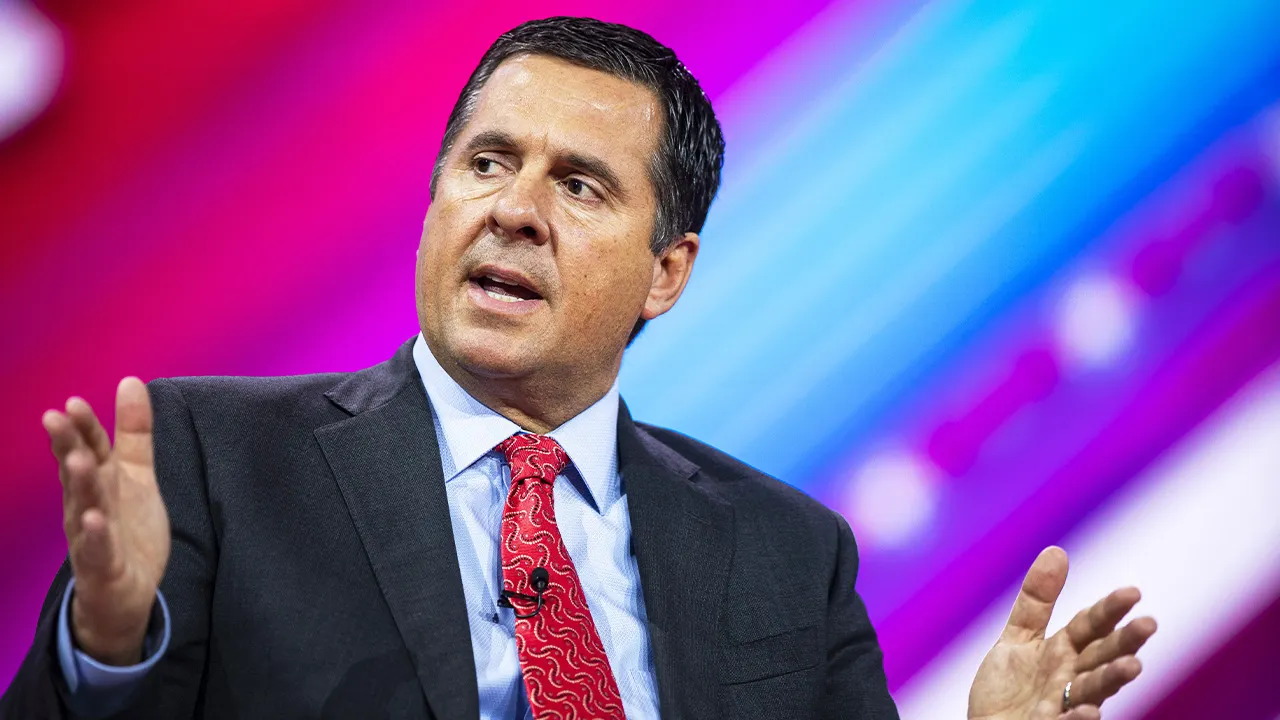
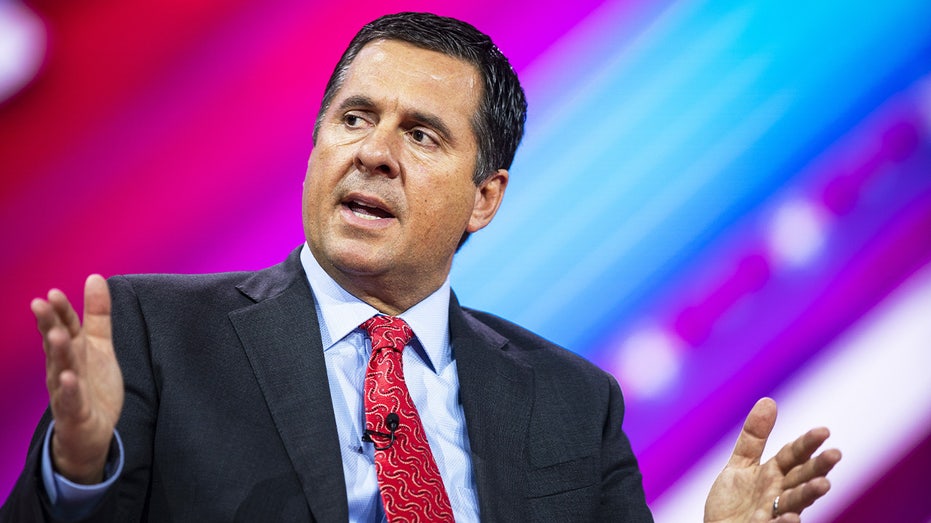
Devin Nunes served as CEO of Trump Media since 2022. (Al Drago/Bloomberg via Getty Images)
Financial disclosures show expenses far outpaced revenue, including more than $576 million in operating costs. A substantial portion of the losses was tied to write-downs and losses related to digital assets, highlighting the company’s exposure to volatile investment areas.
“I want to thank Devin Nunes for his dedicated service to the Company over the past four years, and congratulate Kevin McGurn on his appointment as Interim CEO,” Donald Trump Jr., a board member, said in a statement.
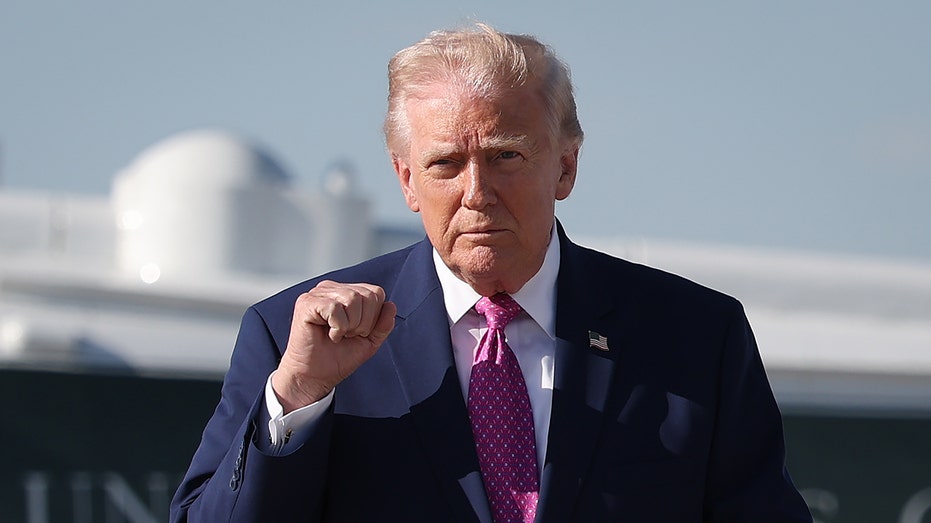
President Donald Trump walks toward reporters before answering questions prior to boarding Air Force One on April 10, 2026. (Win McNamee/Getty Images)
Nunes said the transition comes as the company enters a new phase, adding it was “an appropriate time” for McGurn to take over leadership while he shifts focus to other roles, including serving as chairman of the president’s Intelligence Advisory Board.
The leadership change follows a series of recent board departures disclosed in regulatory filings. Former U.S. Trade Representative Robert Lighthizer resigned from the board in March, and director Eric Swider stepped down earlier this month. The company said in both cases the exits were not due to any dispute with management.
Trump Media is the parent company of Truth Social. (iStock)
Trump Media, which operates the Truth Social platform along with its streaming service Truth+ and fintech brand Truth.Fi, has sought to expand beyond social media into areas including financial services and digital assets as it looks to grow its business.
The company has framed the leadership transition as part of its next phase, with McGurn expected to guide operations and strategic initiatives moving forward.
DUBAI, United Arab Emirates — Shipping traffic through the Strait of Hormuz ground nearly to a halt Wednesday as Iran fired on commercial vessels and seized others, escalating tensions with the United States and sending world oil prices sharply higher amid fears of a prolonged disruption to one-fifth of global crude supplies.
Strait of Hormuz Crisis Triggers Oil Price Surge as Iran Fires on Ships Amid US Blockade
By midday Wednesday, April 22, commercial shipping in the narrow waterway linking the Persian Gulf to the Gulf of Oman was at a virtual standstill, with reports of Iranian gunboats opening fire and Revolutionary Guard forces seizing at least two vessels. Video footage showed tankers and cargo ships making abrupt U-turns to avoid the zone, while maritime tracking data confirmed only minimal transits in recent days.
The latest flare-up comes as a fragile ceasefire between the U.S. and Iran nears expiration and follows a confusing series of openings and closures of the strait over the past week. Iran briefly declared the waterway open on April 17 before reimposing tight controls days later in response to the ongoing U.S. naval blockade of Iranian ports, imposed April 13. On April 18-20, traffic slowed dramatically after shots were fired and vessels were turned back.
Oil markets reacted swiftly to the renewed uncertainty. Brent crude, the global benchmark, climbed toward the $100-per-barrel mark, with intraday trading reflecting heightened risk premiums. West Texas Intermediate futures also rose, though the Brent-WTI spread remained wide due to regional shipping disruptions. Analysts noted prices had already spiked significantly since the U.S.-Israeli military operations against Iran began Feb. 28, with Brent briefly exceeding $110 earlier in the crisis before easing somewhat on hopes of diplomacy.
The Strait of Hormuz has long been the world’s most critical energy chokepoint. Before the 2026 crisis, roughly 20-21 million barrels of oil and petroleum products passed through its waters daily, accounting for about one-fifth of global seaborne oil trade and significant volumes of liquefied natural gas. Major exporters including Saudi Arabia, Iraq, the United Arab Emirates, Kuwait and Qatar rely heavily on the route, which is only about 21 miles wide at its narrowest point.
Advertisement
Iran’s actions this week included reports of its forces firing on three ships and seizing two others accused of violating restrictions. The Revolutionary Guard Corps said Wednesday it stopped vessels attempting unauthorized crossings and directed them toward Iranian waters. U.S. officials maintained their blockade of Iranian ports, with the Navy forcing several ships to turn around in recent days. A ceasefire extension pushed by President Donald Trump appeared under strain, with both sides accusing the other of violations.
Shipping firms have grown increasingly cautious. War-risk insurance premiums have soared, and many operators now demand clarifications on mine threats and safe passage before committing vessels. Satellite imagery and tracking services showed hundreds of ships idling outside the strait or rerouting via longer, costlier paths around Africa’s Cape of Good Hope. Industry executives warned that even a full reopening could take months to restore normal flows due to backlog, insurance issues and damaged confidence.
The crisis traces back to Feb. 28, when U.S. and Israeli strikes targeted Iranian sites, leading to the assassination of Supreme Leader Ali Khamenei and Iran’s subsequent declaration of the strait as closed or heavily restricted. Traffic plummeted by up to 70-80% in the following weeks, with attacks on vessels reported and some ships abandoned or damaged. At least a dozen incidents involving merchant ships have occurred since early March, resulting in crew casualties.
Diplomacy has produced mixed results. Talks in Islamabad aimed at extending the ceasefire stalled over key issues including sanctions relief and nuclear concerns. Iran has used the strait as leverage, alternating between threats of full closure and conditional openings while demanding the U.S. lift its port blockade. Trump has publicly stated that Iran wants the waterway open to resume oil revenue, but U.S. forces continue enforcing restrictions on Iranian-linked shipping.
Advertisement
Global energy markets have felt the strain. Oil prices surged in March as the disruption deepened, with Brent climbing well above $100 and the Brent-WTI spread widening dramatically due to higher shipping costs for Middle East crude. While some relief came from strategic reserve releases and alternative routing, analysts warn that prolonged restrictions could exhaust inventories and force rationing or deeper economic pain. Global supply losses from Iranian outages and reduced Gulf exports have already mounted.
Major consuming nations are scrambling for alternatives. China, a top buyer of Iranian oil, has explored workarounds, while European and Asian refiners face higher costs for rerouted cargoes. The United Arab Emirates and Saudi Arabia have accelerated plans for pipelines and infrastructure that could bypass the strait entirely, a shift that could permanently alter regional export patterns even if tensions ease.
For the shipping industry, the Hormuz crisis has been devastating. Thousands of seafarers remain at risk, with some vessels going “dark” by disabling tracking signals to slip through quietly. Freight rates for alternative routes have spiked, and insurers review coverage every 48 hours. Port operators in the Gulf report reduced activity, while downstream effects ripple into higher fuel costs for airlines, trucking and manufacturing worldwide.
Environmental and humanitarian concerns have also surfaced. Attacks on tankers raise the specter of oil spills in sensitive waters, and delays in LNG and fertilizer shipments could affect global food and energy security. The International Maritime Organization and maritime security centers continue issuing warnings to vessels to avoid the area where possible.
Advertisement
U.S. Central Command has reported forcing multiple ships to reverse course near the blockade zone, emphasizing freedom of navigation while targeting Iranian economic lifelines. Iran, meanwhile, portrays its actions as defensive responses to aggression, vowing swift retaliation if the U.S. does not back down.
Market participants remain on edge ahead of the ceasefire deadline. Some analysts predict further volatility, with oil potentially testing new highs if traffic stays frozen into May. Others see potential for de-escalation if backchannel talks progress, though trust is low after repeated reversals on strait access.
The 2026 Strait of Hormuz crisis has underscored the vulnerability of global energy supplies to geopolitical flashpoints. What began as part of broader conflict with Iran has evolved into a high-stakes contest over one of the planet’s most vital maritime arteries. For now, with gunboats active and vessels turning away, the world watches anxiously as oil prices climb and supply chains strain.
Longer term, the episode may accelerate diversification efforts. Pipeline expansions, floating storage strategies and investment in non-Gulf sources could reduce reliance on the strait. Yet for the immediate future, the narrow passage between Iran and Oman remains the focal point of a crisis with consequences far beyond the region.
Advertisement
As Wednesday’s events unfolded, shipping data showed continued low activity, with experts cautioning that full normalization — if it occurs — would require sustained calm, mine clearance and restored insurer confidence. Until then, the Hormuz chokepoint continues to dictate headlines and energy costs worldwide.
Dhierin-Perkash Bechai is an aerospace, defense and airline analyst.
Dhierin runs the investing group The Aerospace Forum, whose goal is to discover investment opportunities in the aerospace, defense and airline industry. With a background in aerospace engineering, he provides analysis of a complex industry with significant growth prospects, and offers context to developments as they occur, describing how they might affect investment theses. His investing ideas are driven by data informed analysis. The investing group also provides direct access to data analytics monitors.
Learn more.
Analyst’s Disclosure: I/we have no stock, option or similar derivative position in any of the companies mentioned, and no plans to initiate any such positions within the next 72 hours. I wrote this article myself, and it expresses my own opinions. I am not receiving compensation for it (other than from Seeking Alpha). I have no business relationship with any company whose stock is mentioned in this article.
Seeking Alpha’s Disclosure: Past performance is no guarantee of future results. No recommendation or advice is being given as to whether any investment is suitable for a particular investor. Any views or opinions expressed above may not reflect those of Seeking Alpha as a whole. Seeking Alpha is not a licensed securities dealer, broker or US investment adviser or investment bank. Our analysts are third party authors that include both professional investors and individual investors who may not be licensed or certified by any institute or regulatory body.
O’Leary Ventures Chairman Kevin O’Leary joins ‘Varney & Co.’ to push back on Elizabeth Warren’s criticism, explain what markets want from President Donald Trump’s Fed pick and reveal why he’s focused on Bitcoin and Ethereum.
Kevin O’Leary is narrowing his crypto strategy after years of experimenting across the digital asset space, arguing that most tokens have failed to justify their place in portfolios as institutional money reshapes the market.
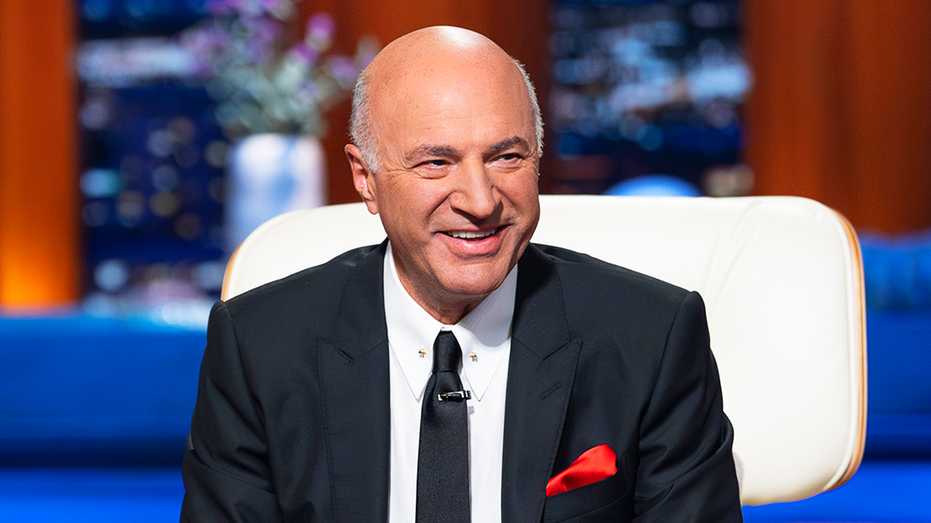
Shark Tank star Kevin O’Leary as a judge on Shark Tank. (Christopher Willard/Disney / Getty Images)
O’Leary Ventures Chairman Kevin O’Leary joined FOX Business’ Stuart Varney on “Varney & Co.” to discuss why he has consolidated his holdings into what he sees as the two dominant cryptocurrencies driving returns and market activity.
O’Leary said his earlier approach included exposure to dozens of smaller tokens, but a shift in regulatory expectations and institutional analysis last year forced a reassessment. As major players conducted deeper research, he argued, the conclusion became clear: most alternative coins lacked staying power.
BlackRock U.S. head of equity ETFs Jay Jacobs discusses market volatility amid tensions with Iran and makes the case for bitcoin as a portfolio diversifier on ‘The Claman Countdown.’
“I used to be one of the components… Supporting 27 different positions… All you need to own is bitcoin and Ethereum, and you own 97% of the volatility of all the other pooh-pooh coins,” O’Leary said.
He added that thousands of smaller cryptocurrencies effectively disappeared following last October’s downturn, reinforcing his decision to exit those positions.
“What’s happened to the pooh-poohs is they collapsed last October… Thousands of them never came back… At the end, why don’t you just own those two?” he said.
Robinhood SVP and GM of Crypto Johann Kerbat reveals the platforms top-traded crypto asset and discusses key trends emerging from the Digital Asset Summit on ‘Varney & Co.’
Advertisement
Despite ongoing volatility, O’Leary pointed to growing adoption of digital payment systems and stablecoins in global transactions as a key driver behind his continued conviction in the space.
An alcohol-free beer made in a brewery near Bristol has scooped the top prize at an international competition. Butcombe Brewing Co’s Goram IPA Zero took home home a gold medal at the 2026 World Alcohol‑Free Awards.
The awards were founded in 2022 by former Michelin‑starred drinks buyer Chrissie Parkinson and writer Chris Losh, and exclusively judge drinks at 0.5 per cent ABV or below.
This year’s competition attracted more than 400 entries from 20 countries, spanning alcohol‑free beers, wines, spirits, aperitivos, teas and functional drinks. A panel of specialist judges from the UK, Europe and the US assessed products through blind tastings.
“Through two rounds of judging – and tasted blind – all our beer judges consistently loved this drink and it thoroughly deserved its gold medal,” the judges said in a statement.
Advertisement
“The beer section of the competition was especially strong this year, so to pick up a top award was a real achievement. To do it for the second time in four years just reinforces how consistently good an all-round brew Goram IPA Zero is.”
Goram IPA Zero’s is one of the most awarded alcohol‑free beers in the UK, with six major accolades in the past two years. Brewed with eight hop varieties, the beer is currently enjoying a surge in popularity within the running community through Butcombe Group’s partnerships with Maverick Trail Races and London Marathon events.
Jayson Perfect, Butcombe Group chief operating officer, said: “We’re incredibly proud to see Goram IPA Zero take home another gold at these prestigious world-renowned awards.
“The team has worked hard to create an alcohol‑free beer that doesn’t compromise on flavour, and this award is a brilliant recognition of that. With more drinkers choosing great‑tasting alcohol‑free options, it’s fantastic to see Goram IPA Zero leading the way.”
Advertisement
The news comes just two months after Butcombe announced an “exceptional sales performance” in its first full year trading under its new brand name.
The Wrington-based group – formerly known as Liberation – said its investment in its estate, particularly its accommodation, had helped it outperform the broader market over the 12 months to the end of January.
TORONTO — Xanadu Quantum Technologies shares rocketed more than 22% midday Wednesday, pushing past $28 as momentum in the nascent quantum computing sector continued to build on artificial intelligence breakthroughs and investor excitement over scalable photonic hardware.
Xanadu Quantum Stock Explodes 22% in Frenzied Session as Photonic Computing Hype Surges
The stock, listed on NASDAQ under the ticker **XNDU**, traded at $28.06, up $5.16 or 22.53% by 12:47 p.m. EDT on April 22. Volume exceeded 4.3 million shares, far above the average, reflecting intense retail and institutional interest in one of the few pure-play quantum companies available to public markets.
The dramatic move caps a volatile but breathtaking run for Xanadu since its public debut. The Canadian company completed a business combination with SPAC Crane Harbor Acquisition Corp. on March 27, 2026, raising approximately $302 million and beginning trading on both Nasdaq and the Toronto Stock Exchange. What started as a modest post-listing pop has turned into a speculative frenzy, with shares surging hundreds of percent in recent weeks amid broader quantum sector tailwinds.
Analysts and traders pointed to Nvidia’s recent release of open-source “Ising” AI models — designed to accelerate error correction in quantum systems — as a key catalyst that reignited buying across quantum names. Xanadu, which specializes in photonic quantum computing, benefited disproportionately as investors bet on its unique approach using light-based qubits that promise greater scalability and room-temperature operation compared with superconducting alternatives.
“Photonic quantum is emerging as one of the most viable paths to fault-tolerant, utility-scale quantum computers,” said one technology analyst who initiated coverage with an Outperform rating on April 20. Several firms have highlighted Xanadu’s PennyLane open-source software platform, which has gained traction for quantum machine learning and hybrid quantum-classical workflows.
Advertisement
Xanadu reported fourth-quarter and full-year 2025 results on April 9, detailing strong progress on its technology roadmap. The company announced 10 new strategic partnerships spanning hardware manufacturing, supply chain, R&D and commercial applications. It also highlighted ongoing negotiations for up to C$390 million in potential funding from the governments of Canada and Ontario to expand manufacturing and accelerate commercialization.
Founded in 2016 by CEO Christian Weedbrook, Xanadu has positioned itself as a leader in photonic quantum hardware and software. Its cloud-accessible systems and proprietary error-resistant photonic qubits aim to deliver practical quantum advantage for industries ranging from pharmaceuticals and materials science to finance and logistics. The company also develops PennyLane, a widely used open-source library for quantum computing and application development.
The recent rally has been nothing short of explosive. Shares hit a 52-week high near $42.44 earlier in April, triggering multiple trading halts on the TSX as circuit breakers activated repeatedly. At one point, the stock soared more than 250% in a single week, briefly minting Weedbrook a paper billionaire before some profit-taking set in. Market capitalization has swung wildly but now hovers near $1 billion to $9 billion depending on intraday peaks, underscoring the speculative nature of early-stage quantum plays.
Unlike many quantum competitors focused on superconducting or trapped-ion qubits, Xanadu’s photonic approach uses silicon-based chips and light particles that can operate at room temperature and integrate more readily with existing semiconductor infrastructure. Executives have emphasized the technology’s potential for massive scalability, a critical requirement for solving problems beyond the reach of today’s noisy intermediate-scale quantum (NISQ) devices.
Advertisement
In February 2026, Xanadu and Mitsubishi Chemical announced a breakthrough in quantum algorithms for simulating extreme ultraviolet lithography processes used in next-generation semiconductor manufacturing. The collaboration demonstrated how photonic quantum techniques could accelerate R&D for advanced chip production, a development that resonates with the AI hardware boom driving demand for ever-more powerful processors.
The company’s public listing marked a milestone as the first pure-play photonic quantum computing firm to trade on major exchanges. The SPAC deal valued the combined entity at roughly $3.1 billion at announcement and provided a robust cash position to fund R&D and fabrication expansion. Xanadu has also secured grants through Canada’s Quantum Champions Program and maintains partnerships with organizations including DARPA.
Despite the hype, quantum computing remains an emerging field with significant technical and commercial hurdles. No company has yet achieved large-scale fault-tolerant quantum computers capable of consistent commercial advantage. Xanadu’s path forward depends on continued progress toward utility-scale systems, successful qualification with enterprise customers and effective execution on its expanded manufacturing plans.
Wall Street has taken notice. Northland Securities initiated coverage with an Outperform rating in recent days, while other firms have highlighted the sector’s long-term potential even as near-term volatility remains elevated. Options activity has shown heightened interest, with traders betting on both continued upside and potential pullbacks after the parabolic moves.
Advertisement
Xanadu’s 52-week range stretches from a low near $6.97 shortly after listing to the recent peak above $42, illustrating both the opportunity and risk inherent in frontier technology stocks. Year-to-date gains have exceeded 100% for many holders who bought near the debut, though sharp reversals have also occurred.
Company leadership expressed optimism in recent commentary. With a strengthened balance sheet and new board and executive additions, Xanadu aims to scale its quantum computers and deepen collaborations across hardware and applications. Gross proceeds from the listing, combined with anticipated government support, provide runway to push toward fault-tolerant architectures.
For investors, Xanadu represents a high-risk, high-reward bet on the quantum revolution. Proponents argue that photonic advantages — including easier networking of qubits and compatibility with fiber-optic infrastructure — could give the company an edge as the industry shifts from laboratory experiments to cloud-based commercial services.
Skeptics caution that memory of past quantum hype cycles and the capital-intensive nature of the technology warrant caution. Valuation multiples remain stretched, with traditional metrics such as price-to-earnings offering limited insight into a pre-revenue or early-commercialization business focused on long-term breakthroughs.
Advertisement
As trading continued Wednesday, some market watchers speculated whether the latest surge reflected fresh sector momentum or simply momentum trading in a thin-float name. Broader technology indices showed mixed performance, but quantum-related stocks again outperformed on selective buying.
Xanadu has no immediate earnings report scheduled in the coming days, but investors will watch closely for any updates on partnership expansions, technical milestones or deployment of additional cloud quantum resources. The company’s PennyLane platform continues to see adoption in academic and industrial research, providing a software moat that complements its hardware ambitions.
From a Toronto startup backed by venture heavyweights including Bessemer Venture Partners, Tiger Global and OMERS to a publicly traded entity with billions in peak market value, Xanadu’s journey encapsulates the excitement surrounding quantum technologies. Its story blends Canadian innovation, government support and the global race to harness quantum mechanics for computing power that could reshape entire industries.
Whether this week’s gains prove sustainable or give way to consolidation, one theme remains clear: investor appetite for quantum computing plays has sharpened as artificial intelligence demands ever-greater computational resources. Photonic approaches like Xanadu’s are gaining attention as a potential bridge to practical, error-corrected quantum systems.
Advertisement
As the broader tech sector grapples with AI infrastructure costs and the search for the “next big thing,” companies at the intersection of quantum and classical computing are drawing fresh capital and scrutiny. Xanadu, once a privately held pioneer, now finds itself at the center of that spotlight — writing a volatile but compelling chapter in the quantum computing narrative.
Nearly nineteen years is a long time in emerging markets. It spans both commodity price supercycles and commodity price collapses, the rise of China, the so-called ‘taper tantrum,’1 a pandemic
Generac Power Systems is recalling certain portable generators sold at Costco after identifying a defect that could cause gasoline to leak, posing a potential fire and burn hazard, according to a notice sent to customers.
The recall affects Generac GP9200E gas generators purchased between May 2025 and February 2026, Generac Power Systems said to Costco members. The affected serial numbers range from 3016786070 to 3016788388.
Advertisement
The issue stems from the generator’s carburetor, which may leak fuel when the unit is first filled with gasoline, creating a risk of fire or explosion.
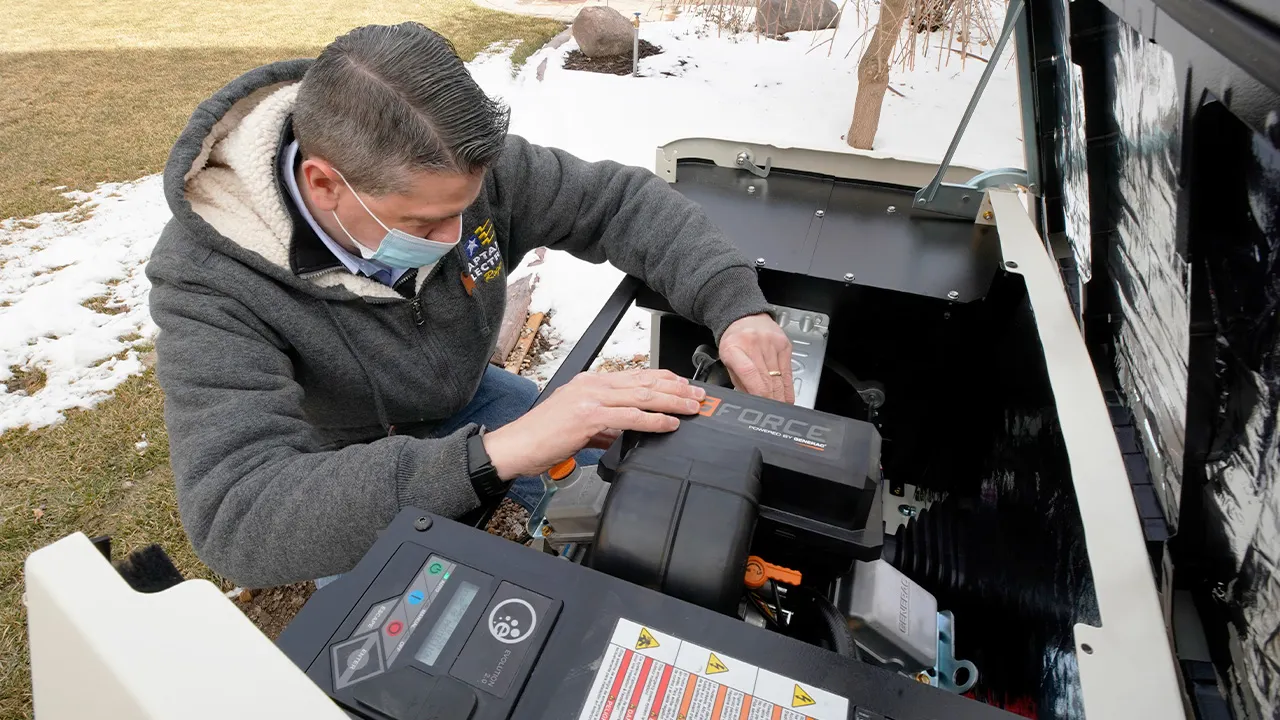
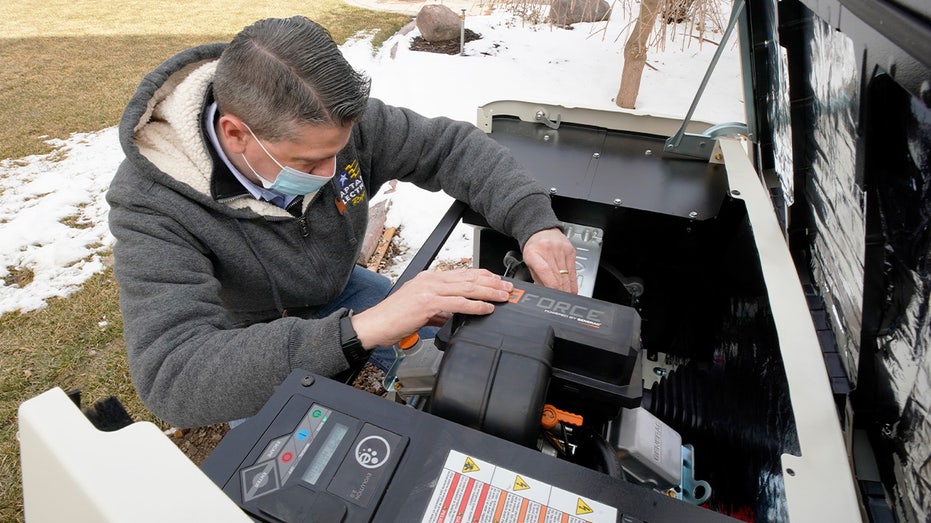
A worker from Captain Electric makes final inspections on a newly installed 24-kilowatt Generac home generator. (George Frey/Getty Images)
Customers who have not yet filled the generator with fuel, or who experience any gasoline leakage, are being urged to stop using the product immediately. However, the notice states that generators that have already been used without any fuel leakage may continue to be operated.
The recall affects Generac generators sold at Costco between May 2025 and February 2026, with customers eligible for repair or refund. (Generac Power Systems)
The recall applies only to units within the specified serial number range, and customers are advised to check their generator to determine whether it is included.
Owners of affected generators can arrange for a free repair through an authorized dealer or return the product to Costco for a full refund, according to the notice.
Generac GP9200E portable generators are being recalled after a defect was found that could cause gasoline to leak, posing a fire hazard. (Generac Power Systems)
Generac is one of the largest U.S. manufacturers of backup power equipment, with its products commonly used during outages caused by severe weather and grid disruptions.
“The safety and safe use of our products is always our top priority,” told FOX Business in a statement. “We encourage consumers to stop using affected units and determine eligibility for a free repair. Consumers with generators that have previously been filled with enough gasoline to move the gauge off “E,” or have been used without any gasoline leakage, can continue use.”
Generac estimates that about 51,500 of the 149,400 affected generators were sold to consumers.





























































You must be logged in to post a comment Login