





Connect with us

Business

U.K. Consumer Prices Rose 2.9% in July Due to Higher Household Energy Costs

Published

on

U.K. Consumer Prices Rose 2.9% in July Due to Higher Household Energy Costs

U.K. inflation jumped in July, driven by a rise in energy charges that could push the pace of price increases even further above the Bank of England’s target in the months to come.

Consumer prices rose 2.9% in July from a year earlier, up from 2.6% in June, the Office for National Statistics said Wednesday. That is the highest annual inflation rate since March, when prices spiked following the outbreak of the war in Iran.

Copyright ©2026 Dow Jones & Company, Inc. All Rights Reserved. 87990cbe856818d5eddac44c7b1cdeb8

Continue Reading
Click to comment

You must be logged in to post a comment Login

Leave a Reply

Business

Stock Market: Redman One Of America’s Greatest Opportunities

Published

on

Stock Market: Redman One Of America's Greatest Opportunities

Redman Industries was a manufactured-home builder, part of a cyclical industry. Stocks in 1966 were marked by a bear market, followed by 1967 — the first year of a new bull. During the last two quarters of 1967, Redman’s earnings turned up 200% and 800%. Further, a 13-week cup-with-handle chart pattern formed amid a correction of the S&P 500 in…

Copyright ©2026 Investor’s Business Daily, LLC. All rights reserved. 87990cbe856818d5eddac44c7b1cdeb8

Continue Reading

Business

Gold Slips Ahead of Fed Meeting Minutes

Published

on

Stocks Little Changed After Fed Decision

Gold prices slipped with investors awaiting the release of the Federal Reserve’s July meeting minutes for fresh clues on its monetary policy outlook.

In early trading, New York futures were down 0.2% to $4,410.30 a troy ounce.

“The outlook remains constrained by the US-Iran conflict,” said Soojin Kim from MUFG. “Energy-driven inflation could reinforce expectations for tighter Fed policy, limiting gold’s upside.”

Continue Reading

Business

Micron Stock Rises on $10 Billion AI Research Lab Plan as Memory Demand Surges

Published

on

Earnings News: Micron Technology Inc (NASDAQ: MU)

BOISE, Idaho — Shares of Micron Technology Inc. climbed more than 2% on Thursday after the memory chipmaker unveiled plans for a $10 billion research initiative focused on artificial intelligence technologies, underscoring investor confidence in sustained demand for high-bandwidth memory amid the ongoing AI infrastructure buildout.

The stock rose about $21 to trade near $958 in afternoon trading on the Nasdaq, recovering ground after recent volatility in the semiconductor sector. The move followed Micron’s announcement of Micron Research Labs, a new U.S.-based innovation hub headquartered in Boise and backed by a planned $10 billion investment over the next decade. The facility will concentrate on critical memory technologies, advanced memory and compute architectures, packaging, and future semiconductor manufacturing.

“The decisions we make today will determine who leads the AI economy of tomorrow, and America’s AI future will be built on American-made memory,” said Sanjay Mehrotra, chairman, president and chief executive of Micron. “With a planned $10 billion investment in Micron Research Labs, we are looking around the corner to the memory and compute systems the future will demand, bringing together the best minds across academia, government, startups and industry. This builds on the more than $250 billion we have separately committed to manufacturing and R&D across the United States, because as the only U.S.-based manufacturer of memory, we have long believed in the future that AI is now making real.”

The lab is described as the first dedicated memory research hub of its kind in the United States. It will feature a flagship campus in Boise designed to support hundreds of researchers, along with university collaborations, global satellite labs and partnerships across the semiconductor ecosystem. Construction is expected to begin in 2027. The investment is separate from Micron’s broader U.S. manufacturing expansions, including new fabs in Boise and New York.

Advertisement

Mehrotra reinforced the strategic shift in memory’s role during a subsequent interview. “Memory is no longer a component in a system, memory is the strategic infrastructure for AI,” he said. “It is no longer a commodity, it is a high value. Without memory, you cannot make AI smarter, cannot make it faster, you cannot scale up AI. AI is driving a whole hierarchy of memory requirements from HBM to DRAM to SSDs.”

Micron has emerged as one of the clearest beneficiaries of the AI boom. In its fiscal third quarter ended in late May, the company reported revenue of $41.46 billion, more than quadrupling from $9.3 billion a year earlier and well above analyst estimates. Adjusted earnings reached $25.11 per share, also exceeding expectations. Data center revenue alone exceeded $25 billion in the quarter, implying an annualized run rate above $100 billion. Gross margins expanded sharply, reflecting higher pricing power in a tight supply environment.

Looking ahead, Micron guided for roughly $50 billion in revenue in the current quarter. The company has signed 16 strategic customer agreements, many with multi-year terms running into 2030, locking in substantial future volume at minimum pricing. Fourteen of those agreements carry a cumulative revenue potential of about $100 billion. Management has collected significant customer deposits and said demand for high-bandwidth memory continues to exceed available supply. HBM4 revenue has already surpassed $1 billion, with ramps proceeding faster than previous generations.

Industry conditions remain constrained. Micron and peers have repeatedly indicated that memory supply is unlikely to catch up with AI-driven demand before 2028 at the earliest, and possibly later. High-bandwidth memory production consumes substantial wafer capacity that would otherwise go to conventional DRAM used in servers, PCs and smartphones, amplifying shortages across the broader market. Prices for both specialized and commodity memory have risen accordingly.

Advertisement

Micron’s market capitalization has crossed the $1 trillion threshold at points during 2026 as the stock delivered gains of several hundred percent over the past year. The company remains the sole U.S.-based producer of leading-edge DRAM and NAND, a position that has drawn support from federal policy aimed at strengthening domestic semiconductor supply chains. Recent comments from administration officials have emphasized reducing reliance on foreign memory sources.

Scott DeBoer, Micron’s executive vice president and chief technology and products officer, framed the research initiative as an extension of the company’s long history in Boise. “For nearly 50 years, from four people in a Boise basement to America’s memory leader, Micron has pushed the boundaries of what memory can do,” he said. “Micron Research Labs gives that legacy a dedicated home for long-horizon innovation, the kind of research that sits upstream of every product we build.”

Investors have weighed the strong near-term fundamentals against the traditional cyclicality of the memory business. After earlier peaks above $1,200 earlier in the summer, the shares experienced pullbacks amid broader technology-sector rotations and valuation concerns. Analysts remain largely constructive, citing multi-year visibility from the strategic customer agreements and the structural nature of AI demand. Some have raised long-term earnings estimates significantly, pointing to potential operating leverage as capacity comes online and pricing remains elevated.

The Boise announcement also aligns with larger capital commitments already under way. Micron has outlined more than $200 billion in planned U.S. manufacturing and research spending, including leading-edge fabs expected to begin producing DRAM in Idaho in 2027. Those projects are positioned to support both HBM and conventional memory output as demand continues to broaden beyond training clusters into inference, edge devices and enterprise applications.

Advertisement

Market participants will watch closely for updates on yield ramps, additional customer agreements and any signs that supply constraints are easing. For now, the combination of robust financial results, multi-year contracts and a fresh commitment to long-horizon research has reinforced Micron’s position at the center of the AI memory story. Shares remain sensitive to shifts in hyperscaler spending plans and competitive capacity additions from peers in South Korea and elsewhere, yet the latest investment signals management’s confidence that the current demand environment has multi-year durability.

Continue Reading

Business

US warns of active cyber threat targeting critical infrastructure

Published

on

Marine vet creates fraud-detecting tech

Federal agencies are warning that hackers are actively targeting industrial control systems used across U.S. water plants, factories, energy facilities and other critical infrastructure.

The NSA, FBI, Department of Energy, EPA and Cybersecurity and Infrastructure Security Agency said Wednesday there is an “active threat” targeting Siemens S7 Series programmable logic controllers.

Advertisement

Siemens said Thursday that it had not detected an increased level of attacks or any previously unknown vulnerabilities affecting its industrial control systems products.

The devices are used to monitor and control industrial equipment across sectors including manufacturing, energy, water and wastewater, chemicals, food and agriculture.

A successful attack could disrupt critical operations, force facilities offline, damage equipment and create safety hazards, according to the advisory. Officials also warned that breaches could trigger cascading disruptions across interconnected systems.

THOUSANDS OF NORTH KOREAN IT WORKERS ARE INFILTRATING CORPORATE AMERICA

Advertisement
siemens las vegas

The Siemens booth at CES 2024, the world’s largest annual consumer technology trade on Jan. 10, 2024, in Las Vegas.  (Tayfun Coskun/Anadolu via Getty Images)

The government said hackers are increasingly using artificial intelligence to make such attacks easier, dramatically reducing the expertise and time needed to develop tools capable of exploiting industrial systems.

According to the advisory, attackers are scanning the internet for exposed or poorly protected Siemens controllers and using AI-generated tools to help gain access to them.

Federal agencies said the activity appears aimed in part at studying targeted systems and developing the ability to disrupt operations in the future.

Such attacks could affect production, public services and supply chains, while also causing equipment damage or prolonged downtime.

Advertisement

Officials also warned that some operators may not realize their systems are exposed, particularly when outside vendors have remote access to industrial equipment.

siemens logo

The Siemens logo at the virtual annual shareholder meeting in Munich, Germany, Feb. 10, 2022. (Sven Hoppe/Pool via Reuters)

The warning comes amid a recent wave of cyberattacks against local water systems that cybersecurity experts suspect may have links to Iran, though federal officials have not formally attributed those incidents to Tehran.

CISA warned July 30 of a significant increase in attacks targeting programmable logic controllers. Days earlier, the agency said Iranian-affiliated hackers had been exploiting industrial equipment made by Siemens, Rockwell Automation and Schneider Electric.

RUSSIAN HACKERS EXPLOITING VULNERABLE INTERNET ROUTERS, NSA WARNS

Advertisement

Concerns intensified after Minnesota became the first state to report a wave of at least 30 cyber incidents involving local water systems on July 26 and July 27.

Federal officials have stopped short of blaming Iran for those attacks. President Donald Trump said July 31 that he did not believe Tehran was responsible and instead criticized Minnesota over the incidents.

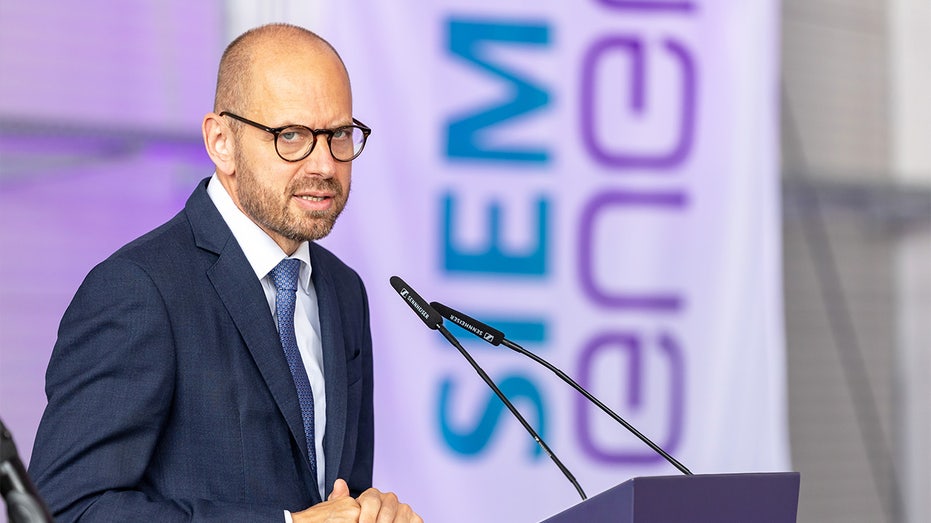
CEO of Siemens Energy

Siemens Energy CEO Christian Bruch speaks during a groundbreaking ceremony at a transformer plant. (Daniel Karmann/picture alliance via Getty Images)

The latest warning underscores the vulnerability of operational technology — systems that control physical equipment rather than simply store corporate data.

HACKERS ARE GOING AFTER WHATEVER THEY CAN ATTACK TO MAKE NEWS, RUBRIK CEO SAYS

Advertisement

Unlike conventional cyberattacks focused on stealing information, attacks on industrial control systems can have direct physical and economic consequences, potentially interrupting utilities, shutting down production or damaging costly equipment.

Siemens told FOX Business that it is aware of the alert and is coordinating with CISA.

“Siemens will provide updates around this issue to potentially affected customers through our ProductCERT team,” a company spokesperson said. “At this point in time, we have not identified increased attack levels or unknown vulnerabilities in Siemens ICS products.”

CLICK HERE TO GET FOX BUSINESS ON THE GO

Advertisement

The potential fallout can extend beyond an individual facility, affecting businesses and services that rely on interconnected industrial systems.

Reuters contributed to this report. 

Continue Reading

Business

Welsh Fire a stand out commercial performer in The Hundred

Published

on

Business Live

Welsh Fire co-chair Mark Rhydderch-Roberts dissects The Hundred season, and urges doubters to give it a go

Welsh Fire.(Image: Gareth Everett/Huw Evans Agency)

After a frenetic 27 days and a gripping and sold out Finals Day last Sunday at Lord’s, the 2026 Hundred tournament has concluded.

Despite the best efforts of some to focus on a marginal decline in total attendances, this season has seen an incredibly competitive and successful tournament with many of the best men’s and women’s players in the world involved.

Many games have gone down to the last few balls and there has been a noticeable increase in intensity on all levels. Teams, owners and fans are desperate to win.

Despite a crowded and competitive sporting calendar over the summer, including a football World Cup, The Hundred has recorded its third best campaign in terms of ticket sales in the last six years, with around 550.000 sold, with three new record attendances.

Advertisement

Probably more significantly, given the fact that media revenues drive operating performance and valuations, the growth in the average broadcast audience on Sky Sports and the BBC was 7.5 per cent. Furthermore, this has been the most viewed and engaged season ever digitally for The Hundred with a 36 per cent rise in engagement and 55 per cent growth in views on social channels.

Objectively, this is a very creditable performance given the context of a major reset of The Hundred, the first year of co-ownership with new international investors, and a number of rebrands taking place. This year was never going to be straightforward. Taking on co-ownership or new ownership meant new teams, new brands and commercial challenges with a short pre-season lead time.

Hundred plan

The Hundred was designed from the outset to bring cricket to new audiences, especially children and families. As in previous years, the demographic of fans attending The Hundred has continued to grow strongly and is sharply differentiated to many competitor sports – 2026 saw 22 per cent of tickets go to under-16s, 40 per cent to families and 28 per cent for women.

Advertisement

At Welsh Fire – following the 50/50 joint venture agreement between Glamorgan County Cricket Club and Sanjay Govil – we have had record breaking attendances for both the men’s and women’s games in Wales, with ticket sales up almost 10 per cent year-on-year. Nearly half of ticket buyers were new to Sophia Gardens home, Wales’ Test-standard arena. Welsh Fire was the only Hundred franchise to increase its ticket sales in percentage terms year on year.

The Hundred achieved a valuation of just under £1bn after the franchise sale last year and provided an immediate and much needed cash injection in excess of £550m into English and Welsh cricket at all levels, with 10 per cent of proceeds earmarked for the recreational game.

The double headers have turbo-charged the growth of the women’s game and the introduction of international investors has not only brought capital but a global dimension and commercial expertise to the sport in Britain. Other sports, including rugby union, which traditionally has had a similar audience profile in size and demographic will only look on enviously.

Mark Rhydderch-Roberts

The sports asset class has seen sustained and rapid uplifts in valuations as the sector has become investment grade for many institutional investors, as well as for private equity companies and high-net-worth individuals. This trend has been confirmed with the recently announced sale of the LA Lakers for £9bn, the highest price ever paid for a sports team and £2bn more than it sold for 14 months ago. In the UK, Jeff Bezos is part of a consortium that is buying 38 per cent of Liverpool FC which values the club at £5.5bn, 18 times more than the £300m that John Henry’s Fenway Sports Group paid for the club in 2010. It would be logical to assume that The Hundred franchise valuations have already benefited from this macro trend.

Advertisement

International growth

Growth in cricket and international franchise valuations has, and will continue to be, driven by India which accounts for over 70 cents in every dollar generated by cricket globally. The overall business and brand valuation of the Indian Premier League is in excess of $20bn and it ranks as the second richest sports league in the world by per-match value, second only to the NFL. Media revenues also remain critically important for valuations – around 95 per cent of the ECB’s total revenues are derived from this source. Independent forecasts give global cricket media revenues around ten years of strong future growth. This is in contrast to several other sports, including Football, where they have plateaued or are in decline.

Realistically, the valuations enjoyed by the IPL, where two franchises in the Rajasthan Royals and Royal Challengers Bengaluru were recently sold for $1.65bn and $1.8bn respectively, are some way ahead of where The Hundred teams are right now. However, I believe that there is a strong case that over the next few years that The Hundred can take its place as the second most important and valuable short format global cricket league.

In a nation where sporting life has long been defined by rugby and football, Welsh Fire is an elite team and brand the nation can get behind. Demand and interest has surged not only in south Wales and along the M4 corridor but also from the south west of England.

Advertisement

Our chief commercial officer Ed Rice says that “Wales needed more than a franchise cricket name, it needed a team that felt Welsh, and belonged to Wales”, adding that a “deep local understanding has driven every decision, and the commercial results speak for themselves”.

A case for Cardiff

Cardiff is the UK’s premier event city after London, and this summer has seen an extraordinary array of major music and sports events. Against that backdrop, Welsh Fire cut through by offering something distinctive: elite sport combined with a genuinely entertaining day out at a competitive price point. We embraced a challenging fixture list, which included a Monday and two Wednesday fixtures, and invested in it. The iconic Welsh rock band Feeder performed in between matches on the Monday evening and we recorded a total attendance in excess of 10K.

The challenge for The Hundred and for Welsh Fire will be to build from here. A breakthrough first “Hundred reset” year does not remove the economic headwinds facing sport, nor does it make audience growth automatic. It gives us something valuable for all of us to work with; a larger database, a more engaged fan base, stronger awareness and proof that The Hundred can prosper and grow.

Advertisement

This is why The Hundred season should be celebrated, and we remain in the early days of something real and significant in global cricket. At Welsh Fire, we now have the opportunity to invest further in growth, technology, content, partnerships and community engagement, while maintaining a laser focus on a team built for Wales.

We also have learned much from our co-owner, and will continue to build and develop the significant operational and commercial synergies that exist between Welsh Fire and Sanjay’s Washington Freedom MLC franchise.

I wish The Hundred doubters could have been at our sold-out Saturday fixture against MI London a few weeks ago. The atmosphere at Sophia Gardens as the fans chanted “Wales, Wales” was unique, the excitement and engagement of the crowd total. There will be many more days like these to come.

  • Mark Rhydderch-Roberts is co-chair of Welsh Fire and chair Glamorgan County Cricket Club.
Continue Reading

Business

Silver surges to $68.30 near upper Bollinger Band: Live levels

Published

on


Silver surges to $68.30 near upper Bollinger Band: Live levels

Continue Reading

Business

Powerus secures $22.3M Middle East counter-drone contract

Published

on


Powerus secures $22.3M Middle East counter-drone contract

Continue Reading

Business

PlayStation Network Down Now? Sony Faces Sixth Major Disruption Pattern of the Year in 2026 Alone

Published

on

fortnite-4129124_1920

Sony’s PlayStation Network experienced a fresh wave of user-reported access problems Thursday, according to outage-tracking service Downdetector, adding to what has become an unusually persistent pattern of disruptions affecting the gaming service throughout 2026.

Downdetector posted on its official account on the social platform X that “user reports indicate problems with Playstation Network since 12:55 PM EDT,” tagging the post with the hashtag #PlaystationNetworkDown and directing affected users to its outage-tracking page for further updates. The post had drawn nearly 1,200 views within a short period after being published.

Thursday’s reported disruption extends a notably rocky year for PSN reliability. According to a running tally maintained by Tech Insider, PlayStation Network went down six separate times over just over four months earlier this year, most recently during a roughly five-hour, 23-minute worldwide disruption affecting PS5, PS4 and web services on July 24. That outage, one of the most severe of the year, drew significant attention given that Sony has offered no public explanation for the cause behind any of the six confirmed incidents logged so far in 2026.

Coverage of the July 24 outage from Push Square documented the incident unfolding in real time over several hours that afternoon and evening. Sony’s own service status page described the network as “experiencing issues” for an extended period, with the company specifically flagging difficulty accessing the PlayStation Store even as other functions gradually returned. According to Push Square’s live updates, Downdetector showed a substantial spike in user reports across the United States during the outage, which only began meaningfully easing several hours after the initial disruption began. By that evening, Sony confirmed PSN was “up and running” again, though the outlet noted some isolated issues could still linger even after the broader network had stabilized.

Advertisement

The timing of PSN’s repeated 2026 outages has drawn particular scrutiny given a separate decision by Sony earlier this year to raise PlayStation Plus subscription prices. According to Tech Insider, Sony increased PlayStation Plus pricing across all tiers effective May 20, 2026, citing “ongoing market conditions,” with the Monthly Essential tier rising from $9.99 to $10.99 and Monthly Premium climbing from $17.99 to $19.99, while annual subscription pricing remained unchanged in that particular round of increases. A network disruption followed less than 24 hours after that price hike took effect, logging 176 reports within the first 24 hours on outage-tracking service IsDown, according to Tech Insider’s reporting, with the outlet noting that, as of its most recent update, no public explanation had been offered for that specific incident either. The recurring outages carry added significance for subscribers specifically because online multiplayer functionality on both PS5 and PS4 requires at least a PlayStation Plus Essential subscription, meaning each PSN disruption this year has directly blocked a feature that subscribers are now paying more to access following the May price increase.

Sony has faced additional headwinds beyond the outage pattern and pricing changes in recent months. According to Tech Insider, the company also settled a $7.85 million antitrust case related to older digital purchases, and is separately planning to retire the “PlayStation Network” branding by September 2026 in favor of a visual rebrand, while keeping user accounts, friends lists and underlying services otherwise unchanged. The outlet emphasized that none of these developments, including the repeated outages, the pricing changes, the antitrust settlement and the branding shift, are legally connected to one another, even as their overlapping timing has drawn continued attention from gaming media and PlayStation’s user base.

The stakes surrounding PSN reliability have also grown given Sony’s broader strategic direction for its console business. According to Game Informer, PlayStation announced earlier this year that it will cease production of physical game discs for new titles beginning in January 2028, a shift that will leave players increasingly dependent on digital distribution and, by extension, on PSN’s continued reliability. Game Informer noted that during PSN outages, physical discs have historically allowed players to at least access offline-playable content stored directly on a disc, while many digital games, including some single-player titles, require an online authentication check that becomes impossible to complete when the network is down, leaving affected players locked out of games they own entirely during service disruptions.

Sony’s history with major PSN outages extends well beyond this year’s cluster of incidents. The most severe disruption in the network’s history remains the 2011 PlayStation Network outage, a 24-day incident caused by an external security intrusion that exposed personal data for 77.1 million PlayStation Network accounts and ultimately cost Sony an estimated $171 million. More recently, a major outage in February 2025 left PlayStation users worldwide unable to access online services, manage accounts or make purchases through the PlayStation Store for more than 18 hours, according to Notebookcheck’s coverage at the time, affecting popular titles including EA Sports FC and Call of Duty and disrupting scheduled online tournaments and promotional events tied to those games.

Advertisement

As of this report, independent monitoring service Entireweb Status had most recently characterized PlayStation Network as operating normally, based on a check conducted roughly a week prior to Thursday’s reported disruption, recording 80 user reports over a 24-hour period at that earlier point, with three of those submitted within the final hour before the check. Given the discrepancy between that earlier reading and Thursday’s fresh spike in Downdetector complaints, the scope and duration of the current disruption remained unclear as of this report, with Sony not having issued an updated public statement addressing Thursday’s specific reported issues.

Given the network’s documented pattern of repeated, unexplained outages throughout 2026, gamers experiencing difficulty accessing PSN services Thursday were likely to view the disruption as consistent with what has become an increasingly familiar, if still frustrating, feature of the platform’s reliability this year, with continued scrutiny expected regarding whether Sony will offer any public explanation for the underlying cause behind this latest incident, as it has similarly declined to do for each of the network’s prior confirmed outages so far in 2026.

Continue Reading

Business

Peter Schiff says US economy now ‘worse’ than back when Biden departed office

Published

on

Peter Schiff says US economy now 'worse' than back when Biden departed office

The U.S. economy is currently “worse” than when former President Joe Biden departed office last year, economic and political commentator Peter Schiff asserted, warning that the nation faces the “threat” of a Democratic socialist winning the White House during the 2028 presidential election.

President Donald Trump is “unpopular because the economy is worse now than it was when Biden left office,” Schiff, chief economist and global strategist of Euro Pacific Asset Management and host of “The Peter Schiff Show” podcast, told Fox News Digital during an interview on Wednesday. 

Advertisement

“So Trump ran promising to fix what Biden broke,” but then “broke it more,” Schiff asserted. 

“He said that prices will come down on day one as soon as I become president,” Schiff said, adding “inflation is a bigger problem now than it was when Trump was elected.”

Fox News Digital reached out to the White House on Thursday.

TRUMP’S APPROVAL RATING PLUMMETS TO NEW LOW AHEAD OF CRITICAL MIDTERMS: ‘MORE WORK TO DO’

Advertisement
Left: Peter Schiff; Right: President Donald Trump

Left: Peter Schiff during the London Blockchain Conference at The Queen Elizabeth II Conference Centre on June 2, 2023, in London; Right: President Donald Trump gestures as he boards Air Force One on Aug. 9, 2026, at Morristown Airport in Morristown, (Eamonn M. McCormack/Getty Images for London Blockchain Conference; Eric Lee/Getty Images)

While Republicans currently hold majorities in both chambers of Congress, Schiff said that he thinks the GOP will lose many House seats in the midterm elections this year and that they “have a real chance of losing the Senate too.”

Schiff said he expects the party to lose control of the Senate in 2028 if they haven’t lost their majority in the chamber before then and that he thinks the GOP will lose the presidency in 2028 as well. He warned that “the real threat” looming over the 2028 White House contest is the possibility of “a real Democratic socialist” getting elected as president.

Schiff, who is involved in selling precious metals through SchiffGold, made a case for people buying gold and silver. “Buy real money that will preserve its purchasing power,” he said.

HOW MUCH HAS THE NATIONAL DEBT GROWN UNDER PRESIDENT TRUMP?

Advertisement
$100 bills

U.S. one hundred dollar bills are shown in this picture illustration in Buenos Aires, Argentina, on March 10, 2025. (Matias Baglietto/NurPhoto via Getty Images)

He argued that investors should be “diversifying into stocks in international markets” to protect against “a weak U.S. dollar.”

Schiff said “stagflation” will “be a big problem for the U.S. economy for years to come,” warning of a “crisis” pertaining to “sovereign debt” as well as “currency.”

“But I want people to understand that this is not about a failure of capitalism. It’s about a failure to have capitalism. It’s a failure of central planning, central government, central banking. It’s big government that interfered with the free market that created the problem. And the solutions that are gonna be proposed by government to increase the size of government, to have even more regulation, to have even more taxes, they will just make all the problems worse,” Schiff said.

Advertisement

The U.S. national debt has surpassed $40 trillion, according to the U.S. Treasury.

“We need to rein in government. We need massive cuts to government spending, deregulation, we need free market forces,” he said.

US NATIONAL DEBT HITS $40 TRILLION MILESTONE FOR FIRST TIME EVER

U.S. Capitol building

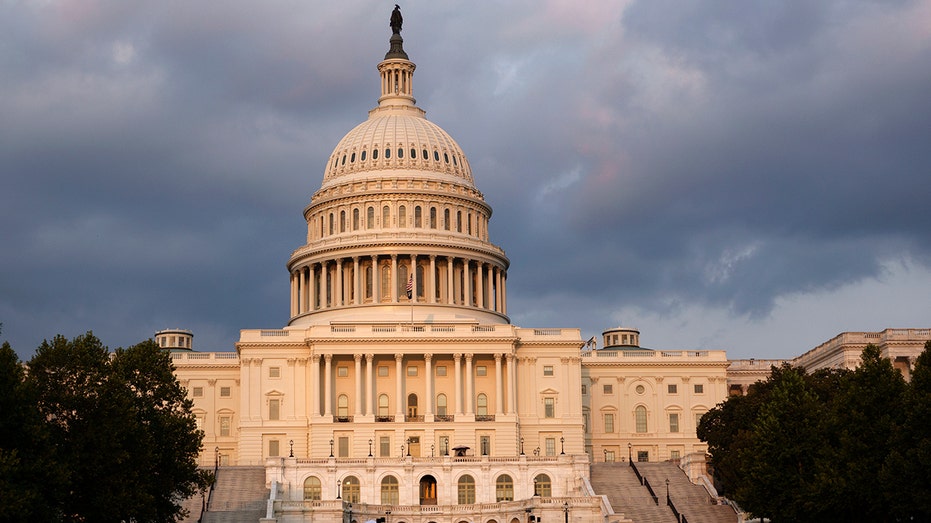
The U.S. Capitol building is seen at sunset on Aug. 12, 2026, in Washington, D.C.  (Kevin Carter/Getty Images)

GET FOX BUSINESS ON THE GO BY CLICKING HERE

Advertisement

Schiff said, “Republicans are in a predicament because doing the right thing economically is probably political suicide, which is why they won’t do it.”

Continue Reading

Business

Under pressure: Tracking the pain in G7 government debt

Published

on


Under pressure: Tracking the pain in G7 government debt

Continue Reading

Trending

Copyright © 2025