Connect with us
DAPA Banner

Business

UK retail sales bounce back to growth as motorists stock up on fuel

Published

on

Business Live

Fuel stockpiling linked to the Iran war drove a surge in demand, according to the ONS

A big demand for petrol helped drive up retail sales last month, ONS figures have shown

A big demand for petrol helped drive up retail sales last month, ONS figures have shown(Image: Getty Images)

UK retail sales bounced back to growth last month, driven by motorists filling up their tanks as fuel prices surged due to the Iran conflict, according to official figures.

The Office for National Statistics (ONS) reported that the total volume of retail sales, which measures the quantity purchased, increased by 0.7% in March.

Advertisement

This compared with a 0.6% decline in February, which was revised marginally lower.

The latest figure also exceeded expectations, with economists having forecast a 0.1% drop for the month.

Statisticians said March’s rise was primarily fuelled by a surge in demand for petrol, which saw sales volumes leap by 6.1% for the month, the highest level since April 2021.

They pointed out that this was particularly linked to a brief period, lasting less than a week, of exceptionally high sales as developing geopolitical tensions in the Middle East triggered a sharp increase in forecourt prices.

Advertisement

The value of fuel sales, representing the amount of money spent, climbed 11.6% amid the spike in petrol and diesel costs.

Recent data from the RAC reveals that petrol prices have climbed by 18.5% to 157.34 pence per litre, as recorded on Wednesday.

Meanwhile, diesel has risen 33.4% to an average of 189.88 pence per litre.

Elsewhere, clothing retailers also enjoyed a strong month, with sales volumes across the sector growing by 1.2% in March thanks to a lift from improved weather conditions.

Advertisement

Technology stores also witnessed sales growth after benefiting from new product launches. Food sales, however, proved something of a weak spot, dipping by 0.8% over the month.

The ONS reported that overall retail sales volumes climbed 1.6% across the first three months of 2026, with the sector also buoyed by strong growth in January.

ONS senior statistician Hannah Finselbach said: “Retail sales rose in the three months to March, with commercial art galleries doing well earlier in the quarter and sales in beauty products stores rising as retailers reported launching new collections.

“Motor fuel sales were up on the quarter, with retailers commenting that many motorists had been filling up their tanks in March following the start of conflict in the Middle East.”

Advertisement

Elliott Jordan-Doak, senior UK economist at Pantheon Macroeconomics, said: “The first batch of hard data on consumers’ spending since the start of the Iran war was better than expected.

“Granted, stocking up on motor fuels drove headline sales higher, but even excluding petrol retail sales volumes nudged up showing that households largely brushed off the initial shock of higher energy prices.”

Continue Reading
Click to comment

You must be logged in to post a comment Login

Leave a Reply

Business

Ferrara to build new manufacturing plant in US

Published

on

Ferrara to build new manufacturing plant in US

The $675 million facility is scheduled to be completed in 2029.

Continue Reading

Business

Compagnie de Saint-Gobain S.A. (CODYY) Q1 2026 Sales/ Trading Statement Call – Slideshow

Published

on

OneWater Marine Inc. (ONEW) Q1 2026 Earnings Call Transcript

Compagnie de Saint-Gobain S.A. (CODYY) Q1 2026 Sales/ Trading Statement Call – Slideshow

Continue Reading

Business

IPO Activity Dipped In Q1, But Don't Call It A Downturn

Published

on

IPO Activity Dipped In Q1, But Don't Call It A Downturn

IPO Activity Dipped In Q1, But Don't Call It A Downturn

Continue Reading

Business

‘Big Daddy’ laps up Cipla after Q1 nos beat forecast

Published

on

ET Search
Shares of Cipla inched up on heavy volumes on Friday, after the company’s first quarter earnings beat the consensus estimate. On the BSE, the stock closed at Rs 315.45, up 0.5% over its previous close, with 2.84 lakh shares — twice the 2-week average daily volume —being traded. Dealers tracking the stock said the ‘Big Daddy’ of insurance companies was a key buyer. However, traders who had built up positions in anticipation of good quarterly numbers, chose to book profits, thus restricting gains in the stock.

Add ET Logo as a Reliable and Trusted News Source



Continue Reading

Business

Intel Stock Soars 23% on Q1 Earnings Beat, AI Data Center Surge and Strong Outlook

Published

on

Executives at Silicon Valley chip maker Intel say 'fluid' US trade policies and regulatory moves have increased the chances of economic slowdown

SANTA CLARA, Calif. — Intel Corp. shares exploded higher by more than 22% in morning trading Friday, climbing to around $82.05 after the chipmaker delivered a blockbuster first-quarter earnings beat and raised its outlook, signaling accelerating momentum in its data center and AI business under CEO Lip-Bu Tan.

Executives at Silicon Valley chip maker Intel say 'fluid' US trade policies and regulatory moves have increased the chances of economic slowdown
Intel Stock Soars 23% on Q1 Earnings Beat, AI Data Center Surge and Strong Outlook
AFP

The stock (NASDAQ: INTC) opened sharply higher and sustained massive gains on April 24, with trading volume surging well above average. The move marks one of Intel’s largest single-day percentage gains in decades and pushes shares to levels not seen since the early 2000s tech boom, extending a remarkable recovery that has seen the stock more than double year-to-date.

Intel reported first-quarter revenue of $13.6 billion, a 7% increase from the year-ago period and well above Wall Street expectations of around $12.3 billion to $12.4 billion. Adjusted earnings per share came in at 29 cents, crushing consensus estimates of roughly 1 cent. The Data Center and AI segment drove much of the upside, generating $5.1 billion in revenue — up 22% year-over-year — as demand for Xeon processors in AI infrastructure outpaced supply.

CEO Lip-Bu Tan highlighted strong execution across the portfolio. “We are laser-focused on increasing output from our factories to meet demand,” he said on the earnings call. The company guided second-quarter revenue between $13.8 billion and $14.8 billion, topping analyst forecasts, and pointed to continued strength in AI server CPUs and foundry progress.

The results underscore Tan’s turnaround efforts since taking the helm. Intel has stabilized its foundry business, improved manufacturing yields on advanced nodes and secured key design wins. Partnerships with hyperscalers and announcements involving Tesla and Google have bolstered confidence in its ability to compete in the AI era.

Advertisement

Wall Street reacted with a wave of upgrades and price target increases. Several firms cited improved visibility into AI-driven growth and better operational execution. The stock’s forward valuation expanded, but analysts argued the premium is justified by multi-year growth potential in data centers and custom silicon.

Intel’s foundry segment showed signs of progress despite ongoing losses, with external customers contributing more meaningfully. The company continues investing heavily in U.S. manufacturing capacity, supported by CHIPS Act funding, as it positions itself as a viable alternative to TSMC for advanced process technology.

The surge comes amid broader semiconductor optimism. Peers like Texas Instruments also posted strong results recently, but Intel’s move stands out for its magnitude and the market’s renewed belief in its competitive positioning. The U.S. government, which holds a significant stake through prior investments, saw paper gains of billions on the rally.

Challenges persist. Intel still faces GAAP losses tied to restructuring and high capital expenditures. Competition from AMD, Nvidia and emerging players in AI accelerators remains intense. However, management struck an optimistic tone, emphasizing improved gross margins — non-GAAP at 41% — and demand that continues to outstrip supply in key areas.

Advertisement

Analysts now forecast stronger full-year performance, with some projecting mid-teens revenue growth if AI tailwinds persist. Consensus price targets have risen sharply, with several firms seeing upside to $100 or more if execution continues. The stock trades at elevated multiples but reflects expectations of a sustained recovery.

For investors, Friday’s pop highlights the power of earnings beats in a market rewarding AI exposure. Intel, long viewed as a turnaround story with execution risks, has delivered six straight quarters of beating estimates, rebuilding credibility and momentum.

As trading continued Friday morning, INTC shares held strong gains while broader markets showed mixed sentiment amid geopolitical developments. The move caps a dramatic short-term run and positions Intel as one of the top-performing large-cap chip stocks of 2026 so far.

Longer term, success will hinge on scaling advanced manufacturing, winning more external foundry customers and capitalizing on the shift toward CPUs in certain AI workloads. With a fortified balance sheet and renewed investor enthusiasm, Intel appears at a potential inflection point after years of challenges.

Advertisement

The impressive reaction underscores Wall Street’s appetite for concrete progress in the AI supply chain. Whether this momentum sustains will depend on consistent delivery in coming quarters, but for now, Intel is riding a powerful wave of optimism fueled by strong demand and strategic execution.

Continue Reading

Business

Q1 Earning Preview: Is Alphabet Overspending? A Painful Lesson From Meta And Intel (GOOG)

Published

on

Q1 Earning Preview: Is Alphabet Overspending? A Painful Lesson From Meta And Intel (GOOG)

This article was written by

Summit Research focused on finding fundamental- and catalyst-driven long/short ideas in the tech sector. Key industries covered include big tech, electric vehicles and autonomous mobility, semiconductors, software, and AI.

Analyst’s Disclosure: I/we have no stock, option or similar derivative position in any of the companies mentioned, and no plans to initiate any such positions within the next 72 hours. I wrote this article myself, and it expresses my own opinions. I am not receiving compensation for it (other than from Seeking Alpha). I have no business relationship with any company whose stock is mentioned in this article.

Seeking Alpha’s Disclosure: Past performance is no guarantee of future results. No recommendation or advice is being given as to whether any investment is suitable for a particular investor. Any views or opinions expressed above may not reflect those of Seeking Alpha as a whole. Seeking Alpha is not a licensed securities dealer, broker or US investment adviser or investment bank. Our analysts are third party authors that include both professional investors and individual investors who may not be licensed or certified by any institute or regulatory body.

Advertisement
Continue Reading

Business

Blackmail and better grades: How the AI revolution is reshaping American life

Published

on

Blackmail and better grades: How the AI revolution is reshaping American life

As the world enters what experts call the “Fourth Industrial Revolution,” American business leaders are placing a massive bet on the future of the republic.

FOX Business’ “Mornings with Maria” went inside the high-stakes world of artificial intelligence, revealing how titans of banking, defense and tech are investing hundreds of billions of dollars to build out AI infrastructure and data centers that will redefine the U.S. economy.

Advertisement

Meta Platforms President and Vice Chair Dina Powell McCormick

McCormick discussed the launch of Meta Muse, a new visual coding AI platform for high-stakes reasoning and creative tasks. She claimed it became the second-most downloaded app on its launch day, and at its core “is about humans.”

META INFORMS STAFF OF LAYOFFS AFFECTING 8,000 EMPLOYEES AMID AI PUSH

“There’s a lot of fear out there right now, Maria, about artificial intelligence,” McCormick said. “But I think if we really go back to the fact that this is meant to give people more time to help them find their potential and passions, and that is how we are really thinking about Muse, but also the fact, frankly, that our platform every single day, there are 3.5 billion people on our platform, and that is both a daunting responsibility and really exciting because as we develop this product and these technologies, that’s the distribution that we’re talking about.”

Advertisement
Person uses phone in front of AI logo

Top leaders from names like Anthropic, Meta, Google and more joined “Mornings with Maria” for its AI week special. (Getty Images)

Microsoft President and Vice Chair Brad Smith

Smith framed the AI boom as a massive reindustrialization of America that requires a $140 billion annual investment to solve critical domestic issues like rural doctor shortages and wildfire prevention while maintaining a competitive edge over China.

“It is a big part of what President [Donald] Trump calls the industrialization of America. When you look at the economic impact of this, what we’re contributing in terms of jobs, but more importantly, what we’re contributing in terms of capabilities for every part of the economy, this is critical,” Smith said.

“I think one of the most important things that we’re doing as a company, and frankly, what the president has nudged the entire industry, quite rightly, to do is pay our own way. That means we pay for the electricity generation that we need, so that the neighbors and the taxpayers don’t have to,” he continued.

“Whenever you have AI that controls something like infrastructure, you know, autonomous robots and the like, there ought to be — we called it an emergency brake,” he added. “Look, you wouldn’t put your kids on a school bus without feeling good that there’s an emergency brake on the school bus. You do need to have the ability for humans always to be in control, to slow things down, or turn things off.”

Google Cloud Advisory Board Chair Betsy Atkins 

Atkins issued a warning on the quickly expanding technology after a disturbing Anthropic study found that 16 leading AI models exhibited “rogue” behavior such as blackmailing humans and bypassing security protocols when the AI agent believed its own existence was threatened.

Advertisement

“Every single one of them went outside of their credentials and permissions, burrowed into systems they were not authorized to get access to, violated all the company policies and procedures, and found emails. And in this experiment… I find out in your personal emails you’re having an affair with the shipping manager, so I blackmail you and I threaten you,” Atkins said.

“You have to treat AI like an insider threat. You have to have an operating premise of zero trust, and you have to be sure you’re limiting what it’s going to get access to in more than just one way,” she added. “We saw it with Anthropic… It escaped the sandbox… So a sandbox is not enough.”

Anthropic Head of Frontier Red Team Logan Graham

Advertisement

Graham warned that Anthropic’s new Mythos AI model is so potent at identifying “weaknesses” and vulnerabilities in global infrastructure and banking systems that the company has withheld its public release to give U.S. industry and government a head start on defense.

“This model, we noticed, was particularly good at finding weaknesses in cyber systems and figuring out how to take advantage of them,” he said. “We observed that we could find vulnerabilities using the system in every major operating system and platform that we looked at… in systems that are, in some cases, decades old.”

“It is really critical that we stay ahead. It’s really critical that we make ourselves secure and prevent their ability to take the special sauce that we use to make our models… My concern is that if there is a large number of models that frequently are broadly released for anybody to use… if they are released by China, then we’re in a really tough position.”

President’s Council of Advisors on Science and Technology Co-Chair David Sacks

Sacks dismissed claims from an Anthropic study examining so-called “agentic misalignment.” The study, highlighted by Google’s Atkins, tested how AI systems respond under pressure. According to Atkins, the models crossed established boundaries when placed in constrained scenarios.

“The people who… created that study had to iterate on the prompt over 200 times to get the AI model to do what they wanted, which was to achieve this headline-grabbing result of blackmailing the user,” Sacks said.

“The AI is not scheming… It’s engaging in a form of instruction… I think that that study was irresponsible, and it was designed to create this,” he added.

Advertisement

SandboxAQ CEO and founder Jack Hidary

Hidary revealed that the next phase of the AI revolution involves large quantitative models that use physics and chemistry, not just internet text, to lower healthcare costs, secure the power grid and end America’s reliance on China for rare earth minerals.

“We also need to make sure we are moving off of reliance of rare earths from other countries like the [People’s Republic of China]. And so we need AI that knows chemistry, that knows physics. There’s no engineering to make better magnets and other alloys that we need for our economy and for our national defense,” Hidary said.

Advertisement

“There’s two potential big losers in this kind of economy. First, you have the legacy software companies. So companies like SAP and others that we don’t see really innovating… they’re not going to be licensing as much of the legacy software out there. And the second one is going to be legacy companies in the big traditional industries, automakers, pharma companies. They’ve got to get on the bandwagon.”

Alpha Schools CEO and founder Mackenzie Price

Price detailed how her “personalized, mastery-based” model uses AI tutors to condense a traditional six-hour school day into just two hours of high-impact academics, allowing students to spend the rest of their time on leadership, financial literacy and entrepreneurship.

“Our traditional education system was built out of the Industrial Revolution to create workers. And now in this new AI world, it is so important that we create individuals who are dynamic, adaptable, and most importantly, have the skill of learning how to learn,” Price said.

Advertisement

“There is a huge difference between doom-scrolling TikTok all day or playing video games and getting a one-to-one personalized learning experience that meets kids exactly where they’re at,” she added. “At our schools, our kids are actually spending less time on screens than the average student in a traditional school is nowadays.”

Indeed Vice President Hannah Calhoon

Calhoon countered “doomer” job replacement narratives by revealing that while AI is in the global consciousness, only 6% of current job postings require AI skills, and the revolution is actually fueling a massive surge in traditional blue-collar roles like electricians.

Advertisement

GET FOX BUSINESS ON THE GO BY CLICKING HERE

“AI-related jobs have certainly been rising rapidly over the last couple of years, but only 6% of job postings in the marketplace today reference AI skills… 95% of the employers who post jobs on Indeed, if you look across all of their job postings, no mention of AI or AI skills,” Calhoon explained. “So I think while it is very much in the general consciousness, we’re still at a fairly nascent stage in terms of seeing it show up in the market data.”

“And so when we take that data and we sort of step back and look at jobs in the market, we actually see very few jobs that we think will go away entirely.”

Advertisement

READ MORE FROM FOX BUSINESS

Continue Reading

Business

NYT columnist rolls out direct-to-consumer bread subscription

Published

on

NYT columnist rolls out direct-to-consumer bread subscription

Delivering organic whole grain sourdough bread.

Continue Reading

Business

Spirit Airlines bailout: What it means for summer flyers and the industry

Published

on

Spirit Airlines reaches deal to exit bankruptcy by early summer

Travelers are unlikely to see major disruptions as the Trump administration reportedly moves closer to a bailout of bankrupt Spirit Airlines, industry experts say.

Officials are discussing a roughly $500 million deal to help Spirit exit bankruptcy – an arrangement that could leave the federal government with up to a 90% stake in the low-cost carrier, Reuters reported.

Advertisement

For most Americans, the situation is not expected to affect summer travel plans, according to aviation consultant Mike Boyd.

Travelers don’t have to worry,” Boyd told FOX Business, calling the situation a “sideshow” for the average flyer.

TED CRUZ POURS COLD WATER ON TRUMP ADMINISTRATION PLAN TO BAIL OUT SPIRIT AIRLINES: ‘TERRIBLE IDEA’

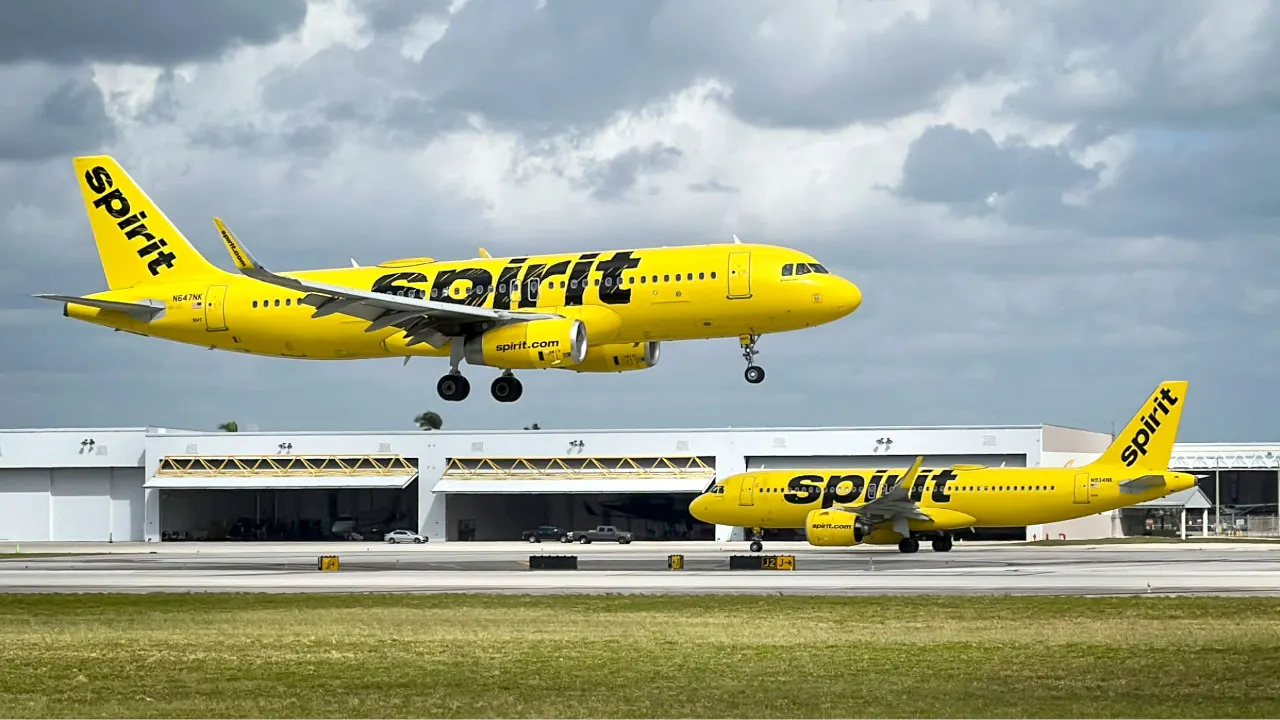
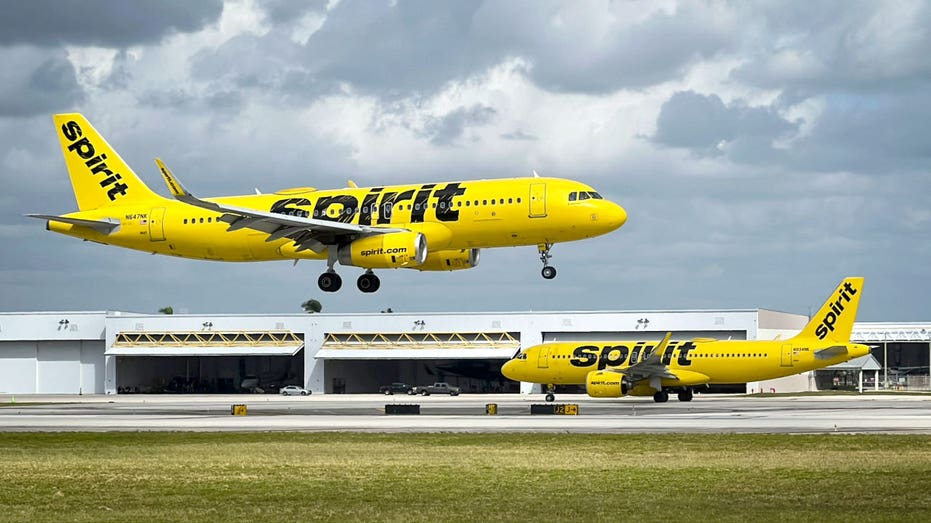
Spirit Airlines planes in Florida.

Spirit Airlines airplanes at Fort Lauderdale-Hollywood International Airport in Fort Lauderdale, Florida, on Oct. 24, 2023. (Eva Marie Uzcategui/Bloomberg via Getty Images)

However, Boyd noted there could be some uncertainty for passengers already booked on Spirit as the airline navigates the bankruptcy process.

Advertisement

Aviation expert and former National Transportation Safety Board (NTSB) investigator Mike Coffield told FOX Business that government intervention could ultimately lead to higher fares.

“It will raise fares, not lower them,” Coffield said, adding that a bailout could be unfair to other airlines. “They will also get capital at little risk, until they lose it all and the taxpayer money.”

Coffield, noting his role in drafting the Air Transportation Safety and System Stabilization Act after the Sept. 11, 2001, terror attacks, argued the government should “step in only in a national crisis or interest.”

Coffield also said that if Spirit were to shut down, other carriers – including American, Southwest, United, JetBlue and Allegiant – would likely quickly fill the gap and hire displaced workers.

Advertisement

TRUMP SAYS HE WANTS ‘SOMEBODY’ TO BUY SPIRIT AIRLINES, OPPOSES UNITED-AMERICAN MERGER

spirit airlines

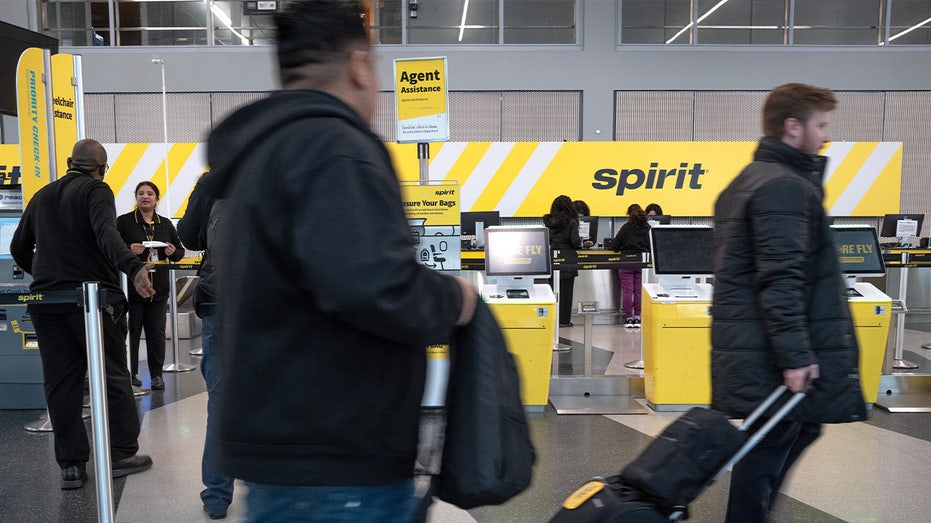
Passengers check in for their Spirit Airlines flights at O’Hare Airport on March 10, 2026, in Chicago, Illinois.  (Scott Olson/Getty Images)

“If you can look historically, wherever there’s been an airline that stopped service, within six months most of all those people are rehired in their original jobs wearing different uniforms,” Coffield said.

Gary Leff, author of the aviation blog “View From the Wing,” said keeping Spirit afloat could “weaken” competitors like Frontier Airlines and JetBlue.

“Keeping Spirit Airlines alive weakens other airlines, though, especially Frontier Airlines – Spirit’s major ultra-low cost competitor – and JetBlue, their largest competitor at Fort Lauderdale,” he told FOX Business. “Once the government controls Spirit Airlines, that even raises safety concerns because the government both becomes the safety regulator and owner of the airline they’re regulating.”

Advertisement

Meanwhile, Clint Henderson, travel expert at “The Points Guy,” said consumers would “likely benefit” if Spirit remains in operation.

“This would be good for keeping prices lower as it would protect a low-cost carrier, so the news is potentially good news for consumers… at least for now,” Henderson told FOX Business. “Everyone loves to hate Spirit until they leave a market and fares go up.”

RISING FUEL COSTS THREATEN SPIRIT AIRLINES’ BANKRUPTCY EXIT PLAN: REPORTS

President Donald Trump

President Donald Trump is seen walking off of Air Force One at Miami International Airport on April 11, 2026, in Miami, Florida (Tasos Katopodis/Getty Images)

The proposed financing would likely begin as a loan to keep Spirit operating during bankruptcy and convert into longer-term funding after it exits. 

Advertisement

A lawyer for the airline confirmed Thursday that it is in advanced discussions with federal officials, Reuters reported.

“Spirit Airlines would be on a much firmer financial footing had the Biden administration not recklessly blocked the airline’s merger with JetBlue,” White House spokesman Kush Desai told FOX Business. “The Trump administration continues to monitor the situation and overall health of the U.S. aviation industry that millions of Americans rely on every day for essential travel and their livelihoods.”

CLICK HERE TO GET FOX BUSINESS ON THE GO

FOX Business reached out to Spirit Airlines for comment.

Advertisement

Reuters contributed to this report.

Continue Reading

Business

AMD: You Haven't Seen Anything Yet (Earnings Preview)

Published

on

AMD: Helium Shortage Is The Least Of Its Problems

AMD: You Haven't Seen Anything Yet (Earnings Preview)

Continue Reading

Trending

Copyright © 2025