
Business
UK retail sales fall 0.5% in July as heatwave hits spending


UK retail sales fell 0.5 per cent in July as shoppers cut back during record temperatures, according to the Office for National Statistics, reversing the rise recorded in June at the start of the warm summer and the Fifa men’s World Cup.
The monthly fall was in line with expectations from economists polled by Reuters. June’s increase was revised down from 1 per cent to 0.7 per cent, and July’s drop wiped out that gain.
Over a rolling three-month period, sales volumes are up 1.1 per cent, the ONS said.
Spending on clothing, footwear and household goods all fell in July. Excluding petrol and diesel, sales volumes recorded a larger 0.9 per cent monthly contraction. Pump prices rose in July after the end of a US-Iran ceasefire pushed up global oil costs.
Grant Fitzner, chief economist at the ONS, said British consumers had ramped up spending on sports merchandise, fans and outdoor products.
Rob Wood, chief UK economist at Pantheon, a consultancy, said consumer spending would be squeezed in the coming months as energy costs drove inflation towards 3 per cent. Annual consumer prices rose by 2.9 per cent in July, up from 2.6 per cent in June.
Sandra Prince, head of consumer at Lloyds, said the warm weather meant more spending had been directed to retail parks and online shopping rather than the high street.
“After an extended spell of warm weather across large parts of the UK, many households will already have bought what they need for the season, while lines of popular summer products come to an end. The boost from the World Cup that came to an end in the first half of July also meant fewer opportunities to capitalise on the warmer conditions,” Prince said.
“For retailers, as the summer peak slows down, attention is now turning to the opportunities the autumn could bring to keep consumers engaged.”

Amy Ingham
Amy Ingham is a reporter at Business Matters, covering UK business news with a focus on breaking news, business policy, late payments and insolvency. She joined the magazine in 2026 after completing the NCTJ Diploma in Journalism at Harlow College’s journalism school. Her recent reporting includes British Steel’s nationalisation and its impact on SME suppliers, the decline in late payments by large firms, and Insolvency Service director disqualifications. Reach her at aingham@cbmeg.co.uk.


China was once one of the most attractive and fastest-growing markets for many American brands.
With its population of more than 1.4 billion people and massive opportunities for businesses, companies were racing to take advantage of the boon that China could offer.
But in recent years, some consumer brands, including Nike, Starbucks and General Motors, have begun to see the tide turn. With rising geopolitical tensions, a surge in domestic competition and a disconnect from the Chinese consumer, American companies have lost ground in the region that once offered fuel for growth.
“China is such a big market. The numbers are so big so quickly when you talk about China that sort of everybody has wanted to try, and that’s why all brands went there,” Aaron Cheris, head of global retail practice at Bain & Company, told CNBC.
Yet those companies haven’t adjusted to the local market and its changing structures and needs, he said.
“If anything, the question isn’t what’s going wrong in China — it’s why isn’t that happening in the rest of the world,” Cheris added.
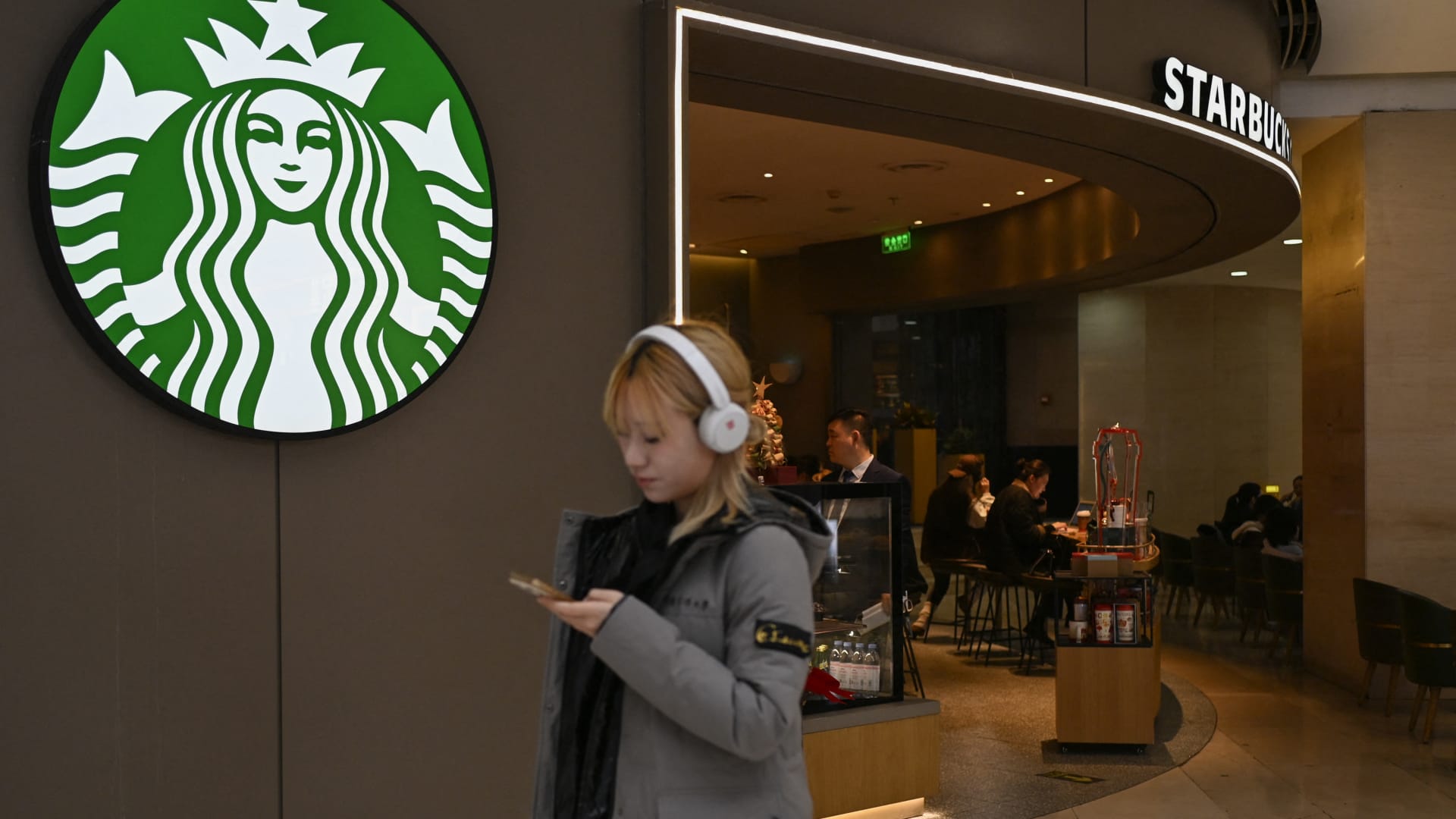
A person walks past a Starbucks coffee shop at a mall in Beijing, Nov. 5, 2025.
Wang Zhao | Afp | Getty Images
Cheris said price premiums for American products are often not worth it for Chinese consumers, and Chinese brands often have a fast innovation cycle and better distribution within the region.
“We’re just not nearly as developed. Our brands don’t necessarily think and develop quite in the same way,” Cheris said.
The U.S. and China have also been embroiled in geopolitical tensions over the past few years, especially with President Donald Trump‘s volatile tariff agenda. And while the political backdrop may be disincentivizing Chinese consumers from buying American, it coincides with a rise in pride for domestic brands as consumers look to buy more local.
Some of those domestic brands have also disrupted the broader industry, reset innovation cycles and launched price wars.
Still, some companies — such as Lululemon, Ralph Lauren and Kentucky Fried Chicken — are finding success in China with their products, a discrepancy Cheris said is due to “the basics” of their business strategies.
“Am I coming in with a good value? Did I have a compelling product that felt locally relevant? Am I advertising and making it available in the channels and stores that are winning in that market?” he said. “It really is a blocking and tackling and running your brand right kind of story.”
For more U.S. companies to turn around their China businesses, Cheris said, they’ll have to make sure the product is worth the price premium and quality.
“The key will be which brands take it seriously enough and really build enough local capability to do that, rather than just saying, ‘I’m going to take what I built globally and try to sell it to a Chinese consumer,’” he said.
Here’s how some consumer companies have seen their influence in China dwindle over the past few years:
Retail
Some retailers’ popularity and relevance have tanked in China over recent years as their bets to go big internationally faltered.
Nike is one of the biggest victims. The sneaker company has seen its China business shrink 30% since 2021, with its annual revenue hitting its lowest level in eight years in the spring. While China was once Nike’s fastest-growing region, shoppers are increasingly turning to domestic brands over international ones, while Nike is attempting to overhaul its distribution model in the country.
Yaling Jiang, founder of consumer research firm ApertureChina, previously told CNBC that Nike has “just become irrelevant” in China, while Adidas has gained traction.
That slowdown is against a backdrop of China’s sports renaissance, with the country’s sportswear market more than doubling over the past decade, according to GlobalData.
And Nike isn’t sure it’ll be able to recover its losses. On its most recent earnings call in June, outgoing CFO Matt Friend said he was unable to determine when the company’s China business would return to growth. Still, Cathy Sparks, the vice president and general manager of Greater China for Nike, previously told CNBC the company is actively working to reconnect with Chinese consumers.
A Nike store in Guangzhou, Guangdong Province, China, July 22, 2026.
Qin Zihang | Visual China Group | Getty Images
Other retailers have seen similar struggles.
Beauty retailer Estée Lauder has faced significant headwinds in China, with CEO Stéphane de La Faverie saying on a conference call in early June that he doesn’t believe China will soon resume to double-digit growth.
“We deal by making sure that our brands are the most locally relevant in the market where we operate,” he said, adding that he’s “confident” the company’s performance will be revived.
In 2022, Gap sold its China business to e-commerce firm Baozun in a $40 million all-cash deal after experiencing a slowdown in its business and an inability to connect with Chinese consumers. Under the deal, Baozun refined the company’s local strategy and Gap broke even for the first time earlier this year, with plans to open 50 new stores in mainland China in 2026.
Abercrombie & Fitch is also reportedly looking for local partners in China to hand off the reins of its business there and strengthen its performance.
Some brands, such as Lululemon and Ralph Lauren,have managed to maintain relevancy and sales. Lululemon has seen its China business rise and now expects China to grow about 20% for the year, while Ralph Lauren saw 40% growth in China in its most recent quarter.
Food and consumer packaged goods
While some food and beverage companies, such as Kentucky Fried Chicken, have continued to see success in the region, others have seen stark declines.
Starbucks entered mainland China in 1999, and it became the company’s second-largest market by 2015. But the Covid-19 pandemic started a downward turn for the company, which saw Chinese consumers seeking out lower-priced local brands instead.
“The market is going through a transition as we see an increase in mass market competitors, which we believe will shake out over time, and the market will emerge looking fundamentally different than what we see today,” then-CEO Laxman Narasimhan said on a Starbucks earnings conference call in early 2024.
Starbucks has seen intense competition from Chinese brand Luckin Coffee, which now has more than three times the number of stores in China. It also sells its drinks at a steep discount.
At the same time, Starbucks’ U.S. business was struggling, leading CEO Brian Niccol to create a joint venture with Boyu Capital to operate the company’s business in China. Boyu holds a roughly 60% stake in the joint venture and aims to use its local knowledge to lift Starbucks’ sales in China once again.
China is also the second-largest market for consumer packaged goods giant Procter & Gamble. But in recent years, P&G’s product sales have struggled in China.
“Coming out of Covid, [Greater China] was a depressed market. It was a tough competitive environment, and the results were not great,” P&G CEO Shailesh Jejurikar said on the company’s earnings conference call in late July.
Sales of its pricey SK-II skincare brand have seesawed. Chinese consumers are traveling less and scaling back spending even when they do go on vacation, hurting sales of SK-II, which relies heavily on luxury travel retail and duty-free stores. In late 2023, SK-II, which originated in Japan but is owned by P&G, also saw sales plummet, as anti-Japanese sentiment weighed on demand from Chinese consumers.
Still, P&G maintains that many of its brands are strong in China, saying some segments are hurt more by the consumer environment than a loss in brand equity. Company executives said they can grow sales in China, such as with diapers made with silk fibers that are winning over consumers.
“We are now growing share in China for the first time in 15 quarters, driven by fundamental changes we made similar to what we’re doing in the company,” Jejurikar told analysts in late July.
Autos
Employees work on a car assembly line at the SAIC General Motors Co., May 18, 2022.
Ren Yong | SOPA Images | Lightrocket | Getty Images
The U.S. automotive industry has been crippled in China.
What was once the largest potential growth market for automakers a decade ago has now turned into a massive restructuring, largely driven by the rise of domestic Chinese car companies and overcapacity creating a price war.
Detroit’s “Big Three” automakers — GM, Ford Motor and Chrysler parent Stellantis, which is no longer based in the U.S. — have collectively fallen from a global market share of 21.4% in 2019 to an estimated 15.7% in 2025, according to S&P Global Mobility. As a result, they’ve retreated from the region or restructured their Chinese operations.
General Motors, which is the longest-standing U.S. automaker in the country, is now just a shell of its former self in China. Its earnings in the region fell from around $2 billion annually in 2018 to two consecutive years of losses in 2024 and 2025.
GM’s fall from grace in the country comes as the automaker is seeing increased domestic competition and changing consumer sentiment. Experts have said local automakers are being fueled by government funding, as well as a culture of innovation and speed that China has instilled in its workers.
Still, a slowing Chinese market and underutilization have forced domestic companies — such as BYD, Geely and more — to begin exporting to major auto markets globally, including Europe, Canada and South America.
More Chinese consumers are also choosing electric vehicles over traditional gas-powered cars for their price and quality. New energy vehicles, which include battery and hybrid-powered cars, accounted for 65.1% of new passenger cars sold in July — up from 54% a year ago, according to China Passenger Car Association data released Tuesday.
GM isn’t the only American automaker considering its future in the region. EV leader Tesla is reportedly weighing the sale or spinoff of its Chinese business, according to a July report by The Wall Street Journal.
Ford, which in recent years has worked to position itself as the most American automaker, has been moving more of its operations and sales efforts to the U.S., including shifting the production of its Lincoln models from China to the U.S. beginning in 2030.
Between 2018 and 2022, Ford said, it saw a 32.4% decline in China sales. The company no longer reports its financial results by region.
– CNBC’s Gabrielle Fonrouge, Amelia Lucas and Mike Wayland contributed to this report.
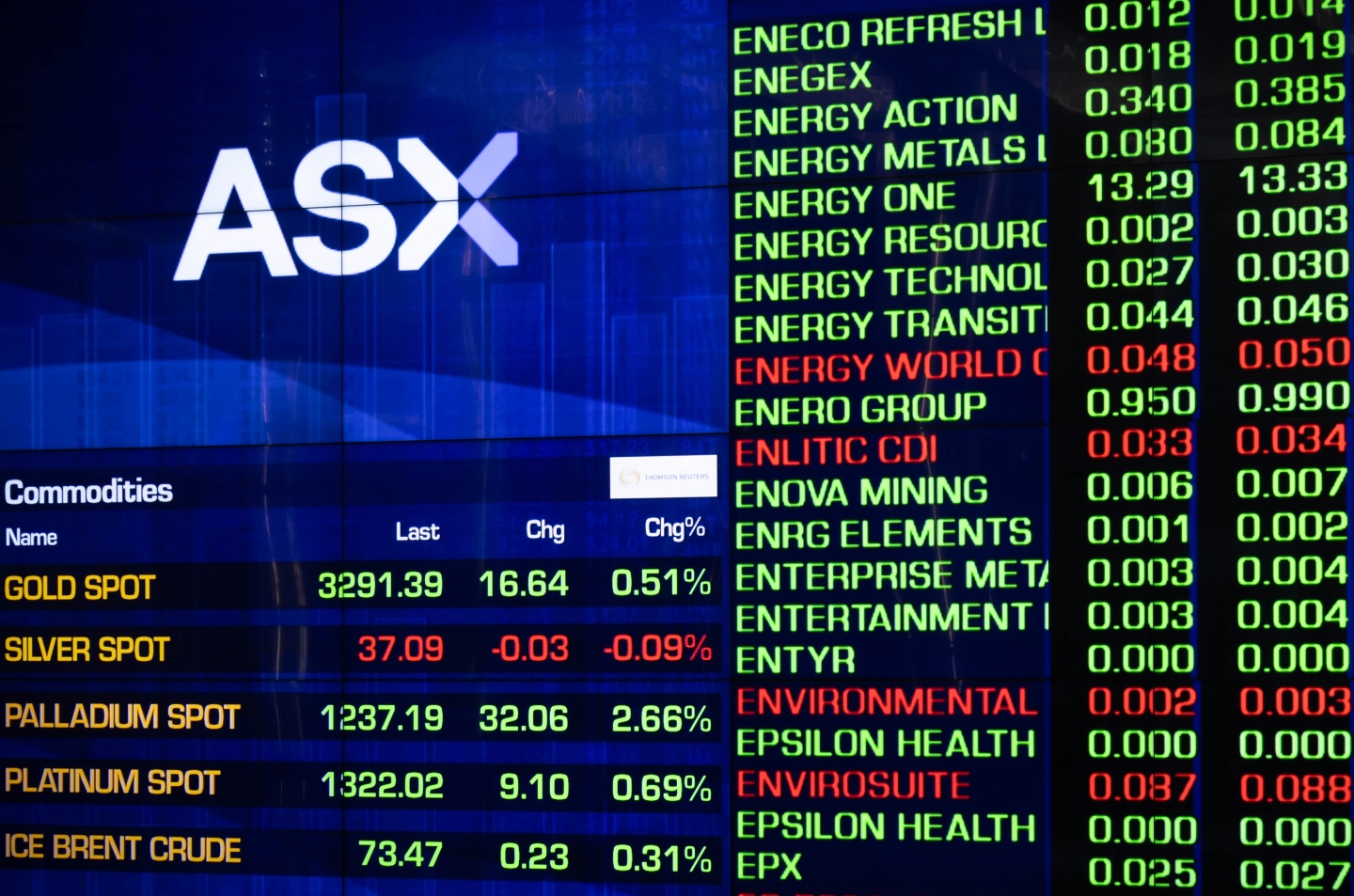
Western Australian-domiciled companies accounted for more than a fifth of ASX debutants after 22 local firms listed during the 2026 financial year.
Accenture: Bears Are On Wrong Side Of High-ARR AI SaaS-Ification Trend
Business
Prince William and Kate Arrive at Balmoral Days After News of Harry’s Return to the UK Breaks
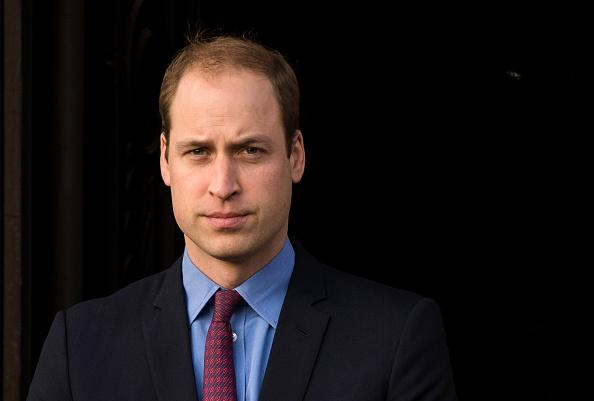
BALMORAL, Scotland — Prince William and Catherine, the Princess of Wales, arrived at Balmoral Castle on Thursday to join King Charles III for the royal family’s traditional summer stay in Scotland, days after news broke that Prince Harry and Meghan Markle plan to return to the United Kingdom after six years living in the United States.
The Prince and Princess of Wales began their visit accompanied by their three children, Prince George, 13, Princess Charlotte, 11, and Prince Louis, 8. The family typically travels to the royal residence in Aberdeenshire each summer for a break from official engagements, joining King Charles, who received his formal welcome to the castle on Tuesday, just two days after learning of Harry and Meghan’s plans to relocate back to Britain.
William has previously spoken about the significance the Scottish retreat holds for his family. “George, Charlotte and Louis are already aware of how dear Scotland is to both of us, and they’re beginning to create their own cherished memories there, too,” William has said of the annual visits.
HELLO! royal editor Emily Nash said William and Catherine are likely feeling less than enthusiastic about the timing of Harry and Meghan’s announcement, offering her assessment on the outlet’s “A Right Royal Podcast.” “Well, what is intriguing about this is the complete radio silence coming from that end of the spectrum. And what’s interesting about it is that they’re normally away at this time of year. I imagine they’re not delighted about this,” Nash said.
Nash suggested the damage done to the relationship between the two brothers over recent years would make any public reintroduction of Harry and Meghan into British life a significant challenge for the family to navigate. “It’s going to be a very, very difficult hill to climb, having them suddenly back in the UK, popping up, doing things publicly, if that’s where they go with this. So much has been said and done that has damaged that relationship, almost beyond repair,” she said.
According to Nash, it is likely that William and Catherine were informed of Harry and Meghan’s plans before the news became public, given that King Charles was told directly on Sunday. “I can’t see a world in which they would be welcoming them back with open arms. But you would anticipate that the King will have spoken to William about this if he was made aware,” Nash said. “We believe the Waleses were made aware beforehand. They didn’t find out at the same time as the rest of the world. So they’ve had time to process this.”
Harry and Meghan’s return does not involve any resumption of official royal duties. According to HELLO!’s reporting, the couple’s status will remain unchanged, with no partial or “half in, half out” arrangement under consideration. The Duke and Duchess of Sussex are expected to live in a non-royal residence outside London and have already enrolled their children, 7-year-old Archie and 5-year-old Lilibet, in British schools ahead of the upcoming school year.
King Charles learned of the couple’s plans to relocate on Sunday, and is reportedly looking forward to seeing more of the family, who first moved to the United States in 2020 following their departure from official royal duties. The king reunited with Harry, Meghan and their children at Highgrove House in Gloucestershire last month, marking the first time he had seen his grandchildren on the Sussex side of the family in four years.
William and Catherine’s arrival at Balmoral, alongside their children, places the full senior working core of the royal family together in Scotland at a moment of heightened attention on the broader family’s internal dynamics. Other family members have also been photographed arriving at the castle in the days following the initial announcement of Harry and Meghan’s return, including Princess Anne, along with Zara and Mike Tindall, according to subsequent HELLO! coverage describing what was characterized as a show of unity among the wider family gathered at Balmoral.
The renewed focus on Balmoral comes as King Charles has continued settling into his own summer stay at the estate, where he has been photographed meeting members of the public during informal walkabouts, a customary part of the royal family’s presence in the area each year. Those public appearances have continued even as the broader family works through the practical and emotional implications of Harry and Meghan’s imminent return.
The relationship between William and Harry has remained strained for several years, following the 2021 interview the Duke and Duchess of Sussex gave to Oprah Winfrey, in which they raised allegations regarding their treatment within the royal family, as well as the 2023 publication of Harry’s memoir, “Spare,” both of which are widely reported to have deepened the rift between the two brothers. Nash’s characterization of the relationship as damaged “almost beyond repair” reflects a broader assessment shared by several royal commentators in the wake of this week’s announcement, even as attention now turns to how the family will manage Harry and Meghan’s return to British life in the weeks ahead.
Neither Kensington Palace nor Buckingham Palace has issued a detailed public statement addressing William and Catherine’s specific reaction to the news of Harry and Meghan’s return, and much of the current reporting continues to rely on sourced commentary from royal correspondents rather than on-the-record statements from the family members themselves. As Harry and Meghan prepare to relocate to a private residence outside London later this month, attention is likely to remain focused on whether any direct meetings occur between the two branches of the family, and on how the gathering at Balmoral, now including both King Charles and the Prince and Princess of Wales, factors into the broader family’s response to the Sussexes’ return.
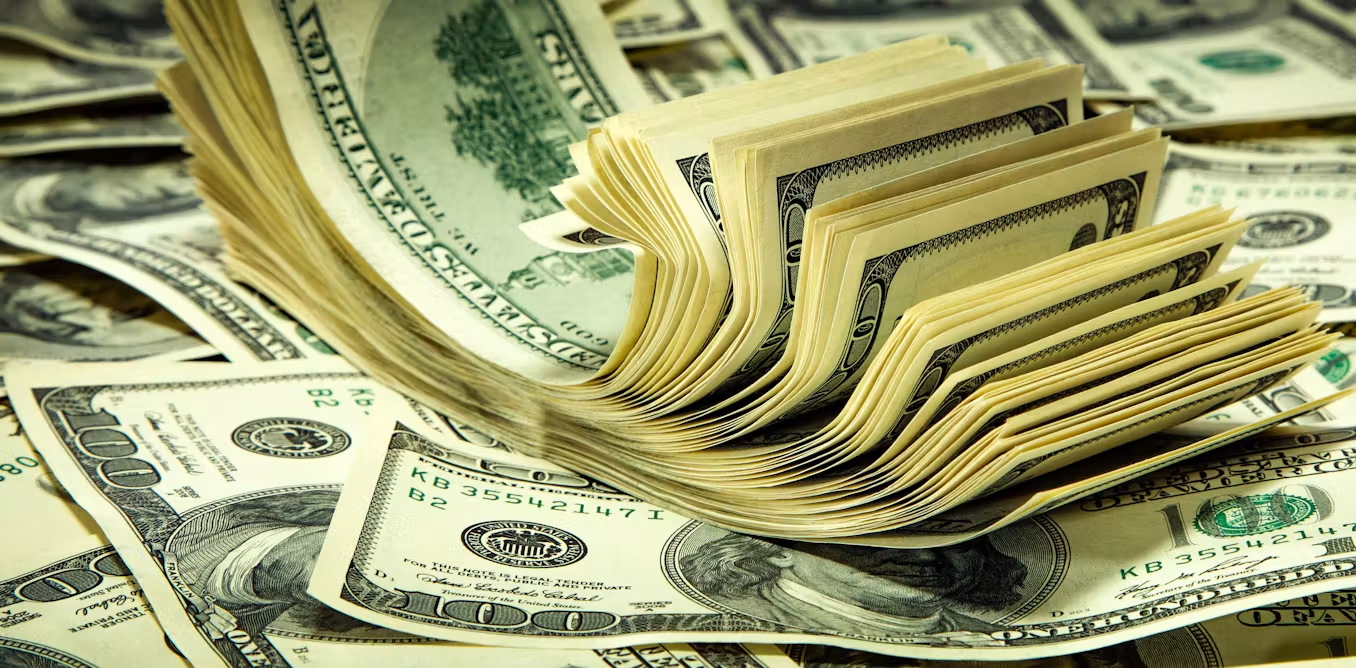
The United States has crossed a fiscal threshold few forecasters expected to see this year. The Treasury Department confirmed on August 19 that total gross national debt has surpassed $40 trillion, a milestone that arrived months ahead of schedule and comes wrapped in a set of numbers few Americans, or investors anywhere else, can easily process: roughly $117,000 per person, $297,000 per household, and a figure that now approximates the combined economic output of China, Germany, Japan, the UK, and India put together.
For Thailand, a small open economy with deep trade and capital-market links to the US dollar system, the milestone is not just an American headline. It touches everything from the baht’s exchange rate to the cost of servicing Thailand’s own public debt.
A Fiscal Milestone Years Ahead of Schedule
The US debt load has effectively doubled in under a decade, rising from roughly $19.4 trillion ten years ago to $40 trillion now. It took the country close to two centuries to accumulate its first trillion dollars of debt; it now adds that amount in under five months. Interest payments on the debt have grown large enough to exceed the entire US national defense budget, a threshold that budget hawks in Washington have flagged as a warning sign of fiscal strain.
Part of what pushed the milestone earlier than expected was a shortfall in tariff revenue after several of the White House’s trade levies were invalidated in court, cutting into a funding stream the administration had counted on. Treasury reported a monthly deficit of $432.3 billion in July, the highest since March 2021, with the year-to-date shortfall nearing $1.8 trillion.
Long-term borrowing costs have moved with the debt. The 30-year Treasury yield touched its highest level since 2007 this month, at 5.31 percent, while the 10-year sits near 4.7 percent. Those yields are not abstract numbers confined to Washington; they set the benchmark price of global capital, including the capital that flows into and out of Thai bonds and equities.
Rising Yields, Global Ripple Effects
Elevated US yields tend to pull capital toward dollar assets and away from emerging markets, Thailand included. TBN has previously examined the fragility signals building beneath record-high global equity markets, noting that concentration risk in US indices and stretched valuations leave the current wave of capital flowing into Southeast Asia more exposed than headline numbers suggest. A further leg up in US yields, driven by concerns over debt sustainability, would test that inflow directly.
The mechanism is already visible in Thai bond markets. The 10-year Thai government bond yield has climbed toward 2.3 percent this year, its highest level since February 2025, as the spread over comparable US Treasuries, currently around 200 basis points, keeps global funds calibrating their exposure to Thai fixed income against what Washington is paying. Foreign investors pulled over a billion dollars out of Thai bonds in a single month earlier this year during a bout of global risk aversion, a reminder of how quickly sentiment can turn when US rate expectations shift.
The Baht, Capital Flows, and Thai Debt Servicing
The interest-rate gap between the Federal Reserve and the Bank of Thailand has been the dominant force behind the baht’s moves in 2026. With the Fed’s policy range sitting 250 to 275 basis points above the BOT’s 1.00 percent rate, the dollar has retained a structural carry advantage that has periodically pushed USD/THB toward the 34 level. TBN has tracked this dynamic through the year, noting that Thailand’s roughly $279 billion in gross reserves provide a substantial buffer, meaning the current pressure looks more like a repricing than a funding crisis.
A US debt trajectory that keeps Treasury yields elevated, or pushes them higher still as investors demand greater compensation for holding US paper, would work against any near-term narrowing of that rate gap. That matters for the BOT, which has generally leaned toward an accommodative policy stance to support a fragile domestic recovery; a widening differential limits how much room the central bank has to cut further without triggering renewed baht weakness.
For the Thai government’s own borrowing, the read-through is more indirect but still relevant. Thailand’s public debt-to-GDP ratio stood at roughly 64 percent in the most recent fiscal year, low by comparison with many advanced economies, and the government funds the bulk of its needs domestically. But global benchmark yields still act as a floor beneath what Thailand pays to borrow, particularly for the growing share of debt issued to fund stimulus and energy-relief measures. The Public Debt Management Office has already leaned on notes and term loans this year as a liquidity cushion amid rising yields, a sign that Thailand is not entirely insulated from the global repricing of sovereign risk that a $40 trillion US debt load represents.
Thailand’s Relative Position
Set against Washington’s numbers, Thailand’s fiscal position looks comparatively conservative. Thai government debt equal to roughly 64 percent of GDP compares with a US debt load now approaching the full size of American GDP, a threshold economists have long treated as a red flag for fiscal sustainability. Thailand’s debt is also overwhelmingly baht-denominated and domestically held, reducing the currency-mismatch risk that has destabilized other emerging economies during past periods of dollar strength.
That relative discipline has not fully insulated Thai assets from global spillover, as the SET Index’s sharp swings this year illustrate, but it does give Thai policymakers more flexibility than counterparts in more heavily indebted economies. Bangkok’s growing appeal to global wealth, documented in TBN’s recent look at the city’s ultra-high-net-worth population growth, reflects in part a search for stability and institutional credibility at a moment when confidence in the fiscal trajectory of larger economies is being openly questioned.
What to Watch
The US debt path is likely to shape several storylines relevant to Thailand and the wider region over the coming months. The Federal Reserve’s rate decisions will remain the single biggest swing factor for the dollar-baht rate gap, with any hawkish surprise driven by inflation or fiscal concerns adding further pressure on the baht. Washington’s next debt-ceiling fight is also likely to arrive earlier than usual given the accelerated pace of borrowing, a recurring source of volatility for global risk assets. And with foreign holders of US debt watching yields climb to multi-decade highs, any shift in appetite for Treasuries, from China, Japan, or other major holders, would ripple quickly into emerging-market currencies and bond spreads, Thailand’s included.
For now, Thailand’s reserves, current account position, and comparatively modest public debt load offer a cushion. But a US fiscal trajectory adding trillions of dollars in debt every few months is a structural headwind that Thai policymakers, businesses, and investors will need to keep watching closely.

H.C. Wainwright cuts Envoy Medical stock price target on share count

Check out what’s clicking on FoxBusiness.com.
Neutrogena broke its silence Thursday following the death of Hayden Panettiere and mounting backlash over the skincare brand’s alleged treatment of the actress, acknowledging that it made her “feel unsupported during a very difficult time.”
Panettiere, known for her roles in “Nashville” and “Remember the Titans,” died Sunday at 36 after she was found unresponsive and in cardiac arrest at an apartment in Greenville, South Carolina.
Preliminary autopsy results found no signs of trauma that contributed to her death, Fox News Digital previously confirmed.
In the days following her death, fans unearthed comments made by Panettiere, who worked with Neutrogena from 2005 to 2015, in which she claimed the skincare brand cut ties with her after she spoke publicly about her experience with postpartum depression (PPD).
TIKTOK SAYS MODERATOR ERROR DELAYED REMOVAL OF PEREZ HILTON’S LIVESTREAM SHOWING ACTS OF SELF-HARM

Hayden Panettiere worked with Neutrogena for a decade before later claiming the skincare brand cut ties with her after she spoke publicly about postpartum depression. (Getty Images / Getty Images)
Neutrogena’s social media posts were subsequently flooded with negative comments, with some users calling for a boycott of the brand.
Neutrogena addressed the backlash in an Instagram post Thursday, saying it was “deeply saddened” by Panettiere’s death.
“For more than a decade, Hayden was a valued member of our Neutrogena community,” the brand wrote. “We are proud to have partnered with her and understand that we made her feel unsupported during a very difficult time. This is not what Neutrogena stands for or who we want to be.”
“Hayden’s courage in sharing her challenges helped inspire important conversations and awareness,” the post continued. “We are making a significant investment to a long-standing community health partner to help give more women access to the support they need, including care for postpartum depression. We will share more details with this community when plans are in place.”

Neutrogena acknowledged that it made longtime brand partner Hayden Panettiere “feel unsupported during a very difficult time” following backlash after the actress’ death. (Dimitrios Kambouris/Getty Images / Getty Images)
The brand said it had initially refrained from publicly commenting on Panettiere’s death out of respect for her family.
In her memoir, “This Is Me: A Reckoning,” released earlier this year, Panettiere wrote that Neutrogena wanted to end its long-term relationship with her after she spoke publicly about her experience with PPD.
During an appearance on Jay Shetty’s “On Purpose” podcast in May, Panettiere said she had not planned to discuss postpartum depression when the subject came up during a 2015 interview on “Live! With Kelly and Michael.”
“I had no intention of, or plan to, talk about postpartum depression. It just came up, and I was just being honest,” she said.
DAVE PORTNOY HAS MESSAGE FOR ‘TRASHY, RATCHET INFLUENCERS’ AMID VIRAL NANTUCKET SIGN CONTROVERSY

In her memoir, “This Is Me: A Reckoning,” Hayden Panettiere claimed Neutrogena wanted to end its longtime partnership with her after she spoke publicly about postpartum depression. (Grand Central Publishing / Unknown)
“Never for a second did I think that anyone … cared, that anyone would have a bad reaction to it. It was my truth.”
Panettiere said losing the Neutrogena partnership was “the last thing that I thought they would ever fire me over.”
“And so when I got that call that Neutrogena wanted to fire me over that, and my representative at the time said, ‘That’s illegal you can’t do that,’ I knew that that was gonna be it, that I was not gonna be invited back the next year, and I had worked with those people for 10 years.”
Panettiere’s death came just weeks after she spoke publicly about her past struggles with addiction and the difficult decisions she made while seeking help.
GET FOX BUSINESS ON THE GO BY CLICKING HERE
Fox News previously reported that the Drug Enforcement Administration (DEA) has been contacted and is assisting in the investigation into Panettiere’s death.
FOX Business has reached out to Neutrogena for additional comment.
Fox News Digital’s Lorraine Taylor and Stepheny Price and Fox News’ Jake Gibson contributed to this report.

Why this strategist thinks longer-term outlook for stocks is "unfavorable"


Seeking Alpha’s transcripts team is responsible for the development of all of our transcript-related projects. We currently publish thousands of quarterly earnings calls per quarter on our site and are continuing to grow and expand our coverage. The purpose of this profile is to allow us to share with our readers new transcript-related developments. Thanks, SA Transcripts Team

Bitcoin's Bear Is Ready For Hibernation

How to print your favorite photos like it’s 1996

‘I don’t want to leave my girls’ – Mum’s tragic diary entries after horrific NHS error

Why U.S. brands like Nike and Starbucks struggle in China

Weekend Open Thread – Corporette.com

Weekend Open Thread: Brooks Brothers

London Mayor Sadiq Khan handed a peerage by Keir Starmer alongside 15 other Labour figures… just days before the PM leaves No10

FY – Money Dance – Official Music Video

What The FED And BiS Just Said About Crypto Is SHOCKING!!! Clarity News, ETH & ADA News! BTC TA!?

GFR 2017 Class | UPSC Principal & Vice Principal General Financial Rules | Delhi Principal Vacancy
-

 Fashion7 days ago
Weekend Open Thread: Ann Taylor
-

 Sports6 days ago
Birmingham 2026: Day 6 Timetable for Irish Athletes
-
 NewsBeat6 days ago
Myanmar says over 300,000 Rohingya refugees verified for repatriation as exodus enters ninth year
-

 Business3 days ago
SMA Solar Technology AG (SMTGY) Q2 2026 Earnings Call Transcript
-

 Politics6 days ago
SEQ Code: The Three Letter Boarding Pass Code That Could Give You The Worst Seat
-

 Tech3 days ago
Qwen3.8-27B runs frontier-class coding agents and reasoning locally, no cloud API required
-

 Crypto World6 days ago
Pi Network Protocol 27 endgame: last upgrade before what?
-

 Crypto World4 days ago
OCC Greenlights Trump Family Crypto Firm for Trust Charter
-
 Tech6 days ago
Every fusion startup that has raised over $100M
-
 Entertainment6 days ago
Marvel Studios Reveals New X-Men Cast Including Adam Driver and Sadie Sink
-
 Business6 days ago
Monarch Mutual Fund set to enter MF space with maiden overnight fund; files draft with Sebi
-

 Fashion7 days ago
Weekly News Update, 8.14.26 – Corporette.com
-

 Business6 days ago
Facebook Down Now? Users Report Login And Loading Problems As Outage Trackers Monitor Ongoing Issues
-

 Fashion7 days ago
Silver bangles for women – Newbridge Silverware
-

 Business6 days ago
Cristiano Ronaldo’s Secret Wedding Deepens As Presenter Claims Family Learned ’30 Seconds’ Before
-

 News Videos1 day ago
Don’t Leave Your Financial Future To Chance | August 19, 2026
-

 Crypto World4 days ago
NAVI Prime launches institutional lending framework on Sui
-

 Fashion7 days ago
Cart Confidential Vol. 44 – Julia Berolzheimer
-
 Crypto World5 days ago
Data of 54K Wallet Users Leaked, Clarity Odds Just 10%: Hodler’s Digest, Aug. 16
-
 Fashion7 days ago
knitwear for women sale – up to 50% off
You must be logged in to post a comment Login