Sen. Dave McCormick, R-Pa., discusses President Donald Trump’s renewed threats to fire Federal Reserve Chair Jerome Powell and Kevin Warsh’s upcoming confirmation hearing on ‘Kudlow.’
Kevin Warsh is set to testify on Tuesday about his nomination to be chairman of the Federal Reserve, with senators likely to press him on his views of the Fed’s 2% inflation target given the persistent price pressures affecting the U.S. economy since the pandemic.
The 56-year-old Warsh, who served as a Fed governor from 2006 to 2011, will testify before the Senate Banking Committee as senators weigh his nomination to succeed current Fed Chair Jerome Powell, whose term leading the central bank is due to expire in May.
Advertisement
Warsh offered an overview of how he views the price stability component of the Fed’s dual mandate in a written copy of his opening statement, which FOX Business viewed in advance of his testimony.
In his prepared remarks, Warsh says that he supports the Federal Reserve’s dual mandate of promoting price stability as well as full employment, though he didn’t specifically discuss the Fed’s policy target of keeping inflation at 2% over the long-run.
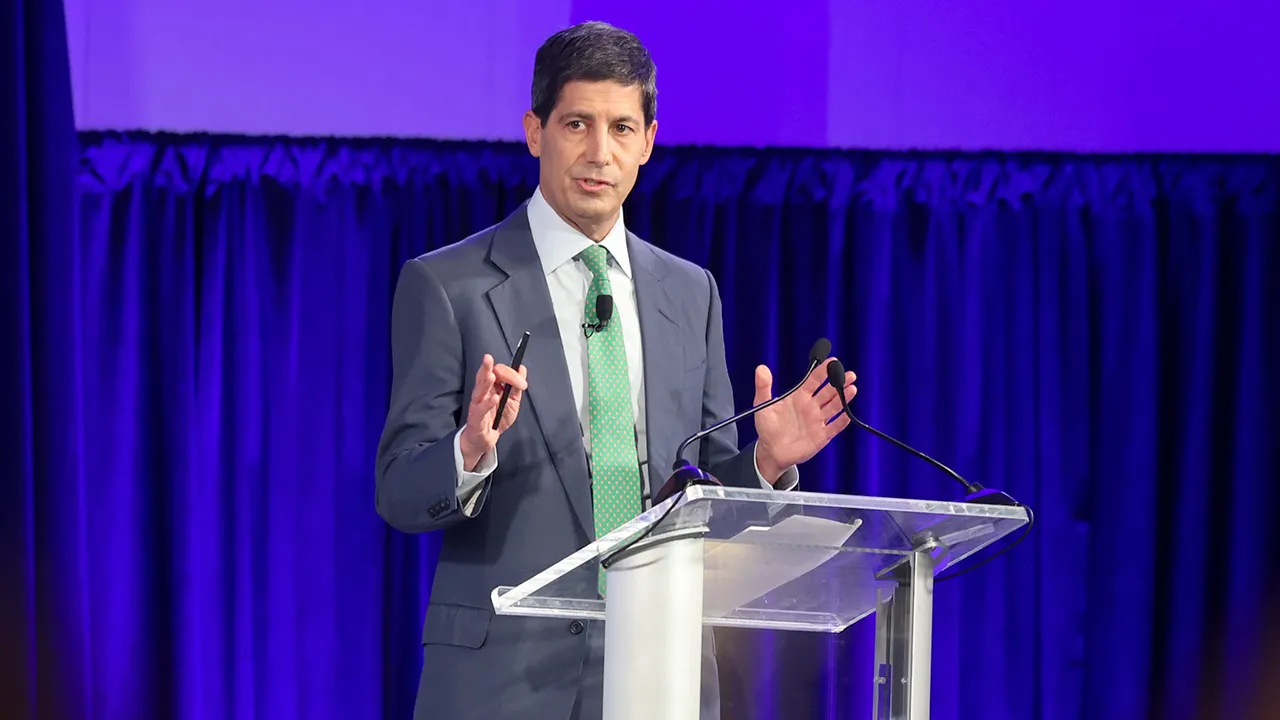
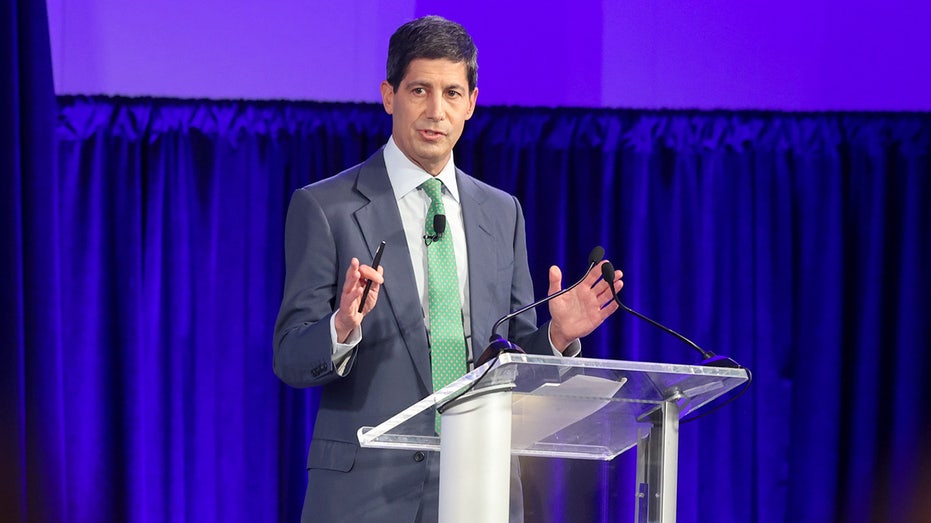
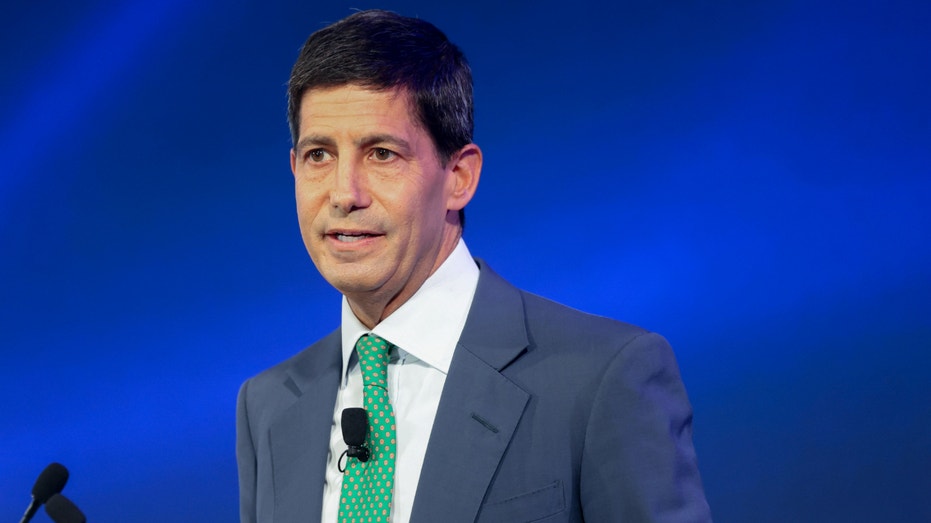
Former Fed Governor Kevin Warsh is the nominee to succeed Powel as Fed chair. (DMV Productions)
“First, Congress tasked the Fed with the mission to ensure price stability, without excuse or equivocation, argument or anguish. Inflation is a choice, and the Fed must take responsibility for it,” Warsh wrote.
Advertisement
“Low inflation is the Fed’s plot armor, its vital protection against slings and arrows,” he said.
“So, when inflation surges – as it has done in recent years – grievous harm is done to our citizens, especially to the least well-off. They lose purchasing power. Their standard of living falls. They may also lose faith in our system of economic governance, raising doubts whether monetary policy independence is all it’s cracked up to be,” Warsh wrote.
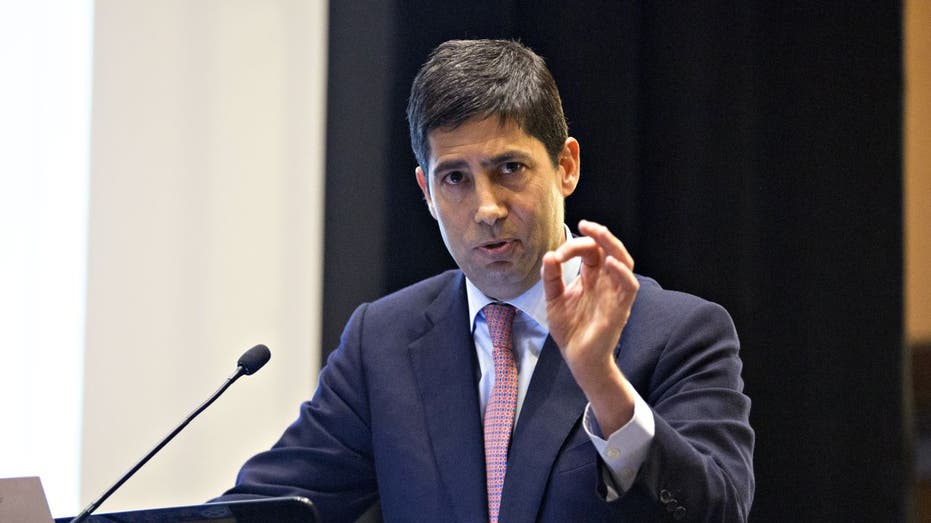
Warsh has emphasized the importance of price stability and is skeptical of relying too heavily on a 2% inflation target due to the risk of measurement errors and policy mistakes. (Tierney L. Cross/Bloomberg via Getty Images)
Warsh discussed his view of monetary policy goals in a 2023 hearing before the British House of Lords’ Economic Affairs Committee and said that he views price stability as an imperative, but is skeptical of the ability to measure inflation precisely, and so he prefers a range-based inflation target.
Advertisement
“Price stability is the North Star. Without stable prices, it is almost impossible to have full employment. It is also almost impossible to have economies that are growing at their full potential. When prices are volatile… it is difficult for households and businesses to make the prudent decisions that they might like,” he explained.
“Frankly, we would not know the difference whether inflation was running at 1.7%, 2.0% or 2.3% in the United States or in the United Kingdom because we do not measure it that precisely,” Warsh said. “Economics is not physics – at least not yet.”
Warsh said that he tends to “prefer ranges versus point estimates, in part because of measurement error and in part because I think broad price stability can never be that precise.”
Advertisement
He added that, in general, he thinks viewing inflation that precisely “led many of the central banks to overly stimulate economies a few years ago,” and led to decisions that contributed to inflation running well above target.
“I broadly favor ranges. Price stability, in the numerical definition, will change in the times. The structures in the global economy are changing even as we speak. It strikes me that agreeing on some permanent basis to 2.0% is asking for trouble,” Warsh said.
Inflation peaked in the U.S. at 9.1% in June 2022 and is currently around 3%, having risen over the last year due to tariffs and the recent impact of the recent energy shock caused by the Iran war.
The Fed’s preferred inflation gauge, the personal consumption expenditures (PCE) index, was 2.8% in February on an annual basis. Data from March is due at the end of next week.
Another popular inflation gauge, the consumer price index (CPI), showed inflation jumped to 3.3% in March after a 2.4% reading in February due to the impact of the war on energy markets.
Shares of Tata Steel have gained around 12% so far in April, nearing their record high, with international brokerage Nomura remaining bullish on India’s steel sector, which it says is resilient to multiple headwinds.
In a note released on Monday, Nomura said it maintains a positive outlook on the sector, adding that global factors, including the impact of Chinese competition, are likely to have a limited effect on the earnings potential of major steel players. “Our bullish stance on the Indian steel sector is underpinned by improving domestic price momentum despite global headwinds,” it said.
The war between the US and Iran, and the subsequent closure of the Strait of Hormuz, triggered an energy crisis that rattled global markets in March. Nomura believes large, blast furnace-based steel players are relatively better positioned than smaller, gas-based DRI producers, as they can partially substitute LPG usage with alternatives in downstream operations.
In the absence of any significant disruption or sustained cost escalation so far, the brokerage has maintained its earnings estimates for stocks under its coverage. It has reiterated its ‘Buy’ ratings on Tata Steel, JSW Steel, Jindal Steel, and Lloyds Metals.
Advertisement
Should you buy Tata Steel shares?
Live Events
Nomura has set a target price of Rs 220 apiece for Tata Steel shares, implying an upside potential of nearly 4% from the stock’s last closing price of Rs 211.72 apiece. The global brokerage noted that Indian steel prices slightly corrected last week, but remain near elevated levels. “China’s steel sector witnessed a notable slowdown with steel production in March 2026 declining by 6.3% y-y to 87.04MT, marking the lowest level for the month since mid-2020. The weakness extended to trade flows as steel exports fell by 12.6% y-y to 9.13MT, partly impacted by disruptions from the Middle East conflict,” it said. (Disclaimer: Recommendations, suggestions, views and opinions given by the experts are their own. These do not represent the views of The Economic Times)
Nexus Airlines and Aviair will receive a share of more than $5 million from the state government to ensure accessibility to regional air services, as the Middle East conflict continues to put pressure on global fuel supply.
Manchester-based beauty and nutrition e-commerce firm posts revenue growth of 7% for the first quarter of 2026
City AM reporter www.cityam.com
10:42, 21 Apr 2026Updated 10:43, 21 Apr 2026
THG CEO Matthew Moulding (Image: THG/PA)
THG shares surged on Tuesday as the Manchester-based firm defied broader gloom across the retail sector, delivering its strongest quarterly performance in five years.
Advertisement
The beauty and nutrition e-commerce giant posted revenue growth of 7 per cent for the first quarter of 2026, noting that growth was only “modestly impacted” by disruption in the Middle East.
The London-listed company recorded revenue of £393.1m, driven by 8.1 per cent growth in its nutrition division to £159.8m, as reported by City AM.
“It is energising for everyone at THG to see such a strong start to 2026,” said chief executive Matt Moulding.
“While the geopolitical backdrop remains uncertain, we enter Q2 with confidence after a better-than-expected Q1, giving us a stronger base against any unforeseen risks later in the year.”
Advertisement
THG shares climbed 9.5 per cent to 42.2p in early trading.
“Positive underlying revenue momentum was maintained in both divisions,” said analysts at Panmure Liberum.
“Three consecutive quarters of mid-to-high single-digit organic growth are encouraging, but the business still needs to demonstrate consistent translation into higher profits and cash generation, particularly given raw material cost volatility.”
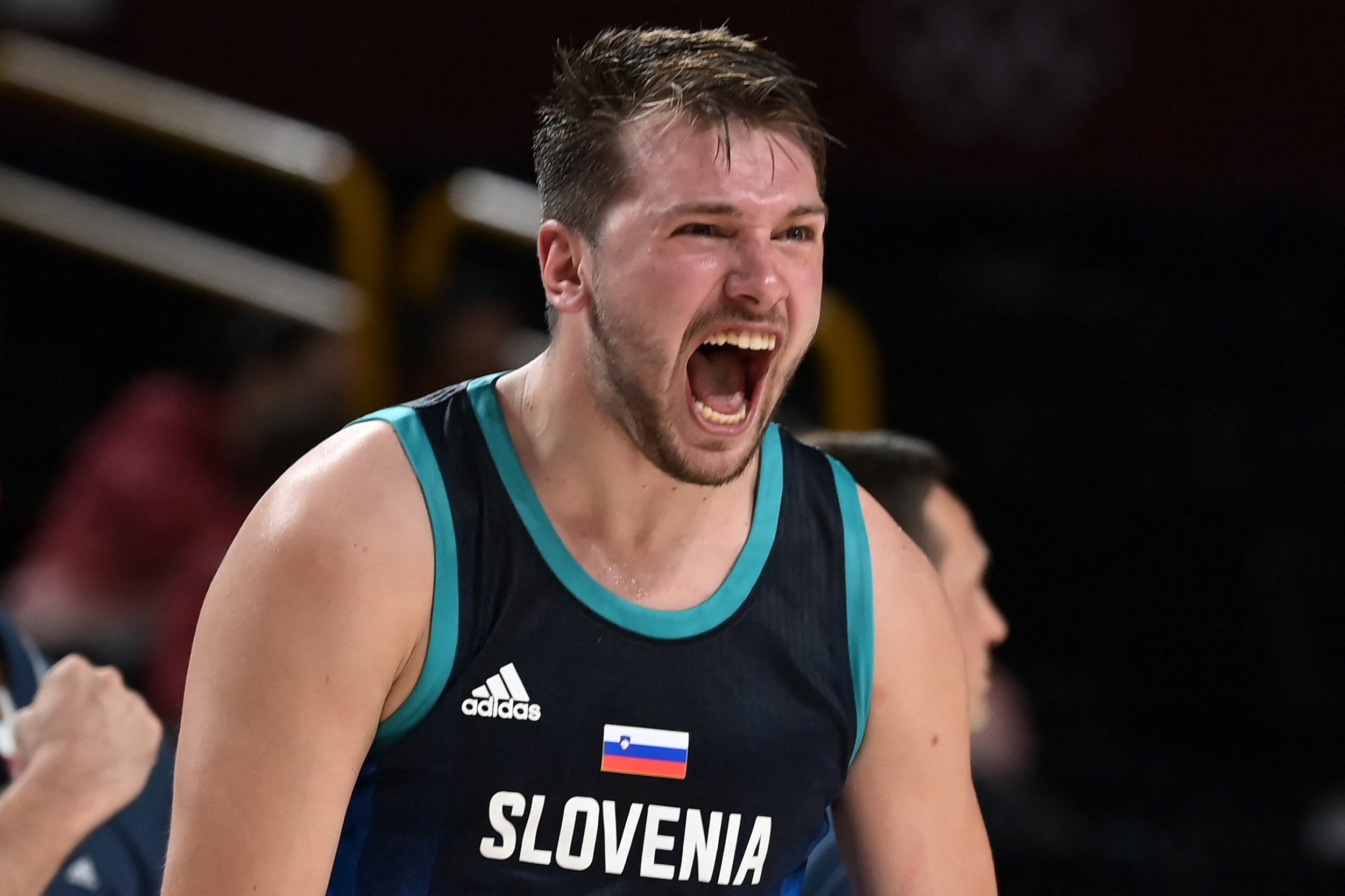
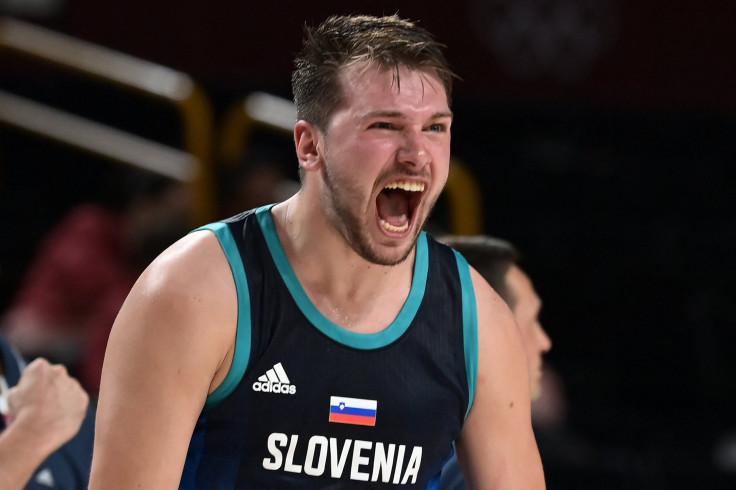
LOS ANGELES — Luka Doncic continues progressing in his recovery from a Grade 2 left hamstring strain, rejoining the Los Angeles Lakers in Los Angeles after specialized treatment in Europe and participating in limited practice sessions as the team battles the Houston Rockets in the first round of the 2026 NBA playoffs.
Luka Doncic
The 27-year-old superstar suffered the non-contact injury on April 2 during a blowout loss to the Oklahoma City Thunder, exiting in visible discomfort. An MRI the following day confirmed the partial tear, sidelining him for the remainder of the regular season and initially casting doubt on his availability for the postseason.
Lakers coach JJ Redick described Doncic as “out indefinitely” in mid-April updates, offering no firm timeline while emphasizing caution with the high-risk muscle injury. Grade 2 hamstring strains typically require four to six weeks for recovery, involving partial tearing of muscle fibers and careful rehabilitation to avoid recurrence.
Doncic traveled to Spain shortly after the diagnosis for advanced medical interventions, including multiple injections aimed at accelerating healing. He was spotted courtside at a Real Madrid EuroLeague game alongside Novak Djokovic before reportedly spending time with family in Slovenia. The trip drew significant attention, reflecting the Slovenian star’s determination to return for a deep playoff run with his new team.
By April 17-18, Doncic had returned to Los Angeles and rejoined the Lakers. Redick noted in a pregame session that the player was “in good spirits” after landing, though the coach joked about not having seen him yet in person. Recent reports indicate Doncic has resumed light practice activities, marking a positive step in his rehabilitation protocol.
Advertisement
As of April 21, Doncic remains officially ruled out for Game 2 against the Rockets on Tuesday night. The Lakers opened the series without their top scorer, relying on LeBron James, supporting cast members and strong performances from role players such as Luke Kennard to compete in the Western Conference matchup.
Insiders have offered measured optimism about a potential return. Lakers reporter Jovan Buha suggested there is a chance Doncic could rejoin the lineup toward the middle of the first-round series if it extends, potentially in Games 5, 6 or 7. Austin Reaves, sidelined with a Grade 2 oblique strain suffered in the same April 2 game, faces a longer projected timeline.
Medical experts caution that rushing a hamstring return carries significant re-injury risk, particularly for a player whose game relies heavily on explosive movements, deceleration and lateral quickness. History shows mixed results with similar injuries in the playoffs; some stars have returned successfully with limited minutes, while others have aggravated the issue and missed extended time.
Doncic’s season statistics underscore his value. In 64 games, he averaged approximately 33.5 points, 7.7 rebounds and 8.3 assists, positioning him as a leading MVP candidate before the injury. His absence forced the Lakers to adjust their offensive scheme, with increased reliance on James’ playmaking and perimeter shooting from others.
Advertisement
The timing of the injury complicated award eligibility. Doncic fell short of the 65-game threshold for certain postseason honors, though his representatives filed for an “extraordinary circumstances” exception citing personal reasons earlier in the season, including travel for the birth of his second daughter.
For the Lakers, managing Doncic’s return involves balancing short-term playoff ambitions with long-term health. The franchise acquired the former Dallas Mavericks star in a major trade, betting on his pairing with James and Anthony Davis — though Davis has also dealt with availability questions in recent seasons. A healthy Doncic could transform Los Angeles into a legitimate title contender, blending elite scoring, vision and clutch performance.
Rehabilitation protocols for Grade 2 strains generally progress from rest and inflammation control to isometric strengthening, then dynamic loading and sport-specific drills. Doncic has not yet resumed full running, according to the latest updates, keeping him in the controlled rehab phase.
Team sources indicate no expectation of Doncic or Reaves returning during the opening round, but the door remains open if the series extends deep into early May. A potential Game 6 would fall around May 1 and Game 7 on May 3, overlapping with the outer edge of a conservative four-to-six-week recovery window from April 2.
Advertisement
Fan reaction has been a mix of concern and hope. Social media buzzes with highlight reels of Doncic’s pre-injury dominance alongside speculation about his return date. Some analysts argue the Lakers should prioritize caution to preserve Doncic for future rounds or even next season, while others point to his competitive drive and history of playing through discomfort.
The broader playoff picture adds pressure. The Western Conference remains stacked, with Oklahoma City, Denver and other contenders posing significant challenges. Without Doncic, the Lakers have shown resilience but lack the offensive firepower and creation that the Slovenian provides.
Doncic’s injury history includes previous hamstring and lower-leg issues, though none exactly mirroring this Grade 2 strain. His meticulous approach to conditioning and access to top medical resources — including the specialized European treatment — could prove pivotal in shortening the timeline safely.
As the series progresses, daily monitoring will continue. Redick and the medical staff have emphasized a day-to-day evaluation without committing to specific games. Any return would likely involve minutes restrictions and a gradual ramp-up to avoid setbacks.
Advertisement
Beyond the immediate playoffs, Doncic’s recovery carries implications for the Lakers’ long-term roster construction and salary cap management. His presence elevates the ceiling of a team built around veteran experience and star power.
In the coming days, expect further updates from practice sessions and injury reports. If Doncic shows continued progress in on-court work without setbacks, optimism will grow for a mid-to-late first-round appearance or readiness for a potential second-round series.
For now, the focus remains on smart rehabilitation. The Lakers have navigated the early series without their star, but his eventual return — whenever it occurs — could shift momentum dramatically.
Doncic’s journey from Dallas to Los Angeles already marked one of the offseason’s biggest storylines. This hamstring setback tests his resilience once more, adding another chapter to a career defined by remarkable production and occasional physical challenges.
Advertisement
As April 21 unfolds with Game 2 on the horizon, all eyes in Lakers Nation remain fixed on the latest signals from Doncic’s recovery. Cautious progress in practice offers hope, yet the medical realities of a Grade 2 strain demand patience.
Whether he returns in this series or later, Luka Doncic’s presence will be felt. The superstar’s drive to contribute, combined with advanced treatment and careful management, positions him for a potential impactful comeback when cleared.
The NBA postseason often hinges on health as much as talent. For the Lakers and their fans, the waiting game continues — with measured optimism that the wait may not be as long as initially feared.
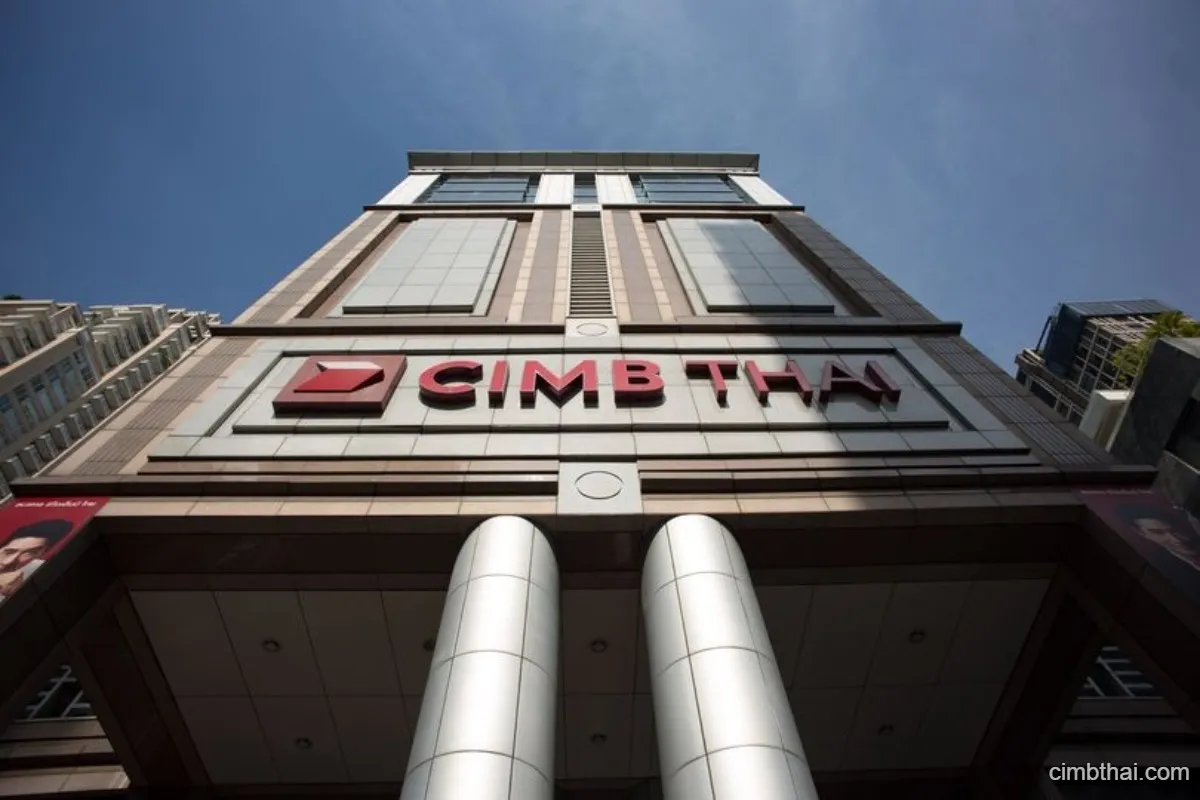
CIMB Thai Bank’s Q1 net profit rose 8.4% to 908.2 million baht, driven by lower credit losses and operating expenses, despite a decline in net interest income due to low rates.
Key Points
Profit Growth: CIMB Thai Bank reported an 8.4% net profit increase in Q1 FY2026, reaching 908.2 million Thai baht. This rise was primarily due to a significant reduction in expected credit losses (down 21.1%) and a slight decrease in operating expenses (down 0.6%).
Revenue Challenges: Despite profit gains, operating income declined 3.1% to 3.47 billion Thai baht. This was attributed to a drop in net interest income caused by lower asset yields in a low interest rate environment and a 22.7% fall in net fee and service income, particularly from insurance and underwriting.
Strategic Outlook: CIMB Thai remains committed to its Forward30 strategy, focusing on balance sheet strength, deposit growth, and quality expansion. The bank aims to leverage its ASEAN network to capture regional flows and support evolving customer needs, despite a more uncertain operating environment.
Profit Growth Driven by Cost and Loss Reduction
CIMB Thai Bank PCL, a subsidiary of CIMB Group Holdings Bhd, has reported a notable 8.4% increase in net profit for the first quarter of fiscal year 2026. This positive performance was primarily fueled by a significant reduction in expected credit losses, which decreased by 21.1% year-on-year, and a marginal 0.6% dip in operating expenses. These efficiencies, particularly lower employee-related costs, contributed to a more favorable bottom line. Despite a challenging economic climate, the bank has demonstrated its ability to manage costs effectively and mitigate potential financial risks.
Income Challenges and Strategic Outlook
While profit saw an uptick, operating income for CIMB Thai declined by 3.1%. This contraction is largely attributed to a 7.1% fall in net interest income, a direct consequence of lower asset yields amid a prevailing low interest rate environment. Furthermore, net fee and service income experienced a significant 22.7% decline, impacted by reduced insurance brokerage and underwriting fees. The bank’s cost-to-income ratio also rose to 48.9%. Nevertheless, CIMB Thai remains steadfast in its commitment to delivering resilient returns by focusing on deeper customer engagement, cross-selling initiatives, and robust risk management as part of CIMB Group’s Forward30 strategy.
Financial Position and Capital Strength
CIMB Thai maintains a healthy financial position and strong capital adequacy. Total gross loans saw a modest increase of 1.6% by the end of March, while deposits saw a decline. Importantly, the bank improved its gross non-performing loan (NPL) ratio to 2.1%, reflecting sound credit management. The loan loss coverage ratio significantly strengthened to 178.0%, exceeding regulatory requirements. CIMB Thai’s total consolidated capital funds stand at 58.6 billion Thai baht, with a robust BIS ratio of 19.6%, underscoring its financial stability and capacity to support future growth and evolving customer needs within the ASEAN region.
Premier Roger Cook has labelled talk of a 25 per cent tax on gas exports as “superficial”, against the state’s interests and something he’s warned the prime minister about.
President Donald Trump announces Kevin Warsh as his pick for new Federal Reserve chairman in a Truth Social post.
As President Donald Trump‘s nominee to lead the Federal Reserve, Kevin Warsh is stepping back into the spotlight – and in the hot seat – as he faces lawmakers Tuesday in a high-stakes confirmation hearing that could shape the future of U.S. monetary policy.
Trump announced Warsh to succeed Jerome Powell at the Fed in January, ending months of speculation over who he’d pick to head the world’s most powerful central bank. Powell is set to complete his term as chairman in May.
“I have known Kevin for a long period of time, and have no doubt that he will go down as one of the GREAT Fed Chairmen, maybe the best,” Trump wrote on Truth Social. “On top of everything else, he is ‘central casting,’ and he will never let you down. Congratulations Kevin!”
Here’s what to know about Warsh and his path to the Fed’s top job:
Kevin Warsh, former governor of the US Federal Reserve, during the International Monetary Fund and World Bank Spring meetings at the IMF headquarters in Washington, D.C., on April 25, 2025. (Tierney L. Cross/Bloomberg via Getty Images)
Warsh, born in 1970, earned a bachelor’s degree in public policy from Stanford University and later earned a law degree from Harvard University. Like Powell, Warsh does not have a formal economics degree (Powell earned a bachelor’s degree in politics from Princeton University and a law degree from Georgetown).
Advertisement
Warsh spent time working in the private sector at Morgan Stanley before joining President George W. Bush’s administration in 2002, burnishing his credentials in Republican policy circles until Bush nominated him to the Fed’s Board of Governors in 2006. At age 35, he became the youngest Fed governor in history.
President Donald Trump announced Warsh to succeed Jerome Powell at the Federal Reserve in January. (iStock)
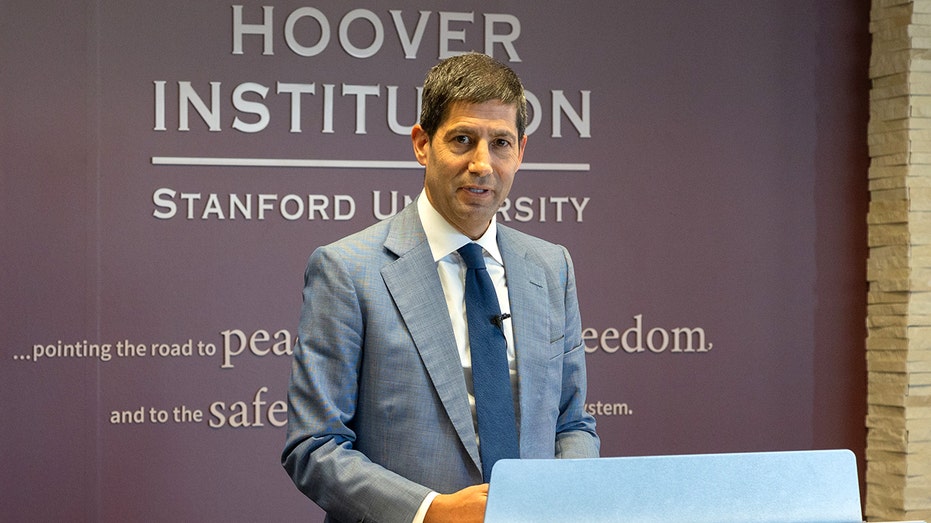
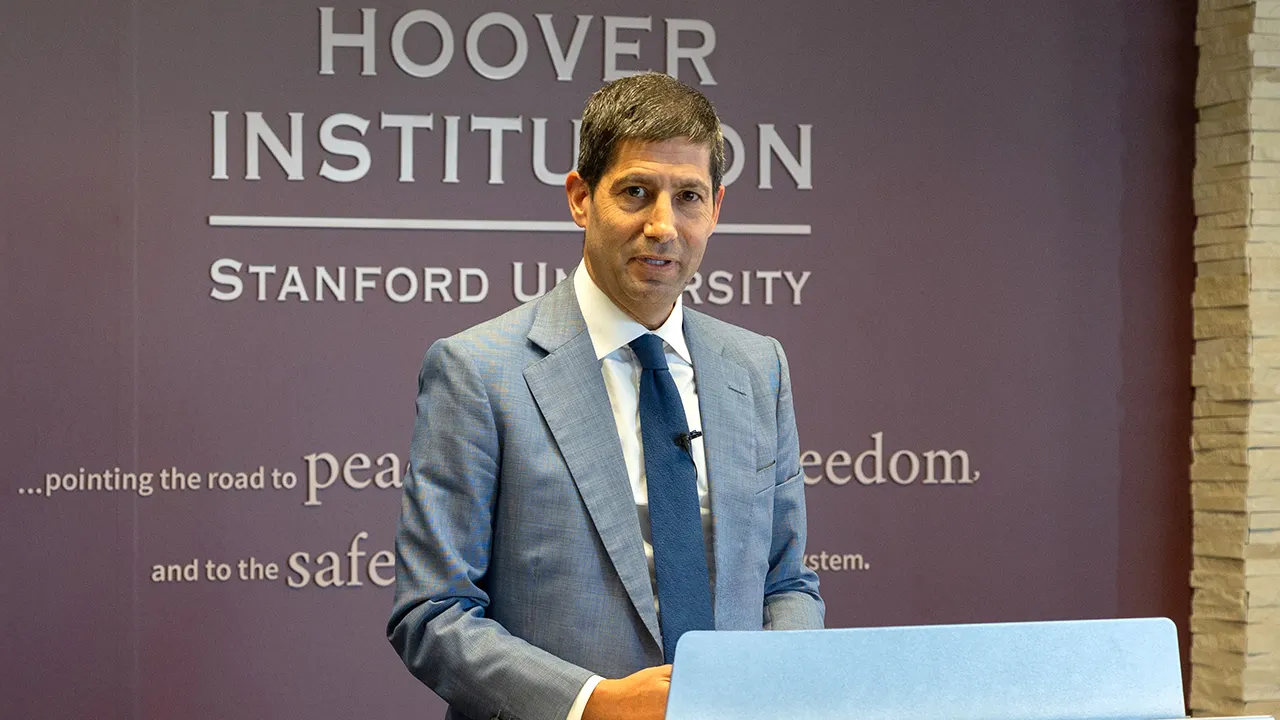
Since leaving the Fed in 2011, Warsh has served as a Shepard Family Distinguished Visiting Fellow in Economics at the Hoover Institution and a visiting scholar at Stanford’s Graduate School of Business. He also serves on the board of UPS and is a trustee of the Group of Thirty and the Panel of Economic Advisers of the Congressional Budget Office.
In 2017, he was considered by Trump to replace Janet Yellen as Fed chair. The president instead chose Powell as her successor. Warsh was also in the running to serve as treasury secretary last fall before Trump nominated hedge fund manager Scott Bessent.
Perhaps no finalist for Fed Chairman was as critical of Powell as Warsh. He has advocated for wholesale changes to the Fed’s approach to policy, calling the central bank’s economic models outdated and opaque while railing against the build-up of its balance sheet.
Despite generating a reputation as one of the Fed’s foremost inflation “hawks” during his stint on the Board of Governors, Warsh had said as recently as last fall that the Fed has room to ease borrowing costs.
“Prices can be lower,” Warsh told Fox News’ “Special Report” in October, “but it’s going to require regime change at the Fed.”
Advertisement
Though he has echoed Trump’s calls for Powell to lower interest rates throughout his candidacy for the central bank’s top job, Warsh has been notably less specific about what his preferred path for monetary policy would be. Members of the Senate Banking Committee are likely to press Warsh on those views during his confirmation hearing before the panel.
Kevin Warsh, former governor of the Federal Reserve, speaks during the American Economic Association annual conference in Chicago, Illinois, on Jan. 6, 2017. (Daniel Acker/Bloomberg via Getty Images)
As the Fed wrestles with how to set rates and adapt to Trump’s tariffs, Warsh – once a critic of protectionist trade policies – said last summer that tariffs would not cause lasting inflation.
Following last spring’s tariff announcements, inflation trended higher over the course of the year and remains closer to 3% than the Fed’s 2% target, though policymakers anticipate it trending closer to target over the course of 2026 barring further tariff announcements. Elevated inflation along with a slowing labor market has complicated the outlook for rate cuts and that dynamic may persist late into this year.
Still, any notion that Warsh would adopt a dovish approach to handling policy would stand in contrast to his record at the Fed, where he was critical of the central bank’s plan to continue buying Treasury bonds while keeping interest rates low for an extended period of time as the job market languished during the 2008 housing crisis.
Warsh’s ties to Wall Street, which reportedly remain strong today, allowed him to serve as the Fed’s chief liaison to the banking sector during that period.


















































You must be logged in to post a comment Login