
Business
US signals possible rollback of 25% tariff on India as Russian oil imports fall

“We put a tariff on India for buying Russian oil. Indian purchases of Russian oil have collapsed,” said Scott Bessent, US treasury secretary. “The tariffs are still on. I would imagine there is a path to take them off… So that’s a check and a huge success.” He was speaking with a US-headquartered publication at the World Economic Forum. The secretary also criticised European countries for buying refined Russian oil from India.
US sanctions have shrunk India’s purchasing pool for Moscow crude, leaving just Indian Oil, Nayara and BPCL lifting cargoes in the first half of January, ET reported earlier this month. India’s imports of Russian oil averaged 1.18 million barrels per day during January 1-15.

US Weighing 500% Tariff
This is about 30% lower, both from a year earlier and the 2025 average, according to Kpler, a global real-time data and analytics provider. Imports were about 3% lower compared with December.

Trade tensions escalated between New Delhi and Washington last August, when US President Donald Trump doubled duties on Indian goods to 50%, including a 25% levy in response to Russian crude trade.
Bessent’s remarks come amid heightened pressure from Trump, who earlier warned that tariffs could increase further unless India curtails its Russian oil purchases. New Delhi remains firm on its India First energy policy and stance of strategic autonomy. External affairs ministry spokesperson Randhir Jaiswal said developments around a proposed US Congressional Bill that could hike duties to 500% were being closely monitored.On Wednesday, Trump said he believed “we’re reasonably close” to a deal to end the war between Russia and Ukraine, which may result in the removal of US sanctions on Russia and ease prices.
Meanwhile, US energy secretary Chris Wright has said the world needs to more than double oil production, while criticising the European Union and the US state of California for wasting money on what he described as inefficient green energy.
Bessent also argued that by buying refined petroleum products from India (Russian crude), Europe is indirectly financing Russia’s war effort. “Before the Ukraine invasion, approximately 2-3% of Indian oil that went into its refineries came from Russia. The oil was sanctioned. It got deeply discounted and moved up… 7%, 18-19% was being refined. Huge profits from the refiners. But in the ultimate act of irony and stupidity, guess who was buying the refined products from the Indian refineries made from Russian oil? The Europeans. They are financing the war against themselves. They are financing the Russians.”

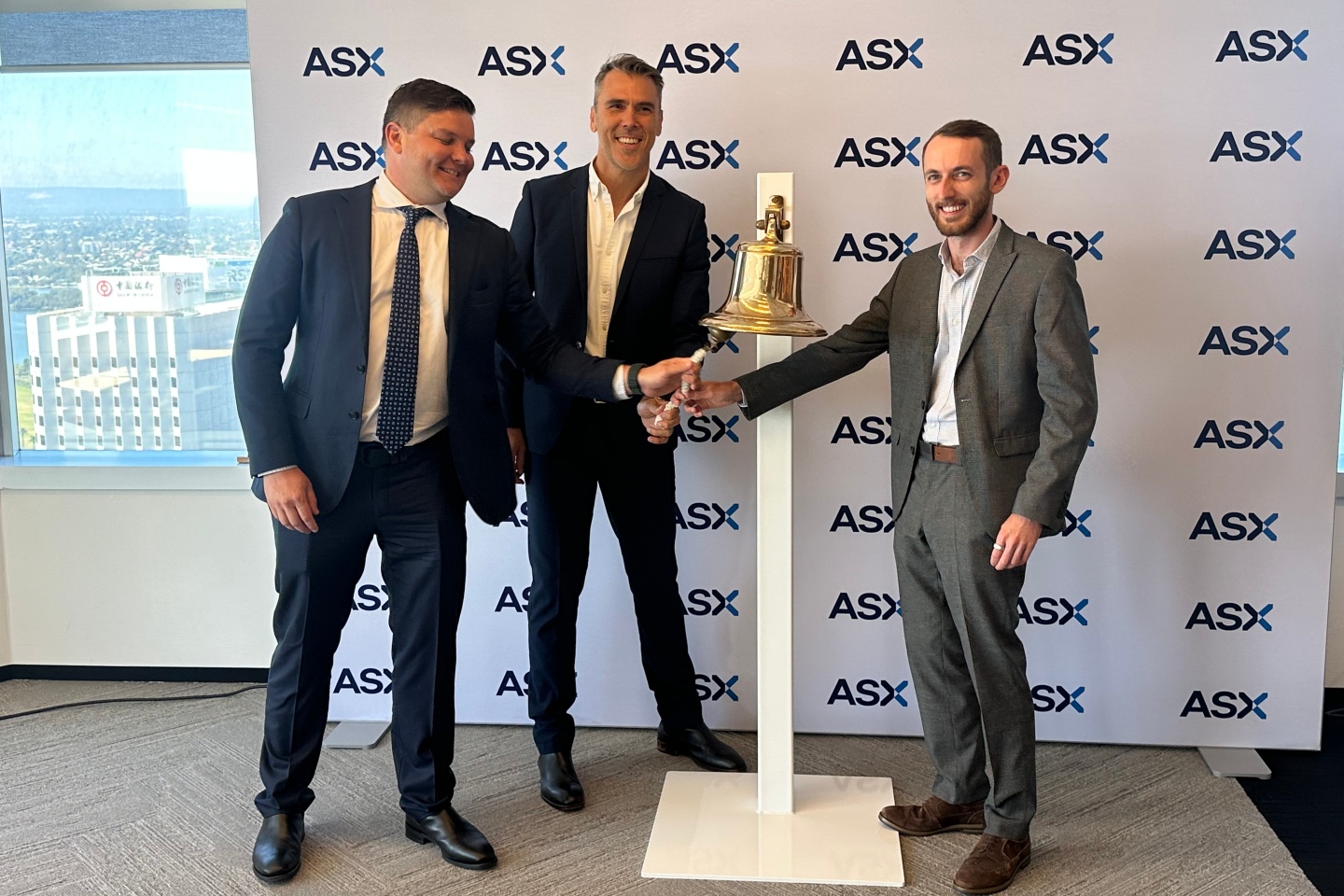
Shares in Nevada-focused Bison Resources more than doubled in the company’s first hour of ASX-listed life, climbing from 20c to 43c in just 60 minutes today.
Business
NVIDIA Stock Climbs 1.7% on AI Supercomputer Ramp as Blackwell Demand Fuels 2026 Growth Bets
NEW YORK — NVIDIA Corp. shares rose more than 1 percent in midday trading Wednesday as investors cheered ongoing production ramps of the company’s Blackwell AI platform and expectations for explosive demand in agentic AI systems throughout 2026.
At around $199.76 shortly after 11:25 a.m. EDT on April 15, 2026, NVDA stock had gained $3.30, or 1.68 percent, extending a recent recovery that has seen the chipmaker add roughly 19 percent in April alone. The shares have traded in a volatile range this year, reflecting both massive AI infrastructure spending and concerns over export restrictions and high valuations. NVIDIA’s market capitalization hovers near $4.9 trillion.
The latest uptick comes amid continued enthusiasm for NVIDIA’s data center dominance. Fiscal fourth-quarter results for the period ended January 2026 showed record revenue of $68.1 billion, up 73 percent from a year earlier, driven largely by data center sales that topped $62 billion. Full fiscal 2026 revenue reached approximately $215 billion, cementing NVIDIA’s position as the clear leader in accelerated computing for artificial intelligence.
CEO Jensen Huang has repeatedly described 2026 as the year of the “agentic AI inflection point,” where AI systems shift from simple chatbots to autonomous agents capable of complex reasoning and multi-step tasks. The Blackwell NVL72 AI supercomputer — essentially a liquid-cooled rack packed with 72 Blackwell GPUs and Grace CPUs connected by high-speed NVLink — is now in full-scale production and shipping to major cloud providers and system makers. Hyperscalers are deploying nearly 1,000 NVL72 racks per week on average, with output expected to accelerate further this quarter.
Blackwell Ultra variants and the upcoming Vera Rubin architecture promise even greater efficiency. NVIDIA claims the platform can deliver up to 30 times higher inference throughput in some benchmarks and an order-of-magnitude reduction in cost per token compared with previous generations. Cloud instances based on Blackwell are already live on AWS, Google Cloud, Microsoft Azure and Oracle, while Rubin-based systems are slated for deployment starting later in 2026.
Gaming and AI PC segments also contributed, with fiscal 2026 gaming revenue hitting a record $16 billion, up 41 percent annually. Professional visualization and automotive segments posted strong double-digit growth, though data center still accounts for roughly 90 percent of total sales.
Wall Street analysts remain overwhelmingly bullish. Across more than 50 firms, the consensus rating is Strong Buy, with an average 12-month price target around $270 to $275 — implying roughly 35 to 38 percent upside from current levels. Optimistic calls reach as high as $380 or $400, while the lowest targets sit near $205. Firms such as Rosenblatt Securities and Raymond James have nudged targets higher following NVIDIA’s GTC 2026 conference, citing sustained AI buildout momentum.
Some forecasts are even more ambitious. Certain models project NVIDIA reaching $250 to $276 by the end of 2026 under base-case scenarios, assuming continued leadership in AI infrastructure. Longer-term bulls point to Huang’s projection of at least $1 trillion in confirmed AI computing demand through 2027, backed by purchase orders from the world’s largest technology companies.
Yet risks loom. U.S. export controls have forced NVIDIA to halt production of certain advanced chips such as the H200 for the Chinese market, shifting capacity elsewhere and prompting a pivot toward compliant products like the H20. While China-related sales still contributed meaningfully in prior quarters, new licensing requirements have created uncertainty and limited upside in that region.
Supply chain constraints on advanced packaging and high-bandwidth memory have occasionally slowed Blackwell ramps, though NVIDIA and partners are expanding manufacturing beyond Asia, including new facilities involving TSMC in Arizona and Foxconn in Mexico, to build resiliency.
Valuation remains a frequent topic of debate. At current levels, NVIDIA trades at a forward price-to-earnings multiple that some view as rich, though growth-oriented investors argue the multiple is justified by 40 percent-plus expected long-term earnings growth and expanding AI software moats around the CUDA platform. The company pays a modest quarterly dividend of $0.01 per share and continues aggressive share buybacks.
Next earnings for the first quarter of fiscal 2027 (calendar Q1 2026) are expected in late May. Analysts will watch for updates on Blackwell production volumes, early Rubin design wins, energy storage and networking contributions, and any commentary on pricing or margin trends amid intense competition from AMD, Intel and custom silicon efforts by hyperscalers.
For investors debating buy or sell decisions in 2026, NVIDIA embodies the purest play on the AI infrastructure supercycle. Bulls see a multi-year runway as enterprises and governments invest in on-premises AI factories, sovereign AI initiatives and next-generation reasoning models. Bears caution that any slowdown in hyperscaler capex, geopolitical escalation or successful competition could pressure the premium valuation.
Retail enthusiasm remains high, with social media chatter focusing on technical breakouts near $185–$200 resistance levels and long-term targets well above $300. Institutional ownership stays elevated, though some funds have taken profits after the stock’s extraordinary run since 2023.
NVIDIA’s competitive edge stems from its full-stack approach: GPUs, CPUs, networking, software and systems all optimized together. The NVL72 rack, for example, functions like a self-contained “thinking machine” delivering massive performance gains in a power-efficient, liquid-cooled form factor that data centers can deploy at scale.
Broader market context also matters. Softer consumer spending or delays in AI return-on-investment timelines could temper near-term enthusiasm, while breakthroughs in agentic AI applications — from automated software engineering to scientific discovery — could accelerate adoption and justify even loftier multiples.
As spring progresses, attention will turn to production milestones, new customer announcements and potential sovereign AI deals. NVIDIA has already signaled plans to build large-scale AI supercomputers in the United States in partnership with domestic manufacturers.
The chipmaker’s story has evolved rapidly from gaming graphics leader to the indispensable engine of the global AI revolution. With Blackwell in full production, Vera Rubin on the horizon and insatiable demand for compute, 2026 shapes up as another pivotal year.
At current prices near $200, NVIDIA offers investors exposure to what many view as the defining technology platform of the decade. Those with high conviction in sustained AI spending see meaningful upside, while more cautious participants may await pullbacks or clearer signals on export dynamics and capex cycles.
Whether the stock delivers another breakout toward $250–$300 by year-end depends on execution and the pace at which AI moves from hype to widespread enterprise value creation. For now, the market continues to bet heavily on NVIDIA maintaining its crown as the king of AI accelerators.


Apple is reportedly planning to upgrade the iPad Air‘s display with an OLED screen for next year.
Production is said to start by the end of this year and continue towards early 2027, which makes it right in time for its anticipated release period during the spring season.
Apple’s iPad Air Rumored to Get OLED Display
According to a report by ET News (via DigitalTrends), Apple is preparing for a massive shift in its mid-range tablet, the iPad Air, with a significant display upgrade coming to the device.
The publication revealed that Apple has partnered with Samsung Display to supply them with the needed OLED panels for the upgrade, with the South Korean tech company now preparing for its manufacturing. The preparations are being done as early as this month.
It was revealed by the report that Apple is possibly releasing this OLED iPad Air by the March to May 2027 window, similar to the typical debut timeline of the iPads.
The OLED iPad Air May Have a Catch
According to the report, there is a catch with the rumored OLED iPad Air, particularly as Apple may only use a single-stack LTPS structure, which is widely considered a cheaper version of the display. This will result in it being locked at the same 60Hz refresh rate that its present LCD now offers.
This means that it may not be able to adopt the ProMotion technology, which is something the iPad Pro and Macs can do, capable of an output of a 120Hz refresh rate. While this may not be an issue for most, those looking for performance on their iPad Air may be disappointed with this.
Originally published on Tech Times
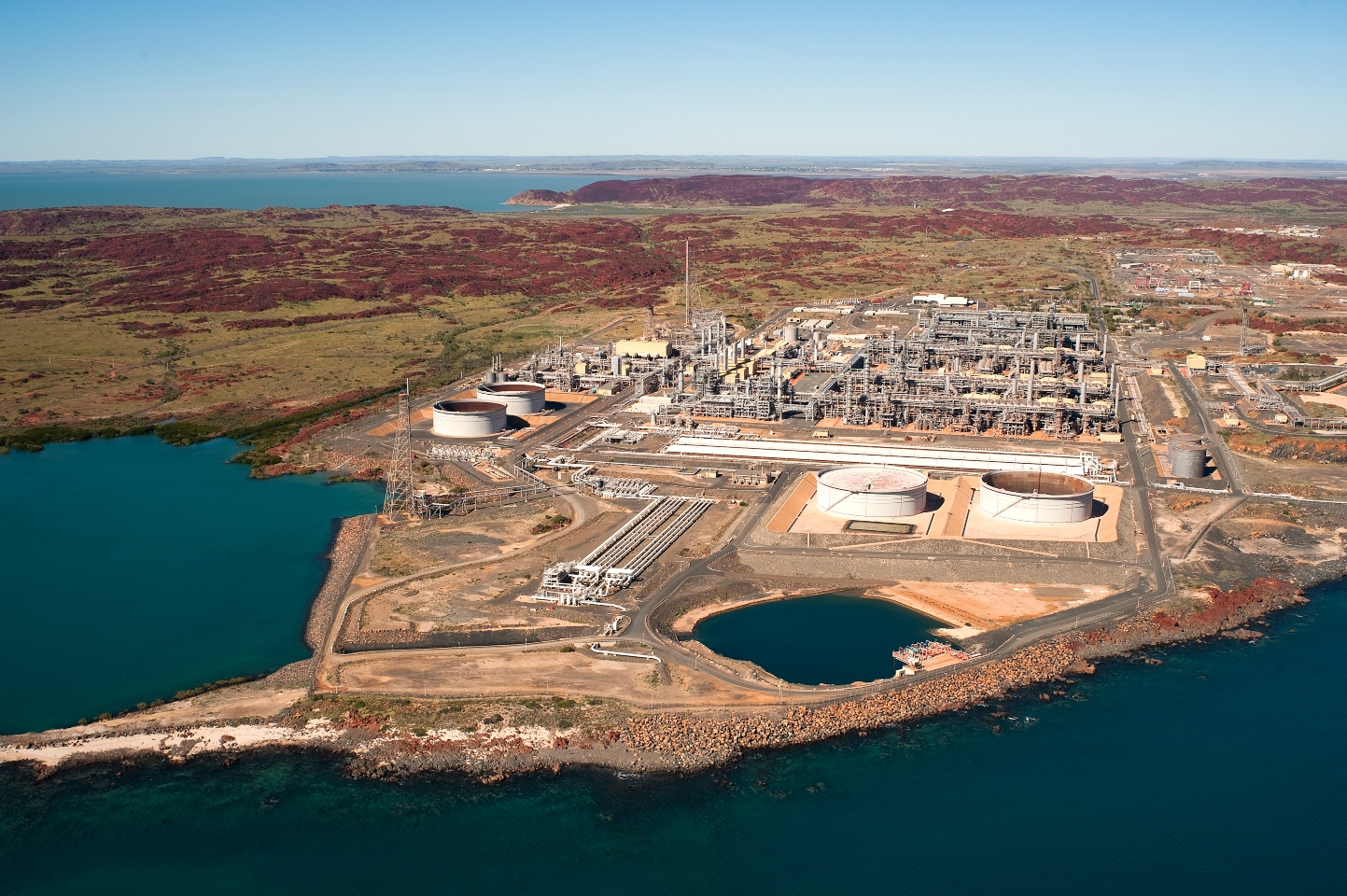
Woodside Energy reinvested more than $24 million into Western Australian communities in 2025, including funds flowing into education initiatives in Karratha and Roebourne.

Songkran Festival 2026 exceeded expectations, generating over 30.35 billion Baht, a 6% increase. TAT attributes success to international appeal, cultural charm, and strong partnerships, boosting tourism sustainably and globally.
Songkran Festival 2026 Success
Bangkok, 14 April 2026 – The Tourism Authority of Thailand (TAT) reports exceptional performance for the Songkran Festival 2026, with tourism exceeding expectations nationwide during 11–15 April. Generating over 30.35 billion Baht in revenue, a 6% increase from last year, the festival reflects strong confidence among Thai and international travelers, elevating its status as a world-class cultural event.
Cultural Highlights and Visitor Engagement
TAT Governor, Ms. Thapanee Kiatphaibool, emphasized the festival’s global appeal and successful collaboration between government, private sector, and communities. Key celebrations in Bangkok, like the Maha Songkran World Water Festival at Benjakitti Park, welcomed over 108,000 visitors. Saneh Art by Songkran at Lumphini Park captivated young audiences, reinforcing the festival’s cultural resonance through engaging programs.
Regional Celebrations and Economic Impact
Phra Nakhon Si Ayutthaya’s “Songkran with Elephants” and traditional northern ceremonies highlight regional cultural depth. In the South, Songkhla saw significant tourism growth, with over 36,000 Sadao border crossings and events like SUNGAIKOLOK Midnight Songkran. Overall, international arrivals reached 500,000, while domestic tourism hit 5.96 million trips, driving both revenue and Thailand’s reputation for high-quality cultural experiences.
Source : Thailand’s Songkran 2026 drives nationwide momentum with 30.35 billion Baht projected revenue
Other People are Reading
Some Recovery Since Ceasefire
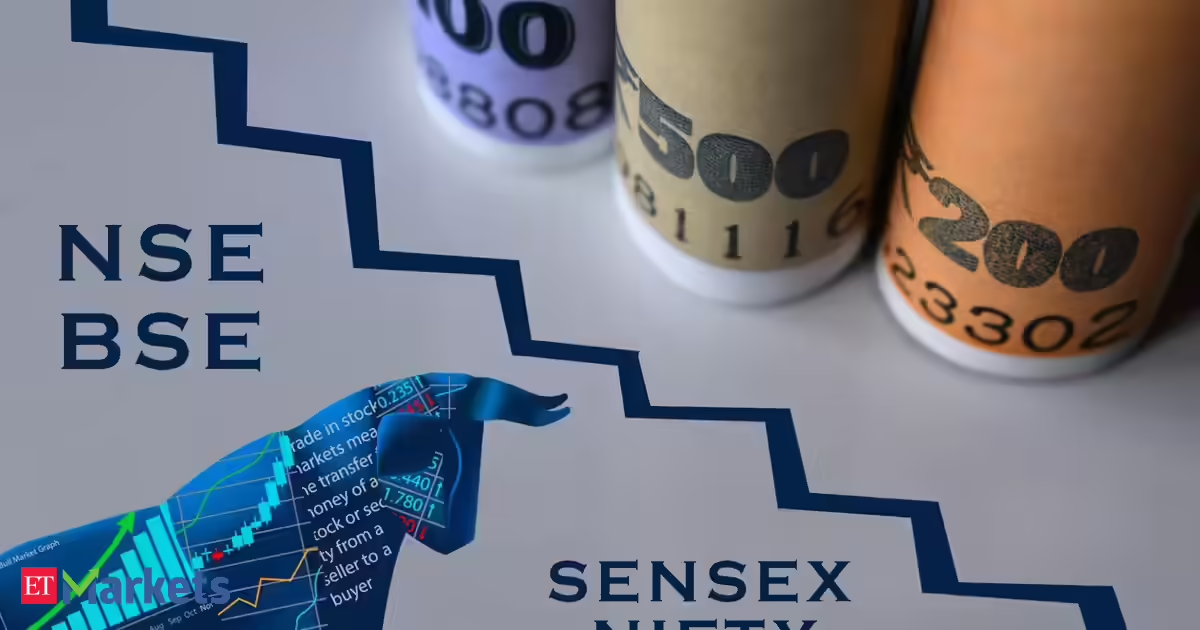
The NSE Nifty ended at 24,231.30, up 1.6% or 388.65 points over Monday’s close. The BSE Sensex finished at 78,111.24, up 1.6% or 1,263.67 points. Indian markets were shut on Tuesday for Ambedkar Jayanti.
ET Bureau“Trump’s remark that there will be no need to extend a ceasefire has led investors to believe that the US and Iran may be on the verge of a peace deal,” said Dharmesh Kant, head of research, Cholamandalam Securities. “At the same time, until the Strait of Hormuz opens completely, markets will be walking on thin ice.”
Trump, according to news reports, said that the US-Iran peace talks could resume in Islamabad over the next two days following the breakdown of negotiations over the weekend. Earlier, the US said its navy had blockaded traffic to and from Iranian ports in response to Iran’s disruption of shipping through the Strait of Hormuz.
Brent crude futures rose 1.6% to $96.2 a barrel on Wednesday after dropping 4.6% on Tuesday. Elsewhere in Asia, South Korea gained 2.1%, and Taiwan climbed 1.2%. Japan, China and Hong Kong rose between 0.1% and 0.4%.
The halt in the offensive has been reassuring for equity investors with the Sensex and Nifty gaining nearly 5% from oversold levels since the two-week ceasefire between the US and Iran began on April 8.
The Volatility Index (VIX) — the street’s fear gauge — fell 8.9% to 18.7, as the market rebound eased near-term risk perception. Foreign portfolio investors (FPIs) bought shares worth a net ₹666.15 crore on Wednesday. Their domestic counterparts sold shares worth ₹568.98 crore. So far in April, global investors dumped shares worth ₹48,198.7 crore .
The momentum of the rebound could carry the main indices even higher. “The prudent rally since April 2 has recovered 50% of the previous fall at 24,278 levels,” said Vipin Kumar, AVP, equity research and PMS, derivatives and technical analyst, Globe Capital Market. “Any close above 24,350 levels can propel Nifty towards 24,650-24,800 levels if there is no escalation.”
All sectoral indices closed higher on Wednesday.

Check out what’s clicking on FoxBusiness.com.
Walmart is giving one of its most recognizable brands a fresh look for the first time in more than a decade.
The retail giant announced Wednesday that it is rolling out a sweeping redesign of its flagship Great Value label, spanning nearly 10,000 food and household products. The effort marks the brand’s first full refresh in over 10 years and the largest private-label update in Walmart’s history.
“Great Value has earned customers’ trust over decades, and while the brand is getting a fresh, modern look, what’s inside isn’t changing,” Scott Morris, senior vice president of private brands at Walmart U.S., said in a statement. “Customers will continue to find the same trusted products at the same every day low prices they rely on.”
MORE THAN 40,000 BICYCLE HELMETS SOLD AT WALMART RECALLED OVER ‘SERIOUS RISK OF INJURY OR DEATH’

A selection of Walmart’s Great Value products featuring the brand’s redesigned packaging is shown here. (Walmart)
The redesign introduces more modern packaging, clearer labeling and a more consistent visual system across products.
Walmart says the updates are intended to make items easier to identify on shelves, with standardized nutrition placement and clearer visual cues for shoppers.
WALMART CUSTOMERS SEEKING VALUE DRIVE SALES HIGHER
Before and after packaging for Walmart’s Great Value Donut Shop ground coffee.
Great Value products are already found in roughly 90% of U.S. households, and the company says they help families save an average of 35% annually.
The new look will roll out gradually over the next two years, beginning with salty snacks and expanding across store aisles.
The move underscores Walmart’s continued investment in its private-label brands as consumer preferences evolve, according to the retailer.
ESTÉE LAUDER SUES WALMART OVER ALLEGED COUNTERFEIT BEAUTY SALES

A worker stocks a shelf in a grocery aisle at a Walmart store in Columbus, Ohio. (Brian Kaiser/Bloomberg via Getty Images)
CLICK HERE TO GET FOX BUSINESS ON THE GO
The company has also said it plans to remove synthetic dyes from its private-brand foods by January 2027.
“We believe great design should be accessible to everyone,” David Hartman, vice president of creative at Walmart, said in a statement. “At our scale, that means creating something that works clearly and intuitively across thousands of individual items, so customers can find what matters, faster. We’ve built a system that does exactly that, bringing consistency, clarity, and a sense of discovery to every shelf.”
Check out what’s clicking on FoxBusiness.com.
A federal jury in New York delivered a major blow to Live Nation Entertainment on Wednesday, finding the concert giant and its Ticketmaster subsidiary liable for monopolistic practices in the ticketing industry.
The verdict stems from a sweeping multistate lawsuit that accused the company of using its dominance in concert promotion and ticketing to stifle competition, inflate prices and limit consumer choice, according to the complaint.
Live Nation shares dropped about 6% in afternoon trading after the verdict, while competitors surged. Vivid Seats jumped more than 9%, and StubHub climbed roughly 3.5%.
HOLLYWOOD TITAN BELIEVES AI IS A ‘REVOLUTIONARY MOMENT’ RESHAPING INDUSTRIES
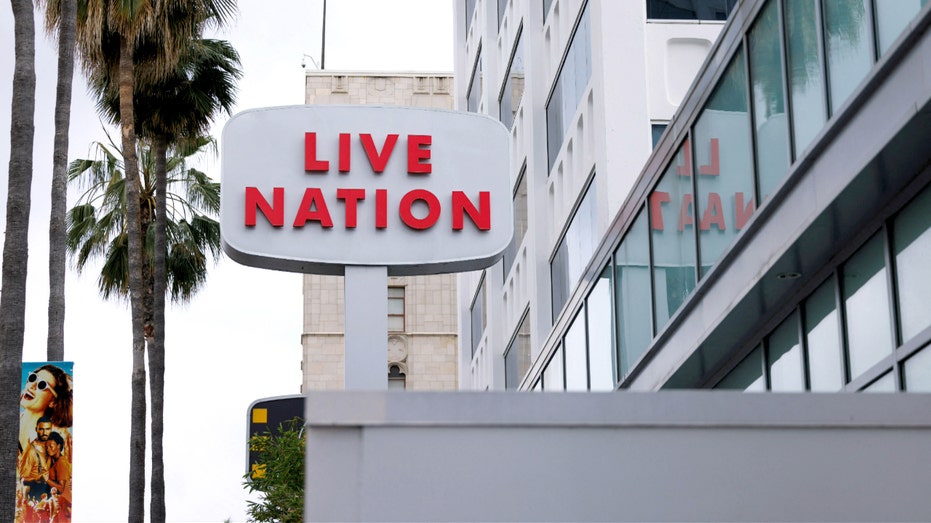
The Live Nation sign stands next to an office building along Hollywood Blvd., in Los Angeles, California, on May 23, 2024. (Mike Blake/Reuters)
Pennsylvania Attorney General Dave Sunday called the ruling a “huge win for consumers,” arguing the company maintained a “stranglehold” on the multibillion-dollar live entertainment sector.
“I am proud that our office has been part of a bipartisan coalition that continued this case under extraordinary circumstances and took it to a jury,” Sunday said in a statement.
New York Attorney General Letitia James also hailed the outcome as a “landmark victory.”
“We just won our trial against Live Nation Concerts and Ticketmaster,” James wrote on X. “A jury ruled in our favor and is holding the companies responsible for their illegal monopoly that cost consumers millions of dollars.”
SEATGEEK JOB POSTING TOUTS $25K SEX CHANGE PERK, 6-FIGURE SALARY
The lawsuit, joined by dozens of states, alleged Live Nation engaged in anti-competitive tactics, including locking venues into long-term exclusive agreements and leveraging control over major tours and artists to pressure venues.
Jurors concluded the company’s conduct led fans to overpay by about $1.72 per ticket, according to Bloomberg News.
| Ticker | Security | Last | Change | Change % |
|---|---|---|---|---|
| LYV | LIVE NATION ENTERTAINMENT INC. | 155.82 | -10.46 | -6.29% |
| SEAT | VIVID SEATS INC | 7.42 | +0.63 | +9.28% |
| STUB | STUBHUB HOLDINGS INC | 7.14 | +0.24 | +3.48% |
A judge will determine penalties and potential remedies in future proceedings.
NEW DISNEY CEO JOSH D’AMARO OFFICIALLY TAKES THE REINS FROM BOB IGER
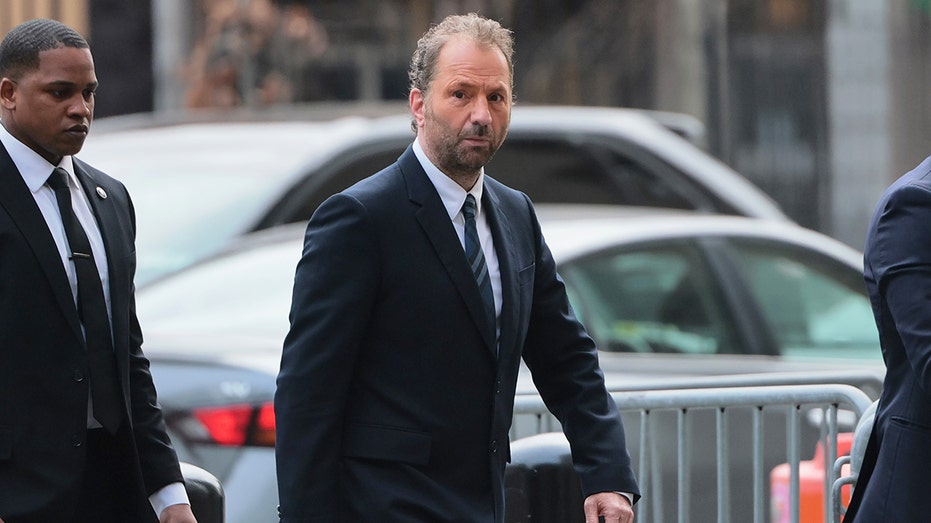
Michael Rapino, president and CEO of Live Nation Entertainment Inc., arrives at federal court on March 19, 2026, in New York City. (Michael M. Santiago/Getty Images)
Live Nation, which recently reached a settlement with the Department of Justice, is expected to appeal the verdict, Bloomberg News reported.
“We’re obviously disappointed,” Dan Wall, a lawyer for Live Nation, said in a statement. “The game is not over by any means.”
CLICK HERE TO GET FOX BUSINESS ON THE GO
Live Nation did not immediately respond to FOX Business’ request for comment.
Reuters contributed to this report.

Thailand’s central bank has cut its 2026 GDP growth forecast and warned of virtually unlimited downside risks as the ongoing Iran war disrupts tourism and drives up import costs.
Thailand’s Central Bank Warns of Severe Economic Impact from Iran War
Key Details:
- The Bank of Thailand revised its 2026 GDP growth forecast down to 1.3% (from 1.9% in December), assuming the war ends in the second half of 2026.
- Tourism from Gulf countries fell to near zero in March due to airport closures caused by Iranian attacks, with those visitors normally accounting for 7% of total tourism spending.
- Malaysian tourist numbers are also declining due to high fuel costs discouraging cross-border travel.
- Inflation is forecast to reach 3.5% under the baseline scenario; interest rate hikes are considered unlikely unless inflation persists beyond a year.
- The previously expected $12 billion current account surplus may need to be revised downward, potentially turning negative.
- Capital outflows in February and March were described as manageable, with flows returning to positive territory in April.
- Bangkok will host the IMF-World Bank autumn meetings in October 2026, which officials hope will showcase Asia’s economic resilience.
Thailand is among the world’s most exposed economies to the Iran conflict due to its heavy reliance on imported energy, and the central bank’s stark warnings highlight the broad regional economic risks if the war continues.
Thailand’s Worst-Case Economic Scenarios Amid Prolonged Iran War
If the Iran war continues beyond a few months, Thailand faces severe economic contraction, with GDP growth potentially falling to 0.2% and inflation surging to 5.8%, driven by energy shocks, tourism collapse, and capital flight.
- In a prolonged conflict scenario (6–9 months), oil prices could climb to $135–145 per barrel, triggering a global downturn and slashing Thailand’s GDP growth to 0.2% while inflation spikes to 5.8%
- If the Strait of Hormuz remains closed, disrupting over 20% of global oil shipments, Thailand’s economy could slow further, with growth potentially dipping below 1%.
- In an extreme scenario, oil prices could reach $200 per barrel, though analysts consider this unlikely; even $130+ per barrel for three months would sharply raise inflation risks.
- Foreign investors have already pulled back sharply, with $823 million net selloff in equities and $705 million in bond outflows in March — the largest combined outflow since October 2024.
- The Thai baht has depreciated nearly 3% since the war began, with forecasts predicting a slide to ฿35 per dollar if the conflict drags on.
- Tourism from Gulf countries has fallen to near zero, and Malaysian visitors are declining due to high fuel costs, both critical to Thailand’s economy.
Why It Matters: Thailand’s heavy reliance on imported energy and tourism makes it uniquely vulnerable; without policy flexibility or fiscal room, prolonged conflict could push the economy into contraction, erasing recent hopes for reviva
Other People are Reading

COPEL: Risk-Return Ratio Is Still Attractive
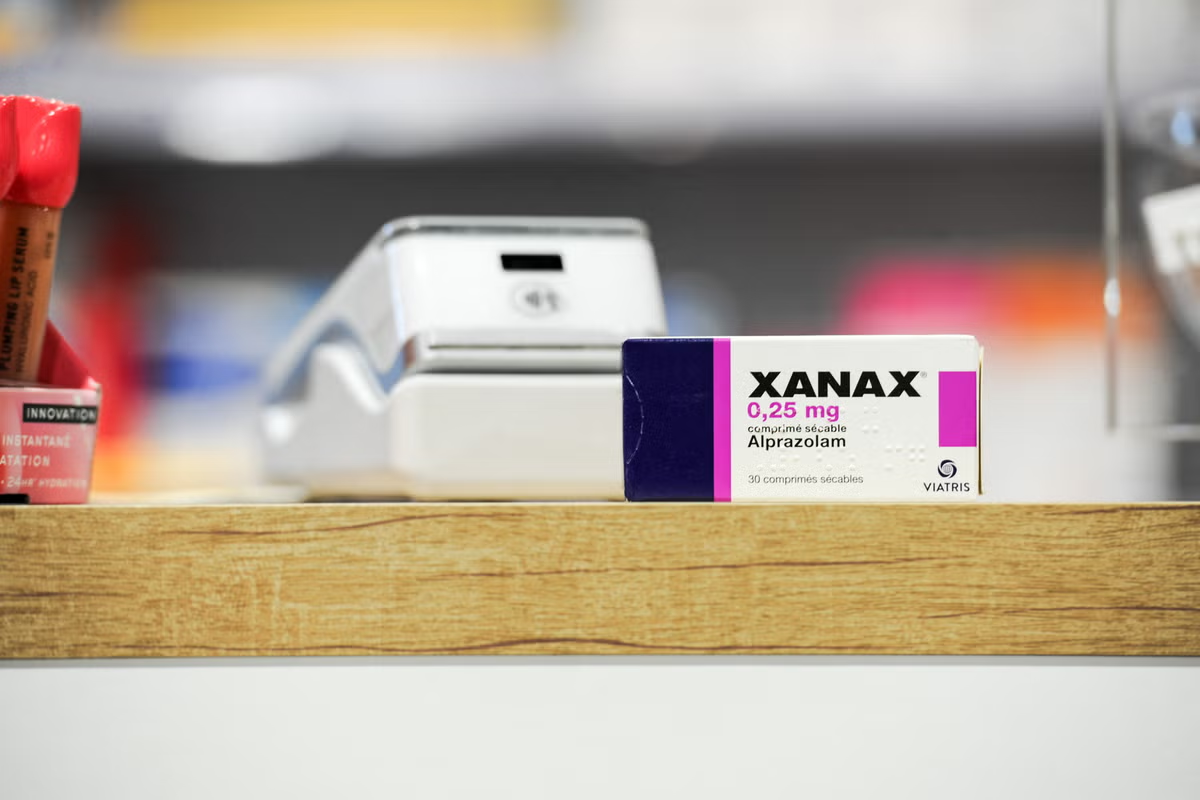
Anxiety drug Xanax is under recall. Here’s what to know

Bison shares double in first ASX hour

Circle’s Allaire says no KRW stablecoin, but eyes South Korea expansion


-

 Politics5 days ago
US brings back mandatory military draft registration
-
 Sports5 days ago
Man United discover Nico Schlotterbeck transfer fee as defender reaches Dortmund agreement
-

 Fashion5 days ago
Weekend Open Thread: Veronica Beard
-

 Politics6 days ago
Malcolm In The Middle OG Turned Down ‘Buckets Of Money’ To Appear In Reboot
-

 Politics4 days ago
World Cup exit makes Italy enter crisis mode
-

 Crypto World7 days ago
Canary Capital Files SEC Registration for PEPE ETF
-

 Business5 days ago
Tesla Model Y Tops China Auto Sales in March 2026 With 39,827 Registrations, Beating Cheaper EVs and Gas Cars
-

 Crypto World2 days ago
The SEC Conditionalises DeFi Platforms to Be Avoided for Broker Registration
-

 Crypto World2 days ago
SEC Signals Exemption for Crypto Interfaces From Broker Registration
-

 News Videos21 hours ago
Secure crypto trading starts with an FIU-registered
-
 NewsBeat3 days ago
Pep Guardiola and Gary Neville agree over Arsenal title problem that benefits Man City
-

 Business6 days ago
OpenAI Halts Stargate UK Data Centre Project Over Energy Costs and Copyright Row
-

 Business5 days ago
Ireland Fuel Protests Enter Day 5 as Blockades Spark Shortages and Government Prepares Support Package
-

 Crypto World5 days ago
Federal judge blocks Arizona from bringing criminal charges against Kalshi
-

 Politics6 days ago
LBC Presenter Mocks Trump Over Iran War Failures
-
 NewsBeat4 days ago
JD Vance announces ‘no agreement’ with Iran over nuclear weapons fear
-

 Crypto World2 days ago
SEC Proposes Certain Crypto Interfaces Don’t Need to Register as Brokers
-

 NewsBeat2 days ago
Trump and Pope Leo: Behind their disagreement over Iran war
-

 Tech6 days ago
A version of Windows 10 released a decade ago is now eligible for additional security patches
-

 Business5 days ago
IMF retains floor for precautionary balances at SDR 20 billion
You must be logged in to post a comment Login