

Connect with us

Business

US states sue to block tariffs impacting dozens of countries

Published

on

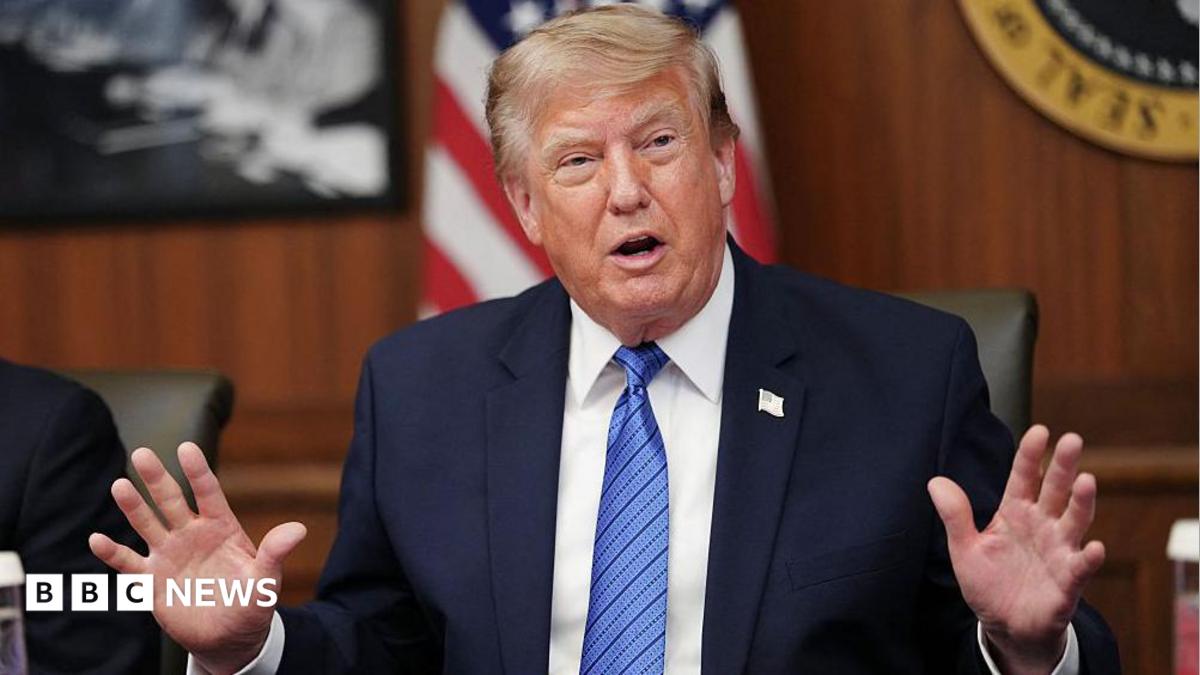
Donald Trump holds up his right fist while wearing a white shirt and red tie.

Twenty five US states sued the administration of US President Donald Trump on Monday over new tariffs of 10% to 12.5% on goods from 60 trading partners.

The tariffs came into effect in July, targeting countries including the UK, China as well as the European Union, over Washington’s contention that they have failed to properly tackle forced labour.

In a legal document seen by the BBC, the coalition of Democratic states said the decision was “arbitrary, capricious, and contrary to law.”

In response, White House spokesman Kush Desai said: “The US is using its lawful authority” to address practices that burden American businesses.

Advertisement

Desai added that any foreign country’s failing to deal with the importation of goods produced with forced labour was “unreasonable” and must be addressed.

The duties cover 99.4% of US imports, according to the Office of the US Trade Representative.

“President Trump’s illegal tariffs are nothing more than a tax on hardworking families,” said New York Governor Kathy Hochul.

Several of the affected trading partners have expressed disappointment over the new tariffs, while analysts have questioned how they would be able to show that they had properly addressed the forced labour claims.

Advertisement

It marks the latest move in a slew of trade policies unveiled by Trump since he returned to office in January 2025.

Wide-ranging duties Trump imposed on global trading partners in his so-called “Liberation Day” tariffs in April last year were struck down by the US Supreme Court.

“The Supreme Court has made it clear that this administration cannot ignore the law to impose sweeping tariffs,” Hochul said.

The court’s decision prompted tens of billions of dollars in refunds to companies that had paid the levies.

Advertisement

The president has long argued that tariffs protect American workers and boost the US economy.

Continue Reading
Click to comment

You must be logged in to post a comment Login

Leave a Reply

Business

Rise in small business ‘whisk takers’ prompts review of bake sheds

Published

on

Business Live

There has been a surge in home bakers selling from their own properties in recent years

Mikaela Bartlett runs The Treat Shed in Kingsteignton and is one of the rising number of small business operators running such enterprises (Image courtesy: Mikaela Bartlett).

Mikaela Bartlett runs The Treat Shed in Kingsteignton (Image: Local Democracy Reporting Service / Mikaela Bartlett)

A surge in budding bakers looking to establish their own small businesses has prompted a Devon council to reassess its policies.

Advertisement

Given that these so-called ‘”whisk takers” are not operating from commercial premises and typically sell their goods directly from their own properties via modest sheds, questions have arisen over what licences or permissions they are required to obtain.

The matter even featured in an Institute of Licensing webinar last month, examining how local councils need to secure street trading licences or consents.

East Devon District Council confirmed it had received a growing number of enquiries from individuals seeking to run bake sheds from their properties, raising the question of how such an activity sits within its existing street trading policies.

At a recent licensing meeting, chair Councillor Joe Whibley (Independent, Exmouth Town) said: “I do think the ‘whisk takers’ need to know where they stand.

Advertisement

“No ‘bun’ intended.”

Phillippa Norsworthy, a licensing manager at the council, confirmed that bake sheds were being handled in accordance with its current street trading policy.

“This means the majority of bake sheds fall into the category of requiring street trading consent and we are dealing with them on this basis,” she said.

“This means that a street trading consent application must be made and it is treated to the same application criteria as all street trading consents. However, we are currently reviewing our street trading policy.”

Advertisement

Ms Norsworthy confirmed that no updates had yet been made to this policy, meaning there remained no further clarity on bake sheds or whether the regulations surrounding them might be revised.

“All street trading applications are subject to an initial application fee of £45.00 and an annual consent renewal fee of £45.00,” she added, setting out the current position.

Mikaela Bartlett runs The Treat Shed in Kingsteignton, a venture she launched after seeking a creative outlet during maternity leave with her second child, having previously worked in corporate roles.

Although Kingsteignton falls outside East Devon, the passionate baker has had to navigate the permissions required by her own local council.

Advertisement

“The Treat Shed officially opened its doors at the end of April, so it’s a relatively new venture,” she said.

“I have a 5 very good food hygiene rating, my kitchen has been inspected – everyone who opens a food business is required to register with the council and have your kitchen inspected as we’re selling to the public.

“I also have public liability insurance, business insurance and have done food hygiene and allergen awareness courses.”

Ms Bartlett added that upon speaking to Teignbridge District Council, her local authority, she was informed that a street trading licence was not required in her area.

Advertisement

An Institute of Licensing webinar, attended by an East Devon council officer, indicated that all councils must take into account the legislation governing street trading – namely the Local Government (Miscellaneous Provisions) Act 1982 – alongside their own street trading policies and guidance when assessing street trading consents for bake sheds.

However, Ms Norsworthy noted that local councils “vary greatly” in their approach to handling street trading applications.

She further explained that bake sheds operating in East Devon are required to register with the environmental health team, and that any street trading consent application must include a site map, a photograph of the trading unit, a copy of an insurance certificate, evidence of a food hygiene rating, along with other formal identity documentation.

The planning department is routinely consulted on street trading applications and would therefore contact the applicant directly should any planning concerns arise.

Advertisement
Continue Reading

Business

Govt moves spark development options

Published

on

Govt moves spark development options

Surplus government land in the western suburbs is attracting developers’ attention.

Continue Reading

Business

American farmers feed growing demand with less farmland

Published

on

American farmers feed growing demand with less farmland

CADIZ, Ky. – The U.S. soybean industry is working to meet growing global demand despite operating with less farmland and fewer farms.

According to the Department of Agriculture, the U.S. had about 943 million acres of farmland in 2000. That figure has since fallen about 7% to 874 million acres. The USDA also reported that the country lost approximately 307,000 farms over the same period.

Advertisement

Meanwhile, global demand for American agricultural products, particularly soybeans, has surged. Farmers are seeking new markets for their crops while working to produce more from each acre.

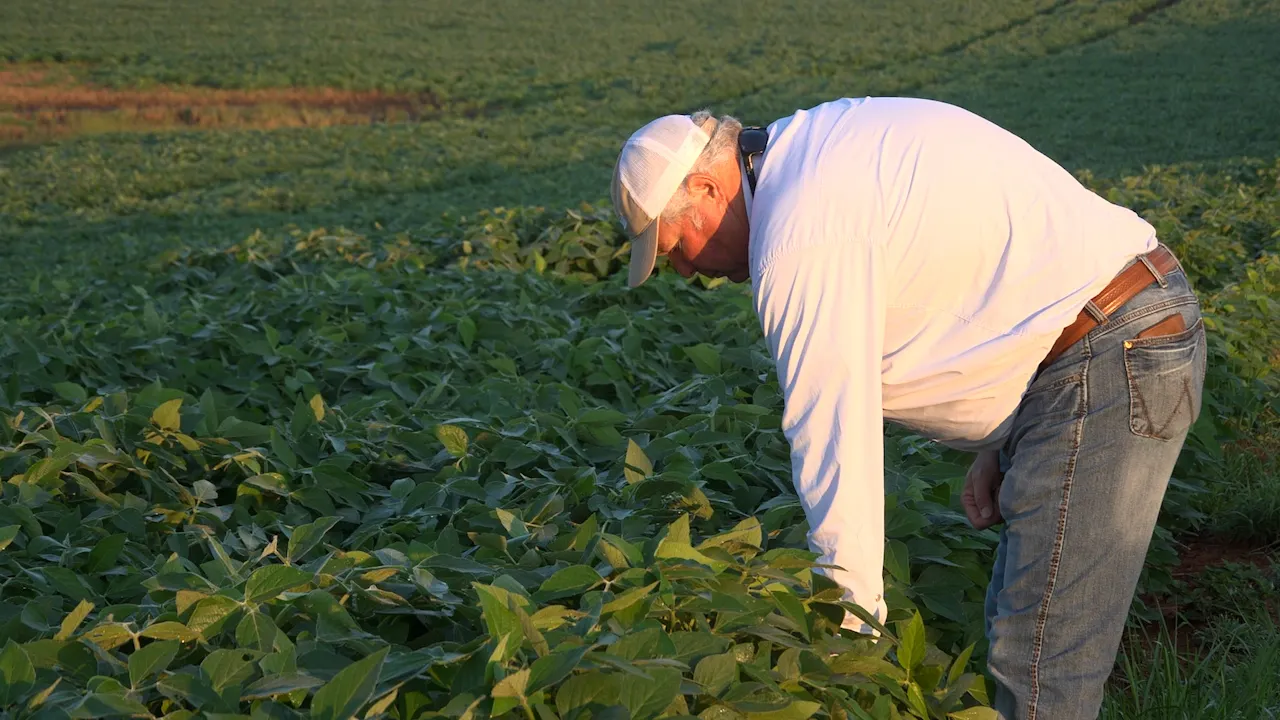
Barry Alexander is a seventh-generation farmer in Cadiz, Kentucky. Soybeans account for about half of the crops grown at Cundiff Farms during the summer.

TRUMP DECLARES FOOD SUPPLY EMERGENCY, SUSPENDS TARIFFS ON KEY FERTILIZER IMPORTS

Kentucky Soy Farmer in Field

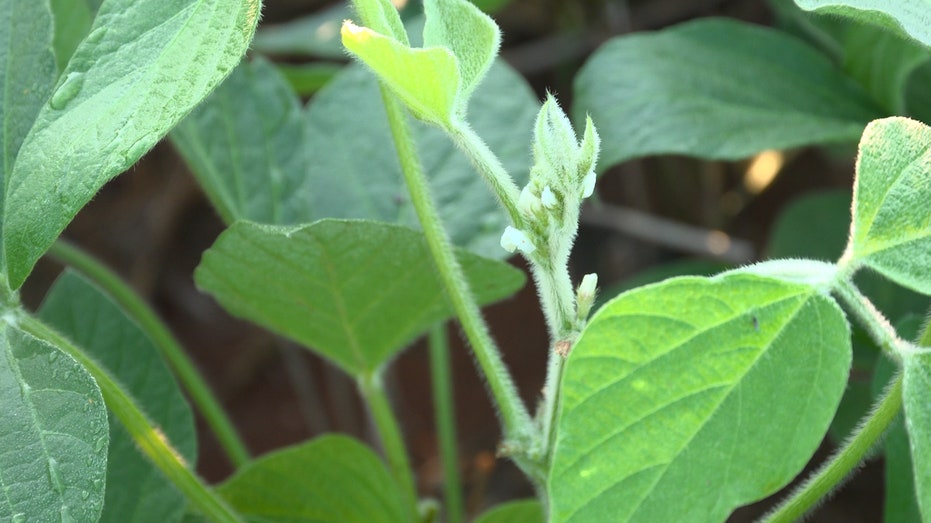
Barry Alexander is a seventh-generation farmer in Kentucky who ships a chunk of his soy crop overseas.  (FOX / Fox News)

Alexander said he has not lost farmland to urban development, but he has noticed farms shrinking as cities expand into rural areas.

Advertisement

“Land is going away every day, and that’s one commodity they’re not going to reproduce,” Alexander said. “Whenever that land is gone and gone out of production, it’s no longer going to be farmland. The population is increasing, and the demand for food is increasing.”

TRUMP DEFENDS TARIFFS AHEAD OF LOOMING MIDTERMS, SAYS THEY HAVE MADE THE US ‘A FORTUNE’

Kentucky’s soybean harvest begins in September and runs through October. A portion of Alexander’s crop is shipped overseas, including to China, the top customer for U.S. soybeans.

“A lot of our product is actually for export. We put it on the rivers here nearby, and it ships down to the Gulf of Mexico to New Orleans and is actually shipped overseas,” Alexander said. 

Advertisement
Kentucky Soy Field

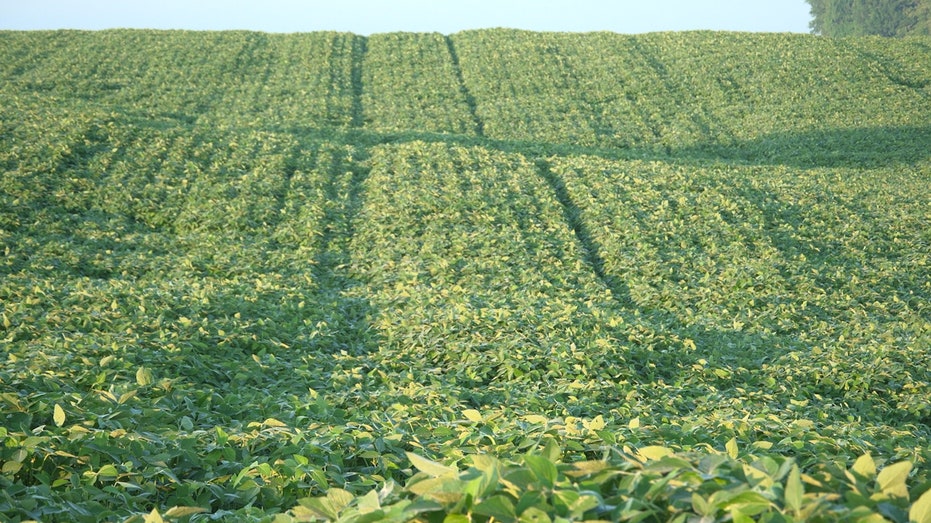
According to the USDA, the amount of farmland in the United States has shrunk about 7% since 2000. (FOX / Fox News)

In 2025, China agreed to purchase 25 million metric tons of U.S. soybeans annually. The country initially failed to meet that benchmark as President Donald Trump’s trade war escalated.

The American Soybean Association said China later began purchasing more American soybeans as prices rallied.

“We’re on a positive trend, but we still got a long ways to go to completely hit the targets that they’ve agreed to,” Caleb Ragland, chairman of the American Soybean Association, said. “Obviously, we’ve had some bumps in the road in our relationship, but they’re too big of a customer to just write off.”

Ragland said China consumes more soy than any other country combined. Much of it is processed into soy protein used to raise pigs and poultry, two major staples in Chinese cuisine.

Advertisement

“They need our soy protein to help grow and produce their meat protein that their people want,” Ragland said.

TRUMP DECLARES FOOD SUPPLY EMERGENCY, SUSPENDS TARIFFS ON KEY FERTILIZER IMPORTS

China currently has a 10% tariff on all U.S. agricultural products. Chinese officials have discussed removing the tariff, which Ragland said would make American soybeans more competitive with South American producers.

South America remains a major force in the global soybean trade.

Advertisement

“I mean, that’s been a 10% tax that has made us uncompetitive when it comes to the cash price that the Chinese customers would pay for soybeans,” Ragland said.

Soybean crop in Kentucky

Farmers are working to pack in more soy production with less land as global demand for American soy increases.  (FOX / Fox News)

A portion of soybean profits goes into a checkoff program that the United Soybean Board uses to research and develop new markets for the crop.

Since the Soy Checkoff was established under the 1990 Farm Bill, annual American soybean production has increased from 2 billion bushels to about 4 billion bushels.

“We treat every acre individually, and we treat it to produce the most it possibly can,” Alexander said. 

Advertisement

GET FOX BUSINESS ON THE GO BY CLICKING HERE

Brent Gatton, chairman of the United Soybean Board, said checkoff investments have helped open new fuel markets and supported U.S. soybean trade with more than 90 countries.

“Because of the checkoff, there are thousands of new uses we get. Soy oil is in Goodyear tires and artificial turf, and soy foam is a great success story,” Gatton said. 

Farmers hope this year’s higher soy prices mixed with larger purchases could help them at least break even after years of high input costs.

Advertisement
Continue Reading

Business

Why is WuXi AppTec stock surging today?

Published

on


Why is WuXi AppTec stock surging today?

Continue Reading

Business

Shein targets $30-$40 billion valuation for Hong Kong IPO- Reuters

Published

on


Shein targets $30-$40 billion valuation for Hong Kong IPO- Reuters

Continue Reading

Business

Promoter ownership climbs to two-year high despite persistent FII selling

Published

on

Promoter ownership climbs to two-year high despite persistent FII selling
Indian promoters demonstrated enhanced commitment to the businesses they run as net stock buyers in the June quarter, driving ownership in NSE-listed companies to a two-year high, even as the collective holdings of foreign institutional investors (FII) slipped to the lowest in 14 years amid soaring oil prices.

Promoters bought shares worth ₹36,336 crore during the quarter, the most in four years since June 2022, showed data from primeinfobase.com.

Read more: FPI inflows into Indian G-Secs dry up as US rate hike looms

At the end of the quarter, 41.36% of stock was held by private promoters, 8.83% by the government of India, 15.88% by FIIs, 19.15% for domestic institutional investors (DIIs), and 9.51% by retail and HNI investors. “There is no one who knows more or better about the business and its valuation than the promoters. Thus, their decision to buy shares is always a positive signal,” said Pranav Haldea, managing director, Prime Database Group.

Advertisement

Attractive Valuations
“After continuously selling during the market highs in 2023 and 2024, their return is a telling sign that valuations had become attractive and that the market may have bottomed out,” said Haldea.

fc36f695-fcac-47ea-a1c8-fa73e82331faET Bureau

Shripal Shah, MD & CEO, Kotak Securities, said the increase in stakes by promoters is generally a sign of confidence in the business and its long-term prospects, but should always be evaluated alongside company-specific fundamentals and the broader industry outlook before any conclusions are drawn.
During the quarter, the Nifty 50 rose 5.2% despite the ongoing US-Iran conflict, which drove crude oil prices to nearly $120 a barrel.
Feroze Azeez, joint CEO, Anand Rathi Wealth, said that decline in FII shareholding was largely driven by lack of appetite for global risks due to a series of uncertainties in recent times, such as tariff tensions, and geopolitical escalations.

“From the market sentiment perspective, this trend should be viewed as constructive, as promoter buying reflects confidence from management, while declining FII ownership should not be viewed as a negative as it is driven by multiple global factors, and they eventually come back to markets once uncertainties settle,” Azeez said.

Deep Pockets
DIIs, retail investors and HNIs have absorbed much of the foreign sell-off, as their combined ownership share reached an all-time high of 28.66% as on June 30, showed primeinfobase’s data.

“While FPI ownership has continued to decline due to sustained foreign selling, this has largely been absorbed by domestic investors, including mutual funds, PMS investors and, in some cases, promoters themselves,” said Shah of Kotak. “The trend highlights the growing strength of domestic participation in Indian markets.”

Advertisement

Overseas funds have remained heavy sellers during this year, and net sold shares worth Rs 1.5 lakh crore in the first quarter.

Sectorally, while domestic institutions increased their allocation most to industrials, they decreased their allocation the most to information technology stocks, which was also the least favoured sector by foreign investors. Other than that, the FIIs increased their allocation most to financial services companies.

Continue Reading

Business

Mitsui profit beats estimates as trading house unveils buyback, return policy

Published

on


Mitsui profit beats estimates as trading house unveils buyback, return policy

Continue Reading

Business

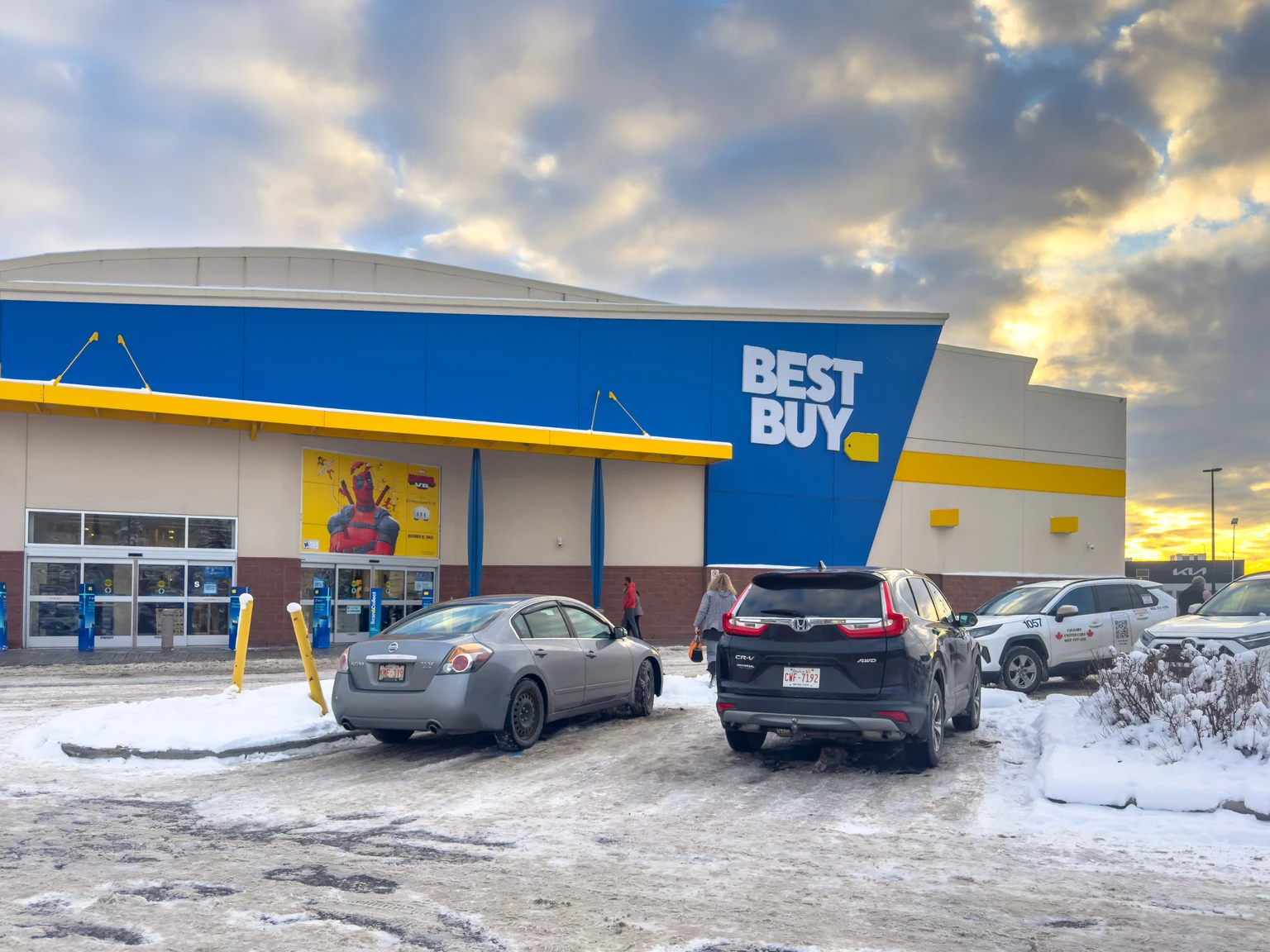
Best Buy: My Thesis Played Out, And That Is Exactly Why I Am Downgrading It To A Hold

Published

on

Best Buy: My Thesis Played Out, And That Is Exactly Why I Am Downgrading It To A Hold

This article was written by

I’m an individual investor who has been actively managing my own portfolio for over a decade. I hold an MBA from the University of Illinois Urbana-Champaign with concentrations in Finance and Marketing, and a Master’s in Industrial and Operations Engineering from the University of Michigan, Ann Arbor. My investing journey began in early 2015 with a position in Starbucks (SBUX), which I bought on valuation. This first buy sparked a lasting interest in long-term, fundamentals-driven investing. My approach combines fundamental analysis with technical insights, with a particular focus on “pick and shovel” businesses — companies that supply the essential tools, infrastructure, and services behind major growth trends. I’ve found this strategy lucrative from a risk/reward perspective.I write on Seeking Alpha to share my thoughts, research, and perspective on the markets — not to provide investment advice. My goal is simply to contribute ideas and analysis that my fellow investors can weigh as part of their own due diligence.

Analyst’s Disclosure: I/we have a beneficial long position in the shares of BBY either through stock ownership, options, or other derivatives. I wrote this article myself, and it expresses my own opinions. I am not receiving compensation for it. I have no business relationship with any company whose stock is mentioned in this article.

Seeking Alpha’s Disclosure: Past performance is no guarantee of future results. No recommendation or advice is being given as to whether any investment is suitable for a particular investor. Any views or opinions expressed above may not reflect those of Seeking Alpha as a whole. Seeking Alpha is not a licensed securities dealer, broker or US investment adviser or investment bank. Our analysts are third party authors that include both professional investors and individual investors who may not be licensed or certified by any institute or regulatory body.

Advertisement
Continue Reading

Business

MV Electrosystems IPO allotment expected today; GMP signals 24% listing gain. Here’s how to check your allotment status

Published

on

MV Electrosystems IPO allotment expected today; GMP signals 24% listing gain. Here's how to check your allotment status
Investors in the MV Electrosystems IPO are likely to know their allotment status today, August 4, as the company is expected to finalize the share allocation for its Rs 290 crore public issue. Once the allotment process is completed, applicants can verify whether they have been allotted shares through the registrar, KFin Technologies, or via the BSE and NSE websites.

The company’s shares are slated to make their stock market debut on August 6. Ahead of the listing, the IPO continues to enjoy strong traction in the grey market, with a Grey Market Premium (GMP) of around Rs 100 per share. This suggests a potential listing gain of nearly 24% over the upper issue price of Rs 425. However, investors should note that the GMP is an unofficial indicator of market sentiment and can fluctuate before the listing.

The IPO, which was open for subscription from July 30 to August 3, witnessed overwhelming demand across investor categories. Overall, the issue was subscribed 188.85 times. The Non-Institutional Investors (NII) segment led the charge with a subscription of 374.58 times, followed by Retail Individual Investors (RII) at 205.42 times, while the Qualified Institutional Buyers (QIB) portion was subscribed 90.47 times.

The Rs 290 crore IPO was entirely a fresh issue of 0.68 crore equity shares, priced at Rs 425 per share.

Advertisement

Sundae Capital Advisors Pvt. Ltd. is the book-running lead manager for the issue, while KFin Technologies Ltd. is serving as the registrar.

How to check Manipal Health Enterprises IPO allotment status

Investors can check their allotment status through any of the following platforms:

1. KFin Technologies (Registrar)

  • Visit the KFin Technologies IPO allotment page (https://ipostatus.kfintech.com/)
  • Select MV Electrosystems from the drop-down menu.
  • Enter your PAN, application number, or DP/Client ID.
  • Click Submit to view your allotment status.

2. NSE

3. BSE

  • Visit BSE IPO allotment link: https://www.bseindia.com/investors/appli_check
  • Now tick Equity under issue type.
  • Choose MV Electrosystems from the dropdown menu.
  • Enter your application number or PAN.
  • Complete the captcha verification and click Search to view your allotment details.

MV Electrosystems IPO GMP Today

The grey market premium (GMP) for the MV Electrosystems IPO is currently around Rs 100 per share, indicating a potential listing premium of nearly 24% over the upper issue price of Rs 425.
Based on the prevailing GMP, the estimated listing price of MV Electrosystems shares is around Rs 525 per share. However, investors should note that the GMP is an unofficial market indicator and is subject to change before the listing. It can fluctuate depending on investor sentiment, subscription demand, and overall market conditions.

Advertisement

IPO Proceeds to Fund Expansion and R&D

MV Electrosystems plans to use the IPO proceeds to strengthen its operations and support future growth.

The company has earmarked Rs 180 crore to meet its long-term working capital requirements, while Rs 21 crore will be invested in research and development for new power electronic equipment. The remaining funds will be used for general corporate purposes.

Given the company’s presence in large-scale manufacturing and railway infrastructure, the additional working capital is expected to support production, project execution, and business expansion.

About MV Electrosystems

Established in 2009, MV Electrosystems Ltd. designs, develops, assembles, and manufactures electrical and power electronic equipment primarily for railway rolling stock applications.

Advertisement

Its product portfolio includes IGBT-based three-phase drive propulsion systems for electric locomotives, switchgear panels for railway coaches and EMUs, cable protection and management solutions, along with a range of electrical systems and sub-systems.

The company operates in a sector benefiting from India’s railway modernization drive, including broad-gauge electrification, Make in India initiatives, network expansion, and increasing investments in high-speed rail infrastructure. These trends are expected to drive demand for advanced railway electrical systems and power electronics, positioning MV Electrosystems for long-term growth.

(Disclaimer: Recommendations, suggestions, views and opinions given by the experts are their own. These do not represent the views of Economic Times)

Advertisement
Continue Reading

Business

Why is Sumitomo Pharmaceutial stock falling today?

Published

on


Why is Sumitomo Pharmaceutial stock falling today?

Continue Reading

Trending

Copyright © 2025