
Business
(VIDEO) Japan’s 10 Deadliest and Strongest Earthquakes in History Highlight Nation’s Seismic Vulnerability


TOKYO — Japan, situated on the volatile Pacific Ring of Fire where multiple tectonic plates converge, has endured some of the most powerful and destructive earthquakes ever recorded, with the 2011 Tohoku event standing as the strongest in the nation’s modern history at magnitude 9.1 and triggering a catastrophic tsunami that claimed nearly 20,000 lives.
The list of Japan’s 10 biggest earthquakes, ranked primarily by magnitude but also considering historical impact and death toll where records allow, reveals a pattern of megathrust events along subduction zones that have repeatedly reshaped the archipelago’s coastline, infrastructure and collective memory. While modern seismology provides precise measurements for quakes since the late 19th century, earlier events rely on historical accounts, with magnitudes often estimated retrospectively.

At the top is the 2011 Great East Japan Earthquake (also known as the Tohoku earthquake and tsunami). On March 11, 2011, at 2:46 p.m. local time, a magnitude 9.0–9.1 megathrust quake struck off the Oshika Peninsula in Miyagi Prefecture at a shallow depth of about 29 kilometers. The rupture, spanning roughly 300 kilometers along the Japan Trench, displaced the seafloor and generated tsunami waves reaching up to 40 meters in some areas. Nearly 20,000 people died, with more than 2,500 still listed as missing years later. The disaster triggered the Fukushima Daiichi nuclear meltdown, caused an estimated $360 billion in damage (adjusted figures approach $500 billion in today’s terms), and displaced hundreds of thousands. It ranks as the fourth- or fifth-largest earthquake globally since instrumental recording began.
The second-largest is the 869 Jogan Sanriku earthquake, estimated at magnitude 8.9–9.0. This ancient event devastated the Sanriku coast with a massive tsunami that inundated areas up to 4 kilometers inland, killing over 1,000 people according to historical records. Geological evidence of tsunami deposits links it to similar patterns seen in 2011, underscoring the recurrence interval of major events in the region.
Third comes the 1896 Meiji-Sanriku earthquake, magnitude 8.5. Striking on June 15, 1896, it produced one of the deadliest tsunamis in Japanese history, with waves up to 38 meters high claiming more than 22,000 lives, mostly in Iwate and Miyagi prefectures. The quake itself caused limited shaking damage, but the tsunami’s rapid arrival caught coastal communities unprepared.
The 1933 Showa-Sanriku earthquake, magnitude 8.4, followed a similar pattern on March 3, 1933. It generated tsunami waves up to 29 meters, resulting in nearly 3,000 deaths. Occurring during a period of heightened seismic activity, it prompted improvements in coastal warnings, though technology at the time remained limited.
The 1707 Hoei earthquake, estimated at magnitude 8.6, struck on October 28, 1707, affecting the Nankai Trough region. It caused widespread damage across Honshu and Shikoku, killing around 5,000 people, and is notable for coinciding with the last major eruption of Mount Fuji, which added volcanic ash fallout to the devastation.
The 1944 Tonankai earthquake, magnitude 8.1, hit on December 7, 1944, during World War II. Centered in the Nankai Trough, it killed over 1,200 and caused significant infrastructure damage, though wartime censorship limited immediate reporting.
The 1946 Nankaido earthquake, magnitude 8.1, occurred on December 21, 1946, in the same tectonic zone. It claimed about 1,300 lives and highlighted the paired nature of Nankai Trough events, where stress release in one segment often triggers activity in adjacent areas.
The 1923 Great Kanto earthquake, magnitude 7.9, devastated the Tokyo-Yokohama region on September 1, 1923. While lower in magnitude than megathrust events, its proximity to densely populated areas resulted in one of Japan’s highest death tolls — over 100,000, many from fires ignited by overturned stoves amid strong shaking. The quake destroyed much of Tokyo, prompted major urban planning reforms and is commemorated annually as Disaster Prevention Day.
The 1891 Mino-Owari (Nobi) earthquake, magnitude 8.0, struck central Japan on October 28, 1891, killing around 7,273 people. It caused extensive surface faulting and damage across Gifu and Aichi prefectures, leading to early advancements in seismic building standards.
Rounding out a top 10 by impact or estimated size is the 1854 Ansei-Nankai earthquake, magnitude around 8.4. Part of a paired event with the Ansei-Tokai quake, it devastated parts of Kyushu and Shikoku, killing thousands and reinforcing cultural beliefs linking earthquakes to mythical giant catfish (namazu) stirring beneath the islands.
These events illustrate Japan’s position at the convergence of the Pacific, Philippine Sea, Eurasian and North American plates. The Japan Trench and Nankai Trough are particularly prone to megathrust quakes, where one plate subducts beneath another, accumulating strain over centuries before releasing in massive ruptures.
Modern monitoring through the Japan Meteorological Agency and dense seismic networks has improved early warnings, saving lives in recent decades. The 2011 quake, despite its scale, benefited from seconds of advance alert via the national system, though the tsunami’s speed overwhelmed many coastal defenses. Post-2011 reforms included higher seawalls, stricter building codes, better evacuation planning and enhanced nuclear safety measures.
Yet challenges persist. Japan’s aging population and dense urban centers amplify risks, while climate change may influence tsunami impacts through rising sea levels. Scientists continue studying recurrence intervals — major Nankai Trough events are overdue based on historical patterns, with a potential magnitude 8–9 quake carrying catastrophic potential for central and western Japan.
Public preparedness remains high. Annual drills, earthquake-resistant architecture and widespread awareness campaigns reflect lessons from past disasters. The 1995 Great Hanshin (Kobe) earthquake, magnitude 6.9–7.3, which killed over 6,400, spurred nationwide improvements despite not ranking among the absolute largest by magnitude.
As of 2026, no earthquake has surpassed the 2011 event in recorded Japanese history, though frequent moderate quakes remind residents of ongoing risk. The April 2024 Noto Peninsula quake (magnitude 7.5) caused significant local damage and served as another test of resilience.
Geologists warn that the next “big one” could strike with little warning beyond seconds of shaking alerts. Research into slow-slip events, seafloor monitoring and AI-driven prediction aims to refine forecasts, though precise timing remains elusive.
Japan’s history of seismic trauma has fostered innovation. From tsunami stones warning “do not build below this point” to cutting-edge early-warning technology, the nation balances fatalism with determination. International cooperation, including shared data with the United States and other Pacific nations, strengthens global tsunami warning systems.
For a country that has rebuilt repeatedly from rubble, these 10 earthquakes represent not just destruction but chapters in a story of endurance. Each disaster prompted reflection, reform and renewed commitment to safety. As scientists monitor the plates grinding beneath the islands, the collective memory of past events serves as both cautionary tale and blueprint for survival.
The human cost — measured in lives lost, communities shattered and economies strained — underscores why Japan invests heavily in mitigation. Yet the beauty and resilience of the Japanese people shine through in recovery efforts, from temporary housing rebuilt into vibrant neighborhoods to the quiet determination of survivors sharing stories to prevent future tragedy.
While no one can prevent earthquakes, Japan’s experience shows that preparation, education and technological advancement can dramatically reduce their toll. As the nation marks anniversaries and conducts drills, the list of its biggest quakes stands as a solemn reminder of nature’s power and humanity’s capacity to adapt.


Wall Street Horizon provides institutional traders and investors with the most accurate and comprehensive forward-looking event data including earnings calendars, dividend dates, option expiration dates, splits, investor conferences and more. Covering 9,500 companies worldwide, we offer more than 40 corporate event types via a range of delivery options. By keeping clients apprised of critical market-moving events and event revisions, our data empowers financial professionals to take advantage of or avoid the ensuing volatility.

Form 144 FIFTH THIRD BANCORP For: 20 April
Form 144 Dakota Gold Corp. For: 20 April

Among the NDA constituents in the state, the BJP, Asom Gana Parishad (AGP), United People’s Party Liberal (UPPL) and Bodoland People’s Front (BPF) have members in the assembly. Rabha Hasong Joutha Sangram Samiti (RHJSS) and Janashakti Party (JP) are also part of the NDA, but they do not have any MLAs.
“Our NDA alliance is complete. We know who will contest where; it is a done deal. There is no issue in stitching the alliance,” Sarma told reporters at the state BJP headquarters.
“After every process is complete, the state leadership will meet Union Home Minister Amit Shah with the list of probable candidates,” he added.
On January 7, Sarma had said the BJP was likely to formalise its seat-sharing agreement with its allies by February 15.

On December 5 last year, he had said the finalisation was expected to be over by January 15.
The elections for the 126-member assembly are expected to take place in March-April. This will be the first election after the delimitation exercise, done in 2023.Post delimitation, many seats and their geographical boundaries have been changed, while some non-reserved seats were reserved and vice versa. This has led to complications within the ruling and opposition coalitions.
At present, the BJP has 64 members in the assembly, while AGP has nine, UPPL has seven, and the BPF has three.
In the opposition camp, the Congress has 26 MLAs, AIUDF has 15, and CPI(M) has one. There is one Independent legislator as well.

Financial influencer Taylor Price joins ‘Varney & Co.’ to break down how shifting your mindset can help Americans grow wealth and achieve the American Dream.
California’s housing market is seeing an increase in inventory while the state’s population growth slows, but strong demand stemming from longstanding scarcity has kept the market tight.
An analysis by the Public Policy Institute of California (PPIC) found that the state added 677,000 housing units over a six-year period in which California’s population grew by only 39,000 residents.
Despite the relative growth in the number of housing units available, vacancy rates showed the market remained tight, with PPIC finding that owner vacancy declined from 1.2% to 0.8% while the rental vacancy rate was 4.3% in 2024, well below the national rate of 5.9%.
“Even though the state is adding more housing units than people, it was in such a deep hole that the recent successes in homebuilding are not enough to truly move the needle,” said Joel Berner, senior economist at Realtor.com.
AVERAGE MONTHLY MORTGAGE PAYMENT HITS NEW HIGH, TOPPING $2K FOR FIRST TIME EVER

California’s population growth slowed, but a longstanding housing shortage has kept the market tight. (Mario Tama/Getty Images)
The state’s longstanding shortage of housing units will require more construction to get inventory levels closer to the market’s equilibrium, as the state will need 2.5 million additional homes, according to a 2022 estimate by the state’s housing agency.
PPIC’s analysis also noted a demographic trend that’s affecting California’s housing market, with average household sizes declining in recent years.
It found that California lost 82,000 households with children and gained 722,000 households without them from 2019 to 2024.
“Fewer people living under the same roof means more roofs are required for the same number of people,” Berner said.
THESE 8 US HOUSING MARKETS FAVOR BUYERS
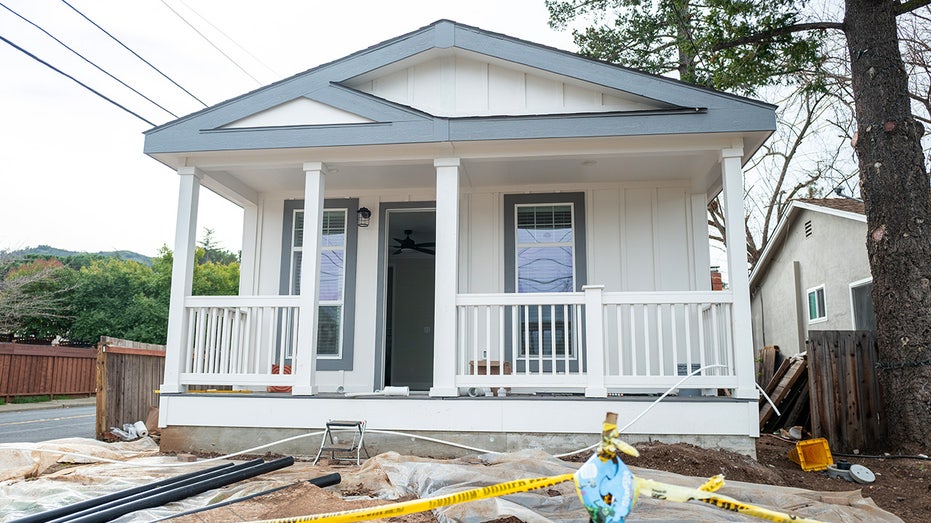
California has eased rules to boost construction of accessory dwelling units (ADUs), such as this one in Concord, California. (Smith Collection/Gado/Getty Images)
The aging of California’s population is a key factor in the trend, as PPIC found that about 16.5% of the state’s population is 65 or older today and projects that number will rise to 24.9% by 2050.
Homebuilding has picked up in the state of California in the last five years, including through promoting the construction of accessory dwelling units (ADUs), which are secondary living units that are on the same lot as a primary home but are typically detached or otherwise self-contained.
“The state has made significant progress from a policy perspective on encouraging ADU construction in recent years, for which it should be commended,” Berner added. “The state has made efforts to lift local restrictions on ADUs, which is helping it to deliver more and more of them where they are needed the most.”
WHITE HOUSE LAYS OUT FIXES FOR HOUSING AFFORDABILITY PROBLEM
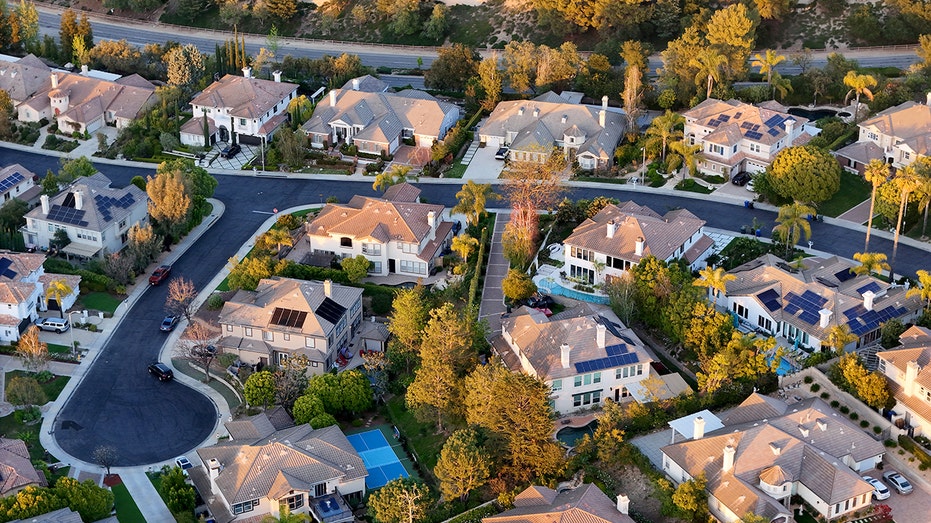
California’s shortage of housing has persisted despite an uptick in construction. ( Kevin Carter/Getty Images)
Both PPIC and Berner suggested that while California is making progress, it hasn’t achieved a breakthrough in resolving its housing shortage as new homes are being snapped up quickly and vacancy rates remain low.
Berner noted that while 11.5% of the U.S. population lives in California, the state accounted for only 7.3% of newly permitted housing units last year, adding that the “pace just isn’t fast enough.”
PPIC noted that household formation rates among young adults in California have trended up, suggesting that younger residents are forming households – though the state will need sufficient lower-cost housing at entry-level prices for them to afford to take those next steps in California.
GET FOX BUSINESS ON THE GO BY CLICKING HERE
That pipeline could prove problematic, as Realtor.com noted that of the more than 1.2 million housing units that are planned statewide, just 712,000 are designated for moderate-income households or lower – about half of what California believes it needs.

Advocates attend a news conference about the “impact of incarcerating those charged with marijuana-related offenses,” and policy reform ideas, outside the U.S. Capitol on Monday, April 20, 2026.
Tom Williams | CQ-Roll Call, Inc. | Getty Images
A White House executive order on psychedelics, signed by President Donald Trump on Saturday, aims to speed up research on drugs like psilocybin, MDMA and ibogaine, helping to legitimize an industry that’s long lived largely underground.
But it also raises a broader question: Will psychedelics fall victim, like cannabis has, to a slow-moving federal process?
The latest executive order comes roughly four months after an effort by President Donald Trump to reschedule cannabis, opening the door to greater research and investment opportunities. But since that directive, progress to reclassify cannabis has largely stalled, with the Drug Enforcement Administration review still ongoing and no final decision on moving marijuana from Schedule I to the lesser Schedule III.
The delay reflects how drug policy often slows once it enters interagency review, where scientific evaluation, legal standards and politics meet.
“The process has certainly been slow and frustrating for stakeholders when you consider they have spent decades fighting marijuana’s outrageous 1970s-era misclassification,” said Shawn Hauser, partner at cannabis law firm Vicente LLP.
Vicente LLP also serves as legal counsel for the National Compassionate Care Council (NCCC), a coalition of healthcare stakeholders focused on evidence-based cannabis policy.
The psychedelics order, however, focuses on research acceleration rather than legalization. It directs agencies like the U.S. Food and Drug Administration to expand clinical trials and “Right to Try” access for patients with serious mental health conditions, while leaving drug scheduling unchanged.
AtaiBeckley is among a number of psychedelic-focused drug developers that’s rallying since the order was signed over the weekend, up roughly 25% Monday. Several smaller-market cap stocks also jumped, including Compass Pathways, Definium Therapeutics and U.S.-listed shares of Cybin.
Hauser said the recent psychedelics order reflects a broader shift in Washington toward a medical-first framework, and could mark a path forward for cannabis rescheduling.
“The science-, patient-, health care-first approach is winning in Washington right now,” she said.
“The psychedelic pathway — built on physical-led protocols, clinical research and compassionate use frameworks — is actually a model cannabis advocates should be studying and adopting more aggressively,” Hauser said.
Safety first
Trump’s psychedelics measure has drawn particular attention for its inclusion of ibogaine, a powerful, naturally occurring psychoactive compound with longstanding safety concerns.
The drug is being studied for its applications with post-traumatic stress disorder, depression and addiction, but cardiac risks flagged by Nora Volkow of the National Institute on Drug Abuse remain a major barrier.
That tension is heightened by the expansion of “Right to Try” access, a federal law allowing patients diagnosed with life-threatening diseases or conditions to try experimental drugs when no other treatments work. This distinction typically applies only after Phase I trials are successful.
Ibogaine has struggled to meet that criteria, since most of the research into the drug has been conducted outside the U.S.
Psychedelic industry leaders say the order is meaningful, but the full impacts are still unknown until implementation catches up to prove scientific value.
“The opportunity now is not hype, it’s execution: rigorous science, disciplined safety standards, physician-led protocols and real-world outcome data,” said Tom Feegel, CEO of clinical neurohealth center Beond.
Beond, based in Cancun, Mexico, specializes in ibogaine therapy.
Feegel added that while the executive order signals legitimacy at the highest level of government, the next phase is critical.
Psychedelics still lack a commercial market, though clinical-stage developers, like AtaiBeckley, Compass and GH Research, are emerging. Many prioritize research around less controversial psychedelics like psilocybin and MDMA derivatives for mental health treatment.
U.S. states have been weighing the space, too. Colorado advanced regulated psychedelic access for its residents in 2022, while a Massachusetts ballot measure failed in 2024 with 56% of voters rejecting the access.
Cannabis, by contract, already has a multibillion-dollar adult-use industry across dozens of states, giving it a significant head start even as federal rescheduling remains unresolved.
Hauser argued the two industries are ultimately reinforcing one another.
“The two regulatory tracks aren’t in conflict,” she said. “Both are advancing the broader legitimacy of plant-based alternative medicines, and the infrastructure being built for one will inevitably support the other.”

Although on Tuesday Reeves, in contrast, stressed that the red lines set out in Labour’s manifesto still stand, the chancellor has now clearly signalled a shift. She indicated in her Mais lecture that, wherever it was in Britain’s interest to do so, the government wants to align the UK’s regulatory regime with that of the EU in more areas.
NEW YORK — Hertz Global Holdings Inc. shares rose 4.44% in midday trading on April 20, 2026, climbing 33 cents to $7.76 as investors weighed early signs of operational improvement against persistent challenges in the car rental giant’s path to sustainable profitability.
The stock has staged a sharp recovery in recent weeks, more than doubling from March lows near $3.78 after a brutal 2025 marked by heavy losses, fleet management issues and a challenging used-car market. Monday’s gain extended momentum from last week’s 6.45% surge to $7.43 on April 17, fueled by reports of rising rental demand and management’s outline of a steadier recovery trajectory for 2026.
Hertz (NASDAQ: HTZ) has been navigating a difficult turnaround since emerging from bankruptcy in 2021. The company continues to grapple with high vehicle depreciation costs, fleet age imbalances and pressure on pricing, but executives have pointed to positive shifts in travel behavior and internal efficiencies that could support cash-flow neutrality later this year.
In late March, Hertz reported a 15% spike in traffic to Hertz.com as airport security delays and longer Transportation Security Administration lines prompted more travelers to consider road trips or alternative plans. The company highlighted growing interest in off-airport rentals and longer-term bookings, trends that could help diversify revenue away from volatile airport demand.
“We’re seeing structural revenue gains from our commercial strategy,” Hertz said in its February update following fourth-quarter results. Management projected mid-single-digit revenue growth for the first quarter and expressed confidence in returning to profitability in the second quarter of 2026. The company also targeted year-end liquidity “well north of $1 billion” through a mix of financing and operational improvements.
Depreciation expense remains a critical variable. Hertz expects per-unit depreciation to fall below $300 in 2026 as used-car values stabilize and the fleet grows younger through strategic purchases and sales. A younger fleet typically translates to lower maintenance costs and stronger resale values, two levers that directly impact profitability per vehicle.
Analysts remain divided on whether the recent rally signals a genuine rebound or another false start for the heavily shorted name. Consensus price targets hover around $4.33 to $5.00, implying significant downside from current levels, with most firms maintaining Hold or Sell ratings. Morgan Stanley trimmed its target to $5.00 in early April, citing weaker-than-expected guidance and execution risks.
Yet some market participants see value in the discounted valuation. Hertz trades at a fraction of its pre-pandemic levels, with a market capitalization near $2.4 billion. Bullish voices point to potential catalysts including summer travel season strength, off-airport expansion and disciplined cost controls under new leadership.
The company plans to report first-quarter 2026 results on May 7, with a conference call scheduled for 9 a.m. ET. Investors will scrutinize revenue trends, fleet utilization rates, per-unit economics and any updates on liquidity and capital structure. Early indications suggest January revenue performed in line with expectations, providing a foundation for the mid-single-digit growth outlook.
Hertz has taken concrete steps to stabilize operations. The company has focused on tightening unit costs, optimizing fleet mix and expanding beyond traditional airport counters. Road-trip demand and longer rental durations have helped offset some weakness in corporate travel, while partnerships and technology investments aim to improve customer experience and pricing power.
Still, risks loom large. The rental car industry faces cyclical pressures from fluctuating vehicle supply, interest rates and consumer spending. Hertz carries substantial debt and must manage a large fleet amid volatile resale markets. Any resurgence in used-car price declines could reignite depreciation headwinds and pressure margins.
Short interest has remained elevated, creating potential for volatility on both upside and downside moves. Recent trading sessions have shown above-average volume and call option activity, reflecting speculative interest in a possible short squeeze or momentum continuation.
Bill Ackman’s Pershing Square disclosed a new position in Hertz earlier in 2026 as part of a broader portfolio shift, adding another layer of intrigue for investors tracking activist involvement. While the exact stake size and intentions remain closely watched, the high-profile investment signaled some confidence in undervalued assets within the travel sector.
Broader market context on Monday included mixed sentiment amid geopolitical tensions and rising oil prices, which could eventually filter into higher fuel costs for renters or affect travel demand. Hertz shares have shown resilience relative to some peers, however, as the company positions itself for a more balanced 2026.
Looking ahead, key metrics for the remainder of the year include achieving cash-flow neutrality after March, sustaining revenue growth and demonstrating consistent execution on fleet management. Success on these fronts could rebuild investor trust and support further stock appreciation, while setbacks might trigger renewed selling.
For retail investors, Hertz represents a classic high-risk, high-reward story common in post-bankruptcy recoveries. The stock’s volatility — swinging from under $4 to near $8 in recent months — underscores the binary nature of the bet: either operational improvements take hold and drive a multi-year rebound, or structural challenges persist and weigh on the share price.
Company officials have emphasized a transformation focused on structural revenue gains rather than short-term fixes. Initiatives include modernizing the customer-facing platform, expanding off-airport locations and leveraging data analytics for better pricing and inventory management. These efforts aim to create more predictable earnings power in an inherently cyclical business.
As Hertz prepares for its May earnings release, the market will look for concrete evidence that 2026 guidance remains on track. Positive surprises on utilization, pricing stability or liquidity could accelerate the current rebound, while any downward revisions might cool enthusiasm quickly.
The car rental sector as a whole has faced headwinds since the pandemic-driven fleet shortages and subsequent oversupply cycles. Hertz, once the largest player by fleet size, has worked to right-size operations while competitors like Avis Budget Group navigate similar dynamics.
Analysts at firms such as Barclays and Goldman Sachs have maintained cautious stances, citing execution risks and industry-wide pressures. Yet the stock’s recent strength suggests some investors are willing to look past near-term noise toward longer-term recovery potential.
Monday’s 4.44% advance to $7.76 came on solid volume, continuing a pattern of bullish option flow and call volume noted by market observers in recent sessions. Whether this momentum sustains into earnings season will depend heavily on management’s ability to articulate credible progress on the 2026 recovery plan.
Hertz Global Holdings occupies a unique place in American travel history, but its financial future hinges on navigating a complex mix of macroeconomic factors, fleet economics and competitive pressures. For now, the stock sits at the intersection of risk and rebound potential — offering substantial upside for believers in the turnaround while carrying clear downside dangers for those skeptical of near-term execution.
As trading continued Monday morning, the modest gain reflected cautious optimism rather than unchecked euphoria. With earnings less than three weeks away, Hertz investors are betting on data points that could finally validate — or undermine — the narrative of brighter days ahead in 2026.

Ralph Lauren stock hits all-time high at 389.38 USD
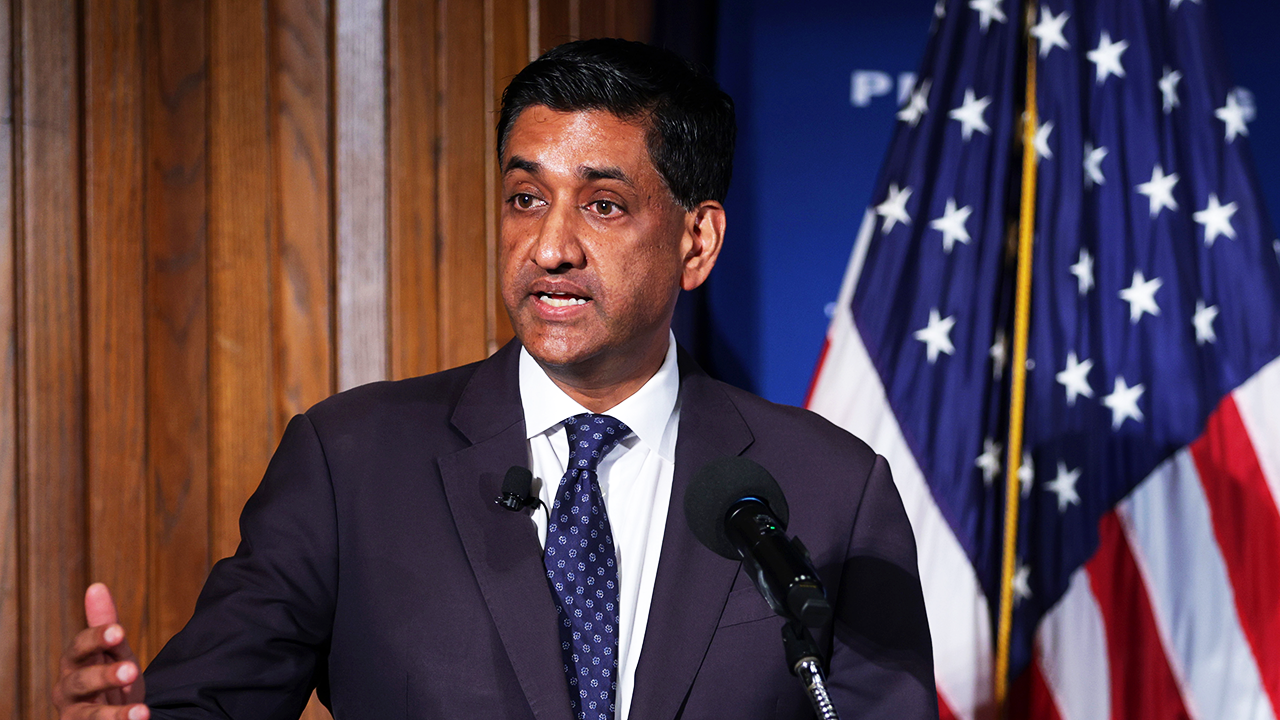
Rep. Ro Khanna, D-Calif., joins ‘Mornings with Maria’ to debate the escalating U.S.-Iran conflict, clash over oil exports and gas prices, and challenge President Donald Trump’s strategy as tensions surge in the Strait of Hormuz.
Rising tensions in the Middle East are spilling into domestic energy policy debates as lawmakers weigh how global conflict is hitting Americans at the pump. With oil markets reacting to instability around the Strait of Hormuz, concerns over supply disruptions are now colliding with questions about whether U.S. energy policy serves domestic consumers first.
Rep. Ro Khanna, D-Calif., joined FOX Business’ Maria Bartiromo on “Mornings with Maria” to argue that the current crisis underscores what he sees as a fundamental policy flaw: continuing to export U.S. oil while prices rise at home.
S&P Global Vice Chairman Daniel Yergin breaks down Iran tensions, oil market volatility, supply disruptions, and global energy risks on ‘Mornings with Maria.’
When Bartiromo pointed to his legislation aimed at stopping U.S. oil exports during the Iran conflict and pressed him on why he supported that move, Khanna framed the issue as prioritizing domestic supply.
“Maria, it’s common sense. Why would we be sending our oil overseas when Americans are getting fleeced at the pump… We should have our oil supply for Americans… That would bring down the price,” Khanna said.
TRUMP: ENERGY SECRETARY WRIGHT ‘TOTALLY WRONG’ ON DELAYED RETURN TO $3 GAS
The debate comes as oil flows through one of the world’s most critical shipping lanes face disruptions, amplifying price volatility and renewing scrutiny over U.S. export policy first loosened nearly a decade ago. Critics argue exports strengthen global energy influence, while others say they disconnect domestic production from consumer relief.
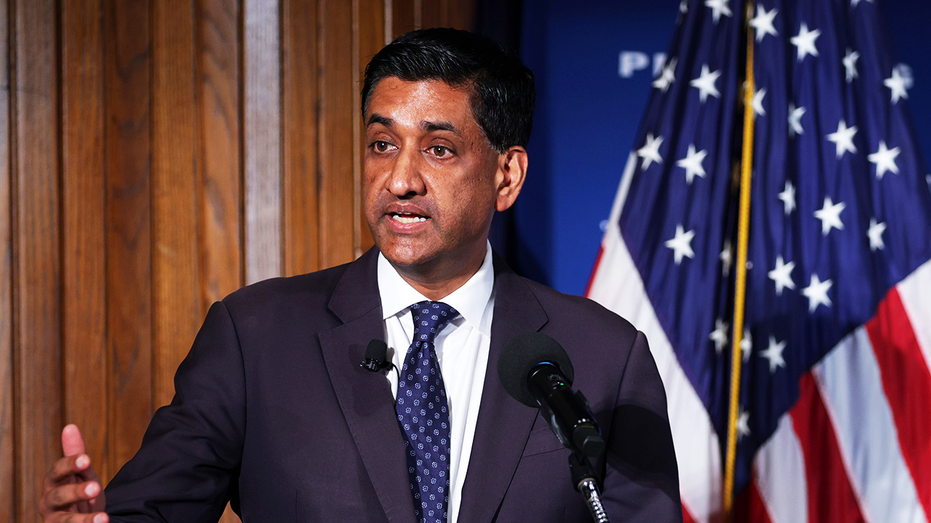
U.S. Rep. Ro Khanna (D-CA) delivering remarks in Washington, D.C. (Alex Wong / Getty Images)
Bartiromo pushed back, noting that the U.S. has been producing oil at high levels and questioning whether restricting exports would address the broader energy picture.
“This was a giveaway in 2015 to the big oil companies… It was good for them… Not good for the average consumer,” Khanna added.
OIL PRICES PLUNGE AFTER IRAN SAYS STRAIT OF HORMUZ OPEN FOR COMMERCIAL SHIPPING TRAFFIC
The exchange reflects a broader divide over energy policy as global supply disruptions put pressure on prices while policymakers debate whether exports strengthen U.S. influence abroad or limit relief at home.
Lexington Institute vice president Rebecca Grant discusses the U.S. blockade of the Strait of Hormuz and analyzes U.S.-Iran talks on ‘Making Money.’
Bartiromo also pressed Khanna on the broader strategy toward Iran, questioning how diplomacy would prevent the country from developing a nuclear weapon and whether Tehran could be trusted.
“The American people are tired of it. They want people who are going to be team America. They want to bring gas prices down here and care about our nation and get us out of these wars,” he said.
Anne Hathaway confirms she's working on “Princess Diaries 3”: 'Have to knock it out of the park'

Q1 Earnings Kick Off: Strong Results And Record CEO Confidence Anchor The Market

Tether Takes 8.2% Stake in Antalpha, Backs Bitcoin Mining Finance

Manchester United reach agreement with Casemiro over contract clause amid transfer speculation

Steven Gerrard disagrees with Gary Neville over ‘shock’ Chelsea and Arsenal claim | Football

US brings back mandatory military draft registration

‘Financial Crisis’ Zone; Trader’s Warning For Gold, Stocks, Bitcoin | Gareth Soloway

Live Crypto And Gold Scalping Trading | 19 April 2026 #cryptoscalping #xauusdlive

They’re Lying to You About Crypto. Here’s What Comes Next.
-

 NewsBeat6 days ago
Trump and Pope Leo: Behind their disagreement over Iran war
-

 Fashion3 days ago
Weekend Open Thread: Theodora Dress
-

 Crypto World7 days ago
SEC Signals Exemption for Crypto Interfaces From Broker Registration
-

 News Videos5 days ago
Secure crypto trading starts with an FIU-registered
-

 Sports3 days ago
NWFL Suspends Two Players Over Post-Match Clash in Ado-Ekiti
-

 Crypto World7 days ago
SEC Proposes Certain Crypto Interfaces Don’t Need to Register as Brokers
-

 Business1 day ago
Powerball Result April 18, 2026: No Jackpot Winner in Powerball Draw: $75 Million Rolls Over
-

 Crypto World3 days ago
Russia Pushes Bill to Criminalize Unregistered Crypto Services
-

 Politics3 days ago
Palestine barred from entering Canada for FIFA Congress
-
 Business4 days ago
Creo Medical agree sale of its manufacturing operation
-

 Politics1 day ago
Zack Polanski demands ‘council homes not luxury flats for foreign investors’
-
 Entertainment7 days ago
Brand New Day’ Footage Reveals the Devastating Impact of ‘Now Way Home’
-

 Crypto World3 days ago
Russia Introduces Bill To Criminalize Unregistered Crypto Services
-

 Tech6 days ago
Microsoft adds Windows protections for malicious Remote Desktop files
-
 Entertainment7 days ago
Karol G’s ‘Ultra Raunchy’ Coachella Set Gave ‘Satanic Vibes’
-

 Entertainment7 days ago
How Babylon 5 Turned Brief Side Story Into Emotional Masterpiece
-

 Tech5 days ago
‘Avatar: Aang, The Last Airbender’ Leaked Online. Some Fans Say Paramount Deserves the Fallout
-
 Crypto World7 days ago
Senate Bill Faces Delay Over Stablecoin Yield Debate
-

 Tech7 days ago
What was the first ransomware attack to demand payment in Bitcoin?
-

 Tech2 days ago
Auto Enthusiast Scores Running Tesla Model 3 for Two Grand and Turns It Into Bare-Bones Go-Kart
You must be logged in to post a comment Login