
Business
(VIDEO) Stunning Lyrid Meteor Shower 2026 Captured in Breathtaking Views From Earth and Space


WASHINGTON — Skywatchers and astronauts alike captured the annual Lyrid meteor shower in spectacular fashion as it peaked Tuesday night into Wednesday, with bright streaks lighting up dark skies on the ground and unique perspectives from 250 miles above Earth aboard the International Space Station.

The Lyrids, one of the oldest known meteor showers with records dating back nearly 3,000 years to ancient China, reached maximum activity around 19:15 UTC on April 22 as Earth plowed through debris left by long-period comet C/1861 G1 (Thatcher). Under favorable conditions with a slim waxing crescent moon setting early and minimal interference, observers reported seeing 10 to 20 meteors per hour, including occasional fast-moving fireballs that outshone Venus.
From the ground, amateur and professional photographers across the Northern Hemisphere documented the display with long-exposure cameras, revealing colorful trails against starry backdrops. Reports flooded in from locations in North America, Europe and Asia, where clear weather allowed prime viewing after midnight and before dawn on April 22. The radiant point in the constellation Lyra rose higher in the northeastern sky as morning approached, increasing the chance of spotting meteors.
NASA astronaut Jessica Meir, aboard the orbiting laboratory, shared jaw-dropping photographs snapped from the station’s cupola observation module. Using a three-second exposure, Meir captured a Lyrid meteor streaking through Earth’s upper atmosphere, appearing as a sharp flash against the planet’s curved horizon. City lights glowed below, while a faint red arc of airglow — caused by solar radiation exciting atmospheric molecules — framed the scene.
“Caught a Lyrid from above,” Meir posted alongside the image, highlighting the rare orbital vantage point that shows meteors burning up from outside the atmosphere rather than looking up from within it. Similar views from past missions, including footage by astronaut Don Pettit in 2012, have shown clusters of meteors ablating as bright points against the nighttime Earth.
The Lyrid shower is active from roughly April 14-30, but activity builds to a narrow peak centered on April 22. This year’s timing aligned well with relatively dark skies, as the moon was only about 27% illuminated and set before prime viewing hours in many locations. Experts from NASA and the American Meteor Society noted that while the zenithal hourly rate — the theoretical maximum under perfect conditions with the radiant overhead — hovers around 18, real-world sightings often range from 5 to 20 per hour depending on light pollution and observer location.
Unlike more prolific showers such as the Perseids or Geminids, the Lyrids are not known for producing massive storms, though occasional outbursts have historically pushed rates toward 100 meteors per hour. In 2026, no such surge materialized, but the shower still delivered reliable bright meteors traveling at about 30 miles per second. Many left short, glowing trains rather than long persistent ones.
Scientists explain that the particles responsible are tiny bits of dust and rock, some no larger than a grain of sand, shed by Comet Thatcher during its 415-year orbit around the Sun. When these enter Earth’s atmosphere at high speed, friction causes them to heat up and vaporize in a flash of light — the “shooting star” effect. Larger fragments can create fireballs that fragment or produce sonic booms if they survive longer.
Ground-based observations benefited from networks like the Global Meteor Network, which provides real-time fireball data and helps triangulate trajectories. Skywatchers were encouraged to face northeast after midnight, lie back in a reclining chair or blanket, and allow eyes to dark-adapt for at least 20-30 minutes. Binoculars or telescopes are unnecessary and can even limit the wide-field view needed to catch fast meteors.
The dual perspective — Earth and space — offered a fuller scientific picture. From the ISS, astronauts witness meteors against the thin blue line of the atmosphere, sometimes seeing them enter from directions not visible from any single ground location. Such images help researchers study atmospheric entry dynamics and meteoroid populations.
The 2026 Lyrids coincided with heightened public interest in astronomy, coming just days after Earth Day and amid growing awareness of near-Earth objects. No significant risks were associated with the shower; the particles are too small to reach the surface as meteorites in any meaningful quantity.
For those who missed the peak, the shower continued at lower rates through late April, overlapping slightly with the emerging Eta Aquariids in early May. Experts recommend checking weather forecasts and finding dark-sky sites away from city lights for the best experience. Apps and websites from NASA, the American Meteor Society and timeanddate.com provide tailored visibility predictions by location.
Photographs and videos shared widely on social media amplified the event’s reach. Images from rural Canada, European countrysides and U.S. national parks showed vivid streaks cutting through the Milky Way. Meanwhile, Meir’s ISS shot, released April 20-21, quickly went viral, offering a perspective that reminded viewers of humanity’s place in a dynamic solar system.
The Lyrids hold historical significance as one of the few showers with ancient documentation. Chinese astronomers noted them as far back as 687 B.C., describing “stars falling like rain.” Modern science has refined our understanding, linking the display directly to Comet Thatcher, discovered in 1861.
As the shower waned Wednesday, stargazers already looked ahead to stronger summer displays. Yet the 2026 Lyrids stood out for their favorable moon conditions and the striking space-based imagery that bridged ground observers with those living and working off-planet.
NASA and international partners continue to monitor meteoroid environments for both scientific value and spacecraft safety. The ISS and satellites routinely encounter small particles, though shielding protects crews and systems. Data from showers like the Lyrids contribute to models predicting debris risks.
For amateur astronomers, the event reinforced simple joys of backyard observing. No special equipment was required beyond patience and a clear view of the sky. Families and educators used the shower as a teaching moment about comets, orbits and the protective role of Earth’s atmosphere.
In the hours following the peak, reports confirmed solid activity without record-breaking numbers. Some lucky observers spotted colorful meteors — greens, blues and yellows — resulting from different chemical compositions in the incoming particles.
The combination of terrestrial and orbital captures provided a complete visual narrative of the Lyrid meteor shower 2026. From dark fields on Earth to the cupola windows of the ISS, the ancient comet’s dust trail created a shared moment of wonder across continents and altitudes.
As April 22 turned to 23, the Lyrids gradually diminished, but their images lingered online, inspiring late viewers to step outside for any remaining trails. With the shower’s end approaching by April 30, astronomers reminded enthusiasts that the night sky offers continuous celestial events for those willing to look up.
The successful documentation from both Earth and space highlighted advancing camera technology and international collaboration in astronomy. Future missions may include dedicated meteor observation campaigns from lunar orbit or deep-space habitats, building on experiences like Meir’s.
For now, the 2026 Lyrids delivered exactly what skywatchers hoped for: a reliable spring display under good conditions, enhanced by perspectives that only human spaceflight can provide. Whether seen as fleeting streaks from a backyard or dramatic flashes above the glowing Earth, the meteors reminded everyone of the constant, gentle bombardment our planet endures — and the beauty it creates in the process.


Operator
Thank you for standing by, and welcome to the Regis Resources quarterly briefing. [Operator Instructions] I would now like to hand the conference over to Mr. Jim Beyer, Managing Director and Chief Executive Officer. Please go ahead.
Jim Beyer
CEO, MD & Director
Thanks, Darcy. Good morning, everyone, and thanks for joining us for the Regis Resources March FY ’26 quarter results. Joining me on the call today is our CFO, Anthony Rechichi; our COO, Michael Holmes; and our Head of Investor Relations, Matt Collings.
At times, we’ll refer to figures and tables in both the quarterly report, which came out this morning, and also the resource and reserves report, which was released yesterday morning. So you may find it useful to have those documents at hand.
Okay. I’ll start with safety. During the December quarter, our operations continued to perform strongly from a safety perspective. The 12-month moving average lost time injury frequency rate finished the quarter a little bit further down at 0.32, which continues to be well below the Western Australian gold industry average. Our objectives remain unchanged to provide a workplace free from serious injury. We continue to focus on leadership, discipline and continuous improvement to support safe and reliable operations across our business.
Turning now to our enviable production performance. The team has consistently delivered to plan during FY ’26 and the March quarter was no exception. Operationally, the group
Amid the gloom, Iran conflict hands Indian cotton yarn hub a win

For the fashion portfolio, the same-store-sales-growth (SSSG), which consists of stores operational for over 18 months, slipped to low single digits in the March 2026 quarter and in FY26 from mid-single digit growth in the March 2025 quarter and a double-digit increase in FY25. This could be attributed to most of the stores being opened in Tier II and III cities. It further plans to raise ₹2,500 crore through a rights issue to fund the expansion strategy. It means the growth trend is likely to persist in the medium term as the company has indicated that it takes two-to-three years for newer markets to become more relevant.
 Agencies
same-store-sales-growth slips to low single digits For fashion portfolio
Apart from the physical channels, Trent’s online channels – Westside.com and Tata Neu – also showed moderation in sales growth. After rising to 56% in the September 2025 quarter from 35% in the June 2025 quarter, it gradually reduced to 25% in the March 2026 quarter. The share of online channels to Westside revenues remained stable at 6% year-on-year.
On the positive side, Trent’s operating margin (EBIT margin) has gradually increased to 11.5% in the March 2026 quarter from 2.9% in the March 2023 quarter, aided by disciplined pricing, better inventory control, and the benefits of scale in sourcing and supply chain operations.
Trent’s stock has gained nearly 25% since April 06 when it issued an encouraging business update for the March quarter, implying a sustained top line growth. This has taken its one-month gain to 32%, also buoyed by an anticipation of a bonus issue of shares. While the announcement of the bonus issue will support the stock in the near term, its performance over the medium term will depend upon how effectively the company executes its expansion strategy.


Altimmune prices $225 million public offering at $3 per share

SAN ANTONIO — Victor Wembanyama’s frightening face-first fall in the second quarter of Game 2 has left the San Antonio Spurs without their franchise cornerstone and raised serious questions about how a concussion will impact the towering 7-foot-4 phenom’s play if and when he returns in the 2026 NBA playoffs.
Wembanyama suffered a diagnosed concussion after tumbling hard to the court following contact with Portland Trail Blazers guard Jrue Holiday during a drive to the basket Tuesday night. He exited with just 12 minutes played, recording five points, four rebounds, one block and one assist, and did not return as the Blazers stole a 106-103 road victory to knot the Western Conference first-round series at 1-1.
The injury occurred at the 8:57 mark of the second quarter when Wembanyama spun around Holiday, lost his balance and slammed face-first onto the hardwood. He remained down for several seconds, appeared dazed while struggling to stand and jogged directly to the locker room after a timeout. Spurs coach Mitch Johnson confirmed postgame that Wembanyama had a concussion and was placed in the NBA’s concussion protocol.
Under league guidelines, Wembanyama cannot engage in full participation for at least 48 hours from the time of injury and must remain symptom-free while progressing through a stepwise return-to-play process. He can begin gradual activity after 24 hours if symptoms do not worsen, followed by monitored exertion levels, non-contact drills and eventual clearance from both the team physician and the NBA’s concussion protocol director. Further testing was scheduled for Wednesday.
The timeline puts Game 3 on Friday in Portland in serious doubt. Many observers, including ESPN’s Stephen A. Smith, believe a return for Game 3 is highly unlikely. A more realistic target appears to be Game 4 on Sunday or, more conservatively, Game 5 next Tuesday back in San Antonio. Average NBA concussion recovery spans about seven to 10 days, though individual cases vary based on symptom severity.
For a player of Wembanyama’s unique physical profile, even a mild concussion carries amplified risks. The 22-year-old’s extraordinary height means any fall generates significant force upon impact, potentially affecting balance, coordination and spatial awareness — all critical to his game. Concussions commonly cause headaches, dizziness, sensitivity to light or noise, slowed reaction times, impaired concentration and reduced cognitive processing, symptoms that could blunt Wembanyama’s elite shot-blocking, perimeter defense and stretch-big scoring.
In the regular season, Wembanyama anchored the Spurs’ defense while emerging as a versatile offensive threat capable of scoring inside, draining threes and facilitating. His playoff debut in Game 1 was electric: a franchise-record 35 points on 13-for-21 shooting, including five threes, plus five rebounds and two blocks in a 111-98 victory. Without him in the second half of Game 2, San Antonio’s interior defense softened, allowing Portland to exploit mismatches and mount a late rally.
Veteran Luke Kornet stepped in at center and delivered a solid 10 points and nine rebounds in 28 minutes, but the drop-off from Wembanyama’s rim protection and switchability was evident. The Spurs’ young supporting cast, including rising talents like Stephon Castle, showed flashes but lacked the gravitational pull Wembanyama provides.
Medical experts note that returning too soon from a concussion can prolong recovery or lead to second-impact syndrome, a rare but dangerous condition. The NBA’s protocol emphasizes caution, particularly in the heightened intensity of playoffs where physicality and fatigue rise. Wembanyama’s history includes a recent rib contusion late in the regular season, though that injury was unrelated.
Spurs leadership has stressed patience. “We’ll take the proper and appropriate steps,” Johnson said. “It’s tough, but health comes first.” Team officials have not ruled out Wembanyama traveling with the squad to Portland, but his on-court status remains fluid pending daily evaluations.
The absence reshapes the series dynamics. Portland, seeded seventh, seized momentum by capitalizing on San Antonio’s diminished frontcourt. Blazers players and coaches expressed concern for Wembanyama’s health while acknowledging the opportunity. If Wembanyama misses multiple games, Portland’s path to an upset brightens considerably, forcing the Spurs to rely more heavily on perimeter scoring and collective defense.
Historically, NBA teams missing star players to concussion in the postseason have mixed results. Some recover quickly and return stronger; others experience lingering effects that subtly erode performance — missed rotations on defense, delayed help-side help, or hesitation on drives. For Wembanyama, whose game relies on length, anticipation and fluid movement, any residual dizziness or neck stiffness could limit his trademark chase-down blocks or step-back threes.
Broader concussion awareness in the NBA has improved, with stricter protocols implemented over the years following high-profile cases. Players like former stars who dealt with repeated head trauma have spoken publicly about long-term cognitive concerns, though Wembanyama’s situation appears isolated to this single incident.
Fan reaction on social media and in San Antonio has been one of worry mixed with optimism for a swift recovery. The Frost Bank Center crowd Tuesday night fell silent during the sequence, a stark contrast to the electric atmosphere of Game 1 when Wembanyama’s playoff arrival felt like a coronation.
If cleared, Wembanyama’s return could swing momentum back to the Spurs, who finished the regular season with the Western Conference’s second-best record behind their superstar. His presence transforms San Antonio from a promising young team into a legitimate contender capable of making noise beyond the first round.
Yet the injury underscores the fragility of even the most physically gifted athletes in a grueling playoff grind. The series now shifts to Portland’s Moda Center, where the Blazers will look to build on their Game 2 resilience. San Antonio must find answers without its defensive anchor, testing the depth and composure of a roster still gaining postseason experience.
Medical updates will dominate the narrative over the next 48 hours. Should symptoms resolve quickly, Wembanyama could rejoin the lineup feeling fresh after enforced rest. More persistent effects might sideline him longer, forcing the Spurs into survival mode.
Wembanyama himself has projected confidence and maturity throughout his young career. In interviews before the series, he spoke of embracing the playoff stage and learning from every moment. How he navigates this health challenge will add another layer to his rapid ascent from French prospect to NBA superstar.
For now, the Spurs face an immediate test of resilience. Portland smells blood in the water after even the series, while San Antonio must adapt without its most irreplaceable piece. The coming days will reveal not only Wembanyama’s recovery timeline but also the depth of a franchise built around his extraordinary potential.
As the Western Conference playoffs intensify, one thing remains clear: the Spurs’ championship aspirations hinge heavily on their towering French star staying healthy and performing at the level that has already rewritten expectations in San Antonio. A prolonged absence could turn a promising postseason into an early exit, while a timely return might ignite a deeper run.
The basketball world watches closely, hoping for a full recovery that allows Wembanyama to showcase his generational talent on the biggest stage without compromise.
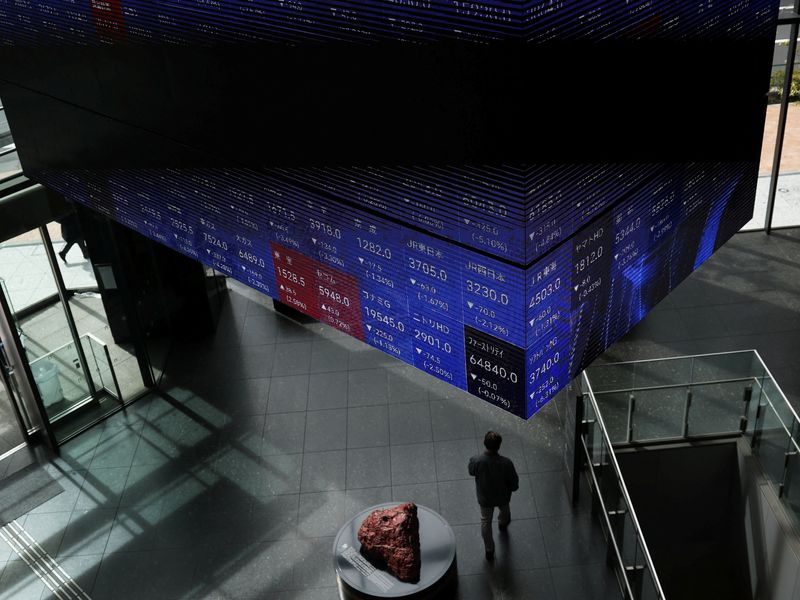

Japan’s Nikkei reverses below 60,000 level as profit-taking steps in

Asia is rewriting the rules of the global energy system. The region’s record-breaking expansion of solar power has now pushed clean electricity generation past its own demand growth, triggering what analysts describe as the sharpest annual decline in fossil-fuel electricity production this century.
Key takeaways
- Asia’s record solar expansion has driven the biggest annual fall in fossil-fuel electricity generation this century, with China and India both recording declines in fossil power for the first time.
- Asia’s green technology and sustainability market is on track to more than double from $6.4 billion in 2024 to nearly $15 billion by 2032, growing at 11.3% annually.
- IoT and green buildings are leading the technology shift, backed by sweeping government policies like China’s 14th Five-Year Plan and India’s rapid build-out of renewable energy capacity.
Simultaneously, the continent is becoming the epicentre of a fast-growing green technology market projected to nearly double in value by 2032.
Together, the two trends are pointing toward a structural, not merely cyclical, shift in how the world’s most populous region powers its economies.
A Historic Turn in the Power Sector
According to reporting by Nikkei Asia, Asia’s record increase in solar power generation last year helped clean power surpass the region’s electricity demand growth, resulting in the largest annual decline in fossil-fuel generation this century.
The scale of that achievement is difficult to overstate. Asia accounts for the bulk of the world’s coal consumption and, until recently, remained the principal driver of rising global emissions. That the region is now leading the retreat from fossil fuels, outpacing Europe and North America, marks a dramatic reversal.
The shift is being driven by a handful of large economies acting in concert. China and India, historically the largest contributors to the global rise in fossil power, both recorded a fall in fossil generation in 2025. In both countries, record clean power additions outpaced demand growth. This brought net growth in global fossil generation to a halt, a milestone that appeared distant only a few years ago.
Solar power has been the decisive technology. Solar power cemented its role as the dominant driver of change in the global power sector, with its record growth meeting three-quarters of the net rise in electricity demand in 2025.
The momentum extends well beyond China and India. Asia started its electricity transition later than other regions, but is catching up fast. The share of solar and wind energy in Asia is now almost equal to the world average, and the share of renewables in Asia’s electricity mix reached 29% in 2024.
A Green Tech Market Racing to Keep Pace
The power sector transition is not happening in isolation. It is being accompanied by a broader surge in demand for green technology and sustainability solutions across industry, urban infrastructure, and agriculture.
According to market research firm P&S Intelligence, the Asian green technology and sustainability market was $6,415.9 million in 2024 and will reach $14,944.7 million by 2032, growing at 11.3% during 2025 to 2032. That trajectory would see the market more than double in under a decade.
The forces driving this expansion are partly environmental, partly economic, and partly regulatory. Asia’s position as a major carbon emitter has intensified the demand for green technology solutions. Over the past few years, Asia, particularly China, has emitted carbon at an alarming rate, driven by rapid economic growth and energy consumption. Among all the sources, coal accounted for approximately 15.4 billion metric tonnes of emissions in 2023. That environmental pressure has catalysed consumer demand for eco-friendly products and given decisive impetus to companies offering green solutions across the region.
Government policy is adding structural momentum. China’s 14th Five-Year Plan (2021 to 2025) aims to reduce emission intensity by 18% and sets a reduction target of 13.5% for energy intensity over a period of five years. Similar initiatives across Asia are demonstrating strong governmental commitment to sustainability.
India, meanwhile, is building out its renewable infrastructure at a striking pace. India’s installed renewable energy capacity reached 201.45 GW in October 2024, making up 46.3% of the country’s total installed power generation capacity.
Technology Is at the Core
The green technology market is not simply about solar panels and wind turbines. Increasingly, it encompasses a sophisticated ecosystem of digital tools, including IoT sensors, artificial intelligence, cloud computing platforms, and carbon monitoring software, that together are enabling industries to reduce their environmental footprints in real time.
IoT technology accounted for the largest revenue share in 2023, at 42.6%, and is anticipated to continue leading the market. Cloud infrastructure is also gaining ground rapidly, with adoption rising due to its ability to optimise energy resources and integrate seamlessly with IoT devices across geographies.
The green buildings category held the largest market share in 2024, due to the rising commercialisation and industrialisation in Asia, which has increased building construction to meet business and residential needs. Green buildings, which use recyclable materials and energy-efficient systems, including solar panels, have become the primary application segment for these technologies.
The Road Ahead
The convergence of record-breaking clean power generation and a rapidly expanding green technology market suggests Asia’s energy transition has moved beyond the demonstration phase into one of industrial-scale deployment.
The future of the global power system is being shaped in Asia, with China and India at the heart of the energy transition.
Yet the region’s scale means that challenges remain formidable. Electricity demand across Asia is rising sharply, driven by data centres, electric vehicles, and the electrification of heating and industry. Sustaining a clean-power surplus above that demand growth will require continued investment and continued political will.
For now, the data tells a story that would have seemed improbable at the start of this decade: Asia, long regarded as the world’s most stubborn fossil-fuel dependency, is leading the planet’s most consequential energy transition.
Other People are Reading

Gina Rinehart has described as a “national crisis and disgrace” the number of homeless veterans and war heroes in Australia, as Hancock Prospecting announced a $200 million commitment to buy them homes.
 Agencies
The divergence reflects private banks’ higher exposure to unsecured retail and MSME advances, which have been the primary source of stress across the sector. ICRA flags that the stress is increasingly concentrated in the MSME and retail segments, with the rural economy seen as bearing the brunt. The ongoing West Asia conflict adds a further layer of uncertainty, with potential job losses — particularly in the IT sector — flagged as a watch item for personal loan performance.
Business
Earnings call transcript: Sandfire Resources Q3 2026 sees record outcomes despite challenges
Earnings call transcript: Sandfire Resources Q3 2026 sees record outcomes despite challenges
Police investigation of “Storage Wars” star Darrell Sheets' death includes cyberbullying accusations

Regis Resources Limited (RGRSY) Q3 2026 Earnings Call Transcript

Kalshi bars three U.S. lawmakers from betting on their own races

Manchester United reach agreement with Casemiro over contract clause amid transfer speculation

Steven Gerrard disagrees with Gary Neville over ‘shock’ Chelsea and Arsenal claim | Football

US brings back mandatory military draft registration


-

 Sports6 days ago
NWFL Suspends Two Players Over Post-Match Clash in Ado-Ekiti
-

 Fashion5 days ago
Weekend Open Thread: Theodora Dress
-

 Politics5 days ago
Palestine barred from entering Canada for FIFA Congress
-
Entertainment3 days ago
NBA Analyst Charles Barkley Chimes in on Ice Spice McDonald’s Fiasco
-

 Business4 days ago
Powerball Result April 18, 2026: No Jackpot Winner in Powerball Draw: $75 Million Rolls Over
-

 Tech4 days ago
Auto Enthusiast Scores Running Tesla Model 3 for Two Grand and Turns It Into Bare-Bones Go-Kart
-

 Politics4 days ago
Zack Polanski demands ‘council homes not luxury flats for foreign investors’
-

 Crypto World5 days ago
Russia Pushes Bill to Criminalize Unregistered Crypto Services
-

 Politics2 days ago
Gary Stevenson delivers timely reminder to register to vote as deadline TODAY
-

 Politics10 hours ago
Disabled people challenge government SEND proposals over segregation concerns
-

 Business18 hours ago
Rolls-Royce Voted UK’s Most Iconic Trade Mark as IPO Register Hits 150
-

 Politics10 hours ago
Making troops accountable for war crimes threatens US alliance, ex-SAS colonel warns
-
 Business6 days ago
Creo Medical agree sale of its manufacturing operation
-

 Crypto World5 days ago
Russia Introduces Bill To Criminalize Unregistered Crypto Services
-

 Politics11 hours ago
Starmer handler McSweeney to be dragged from shadows by Foreign Affairs Committee
-

 Politics11 hours ago
Zack Polanski responds to home secretary’s taser threat
-
Politics11 hours ago
Wings Over Scotland | How To Get Away With Crimes
-
 Crypto World4 days ago
Kelp DAO rsETH Bridge Hack Drains $292M as DeFi Losses Top $600M in Two Weeks
-

 Politics8 hours ago
‘Iran is still a nuclear threat’
-

 Tech7 days ago
Ford EV and tech chief leaving automaker
You must be logged in to post a comment Login